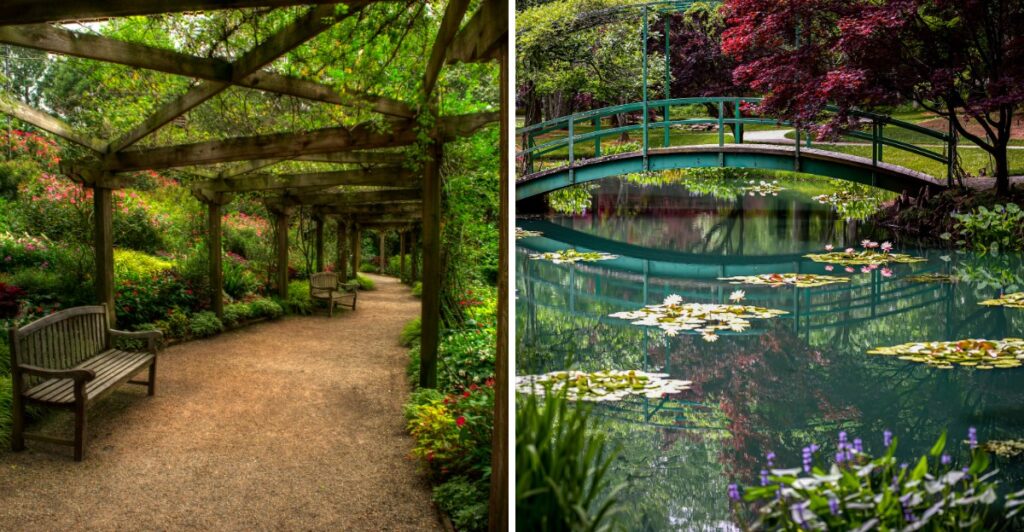
Five thousand Japanese maples and three hundred varieties.
One Georgia family estate clearly never heard the words “enough trees.”
The garden spreads across more than 40 acres, with spring-fed ponds, stone lanterns, and bridges winding through the landscape.
You’d think that was ambitious enough, but the founder spent 15 years visiting gardens around the world before choosing the site. That’s dedication on a level my weekend projects will never understand.
Then autumn arrives, and all those maples start changing color. Reds, oranges, and yellows appear from late October through mid-November, with different varieties taking turns in the spotlight.
The best part? They don’t all peak at once. Just when you think you’ve seen the grand finale, another section changes its outfit.
Even autumn has trouble keeping up with this place.
Forty Acres Of Japanese Garden Is A Lot Of Zen To Cover
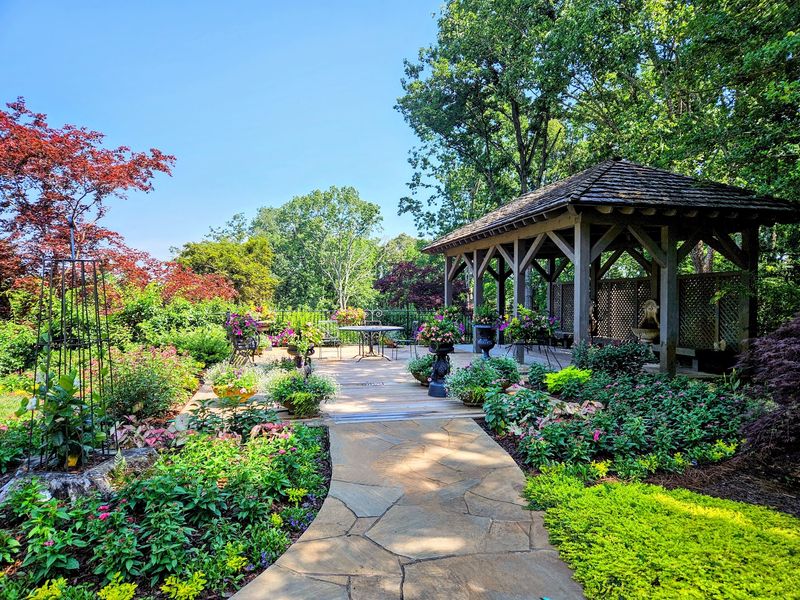
Most Japanese gardens fit inside a city block. The one at Gibbs Gardens stretches past 40 acres, and it’s billed as the largest Japanese garden in the nation.
It follows the Tsukiyama style, which means a hill and pond stroll garden. You’re meant to wander, pause, and let new views open around each bend.
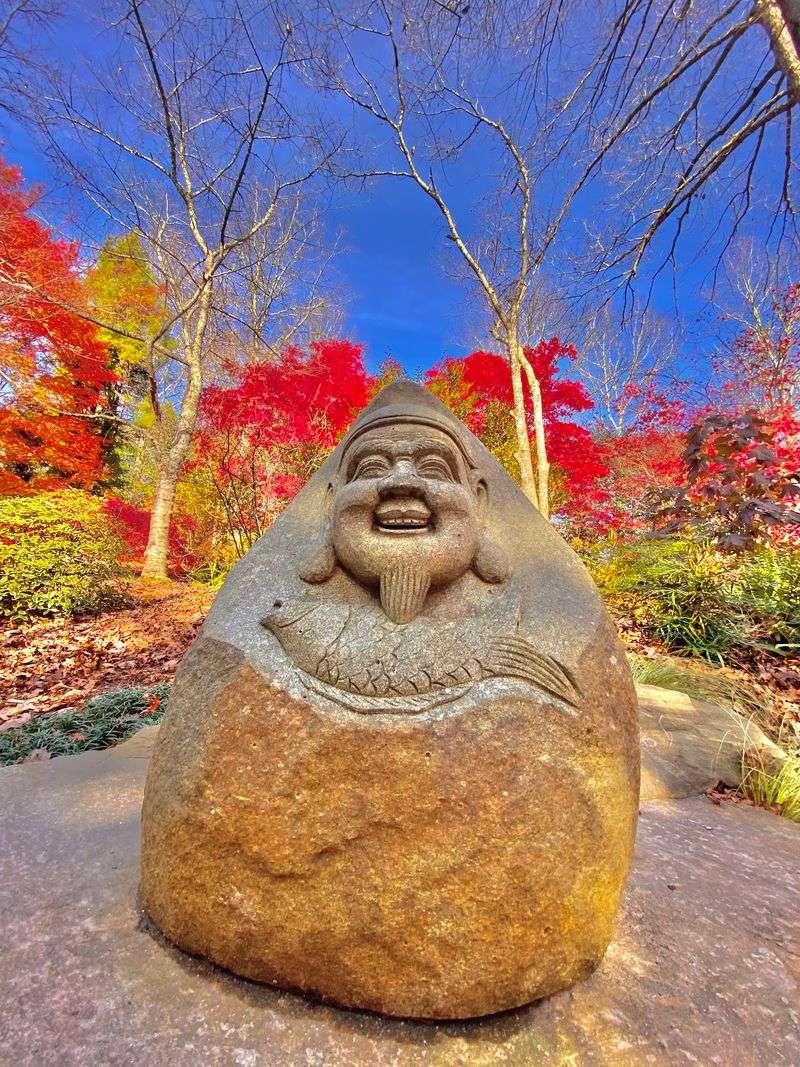
Seven spring-fed ponds anchor the design, complete with islands and bridges. Massive boulders and natural stones give the whole space a calm, solid feel.
Look closely and you’ll spot 40 handcrafted Japanese lanterns placed throughout. Pagoda structures and a zigzag bridge add even more to study along the way.
The zigzag bridge is a classic feature in Japanese garden design. It slows your steps and turns a simple crossing into a series of new angles.
Softer plants balance all that stone and water. Ferns, bonsai, seasonal azaleas, and dogwoods fill in the edges with texture and color.
Give yourself plenty of time here, because rushing defeats the whole point. This garden rewards slow walkers and anyone who likes stopping for one more photo.
Comfortable shoes are a smart call too. Forty acres adds up fast, even at a leisurely pace.
Late Fall Turns Every Maple Into A Showoff
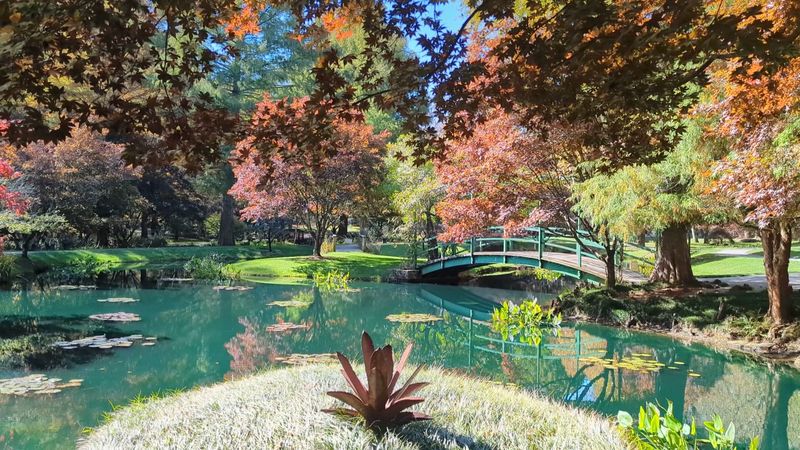
Five thousand trees, three hundred varieties, and one big seasonal finale. That’s the maple math behind the Fall ColorFest.
The display runs from late October through mid-November in this corner of Georgia. Leaves shift into brilliant yellow, orange, and red during that stretch.
Here’s the fun part. Different varieties change at different times, so the scene keeps shifting from one week to the next.
A visit in late October won’t look the same as one in mid-November. Some trees may be glowing while their neighbors are just getting started.
That staggered timing works in your favor. You get a longer window to catch great color instead of one rushed weekend.
Many of these maples sit beside ponds and bridges in the Japanese Garden. Red leaves reflected in still water make a pretty strong case for bringing a fully charged phone.
Planning tip: check the garden’s bloom updates before heading out. Fall color depends on weather, and no tree reads a calendar.
Arrive early in the day if you can. The gardens open at 9 am, and morning light flatters every leaf.
Bring a light jacket too. Late fall in the North Georgia foothills can start out chilly.
Meet The Maples With Names Worth Remembering
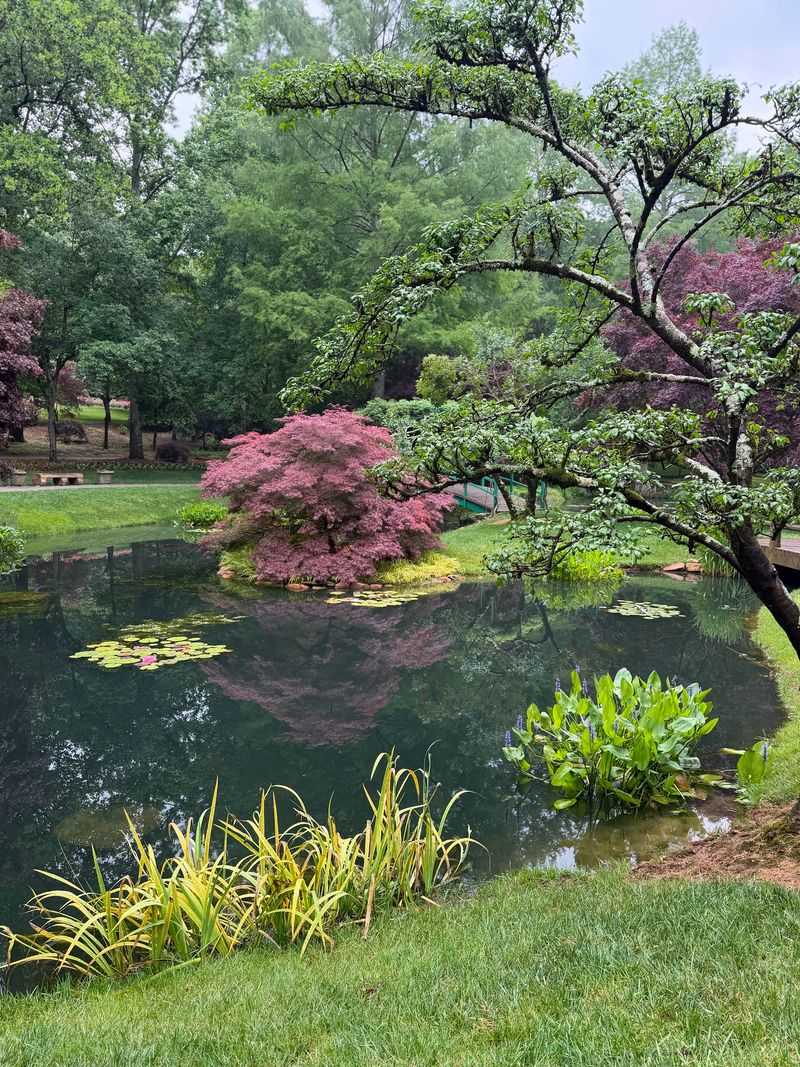
Some trees earn their spotlight with a single feature. At Gibbs Gardens, a couple of maple varieties stand out even in a crowd of thousands.
Take ‘Ryusen,’ a weeping Japanese maple. Its branches spill downward like a waterfall, and in late autumn they turn bright orange and red.
Then there’s ‘Sango-kaku,’ better known as the coral bark Japanese maple. Its claim to fame isn’t just the leaves.
The bark itself glows a vibrant coral color, especially on new growth. That means it keeps adding color even after many leaves have dropped.
Learning a few names makes the walk more fun. Instead of seeing a blur of pretty trees, you start noticing shapes, textures, and habits.
Weeping forms drape over paths and ponds. Upright types lift their color higher into the canopy.
Home gardeners, take notes. Spotting a variety you love here can help you pick the right maple for your own yard.
Just keep your hands to yourself while you study. These collections took decades to grow, and the leaves look best left on the trees.
A camera works better than a clipboard. Snap a photo of any variety that catches your eye.
One Man Spent Decades Chasing This Dream
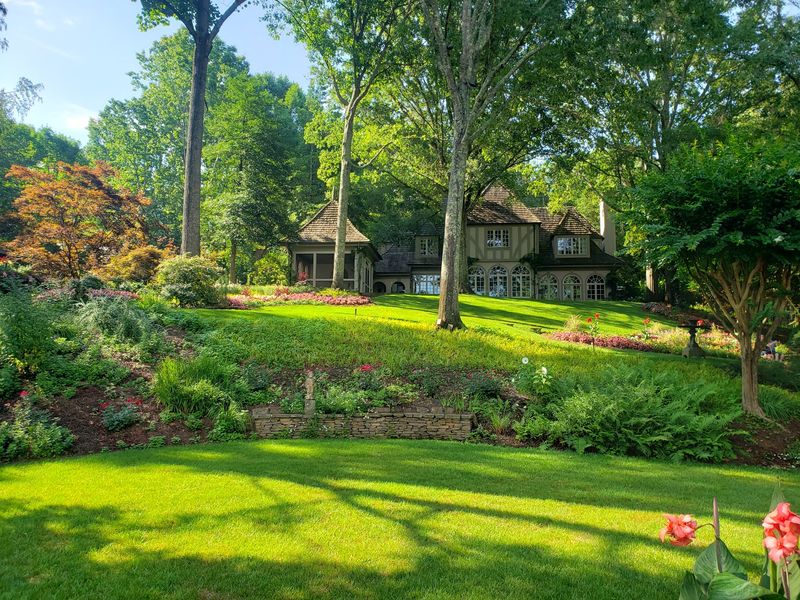
Jim Gibbs didn’t stumble onto this land by accident. The retired president of Gibbs Landscape Company spent 15 years traveling the world to study gardens.
After that, he searched another six years for the perfect site. In 1980, he bought the first 200 acres.
The gardens didn’t open to the public until 2012. That’s a long runway, and it shows in how mature everything feels.
Today the estate covers 376 acres, with more than 250 acres of landscaped gardens. Jim Gibbs has collected over 300 awards for his landscape work and the gardens.
His family still lives in the manor house on the property. It isn’t open for public tours, so admire it from the gardens around it.
Those Manor House Gardens deserve their own visit. Expect terraces, waterfalls, sweeping lawns, and woodlands with color across spring, summer, and fall.
They also offer views of Mount Oglethorpe in the distance. The path up has a slope, so pace yourself.
Knowing the backstory changes how the whole place reads. Every bridge and boulder came from one person’s very long, very patient plan.
Spring Brings Millions Of Daffodils To The Party
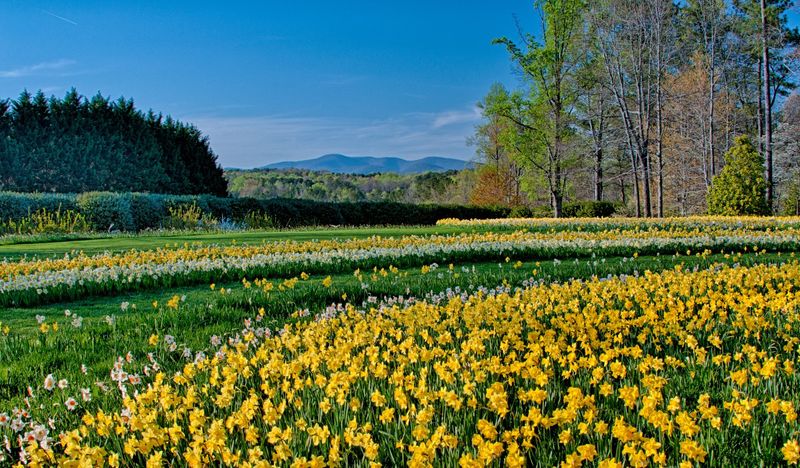
Fifty acres. Millions of daffodils. Those numbers sound made up, but they describe the Daffodil Gardens at Gibbs Gardens.
Blooms usually appear from March to mid-April. That timing lines up with the Daffodil Festival, one of the big events on the garden’s calendar.
Hillsides turn into waves of yellow and white during peak season. It’s a cheerful way to shake off winter in North Georgia.
So why mention daffodils in a fall maple story? Because the gardens open in late February for the 2026 season, and spring is a whole different show.
The property celebrates its Seasons of Color through much of the year. Each visit can feel like a brand-new garden.
Some fans buy an annual pass to catch every change. Spring daffodils, summer waterlilies, and fall maples make that idea pretty tempting.
If you go in spring, wear shoes that handle damp ground. Rainy weeks can make some paths tricky for strollers or wheelchairs.
Arrive early for the best light on the blooms. Morning sun on a yellow hillside is hard to beat.
Then circle back in autumn. Your camera roll will thank you twice.
Claude Monet Would Feel Right At Home Here
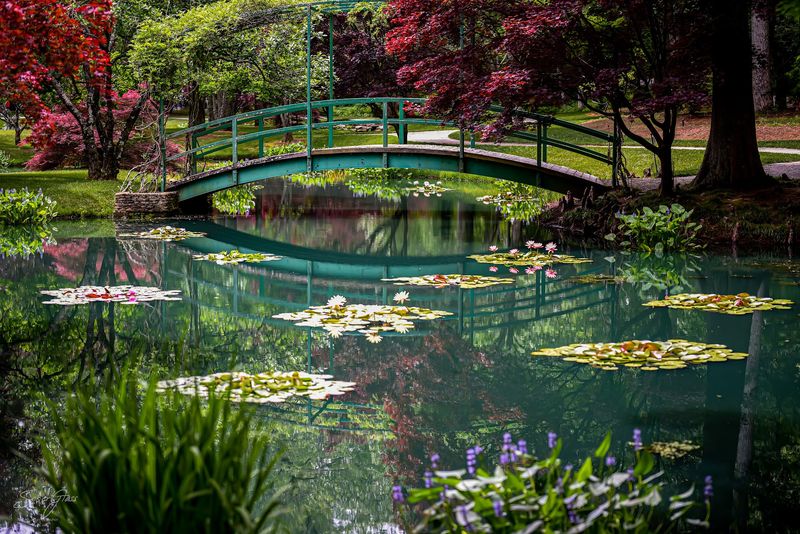
A famous French painter’s backyard has a twin in Georgia. The Monet Waterlily Gardens feature a replica of the bridge from Monet’s garden.
Around it float 140 varieties of waterlilies. The mix includes both tropical and hardy types.
They bloom from late spring through fall. That means early autumn visitors can catch lilies and the first hints of maple color on the same trip.
Bring your best art-class vocabulary. Soft pinks, whites, and purples resting on still water look a lot like a painting come to life.
Photographers love the reflections here. Pond surfaces mirror the sky, the bridge, and the surrounding greenery.
This is one of six feature gardens on the property. Altogether, Gibbs Gardens features six major gardens and 18 seasonal color gardens.
Across the estate, you’ll find 24 ponds, 19 waterfalls, and 32 bridges. The water features help set the calm mood throughout.
Benches give you a chance to sit and soak it in. No easel required, though you can still enjoy the scenery and take photographs.
Plan this stop for midday if you can. Many waterlilies open fully once the sun gets going.
Newer Gardens Keep The Surprises Coming
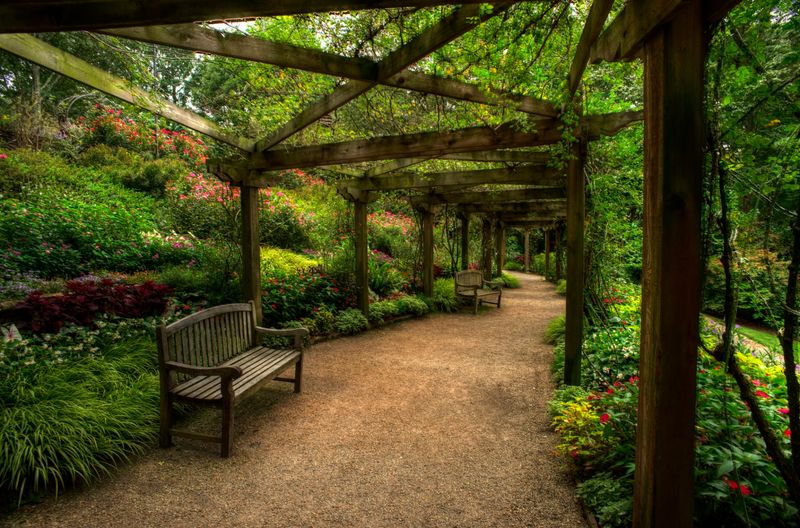
Plenty of famous gardens stop changing once they open. Gibbs Gardens keeps adding fresh spaces.
The Inspiration Gardens arrived in 2021 and cover 7.5 acres. They showcase Encore and native azaleas, plus Dwarf Drift and Knockout roses.
Maple lovers get bonus points here too. Dwarf Japanese dissectum maples and other Japanese maples grow alongside more than 200 varieties of dwarf conifers.
That collection is handy for anyone with a smaller yard. Compact plants show how to pack big style into limited space.
In summer 2023, the Le Jardin Color Garden joined the lineup. It holds thousands of bold annuals and perennials spread across nine flower beds.
Bright colors make this spot a cheerful contrast to the quiet Japanese Garden. One leans calm, the other practically shouts.
Don’t skip the Fern Dell either. It’s considered one of the largest ferneries in the nation.
The Grandchildren’s Sculpture Garden adds a personal, family touch. It’s a sweet reminder that this estate is still a family home.
With so many venues, a map helps. Pick your must-sees first, then wander.
Plan Smart Before You Hit The Trails
Location first. You’ll find Gibbs Gardens at 1987 Gibbs Dr, Ball Ground, GA 30107, in the foothills north of Atlanta.
The gardens operate seasonally, with the 2026 season running from February 27 through November 29.
Hours usually run 9 am to 4 pm, and days vary by season.
Currently, the schedule shows Wednesday through Sunday openings, with Monday and Tuesday closed. Double-check before driving up, especially during fall peak.
Everything is self-guided on foot. Allow 2 to 4 hours for a full tour.
Some paths are hilly, and they add up to miles of walking. Comfortable, closed-toe shoes are your best friend here.
There’s no shuttle, tram, wheelchair rental, or golf cart rental on site. Plan accordingly if anyone in your group needs mobility help.
Weather won’t close the gardens. Entry may pause briefly if lightning is nearby, and heavy rain can limit stroller and wheelchair access.
Georgia autumn days can swing warm or cool. Layers make the walk far more pleasant.
Pick a crisp November morning and start in the Japanese Garden. Those maples have been waiting all year for an audience.