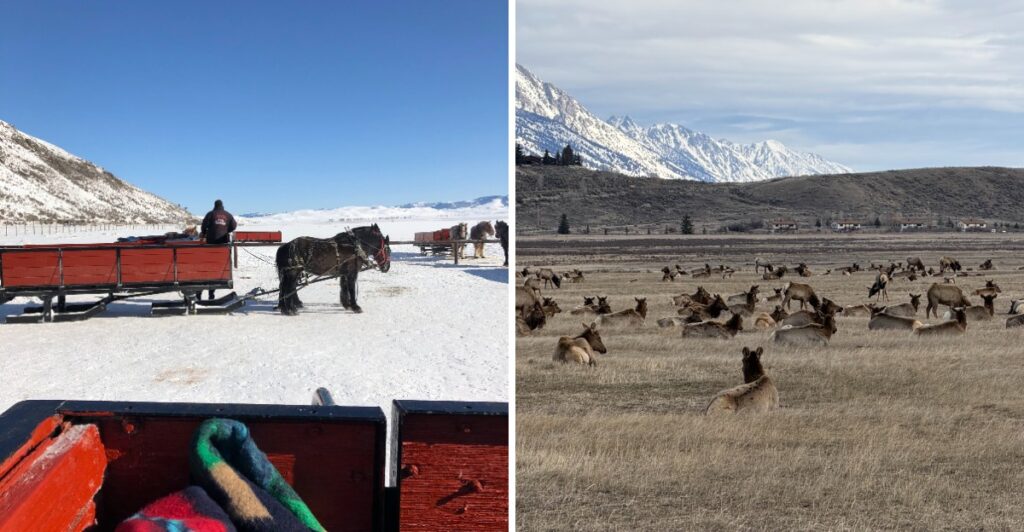
A horse-drawn sleigh pulls up beside a herd of wild elk, and the passengers are the ones who can’t stop staring. The elk? They’ve got more important things to do.
Like eat.
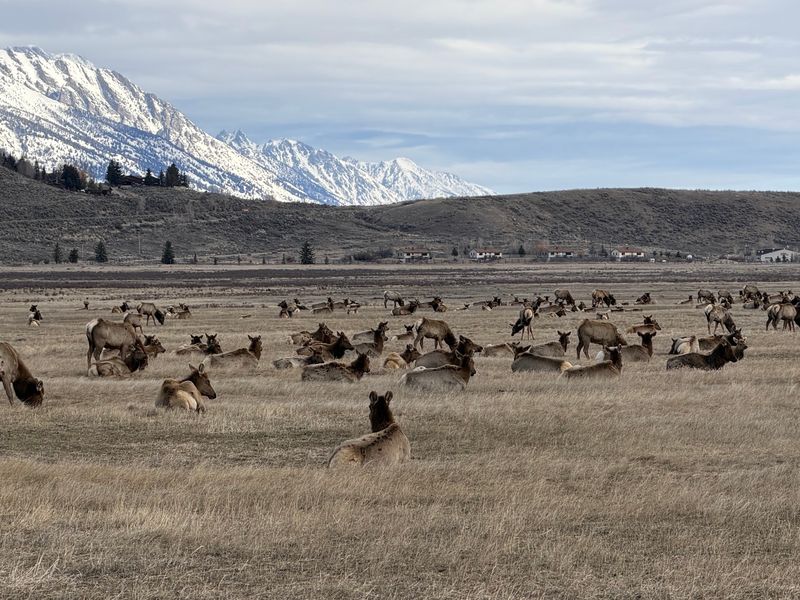
Every winter, roughly 7,500 elk gather in this Wyoming valley. Some travel all the way from southern Yellowstone, following a migration route that puts your longest road trip to shame.
And the sleigh can bring you within 20 to 30 feet of them. No binoculars required, just a warm coat and a bit of respect for personal space.
Bald eagles, bighorn sheep, and trumpeter swans might make an appearance, too.
The horses handle the transportation, the elk carry on with lunch, and you get a front-row seat to the wildest winter gathering in town.
The Sleigh Ride Tradition That Started In 1965
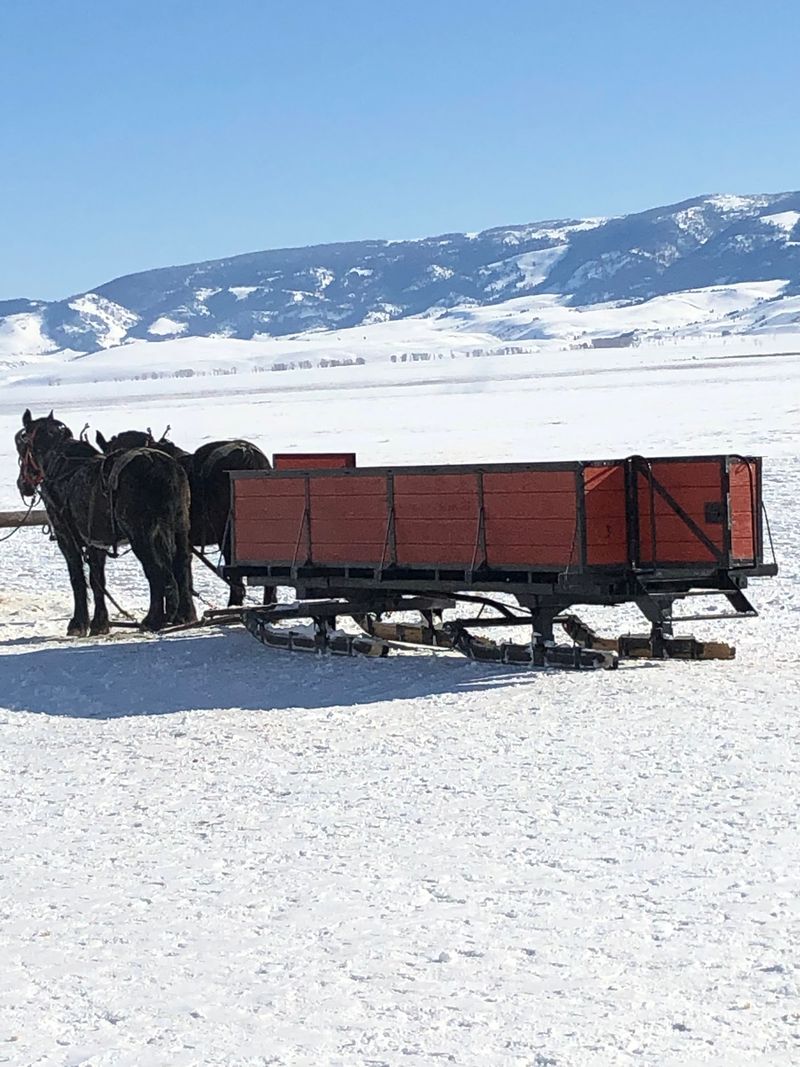
Back in 1912, the National Elk Refuge was created as a winter game reserve. Its job was simple and urgent: give hungry elk a safe place to ride out the snowy months.
Sleigh rides had been a local habit for watching elk long before they went official. In 1965, the rides became formal public tours, and the tradition has rolled on ever since.
The idea came from real concern. In the late 1800s and early 1900s, people like S.N. Leek shared images and stories of starving elk.
Public worry grew, and the refuge was the answer.
Today, the U.S. Fish and Wildlife Service manages the land. That makes your sleigh ride part of a federal wildlife effort, not just a fun winter outing.
Knowing the backstory changes how the ride feels. Those elk aren’t props in a postcard scene. They’re the reason this whole place exists in the first place.
So when the horses start pulling and the herd comes into view, you’re seeing a century-old promise in action. It’s history you can watch chew grass. Not many history lessons come with steaming breath and twitching ears.
Your Front-Row Seat Is Closer Than You Think
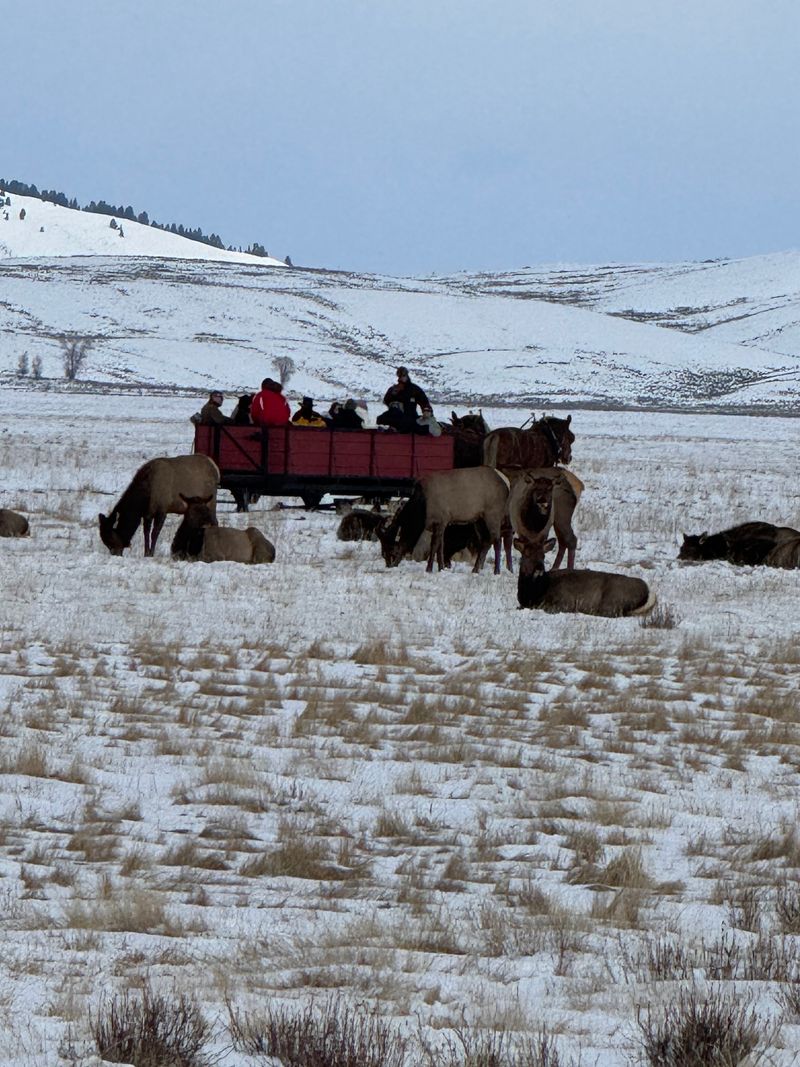
Twenty to thirty feet. That’s how close the sleighs can get to the elk, and it’s a distance most wildlife lovers only dream about.
The animals are used to the sleighs moving through the meadows. That means you can watch them eat, rest, and wander without a long telephoto lens doing all the work.
Bulls with big antlers often grab the spotlight. Cows and younger elk fill in the rest of the scene, spread across the snowy flats like a living painting.
The ride itself lasts about 45 minutes to an hour. Plan on roughly 1.5 hours total once you count check-in and the shuttle trip.
Bring a camera with a full battery, because cold weather drains power fast. A spare battery tucked in an inside pocket stays warmer and lasts longer.
Binoculars aren’t required here, but they’re still handy. They help you spot details like antler shapes, frosty fur, and animals farther across the meadow.
Most of all, take a few minutes to just look. Photos are great, but the sound of the herd and the sleigh bells is worth soaking up too.
Thousands Of Elk Picked This Valley For A Reason
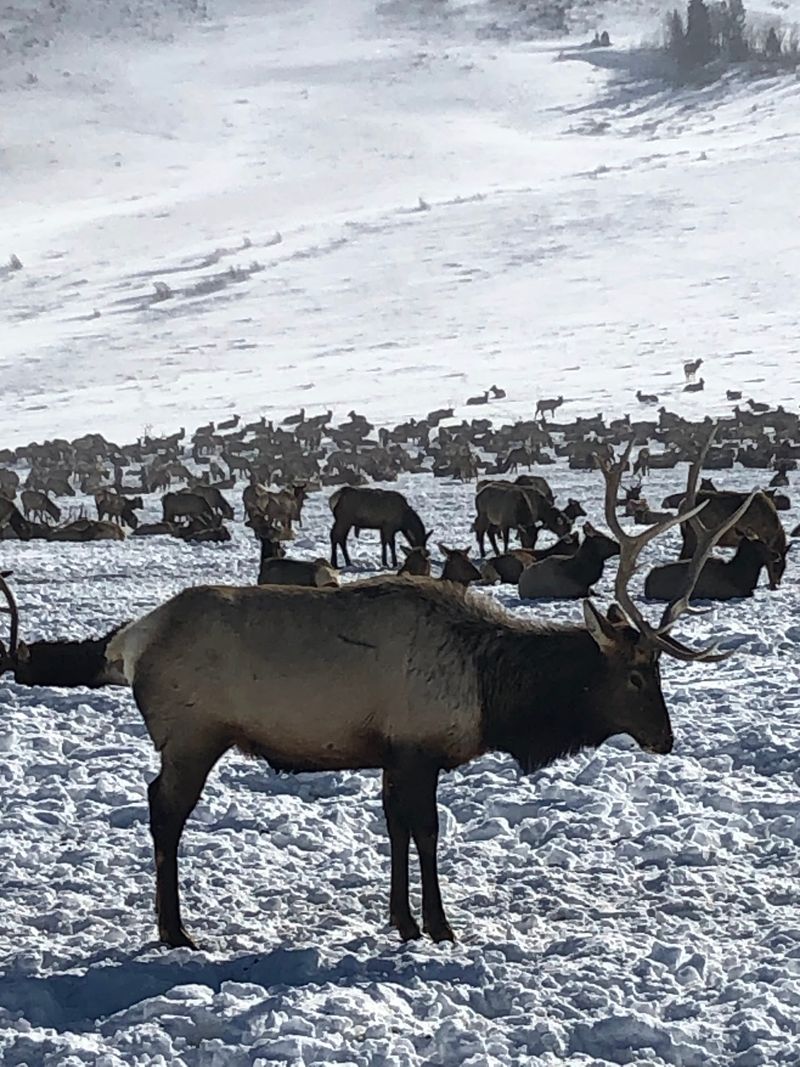
Elk don’t book winter getaways, but they sure act like they do. Every year, an average of about 7,500 elk show up at the National Elk Refuge.
Some make the trek from as far as southern Yellowstone National Park. That journey counts among the longest hoofed-animal migrations in the lower 48 states.
The refuge covers nearly 25,000 acres of meadows, marshes, sagebrush, and rock outcroppings. All of that land gives elk a winter range when the high country gets buried in snow.
Managers actually aim for a smaller herd of around 5,000. Fewer elk in one spot helps keep the land healthy and lowers the risk of disease spreading.
When deep snow covers natural food, the refuge may give the elk supplemental alfalfa pellets. It’s a backup plan, not an all-you-can-eat buffet every day.
Elk are usually visible from mid-December through early April. Come summer, the herd heads back to higher ground, and the meadows get much quieter.
Timing your trip for winter matters a lot. Show up in July and you’ll mostly find grass, birds, and a very patient landscape waiting for its guests.
Keep An Eye Out For Surprise Guest Stars
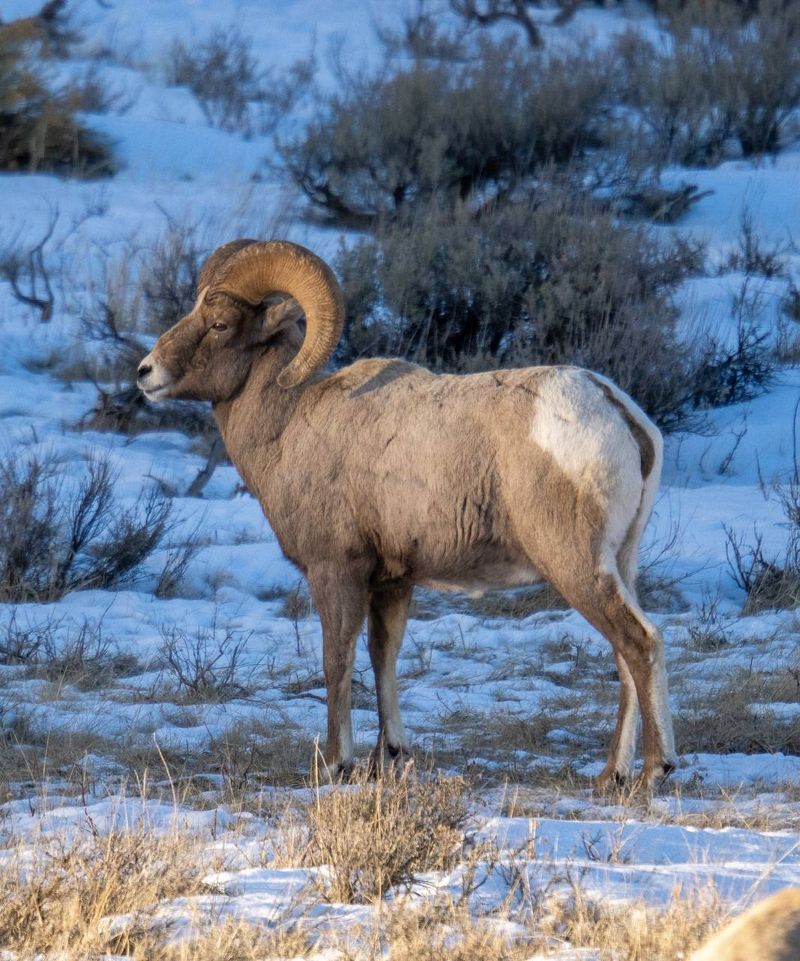
Elk get top billing, but they don’t work alone. The refuge hosts a whole supporting cast that can pop up during your sleigh ride.
Bison sometimes share the winter range, looking like shaggy boulders that occasionally move. Bighorn sheep may appear on rocky slopes, balancing like they’ve got secret grip socks.
Look up, too. Bald eagles and trumpeter swans are among the birds commonly spotted, and the swans’ bright white feathers stand out against the winter scenery.
Coyotes, foxes, and even wolves are possible sightings. None of these are guaranteed, of course, because wild animals keep their own schedules.
Here’s a smart move: ask your sleigh guide what’s been around lately. The drivers know the refuge well and love sharing details about the animals.
Kids can make a game of it by keeping a quick sighting list. One point for an eagle, two for a coyote, and bragging rights for anyone who spots a wolf.
Every ride is a little different because of this. You might go twice and see two completely different shows. That’s part of the fun.
How To Get Your Ticket And Catch The Shuttle
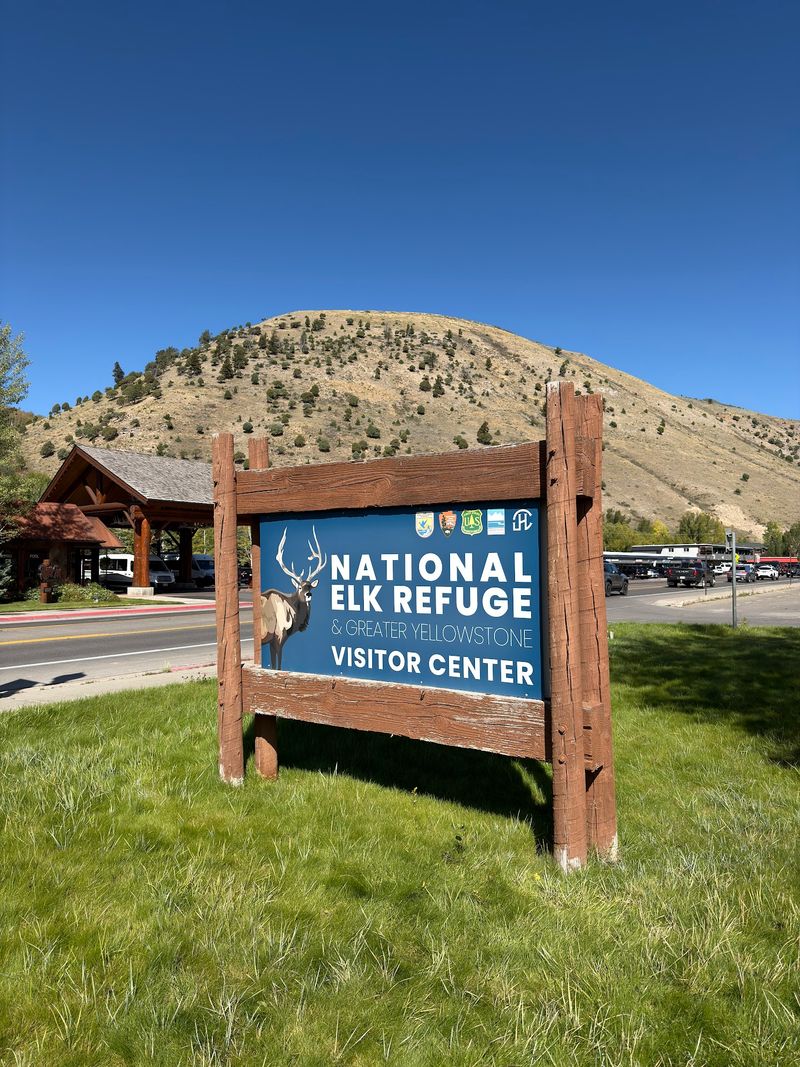
Start at the visitor center parking lot at 532 N Cache Street, Jackson, WY 83001. That’s home base for the whole sleigh ride adventure.
Tickets are sold from a white trailer right in the lot. Online reservations are also available, and they’re strongly recommended for holidays and big groups.
For the 2026-2027 winter, rides are scheduled from December 19 through April 3. They run daily from 10 a.m. to 4 p.m., with Christmas Day off.
Shuttles carry riders from the lot to the sleigh boarding area. They leave about every 20 to 30 minutes, so there’s no need to sprint.
Give yourself a little buffer time anyway. Winter roads, parking, and bathroom breaks have a way of eating minutes when you least expect it.
Groups should plan ahead and book early. Holiday weeks in a popular Wyoming mountain town fill up faster than a hot cocoa line.
Once you’re on the shuttle, the hard part is done. From there, your only real job is staying warm and keeping your eyes open.
Dress Like You Mean It, Because No Blankets Are Provided
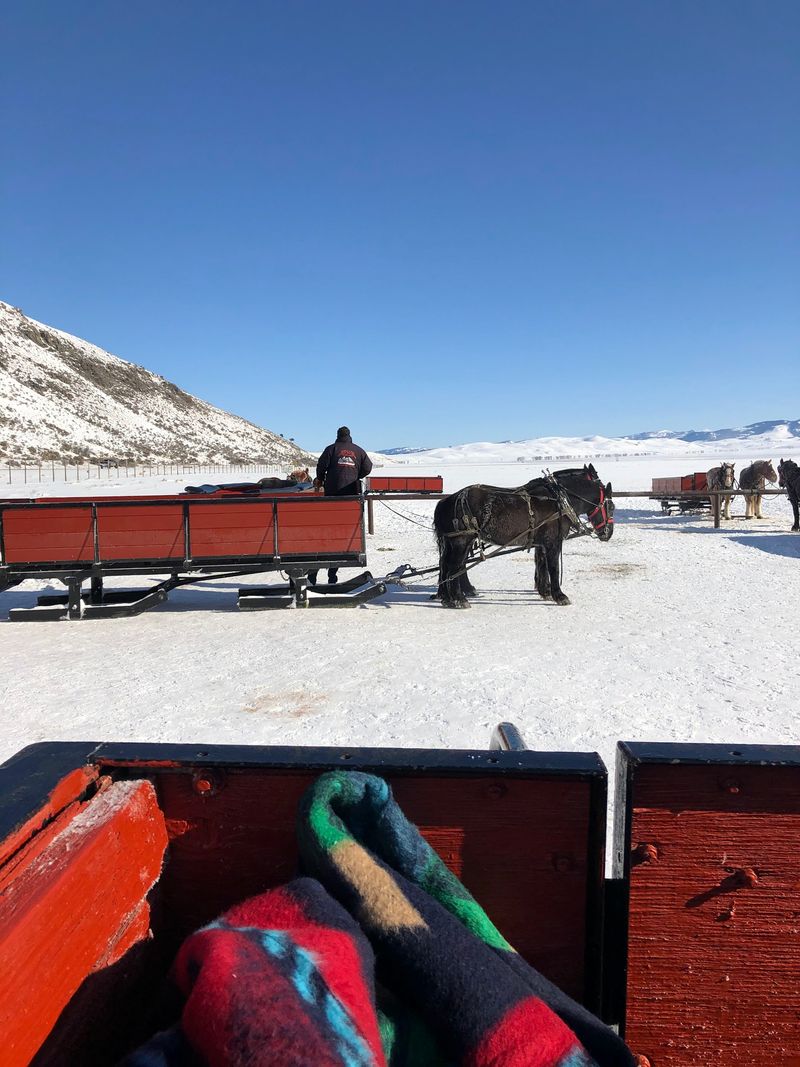
Here’s a detail that matters more than your camera settings. Blankets are not provided or sold for the sleigh ride, so your outfit is your heating system.
An open sleigh in a Wyoming winter means wind, cold air, and no walls. Sitting still for up to an hour makes it feel even chillier.
Layers are your best friend. Start with a warm base layer, add a fleece or sweater, and top it off with a windproof coat.
Don’t forget the small stuff. A hat that covers your ears, thick gloves or mittens, and a scarf or neck gaiter can save the day.
Feet get cold fast, too. Insulated boots and wool socks will keep you from doing the frozen-toe shuffle at the boarding area.
Bringing your own blanket is a great idea. A cozy throw over your lap makes the whole ride feel snug, almost like a rolling living room.
Hand warmers are another easy win. Toss a few in your pockets, and your fingers will thank you every time you pull out your phone.
Warm Up Inside With Dioramas And Expert Help
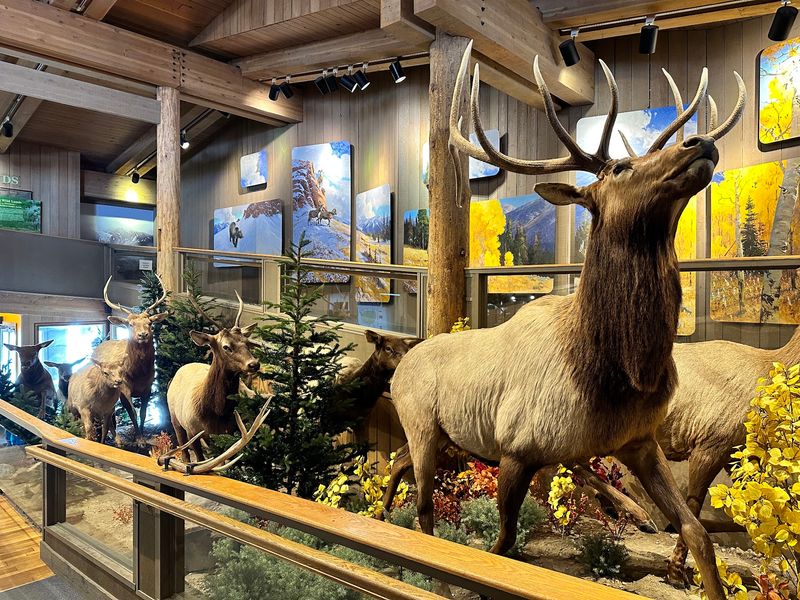
Thawing out has never been this educational. The National Elk Refuge & Greater Yellowstone Visitor Center sits right at the start of your sleigh adventure.
Inside, you’ll find interpretive displays and dioramas about the area’s wildlife, plants, and geology. They cover Jackson Hole, the refuge, and the nearby national parks.
It’s a team effort, too. Partners include Grand Teton National Park, Bridger-Teton National Forest, the Jackson Hole Chamber of Commerce, and Grand Teton Association.
That means one stop can help you plan way more than a sleigh ride. Refuge staff are on-site to answer questions and help shape your visit.
The center is open daily from 9 a.m. to 5 p.m. The visitor center closes on certain holidays, including Thanksgiving and Christmas, so check its schedule before visiting.
Kids especially like seeing animals up close in the displays. It’s a nice warm-up before they meet the real elk out in the snow.
Stopping here before your ride makes the whole experience richer. You’ll board the sleigh already knowing what you’re looking at, which beats nodding along politely.
More Ways To Explore When The Sleigh Ride Ends
Still craving wildlife after the horses head home? Good news, because the National Elk Refuge offers a few other ways to explore.
The refuge itself is open year-round from sunrise to sunset. Visitors can drive the Refuge Road for wildlife watching, which is handy if you prefer a heated car seat.
Go slowly and keep your eyes on the hillsides. Wildlife can show up close to the road, so patience pays off more than speed.
Hiking options on the refuge are limited. Still, it’s worth asking staff what’s open and where you can stretch your legs safely.
Anglers have options in warmer months. Fishing is allowed in places like the Gros Ventre River, Upper Flat Creek, and Lower Flat Creek.
You’ll need a Wyoming fishing license, and annual license holders must also have a conservation stamp.
Those rules help protect the waters and the critters living in them.
Mixing a sleigh ride with a scenic drive makes a full day. Pack snacks, a thermos of something warm, and a sense of curiosity, and you’re set.