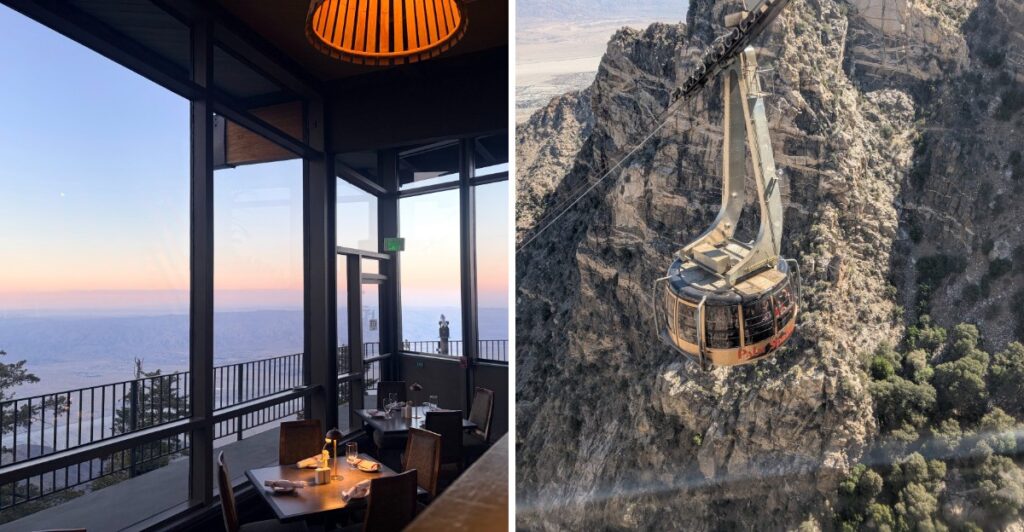
The floor beneath your feet starts turning while your cabin climbs nearly 6,000 feet above the desert. Don’t worry, you’re supposed to be moving in two directions at once.
During the ten-minute ride, the floor makes one or two full rotations, giving everyone a chance to enjoy the view without fighting for a window spot.
And what a change of scenery. You start among desert palms and arrive in a pine forest where temperatures can be 30 to 40 degrees cooler. There might even be snow waiting at the top.
California packs five life zones into one short ride. Imagine leaving the desert and finding snow at the top.
I’d be checking my phone to make sure I hadn’t accidentally booked a flight somewhere.
The Floor Turns, So Every Spot Gets The View
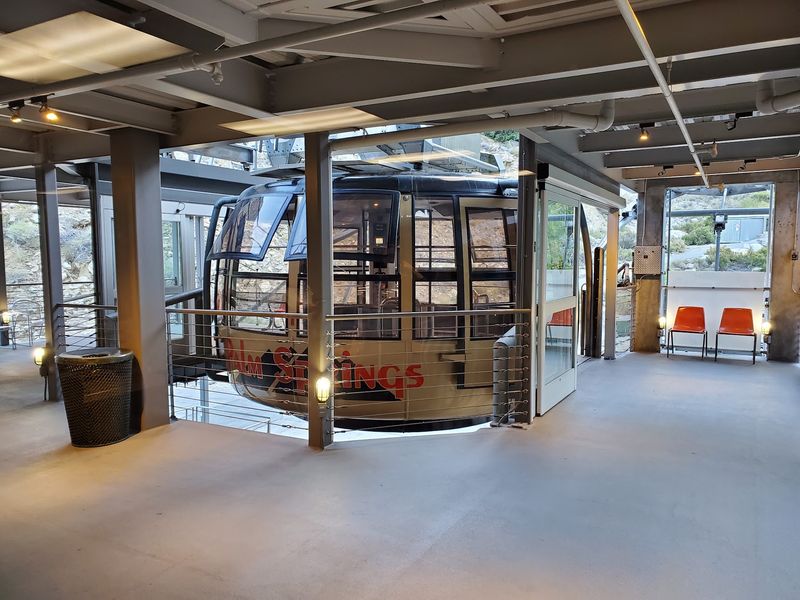
Nobody fights for the window seat here, mostly because there are no seats. The Palm Springs Aerial Tramway runs the largest rotating tramcars in the world, and the floor does the work for you.
Each round car measures 18 feet across.
As it climbs, the floor slowly spins, making one to two full revolutions during the roughly ten-minute trip.
That means you see the desert, the canyon walls, and the mountain ahead without shuffling around. Everyone gets the same 360-degree show, which feels pretty fair to me.
The cabin itself doesn’t spin. Only the floor moves, so the windows stay put while you glide past them.
These cars arrived in September 2000 as part of a major modernization program. They replaced the original cars and became the first rotating models of their kind in North America.
A quick tip helps here. Stand near the windows if you can, since the rotating floor gives you a view in every direction.
Bring your phone fully charged, too. Between the canyon and the valley below, you’ll likely want more photos than you planned. The ride is short, so let your eyes wander as much as your camera does.
Ten Minutes, Nearly 6,000 Feet, And A Brand New Climate
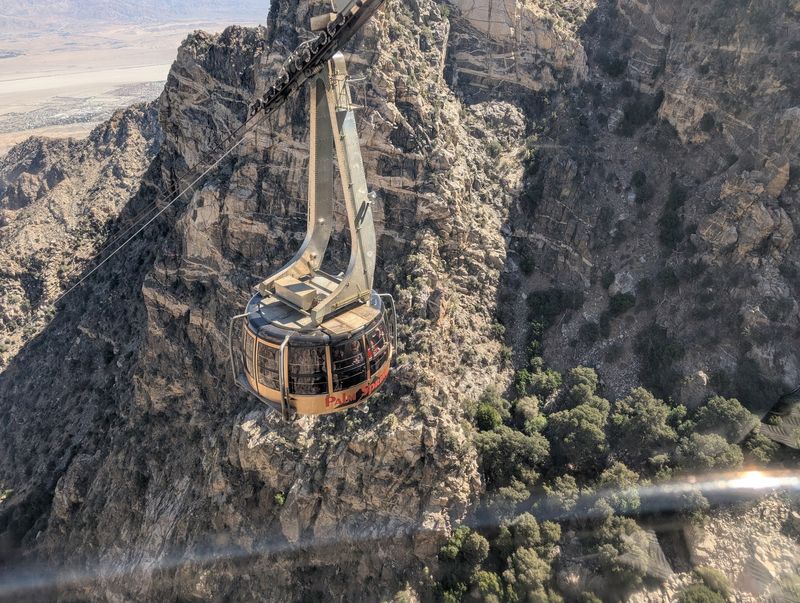
Numbers tell this story best. The Valley Station sits at 2,643 feet, and the Mountain Station tops out at 8,516 feet.
That’s a climb of 5,873 feet in about ten minutes. Most elevators in tall buildings feel slow by comparison.
The route runs up Chino Canyon, one of the steepest canyon routes you’ll find anywhere. Rock walls rise close to the car as the desert drops away behind you.
Along the way, you pass through five distinct life zones. The trip begins in the dry Colorado Desert and finishes in alpine wilderness.
Think of it as a road trip from Mexico to Canada, squeezed into one short ride. Plants change, the light changes, and the scenery feels like a different state by the end.
Your ears may notice the height before your brain does. A little yawn or swallow usually helps with that pressure.
Watch the cliffs as you rise past the towers. The landscape shifts fast, and it’s easy to miss the moment cactus country gives way to pines. Blink too long and you might skip a whole ecosystem.
Pack A Jacket Even When The Valley Is Baking
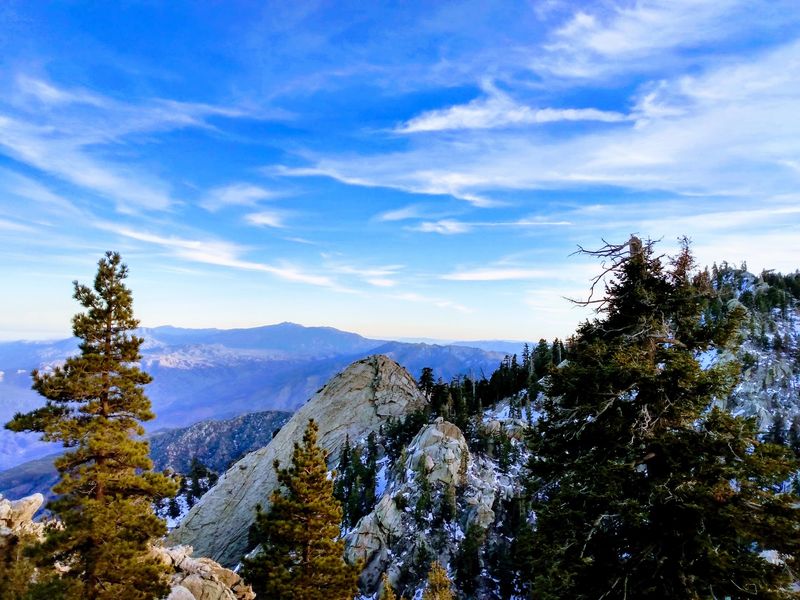
Shorts at the bottom, sweatshirt at the top. That’s the unofficial dress code, and it exists for a good reason.
Temperatures at the Mountain Station typically run 30 to 40 degrees Fahrenheit cooler than the desert floor. On a scorching summer afternoon, that difference feels almost unfair to everyone stuck below.
Winter brings its own surprise. When snow conditions allow, the mountain turns into a snowy playground right above the palm trees.
Snowshoeing and cross-country skiing become options in the colder months. Equipment rentals are often available, so you don’t need to haul gear up the canyon.
Few places in California let you swap desert sunshine for snow this quickly. You can spend the morning by a pool and the afternoon crunching through powder.
Layers are your best friend for this trip. A light jacket, closed-toe shoes, and maybe gloves in winter will keep you comfortable.
Check conditions before you go, especially in snowy months. Mountain weather can change fast, and a little planning beats shivering in a T-shirt at 8,516 feet. Trust me, nobody looks cool while their teeth are chattering.
Over 50 Miles Of Trails Start Right Outside The Door
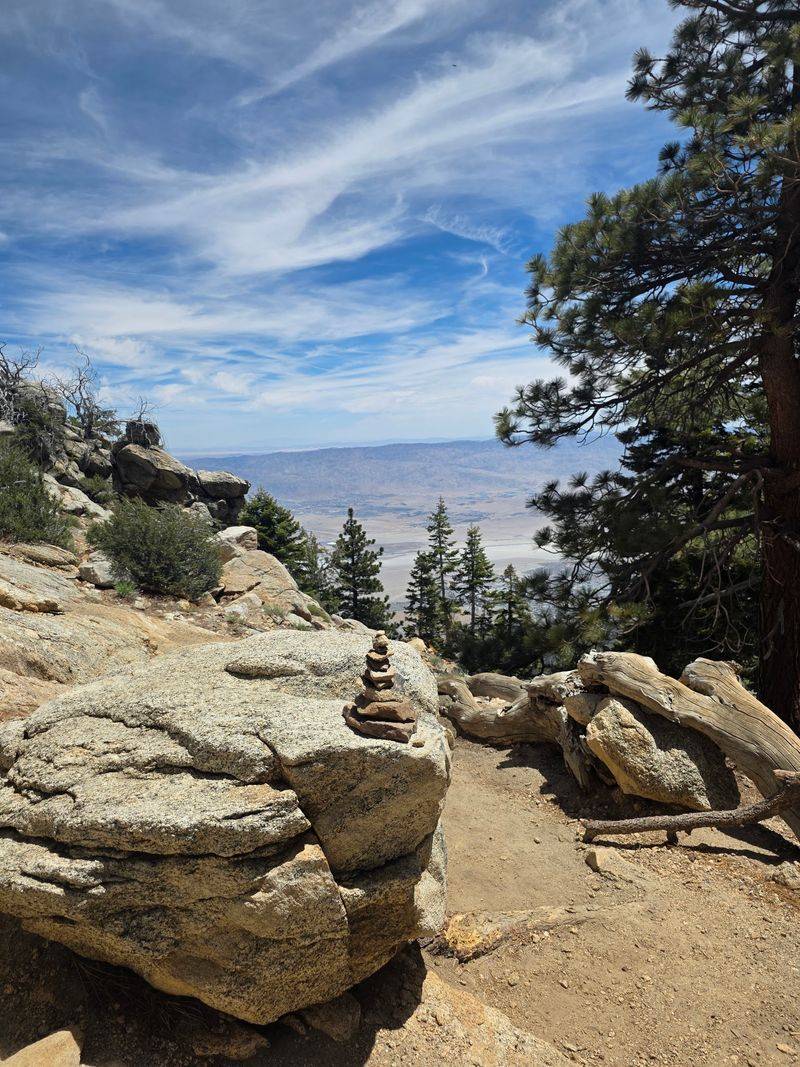
Step outside the Mountain Station and the forest is waiting. More than 50 miles of hiking trails wind through Mount San Jacinto State Park and Wilderness Area.
The trails start from Long Valley, a short walk down from the station. Pine trees, granite boulders, and cool air replace the desert in every direction.
Beginners have an easy option. The Long Valley Discovery Trail is a gentle 0.75-mile loop that suits kids and casual walkers.
Serious hikers can aim much higher. Longer, tougher routes head deeper into the wilderness for anyone craving a real workout.
Day hiking permits are free at the ranger station. Overnight campers need a camping permit, which comes with a small fee per person.
Keep in mind that the trails themselves are not wheelchair accessible. The station and tram cars are, though, so everyone can still enjoy the views.
Wear sturdy shoes, since the ground can be rocky. Bring water, too, because thin mountain air makes you thirsty faster than you’d expect. A snack in your pocket never hurts either.
Your legs will thank you later.
On A Clear Day, The View Reaches Another State
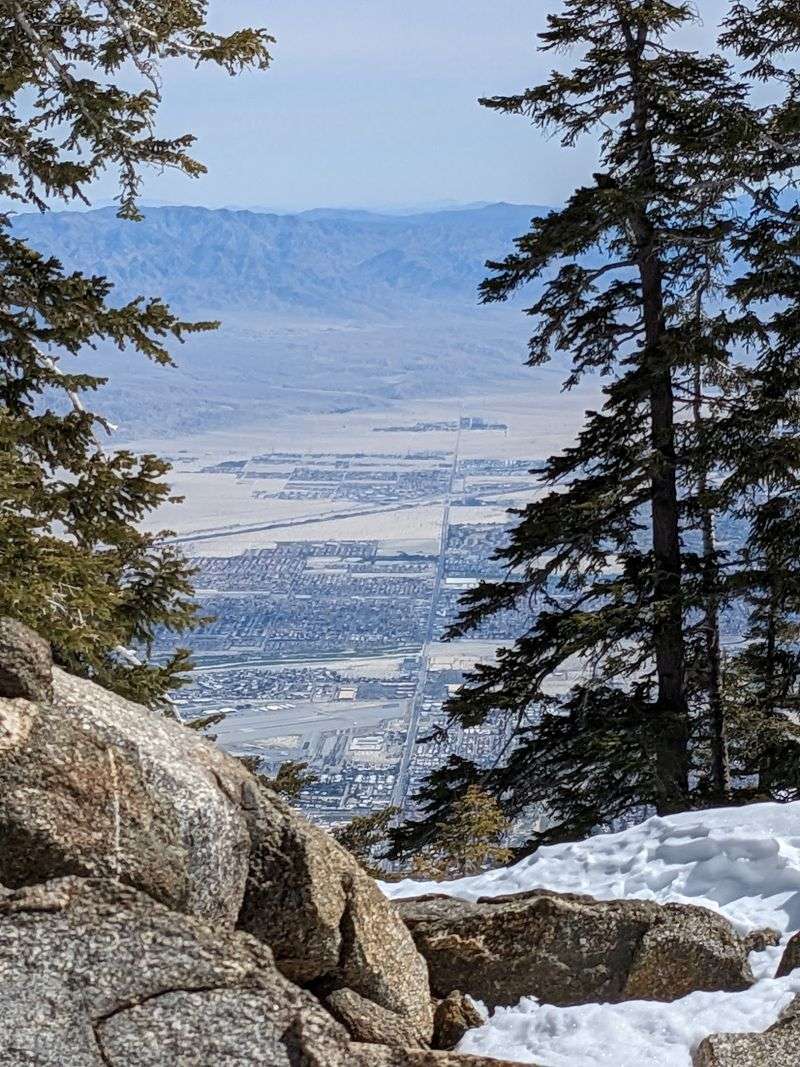
Here’s a fun bragging right: you might spot Nevada from California. On clear days, views from the Mountain Station can stretch more than 200 miles.
That distance can reach all the way to Mount Charleston, north of Las Vegas. It’s a wild thing to see from a mountain you reached in ten minutes.
Closer in, the Coachella Valley spreads out like a giant map. Towns, roads, and desert patterns look tiny from this height.
Several observation decks give you room to take it all in. Each one offers a slightly different angle on the valley and the surrounding peaks.
Sunset makes a strong case for an evening visit. The last tram up currently departs at 8 pm, with the final ride down at 9:30 pm, giving you time to enjoy the sunset and descend after dark.
Watching city lights blink on below is a whole different mood. It turns the trip down into a quiet little show of its own.
Bring binoculars if you own a pair. They make spotting distant landmarks much easier, and they add a nice explorer vibe to the whole outing.
Dinner With A Side Of Mountain Air
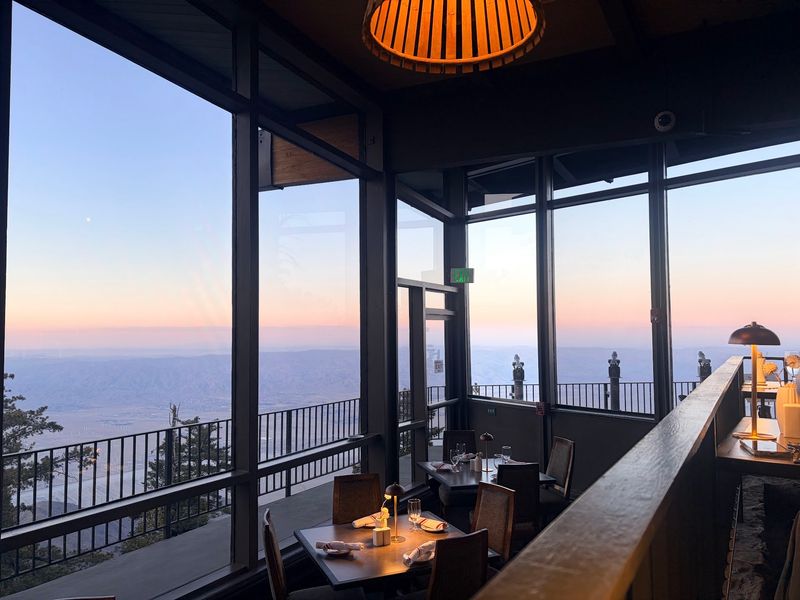
Hungry hikers get two solid choices at the top. The Mountain Station has Peaks Restaurant and Pines Café, and both serve lunch and dinner.
Peaks Restaurant is the fancier option. It offers chef-driven, seasonal menus built around fresh local ingredients.
Reservations are recommended at Peaks, especially if you want a sunset table. Eating dinner at 8,516 feet feels a little like dining on a cloud, only with better seating.
Pines Café keeps things casual. It runs cafeteria-style, which works well for families and anyone eager to get back on the trails.
Both spots save you from packing a full meal up the canyon. That said, many visitors still bring snacks for longer hikes.
Planning a special night out? Pairing the tram ride with a meal turns a quick trip into a full evening.
A mountain dinner followed by a nighttime ride down is hard to top. The valley glitters below, and the whole outing feels like a mini vacation inside a vacation. Not bad for a Tuesday.
Films, Exhibits, And Modern Design Wait At The Summit
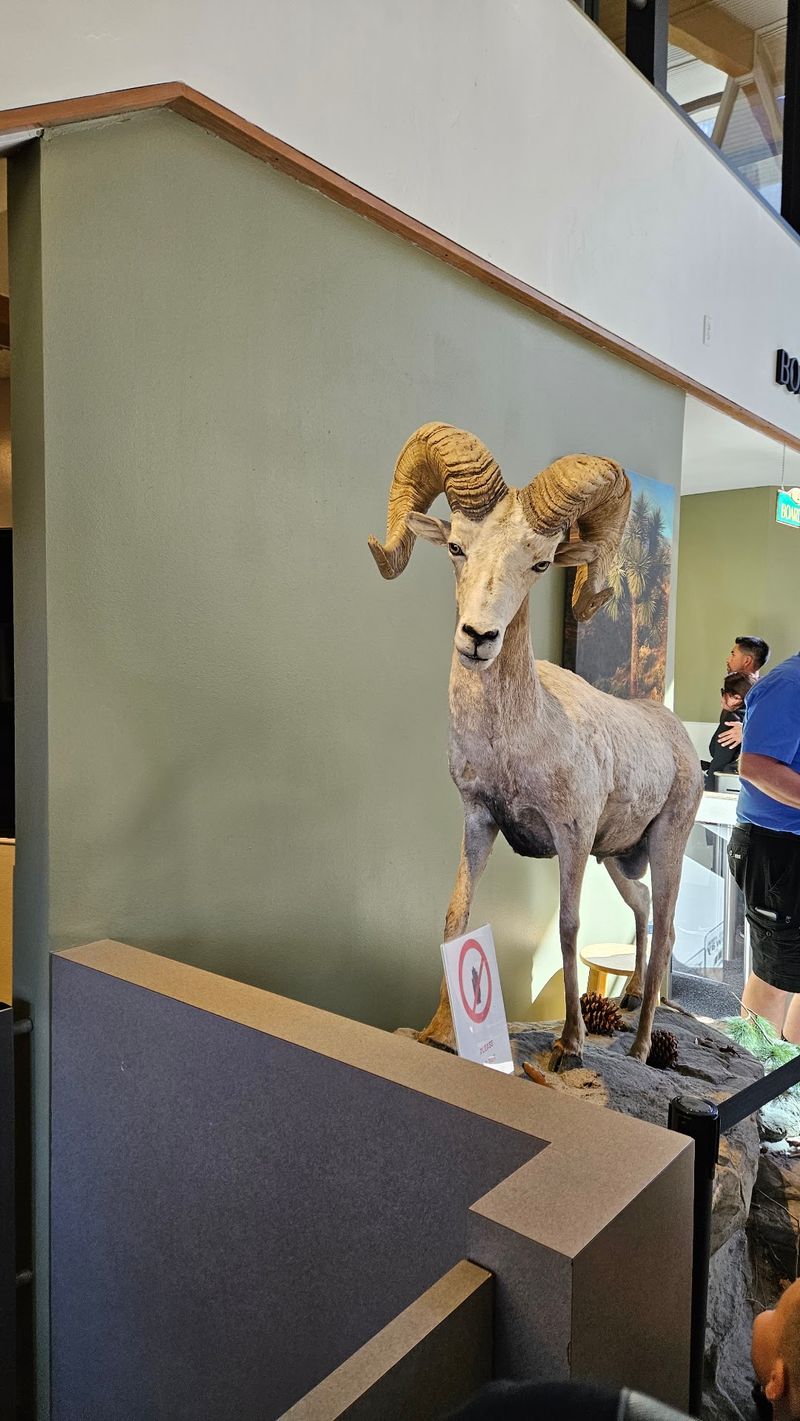
Rainy-day plan or cold-feet backup, the Mountain Station has you covered. It’s more than a drop-off point for hikers.
Inside, a small Natural History Association Museum shares stories about the mountain’s plants, animals, and landscape. It’s a quick, easy way to understand what you’re seeing outside.
Two theaters show documentary films. One topic covers Mount San Jacinto State Park, and another explains how the tram was built.
Watching the construction film after the ride hits differently. Suddenly those towers and cables feel even more impressive.
The building has its own backstory, too. A $13 million renovation from 2019 to early 2023 updated its systems and restored architect E. Stewart Williams’s original vision.
Williams is a big name in Palm Springs design history. Fans of mid-century style will enjoy spotting his touch up here.
A gift shop rounds things out for souvenir hunters. Clean flush restrooms are available, which matters more than anyone admits after a long hike. The station is also wheelchair accessible, so everyone can explore indoors comfortably.
Smart Timing Makes The Whole Trip Smoother
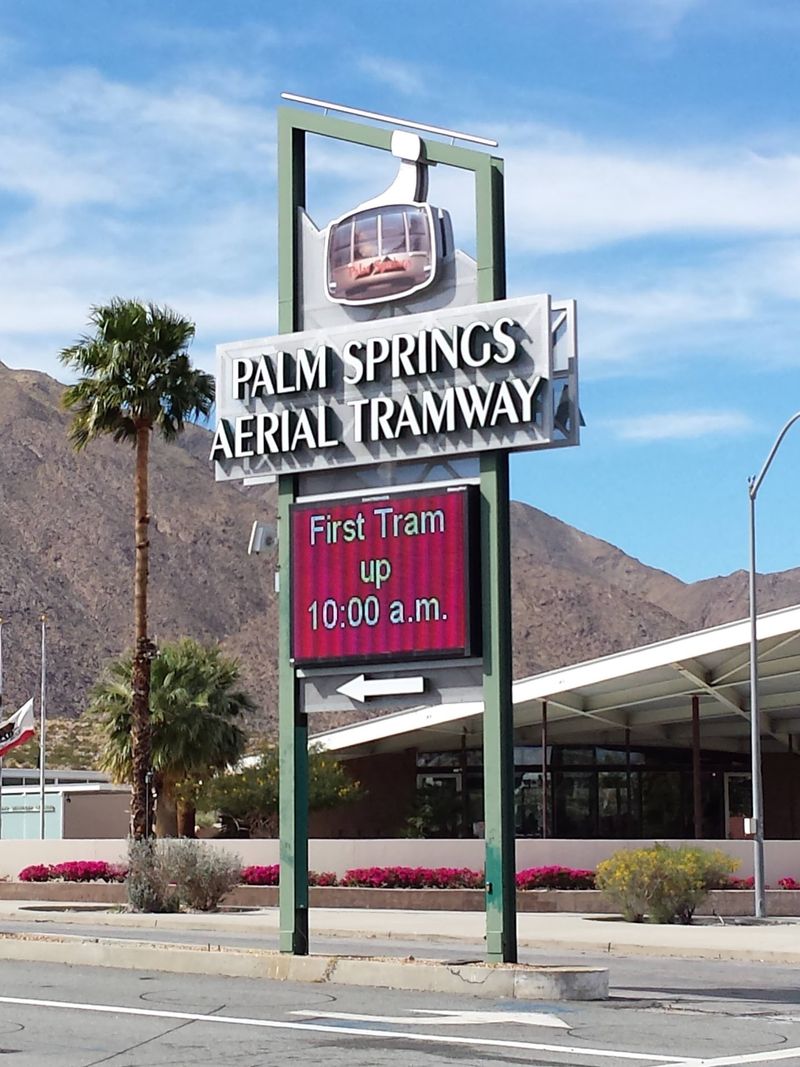
Getting there is half the fun, but planning is the other half. The Valley Station sits at 1 Tram Way, Palm Springs, CA 92262, at the base of Chino Canyon.
On regular weekdays, the first tram departs at 10 am and the last tram up leaves at 8 pm, with the final descent at 9:30 pm.
On Saturdays and Sundays, the first rides start earlier at 8 am.
Arriving early is a smart move, especially on weekends. You’ll have more time at the top before the day slips away.
Keep an eye out for maintenance closures. The tramway does schedule occasional closures, so check before you leave home.
Families with little ones get a nice perk. Children under two ride free, though they still need a same-day boarding pass.
Accessibility is strong here. The Valley Station, tram cars, and Mountain Station are all wheelchair accessible and ADA compliant.
Plan a ride home ahead of time, too, since mountain cell signal can be spotty. With a little prep, the Palm Springs Aerial Tramway becomes an easy, unforgettable California day. Desert palms in the morning, pine forest by lunch.
Hard to beat that combo.