Bleached tree skeletons lie scattered across the sand like the bones of giants. The sun and salt water stripped away their bark long ago.
Now they look carved, smooth, and almost unreal.
Those trees once grew on top of bluffs that stand 20 to 30 feet tall. Erosion slowly pulled the ground out from under them.
Those bleached oaks and cedars give Boneyard Beach its name.
I love that getting there takes a little effort. A short trail winds through a shady coastal forest before the view finally opens up.
I believe that slow reveal makes the payoff feel earned.
Florida has plenty of beaches built for umbrellas and snack bars. This one is built for wandering, staring, and taking way too many photos.
So who’s ready to meet a beach that never got the memo about time?
The Trail Starts Where The Picnic Tables End
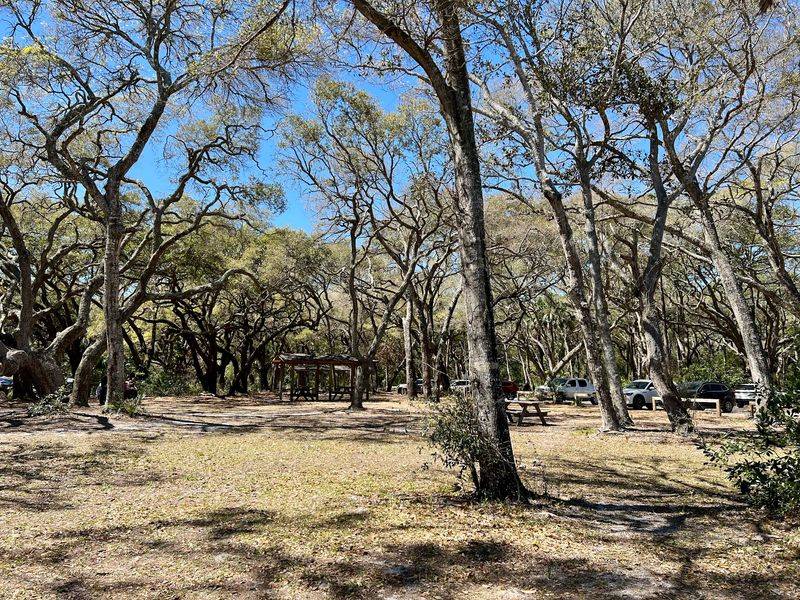
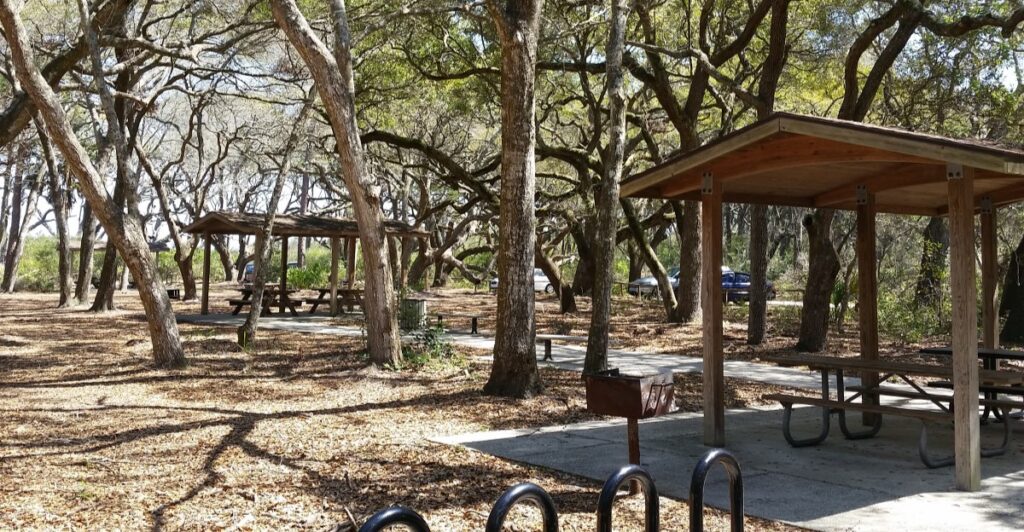
Your adventure begins at The Bluffs Picnic Area inside Big Talbot Island State Park. From there, the Shoreline Trail heads off toward one of the strangest beaches in the state.
From The Bluffs, the Shoreline Trail runs about half a mile each way to Boneyard Beach. Allow roughly a mile round trip, plus any time you spend exploring the shoreline.
Along the way, the trail passes through maritime hammock. That’s a fancy name for a coastal forest shaped by salty wind and sandy soil.
Shade from the trees makes the walk pleasant on warm days. Still, the beach waits at the end, and that thought keeps your feet moving.
Informational signs appear along the route with reminders about tides and park rules. Reading them takes a minute and can save you a soggy surprise later.
Big Talbot Island State Park sits in Jacksonville, but this stretch feels far from city life. The quiet starts the moment you leave the parking area behind.
Leave The Flip-Flops In The Car, Seriously
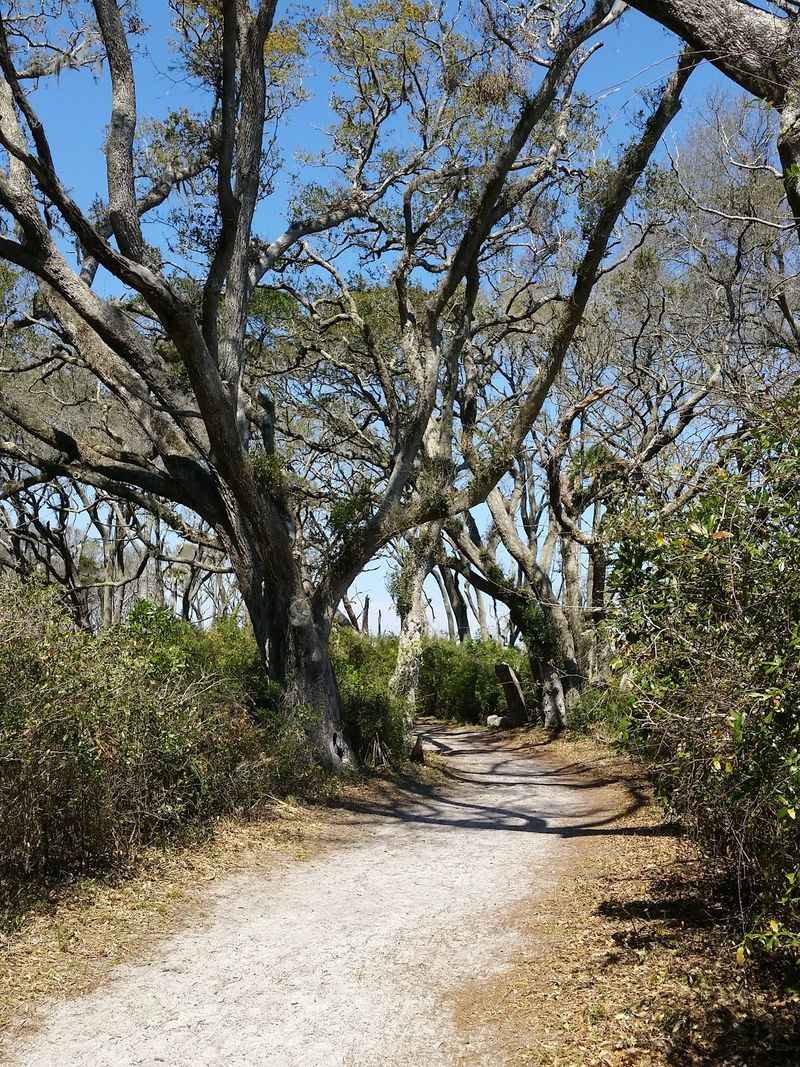
Roots love to sneak across this path. Add uneven ground and soft sand, and flimsy sandals quickly become a bad idea.
Sturdy shoes are the smarter pick for the Shoreline Trail. Your ankles will thank you, and so will your pride.
Once you reach the beach, the footing gets trickier in a different way. Branches and roots poke out of the sand near the waterline.
Some of those snags hide under the water where you can’t see them. That’s a solid reason to watch every step near the surf.
Water shoes can work well if you plan to explore the edges. Just make sure they have decent grip for slippery wood and wet sand.
Pack water too, especially during Florida’s warmer months. The trail has shade, but the open beach can get bright and toasty.
A small backpack keeps your hands free for balance and photos. Think snacks, sunscreen, a hat, and maybe a towel for sandy feet.
None of this requires fancy gear or expert skills. A little planning simply turns a good walk into a comfortable one.
Those Bluffs Offer A View Worth Pausing For
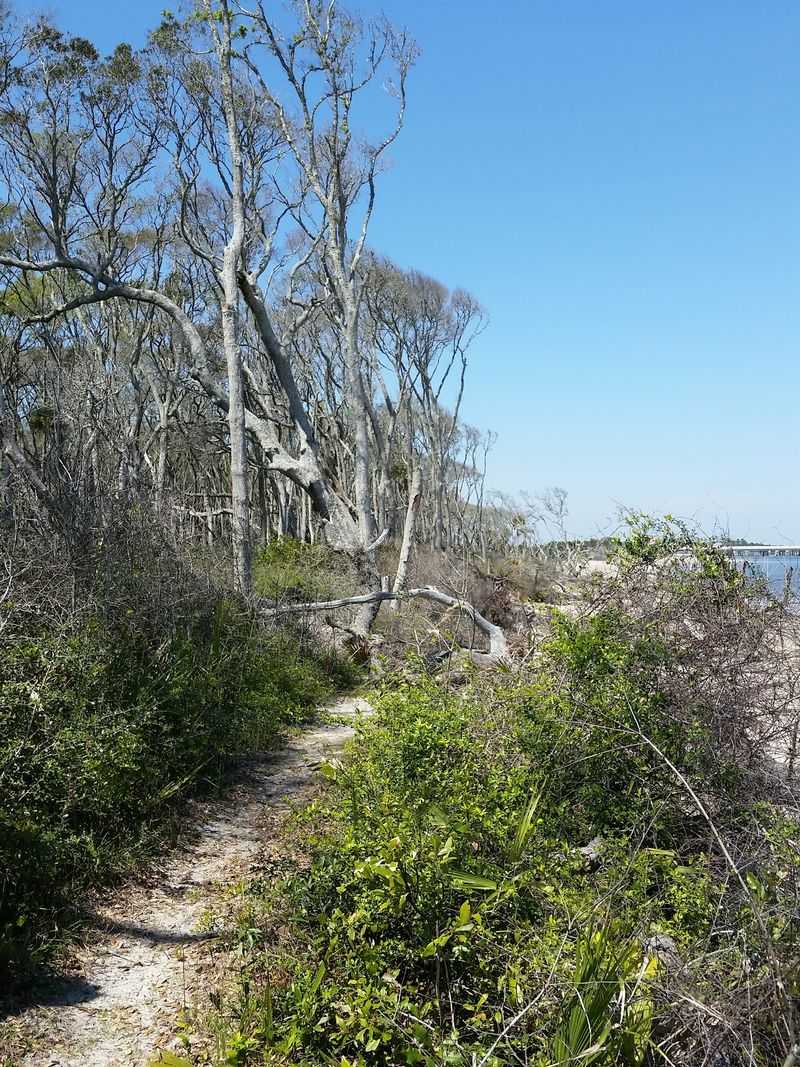
Few Florida beaches come with cliffs. Here, bluffs rising 20 to 30 feet line the shore and give the trail its name.
Parts of the Shoreline Trail run along the top of these bluffs. From up there, you can look out over Nassau Sound.
The water stretches wide, and the beach below starts to show its character. Twisted gray trunks dot the sand like a puzzle waiting for you.
These bluffs also tell the story of the whole beach. Erosion keeps eating away at them, a little at a time.
As the ground slips, trees perched near the edge lose their footing. Eventually they topple onto the beach below.
That means the view you see is never quite permanent. The coastline keeps shifting, so each trip can look a bit different.
Stay back from crumbling edges, though. Loose sand and steep drops don’t mix well with selfies.
A quick stop at an overlook is worth it before heading down. Seeing the scene from above makes the walk on the sand even more satisfying.
Bleached Trees Turn The Shore Into An Outdoor Gallery
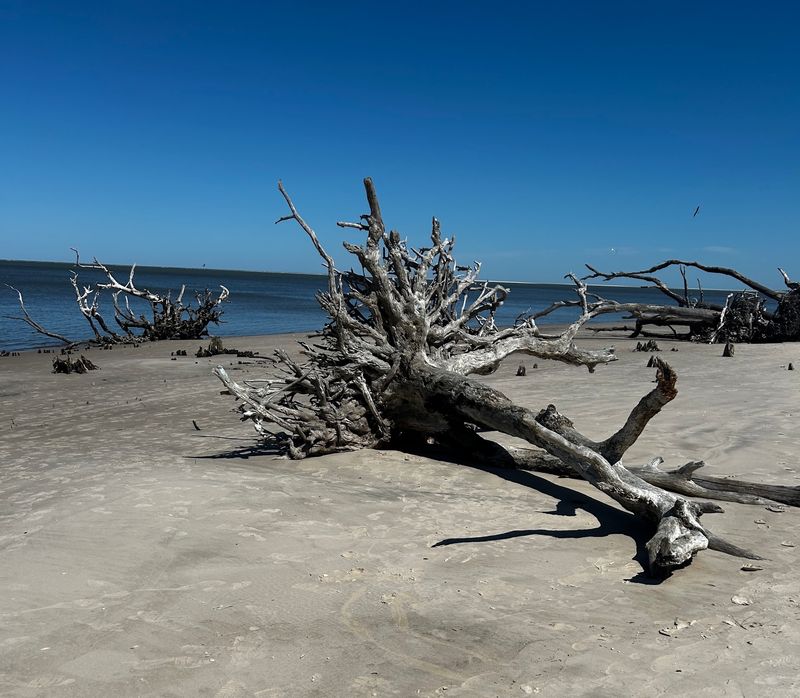
Live oaks and cedars once grew tall near this coastline. Now their sun-bleached remains sprawl across Boneyard Beach in wild, twisting shapes.
Salt water and sunshine did the sculpting. Over time, the bark wore away and the wood turned smooth and pale.
The result looks a lot like scattered bones, which explains the spooky name. Some folks call it a prehistoric graveyard, and honestly, that fits.
Here’s the clever twist. The fallen trees actually help protect the coast by breaking up wind and wave energy.
That slows down erosion, even though erosion is what knocked them over. Nature apparently enjoys a good plot twist.
Historical accounts suggest this coast was densely forested less than 200 years ago. Imagining that thick forest makes today’s open, driftwood-covered shore feel even more striking.
Every trunk has its own pose. Some lie flat, some reach upward, and some arch like frozen dancers.
Walking among them feels like strolling through a museum without walls. The best part is that the exhibit changes with every storm and tide.
Check The Tide Chart Before You Lace Up
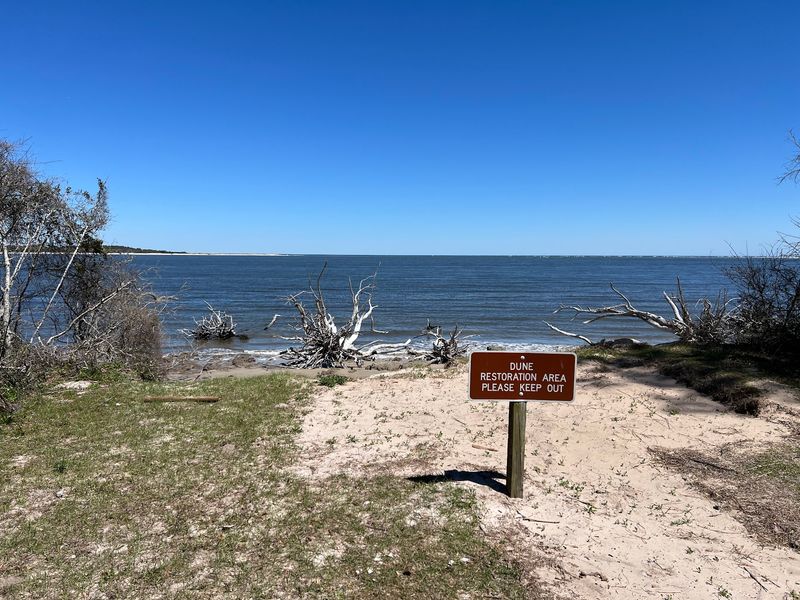
Timing matters more here than at most beaches. Low tide is the best time to explore Boneyard Beach.
When the water rises, some areas become hard or impossible to reach. Nobody wants to wade back around a driftwood maze.
A quick look at a tide chart before leaving home solves that problem. It takes thirty seconds and saves a lot of guesswork.
Low tide also reveals more of the beach’s hidden details. Tidal pools form among the sand and roots, inviting a closer look.
Those little pools are fun for curious kids and grown-ups alike. Just look gently and leave everything as you found it.
The park opens at 8 a.m. and stays open until sundown every day. That gives you plenty of room to match your visit with the tides.
Planning around both the tide and daylight takes a little effort. Yet it makes the difference between a rushed visit and a relaxed one.
Think of the ocean as the boss here. Show up on its schedule, and the beach rewards you generously.
Bring A Camera, Skip The Swimsuit
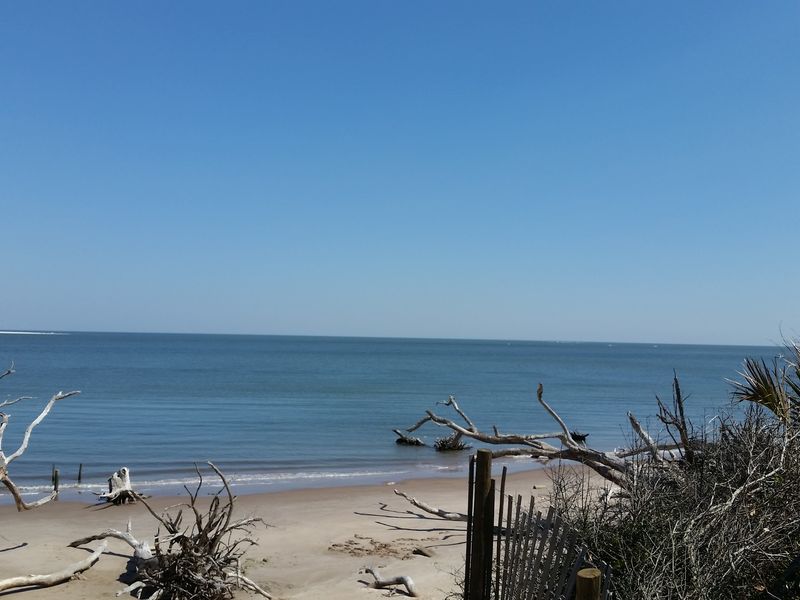
Photographers adore this place for good reason. Sunrise and sunset light pours over the driftwood and highlights every crack and curve.
Those textures pop in soft morning or evening glow. Even a phone camera can capture something frame-worthy.
Swimming, however, isn’t recommended here. Strong currents, submerged trees, and marine wildlife make the water risky.
There are no lifeguards on duty either. So this beach works best as a walking and wandering spot, not a splashing one.
That actually changes the whole mood in a nice way. Without crowds of swimmers, the shore feels calm and wild.
Try shooting from low angles to make the trunks look massive. Wider shots show how the trees spread across the sand.
Patience pays off too. Waiting a few minutes for the light to shift can transform an ordinary photo into a favorite.
Big Talbot Island State Park gives you a ready-made set. All you need to do is show up, slow down, and keep your lens clean.
Every Piece Of Driftwood Stays Right Where It Is
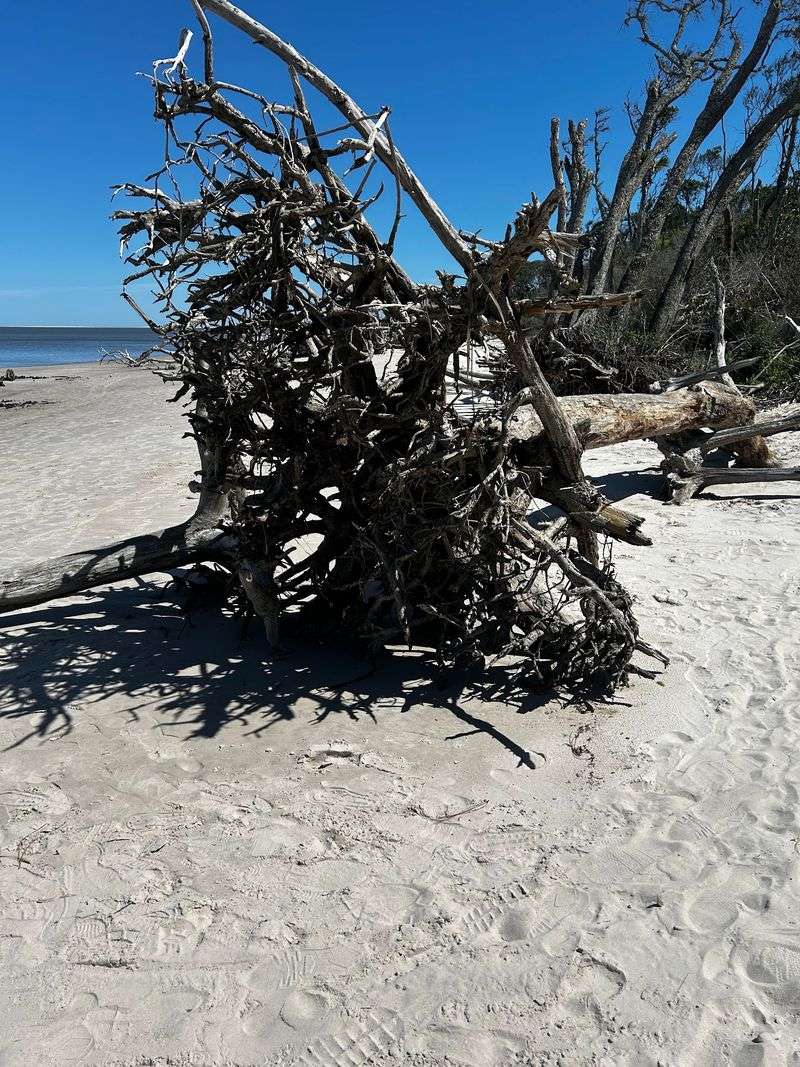
Tempting souvenirs lie everywhere on this beach. Still, collecting driftwood is not allowed at Big Talbot Island State Park.
These weathered trees count as a protected natural feature of the park. Taking even a small piece chips away at what makes the place special.
Signs also remind visitors not to dig or remove artifacts from state property. The rule keeps the beach wild for the next person.
Photos make better keepsakes anyway. They don’t get sand in your car or take up shelf space.
The park follows a light-touch approach to management. That means a natural setting with very few developed extras.
Respecting that style helps the beach stay the way it feels right now. Pack out your trash and leave the scenery untouched.
The Timucua lived on the islands before European settlement. The Talbot Islands were later named for Charles, Baron Talbot, who served as England’s lord high chancellor.
Whether the pirate story is true or not, the lesson is clear. The real treasure here is the beach itself, so leave it in place.
Pack A Lunch For The Pavilions Back At The Start
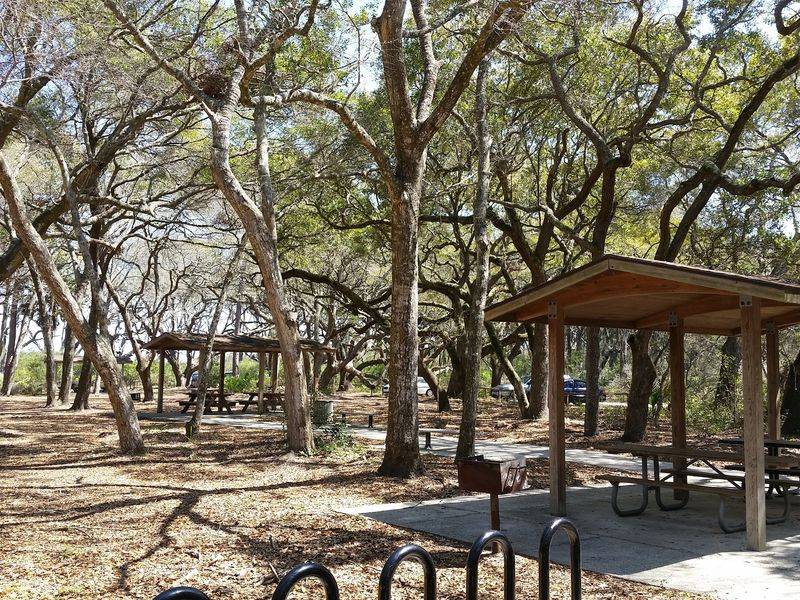
Hungry hikers have a great spot waiting at the trailhead. The Bluffs Picnic Area offers covered pavilions with tables and grills.
Those pavilions overlook the water, so lunch comes with a view. It’s hard to complain about a sandwich in a setting like that.
Restrooms are available at The Bluffs too. That’s handy news before or after the walk to the beach.
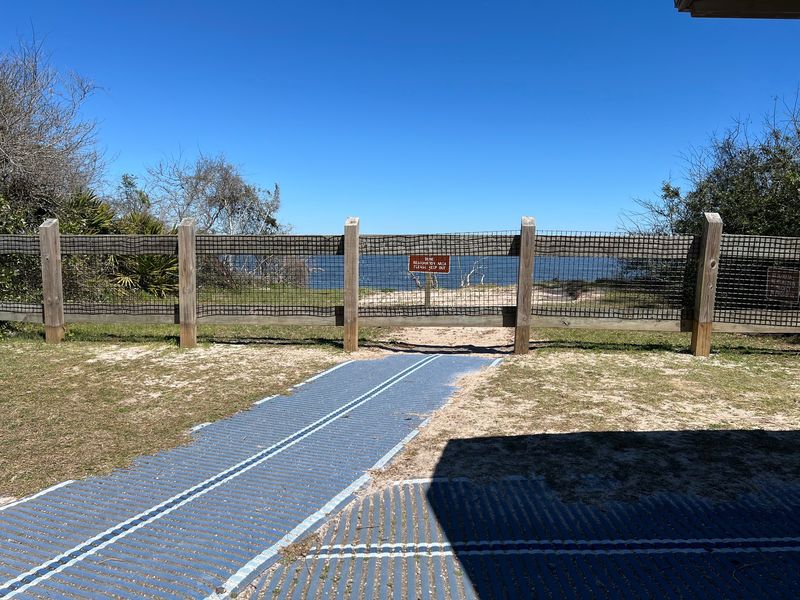
Accessibility gets some attention here as well. A Mobi-Mat helps with platform access, and the area connects to the paved Timucuan pathway.
You’ll find this picnic area along State Road A1A North, Jacksonville, FL 32226. The drive there is part of the fun, with trees and marsh lining the road.
The entrance fee at The Bluffs is $3 per vehicle. Scan the posted QR code to pay online.
Planning a meal here turns a quick hike into a half-day outing. Grill something simple, rest your legs, and swap favorite photos.
After all that wandering among ancient-looking trees, a shady table feels like a reward. You earned it.
Keep Exploring Because The Island Has More Tricks
Wildlife fans should keep their eyes up and out. Ospreys, pelicans, cormorants, bald eagles, and owls all appear around this park.
On the ground, watch for white-tailed deer, raccoons, and gopher tortoises. Manatees and alligators live in the area too.
The park covers salt marsh, maritime hammock, bluff shoreline, and tidal pools. That variety makes it a favorite for bird-watching and nature study.
Cyclists can ride the paved Timucuan Trail, which runs alongside A1A. It’s part of the East Coast Greenway, a much longer route.
Hikers have other choices beyond the Shoreline Trail. The Blackrock Trail leads to a beach with dark rock formations made of compressed peat and sand.
Paddlers can launch their own kayaks or canoes at Sawpit Creek. PADL offers kayak and paddleboard rentals between Big Talbot and Little Talbot islands.
Book ahead for a guided kayak tour.
Big Talbot Island State Park belongs to the larger Timucuan Ecological and Historic Preserve. That means there’s even more Florida wilderness waiting nearby.
One trip might start at Boneyard Beach. Chances are good it won’t be your last.