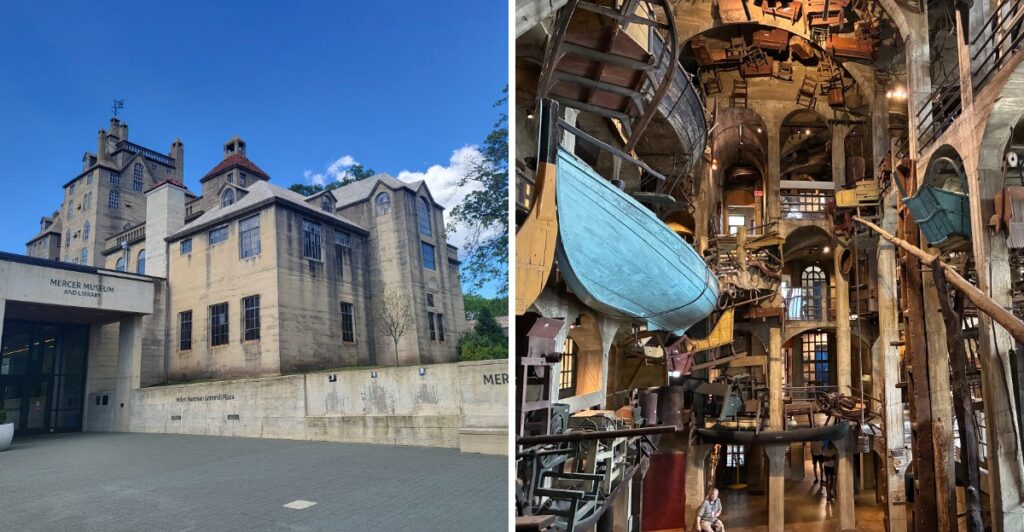
A fire engine hanging from a balcony? Yes, an actual fire engine. In this Pennsylvania museum, the floor is for walking.
Everything else seems negotiable.
The man behind it collected more than 17,000 artifacts from over 60 early American trades. When he ran out of ordinary places to put things, he started hanging them overhead. Suddenly, that crowded garage at home doesn’t seem so ambitious.
The museum rises seven floors inside a concrete castle, with old wagons, tools, and other inventions appearing in places you’d never expect.
There was a reason for all this. The founder wanted to preserve everyday craftsmanship before machines made it disappear.
And he certainly took the assignment seriously.
I just want to know how the fire engine got up there. More importantly, who’s volunteering to dust it?
One Collector Saw Value Where Everyone Else Saw Junk
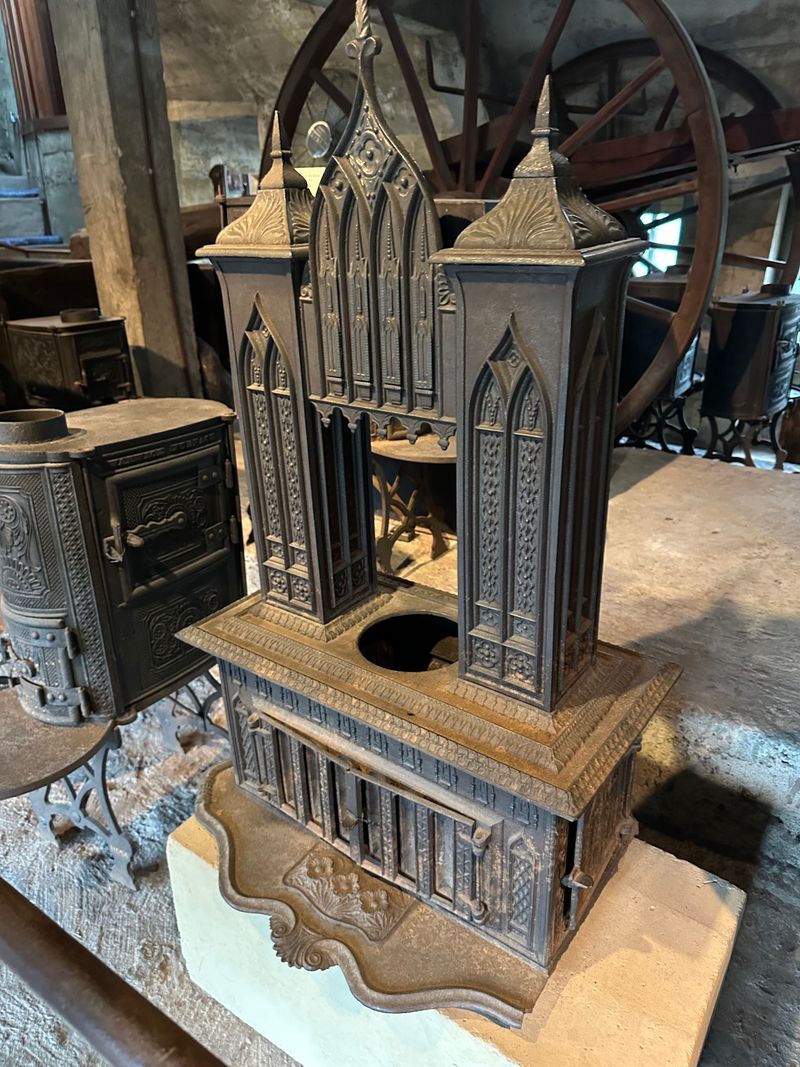
Henry Chapman Mercer was an archaeologist, tile maker, and collector with a very unusual hunch. He believed everyday hand tools told the real story of American life.
Around the late 1800s, factories were replacing old crafts fast. Mercer started gathering axes, looms, spinning wheels, and kitchen gadgets before they vanished into scrap piles.
Plenty of neighbors probably thought he was just buying old junk. He kept going anyway, and the pile grew into a national treasure.
The Mercer Museum is the result of that stubborn idea. Completed in 1916, it was built to show off his collection in a way no ordinary gallery could.
Today, the museum is run by the Bucks County Historical Society, which Mercer supported for years. His core collection includes more than 17,000 objects from over 60 pre-industrial trades.
That number sounds big on paper. It feels even bigger once you start looking up and realize the displays keep going.
Knowing the backstory makes the visit richer. Each worn handle and patched bucket becomes proof that one curious man refused to let ordinary history quietly disappear.
Yes, The Whole Castle Is Made Of Poured Concrete
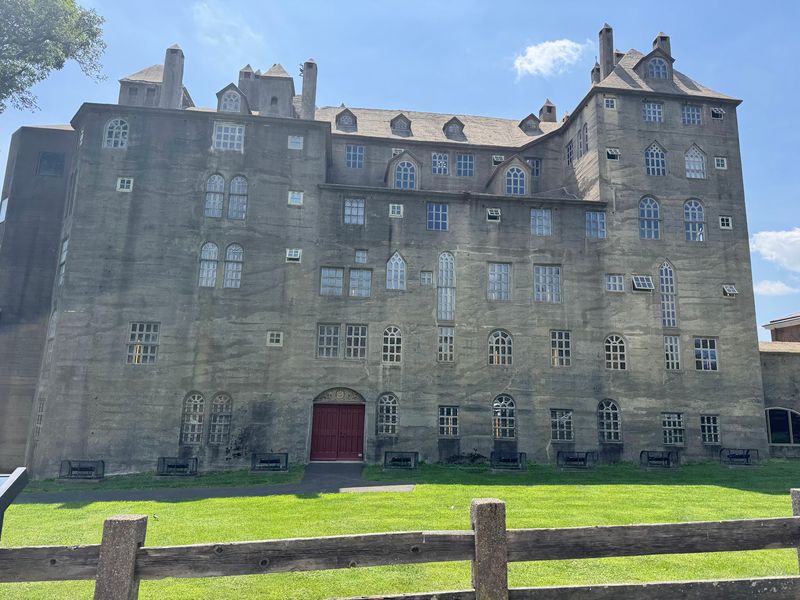
Castles usually mean stone blocks and drawbridges. Mercer chose reinforced concrete instead, which was a bold building material for a museum in the early 1900s.
He designed the structure himself and had it built with hand-mixed concrete. The towers, turrets, and odd rooflines give it a fairytale look with a serious industrial backbone.
Why concrete? Mercer wanted a fireproof home for his collection. After all that hunting for rare objects, losing them to flames was not part of the plan.
The building is now a National Historic Landmark. That status honors both its daring design and the treasures packed inside its thick gray walls.
From the outside, it looks like something a wizard might rent in Pennsylvania. Inside, the concrete shapes create balconies, nooks, and staircases that feel built for wandering.
Take a moment on the lawn before heading in. The castle’s jagged silhouette is worth a slow look and a few photos.
It also helps you appreciate the scale. Few buildings this quirky were made to last this long, and this one has handled the job well.
Look Up, Because The Best Stuff Is Overhead
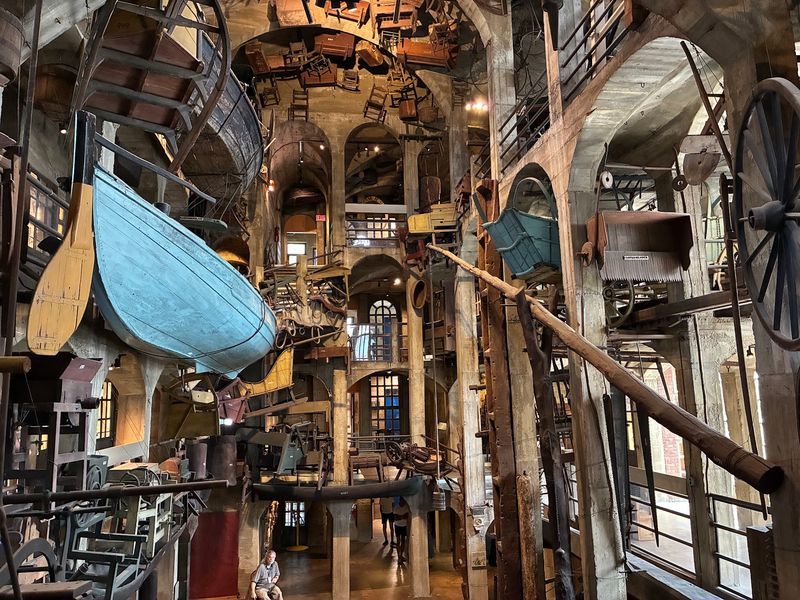
Most museums tell you not to touch anything. This one practically dares you to keep your chin pointed at the ceiling.
The famous Central Court rises seven floors high. Wagons, a whaleboat, chairs, and a fire engine appear suspended in the air above visitors.
Mercer placed some of the largest objects in this open space on purpose. The arrangement lets you see huge pieces from many angles as you climb.
Each balcony level gives a new view of the same airborne crowd. A cradle that looked tiny from the ground suddenly seems close enough to rock.
That vertical display is the reason the Mercer Museum feels so different. It is less like a quiet gallery and more like a giant three-dimensional scrapbook.
Bring a phone with plenty of storage space. The shots from upper balconies looking down are some of the most striking in the building.
Move slowly through this part. Objects hide in corners and behind railings, so a second look often reveals something you missed the first time around.
Sixty Trades Are Packed Into Little Rooms
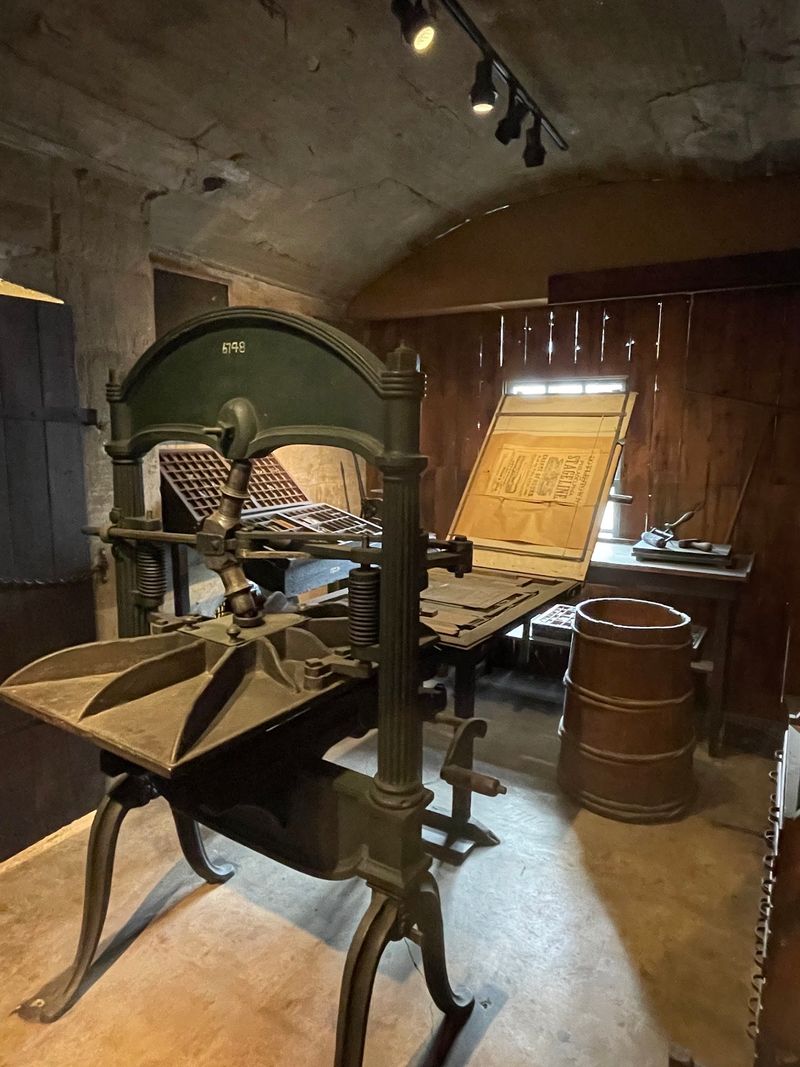
Beyond the Central Court, the museum breaks into small rooms and alcoves. Many focus on a single trade, which makes the huge collection easier to explore.
You can find tools tied to woodworking, blacksmithing, farming, and leather work. Other spaces show how people pressed fruit, made textiles, or kept a household running.
Each room feels like peeking into an old workshop. The tools are grouped so you can compare shapes and guess how they were used.
Here’s a fun challenge for families. Try to guess what a strange gadget did before reading the label.
Spoiler: you will guess wrong at least once. Some of these tools look like medieval puzzles, even when their actual job was something simple.
Labels explain names and uses clearly. That helps make sense of objects that rarely appear in modern kitchens or garages.
The best part is seeing how much skill everyday people needed. Before factories, someone made almost everything by hand, and those hands needed the right tools.
Outlaws Of The Revolution Get The Spotlight
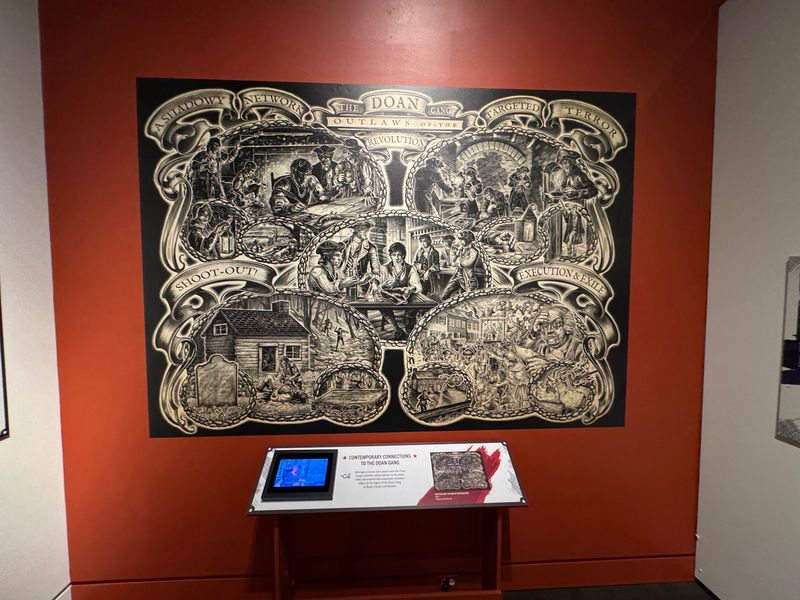
Bucks County had its own band of colonial outlaws. The Doan Gang were brothers and cousins who robbed and spied during the American Revolution.
The Mercer Museum tells their story in a major exhibition. It opened in 2024 and has been extended, linking to the Bucks 250 celebration of the nation’s anniversary.
The exhibit uses staged artifact groupings, lighting, and interactive elements. It brings a messy, surprising chapter of local history to life.
The Doans were Loyalists, which made them unpopular with many neighbors. Their tale mixes daring escapes, stolen tax money, and divided loyalties in a single county.
It’s a smart pairing with the main collection. The tools show daily life, while the Doan story shows how tense that life could get.
Special exhibitions change over time, so check what’s showing before your trip. Exhibits like this one tend to rotate in the modern wing.
Plan extra time if this story grabs you. Between the castle and the outlaws, an afternoon disappears quickly.
Kids Get A Wild Space Of Their Own
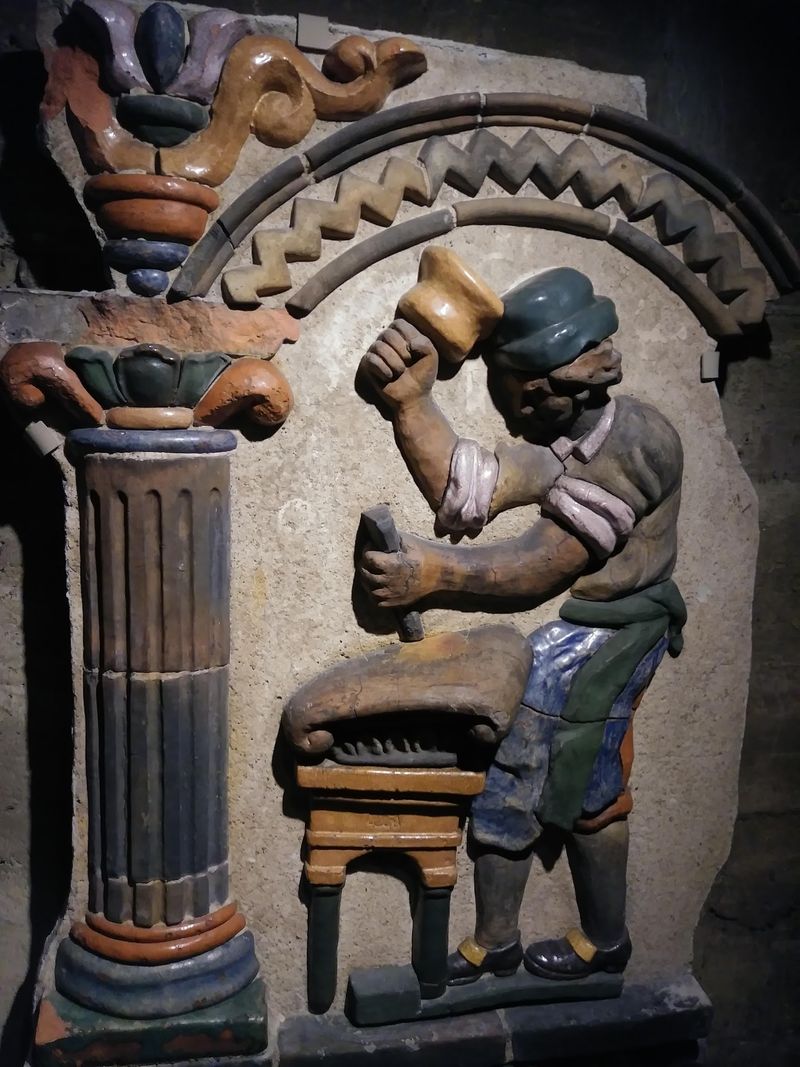
Little legs get tired after a few flights of stairs. Luckily, younger visitors have a dedicated area called Animals on the Loose.
The space is designed for kids to explore objects from the collection through play. It turns history into something they can touch, move, and talk about.
Many artifacts in the museum show animals or were used with them. Think harnesses, decoys, and farm gear, which gives children a fun way to connect.
The museum has also offered scavenger hunts for families. Searching for specific items keeps young eyes busy in the busy galleries upstairs.
That’s a clever trick for grown-ups too. A checklist makes a giant collection feel like a game instead of homework.
Families should know the historic castle has many stairs. Pacing the visit with breaks helps everyone stay cheerful.
Kids often love the hanging objects most. A wagon floating overhead is the kind of sight they will describe at dinner for days.
A Few Smart Tips Make The Climb Easier
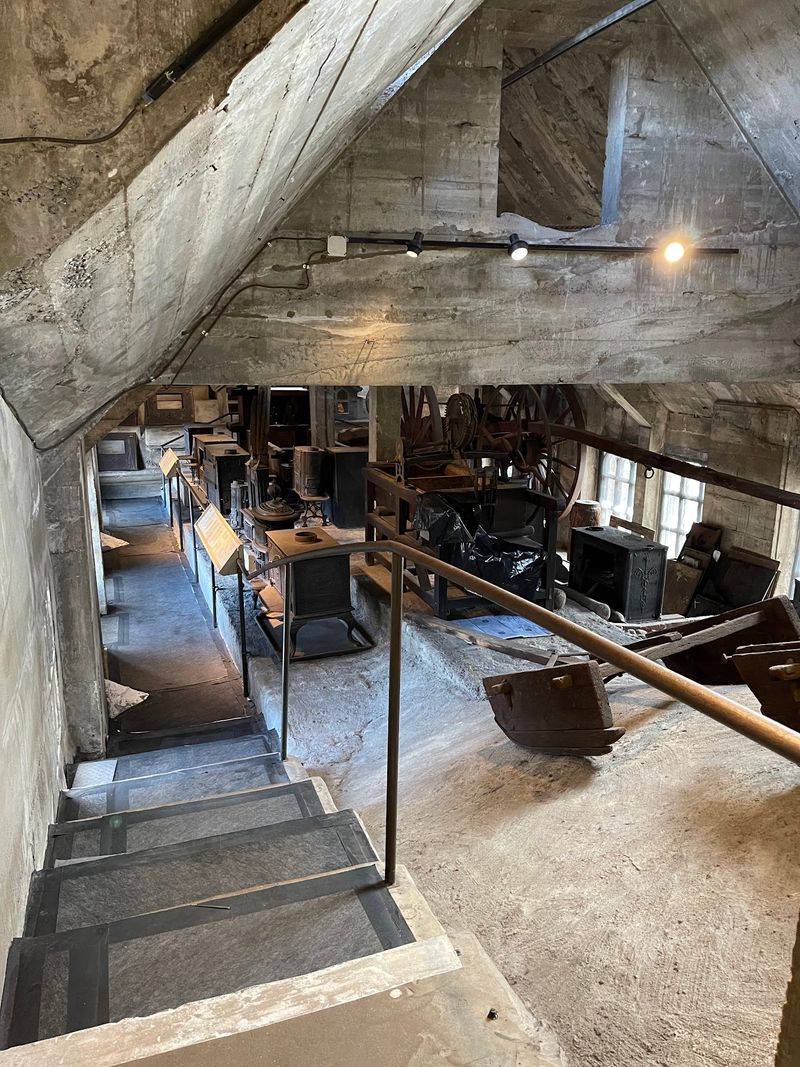
Comfortable shoes are your best friend here. The historic castle has seven levels, and stairs connect many of its rooms and balconies.
An elevator recently went through a major renovation to improve access. It’s wise to confirm its status before visiting if stairs are a concern.
The historic section is not climate-controlled. On hot summer days, it can feel warm inside those concrete walls, so dress lightly and bring water.
The modern ground-floor wing offers relief. It’s climate-controlled and includes restrooms, a museum shop, lecture space, and a changing exhibit gallery.
Tickets can sell out, especially on busy days. Buying them online ahead of time is the safer move.
Free parking is available in the museum lot. That’s one less thing to worry about when exploring town afterward.
Hours vary by day, and the museum is closed Mondays.
The museum is normally open from 10 a.m. to 5 p.m. on Saturdays and Sundays, though special events may occasionally affect its hours.
Downtown Charm Sits Right Outside The Door
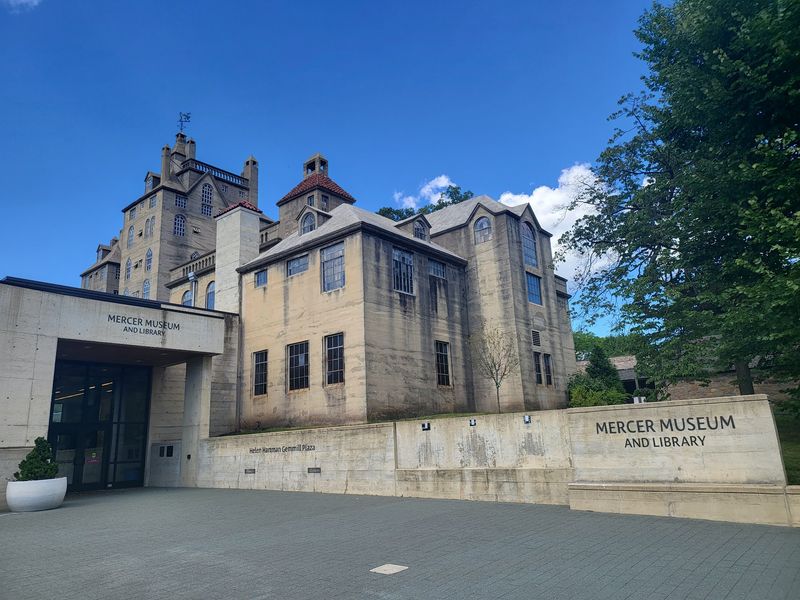
Location matters, and this castle landed in a great spot. You’ll find the Mercer Museum at 84 S Pine St, Doylestown, PA 18901.
That puts it a short walk from Doylestown’s historic downtown. Shops, cafes, and restaurants make it easy to turn a museum stop into a full day.
Doylestown is the county seat of Bucks County, Pennsylvania. Its streets mix older buildings with lively local businesses.
Grabbing lunch between attractions is a popular approach. It also gives your legs a well-earned break after all those castle stairs.
The James A. Michener Art Museum sits nearby as well. Art fans can easily add it to the same outing.
Philadelphia is roughly an hour away by car, depending on traffic. That makes the trip doable for a day outing from the city.
A weekend stay works nicely too. The area has enough history, art, and food to fill more than a single afternoon.