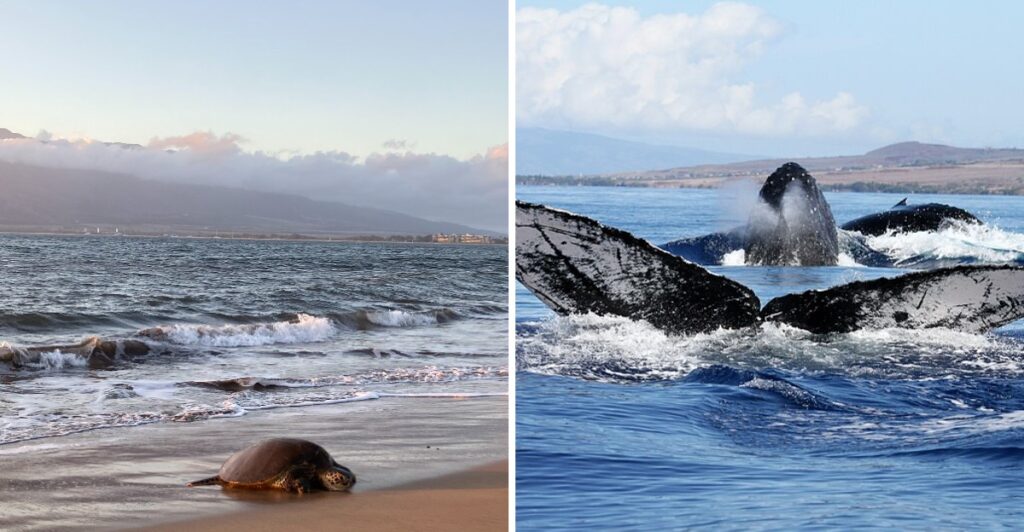
Humpback whales travel thousands of miles to Hawaii every winter. And once they arrive, they generally go months without eating. Months!
I’d be asking for room service.
But the whales have other plans. They’re here to give birth, nurse their calves, and find mates. February is usually the busiest time, so there could be plenty of activity out on the water.
And get this: there’s a free beachfront visitor center where you can learn all about them. Exhibits, lectures, and ocean views toward two neighboring islands and West Maui.
You might even spot sea turtles resting on the rocks outside.
I’d especially like to catch a glimpse of a humpback from shore. After traveling all that way, I hope at least one decides to put on a little show.
The whales can keep their months-long fast. I’m bringing snacks.
The Whales Picked This Spot Long Before Anyone Made It Official
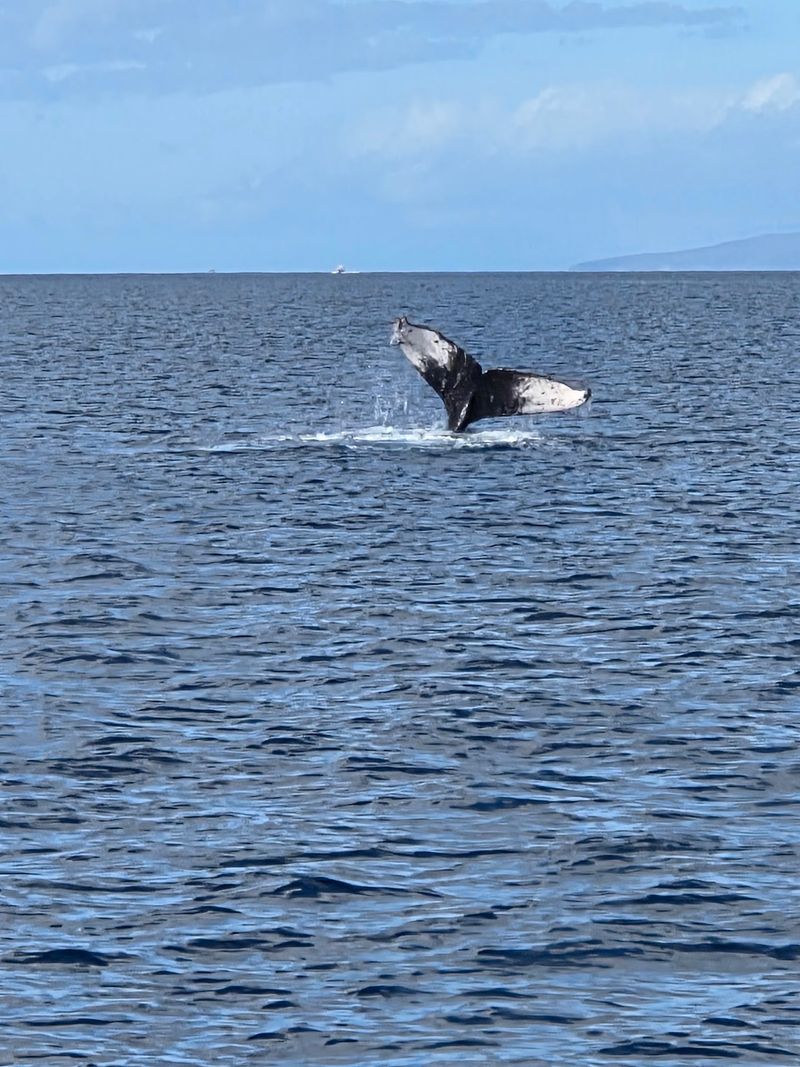
Humpback whales were visiting these islands long before any map called the water special. In 1992, the U.S. Congress caught up and created the Hawaiian Islands Humpback Whale National Marine Sanctuary.
The goal was simple and big. Protect the humpbacks, called koholā in Hawaiian, and protect the warm water they rely on.
The sanctuary covers roughly 1,400 square miles of ocean around the main Hawaiian Islands. It stretches from the shoreline out to waters about 600 feet deep.
That shallow, warm water is the whole point. Whales use it for breeding, giving birth, and nursing their calves.
NOAA’s Office of National Marine Sanctuaries runs the sanctuary together with the State of Hawaii. It’s a team effort between federal and state experts.
The results speak for themselves. Hawaii’s humpback population did so well that it came off the U.S. endangered species list in 2016.
The whales still have protection under the Marine Mammal Protection Act. So when you spot a spout offshore, you’re seeing a real conservation comeback.
That’s a pretty great story to carry along on any beach walk. It makes every splash feel a little more earned.
Mark Your Calendar Because February Brings The Biggest Whale Party
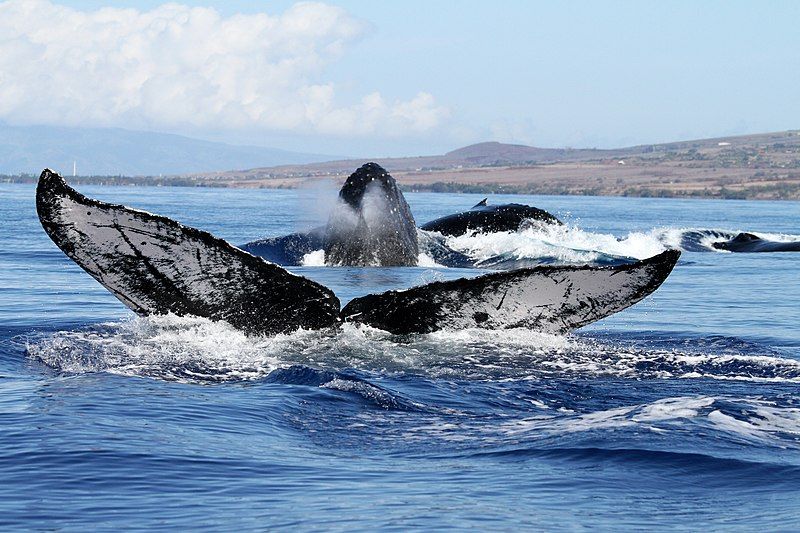
Timing matters a lot with whales. Humpbacks usually show up in Hawaii around November and hang around through April.
Humpback whale season in Hawaii generally runs from November through May, while certain seasonal boating restrictions apply from December 15 through May 15.
That’s a nice, wide window for planning a trip.
Want the best odds, though? Aim for late January through early March.
February usually has the highest number of whales in Hawaiian waters. That’s when the ocean can feel like it’s putting on a full show.
Here’s a fun fact for your next trivia night. Humpbacks rarely feed while they’re in Hawaii, although researchers have documented occasional feeding.
They fill up in the cold North Pacific first. Then they swim south to mate, give birth, and raise calves in calm, warm water.
Mothers with new calves are a highlight of the season. The little ones need safe, shallow areas while they grow stronger for the long trip back north.
Plan your visit around these months, and your chances improve a lot. Pack patience, too, since whales keep their own schedules.
Nobody has convinced a whale to follow a tour plan yet. Good luck being the first.
A Free Beachfront Visitor Center Waits On Maui’s South Shore
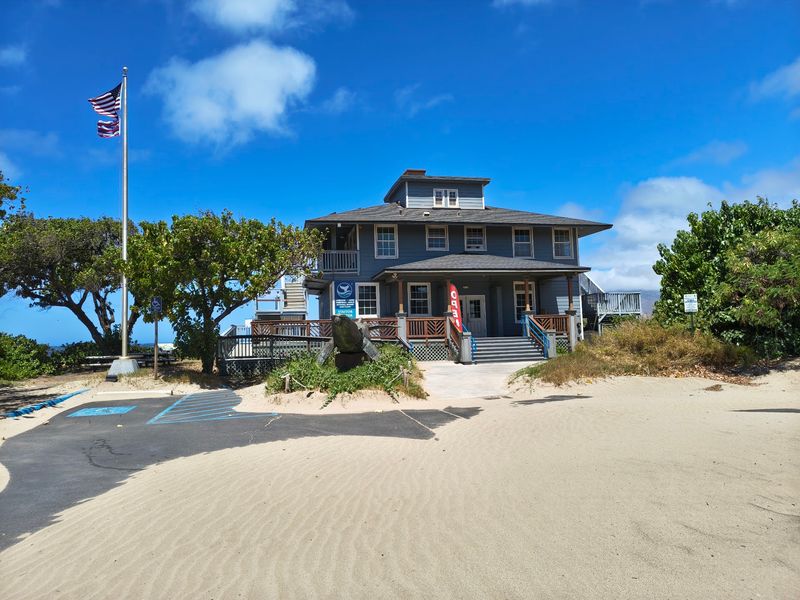
Free admission is a rare phrase on a Maui vacation. The sanctuary’s visitor center offers exactly that, right beside the water.
You’ll find it at 726 South Kihei Road, Kihei, HI 96753. It sits on the south shore of Maui, an easy stop between beach plans.
The center is open Monday through Friday from 9:30 a.m. to 2:30 p.m. It closes on federal holidays, so check ahead around those dates.
Weekend hours do pop up for special events now and then. Confirming times before you go saves you a disappointing drive.
Inside, the Hawaiian Islands Humpback Whale National Marine Sanctuary shares exhibits and interactive displays. There’s also a marine science library for curious minds.
Everything here focuses on the ocean right outside the windows. That makes the lessons feel instantly real.
It’s a smart place to start your whale season. You’ll head back to the beach knowing what to look for.
The center also gets you out of the midday sun for a bit. Your shoulders will probably thank you for the break.
Two Islands And West Maui Fill The View From The Shoreline
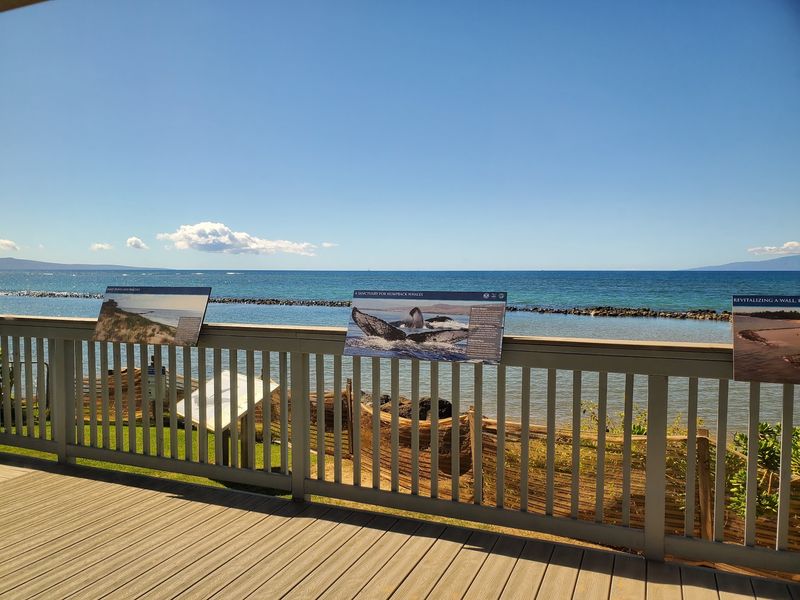
Few lobbies come with a view this good. From the visitor center, you look across sanctuary waters toward Kahoʻolawe, Lānaʻi, and West Maui.
That’s two neighboring islands and the western part of Maui visible across the water.
It’s a gorgeous frame for scanning the water.
The sanctuary is known for whale viewing both from shore and by boat. Shore watching costs nothing and needs no seasickness plan.
Bring binoculars if you own a pair. They help a ton when a spout appears far out.
Look for puffs of mist first. A whale’s blow often shows up before you see any body or tail.
Splashes are another clue. A breach can send water flying high enough to catch your eye from a distance.
Calm mornings can make the surface easier to read. Choppy water hides spouts among the whitecaps.
Patience pays off here more than anything else. Sit, scan slowly, and give the ocean a few quiet minutes.
Even without whales, the scenery makes the wait easy. That’s a pretty nice consolation prize.
Free Whale Talks Turn Curious Visitors Into Instant Experts
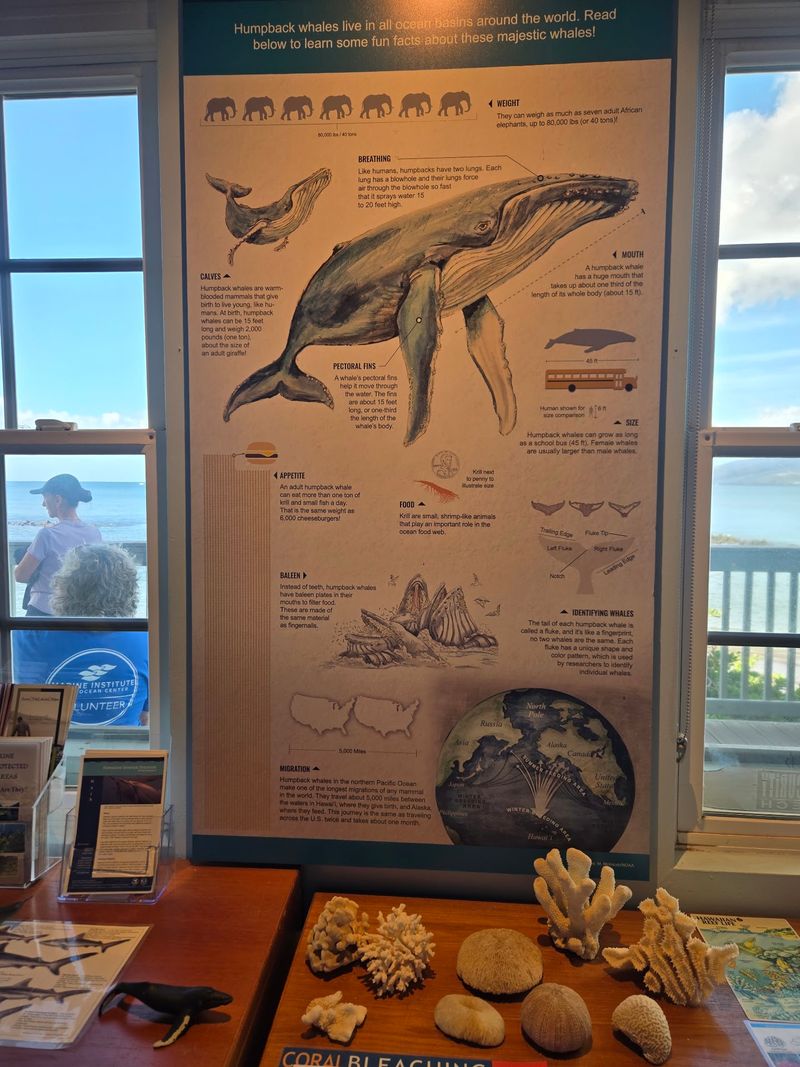
Tuesday, Thursday, and Friday mornings come with a bonus. Public lectures start at 10 a.m. at the visitor center.
These talks are a simple way to learn the basics. They also answer the questions you didn’t know you had.
Why do whales travel so far? How do scientists tell one whale from another?
The sanctuary studies whales through photo identification and population research. Scientists also track births and whale behavior over time.
Hearing about that work makes whale watching more fun. Suddenly a tail isn’t just a tail, it’s a clue.
The center also runs weekly programs for all ages. Kids and grown-ups can learn side by side without anyone feeling lost.
Arrive a little early if you can. Parking at the center can be limited, especially on busy days.
Schedules can change, so confirm before you go. That quick check keeps your morning running smoothly.
A lecture before a boat tour is a smart combo. You’ll spot behaviors out there and actually know what they mean.
Consider it homework, minus the grades.
An Ancient Fishpond Sits Right Out Back
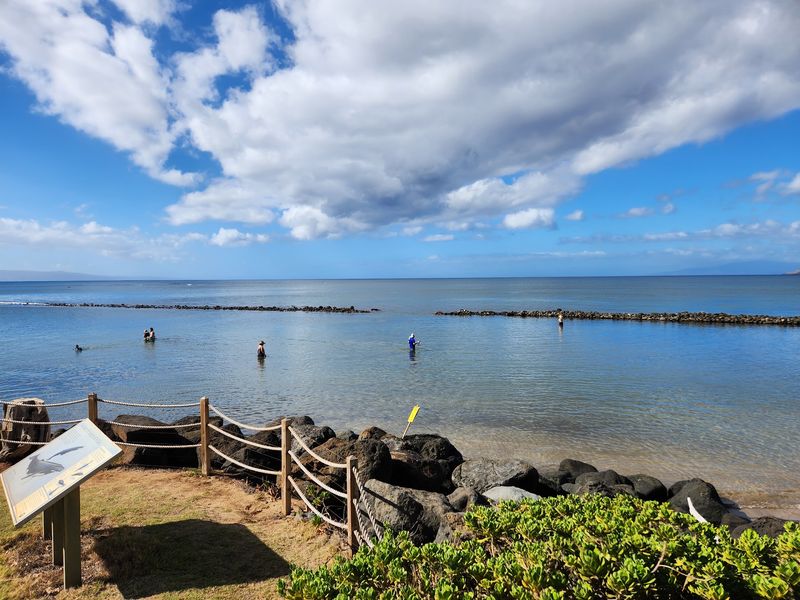
History hugs the shoreline here. The Kōʻieʻie fishpond fronts the sanctuary property on Maui.
It’s one of the last intact traditional fishponds along the South Maui coast. That alone makes it worth a slow look.
Native Hawaiians built fishponds like this with skill and serious planning. These ponds helped raise fish close to home.
The pond now works as a natural classroom. You can learn about Hawaiian culture and the ocean in one stop.
Standing beside it adds depth to your whale day. The sea mattered to people here long before whale watching became popular.
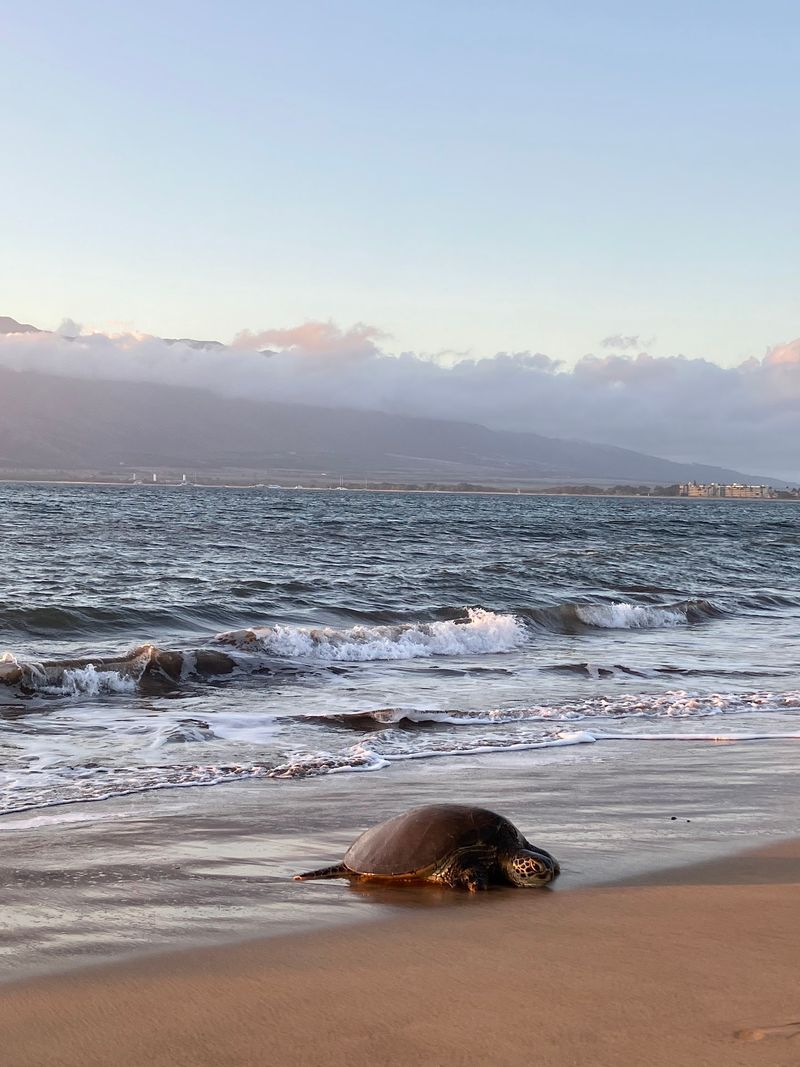
Green sea turtles also live in sanctuary waters. Keep an eye on the nearby rocks and shoreline while you explore.
Give any turtle plenty of room, of course. Watching quietly is the kindest way to enjoy them.
Bring a camera, but skip the urge to climb. The stones carry real history.
A visit here reminds you that Hawaii’s ocean story is long. Whales are just one beautiful chapter in it.
Whales Share These Waters With A Whole Cast Of Characters
Humpbacks get top billing, but the supporting cast is huge. At least 23 other species of whales and dolphins live in or visit these waters.
Five types of sea turtles show up, too. Green sea turtles are common, and endangered hawksbills appear as well.
Hawaiian monk seals also call this region home. They’re endangered, so spotting one is a special moment.
Fish, invertebrates, and seabirds round out the ecosystem. The whole system works together like a busy neighborhood.
That variety makes any trip feel full. Even if whales stay shy, something else might steal the spotlight.
Treat every animal with respect. Keep your distance and never chase or touch wildlife.
For humpbacks, the rule is clear. People and boats must stay at least 100 yards away.
That’s about a football field of space. It sounds far, but these animals are big enough to impress from there.
Following the rules keeps everyone safe. It also keeps this marine neighborhood thriving for future visitors.
Behind The Scenes, A Rescue Team Helps Tangled Whales
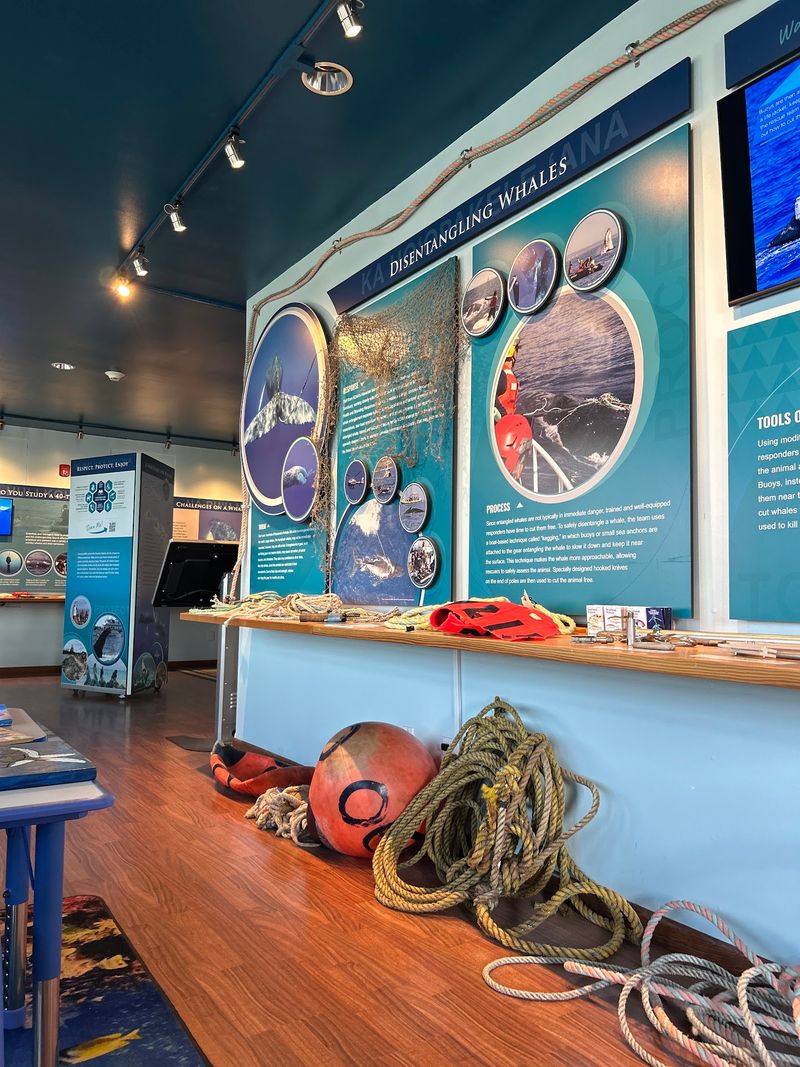
Some of the sanctuary’s most important work happens far from the exhibits. Since 2002, it has coordinated the Hawaiian Islands Disentanglement Network.
This community-based team works to free whales and other marine animals caught in lines or gear. Trained responders handle these tricky situations safely.
Every rescue also teaches something useful. The network gathers data to help cut down on future entanglements.
The sanctuary also watches for other threats to humpbacks. Its resource protection efforts aim to keep whale waters healthy.
Outreach is a big piece of the plan. Education programs reach both Hawaii residents and visitors.
You can help, too, without any special gear. Follow viewing rules and keep trash out of the ocean.
Spotted a whale that seems tangled or in trouble? Report it rather than trying to help on your own.
The visitor center also accepts donations for whale projects. Small gifts can support big work.
Knowing this effort exists makes every sighting feel richer. The whales have a crew quietly cheering them on, and now you’re part of it.