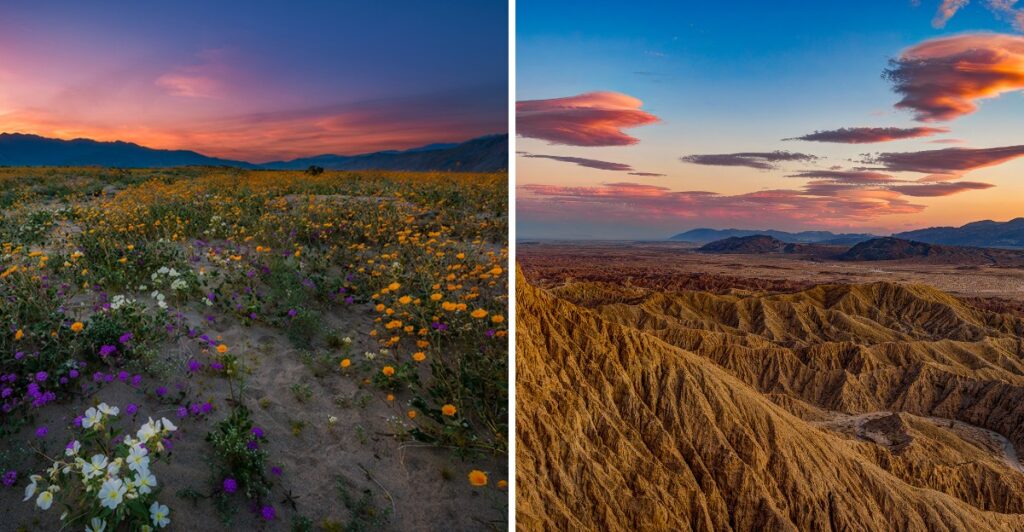
A walrus in the California desert? Someone actually dug up the fossil of one, miles from the ocean. Try explaining that to someone standing next to a cactus.
And the walrus had some interesting company. Fossils of mammoths, sabertooth cats, and ancient crocodile relatives have all turned up here. The evidence goes back roughly seven million years, when this dry landscape looked nothing like it does today.
Now it’s a massive state park covering about 600,000 acres, the largest in California. That’s a lot of desert hiding a very surprising past.
Fall and winter bring cooler temperatures, making it easier to explore without the summer heat.
You might arrive expecting sand and cacti. But a place that once had walruses? I’d be curious what else is hiding beneath my hiking boots.
Late Fall Is When This Desert Finally Plays Nice
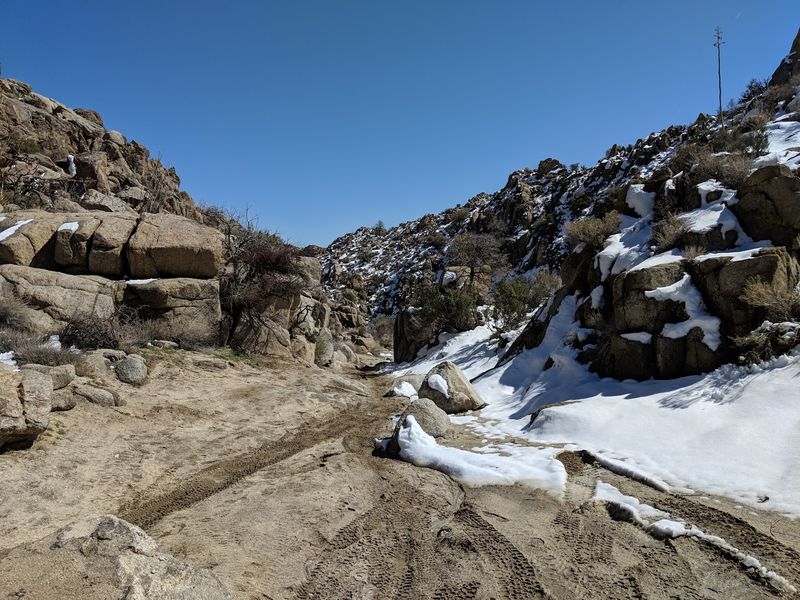
Timing matters a lot out here. Anza-Borrego Desert State Park sits in the Colorado Desert, and summer heat can be brutal.
Fall through spring is the sweet spot, with November through March often called ideal. November days typically land around 70 to 75 degrees, which feels like a gift.
October can still be tricky, though. Temperatures sometimes push past 100 degrees, so check the forecast before you pack.
December and January bring a different twist. Days stay pleasant, but nights can get genuinely chilly, so warm layers are smart.
The cool season also lines up with park operations. The Visitor Center opens daily from 9 a.m. to 5 p.m. between October 1 and May 31.
Several developed campgrounds follow a similar calendar. Many close from June 1 to September 30 because of the extreme heat.
That makes the final months of the year a great window. You get comfortable hiking weather, open facilities, and long, golden afternoons.
Carry plenty of water anyway, even on mild days. Dry desert air sneaks up on people faster than they expect.
Your First Stop Should Be The Friendly Visitor Center
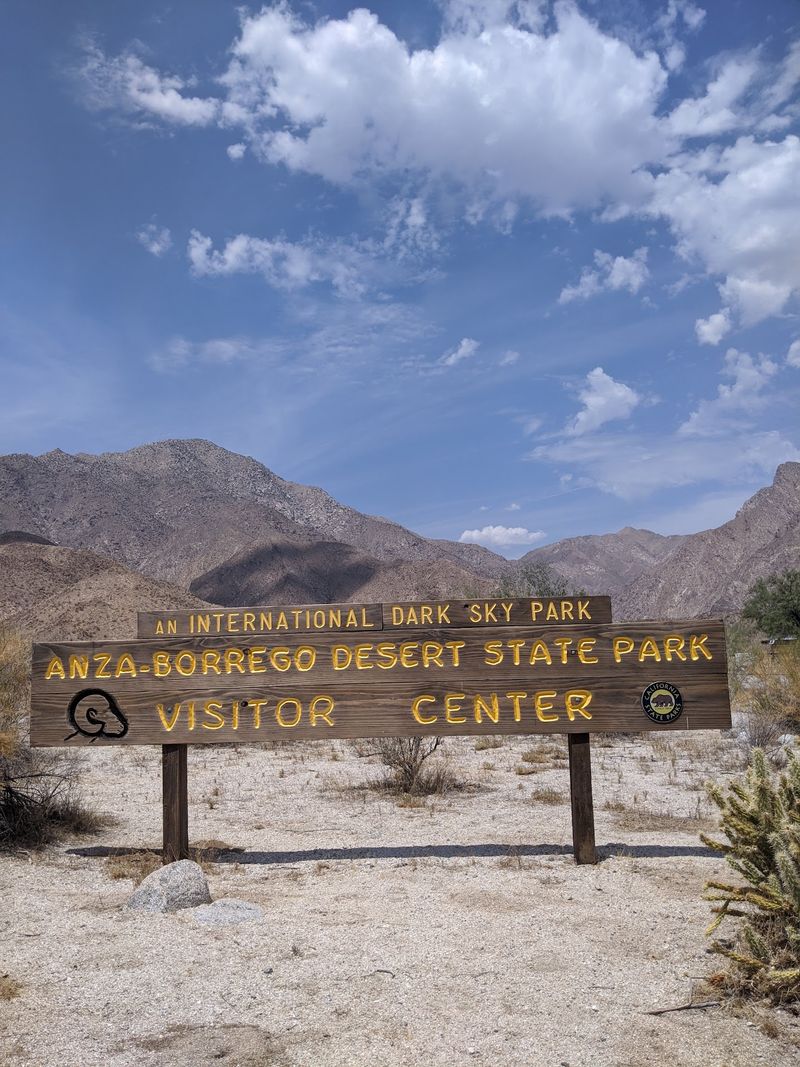
Smart desert trips usually start with good advice. The Visitor Center sits at 200 Palm Canyon Drive, Borrego Springs, CA 92004.
Rangers and volunteers can help you match trails to your energy level. That matters in a park this huge, where choices can feel endless.
Timing is easy to remember. The center opens daily from 9 a.m. to 5 p.m. from October 1 through May 31.
The parking lot runs on longer hours. It’s open daily from 7 a.m. to 7 p.m., which helps early hikers.
Ask about current conditions before heading out. Some areas change, and a few spots have closures right now.
For example, Coyote Canyon Road is closed to vehicles at the Third crossing. Knowing that ahead of time saves you a long, bumpy detour.
Road types matter too. Some destinations require high-clearance or four-wheel-drive vehicles, and staff can point you toward the right routes.
Think of this stop as your desert briefing room. Ten minutes of questions can shape a much better day in California’s biggest state park.
Long-Lived Palm Trees Hide In This Canyon
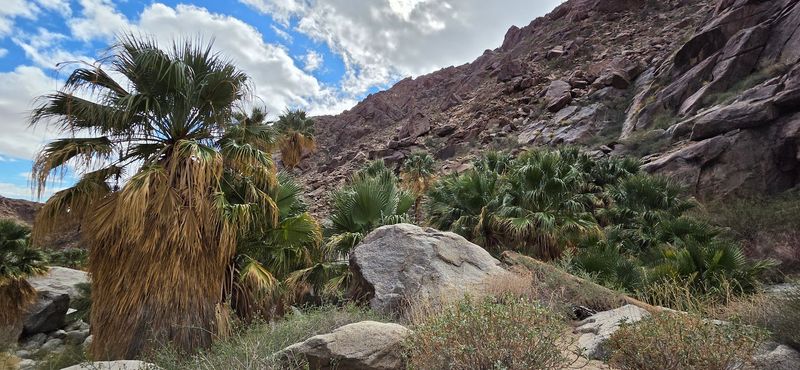
California fan palms can live for approximately 150 years.
That’s a lot of birthdays for a tree growing in a desert canyon.
Borrego Palm Canyon holds a grove of California fan palms. They’re the only palm native to the state, clustered around a seasonal stream.
The Borrego Palm Canyon Trail is about 3 miles round trip. It’s one of the most popular hikes in Anza-Borrego Desert State Park.
One update matters here. The first palm grove is closed because of fire damage.
The trail now ends at a viewpoint overlooking the grove. You still get that striking contrast of green fronds against rocky slopes.
The trail opens from sunrise to sunset. Cool mornings make the walk much more pleasant than midday heat.
Keep your eyes on the hillsides, too. Bighorn sheep sometimes appear around the Palm Canyon Trail during their mating season, which runs from July through December.
Pack water, sun protection, and sturdy shoes. The path is rocky in places, and desert sun stays strong even in winter.
Squeeze Through A Canyon Barely Wider Than Your Shoulders
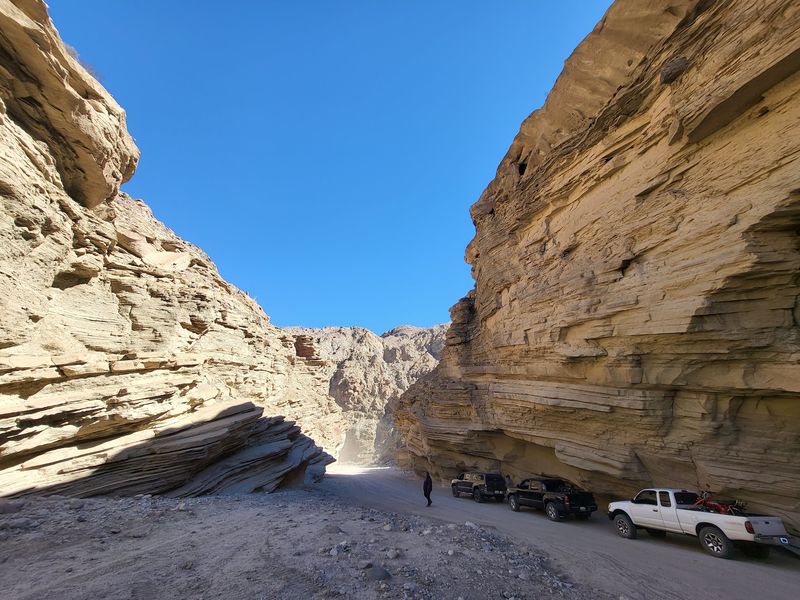
Eighteen inches. That’s how narrow The Slot can get in certain spots.
This slot canyon is a favorite for hikers who like a little adventure. Tall, twisting walls rise on both sides as the path pinches tighter.
Hours run from one hour before sunrise to one hour after sunset. That gives early birds a cool start and good light.
Safety comes first here. Avoid slot canyons during or after rain because flash floods are a real risk.
Elsewhere in the park, the Wind Caves offer another rocky surprise. These sandstone formations were shaped by wind over long stretches of time.
Both spots show how wild the geology gets in Anza-Borrego Desert State Park. The landscape feels carved by a sculptor with endless patience.
Bring a small backpack rather than a bulky one. Tight squeezes are more fun when you’re not wedged in by your gear.
Plenty of water is a must, of course. Cool weather helps, but desert hiking still dries you out quickly.
Sunset At Font’s Point Looks Unreal In The Best Way
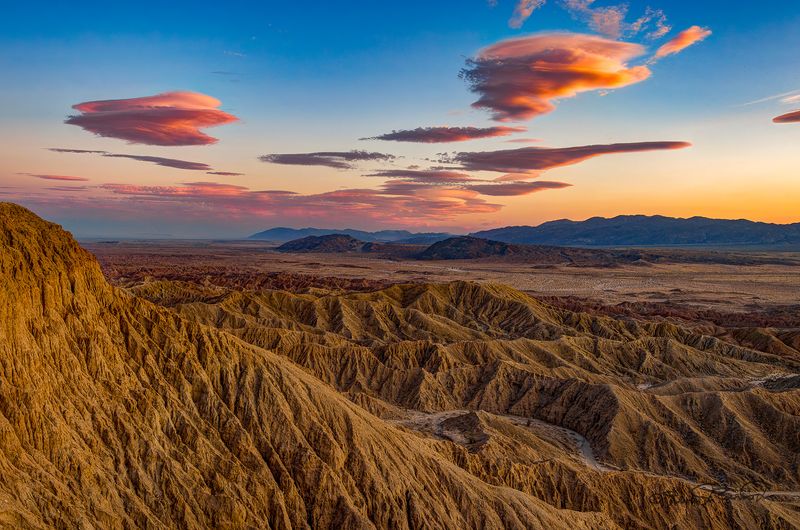
People call the Borrego Badlands the Grand Canyon of the desert. One look from Font’s Point explains the nickname.
Eroded ridges ripple across the land in every direction. Sunrise and sunset paint them in shifting colors that photographers chase.
Getting there takes some planning. Access requires a high-clearance, four-wheel-drive vehicle on a sandy dirt route.
Hours run from one hour before sunrise to one hour after sunset. That timing lets you catch the best light at either end of the day.
Cool months make the trip far more comfortable. Waiting for sunset is easier when the air isn’t trying to bake you.
Bring a jacket for the ride back. Desert evenings in late fall and winter cool down fast once the sun drops.
The park holds about 500 miles of dirt roads overall. Font’s Point is a great reason to explore at least a few of them.
Check road conditions at the Visitor Center first. Sandy stretches can change, and local advice beats guesswork.
Keep Watch For The Shy Sheep That Named The Park
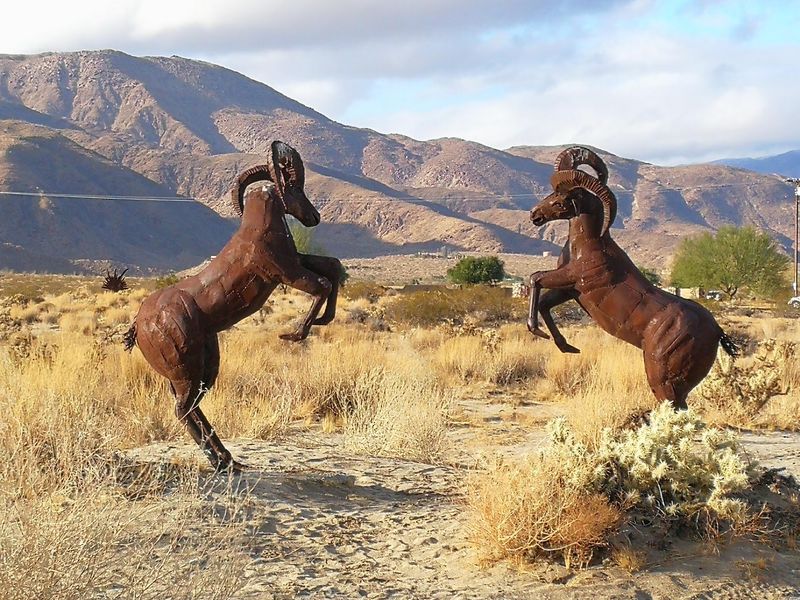
Borrego is Spanish for sheep. Part of the park’s name honors the endangered Peninsular bighorn sheep.
These animals are famously hard to spot. Their tan coats blend right into rocky slopes.
Early to mid-morning offers better odds in lower elevations. In hotter months, they often stay near water sources.
Late in the year brings a special chance. The mating season, which runs from July through December, can bring sightings around the Palm Canyon Trail.
Plenty of other creatures share this land. Roadrunners, golden eagles, kit foxes, coyotes, and chuckwallas all call the park home.
Mule deer show up more often around dawn and dusk. Gambel’s quail and black-tailed jackrabbits add more chances for a fun sighting.
Keep a respectful distance from all wildlife. Never feed animals, since that harms their health and natural habits.
Binoculars are a smart addition to your pack. They let you enjoy a close view without crowding anyone.
Patience pays off here. A quiet scan of a ridge might reveal curled horns you nearly missed.
Giant Metal Creatures Roam The Open Desert Here
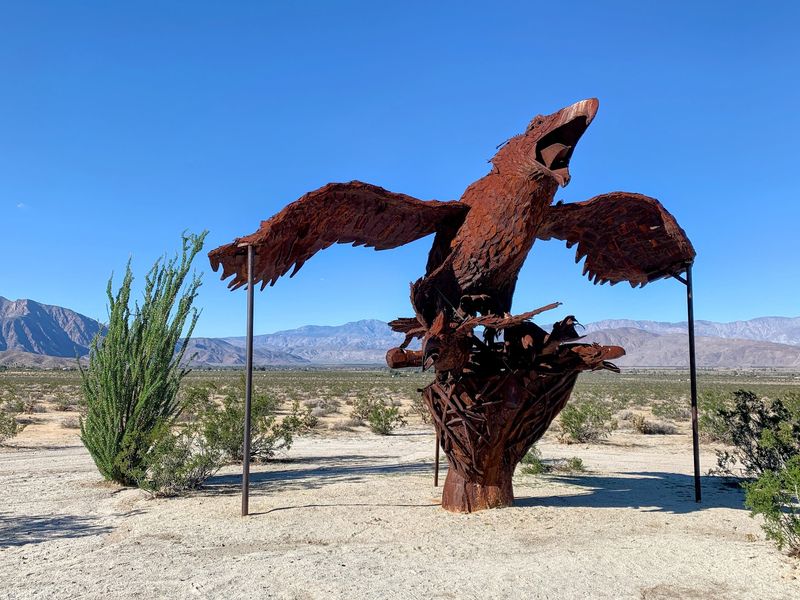
A towering metal beast in the sand is not something you see every day. Near Borrego Springs, it becomes pretty normal.
Artist Ricardo Breceda created these larger-than-life sculptures at Galleta Meadows. They show prehistoric and fantastical creatures scattered across the open desert.
The art connects nicely with the area’s deep past. Fossils of mammoths, camels, horses, and giant ground sloths have been found in the park.
Seeing big metal versions of ancient animals makes that history feel real. Kids and grownups alike tend to point and stare.
Cool weather makes sculpture hopping much easier. You’ll want time to wander between pieces without wilting in the heat.
Plan for more stops than you expect. The sculptures spread out, so a full loop can fill a good chunk of the day.
Golden hour adds great shadows for photos. Long light makes the metal details pop against the desert floor.
Bring a map or check locations ahead of time. That helps you track down favorites instead of driving in circles.
After Dark, The Sky Puts On The Real Show
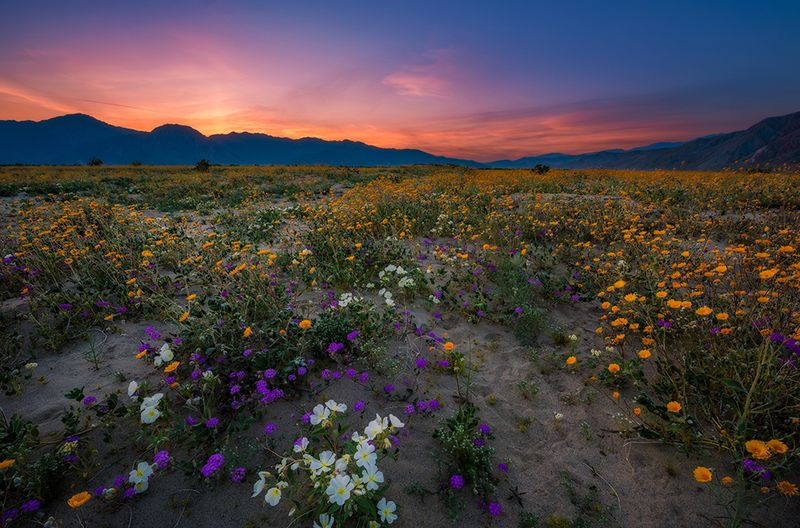
Darkness is protected here on purpose. Anza-Borrego Desert State Park became an International Dark Sky Park in 2018.
Nearby Borrego Springs earned International Dark Sky Community status back in 2009. Together, they keep light pollution low and stars bright.
Winter evenings are especially good for stargazing. Crisp, clear air helps dense star fields and constellations like Orion shine.
The park and its nonprofit partners offer seasonal astronomy programs. Star parties give beginners a friendly way to learn the night sky.
Silence adds to the magic. The park became the first public land in California classified as a Quiet Conservation Area.
That designation protects natural soundscapes, like desert wind and coyote yips at night. It’s a peaceful break from everyday noise.
Dress warmly for any night outing. December and January evenings can feel surprisingly cold.
Use a red flashlight if you can. It protects your night vision and helps others enjoy the view too.
Give your eyes time to adjust after dark. More stars slowly appear the longer you look.