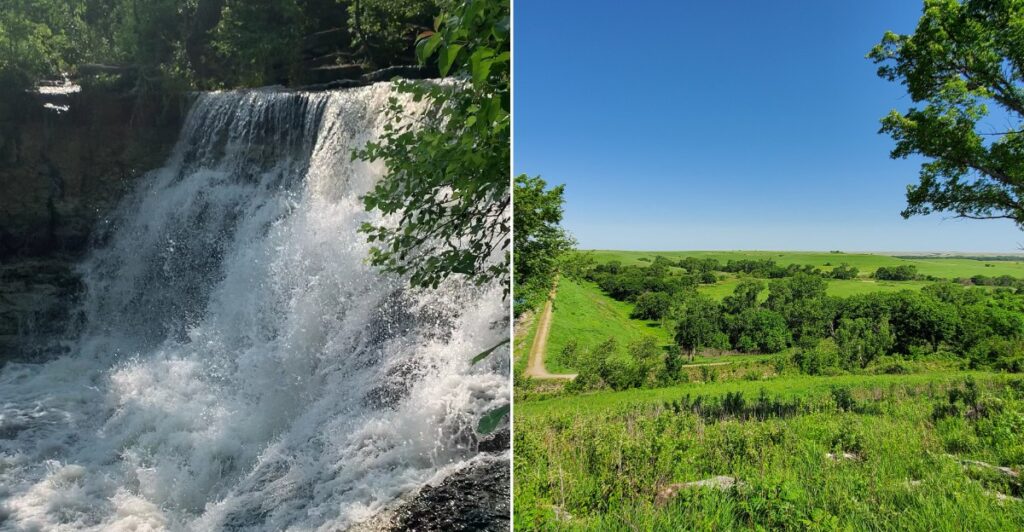
A waterfall roughly 40 feet tall tumbles down a staircase of limestone shelves.
It sits in the middle of prairie country, and the walk to reach it takes about a mile round trip.
The falls come in several tiers, not just one drop. Below them, clear and shallow pools collect along the rock.
On warm days, those pools practically beg for bare feet and rolled-up jeans.
Kansas usually gets teased for being flat, so this spot feels like a friendly correction.
I like how the whole show depends on rain, which makes every trip a little bit of a gamble.
I can’t imagine a better excuse to watch the weather forecast like a hawk. A big storm rolls through, and suddenly the quiet creek turns loud.
A Triple-Tiered Waterfall Answers Every Flat-Kansas Joke
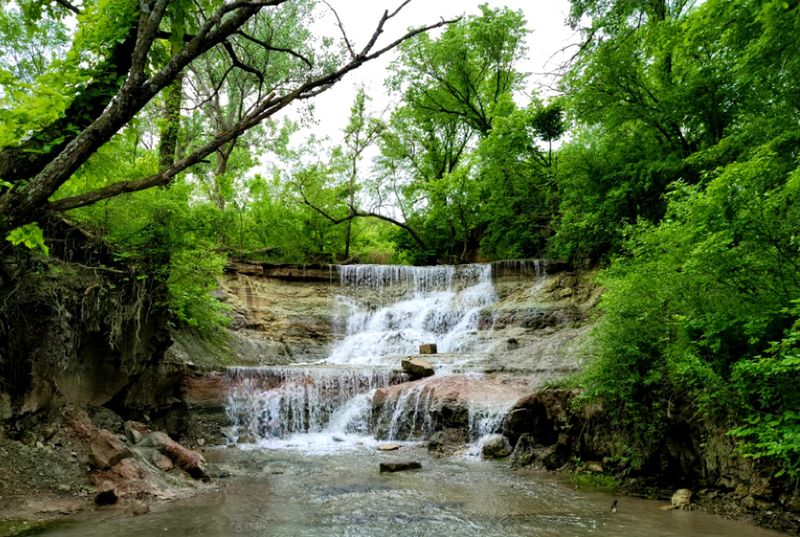
Chase State Fishing Lake & Wildlife Area holds one of the biggest surprises in the Flint Hills. Below its dam, water spills about 40 feet down a series of rocky limestone shelves.
People call it Chase Lake Falls or the Prather Creek Waterfall. Either name works, and both lead to the same stunning scene.
The falls don’t drop in one straight sheet. Instead, they step down in multiple tiers, a bit like water rolling down a stone staircase.
That layered look makes the waterfall a real rarity in this part of the country. Much of the state is known for wide, gentle land, so a cascade like this feels almost sneaky.
Each shelf creates its own small splash and pool. You can study one tier, then wander down and find a completely different angle.
Photographers love this kind of setup because the scene changes with every step. Even a phone camera can catch some impressive shots here.
Bring patience and a curious eye. The best view might be from the bottom, or it might be halfway up the rocks.
Either way, this waterfall gives Kansas some serious bragging rights. And honestly, the state deserves them.
Rain Turns The Volume Way Up On These Falls
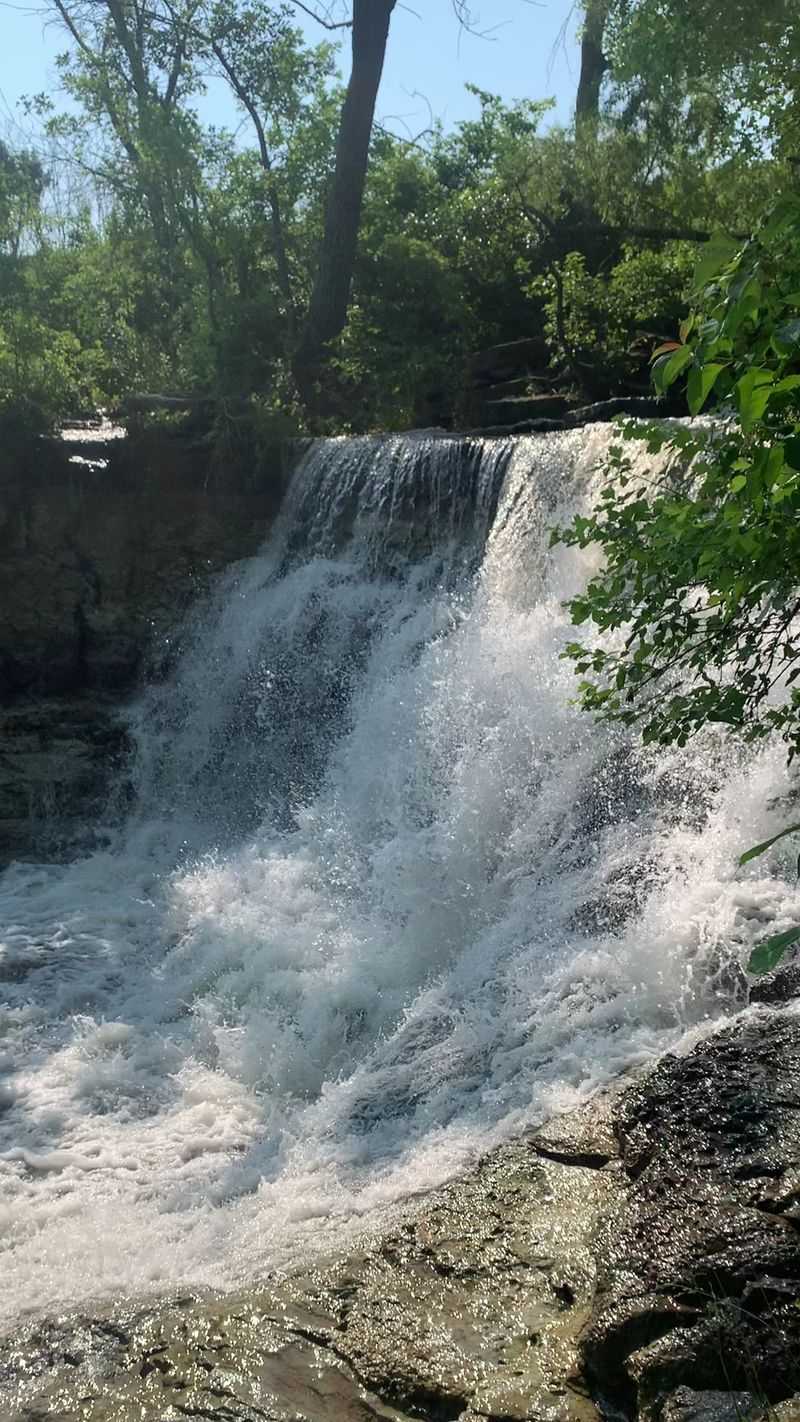
Timing is everything here. The waterfall gets its power from rain, and its mood changes a lot from week to week.
After a heavy storm, the lake spills over the dam and feeds the falls. That’s when the water roars down the limestone with real force.
Spring is usually the most dramatic season. Rainy weeks fill the lake, and the cascade puts on its best performance.
Dry stretches tell a different story. In the heat of summer, the flow can shrink to a trickle or stop completely.
So how do you avoid a letdown? Check the recent weather before you load up the car.
A few days of steady rain is a great sign. A long dry spell means you might find more rock than water.
Still, a quiet waterfall isn’t a wasted trip. The rocky shelves are fun to explore, and small pools often linger between them.
Think of it as a natural show with no fixed schedule. You never know exactly what you’ll get.
That uncertainty is part of the fun. When you finally catch the falls in full flow, it feels like winning a prize.
Your Legs Will Barely Notice This Short Walk
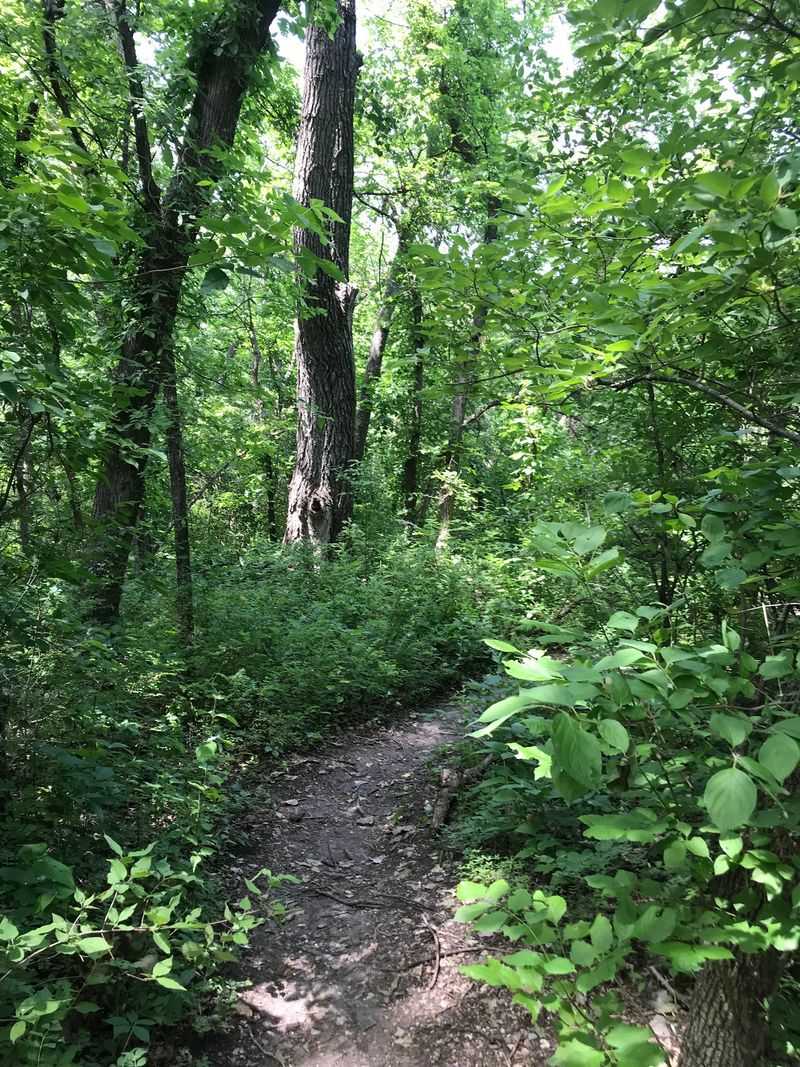
Good news for anyone who avoids long hikes. Reaching the falls takes roughly a mile round trip, so the effort stays low and the reward stays high.
The trail starts at the dam. You walk across it first, which gives you a nice look over the lake on one side.
After that, an unpaved footpath follows the creek downstream. It leads you right toward the tiered rocks and the sound of falling water.
The route is easy enough for most families. Little hikers can usually handle it without too many complaints about tired feet.
Wear real shoes, though. The rocks around the waterfall can get slick, and flip-flops are not your friend on wet limestone.
Sturdy sneakers or hiking boots work best. A walking stick can also help if the ground is muddy after rain.
Bring water, especially on hot days. Kansas summers can feel intense, even on a short stroll.
The best part is how quickly the payoff arrives. You won’t spend all afternoon marching just to glimpse the falls.
That leaves plenty of time for exploring, snacking, and taking way too many photos.
Cool Little Pools Make Wading Hard To Resist
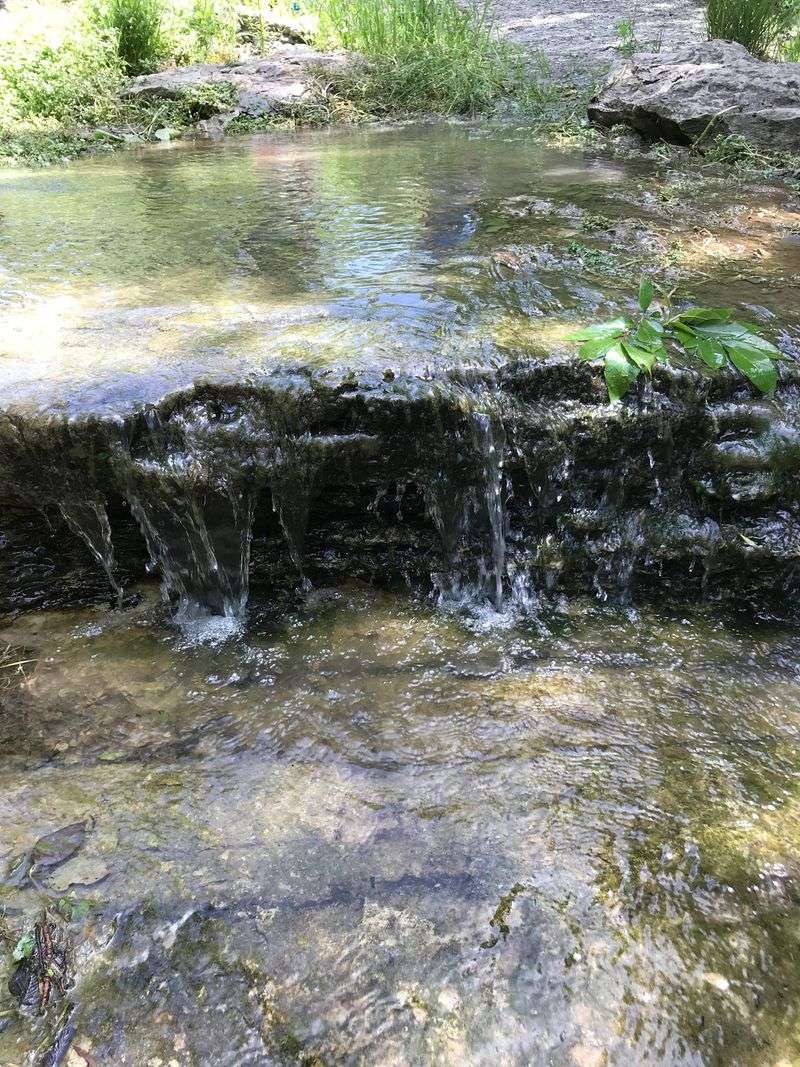
Hot day? The bottom of the falls has a refreshing sight waiting for you.
Below the limestone shelves, shallow pools form in the rock. They make a lovely place to admire the water and photograph the different tiers of the waterfall.
Look closely, and the pools reveal tiny details. Smooth stones, rippling water, and sunlight on the rock all add to the charm.
The water may look inviting, but don’t assume the pools are designated swimming areas.
Kansas regulations generally prohibit swimming in state fishing lakes except where specifically authorized by posted notice.
Chase State Fishing Lake has a designated swimming beach, which is the appropriate place to check for permitted swimming. Follow all posted signs and local restrictions before entering the water.
Safety still matters when you’re only sightseeing. The limestone shelves can be slippery, especially after rain, so move carefully and supervise younger family members.
Sturdy shoes with good traction are a smart choice. They help protect your feet and make exploring the uneven ground more comfortable.
The pools also make a peaceful scene to sit nearby and enjoy. The sound of falling water does a great job of quieting a busy mind.
For many visitors, this becomes the favorite part of the trip. The waterfall gets the attention, but the little pools add their own beauty to the afternoon.
Tallgrass Prairie Rolls Out In Every Direction
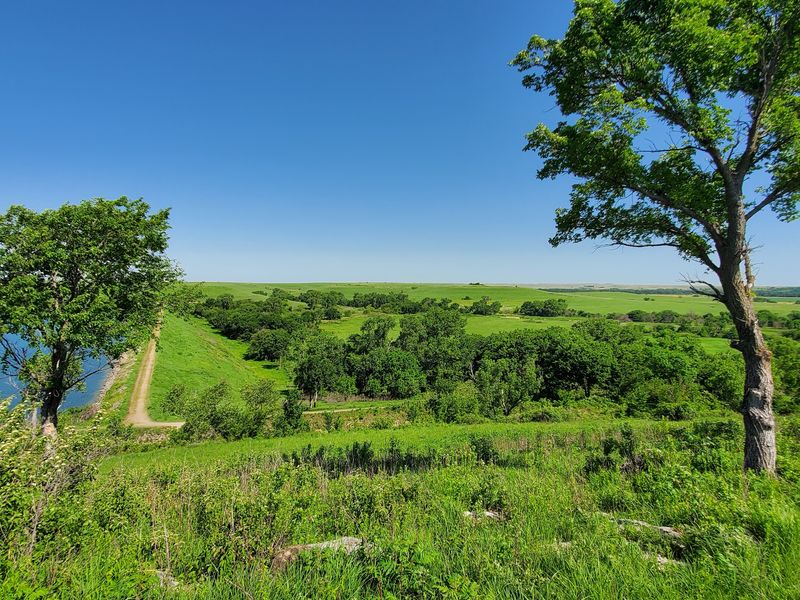
The scenery around the lake is a big deal. Chase State Fishing Lake & Wildlife Area sits in the Flint Hills, home to one of the last native tallgrass prairies in the world.
That makes the drive itself part of the experience. Rolling hills stretch toward the horizon, and the grass moves like waves in the wind.
The lake lies along the Flint Hills National Scenic Byway. This route offers wide prairie views and connects to nearby towns with shops and historic sites.
Wildflowers also show up across the wildlife area. Different blooms add pops of color, giving nature lovers plenty to admire.
Bird watchers will feel right at home too. The open grassland makes a fine place to scan for feathered neighbors.
Hiking is allowed year-round across the 383-acre wildlife area. Most of that land is native grass prairie, so the views stay wide and open.
Spend a few extra minutes simply looking around. This landscape once covered huge parts of North America.
Today, it survives in special places like this corner of Kansas. Seeing it in person feels a bit like visiting living history.
Anglers Get Eight Piers And A Lot Of Hungry Fish
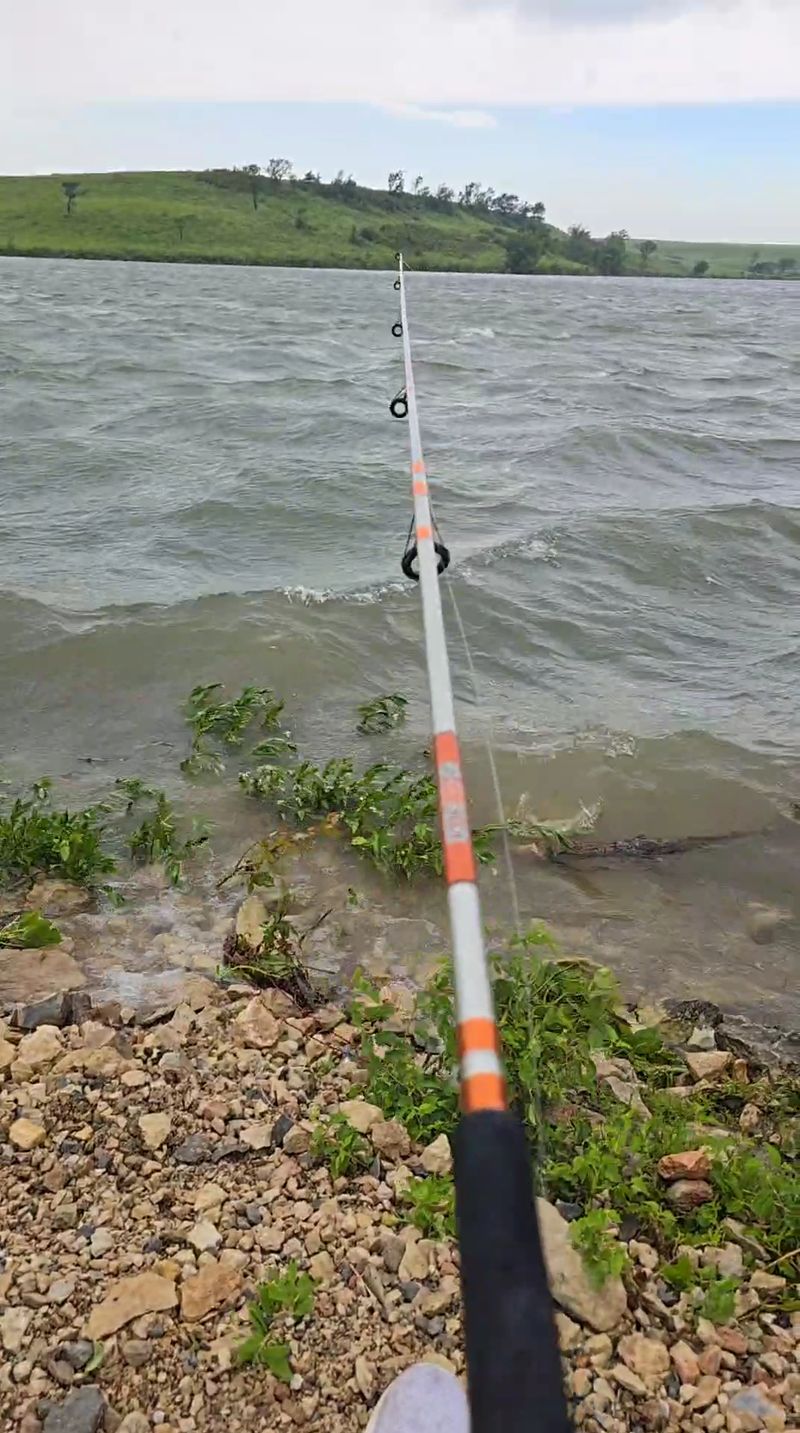
The waterfall gets the headlines, but the lake has plenty of fans too. It covers 109 acres and was built back in 1954.
Its water clarity is generally very good. The shoreline mixes steep rocky edges, shallow rocky areas, and some shallow mudflats.
Fishing ratings run from fair to excellent depending on the species. Channel catfish, largemouth bass, saugeye, crappie, white bass, and bluegill all swim here.
Eight fishing piers give shore anglers lots of choices. Rock and brush fish attractors are also placed around the lake to improve fishing opportunities.
Have a boat? Chase State Fishing Lake has a boat launching facility.
Motorized boats may be used for fishing or hunting purposes only, and the lake has a no-wake rule.
Nonmotorized watercraft are not subject to the same fishing-or-hunting-only restriction, but visitors must still follow applicable boating regulations and posted notices.
A boat ramp with a courtesy dock makes launching easier. Bring a valid Kansas fishing license if one is required for your age and residency status.
The lake is also designated as a water body with aquatic invasive species, including zebra mussels.
Boaters and anglers should clean, drain, and dry their equipment to avoid spreading invasive species to other waters.
Early mornings can be especially pleasant on the water. Even if the fish ignore your bait, the view never really disappoints.
Pitch A Tent Where The Night Sky Gets Wild
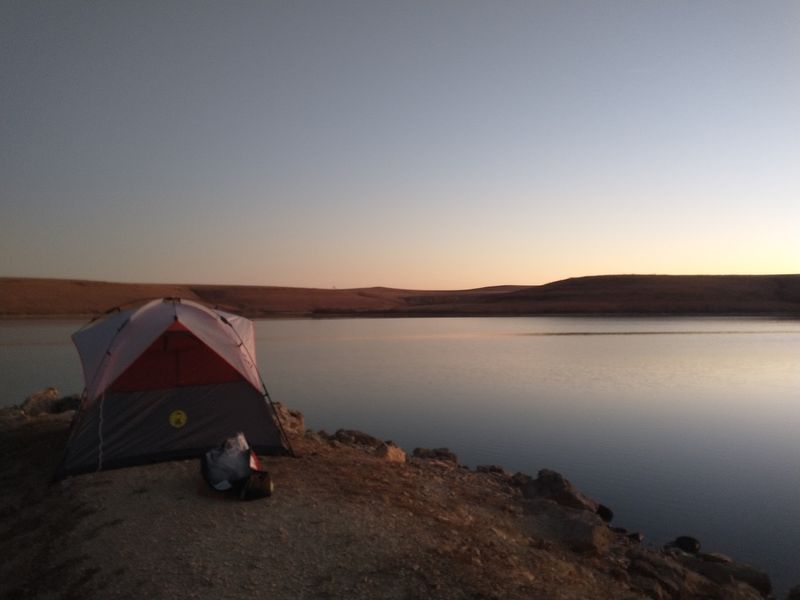
Want to stretch one day into two? Primitive campsites line the north shore of the lake.
They’re first-come, first-served, so there’s no reservation system to stress about. Arriving early gives you the best shot at a spot you like.
Facilities are simple but useful. You’ll find pit toilets, fire rings or grills, picnic tables, and a shelter house.
A swimming beach adds another way to cool off. It’s a nice option if you’d rather float in the lake than wade below the falls.
Plan to bring most of what you need. Basic camping means packing smart, including trash bags so you can carry garbage out.
Bug spray is a good idea in warmer months. Ticks can show up in prairie grass, so check yourself after hikes.
Once the sun goes down, look up. The area sits away from big city lights, which helps the stars shine brighter.
A campfire, a quiet lake, and a sky full of stars make a pretty great evening. Waking up to prairie views isn’t bad either.
A Tiny Prairie Town Waits Just Down The Road
Finding this spot is easier than you might expect. Chase State Fishing Lake & Wildlife Area sits about 1.5 miles west of Cottonwood Falls.
The address is 1461 Lake Rd, Cottonwood Falls, KS 66845. Plug it into your map app, and you’re on your way.
The Kansas Department of Wildlife and Parks manages the area. It’s open year-round, so every season brings a new reason to visit.
Cottonwood Falls makes a handy stop before or after your adventure. You can grab supplies, stretch your legs, and explore the small town nearby.
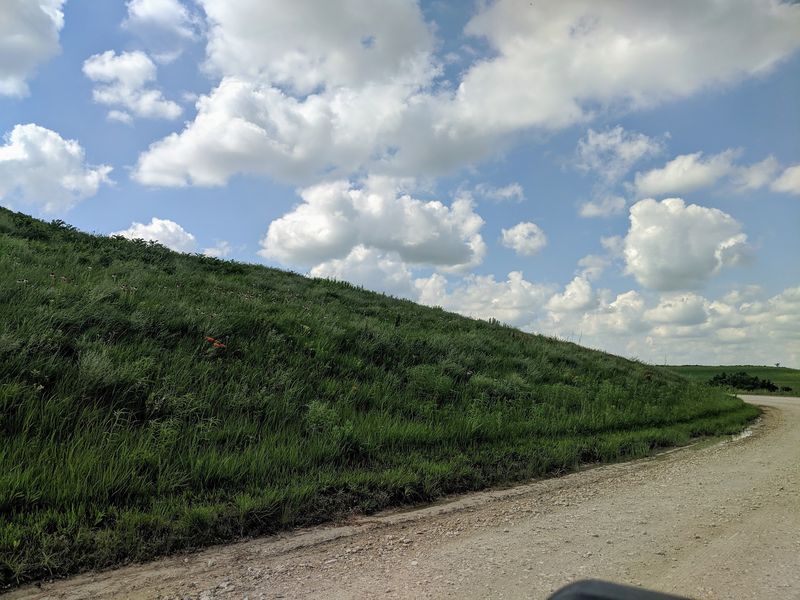
The road out to the lake includes some gravel. Drive slowly and enjoy the scenery instead of rushing.
Pair your trip with a drive along the Flint Hills National Scenic Byway. The prairie views alone can fill a whole afternoon.
Spring trips may offer the strongest waterfall flow. Fall brings cooler hiking weather and a calmer feel around the water.
No matter when you go, this little corner of Kansas packs a lot into a small space. A waterfall, a lake, and endless prairie make one memorable day trip.