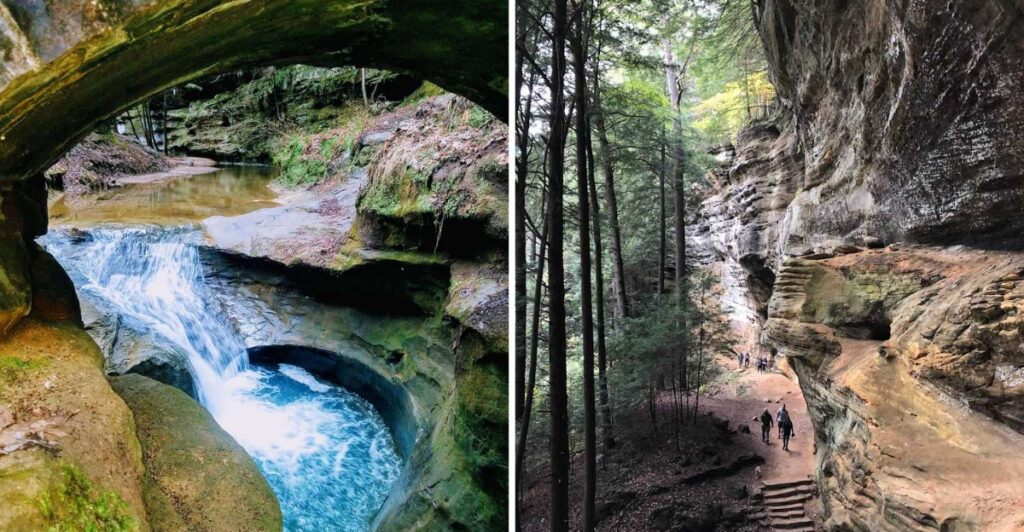
Some places just stop you in your tracks. This State Park in southeastern Ohio is one of those places that genuinely makes you question whether you’re still in the Midwest.
Ancient rock formations, shadowy caves, and cascading waterfalls make it feel more like a fantasy landscape than a public park. Local legends add another layer of intrigue to the park.
Stories of hermits, lost travelers, and strange sightings have circulated in the area for generations, giving it a mythical reputation. With over ten thousand reviews, it’s clearly not just a local secret anymore.
Plan your visit soon and see for yourself why so many people keep coming back to explore every trail and hidden corner.
Beat The Crowds On Ohio’s Iconic Old Man’s Cave
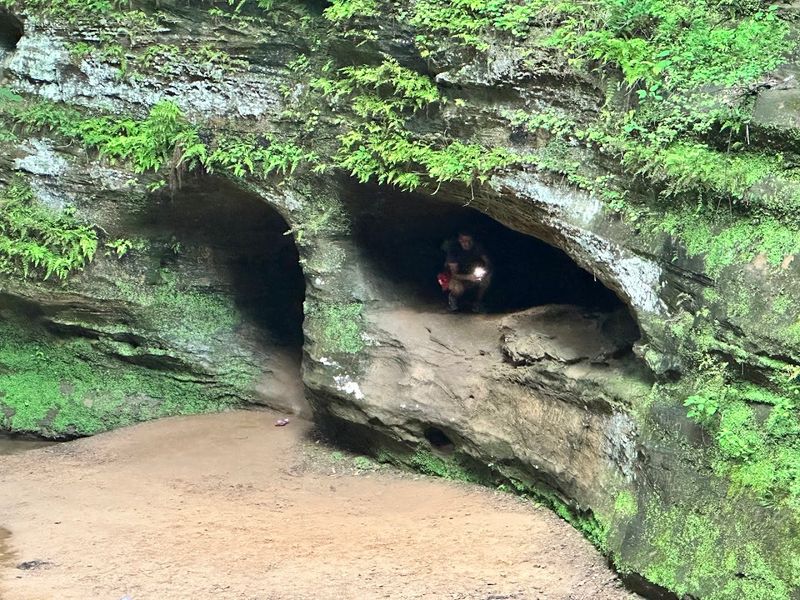
There’s a reason everyone keeps talking about Hocking Hills State Park. Old Man’s Cave is just one of its wonders.
The trail through the gorge here is unlike anything else in Ohio, carved out by thousands of years of erosion into something that looks almost unreal. Towering sandstone walls rise on both sides, and the path winds through a narrow gorge that feels genuinely ancient.
The cave itself was home to a hermit named Richard Rowe in the early 1800s, which is where the name comes from. That little historical detail makes the whole place feel even more interesting when you’re standing inside it.
The trail is roughly 2 miles for the main loop, with an option to extend it to about 6 miles if you want to see more of the park.
Go early. Seriously, go as early as possible.
By midday, this trail gets packed and it can feel more like a queue than a hike. The address is Logan, OH 43138, and parking fills up fast on weekends.
Weekday mornings are the sweet spot for a quieter experience here.
Ohio’s Largest Known Recess Cave
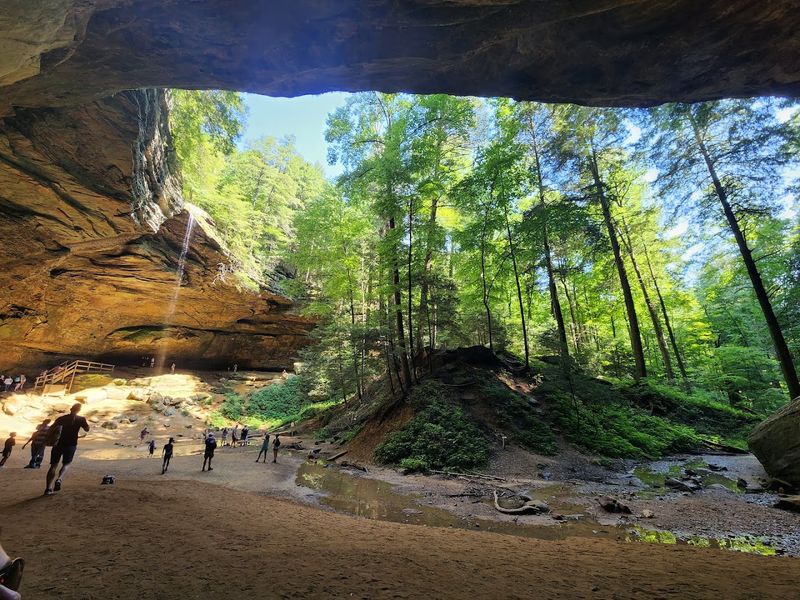
Ash Cave is massive. Like, genuinely, jaw-dropping massive.
It’s the largest recess cave in Ohio, stretching about 700 feet wide and 100 feet deep, with a ceiling that arches overhead in a way that makes you feel very small. Standing inside it for the first time is a moment you won’t forget quickly.
A seasonal waterfall drops from the rim into a pool below, and when it’s flowing after rain, the whole scene looks completely surreal. Even when the waterfall is dry, the cave itself is still worth every step of the short, paved trail that leads to it.
The path to Ash Cave is relatively easy compared to some other trails in the park, making it accessible for most visitors.
One thing people notice right away is how quiet it gets inside the cave. The curved rock walls create a natural acoustic effect that muffles outside noise.
It draws crowds, but the trails around it tend to be much quieter than the cave itself. If you want some breathing room, explore the surrounding forest trails after seeing the main attraction.
The Most Powerful Waterfall In The Park
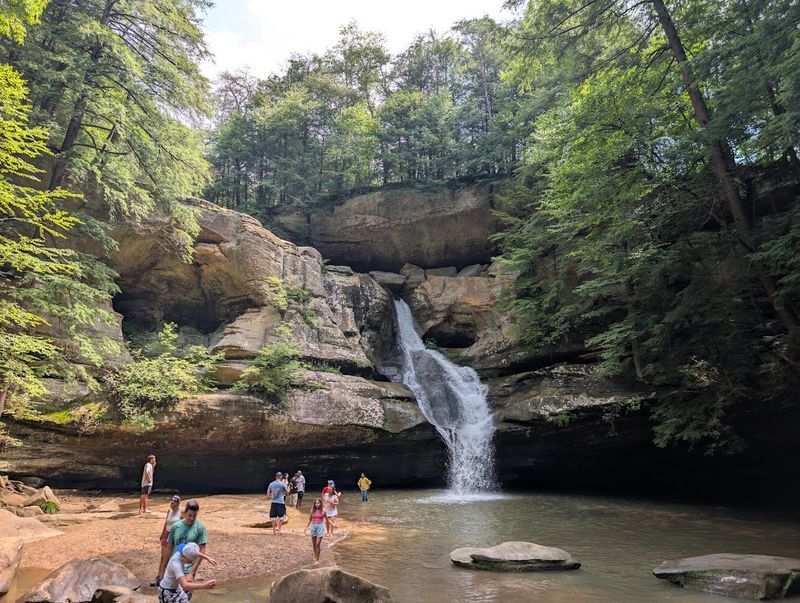
Cedar Falls consistently surprises people. Despite the name, the trees surrounding it are mostly hemlocks, not cedars.
Early settlers apparently got confused, and the name just stuck. It’s a small quirk that makes it feel more charming somehow.
What’s not confusing is the waterfall itself. Cedar Falls is considered the most voluminous waterfall in the Hocking Hills area, and after a good rainfall it absolutely earns that title.
The water pours over a wide ledge and crashes into a plunge pool below with a sound you can hear before you even see it. The trail to get there is about a mile round trip and winds through hemlock-shaded terrain that stays cool even in summer.
The falls are seasonal, so water levels depend heavily on recent rainfall. October visits can sometimes mean dry rock faces, but after 24 hours of rain the transformation is spectacular.
It’s worth checking recent visitor reports before heading out if waterfalls are your main goal. Even without the falls running, the surrounding gorge and old-growth hemlock forest make the walk genuinely worthwhile.
The Cave That Amazes You The Most
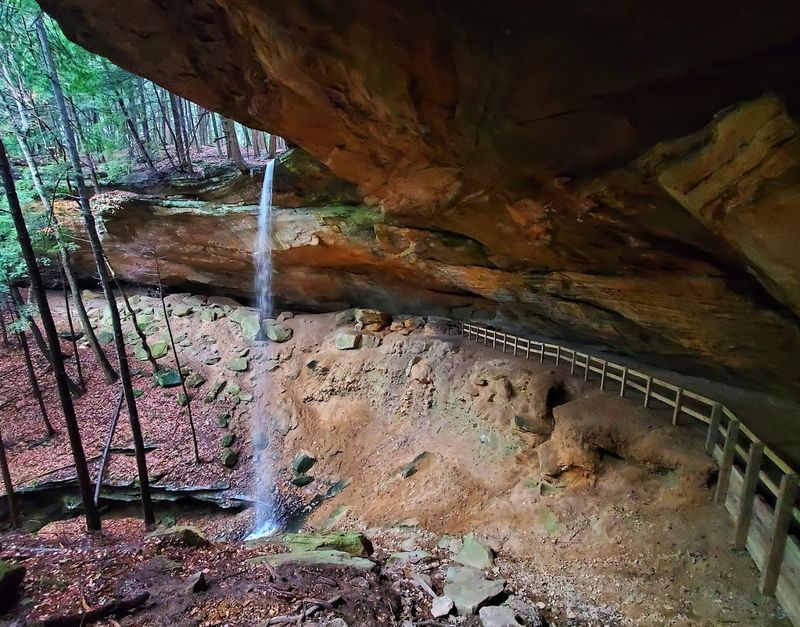
Whispering Cave doesn’t get as much hype as Old Man’s Cave or Ash Cave, but visitors who make it there often say it’s their favorite. The cave is a long, shallow recess cut into a cliff face, and a thin curtain of water trickles along its edge when conditions are right.
It’s quieter, less crowded, and somehow more atmospheric than the bigger spots.
The name comes from the way sound moves inside the cave. Even a soft voice carries in an eerie, echoing way that genuinely catches you off guard.
Standing inside while rain falls outside creates a layered sound experience that’s hard to describe without sounding dramatic about it. Hikers often stay longer than planned, taking in the subtle beauty and unusual acoustics before continuing along the connecting trails.
One visitor called it their favorite spot in the whole park, alongside the waterfalls, and it’s easy to understand why. The trail connecting Whispering Cave to other park features is part of a longer trail system, so it pairs well with a half-day hike.
Wear shoes with good grip because the rocks around the cave entrance get slick fast. Mud and clay are a real factor throughout the park, so waterproof footwear is genuinely useful here.
Miles Of Surprisingly Varied Terrain
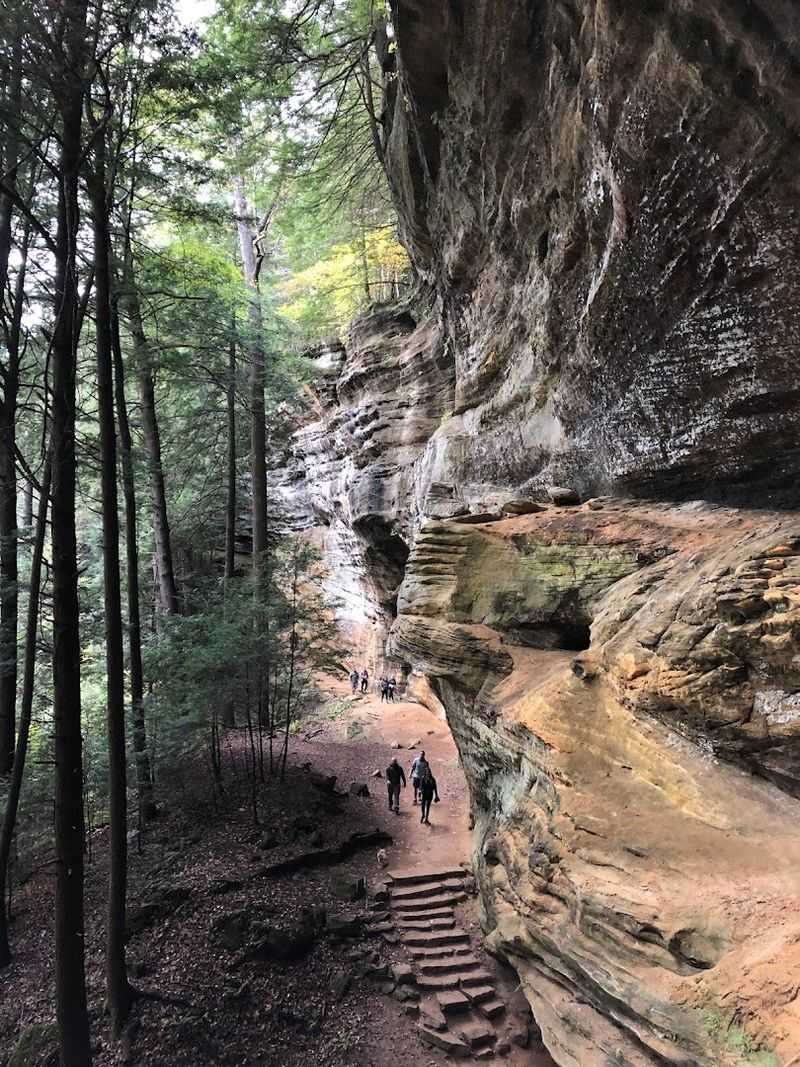
Long before tourists arrived with trail maps and hiking boots, Native American cultures shaped this landscape. The Adena and Hopewell peoples traveled through these gorges thousands of years ago, leaving behind earthworks and artifacts that hint at their presence.
Hocking Hills has around 25 miles of trails spread across the park, ranging from paved accessible paths to rugged rocky routes that include actual ladders bolted into cliff faces. That variety is part of what makes the park so interesting.
You can have a completely different experience depending on which trail you choose.
The main gorge trail connecting Old Man’s Cave to Cedar Falls is a favorite for good reason. It covers about 6 miles total and passes through multiple geological features, creek crossings, and forested sections that shift in character as you go.
Some hikers complete it in a few hours, others take most of a day. One couple reportedly hiked over 9 miles in a single visit and said their legs gave out afterward.
Trail markings are generally solid, though some visitors recommend downloading a map or bringing a printed one just in case. Cell service can be spotty in the gorge areas.
The trails stay open year-round, and winter visits reveal a completely different side of the park with ice formations clinging to the cliffs. Mud is a constant companion in wet seasons, so dress accordingly and don’t wear shoes you care about.
Ancient Geology You Can Actually Touch
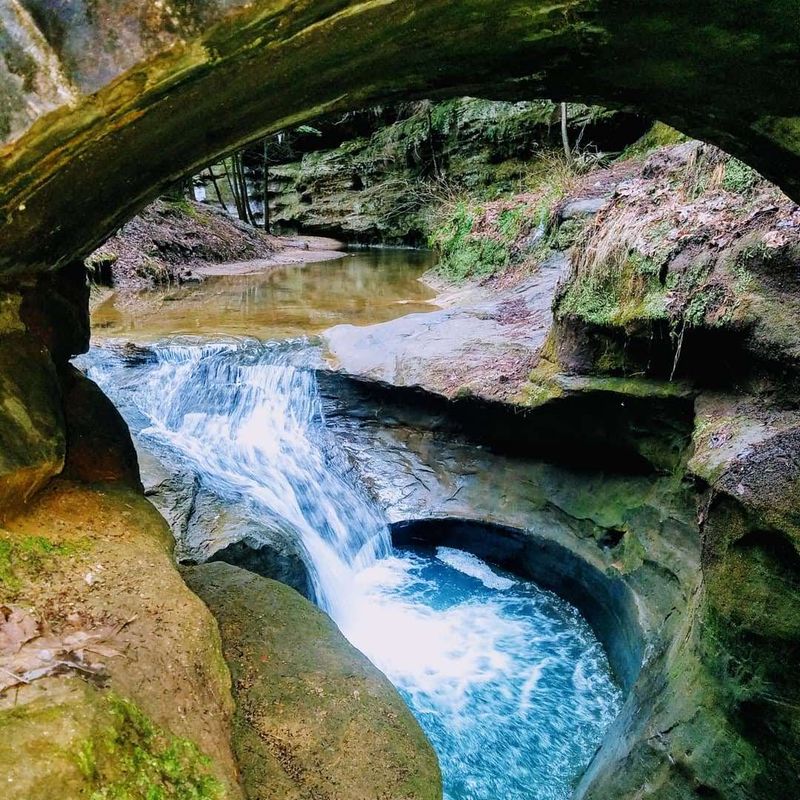
The geology at Hocking Hills is genuinely fascinating once you understand what you’re looking at. The rock here is called Black Hand sandstone, and it formed roughly 350 million years ago.
Water and time carved the caves, gorges, and cliffs that make the park look the way it does today. That’s not a small number to sit with.
The softer layers of rock eroded faster than the harder ones above, which is how those dramatic overhanging cave ceilings formed. You can actually see the different rock layers when you look closely at the cliff faces.
It’s the kind of geology lesson that sticks with you because you’re standing inside the textbook.
Some of the rock surfaces are covered in ferns, moss, and liverworts that thrive in the cool, shaded gorge environment. It adds to that otherworldly atmosphere that keeps pulling people back.
Touching the formations is allowed in most areas, but climbing or disturbing the rock is not permitted. The park takes conservation seriously, and the fragile cave ecosystems need that protection to stay intact for the next generation of visitors.
Staying Overnight Changes Everything
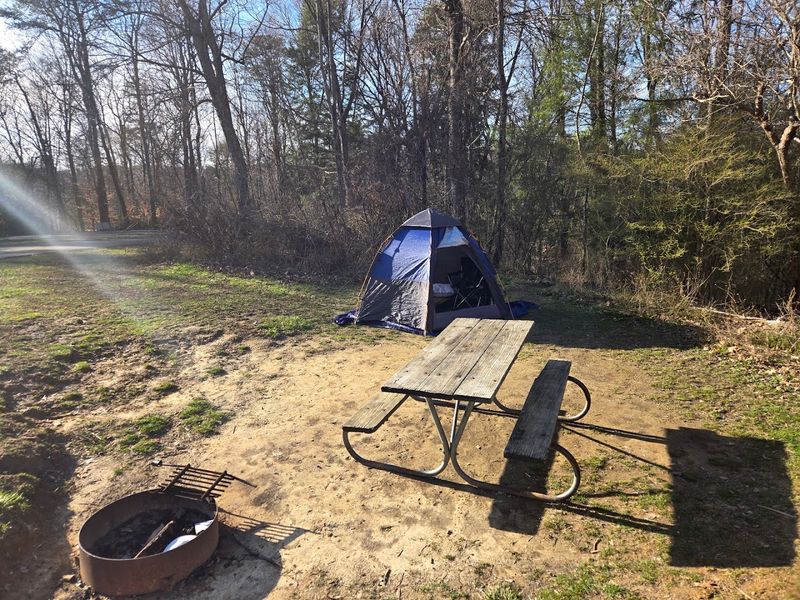
Spending a night at Hocking Hills is a completely different experience from a day trip. The park offers campgrounds with electric and non-electric sites, plus cabins that come with real amenities including gas fireplaces, full kitchens, and on-demand hot water.
The cabins are comfortable enough that you won’t feel like you’re roughing it.
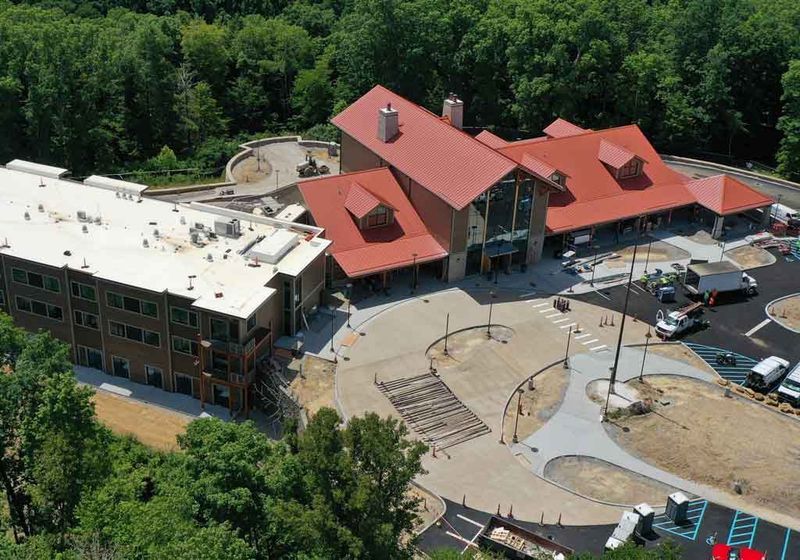
The lodge is a newer facility, built in 2022, and has a rustic look that fits the surroundings well. Staying on-site means you can hit the trails at sunrise before the parking lots fill up, which makes a huge difference in the quality of your visit.
Early morning light in the gorge is also something worth setting an alarm for.
The RV electric sites are noted as being fairly close together, so if space matters to you, the non-electric loop offers a bit more breathing room. Cabin guests have reported that the beds are comfortable and the overall setup exceeded expectations.
Booking well in advance is essential, especially for summer and fall weekends. The park gets visitors from across the country, and availability disappears fast during peak season.
Wildlife And Nature
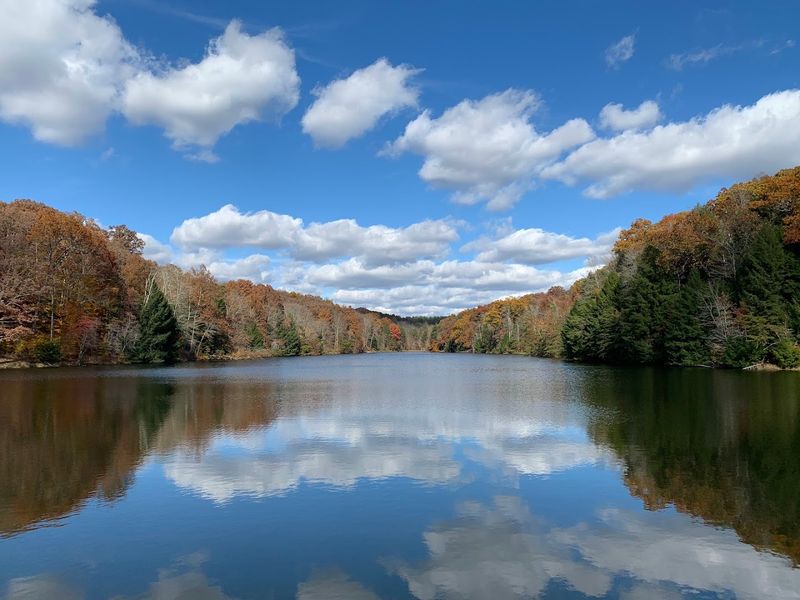
The wildlife at Hocking Hills tends to catch people off guard. White-tailed deer are common along the trails, especially in early morning and evening hours.
Wild turkey, foxes, and various bird species also move through the park regularly. The hemlock-lined gorges create a microhabitat that supports species you wouldn’t typically find in open Ohio countryside.
The plant life alone is worth paying attention to. Canada yew, rare ferns, and plants more commonly associated with northern forests survive here because the gorges stay cool and shaded even in summer.
It’s one of the ecological quirks that makes the park feel so different from the surrounding landscape.
Dogs are welcome on the trails, which a lot of visitors appreciate. One important tip if you bring a dog: use a body harness rather than just a collar.
The terrain includes walls, ledges, and drop-offs, and a collar alone won’t save a dog that decides to jump somewhere unexpected. The park also stays open year-round, so wildlife viewing in winter can be surprisingly rewarding when the leaf cover drops and sight lines through the forest open up significantly.
What To Know Before You Go
Hocking Hills has a 4.8-star rating from over 17,000 reviews, which sounds impressive until you realize what that also means for crowds. This park draws visitors from all over the country, and on summer and fall weekends it can feel genuinely overwhelming.
One visitor compared peak times to standing in line at a theme park, which isn’t an exaggeration.
Arriving early is the single most repeated piece of advice from experienced visitors. The parking lots fill up quickly, and once they’re full, access becomes frustrating.
Weekday visits, especially in spring or late fall, offer a noticeably different and more peaceful experience. All trail entries are free, which removes one barrier but adds to the foot traffic.
A few practical things worth knowing: cell service is unreliable in the gorge areas, so download maps before you arrive. Some trailheads don’t have traditional bathrooms, though portable facilities are available.
The roads around the park are narrow and winding with limited visibility, so drive carefully. Mud and clay are persistent on the trails in wet weather, and waterproof shoes make a real difference.
Bringing a printed trail map is genuinely useful and not just an old-fashioned suggestion.