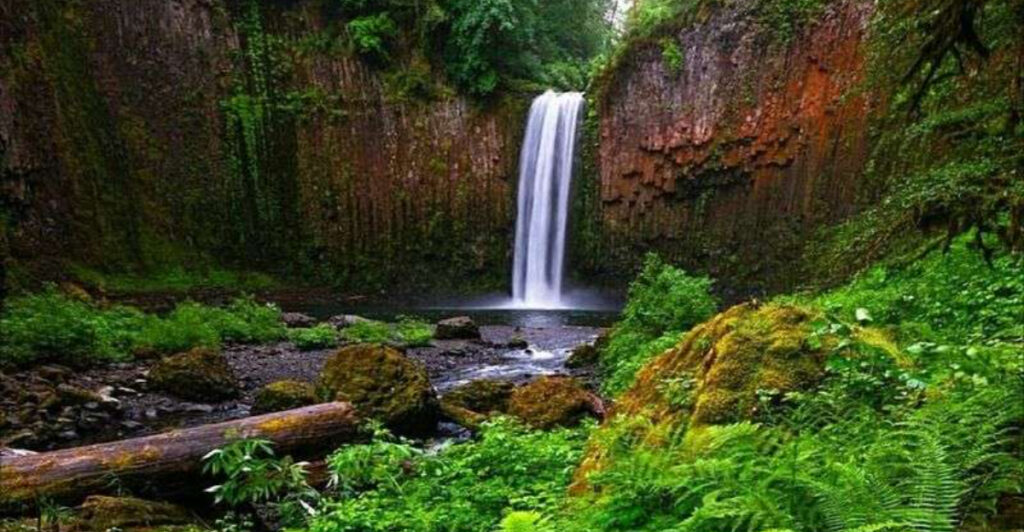
I remember the first time someone mentioned this waterfall in Oregon, like it was a secret only locals knew. The state is packed with incredible sights, but this one felt different.
It demanded attention the moment I saw it. Hiking up along the creek wasn’t easy. I had to push through mud, rocks, and tangled roots.
Every step made the payoff feel even bigger. When I finally rounded the last bend and saw the water plunging into the pool below, I completely lost my breath. It’s the kind of place that makes you forget your phone, your schedule, even the world outside the forest.
If you crave raw, dramatic scenery and don’t mind a little adventure to get there, this should absolutely be on your list. Pack good shoes, bring water, and be ready for an experience that sticks with you long after you leave.
The Journey Is Part Of The Adventure
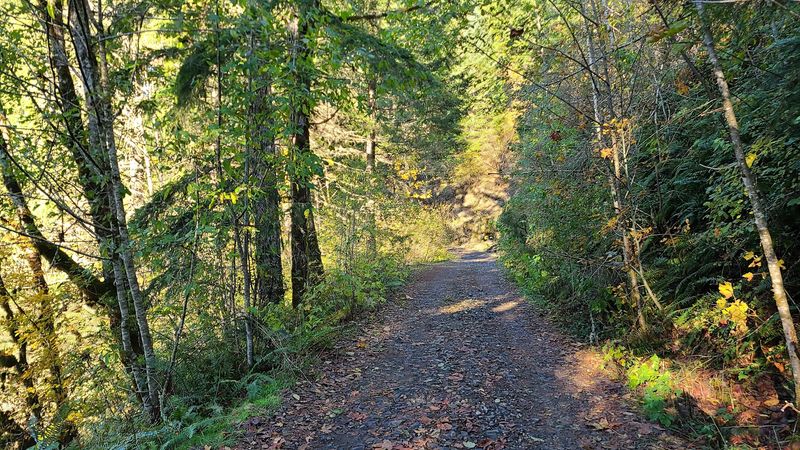
Before I ever set foot on the trail, the road itself gave me a preview of just how wild this experience was going to be. The official address for Abiqua Falls is listed near Scotts Mills, Oregon 97375.
Getting there means navigating several miles of rough, deeply rutted gravel road that will humble even confident drivers.
I drove past where Google Maps told me to stop, which is a mistake almost everyone makes on their first visit. Keep going past that marker by roughly 0.4 miles and look for a sign near a white gate.
If your vehicle does not have all-wheel drive and decent ground clearance, I strongly recommend parking about a mile before the trailhead and walking the road instead.
The horseshoe turn near the end has a steep rut that regular sedans simply cannot clear. I watched two cars attempt it and back up defeated. Trucks, Jeeps, and higher-clearance SUVs handle it fine.
Walking the road adds distance but honestly builds anticipation beautifully. The forest closes in around you, filling the air with the scent of wet earth and cedar.
By the time you reach the trailhead, you already feel like you’ve earned something special.
Finding The Trailhead Without Losing Your Mind
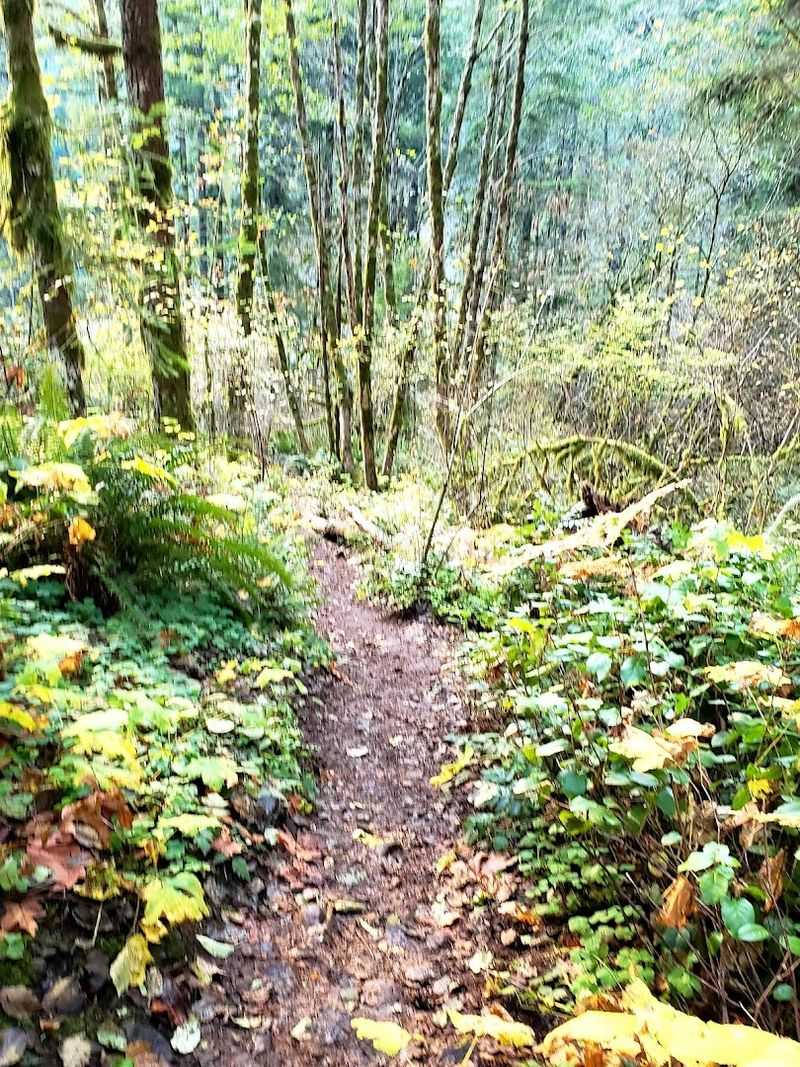
Locating the actual trailhead at Abiqua Falls is genuinely confusing the first time, and I say that as someone who has hiked all over the Pacific Northwest. The trail does not start where most mapping apps suggest, and there are almost no official markers guiding you in the right direction.
Look for a white sign that reads something like “Angel Abbey” or a board displaying fire warning information and local regulations. The trailhead sits just before a closed white gate at the end of the road.
Do not scramble down the rocks immediately adjacent to the gate because that route is dangerously steep and uncontrolled. Instead, walk back from the gate about one hundred feet and find the marked path.
I also noticed red and white trail tape tied to branches on my last visit, which helped confirm I was heading the right direction.
Other hikers in the area are usually friendly and willing to point you toward the correct entry. Oregon trails like this one rely on community knowledge more than official signage, so asking someone nearby is never a bad call.
Once you find the path, the descent begins almost immediately.
Rough Terrain And Ropes Make The Descent An Adventure
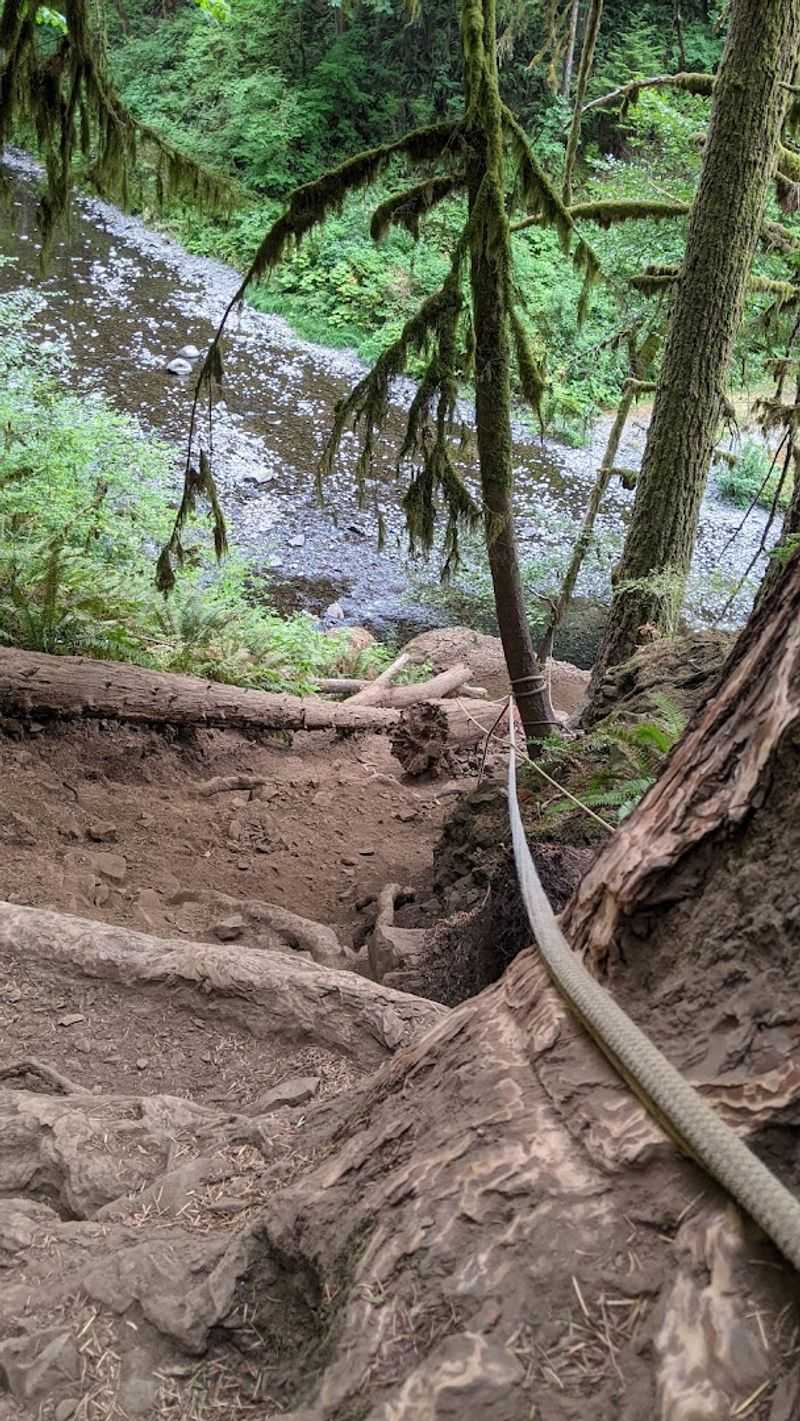
Nothing fully prepared me for how steep the trail down to Abiqua Falls actually is. The descent is short in distance, roughly half a mile. It drops sharply through loose rock, slick dirt, and tangled tree roots that demand your full attention.
Previous visitors have tied ropes to trees at the steepest sections, and those ropes are genuinely necessary rather than just helpful extras.
I wore proper hiking boots and still slipped twice on my first trip down. People who attempt this trail in flip-flops or casual sandals are taking a real risk.
After rain, every surface becomes a slip hazard.
The third rope section near the bottom is the trickiest, requiring some upper body strength to control your descent safely. I always tell friends to bring gloves for extra grip on the ropes.
Coming back up is actually easier than going down, which surprised me completely. Your footing feels more secure when you are climbing rather than lowering yourself, and the ropes give you solid upward leverage.
Plan for about an hour total for the hike from the trailhead to the falls and back, though that estimate assumes dry conditions. Wet weather adds significant time and difficulty.
This trail is not suitable for young children, and I would not bring dogs given the sharp rocks along the creek bed.
Your First Glimpse Of The Falls Feels Almost Unreal
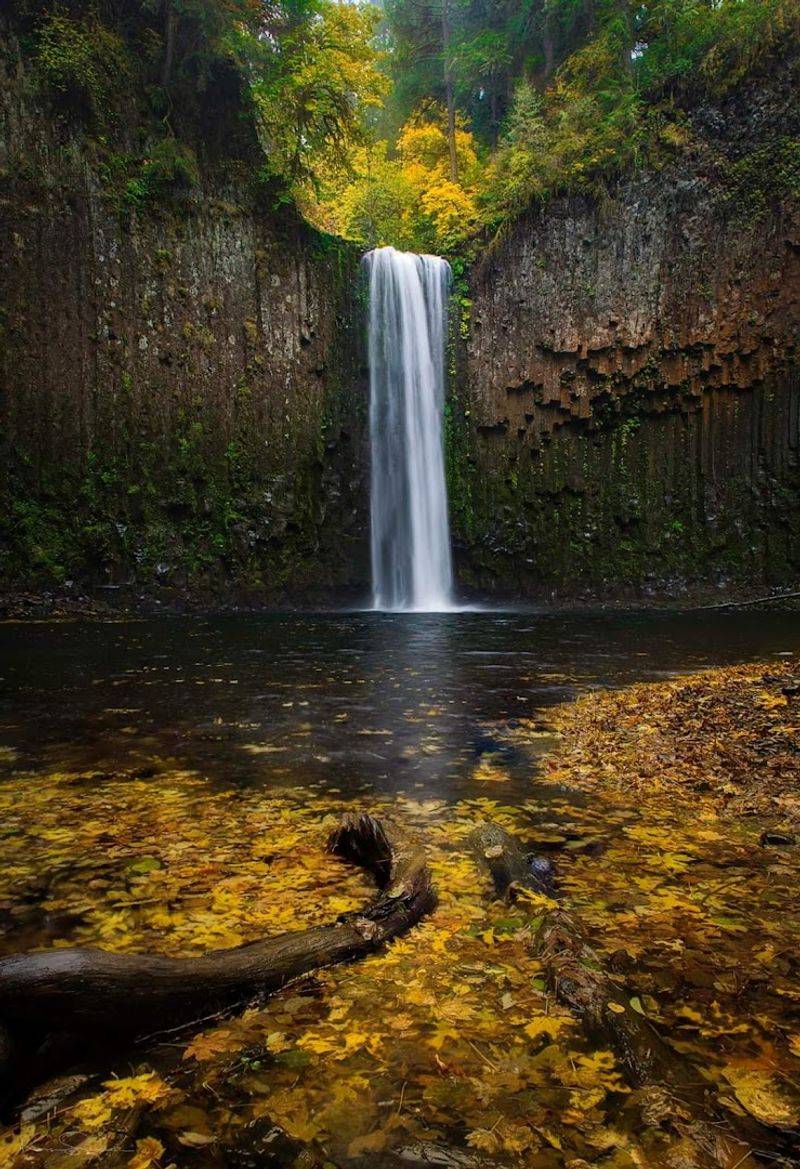
I have visited a lot of waterfalls across Oregon, and nothing quite matches the theatrical entrance that Abiqua Falls delivers. You round a bend after rocks and logs, and suddenly the waterfall crashes into view, leaving you breathless.
The sound arrives a split second before the view, a deep, resonant roar that bounces off curved basalt walls.
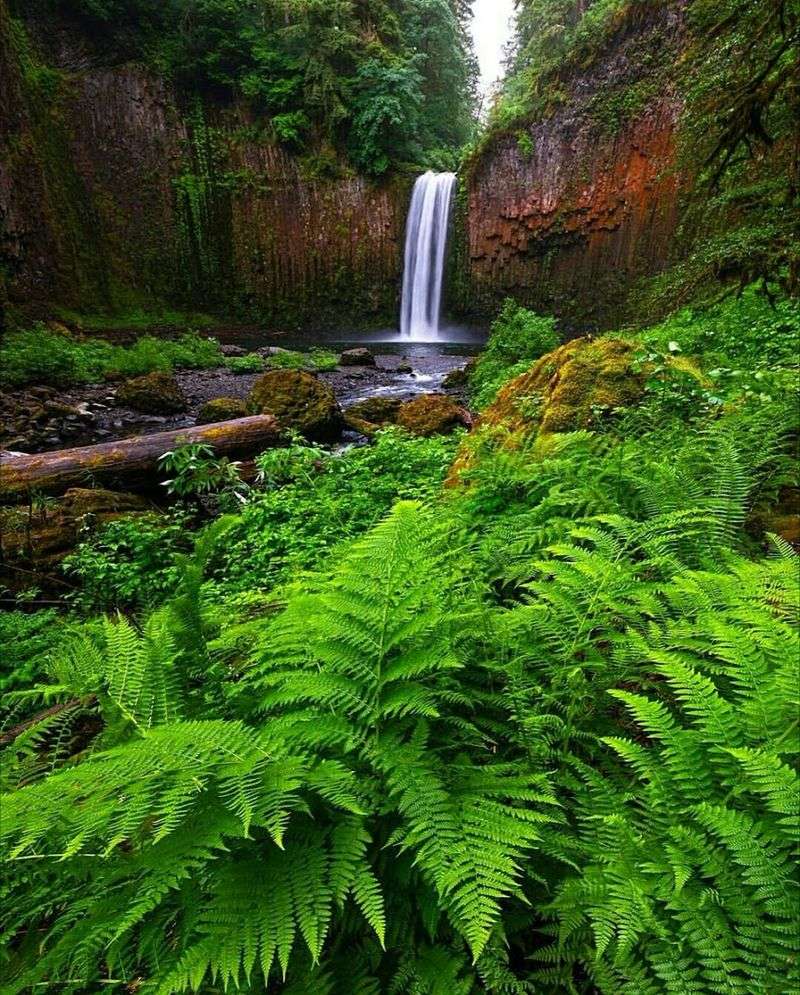
Abiqua Falls drops approximately 92 feet into a wide plunge pool, and the surrounding amphitheater of volcanic rock curves around it like a natural cathedral. Dark green moss and ferns cover the walls, and the falls’ mist drifts across your face as you step closer.
I stood completely still for several minutes the first time, unable to form a coherent thought.
The geological formations in the rock walls are genuinely fascinating up close. Columnar basalt formations from ancient lava flows create a honeycomb-like texture across the cliff faces.
The water carving through the rock over thousands of years tells a quiet story of deep time.
Photos simply do not capture the scale or the atmosphere of this place. Every person I have brought here has reacted with the same stunned silence I felt on my own first visit.
The Geology And Local History Behind The Falls
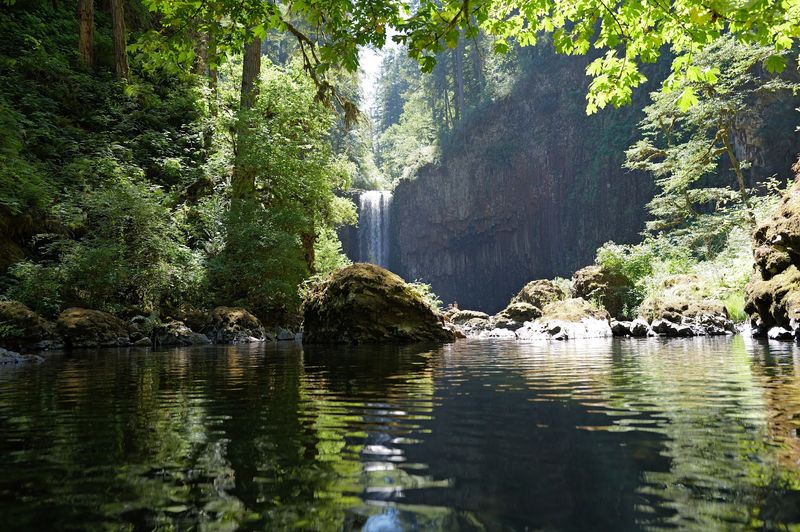
Abiqua Falls exists because of volcanic activity that shaped much of the Cascade Range millions of years ago. The basalt walls of the amphitheater formed from ancient lava flows that cooled and cracked into columnar patterns.
Running your hand along those hexagonal columns connects you to a geological timeline that stretches far beyond human history.
The Abiqua Creek watershed has long been recognized as ecologically significant within the Willamette Valley region of Oregon.
The name “Abiqua” is believed to have roots in the language of Indigenous peoples who lived in the Willamette Valley long before European settlers arrived. Historical documentation of the specific origin is limited.
The surrounding land carries layers of history that most casual visitors never think about while they are staring at the water.
Local oral tradition sometimes references the area as a place of spiritual significance, and spending time there it is easy to understand why. The enclosed amphitheater creates an almost complete acoustic isolation from the outside world.
Wind, traffic, and human noise all disappear once you are standing at the base of the falls. All that remains is the sound of water, the scent of cold stone, and the sense of being somewhere truly apart from ordinary life.
That sense of removal from the everyday world is part of what keeps people returning.
Wildlife And Plant Life Along The Creek
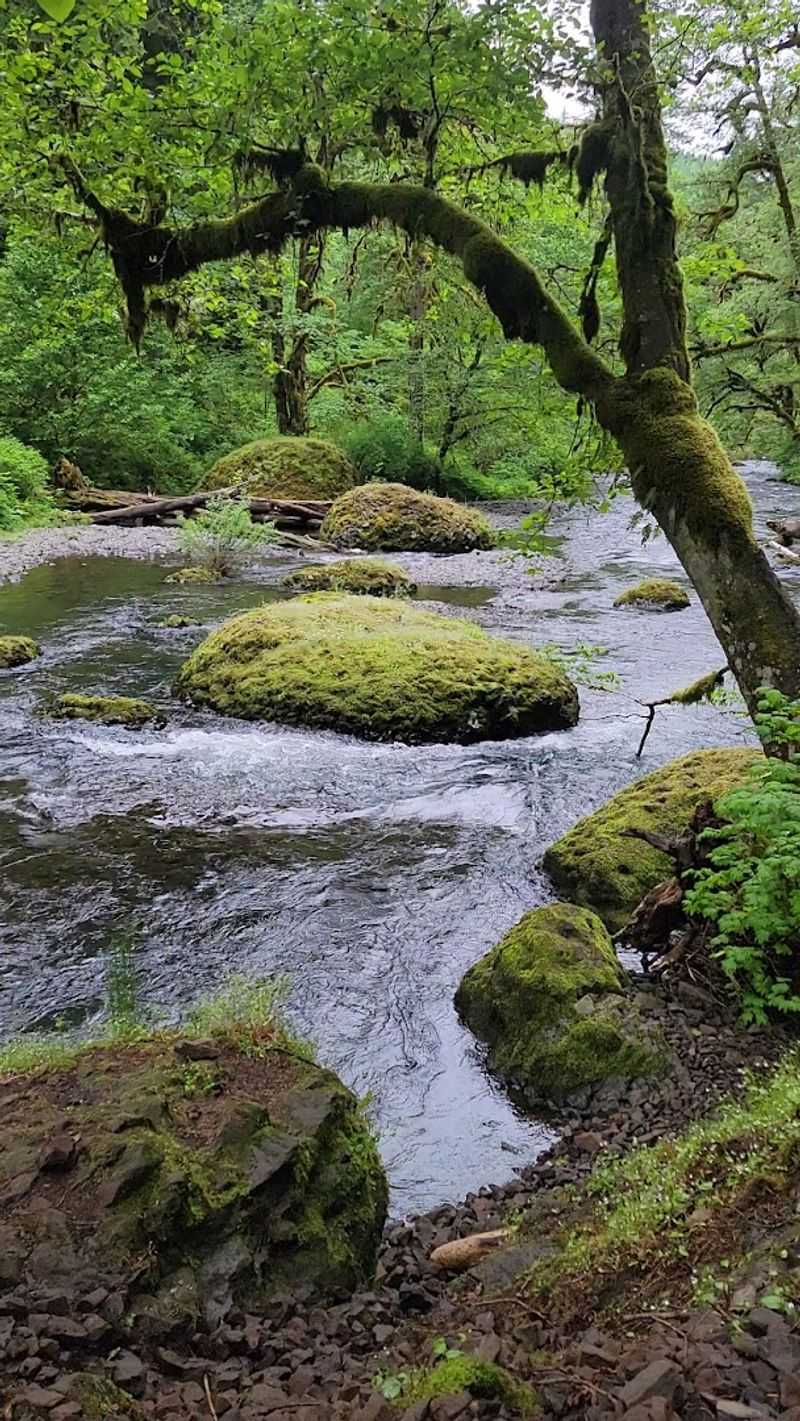
The creek corridor leading to Abiqua Falls is one of the richest little ecosystems I have explored anywhere in the Pacific Northwest. Old-growth Douglas firs tower above the canyon rim, their roots gripping the rocky slopes in ways that seem to defy gravity.
Sword ferns grow in dense clusters along every available surface, and bigleaf maple trees stretch their wide branches over the water in graceful arcs.
I have spotted American dippers bobbing on mid-stream rocks during almost every visit. These small, energetic birds dive into the rushing creek to hunt insects underwater, which never stops being astonishing to watch.
Steelhead and native cutthroat trout use Abiqua Creek as habitat, and during certain seasons you can see them holding position in the clear pools along the trail. The presence of clean, cold water supports a remarkable variety of aquatic life.
Black-tailed deer frequently move through the forest above the canyon in the early morning hours, and I have heard but never seen a black bear in the area, though locals confirm they pass through occasionally. The canyon itself creates a microclimate that stays noticeably cooler and more humid than the surrounding forest.
This environment supports mosses and lichens that rely on consistent moisture to thrive.
Bring your curiosity along with your camera because the smaller details of this place reward patient observation just as much as the waterfall itself does.
Photography Tips For Capturing The Falls Perfectly
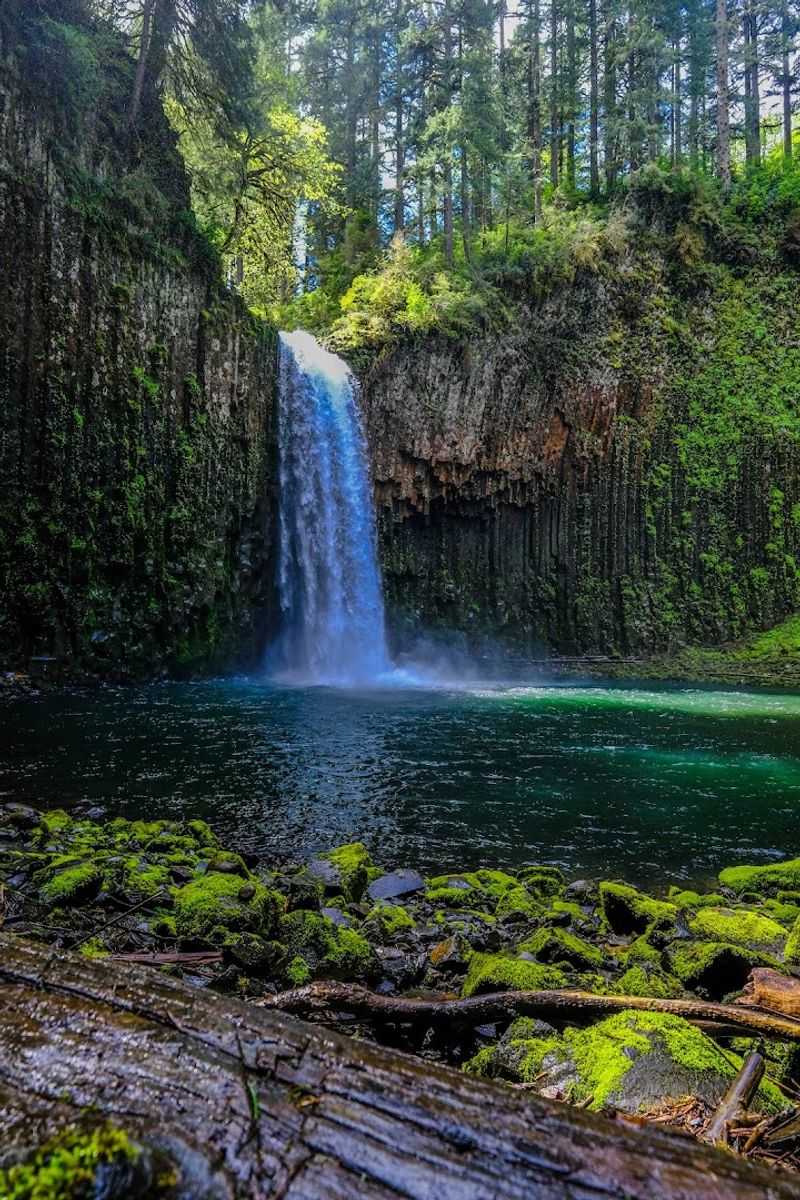
Photographing Abiqua Falls is one of the most rewarding challenges I have tackled with a camera. The canyon walls channel light from above in a narrow band, making harsh midday sun more of a challenge than a benefit.
Overcast days produce the most even, flattering light inside the canyon, softening the contrast between the bright water and the dark basalt walls.
A tripod is essential for long-exposure shots that render the falling water as smooth, silky ribbons rather than frozen droplets. I use a two-second shutter delay or a remote trigger to eliminate camera shake when the shutter opens.
Shutter speeds between half a second and two seconds generally give the best waterfall effect without completely washing out the texture of the water. A polarizing filter cuts glare on the wet rocks and deepens the green of the moss dramatically.
Note: Getting your camera wet is a real risk at Abiqua Falls because the mist from the plunge pool drifts constantly outward. I suggest keeping a microfiber cloth in your jacket pocket to wipe the lens between shots.
Wide-angle lenses work best for capturing the full scale of the amphitheater, but a short telephoto lets you isolate the columnar basalt textures in compelling detail. Arrive early on weekends if you want the falls to yourself in your frame.
Best Times To Visit And Nearby Amenities To Know
Timing your visit to Abiqua Falls makes an enormous difference in what you experience. Late spring, roughly May through early June, delivers the highest water volume and the most dramatic curtain of falling water.
The snowmelt from the Cascades feeds Abiqua Creek generously during this window, and the surrounding vegetation is at its most intensely green. Summer visits are popular for swimming in the plunge pool, and the water is cold but absolutely refreshing on a warm day.
Avoid visiting in wet winter conditions unless you are an experienced hiker comfortable with very slippery, muddy terrain. One hiker I met attempted the trail on Christmas Day at 35 degrees and said the rope section was too unsafe to complete.
The road to the trailhead also becomes far more treacherous in winter rain, and getting stuck out there is a genuine possibility without the right vehicle. Early morning arrivals on weekdays give you the best chance of having the falls mostly to yourself.
There are no formal amenities at Abiqua Falls. No bathrooms, no water stations, no food vendors, and no maintained parking lot close to the trailhead.
The nearest town with services is Scotts Mills, Oregon, a small community a short drive back toward the main road.
Pack everything you need before leaving home, including water, snacks, a first aid kit, and a fully charged phone with an offline map downloaded. Leave no trace and carry out everything you bring in.
Enjoy nature, but always respect it first.