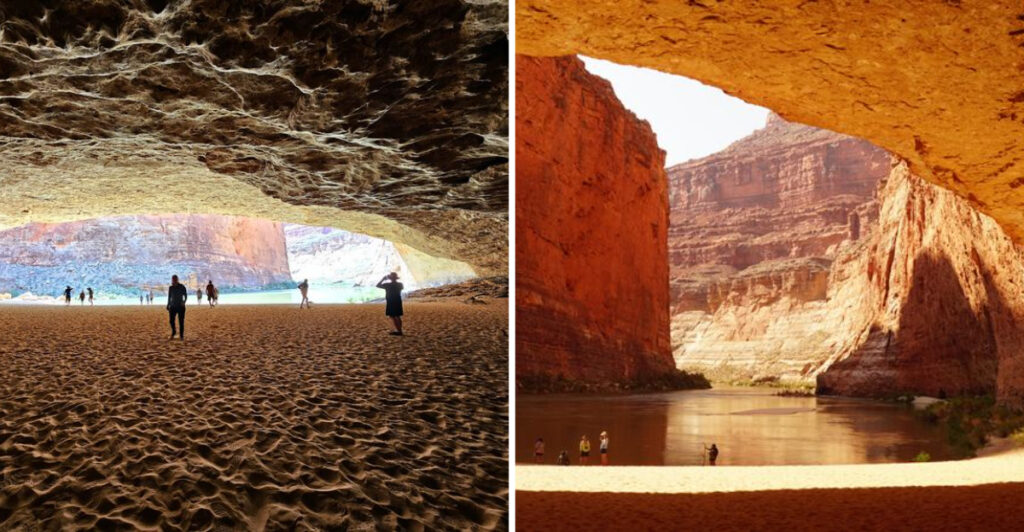
Deep inside Arizona, this cave is the kind of place that makes you question everything you thought you knew about caves.
From the river, it barely looks like anything special, just a shadowy notch in a towering limestone wall. But step inside and the space opens up into something almost unbelievable, a massive natural amphitheater with a soft sandy floor.
This is not your average roadside attraction. The only way to reach it is by rafting the Colorado River, which means most people will never see it.
For those who do make the journey, this cave delivers one of the most adventurous surprises the Grand Canyon has to offer.
For those who do make the journey, this cave delivers one of the most adventurous surprises the Grand Canyon has to offer.
What This Cavern Actually Is
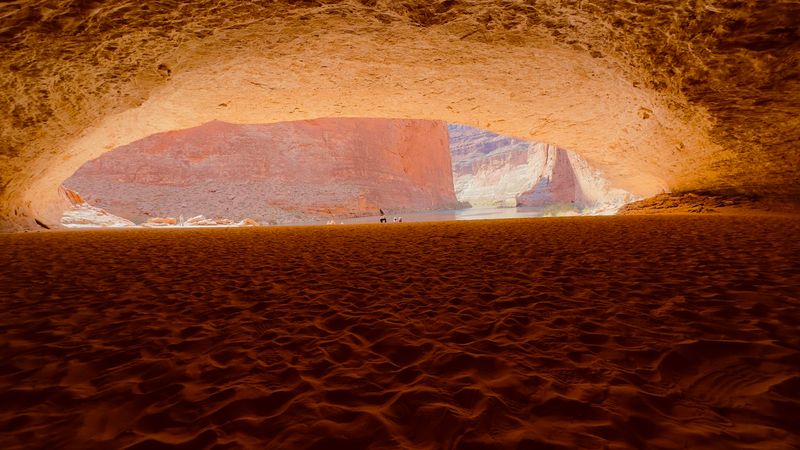
Not every cave earns a reputation, but Redwall Cavern in the Grand Canyon, Arizona, has quietly built one of the most impressive ones in the American Southwest.
The cavern is carved into a layer of reddish limestone known as the Redwall Limestone, a formation that runs through much of the Grand Canyon’s inner walls.
This rock layer was deposited roughly 340 million years ago during the Mississippian period, when a shallow sea covered the region.
The cave itself is not a deep, twisting tunnel.Instead, it opens like a giant scalloped bowl, wide at the mouth and arching dramatically overhead.
The interior is surprisingly bright, lit naturally by the wide opening that faces the Colorado River.
John Wesley Powell, the legendary explorer who led the first known expedition through the Grand Canyon in 1869, estimated the cavern could hold around 50,000 people.Modern estimates are more conservative, but the space is still strikingly large.
Few natural features in Arizona manage to feel both intimate and enormous at the same time.
The Only Way To Get There
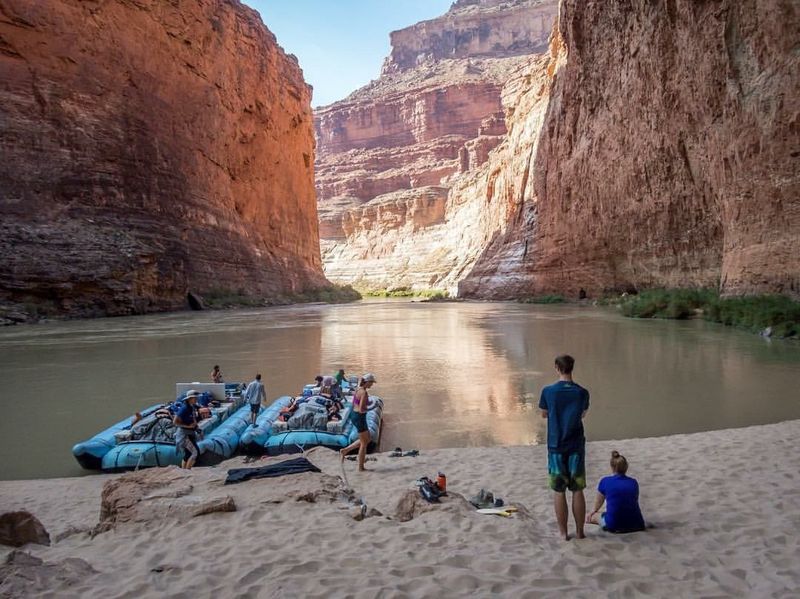
Here is the part that surprises most people: there is no trail, no road, and no shortcut to Redwall Cavern.
River trips typically launch from Lee’s Ferry in northern Arizona, located just south of the Utah border.
From there, Redwall Cavern appears at approximately river mile 33, which means you will pass through some of the canyon’s most dramatic early scenery before arriving.
The only practical way to reach Redwall Cavern is by rafting the Colorado River through the Grand Canyon. Most visitors see it on a guided multi-day river trip, and the National Park Service says commercial trips typically range from 3 to 18 days.
Commercial outfitters based in Arizona offer guided trips that include a stop at the cavern as a highlight of the journey.
The lesson is clear: this destination belongs to the river, and the river alone decides who gets to visit.
The Sandy Beach Inside The Cave
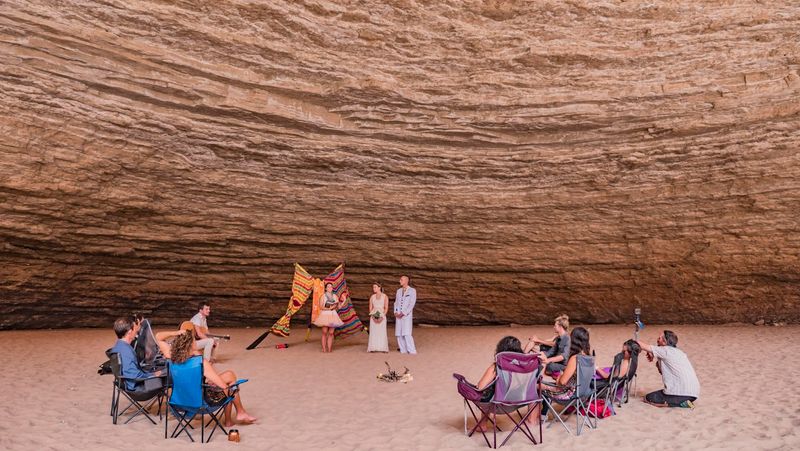
The sandy floor is the feature that stops visitors in their tracks the moment they step inside.
Fine, pale sand covers the entire base of the cavern, creating a surface that feels more like a private beach than the inside of a cave.The sand is smooth and surprisingly soft underfoot, shaped by centuries of river flooding that deposited sediment deep into the alcove.
When river levels drop, that sand stays behind, creating one of the most unexpected lounging spots in all of Arizona.
Groups routinely spread out lunch across the sandy floor, and some simply sit quietly and take in the scale of the space around them.
The coolness of the cave contrasts sharply with the blazing Arizona sun outside, making it a natural resting point during long river days.
The combination of shade, soft ground, and the sound of the Colorado River just outside creates an atmosphere that is genuinely hard to describe.Some visitors call it meditative.
Others just call it the best nap spot on the entire river trip.
The Sheer Size Of The Space
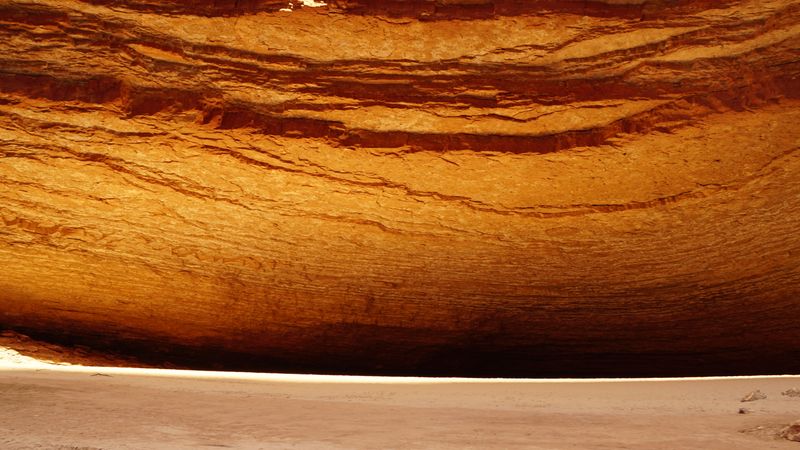
Scale is something the Grand Canyon plays with constantly, but Redwall Cavern takes that game to a whole new level.
The opening of the cavern stretches roughly 300 feet wide and rises to a height that dwarfs everything standing beneath it.
The arch-shaped ceiling curves overhead in a smooth, sweeping line, worn smooth by ancient water erosion over millions of years.
Standing at the back of the cave and looking out toward the river, the opening frames the opposite canyon wall like a painting.
John Wesley Powell famously wrote that the cavern could seat a crowd the size of a major arena.
While that figure may have been poetic exaggeration, the impression it creates is accurate.
A group of 20 people standing inside barely registers against the cave’s total volume.
For travelers who have spent time in Arizona’s smaller slot canyons and narrow gorges, Redwall Cavern feels like the opposite experience entirely.
Rather than squeezing through tight passages, visitors simply walk into an open, cathedral-like space and let the silence settle around them.
Fossils Hidden In Plain Sight
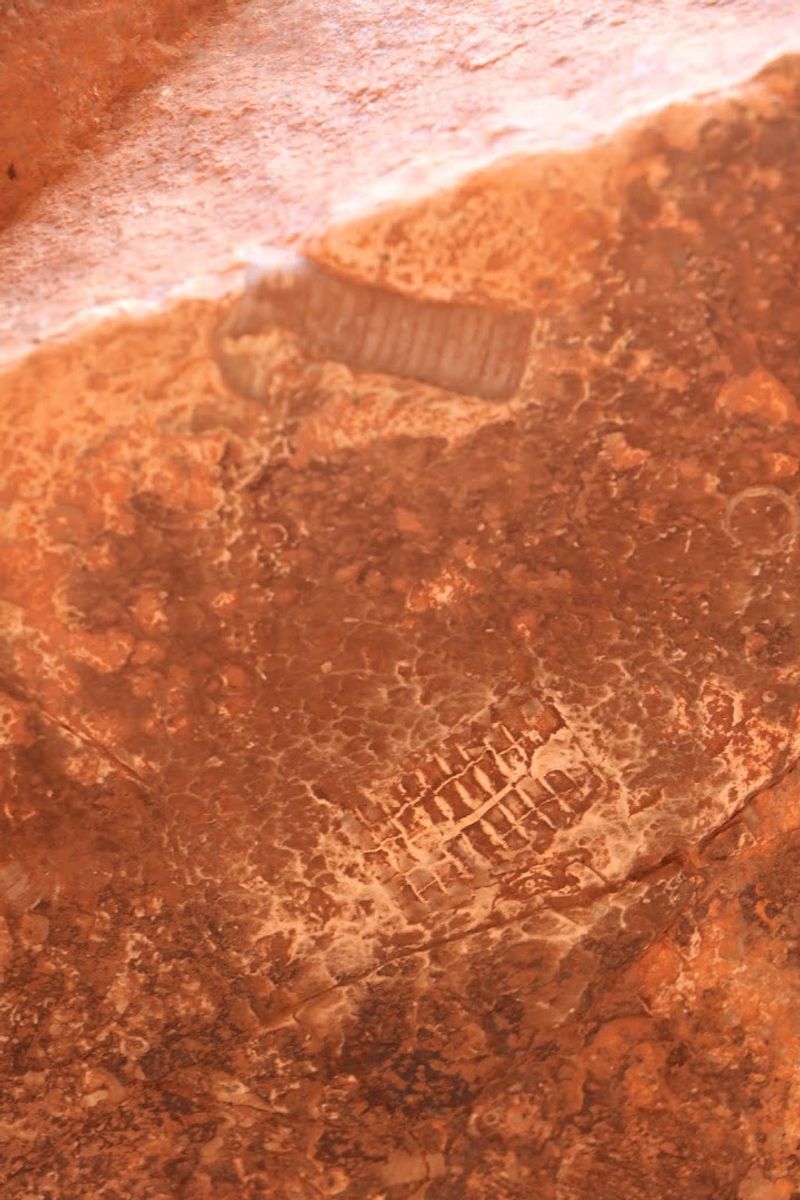
The cave does not just impress with size; it also quietly rewards the curious.
Scattered around the rocky edges of Redwall Cavern, particularly in boulders and fallen slabs near the entrance, visitors have spotted fossilized remnants of ancient sea creatures.Crinoids, corals, and brachiopods are among the most commonly identified fossils in the Redwall Limestone formation throughout the Grand Canyon.
These organisms lived in the warm, shallow sea that covered this part of Arizona hundreds of millions of years ago.
Finding a fossil pressed into a rock that you can actually touch, without glass between you and it, is the kind of experience that makes geology feel personal rather than academic.
Kids especially tend to react with genuine excitement when a guide points out the outline of a shell in the wall beside them.
The fossils are protected, meaning they should be observed but not removed.
Still, just knowing they are there, embedded in the same stone that arches above you, gives the entire cave a layered sense of time that few places in the world can match.
The Atmosphere Inside The Cavern
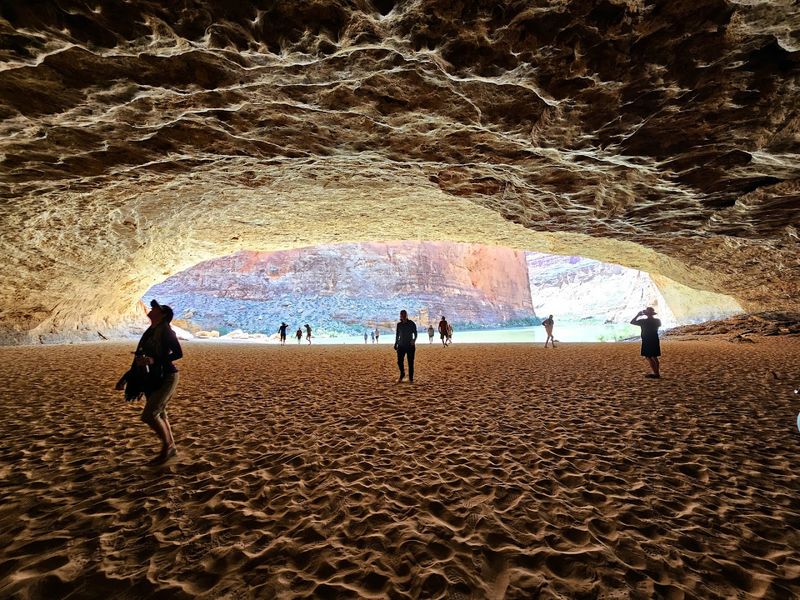
Walking into Redwall Cavern feels like the canyon is offering you a moment of quiet after miles of noise and motion on the river.
The temperature drops noticeably the moment you step out of the direct Arizona sun. It feels well deserved after spending some time on ahot Arizona day.
In summer, when river temperatures and air temperatures both climb well above 100 degrees Fahrenheit, the shade inside the cavern feels like a gift.
The stone walls hold a natural coolness that no amount of sunscreen or river spray can replicate.
Sound behaves differently in here too.
Conversations echo gently off the curved ceiling, and the low rumble of the river outside becomes a soft background hum.
Groups that arrive loud and energized from the rapids often find themselves speaking more quietly once they are inside, as if the space itself asks for a little respect.
One reviewer described the feeling simply as “sublime,” and that single word captures something real.
There is a quality to the light, the temperature, and the silence in Redwall Cavern that makes visitors instinctively slow down and pay attention to where they actually are.
What To Expect On A River Trip
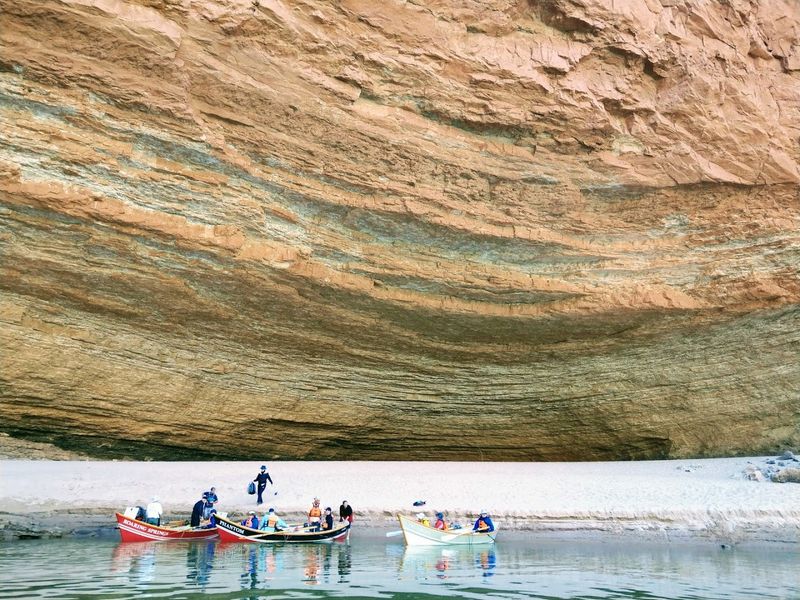
Planning a trip to Redwall Cavern means planning a full Grand Canyon river expedition, and that is not a small undertaking.
Commercial river trips in Arizona typically require advance reservations, sometimes made a year or more ahead of time due to the limited number of permits available.
The National Park Service controls access to the Colorado River corridor through the Grand Canyon, and the permit system is designed to protect the canyon’s fragile environment from overuse.
Trips range in style and intensity.Motorized raft trips cover the canyon faster and tend to suit travelers who want the highlights without committing to weeks on the water.
Non-motorized oar trips move more slowly and offer a deeper, more immersive experience of the canyon’s daily rhythms.
Most itineraries that include the upper canyon will stop at Redwall Cavern, usually for lunch or a midday break.Guides typically share the geology and history of the cave while visitors explore.
Packing light, staying hydrated, and wearing sun protection are non-negotiable basics for any Arizona river journey in the summer months.
John Wesley Powell And The Cavern’s History
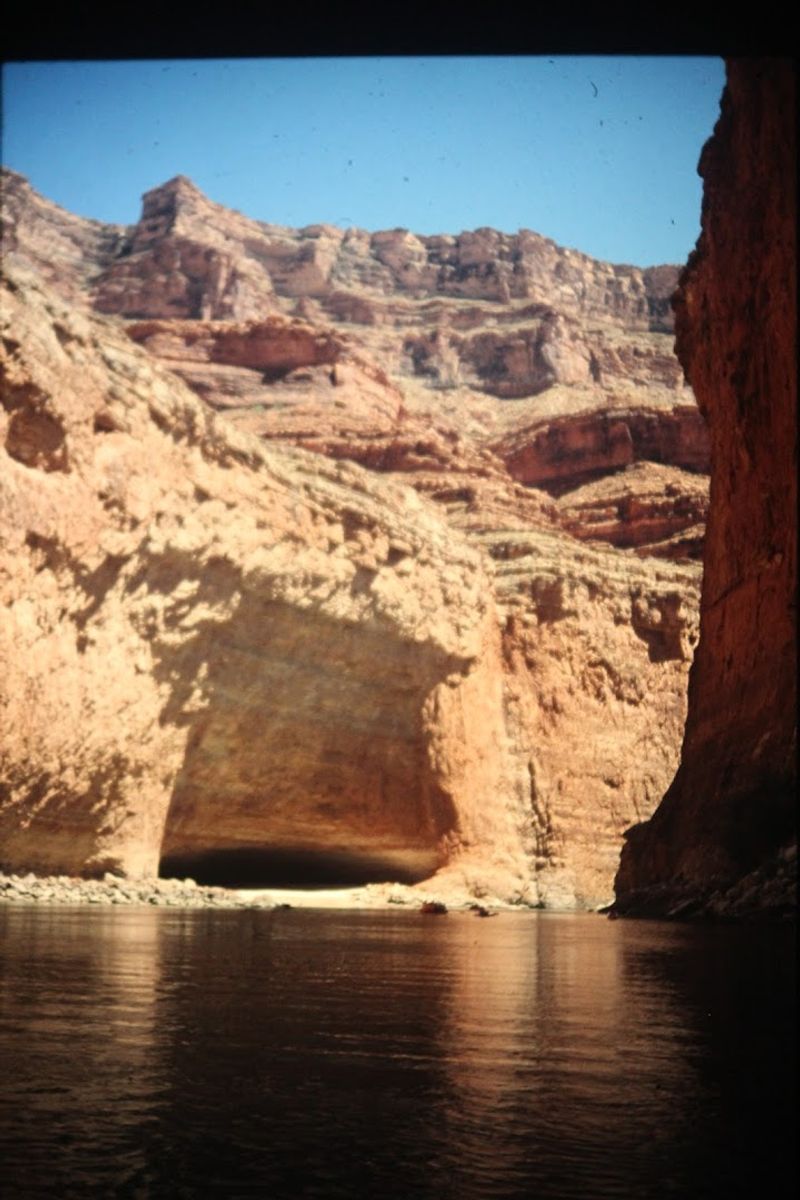
Few places in Arizona carry the weight of history the way Redwall Cavern does, and much of that history has one name attached to it.
John Wesley Powell led the first documented journey through the Grand Canyon in 1869.
His expedition passed through the canyon at a time when the interior of the Grand Canyon was essentially unknown to the outside world.
Powell kept detailed journals, and his descriptions of Redwall Cavern helped introduce the space to a public that had never heard of it.
Powell wrote that the cavern was large enough to comfortably seat 50,000 people, a figure that has been quoted and debated ever since.
Whether or not the math holds up, the image he created stuck.
The cavern became one of the most talked-about landmarks from his famous journey.
His 1869 expedition remains one of the most celebrated feats of American exploration.
Visiting Redwall Cavern today means following a route that Powell and his crew traced with wooden oars and sheer determination more than 150 years ago.
Wildlife And The World Just Outside
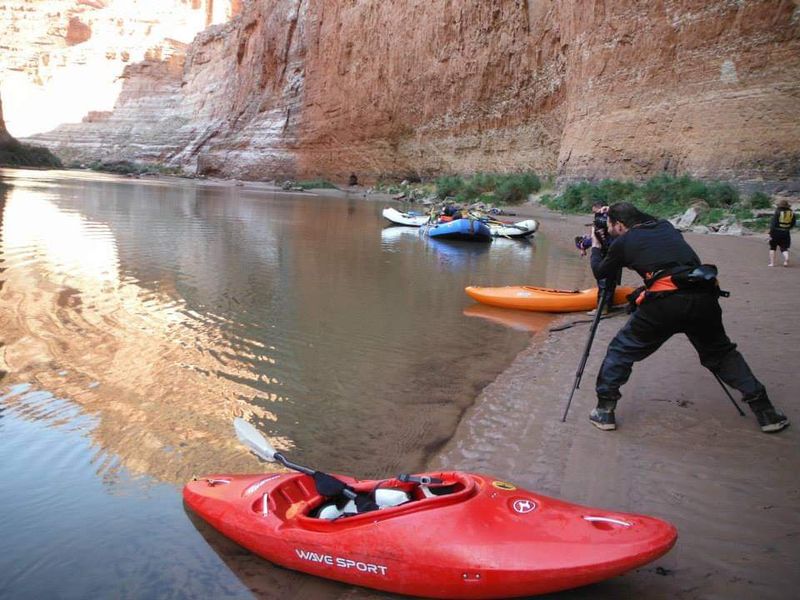
The cavern does not exist in isolation; the living world around it is just as worth paying attention to.
The Colorado River corridor through the Grand Canyon supports a surprising variety of wildlife, even in the deep inner canyon where conditions are extreme.
Great blue herons are commonly spotted standing motionless along the riverbanks, and peregrine falcons nest in the canyon walls overhead.
Bighorn sheep occasionally appear on the rocky slopes above the river, picking their way across terrain that looks completely impassable.
The vegetation near Redwall Cavern is sparse but present, with tamarisk, willow, and native grasses clinging to the sandy banks near the water’s edge.
The contrast between the barren upper canyon walls and the thin green ribbon along the river is one of the defining visual experiences of any Grand Canyon river trip in Arizona.
At night, the canyon becomes something else entirely.
With no artificial light for miles in any direction, the stars above the Grand Canyon are extraordinary.
No river trip camping is allowed there. You can camp elsewhere on a river trip, but not at Redwall Cavern itself.
Tips For Making The Most Of Your Visit
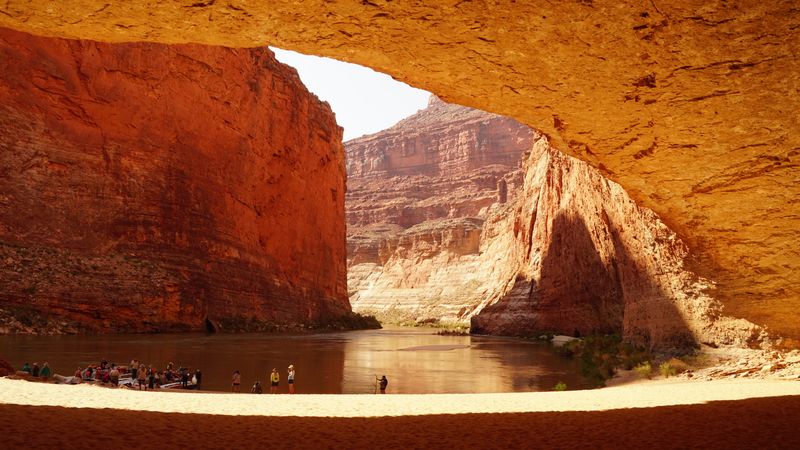
Getting to Redwall Cavern takes real effort, so making the most of the time there is worth thinking about in advance.
Arrive ready to explore on foot once the boats land.The sandy floor is easy to walk on, and the cave is large enough that spreading out and finding a quiet corner is entirely possible even when other groups are present.
Bringing a small lunch or snack to enjoy in the shade is a tradition for most river groups, and the setting makes even a basic meal feel special.
Photography is genuinely rewarding here, but the light can be tricky.The bright exterior and dark interior create a strong contrast that challenges automatic camera settings.
Manual adjustments or shooting toward the entrance rather than away from it tends to produce the best results.
Respect for the environment is essential in this protected corridor of Arizona.Leave no trace principles apply strictly, and guides on commercial trips enforce them carefully.
The cave and its surroundings remain pristine largely because visitors and outfitters have taken those rules seriously for decades.That care is the reason future travelers will find the same extraordinary space waiting for them.