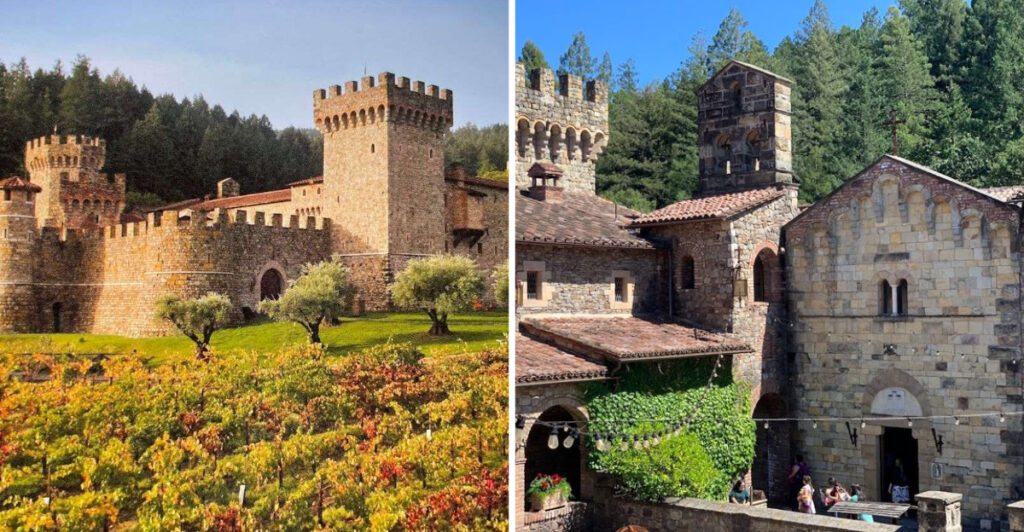
In days of yore, he raised a wondrous castle and a fair garden for the love of a lady whose heart he hoped to win. Yet alas, his devotion availed him naught.
Sorrowful and heavy of heart, he forsook the castle and wandered into lands unknown.
My father told me this tale as a bedtime story. It returned to me when I first beheld this medieval fortress in California, its stonework still standing as a testament to devotion through generations.
One cannot gaze upon such marvels without sensing the reverence of those who labored to shape them.
If you cherish tales of medieval castles and the passions they inspire, continue reading, for today I share the history of a truly singular stronghold.
From Family Legacy To Architectural Obsession
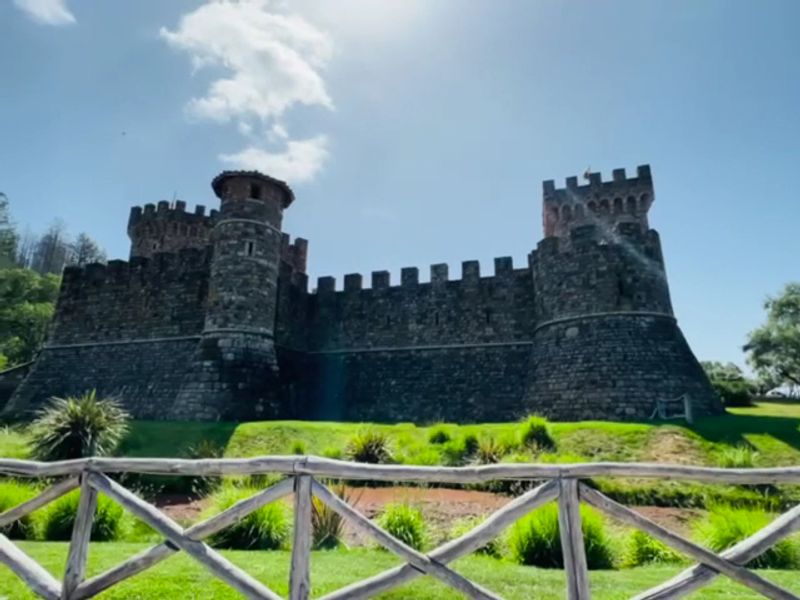
Dario Sattui did not just build a castle. He fulfilled a multi-generational promise to himself that began with his great-great-grandfather, Vittorio Sattui.
Vittorio immigrated from Italy to San Francisco in 1882 and dreamed of creating something extraordinary in America. That dream coursed through the family bloodline.
Dario carried it forward with an intensity most people reserve for, I don’t know, Olympic training.
Growing up, Dario became fascinated with medieval Italian architecture during trips to Europe. He did not just admire castles from the outside like a normal tourist.
He studied them obsessively, photographing every archway, every corbel, every moss-covered stone. His friends probably thought he had an unusual hobby.
Turns out, it was a master plan.
The result is Castello di Amorosa, a breathtaking 121,000-square-foot, 13th-century-style Tuscan castle sitting at 4045 St Helena Hwy, Calistoga, CA 94515. Dario poured his entire soul, and reportedly over 30 million dollars, into making this vision real.
This is what happens when passion meets obsession and refuses to blink.
The 15-Year Journey To Build A Castle
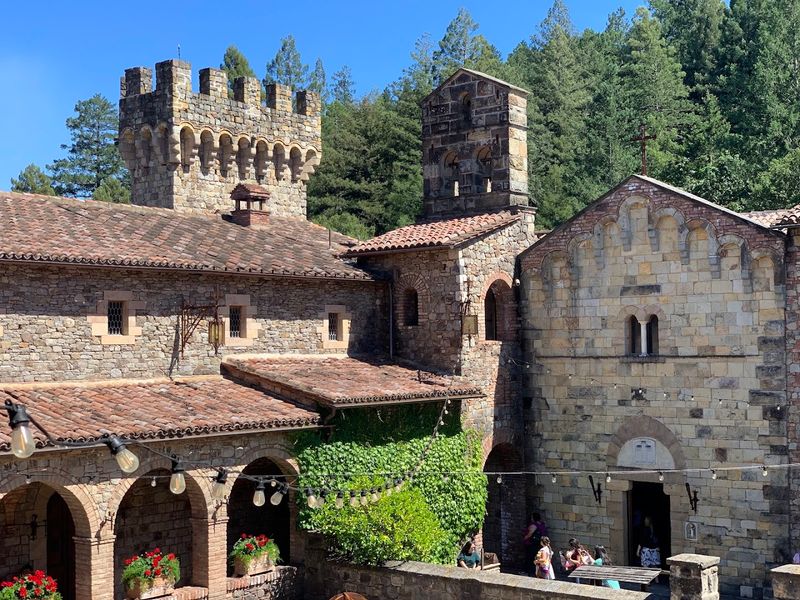
Fifteen years! That is how long it took to build Castello di Amorosa from scratch, beginning in 1994 and opening to the public in 2007.
Most people spend fifteen years slowly redecorating their living room. Dario Sattui spent those years importing 8,000 tons of hand-cut stone and antique materials from Europe.
He did this to ensure that every inch of the castle felt medieval.
Artisans were brought in from Italy to hand-paint frescoes directly onto the walls using pigments and plaster techniques that date back centuries. No shortcuts, no spray paint, no modern cheats.
Even the bricks were taken from demolished European buildings. This was done to achieve that authentic, worn, lived-in look that you simply cannot fake with new materials.
Over 100 craftspeople worked on this project at various stages. Some of the ironwork, the hinges, the door hardware, the torch holders, was custom-forged by blacksmiths using traditional methods.
Every single stone was placed with intention. When you walk through these walls today, you are not looking at a Hollywood set.
You are standing inside something built with the same care and stubbornness as the original medieval castles that inspired it.
Inside The Great Hall And Secret Passageways
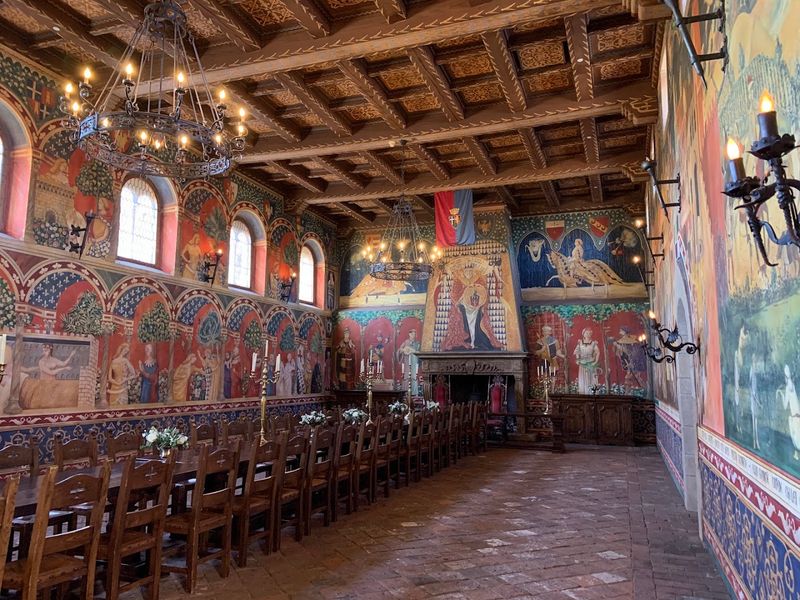
Walking into the Great Hall at Castello di Amorosa stops you in your tracks. The vaulted ceilings soar overhead.
They are decorated with hand-painted frescoes depicting scenes of medieval life, feasts, battles, and courtly romance. The stone columns are thick and ancient-looking, and the lighting is warm and amber, like candles but without the fire hazard.
Your jaw just drops on its own.
Beyond the Great Hall, the castle has 107 rooms spread across eight above-ground levels and four underground levels. Some rooms are open to visitors, and others stay mysteriously closed, which only adds to the intrigue.
Narrow stone staircases spiral upward into the tower rooms. From there, you get sweeping views of the Napa Valley, which is absolutely gorgeous.
The passageways connecting different sections of the castle feel secretive. Low-lit corridors, arched doorways, and unexpected chambers appear around corners when you least expect them.
I kept half-expecting a knight in armor to walk past me. The attention to detail in every passageway, every carved doorframe, and every painted ceiling is remarkable.
It is the kind of craftsmanship that makes you slow down and truly notice the work.
Hidden Wonders Behind Stone Walls
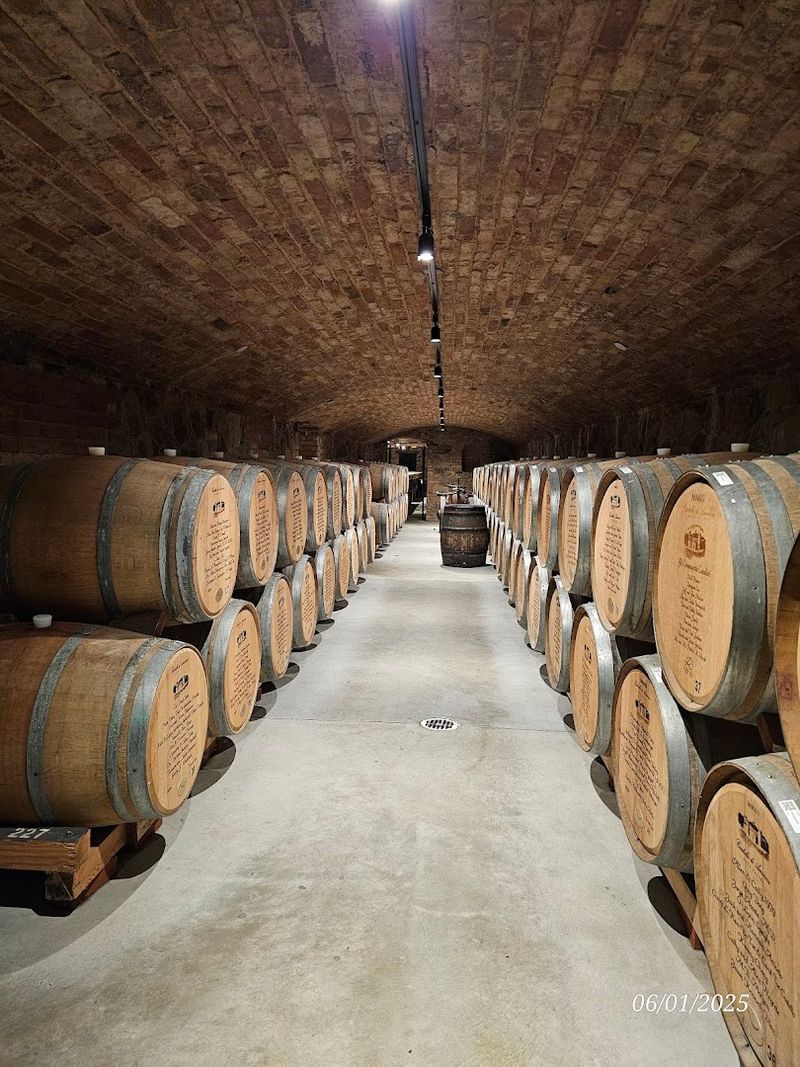
Here is the part that blew my mind. This stunning medieval castle is not just a showpiece.
It is fully functional, with spaces ingeniously designed for practical use throughout the property. The operations are built directly into the castle’s lower levels, hidden behind those thick stone walls.
This design showcases a level of engineering that feels both secretive and brilliant.
The underground rooms are barrel-vaulted in the traditional Romanesque style, meaning the architecture itself serves a practical purpose. The naturally cool temperatures underground make these spaces ideal for storage and preservation.
Dario essentially engineered state-of-the-art functional spaces inside a structure that looks like it belongs in 13th-century Tuscany. That is some seriously impressive multitasking.
The estate contains a variety of rooms and halls, each designed with care and precision. The underground chambers stretch deep beneath the castle grounds.
They are lined with intricately crafted spaces quietly serving their purpose. It is one of those rare places where beauty and function exist in perfect harmony.
Somehow, the medieval setting makes the whole experience feel even more special.
Moats, Drawbridges, And A Real Dungeon
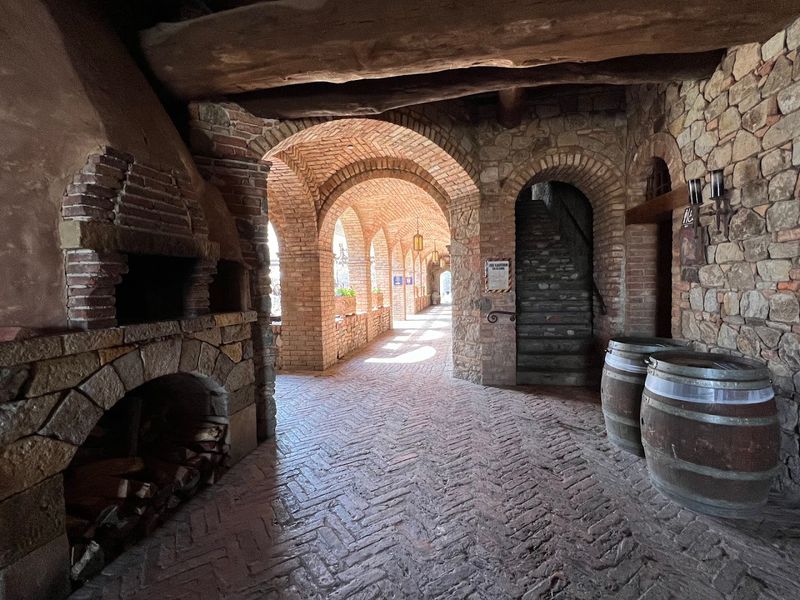
Yes, there is a real moat. And yes, there is a working drawbridge.
And yes, there is an actual dungeon underground. I realize this sounds like I am describing a theme park, but I promise you, Castello di Amorosa is the article.
Dario Sattui insisted on including every authentic medieval feature he could, and the result is a property that feels theatrical without being fake.
The moat wraps around a section of the castle and reflects the stone towers beautifully on sunny days.
The drawbridge is the kind you actually walk across to enter the main courtyard, which gives you an immediate sense of crossing into a different world. I walked across it three times just because it felt so dramatically satisfying each time.
The dungeon is located in the deepest underground level and features an actual torture chamber with period-appropriate iron devices on display. It is creepy and fascinating in equal measure.
Dario researched authentic medieval dungeon features and had them recreated with historical accuracy. Kids absolutely love it, adults get slightly uncomfortable, and everyone ends up taking the same photo next to the Iron Maiden.
It is that kind of place.
Surviving Fire And The Test Of Time
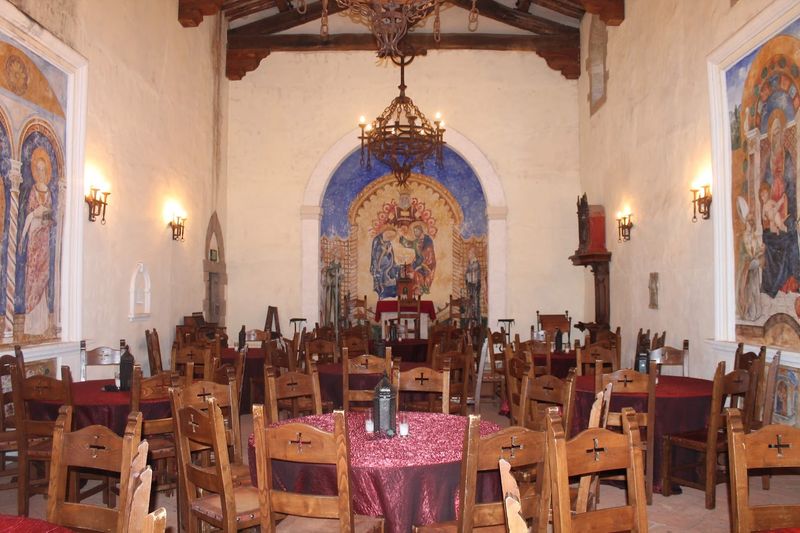
Napa Valley has faced some devastating wildfires in recent years, and Castello di Amorosa was not immune to those threats. The 2017 Atlas Fire and the 2020 Glass Fire both came dangerously close to the property.
Ash rained down on those carefully crafted stone walls, threatening everything Dario Sattui had spent decades building. It was, by all accounts, terrifying.
The castle’s thick stone construction, ironically, offered real protection. Medieval builders designed fortresses to withstand attack and destruction.
That same durability gave the castle a level of fire resistance that modern wood-frame buildings simply cannot match. The stone walls held.
The frescoes survived. The barrel rooms stayed intact.
The surrounding grounds did suffer damage during fire seasons, and the team worked hard to assess and manage the impact in affected years. But the castle itself stood firm, as stubborn and immovable as the obsession that built it.
Visitors today walk through a place that has already faced California’s harshest challenges and refused to crumble. That resilience adds a whole new layer of meaning to every stone you touch.
Romance, Mystery, And Medieval Fantasy
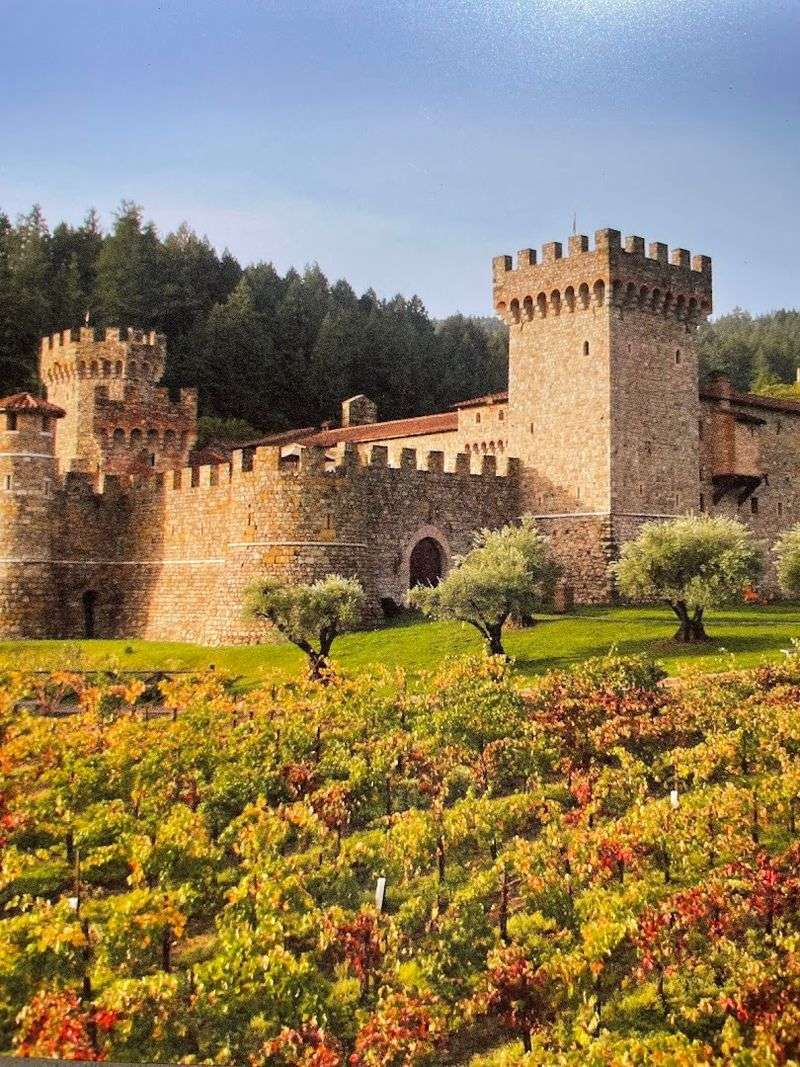
The name Castello di Amorosa literally translates to Castle of Loving. That romantic spirit runs through every corridor, courtyard, and candlelit corner of the place.
Couples get engaged here regularly. Weddings happen in the courtyard beneath stone arches and centuries-old-looking frescoes.
At twilight, when the lights begin glowing through those narrow stone windows, the whole place looks like a living fairytale illustration.
There is a mystery woven into the property too. Certain rooms are kept private, accessible only on special tours, fueling curiosity about what lies behind those thick wooden doors.
Stories circulate among visitors about hidden passages and secret chambers. People also marvel at the artistic symbols embedded in the frescoes by the Italian painters who created them.
Whether those stories are entirely true is almost beside the point. They add atmosphere in the best possible way.
Dario Sattui has said in interviews that he wanted visitors to feel transported, to forget for a few hours that they are in modern California. Mission completely accomplished.
Castello di Amorosa has a magnetic quality that is hard to explain until you experience it personally. People leave talking about it for weeks, which is how I ended up writing this article in the first place.
Visiting Today
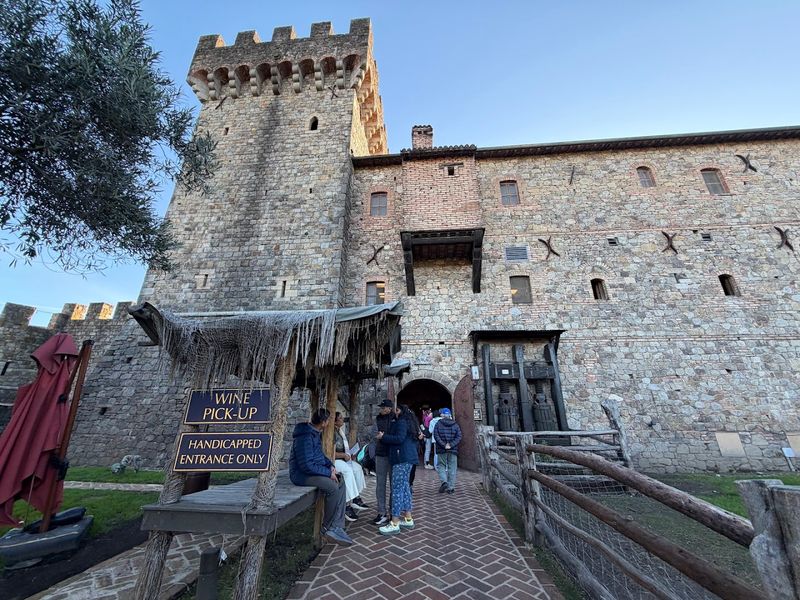
Getting to Castello di Amorosa is easy, which makes the whole experience feel even more surreal. You drive along the scenic St. Helena Highway, passing rolling hills.
Then, suddenly, a medieval castle appears on your left. It never gets less shocking, no matter how many times you have seen photos of it beforehand.
The castle is open to visitors year-round, and tours are available at various levels. You can do a self-guided exploration of the main public areas.
Or, you can book a guided tour that takes you deeper into the castle, including the dungeon and private chambers. Reservations are strongly recommended, especially on weekends when the area gets particularly busy.
Their official website, castellodiamorosa.com, has current hours, tour options, and booking information. Parking is available on-site.
Bring comfortable shoes because you will be walking on uneven stone floors and climbing spiral staircases. Bring your camera too, obviously, because you will take approximately 400 photos and not feel even slightly sorry about it.