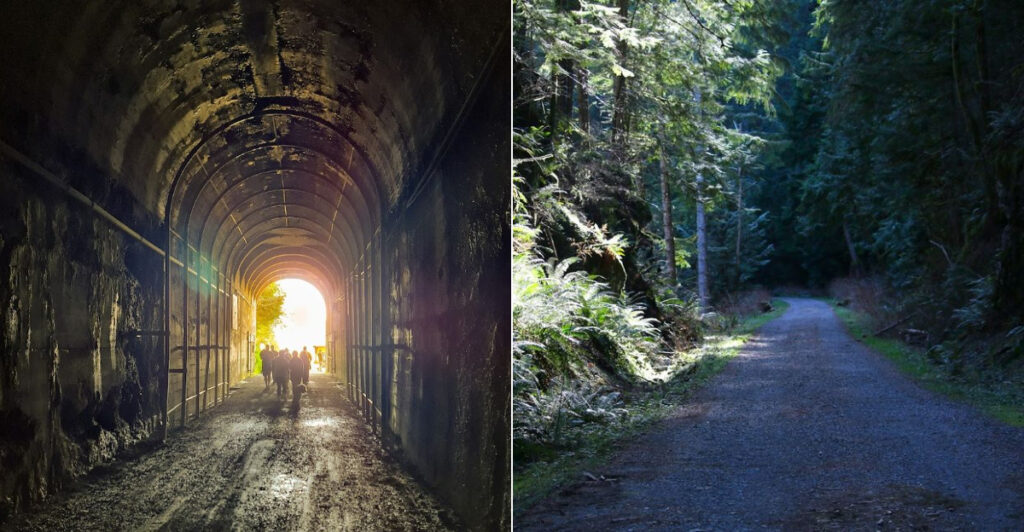
Not every trail in Washington leads to the kind of surprise that makes you stop in your tracks. This one does. What starts as a scenic mountain walk soon leads to a huge abandoned train tunnel carved through solid rock.
It is long, dark, cold, and just eerie enough to make the whole experience feel even more exciting. The tunnel stretches for nearly two and a half miles, which means this is not the kind of walk you forget by the time you get back to the car.
It feels different from the usual hike right away. More dramatic. More immersive.
More like stepping into a hidden piece of history than heading out for a standard day on the trail.
If you are looking for an outdoor adventure that feels bold, memorable, and a little unexpected, this is the kind of experience that easily earns a spot on your list.
The Trail That Leads You Somewhere Unexpected
Most hikes promise views. This one promises a portal straight into Washington’s railroad history, hidden inside a mountain.
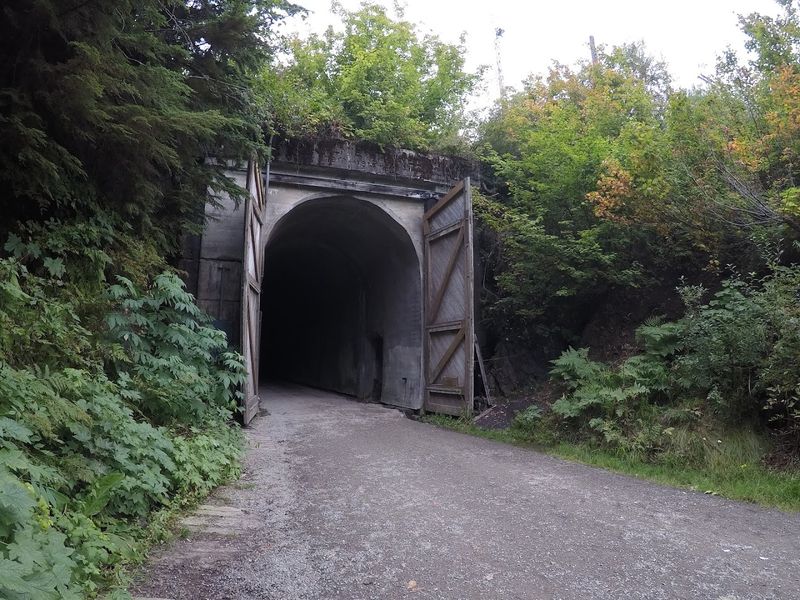
The trail leading to the Snoqualmie Tunnel fows the old Milwaukee Road rail corridor, now part of the Iron Horse State Park Trail. The path is wide, flat, and well-maintained, making it accessible for hikers of most fitness levels.
You do not need to be an expert mountaineer to enjoy this route. The trailhead sits near 61 Kendall Pl, Snoqualmie Pass, WA 98068, which puts you right in the heart of the Cascades.
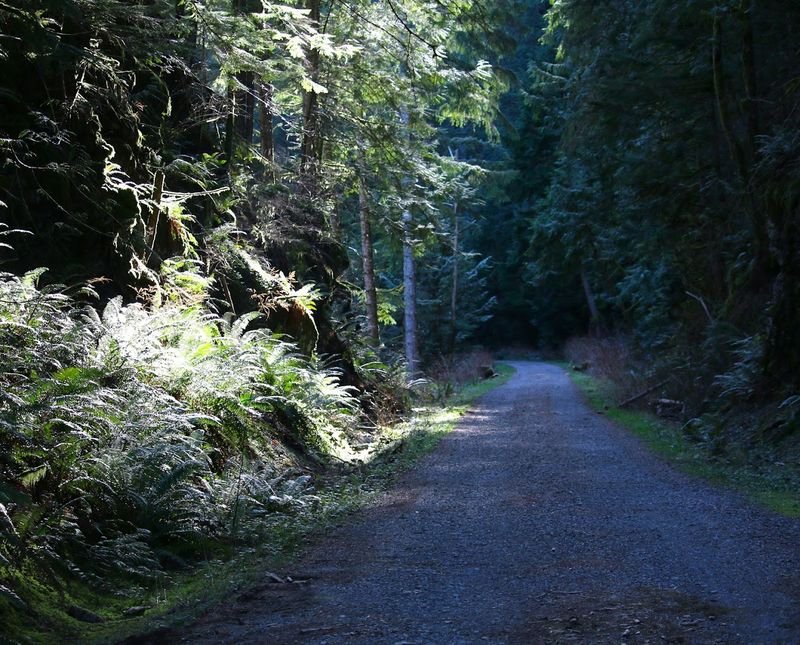
From the moment you step onto the trail, the landscape opens up around you in a way that feels almost cinematic. Tall Douglas firs line the path.
The air carries that clean, pine-sharp scent that only mountain forests produce. Snow-capped peaks peek through the canopy on clear days, giving you a reason to stop and look up every few minutes.
The trail is roughly five miles round trip if you walk to the tunnel entrance and back, making it a manageable half-day outing. Families with older kids, solo adventurers, and hiking groups all find the distance comfortable without feeling too short to be satisfying.
What makes this trail stand out is how the scenery shifts as you move closer to the tunnel. The forest thickens, the light changes, and a certain quiet anticipation builds with every step.
A Tunnel Built For Trains, Now Explored By Hikers
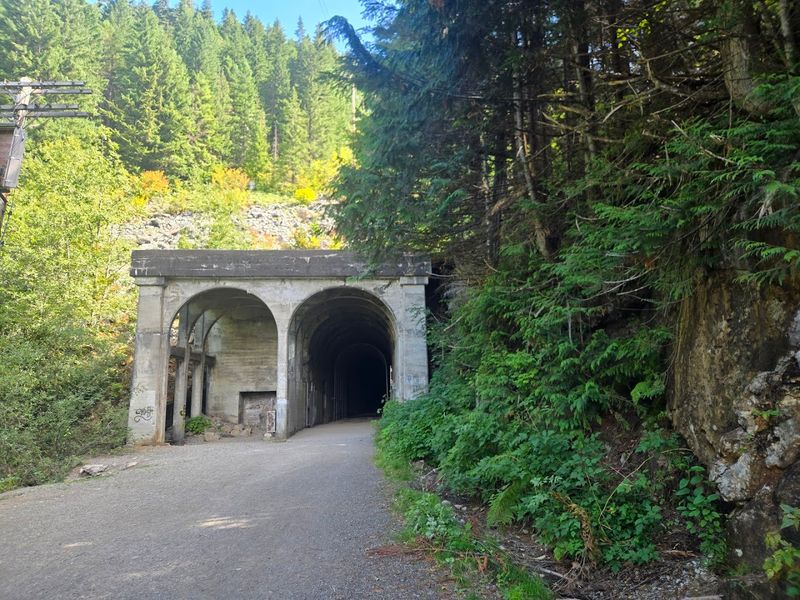
When the Milwaukee Road Railroad completed this tunnel in 1914, nobody imagined that one day hikers would be the ones walking through it with headlamps and wide eyes. The Snoqualmie Tunnel stretches 2.3 miles through the heart of Snoqualmie Pass.
That makes it one of the longest railroad tunnels in the United States that is now open for public exploration on foot. The sheer scale of the engineering project is staggering when you consider it was built over a century ago.
Inside, the tunnel is completely dark. Not dimly lit, not shadowy, but fully and completely dark within minutes of entering.
Your flashlight becomes your best friend, and the beam of light cutting through the blackness gives the whole experience a genuinely adventurous feel.
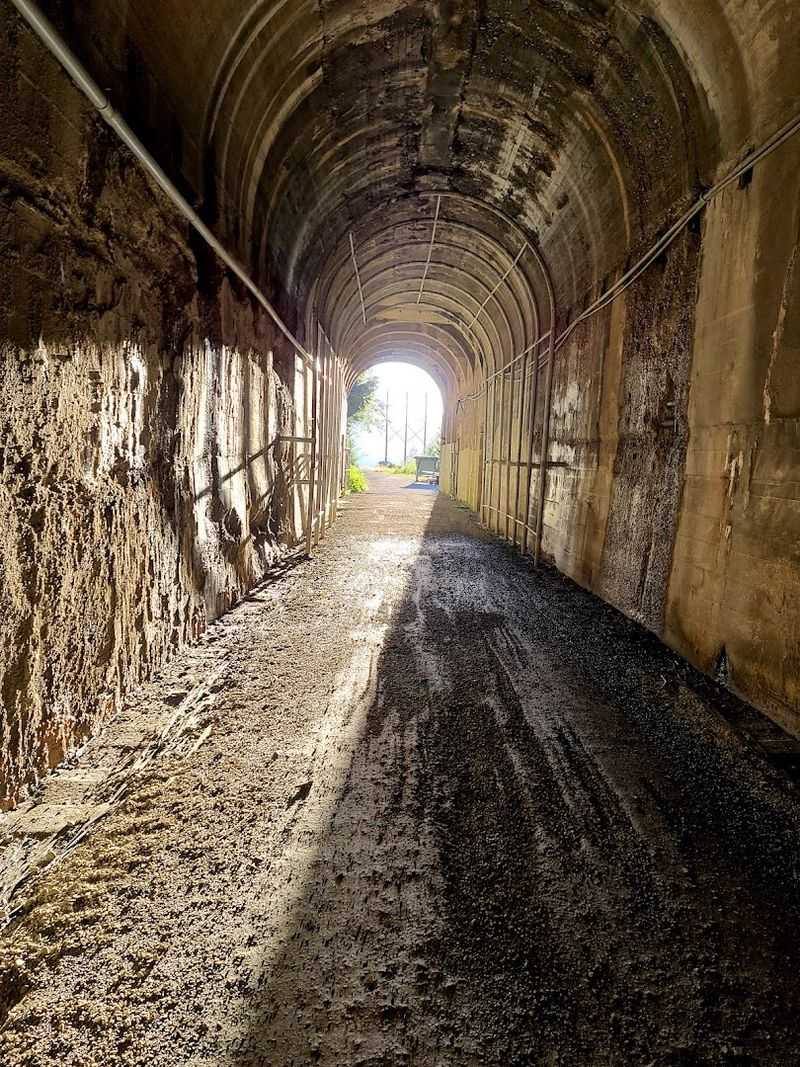
The tunnel walls drip with water that seeps through the mountain above. The temperature inside drops sharply, hovering around 34 to 38 degrees Fahrenheit even on the warmest summer days.
A jacket is not optional here, it is essential. The floor is uneven in places, with puddles and muddy patches that remind you this space was never designed for foot traffic.
That rawness is part of what makes the experience feel so authentic and exciting. Walking through and emerging on the other side feels like completing something.
Gear Up Right Before You Head Inside
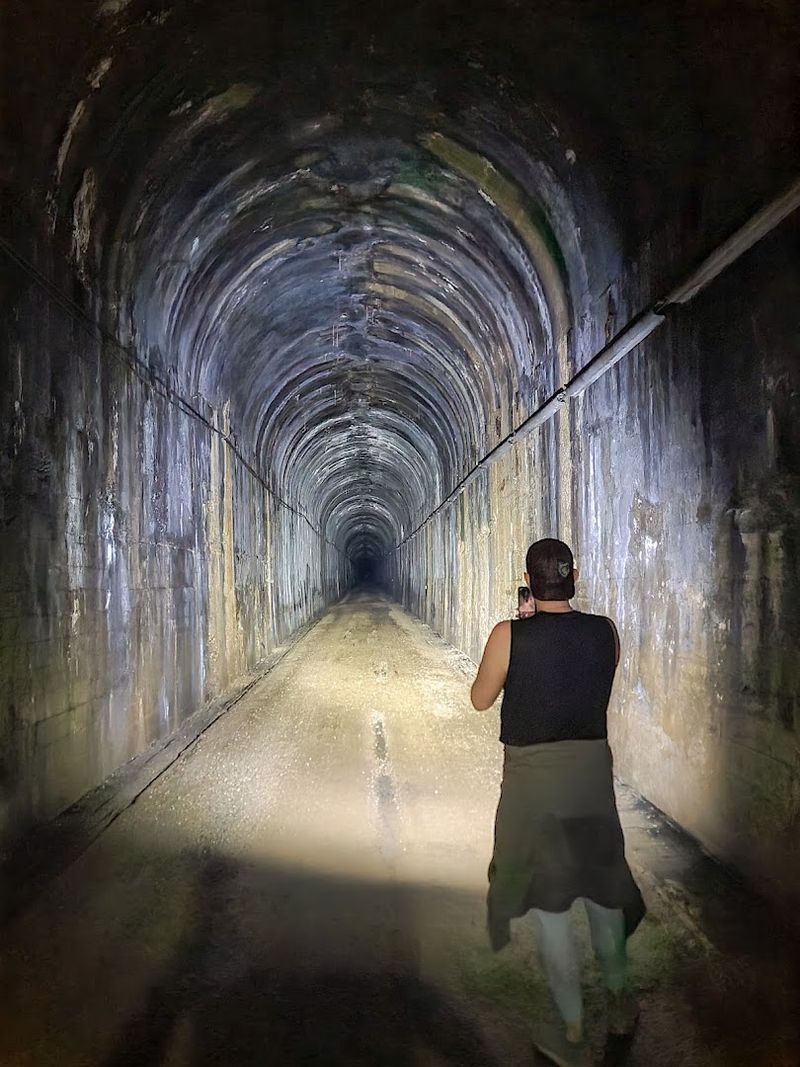
Going into a two-mile underground tunnel without the right gear is a fast way to turn an adventure into a miserable afternoon. A little preparation goes a long way here.
The single most important item you need is a bright, reliable flashlight or headlamp. Phone flashlights work in a pinch, but they drain your battery fast and do not throw enough light to feel confident in total darkness for over two miles.
Bring a proper headlamp and pack extra batteries just in case.
Warm layers are non-negotiable. The tunnel temperature stays near freezing year-round, so even if you start the hike in shorts and a t-shirt on a hot August day, you will want a fleece or insulated jacket the moment you step inside.
Many visitors are caught off guard by just how cold it gets so quickly. Waterproof boots or trail shoes with solid grip help you navigate the wet, uneven tunnel floor without slipping.
The puddles inside can be surprisingly deep in spots, and regular sneakers tend to soak through fast. Trekking poles are optional but useful, especially for younger hikers or anyone who prefers extra stability on slippery surfaces.
A small daypack with snacks and water rounds out your kit nicely. The tunnel is open from late May through October, depending on snow conditions at the pass.
The History Hidden Inside The Mountain
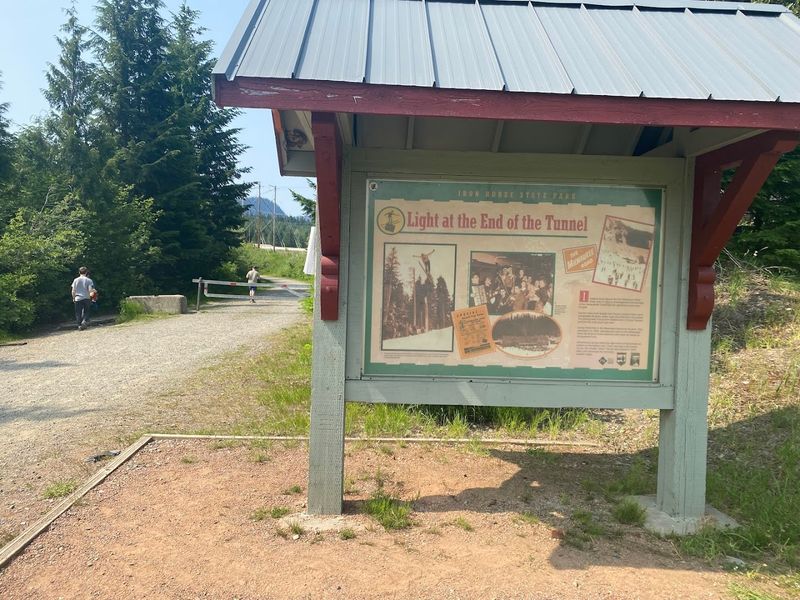
The tunnel has a big history behind it. It was built by the Milwaukee Road as part of a rail line connecting Chicago to Seattle.
At the time of its construction, it was a massive engineering achievement. Workers drilled and blasted through solid rock for years to carve out this passage beneath the Cascade Mountains.
The tunnel opened in 1914 and served as a critical crossing point for freight and passenger trains for decades.
The railroad eventually ceased operations through the tunnel in 1980 when the Milwaukee Road went bankrupt. The tracks were later removed, and after years of sitting unused, the route became part of Iron Horse State Park Trail for public access.
Walking through the tunnel today, you can still see the original rock walls, old drainage channels, and the marks left by the construction process over a century ago. The history is literally carved into the stone around you.
For anyone who loves American industrial history, this tunnel is a rare chance to physically experience a piece of it rather than just reading about it in a book. The scale of what was built here, by hand and by early machinery, is humbling in the best possible way.
What The Surrounding Scenery Looks Like
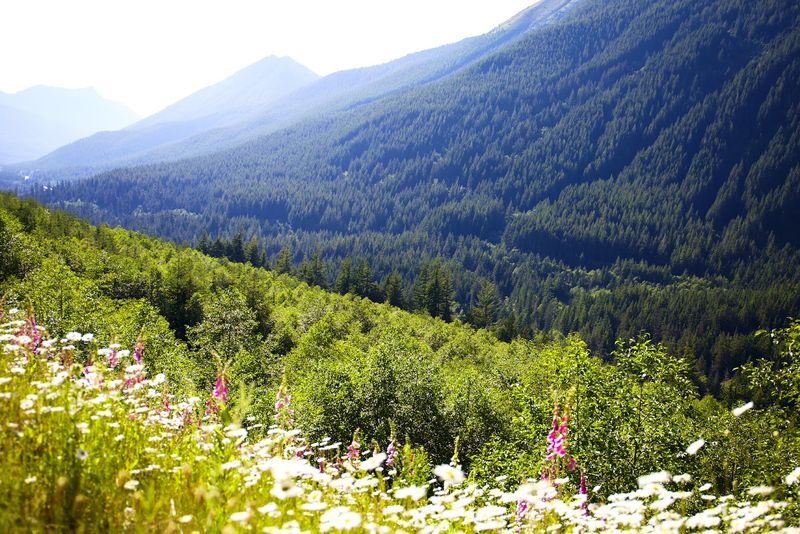
The tunnel gets all the attention, but the landscape surrounding the trail is genuinely spectacular on its own terms. This part of the Cascades is rich with visual drama at every turn.
The trail runs through a mix of dense conifer forest and open rocky sections that offer wide views of the surrounding peaks. In summer, wildflowers push through the rocky soil along the edges of the path, adding color to the green and grey palette of the mountains.
Snoqualmie Pass sits at an elevation of around 3,022 feet, which means the scenery carries that unmistakable high-country feeling even though the hike itself is relatively flat. You feel like you are deep in the mountains without having to earn the altitude through a brutal climb.
The area around the pass is home to a rich mix of wildlife. Keep your eyes open for marmots sunning themselves on rocks, hawks circling overhead, and the occasional deer moving quietly through the trees near the trail edges.
Spotting wildlife is never guaranteed, but it is a real possibility on any given day.
In autumn, the deciduous trees mixed among the conifers turn shades of gold and orange, making the trail particularly photogenic from late September through mid-October.
The light hits differently in fall, softer and warmer, and the whole landscape takes on a completely new character.
Tips For Making The Most Of Your Visit
A few smart choices before and during your visit can turn a good hike into a genuinely great one. Here is what experienced visitors to the Snoqualmie Tunnel recommend.
Arrive early in the morning, especially on weekends and summer holidays. The parking area near the trailhead fills up faster than you might expect, and the trail can get crowded as the day progresses.
An early start also gives you the best chance of having the tunnel largely to yourself, which is a completely different experience from walking through it in a crowd.
Bring more light sources than you think you need. Two headlamps per person is not excessive for a tunnel this long.
If one fails or dims, having a backup keeps the experience safe and enjoyable rather than stressful. Walk at your own pace inside the tunnel. There is no need to rush.
Stop occasionally and turn off your lights for a moment. The total darkness and silence of being inside a mountain is something most people have never experienced, and it is worth sitting with for a few seconds.
Respect the tunnel and the trail. Pack out everything you bring in, stay on the path, and avoid touching the old tunnel walls more than necessary. Preserving the site keeps it open and enjoyable for future visitors.
The trail is dog-friendly, and many hikers bring their dogs along for the adventure. Just keep pets leashed and be prepared for them to find the tunnel entrance very interesting indeed.
The Atmosphere Inside The Tunnel
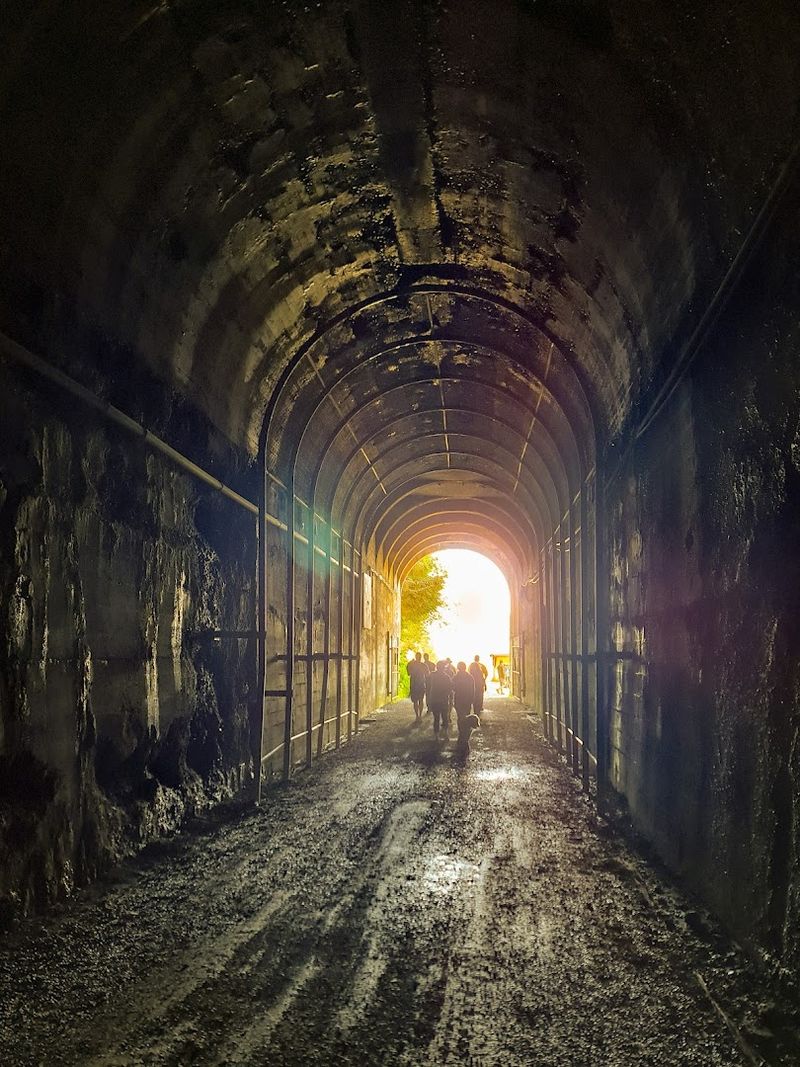
There is no other experience quite like walking into a mountain and watching the daylight shrink behind you until it disappears entirely.
Within the first few hundred feet of entering the Snoqualmie Tunnel, the outside world simply vanishes. The sounds of wind, birds, and rustling trees fade out.
What replaces them is a deep, steady silence broken only by the drip of water on stone and the soft crunch of your own footsteps echoing off the walls.
The air inside is cool and damp, carrying a mineral smell that is distinctly underground. It is not unpleasant, just very different from anything you encounter on the surface trail.
Your senses recalibrate quickly, sharpening in response to the low visibility and the unfamiliar environment.
About halfway through, you reach the deepest point, where no light from either entrance is visible. Looking forward or backward, you see only darkness beyond the reach of your headlamp.
It is one of those rare moments where you feel genuinely small and genuinely present at the same time.
Some hikers find the experience meditative. Others find it thrilling. A few find it slightly unsettling in the best possible way.
Most people describe it as one of the most memorable things they have done outdoors in Washington State.
Why This Hike Deserves A Spot On Your Washington Bucket List
Washington State has no shortage of incredible outdoor experiences, but very few of them combine history, natural beauty, and genuine adventure the way this hike does.
The Snoqualmie Tunnel trail offers something for nearly every type of outdoor enthusiast. History lovers get a firsthand look at a remarkable piece of American railroad heritage.
Nature lovers get miles of stunning Cascade Mountain scenery.
Thrill seekers get the tunnel itself, a two-mile underground passage that is unlike anything most people have ever walked through.
The trail is also remarkably accessible compared to many other memorable hikes in Washington. The flat terrain means you do not need to be in peak physical condition to complete it.
The relatively short distance makes it achievable in a half day, leaving time for a meal and a drive through the scenic pass afterward.
Located at 61 Kendall Pl, Snoqualmie Pass, WA 98068, the trailhead is easy to reach from Seattle in under two hours, making it a perfect day trip from the city. The drive through the Cascades on Interstate 90 is scenic in its own right.
Few hikes in the Pacific Northwest give you the feeling of genuinely discovering something. This one does.
You walk into a mountain, cross beneath a ridgeline that trains once crossed, and come out the other side having done something most people never think to do.
The trail is waiting. The tunnel is ready. The only question left is when you are going to make the trip happen.