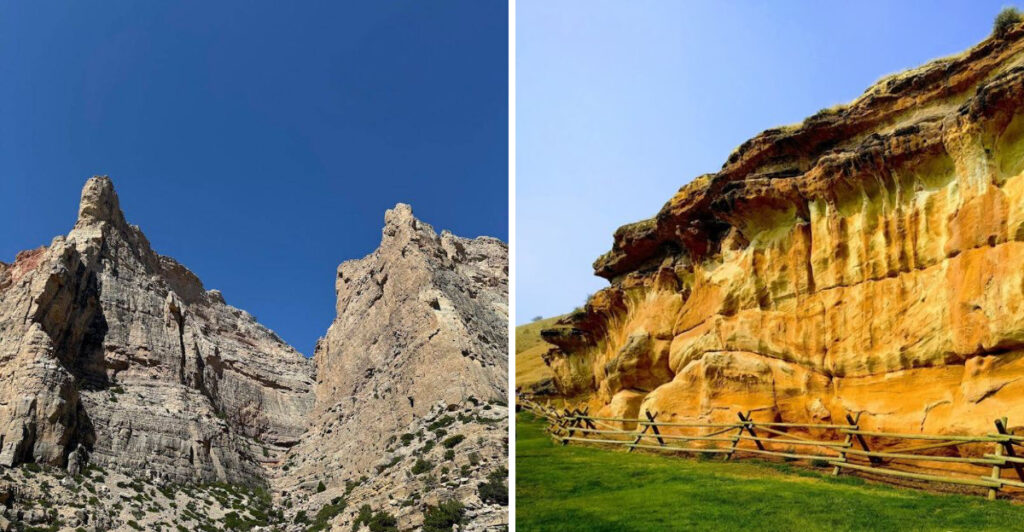
Ready for the kind of drive that keeps making you pull over, stare, and say, “How is this not packed with people?” That is the mood here.
Wyoming goes all in here with a route full of surprises, where a natural bridge, a disappearing river, towering rock formations, and old trail history all show up on the same trip.
Every stretch feels like it is building toward another place you did not see coming.
You are not cruising past the usual big-name attractions here. You are chasing the quieter, stranger, more memorable side of the state, the one that sneaks up on you and ends up stealing the whole trip.
By the time you finish winding through it all, Wyoming feels bigger, wilder, and way more interesting than you expected.
1. Ayres Natural Bridge Park
This is the kind of stop that makes a short detour feel like a brilliant decision.
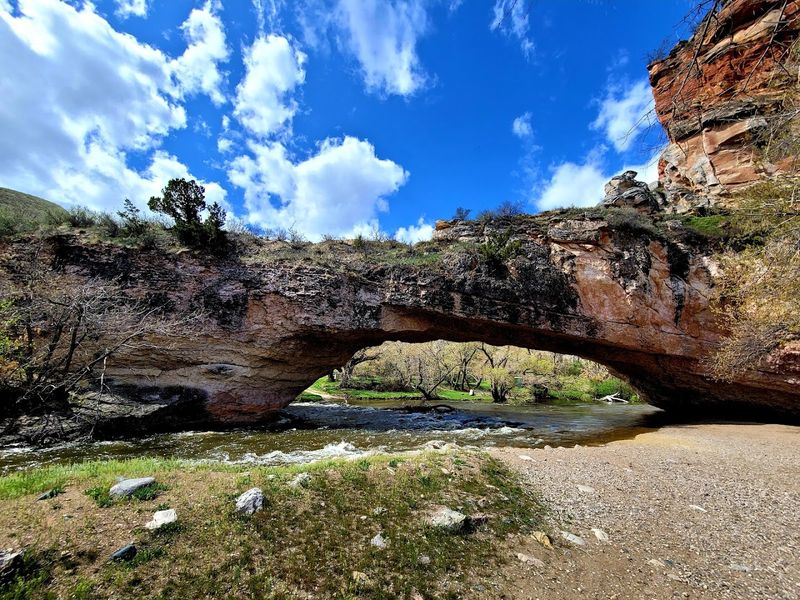
Ayres Natural Bridge Park, tucked just outside Douglas in eastern Wyoming, is one of those rare places that feels completely secret even though it has been wowing visitors for generations.
The star of the show is a massive natural stone arch that rises dramatically over LaPrell Creek.
Unlike most natural arches out West, this one actually spans a flowing stream, which makes the whole scene feel alive and almost theatrical.
The red rock walls of the surrounding canyon frame everything perfectly.
Kids love scrambling around the rocky banks, and the shaded picnic area makes it a genuinely pleasant stop on a warm afternoon.
The park is free to enter, which makes it even harder to justify driving past.
Spring and early summer tend to bring the most vibrant colors, with wildflowers dotting the canyon walls and the creek running full and clear.
The drive in from the highway is short, and the payoff is enormous.
This spot earns its place as one of Wyoming’s most underrated natural wonders, full stop.
2. Sinks Canyon State Park
What if a river just vanished into the earth right in front of you?
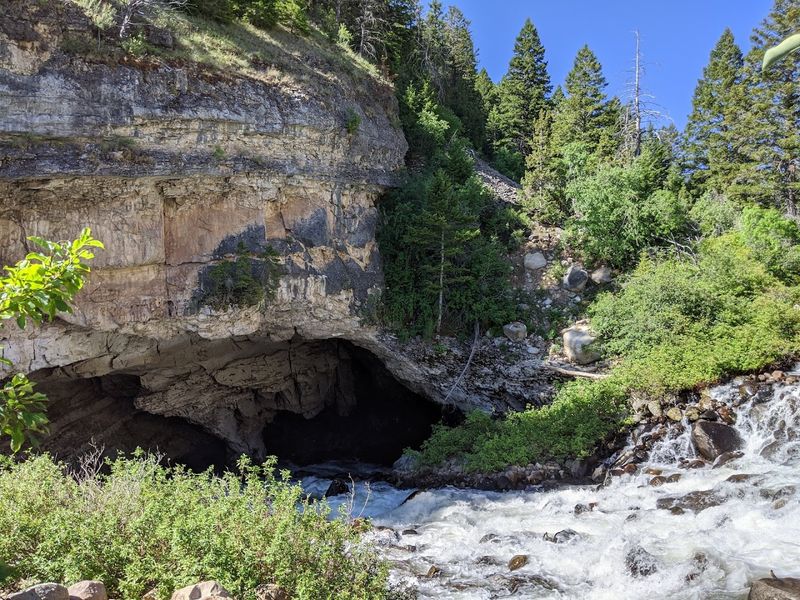
That is exactly what happens at Sinks Canyon State Park, located along Sinks Canyon Road just south of Lander in central Wyoming, and it never gets old no matter how many times you see it.
The Popo Agie River flows into a limestone cave called “The Sink,” disappears completely underground, then reappears about a quarter mile downstream at a calm, trout-filled pool known as “The Rise.”
The Popo Agie River disappears into a limestone cavern at The Sink and reappears about a quarter mile downstream at The Rise, one of the park’s most fascinating geologic features.
The canyon itself is stunning, with forested walls rising steeply on both sides and well-maintained trails threading through the whole area.
Brown trout gather in enormous numbers at The Rise, and watching them glide through the crystal-clear water is oddly mesmerizing.
Camping is available nearby, and the park sees far fewer crowds than Wyoming’s more famous destinations.
If you are traveling through central Wyoming, skipping Sinks Canyon would be a decision you would genuinely regret.
3. South Pass City State Historic Site
Gold rush towns have a reputation for being rowdy, fleeting, and spectacular, and South Pass City lived up to every bit of that legend.
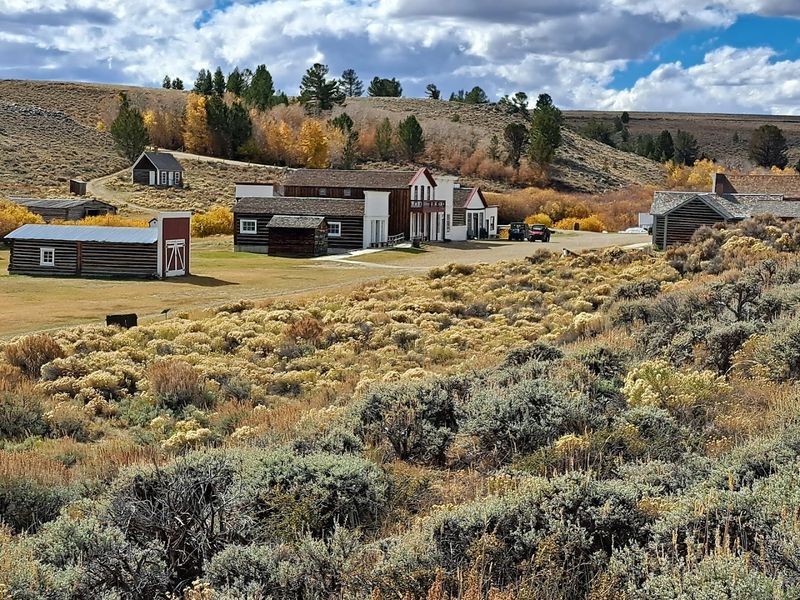
Found in the remote high desert of central Wyoming at an elevation that will remind your lungs you are not at sea level, this remarkably preserved ghost town sits along South Pass Main Street and tells the story of
Wyoming’s wild mining era with quiet confidence.
Over thirty original and restored structures still stand here, including a hotel, a saloon building, a jail, and several homes.
Walking the main street feels genuinely transportive, like the calendar flipped back to the 1860s and forgot to flip forward again.
South Pass City also holds serious historical weight as the place where Wyoming first granted women the right to vote in 1869, a landmark moment in American history.
That story alone makes the drive out here worthwhile.
The surrounding landscape of rolling sagebrush and open sky adds to the atmosphere in a way that no museum exhibit ever could.
Plan for at least a couple of hours here, because the more you look, the more you find.
4. Oregon Trail Ruts State Historic Site
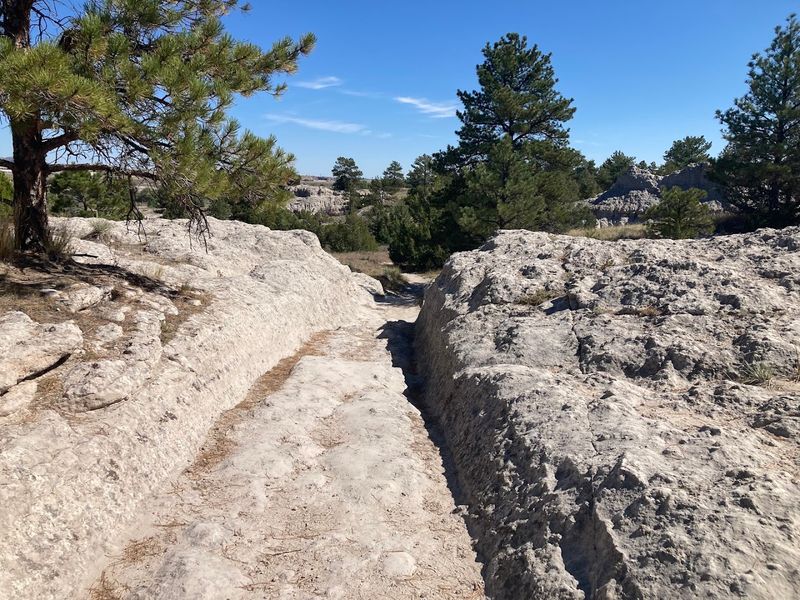
History carved itself right into the rock here, and you can still see every groove.
The Oregon Trail Ruts State Historic Site near Guernsey in eastern Wyoming preserves one of the most visually powerful reminders of pioneer migration anywhere in the United States.
The ruts cut up to five feet deep into solid sandstone, worn down by the sheer weight and volume of wagons that passed through during the 1800s.
Standing at the edge of those channels and imagining the thousands of families who rolled through this exact spot heading west is a genuinely humbling experience.
There are no guardrails, no glass cases, and no recreations here, just the actual ground where history happened.
The site is easy to reach just off Interstate 25 at Exit 92, and a short walk from the parking area brings you directly to the ruts.
A nearby overlook offers a broader view of the trail corridor and the North Platte River valley below.
Combining this stop with the nearby Register Cliff, where pioneers carved their names into rock, makes for an afternoon that feels more like time travel than sightseeing.
Few places in Wyoming hit quite this hard.
5. Bighorn Canyon National Recreation Area
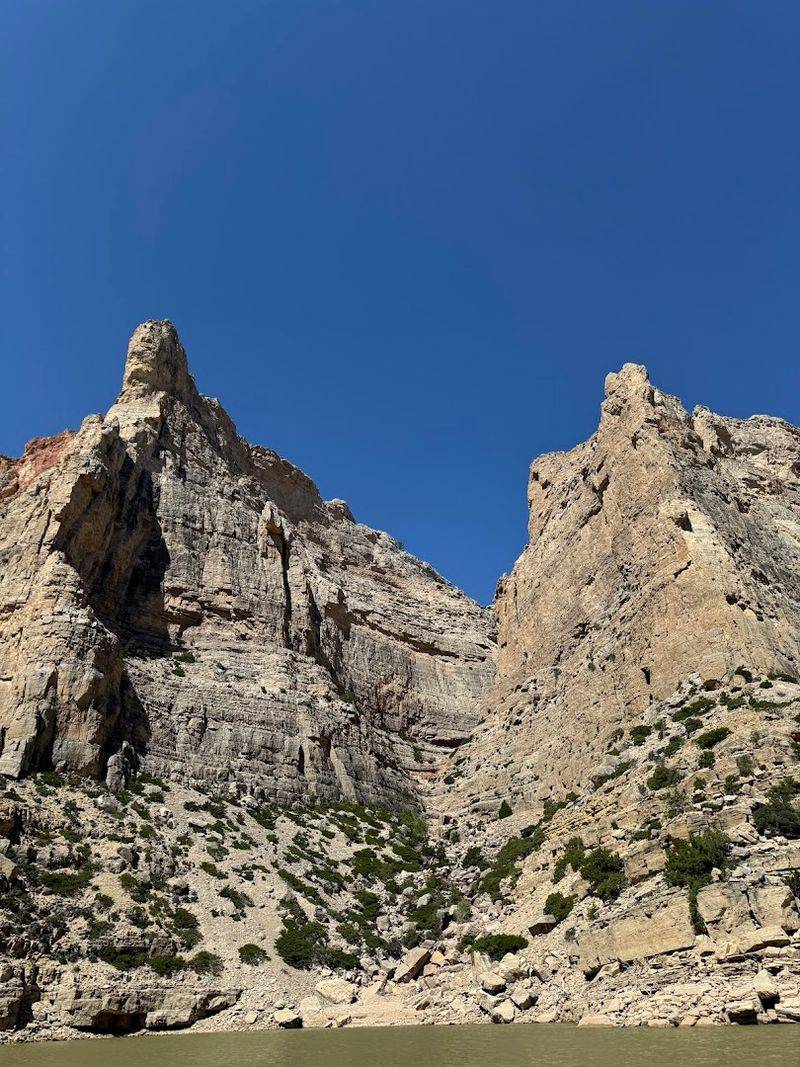
Sheer canyon walls dropping hundreds of feet straight into blue water is not something you forget quickly.
Bighorn Canyon National Recreation Area, accessed via the South District Visitor Center at 20 US Highway 14A in Lovell in northern Wyoming, delivers scenery that rivals far more famous parks without the matching crowd size.
The canyon stretches for miles along the Wyoming-Montana border, carved by the Bighorn River over millions of years into dramatic red and tan cliffs.
Boating, fishing, kayaking, and swimming are all popular ways to experience the reservoir, while the canyon rim offers hiking trails with vertigo-inducing views.
Wildlife sightings are common here, with wild horses, bighorn sheep, mule deer, and golden eagles all making regular appearances.
The Pryor Mountain Wild Horse Range sits adjacent to the recreation area, and spotting those free-roaming mustangs against the canyon backdrop is the kind of moment that makes you put your phone down and just watch.
The South District Visitor Center is a smart first stop for maps, trail conditions, and background on the area’s geology and Native American history.
This place rewards slow travelers who are willing to linger.
6. Medicine Mountain National Historic Landmark
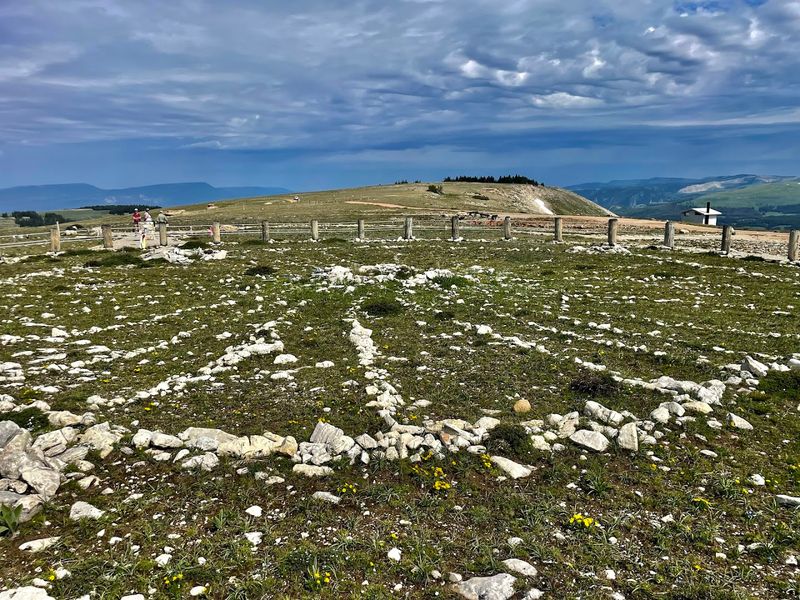
Up on a windswept ridge more than 9,000 feet above sea level, someone built a wheel out of stone, and nobody knows exactly why.
The Medicine Wheel on Medicine Mountain, reached by taking US Highway 14A east from Lovell in northern Wyoming and then Forest Road 12 to the lower parking area, is one of the most sacred and mysterious archaeological sites in North America.
The wheel measures roughly 80 feet in diameter and consists of a central cairn with 28 limestone spokes radiating outward, all arranged with a precision that has fascinated researchers for decades.
Many Plains Indian nations consider this site deeply sacred and continue to use it for ceremonies today.
Visitors walk a 1.5-mile round trip from the lower parking area to reach the wheel, passing through subalpine terrain with views that stretch across three states on a clear day.
The path is unpaved and can be breezy and cool even in summer, so bring a layer.
Access is seasonal and typically limited to late spring through early fall depending on snowpack.Respecting the site’s cultural significance is not just requested, it is essential.
Few places in Wyoming carry this much weight in such a quiet way.
7. Shell Falls Interpretive Site
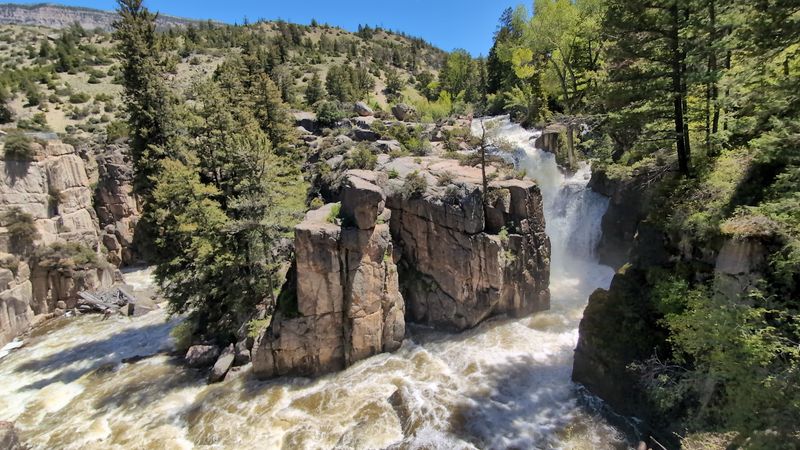
Pull off the highway and suddenly there is a waterfall thundering through a canyon right next to the road.
Shell Falls Interpretive Site sits along US Highway 14, about eleven miles east of Shell in the Bighorn Mountains of north-central Wyoming, and it is the kind of stop that makes passengers in passing cars crane their necks in disbelief.
The falls drop dramatically into a narrow red rock gorge, and the viewing platform puts you close enough to feel the mist on your face.
Interpreted signs along the short walking path explain the geology of the canyon, including how the layers of ancient rock tell a story spanning hundreds of millions of years.
The surrounding Bighorn National Forest adds lush pine-covered slopes to the scenery, creating a contrast between the rugged canyon below and the softer forest above.
This stop is genuinely accessible for all ages and fitness levels, with paved paths and solid railings making the views available to everyone.
Highway 14 through Shell Canyon is already considered one of Wyoming’s most scenic drives, and this waterfall is the undeniable highlight of the whole route.
Do not even think about breezing past without stopping here.
8. Meadowlark Lake
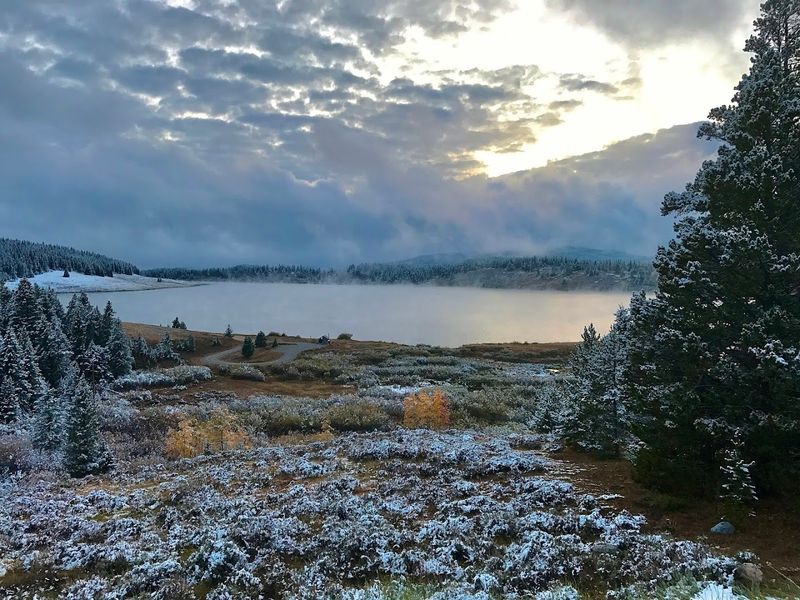
There is something deeply satisfying about finding a mountain lake that nobody in your social circle has ever mentioned.
Meadowlark Lake sits at elevation along US Highway 16 East near Ten Sleep in the Bighorn Mountains of north-central Wyoming, and it operates at a pace that feels refreshingly unhurried compared to more crowded alpine destinations.
The lake is surrounded by pine forest and rocky ridgelines, with reflections on calm mornings that make the whole scene look like a painting someone left unfinished.
Fishing is popular here, and the surrounding trails offer hikes ranging from easy lakeside strolls to more demanding ridge walks with sweeping mountain views.
Meadowlark Lake Lodge sits right on the shoreline and provides a convenient base for exploring the area, offering lodging and a classic mountain lodge atmosphere that fits the setting perfectly.
The lodge has been welcoming travelers along this highway for decades, and that lived-in character adds to the charm.
The drive along Highway 16 through Ten Sleep Canyon leading up to the lake is itself a highlight, with dramatic limestone walls and a winding river keeping things interesting the whole way.
This is the kind of stop that quietly becomes the favorite part of the trip.
9. Medicine Lodge Archaeological Site
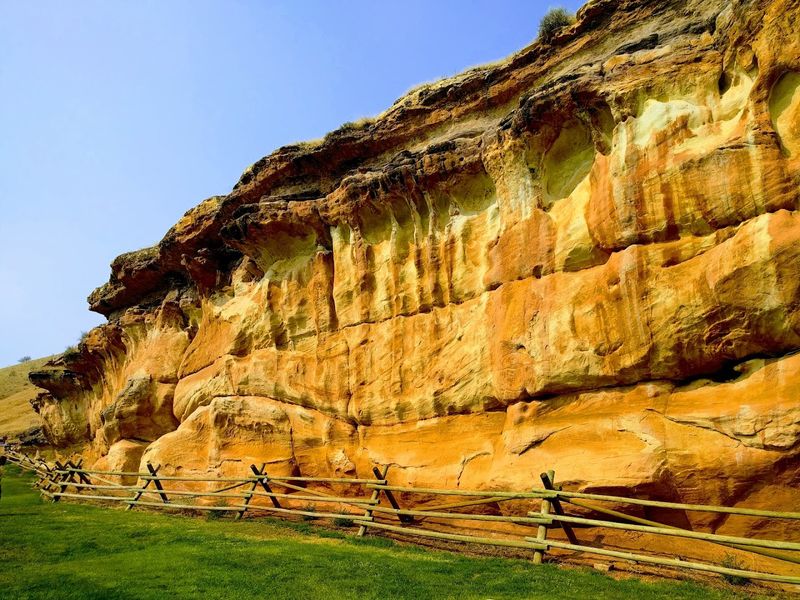
Some walls have more to say than others.
Medicine Lodge Archaeological Site, located at 4800 County Road 52 near Hyattville in north-central Wyoming, preserves one of the most impressive collections of Native American rock art in the entire Rocky Mountain region.
It sits in a canyon so beautiful that the art almost has to compete with the scenery for your attention.
Petroglyphs and pictographs cover a long stretch of sandstone cliff face, with images dating back thousands of years representing animals, human figures, and abstract designs left by people who lived in this canyon long before anyone wrote anything down.
The layering of styles and time periods makes the cliff face feel like a living archive.
The site also includes a campground and a pleasant trail along Medicine Lodge Creek, lined with cottonwood trees that turn golden in the fall.
Wildlife is active in the area, with deer, wild turkeys, and various birds frequently spotted along the creek corridor.
Getting here requires navigating some rural roads, but the directions are straightforward and the drive through the rolling foothills is enjoyable.
This is the kind of place that makes you stand quietly for a while, and that feeling is worth every mile.
10. Vedauwoo Recreation Area
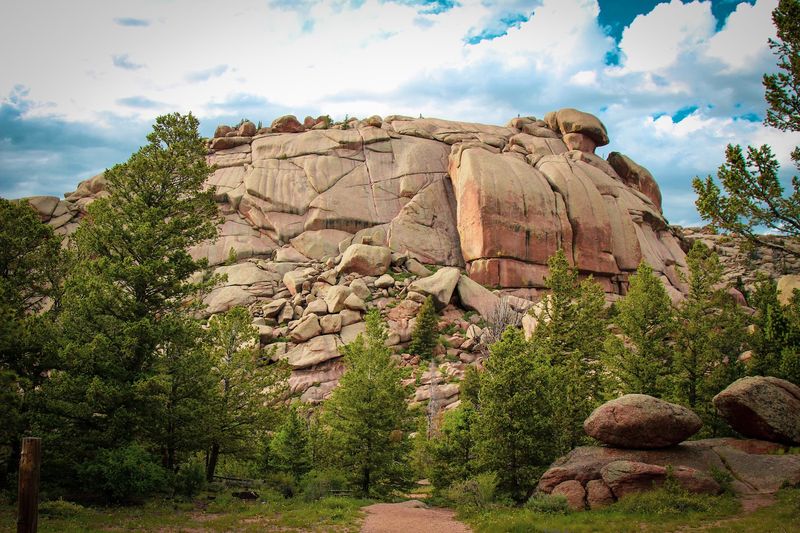
These rocks look like they were stacked by something enormous that had a very specific sense of humor.
Vedauwoo Recreation Area, reached via Forest Road 720 near Buford in southeastern Wyoming, is one of the most visually distinctive landscapes in the entire state, featuring colossal granite formations that pile up in rounded, chaotic towers unlike anything else in the region.
The name comes from an Arapaho word meaning “earthborn spirits,” and standing among these formations on a quiet morning, that description starts to feel less poetic and more literal.
Rock climbers from across the country travel here specifically for the unique crack climbing that these granite masses provide, with routes ranging from beginner-friendly to seriously technical.
Hikers and photographers also find plenty to work with, as the trails weave through and around the formations in ways that constantly reveal new angles and compositions.
The surrounding Medicine Bow National Forest adds a backdrop of pine trees and open meadows that softens the drama of the rocks without diminishing it.
Vedauwoo sits conveniently close to Interstate 80, making it an easy addition to any road trip crossing southern Wyoming.
Once you see those rock towers rising above the treeline, stopping becomes non-negotiable.