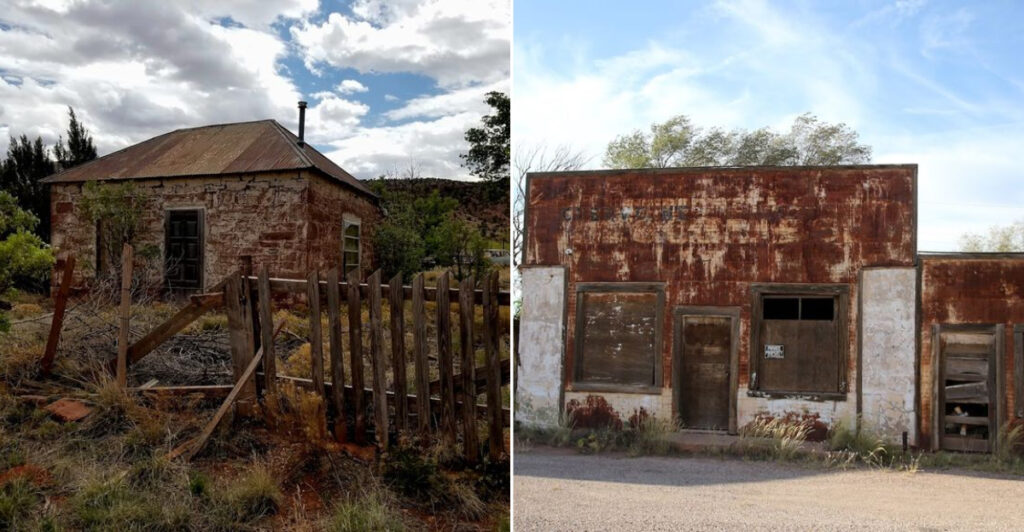
New Mexico has 1,000 miles of interstate and about a million reasons to exit early. Most people blow right past the good stuff at 75 miles per hour, windows up, playlist on, destination locked.
Big mistake. The real New Mexico hides in plain sight. It lives in the silences between towns, in the crumbling walls still standing against impossible odds, in the ZIP codes that outlasted the post offices they were built for. Pull over sometime.
Seriously. The high desert rewards the curious in ways no guidebook quite captures. You will stand somewhere and feel the full weight of American history pressing in around you. No crowds.
No gift shop. No filtered version of anything. Just open sky, honest ruins, and that rare feeling of being exactly where you were always meant to wander.
Born From The Rails, Forgotten By The Road
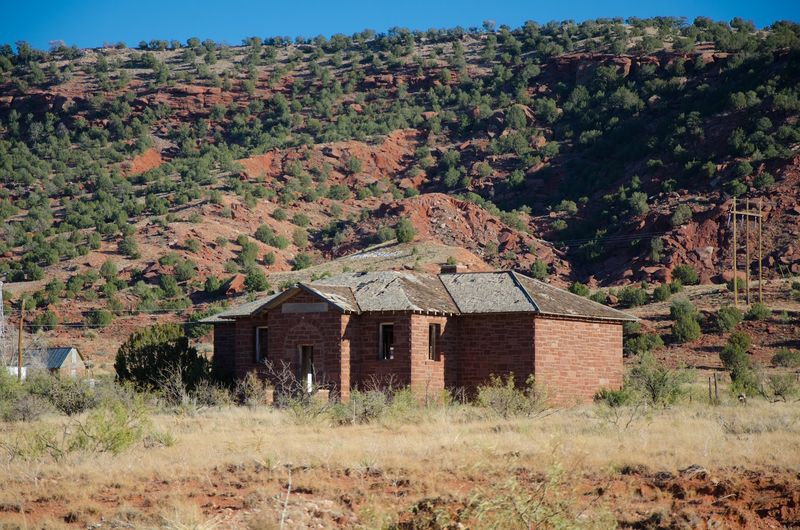
Long before the interstate cut through this part of New Mexico, Cuervo was a working town with real people, real routines, and real ambitions. It grew up along the old Route 66 corridor, pulling in travelers, ranchers, and settlers who needed a place to stop and resupply.
At its peak, Cuervo had a school, a post office, a handful of businesses, and a community that believed it had a future. What happened next was not dramatic.
It was just slow. The highway shifted, the population drifted, and the services followed the people out the door.
The post office closed on September 10, 2011, which felt like the town’s last official goodbye. But Cuervo never fully disappeared.
Its ZIP code still exists, which is a quirky little detail that gives the town a kind of stubborn identity.
Have you ever wondered what it takes for a place to simply refuse to vanish entirely? Cuervo is your answer, standing right there off I-40, weathered but still present, still worth every mile of the detour you will absolutely not regret making.
What The Landscape Tells You Before You Even Stop The Car
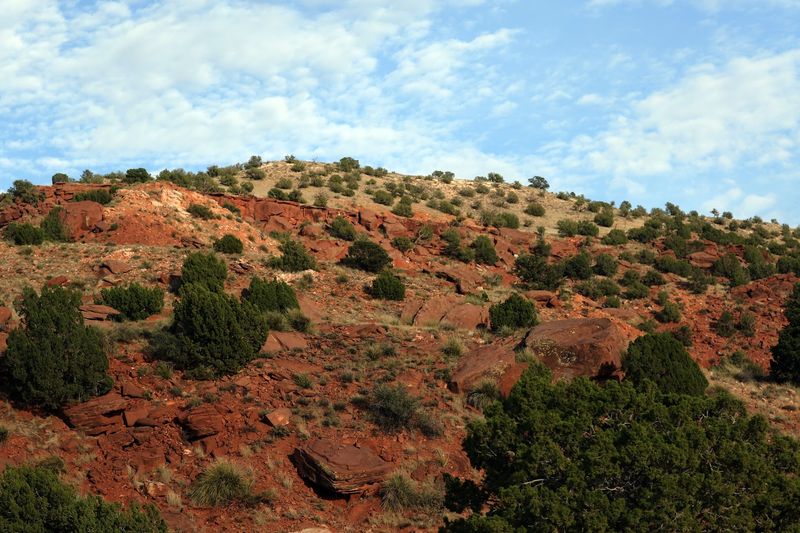
The land around Cuervo does not ease you in gently. It opens up big and flat, with the kind of sky that makes you feel wonderfully small.
The high desert of Guadalupe County stretches in every direction, dotted with scrub brush, sandy soil, and the occasional hawk riding a thermal overhead.
Driving in from Interstate 40, you get this slow reveal where the ruins start appearing on the horizon before you even realize what you are looking at. A roofless wall here, a rusted structure there, and then suddenly you are in the middle of it.
The light out here is extraordinary, especially in the late afternoon when everything turns golden and the shadows stretch long across the broken pavement.
Photographers absolutely love this place for that reason alone. The textures, the contrast between old adobe and open sky, the way the desert reclaims structures inch by inch, it creates a visual story that no studio could replicate.
The Buildings That Are Still Standing
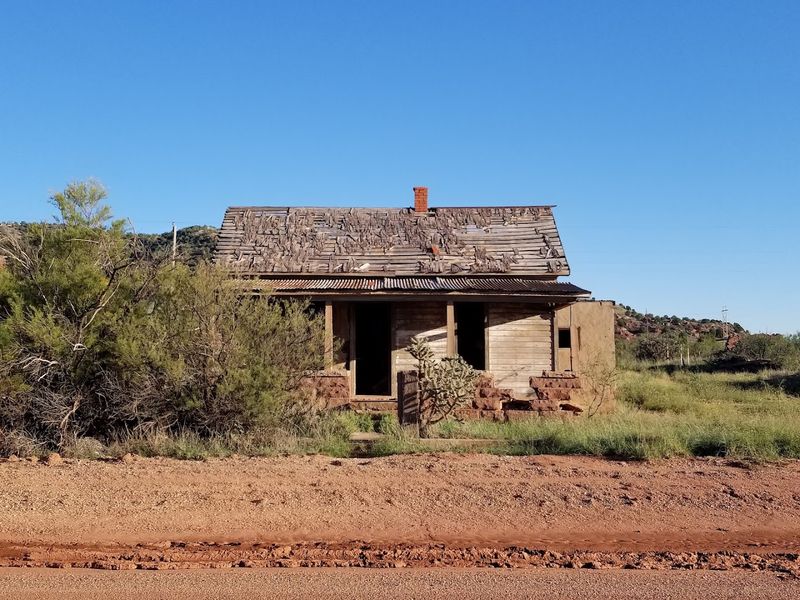
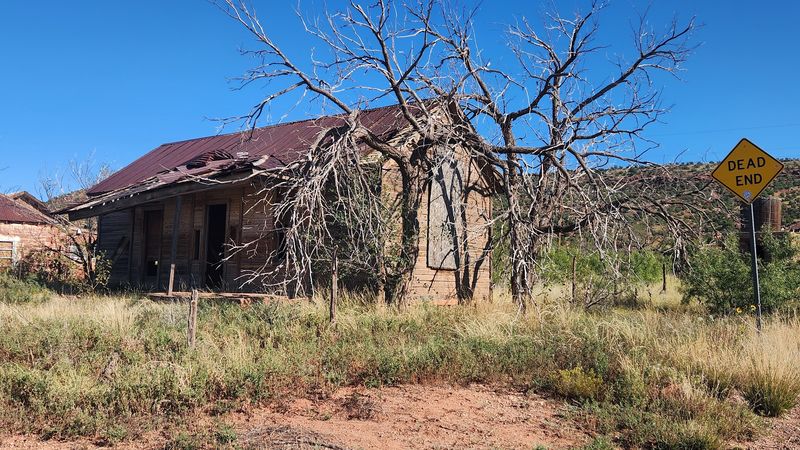
Walking through Cuervo, you start piecing together the town’s layout like a puzzle. Some structures are barely standing, but enough walls remain to give you a real sense of where things used to be.
There was a gas station. There was a general store. There were homes where families woke up every morning and went about their lives.
The old church is one of the most striking sights in town. Its walls have held up better than most, and the structure still carries a quiet dignity that makes you want to slow down and look carefully. Adobe construction has a way of aging that feels more like erosion than ruin, and that is exactly what you see here.
Several roofless buildings still have their doorframes intact, which creates these perfect rectangular windows into open sky. It sounds simple, but standing in one of those doorways and looking straight up at the blue above you is one of those travel moments that sticks with you.
Cuervo has a way of turning the ordinary into something that quietly takes your breath away, and every structure here has a silent story just waiting for someone curious enough to stop and listen.
Route 66 Roots That Still Echo Through The Streets
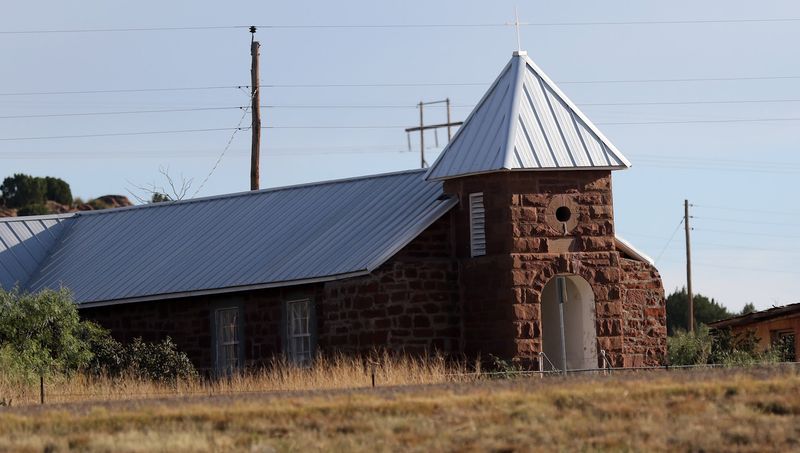
This town owes a lot of its early life to Route 66, the legendary highway that once connected Chicago to Los Angeles and passed right through this corner of New Mexico. Travelers rolling west or east would stop here for fuel, food, and a moment of rest before continuing across the open desert.
That roadside culture shaped the town’s character in ways you can still feel today. The bones of old service buildings and roadside stops are scattered around, and if you look closely at the faded signage and crumbling facades.
You can almost reconstruct what a stop here would have looked like back in its prime. It was not glamorous, but it was alive. Route 66 nostalgia runs deep across New Mexico, and Cuervo is one of the rawest and most unfiltered versions of that story you will find anywhere along the old corridor.
There are no gift shops here, no staged photo opportunities, no tour buses. Just the real thing, slowly returning to the earth.
How To Get There And What To Expect When You Arrive
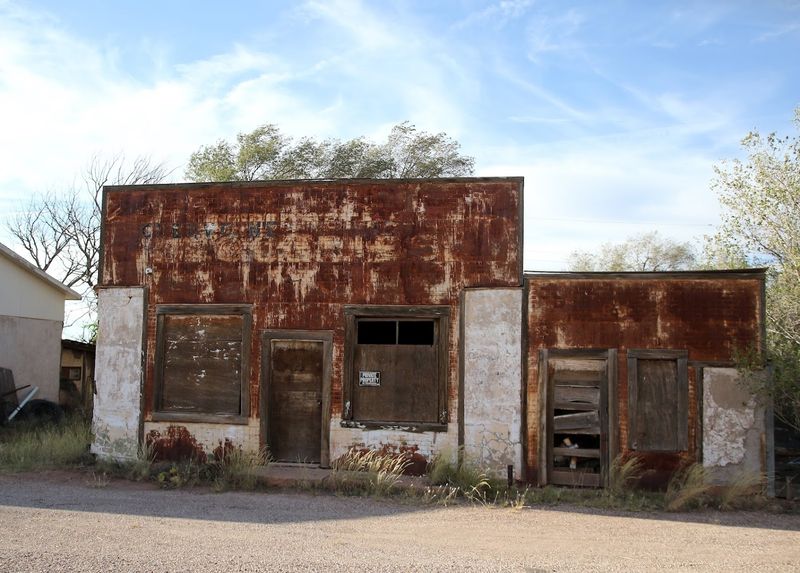
Getting to Cuervo is straightforward. Take Interstate 40 to the Cuervo exit, which sits about 16.8 miles east-northeast of Santa Rosa in Guadalupe County, New Mexico.
The drive from Albuquerque takes roughly two hours, and from Amarillo you are looking at about two and a half hours heading west.
Once you exit, a short drive brings you into what remains of the town. There are no entrance fees, no visitor centers, and no formal parking lots.
You simply arrive, park sensibly, and start exploring on foot. It is genuinely that easy and that open.
A few practical things to keep in mind before you go: bring your own water because there are no services here. Wear sturdy shoes because the ground is uneven and full of loose debris.
Check the weather before heading out because desert conditions can shift quickly, especially in summer and monsoon season. Cell service can be spotty, so download an offline map just in case.
Is this the kind of adventure that requires a little preparation? Yes, absolutely, but the payoff for that small effort is a completely unique experience that most tourists passing on I-40 will never even know they missed.
Where Every Crumbling Wall Is A Perfect Shot
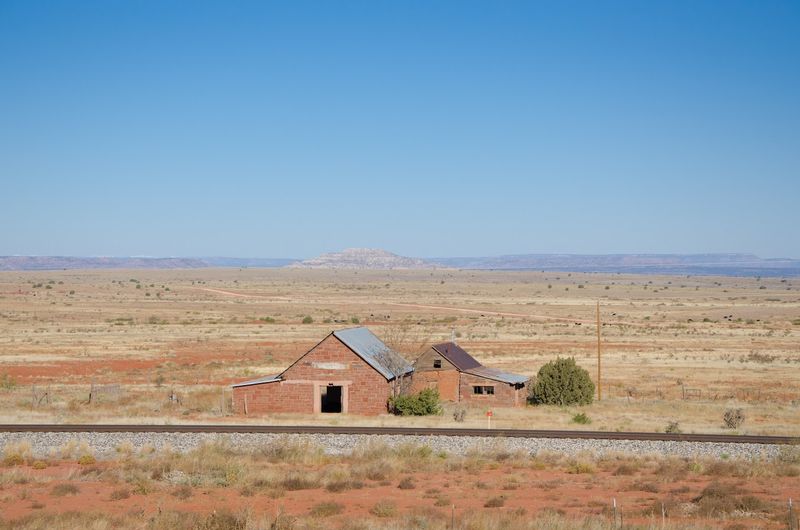
For anyone who loves photography, this place is the kind of location that feels almost unfair. The combination of crumbling architecture, vast desert backgrounds, dramatic skies, and zero crowds creates conditions that most photographers spend years searching for.
The best light arrives in the early morning and again about an hour before sunset. During those windows, the warm tones hit the old walls in a way that turns every shot into something worth framing.
The textures here are extraordinary: peeling paint, rusted metal, weathered wood, and sun-bleached adobe all sitting side by side in the same frame.
Wide angle lenses work beautifully for capturing the scale of the landscape against the ruins. Macro lenses reveal details in the surfaces that tell their own miniature stories.
Portrait photographers sometimes use the doorways and window openings as natural frames, creating compositions that feel both modern and timeless at once. Do you have a photo project that needs a location with genuine character and zero tourist clutter?
Cuervo delivers that with zero competition for the best angles, and on a quiet weekday morning, you might have the entire place completely to yourself, which is a rare luxury in an age when every scenic spot seems permanently crowded.
The Silence Of Cuervo And Why It Hits Differently
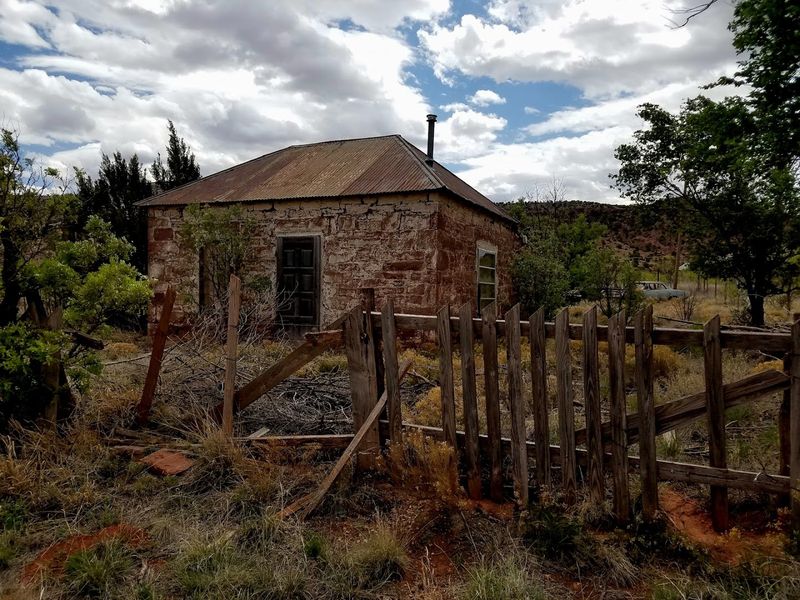
There is a specific kind of quiet that exists in abandoned places, and Cuervo has it in full. Not the quiet of a library or a park at dawn, but a deeper stillness that comes from a place where human activity has simply stopped.
It is the sound of wind moving through open windows and nothing else.
Visitors often describe feeling unexpectedly emotional when they walk through Cuervo. It is not sadness exactly, more like a heightened awareness of time passing and of all the ordinary moments that happened here and are now gone.
A family eating breakfast. A mechanic working on an engine. A kid running down that street. All of it real, all of it over. That emotional weight is part of what makes Cuervo worth visiting.
It is not just a collection of old buildings. It is a meditation on impermanence that happens to come with incredible scenery. How often do you find a place that makes you feel something that genuinely surprises you?
Cuervo has that quality in abundance, and it does not need a single interpretive sign or audio guide to deliver it. The place speaks entirely for itself, and it does so in a language that every visitor seems to understand the moment they step out of their car.
Why This Forgotten Corner Of New Mexico Deserves Your Time
New Mexico road trips tend to focus on the big names: Santa Fe, Taos, White Sands, Carlsbad Caverns. Those places are wonderful, but they are also busy, well-documented, and thoroughly mapped out.
Cuervo offers something completely different, a stop that feels like your own personal discovery.
Adding Cuervo to a road trip along I-40 requires almost no extra effort. It is right off the highway, and even a one-hour stop gives you enough time to walk the town, take photos, and soak in the atmosphere.
Pair it with a visit to nearby Santa Rosa and you have a half-day itinerary that most travel guides would never think to suggest. The fact that Cuervo remains largely unknown is honestly its greatest strength right now.
The crowds have not found it. The Instagram tour groups have not descended on it. It is still raw, still real, and still entirely yours to experience on your own terms.
Cuervo, New Mexico 88417, is sitting right there off Interstate 40, patient and unhurried, waiting for the travelers who are curious enough to take the exit and see what the highway has been hiding all along.