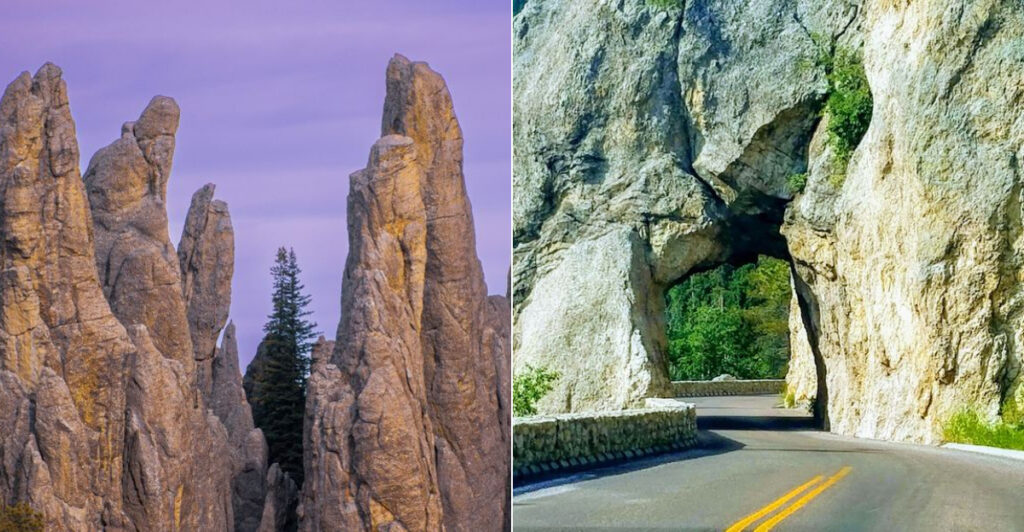
This place is about to blow your mind. Turn one corner on this trail and suddenly granite towers are shooting straight out of the forest like nature built its own skyline.
Nobody warned you it would look like this. Do you deserve a real South Dakota adventure? An actual break from ordinary life?
Yes. Absolutely yes. Every single step rewards you here. Tall spires. Views that stretch across the plains so far your eyes can barely keep up. A sky so big it makes you stop and stare.
This is not a casual stroll. This is the kind of trail that earns a permanent spot in your memory, long after your boots are dry and you are back home wishing you had stayed longer.
Where The Trail Begins
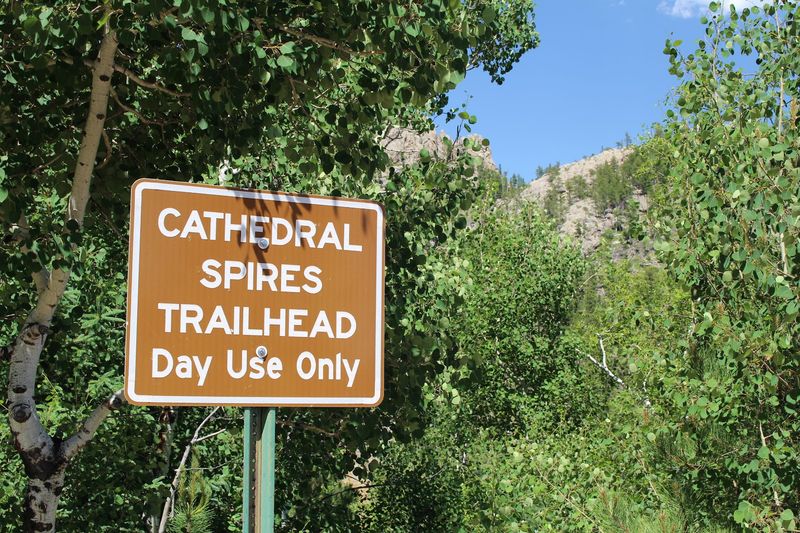
Not every great adventure starts with a dramatic entrance, but the Cathedral Spires Trailhead in Custer State Park comes pretty close. The trailhead sits quietly among towering ponderosa pines that already hint at the drama ahead.
The trail itself is about 3.6 miles round trip, with an elevation gain of roughly 600 feet. That puts it in the moderate category, meaning it is manageable for most people who are reasonably active but still offers enough of a challenge to feel earned.
First-time visitors often say the beginning of the trail feels almost too peaceful, like the forest is keeping a secret. The path winds gently upward through shaded woodland before the terrain shifts and the granite formations start appearing through the trees.
Tourists say that the trailhead is the kind of place where you check your phone one last time before putting it in your pocket and actually paying attention to the world around you. That pretty much sums it up perfectly.
The adventure truly starts the moment you step past that sign.
The Granite Spires That Make This Trail Famous
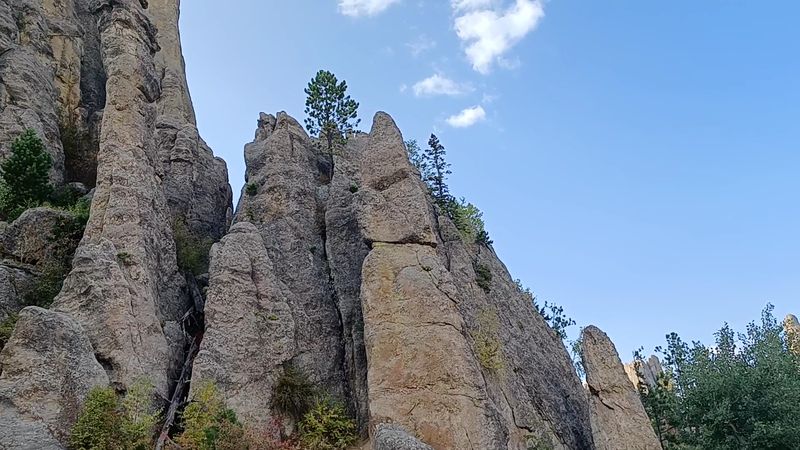
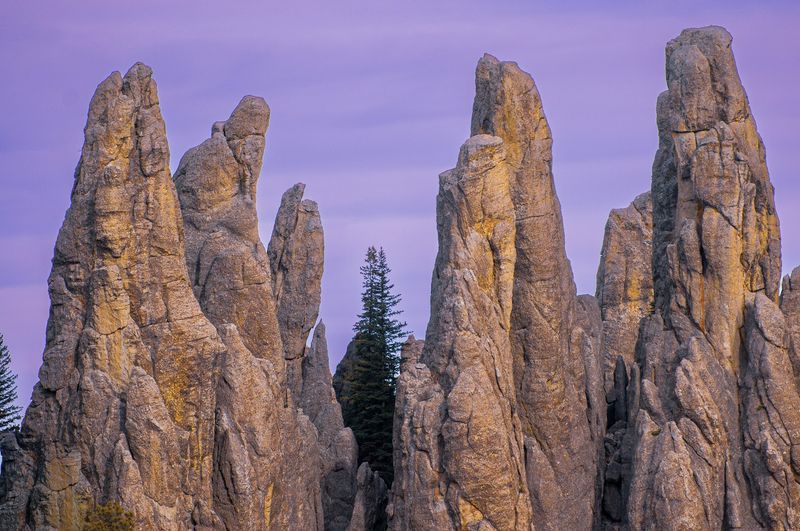
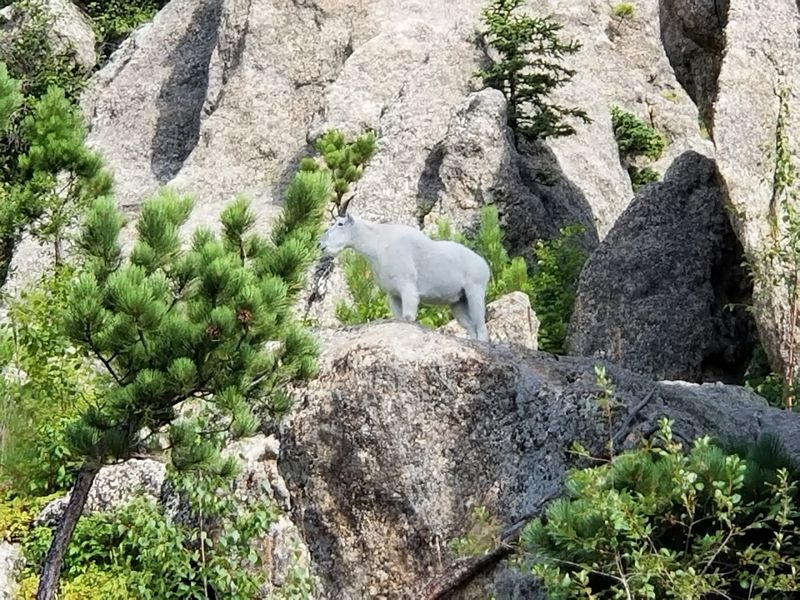
Few rock formations in the entire country look quite like the Cathedral Spires. These sharp, narrow pillars of granite rise dramatically from the forest floor, some reaching heights of over 100 feet.
They have been shaped by millions of years of erosion, and the result is something that feels almost architectural. The rock is a warm pinkish-gray color that catches the light beautifully in the morning and glows golden during late afternoon.
Photographers absolutely love this trail for that reason, and you will often see people with serious camera gear set up at various points along the route. Geologists identify the rock as Harney Peak Granite, which is among the oldest exposed rock in North America, estimated to be around 1.7 billion years old.
Pausing for a moment to think about that number makes the spires feel even more impressive. A local park ranger once told a group of visitors that the spires look different depending on the season.
In winter, they wear a dusting of snow like frosting on a very dramatic cake. In summer, they are framed by a green pine canopy that makes the gray rock pop with contrast.
This View Pays Off
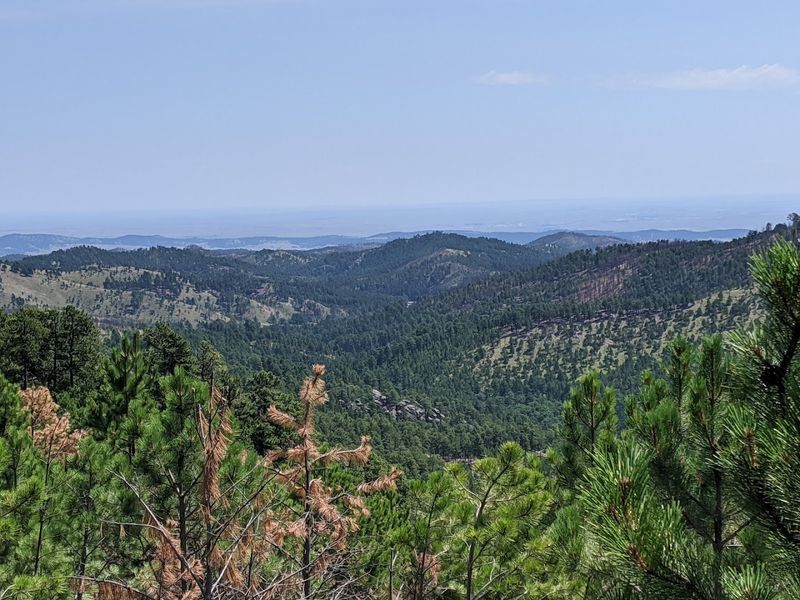
After winding through the trees and climbing past the granite formations, the trail opens up to a viewpoint that genuinely earns the word breathtaking. South Dakota spreads out below in every direction, rolling and golden and seemingly endless.
On a clear day, visibility from the upper sections can reach for dozens of miles. The shift from dense Black Hills forest to wide open land below is striking in a way that photos only partially capture.
Two completely different worlds, stacked side by side, visible all at once. The upper viewpoint sits at around 6,400 feet above sea level. That extra height changes everything.
The wind up there stays refreshing even on warm summer days, and the views just keep going. Perspective is something this trail delivers in a way that few other hikes in the region can match. Could there be a better reward for a few hours of hiking?
Wildlife Along The Way
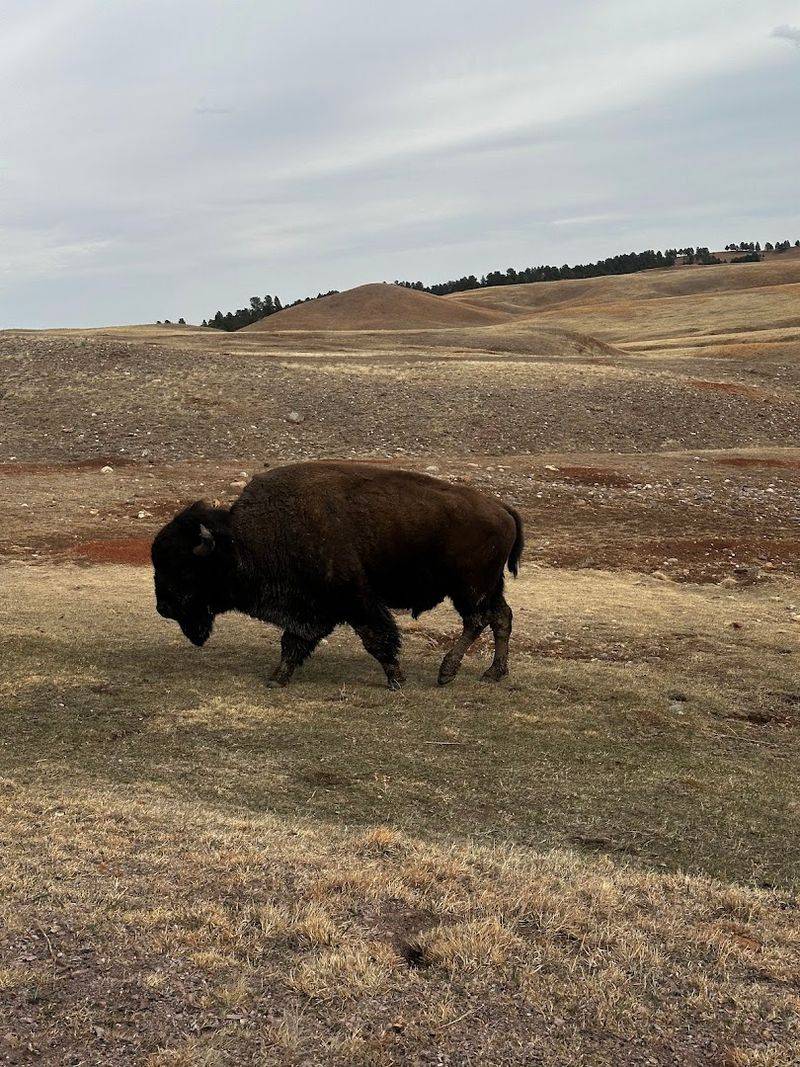
This trail does not just offer rocks and views. The surrounding forest is alive with wildlife that can turn a regular hike into something genuinely memorable.
Custer State Park is known for its impressive animal diversity, and the trail passes through prime habitat for many species.
White-tailed deer are common sightings along the lower sections of the trail, especially in the early morning. Wild turkeys are also frequently spotted scratching through the pine needles, completely unbothered by passing hikers.
Keep your eyes on the tree line and you might spot a wild turkey strutting with a confidence that most of us can only dream about. The park is also home to one of the largest free-roaming bison herds in the world, with over 1,400 animals.
While bison are not typically found right on the Cathedral Spires trail, they are visible throughout the park and seeing one up close from a safe distance is an experience that tends to become the highlight of many visitors’ entire trip.
Birders will want to keep their ears open on this trail. The Black Hills are home to species like the red crossbill and the white-breasted nuthatch, both of which can be heard calling through the pines on quiet mornings.
Best Times To Visit
Timing your visit to the Cathedral Spires trail can make a significant difference in what you experience. Each season brings something different, and honestly, the trail has something worthwhile to offer in all of them.
Summer, from June through August, is the most popular time. The trail is fully accessible, the days are long, and the wildflowers along the lower sections add splashes of color to the forest floor.
Mornings are ideal since afternoon thunderstorms can roll in quickly in the Black Hills during summer.
Fall is a favorite for many repeat visitors. September and October bring cooler temperatures and a shift in color as the deciduous trees mix warm oranges and yellows into the green pine forest.
The crowds thin out compared to summer, which means a quieter, more personal experience on the trail.
Spring offers its own charm, with snowmelt feeding small streams along the route and early wildflowers pushing up through the thawing ground. Winter hiking is possible for those with the right gear, and the spires covered in snow are genuinely striking, though the trail can be icy and slippery in spots.
A seasoned hiker who visits every fall says she packs an extra layer and a good thermos of something warm, and considers it the most peaceful hiking experience in all of South Dakota.
Practical Tips To Make Your Hike Go Smoothly
A little preparation goes a long way on the trail. The hike is moderate, but the terrain includes rocky sections and some elevation gain that can catch unprepared visitors off guard.
Good footwear is the single most important thing you can bring. Water is essential, especially during summer months when temperatures in the Black Hills can climb into the 80s and 90s. Bring more than you think you will need.
The trail has no water sources along the route, so everything you drink comes from what you carry in.
Custer State Park requires an entrance fee, which covers access to the park including the Cathedral Spires Trailhead. As of recent years, daily vehicle permits are available at the entrance gates, and annual passes are also offered for those planning multiple visits.
Sun protection matters more than many people expect at this elevation. A hat, sunglasses, and sunscreen are all worth packing, even on days that start out overcast. The UV index at higher elevations can be surprisingly intense.
Your Base Camp For Black Hills Adventures
Right at the edge of Custer State Park sits the small city of Custer, South Dakota, and it is the kind of town that makes visitors want to stay longer than planned. With a population of just under 2,000 people, it has the welcoming feel of a place where everyone knows their neighbors and strangers are treated like friends.
The town sits at the center of some of the most stunning scenery in the entire Black Hills region. Mount Rushmore is about 23 miles north, Crazy Horse Memorial is just a short drive away, and Wind Cave National Park is practically next door.
Using Custer as a home base for exploring the area is one of the smartest decisions a visitor can make. Downtown Custer has a solid mix of local restaurants, shops, and small galleries.
The main street has a relaxed, unpretentious character that feels refreshingly authentic compared to more heavily commercialized tourist areas in the region.
Accommodations range from campgrounds inside Custer State Park itself to cozy cabins and motels in town. Booking ahead during the summer season is strongly recommended, as rooms and campsites fill up weeks in advance.
Why This Trail Deserves A Spot On Your Bucket List
Some trails are pleasant. Some are pretty.
And then there are the ones that change how you see a place entirely. The trail belongs in that last category, and it earns that distinction through a combination of geological drama, sweeping views, and an atmosphere that feels genuinely wild.
South Dakota does not hand out views like this on every trail. This one is different, and anyone who has stood at the top will tell you the same thing: you owe it to yourself to see it in person.
The trail is accessible enough for families with older kids and experienced enough to satisfy serious hikers looking for a rewarding challenge. That balance is surprisingly rare, and it is one of the reasons the Cathedral Spires trail consistently earns high praise from visitors of all experience levels.
So, what is stopping you from putting this trail on your list? The granite spires are patient.
The plains are not going anywhere. And the view from the top of the Cathedral Spires trail in Custer, SD 57730, United States, is waiting for you to come and see it for yourself.