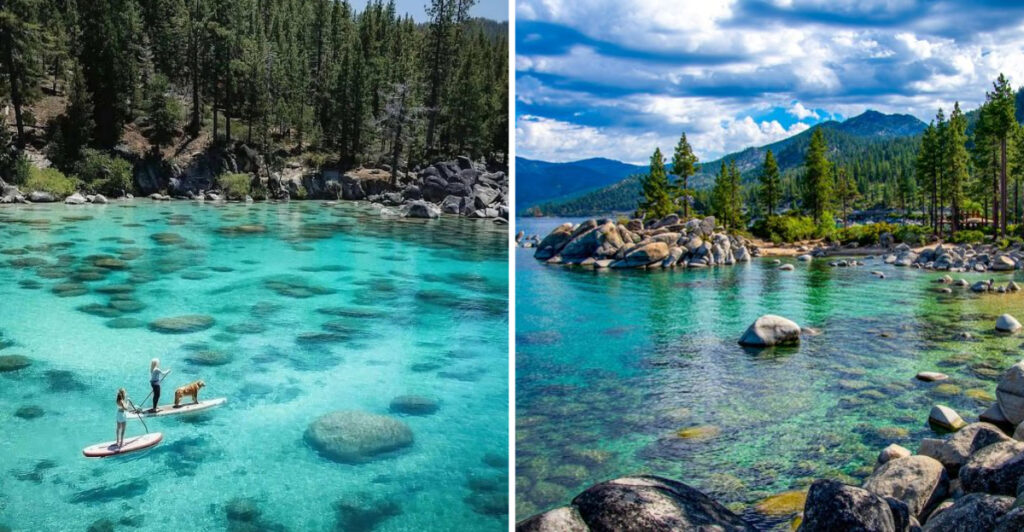
Bright blue water, pale sand, and that wow moment you usually expect from a far bigger-name destination all show up here at once.
The surprise is how peaceful it can still feel. California knows how to do dramatic scenery, but few spots make a lake beach look quite this vivid, calm, and wildly inviting.
Then the mood really clicks. The water shimmers, the mountains sharpen every view, and the whole place starts giving off that Caribbean vibes energy without the packed shoreline you might expect.
California pulls off that mix of beauty and breathing room better than almost anywhere, and this beach proves it fast. Keep going, because the details only get dreamier from here.
The Water Color That Stops You Cold
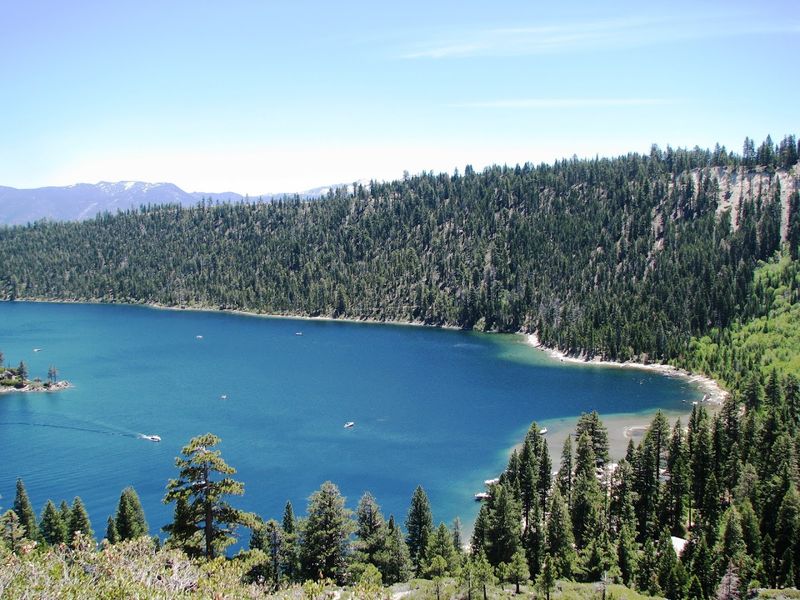
Nobody expects freshwater to look like this. The moment sunlight hits Lake Tahoe’s surface, it turns a shade of blue-green so vivid it looks digitally enhanced, yet it is completely real.
The lake sits at roughly 6,225 feet above sea level, and its water is famously pure. Visibility can extend dozens of feet below the surface, giving swimmers and paddlers the surreal experience of floating above what looks like liquid glass.
Scientists attribute this clarity to the lake’s cold temperature and low nutrient levels, which keep algae growth minimal. The result is water that reads turquoise in shallow areas and shifts to a deep cobalt blue further out.
This is the kind of color that makes people stop mid-sentence and just stare. California has plenty of beautiful lakes, but none quite match this particular shade of impossible blue that Tahoe pulls off effortlessly, season after season.
The Quiet Shore With Big Personality
Picture powdery white sand, calm water the color of sea glass, and mountains rising up on every side. That is Meeks Bay, and it sits on the western shore of Lake Tahoe without demanding nearly enough attention.
This beach is the one locals quietly recommend while tourists crowd the busier southern shores. The sand here is soft and the water shallow enough near the edges for kids to wade in safely, making it a practical pick for families.
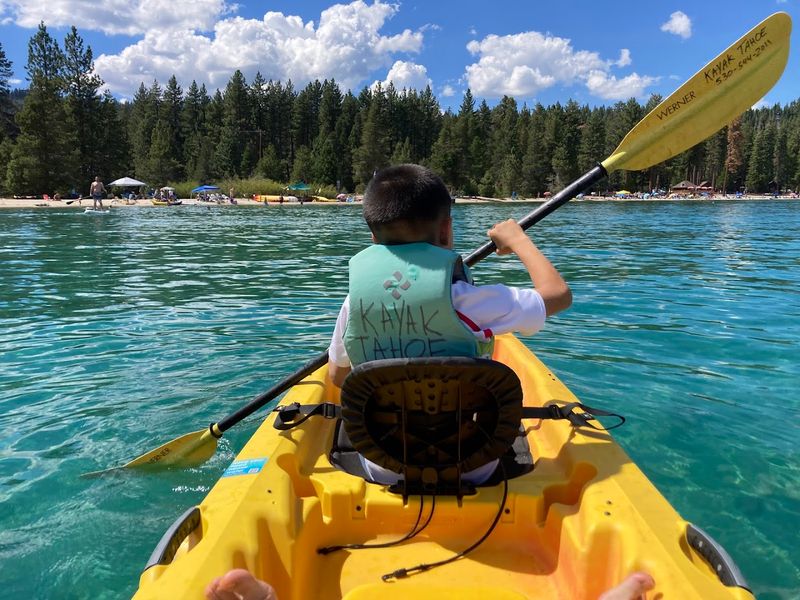
Kayaking and paddleboarding are popular here because the water stays relatively calm, especially in the morning hours. Renting gear nearby is straightforward, and the bay’s sheltered shape means even beginners feel comfortable on the water.
The surrounding pine forest adds a scent to the air that no beach resort can replicate. It is the kind of spot in California that feels like a personal discovery, even if others have already found it.
The full address for orientation purposes is Lake Tahoe, South Lake Tahoe, CA 96150.
What Makes This Place Feel Like The Caribbean
The Caribbean comparison is not a marketing stretch. It is a genuine reaction that first-time visitors have the moment they step onto a Tahoe beach and look out at the water.
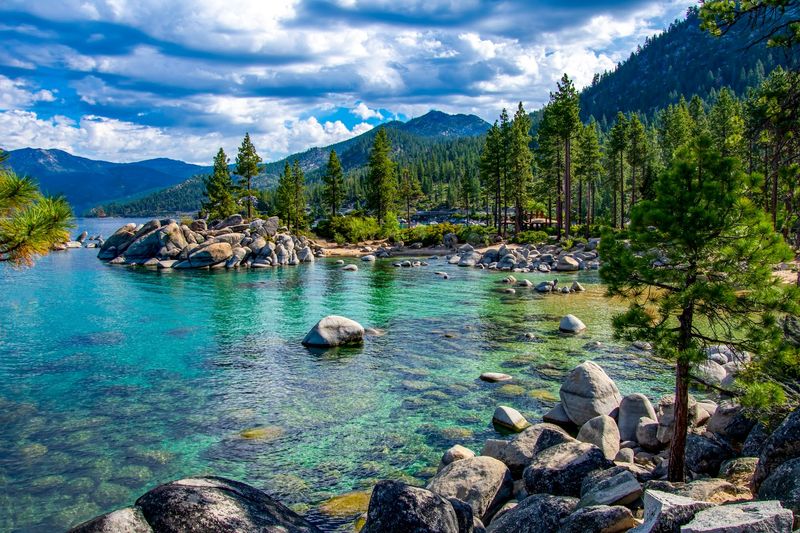
The combination of white sand, translucent blue-green water, and bright mountain light creates a visual atmosphere that feels tropical, even at altitude. The key difference is the temperature, which runs cooler than the Caribbean, but on a warm summer afternoon, that refreshing chill is actually welcome.
What Tahoe adds to the equation is drama. The Sierra Nevada peaks frame every view, turning what would be a beautiful beach into something that feels genuinely cinematic.
No flat horizon here, just mountains stacked behind mountains in every direction.
California has coastline for days, but ocean beaches rarely offer this kind of water clarity. Tahoe sits in a category of its own, delivering that warm-weather, clear-water energy with an alpine twist that keeps people coming back year after year.
The Best Time To Visit And Beat The Crowds
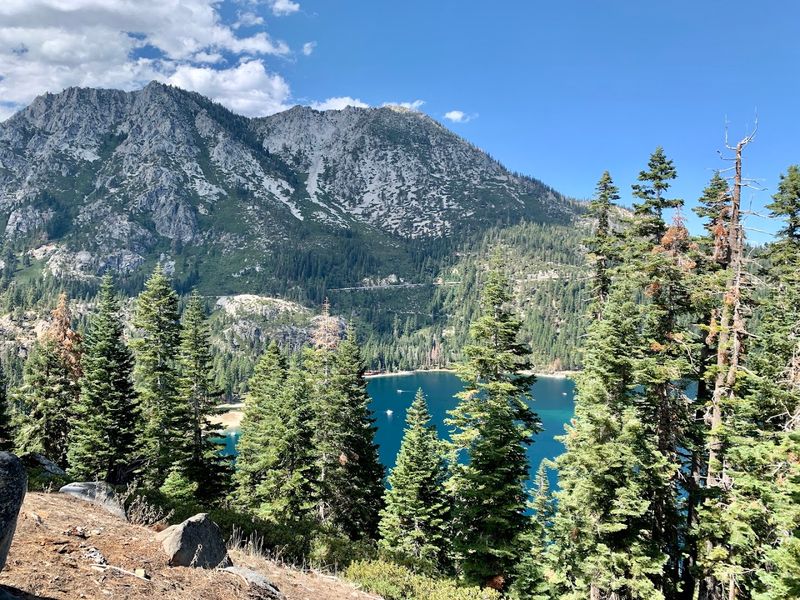
Timing a Tahoe visit smartly makes an enormous difference. Summer weekends, especially in July and August, bring heavy traffic to the most popular beaches and access roads around the lake.
Early June is a sweet spot that experienced visitors swear by. Snow has mostly melted, the wildflowers are blooming along hiking trails, and the crowds have not yet arrived in full force.
The water is cold but swimmable, and parking is actually manageable.
September is another underrated window. The summer rush fades, temperatures stay warm during the day, and the surrounding forests begin their early autumn shift.
The light in September hits the water differently, casting a golden tone that photographers chase specifically.
Weekday visits in any summer month also help significantly. Weekday mornings are usually the calmest time to visit, but crowd levels and entry rules vary by beach, so checking the current access policy before you go is smart.
Water Activities That Go Beyond Swimming
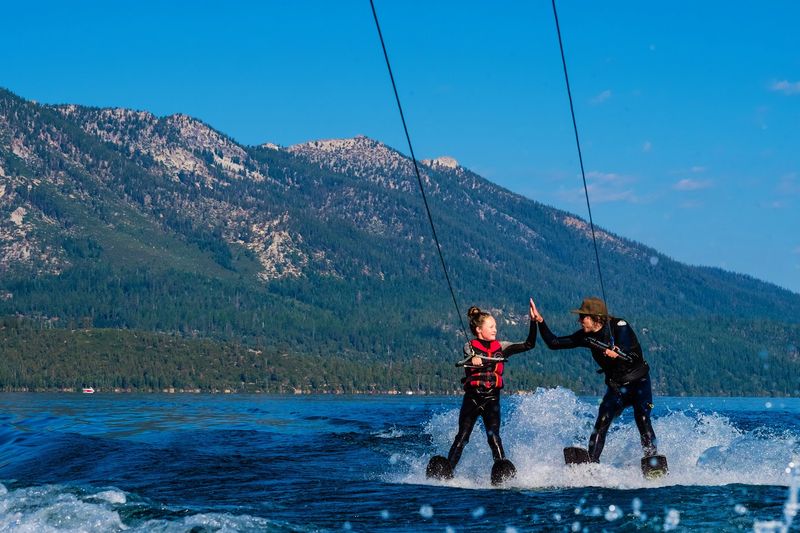
Floating on your back and staring at the sky is a perfectly valid activity here. But Lake Tahoe’s water also supports an impressive range of things to do for those who want to stay moving.
Paddleboarding has become hugely popular, and the lake’s calm morning conditions make it ideal for beginners. Kayaking lets visitors explore coves and rocky shorelines that are not accessible from the beach, revealing quieter pockets of the lake that feel completely private.
Jet skiing draws a crowd on warmer days, especially near South Lake Tahoe, where rental operations are plentiful. For those who prefer to stay underwater, the clarity of the lake makes snorkeling a surprisingly rewarding experience, with rock formations and fish visible without any special equipment.
Sailing is another option, with the lake large enough to generate real wind patterns. California’s outdoor culture shines brightest here, where the water is both a backdrop and an invitation to get in and explore every inch of it.
Hiking Trails With Views Worth Every Step
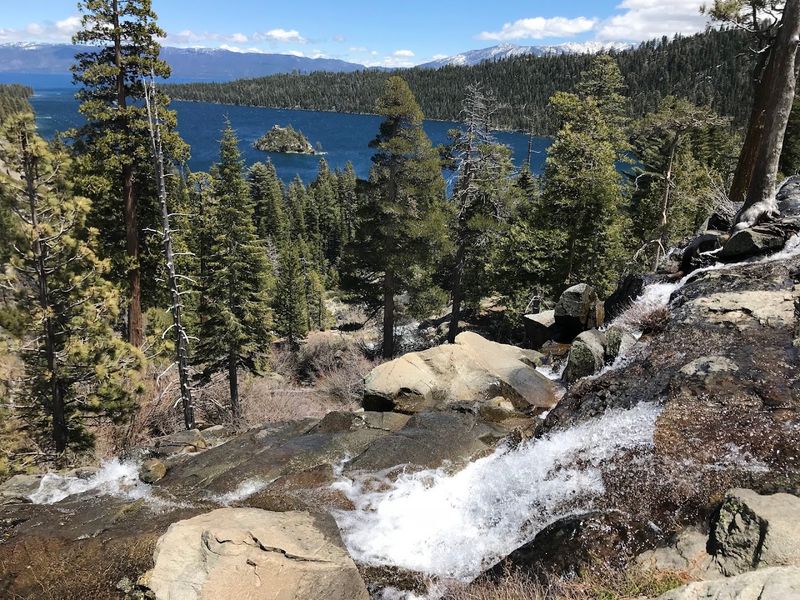
The lake is only part of the story. Pull yourself away from the shoreline and the surrounding trails reveal a completely different dimension of what makes this place extraordinary.
The Rubicon Trail along the western shore is one of the most scenic lakeside walks in California, hugging the shoreline and passing through forest, over granite boulders, and alongside stretches of water that look unreal from above.
It is manageable for most fitness levels and rewards hikers with constant views.
For something more challenging, the trails climbing above the lake offer elevated perspectives that put the full scale of Tahoe into context.
From certain viewpoints, the entire lake basin stretches out below, ringed by peaks and dotted with the tiny shapes of boats on the water.
Wildlife sightings are common on these routes, with mule deer and black bears occasionally spotted in the surrounding forest. Always keep a respectful distance and store food properly, because this is genuinely wild California mountain country.
The California Shoreline Has Its Own Distinct Appeal
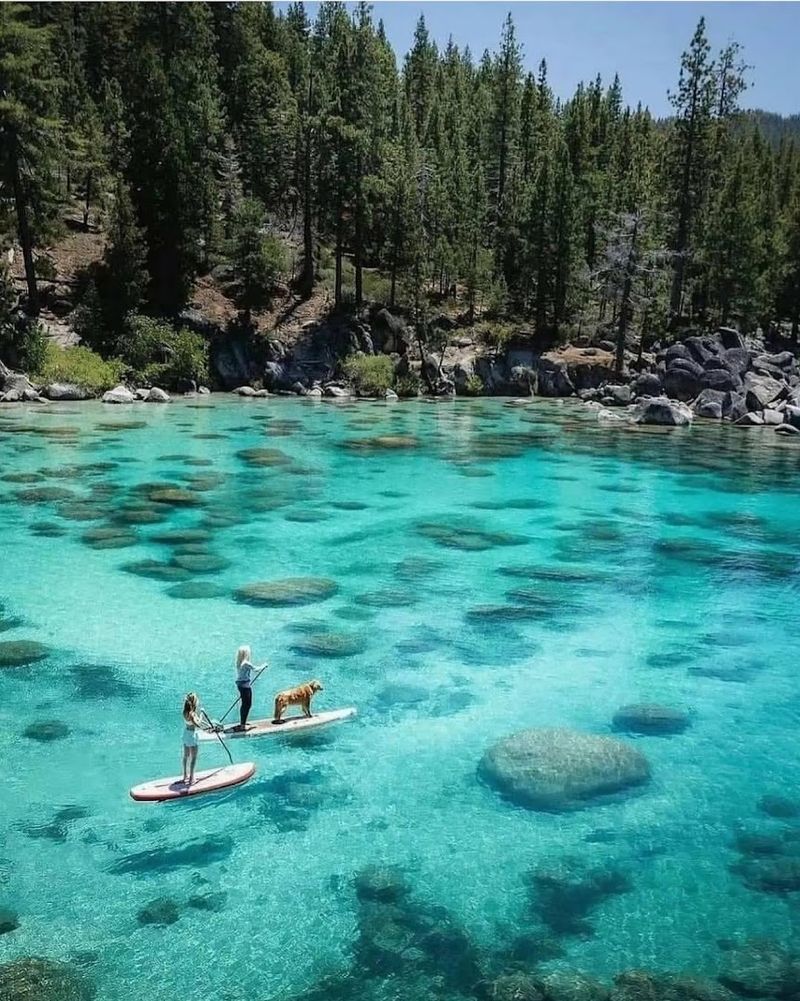
Lake Tahoe may stretch across two states, but the California side has a feel all its own. It leans scenic, relaxed, and a little more tucked into nature, which suits travelers who care as much about the setting as the beach itself.
Long drives framed by pine forest, bright granite, and flashes of blue water give this side of the lake a slower, more cinematic rhythm from the start.
What makes the California shore especially appealing is how varied it feels without losing that calm, alpine beauty. One stop may offer a sandy shoreline with shallow, glassy water, while another gives you bigger views, rockier edges, and a stronger sense of mountain drama.
It all still feels connected by that same impossible water color and fresh high-elevation air. For visitors chasing a beach day that feels beautiful, peaceful, and slightly under the radar, the California side delivers that balance with remarkable ease.
The Lake’s Surprising History And Scale
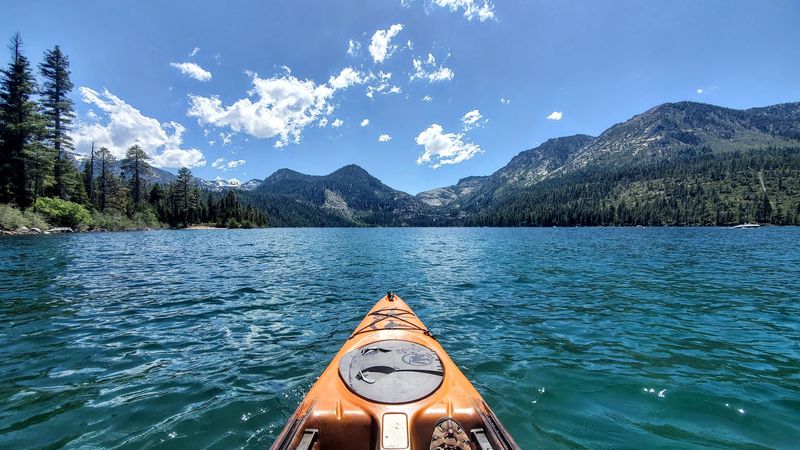
Lake Tahoe is not just big. It is staggeringly, almost incomprehensibly large once you are standing at the edge of it for the first time.
The lake stretches roughly 22 miles long and 12 miles wide, sitting at an elevation that makes it the largest alpine lake in North America by surface area. The depth reaches over 1,600 feet at its deepest point, placing it among the deepest lakes on the entire continent.
The lake formed around two million years ago through geological faulting, and the basin filled over time with water from snowmelt and rainfall.
The Washoe people lived around its shores for thousands of years before European settlers arrived in the 1800s, drawn first by fur trapping and later by the silver rush in nearby Nevada.
Mark Twain famously wrote about visiting the area and described the water with genuine awe. That reaction has not changed much.
California has remarkable geography throughout, but Tahoe occupies a category that simply has no equal.
Food, Coffee, And Refueling After A Day Outside

A lake day like this has a way of building a real appetite before you even notice it. Between swimming, paddling, hiking, and stretching out on the sand, it does not take long to start thinking about a good meal and a solid cup of coffee.
The area around the lake makes that part feel easy, with relaxed places to eat and cozy stops where you can recharge without breaking the mood of the day.
What works so well is how naturally it fits into the experience. You can start with coffee before heading to the beach, grab something satisfying after a few hours outside, or slow down later and turn the meal into part of the outing itself.
Nothing feels too formal or forced.
It all matches the easy rhythm of a place where the scenery does most of the talking and the day tends to unfold at its own pace.
What To Know Before You Go
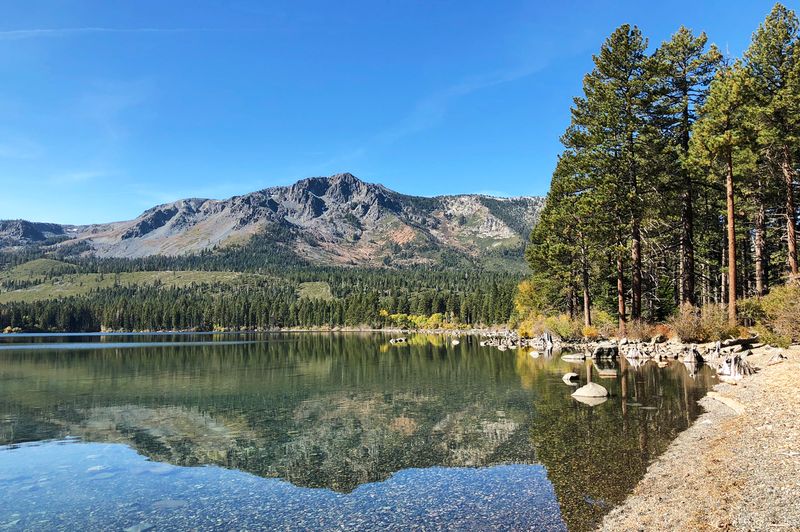
Getting to Lake Tahoe is straightforward from most major California cities. The drive from San Francisco takes roughly three to four hours, depending on traffic and the route chosen, with Highway 50 and Interstate 80 being the two main approaches from the west.
Parking at popular beaches fills up quickly on summer weekends, so planning to arrive before 9 in the morning is practical advice rather than just a suggestion. Some areas require a day-use fee, so carrying some cash or a card is useful.
Lodging options range from large lakeside resorts to small cabins and vacation rentals tucked into the surrounding forest. Booking well in advance for summer stays is strongly recommended, as availability tightens significantly from June through August.
Cell service can be spotty in some areas around the lake, so downloading offline maps before arriving saves frustration. California’s mountain weather can shift quickly, so packing an extra layer is always a smart move regardless of the forecast.