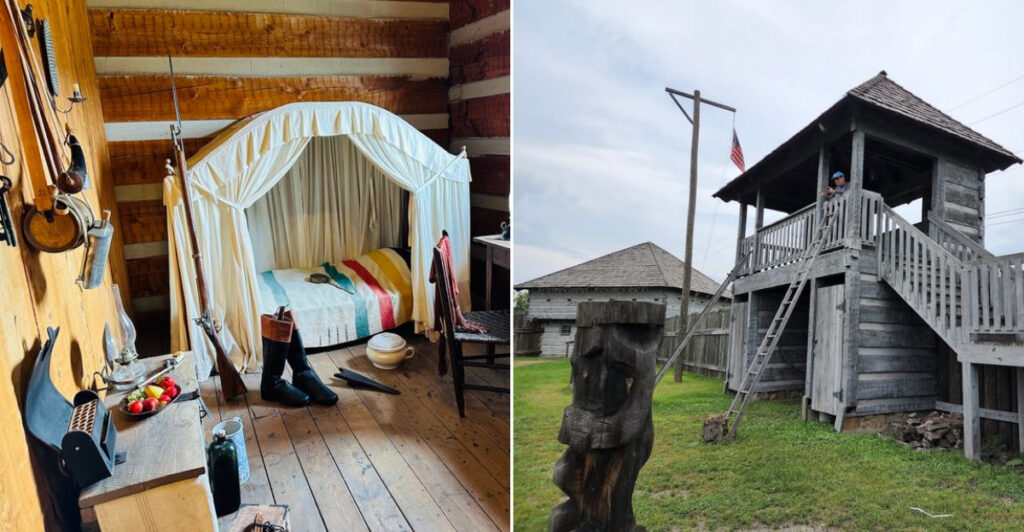
Ever wanted to walk straight into the 1700s without a time machine? Ohio makes that wish surprisingly easy. A reconstructed 18th-century fort feels pulled right out of an adventure novel. Timber walls stand tall.
Guardrooms smell like real history. Costumed interpreters bring every corner to life with stories, tools, and a few fun surprises. Ready to swap scrolling for sword drills and soldier camps? Picture yourself stepping through wooden gates, hearing boots on packed dirt, and learning what life looked like back in 1786.
History buffs will geek out. Kids will love it. Even casual travelers walk away grinning. Pack a curious spirit and comfy shoes. You deserve an adventure that surprises you in the best way. One visit here, and history suddenly becomes the most exciting part of your weekend.
The Story Behind The Fort That Started It All
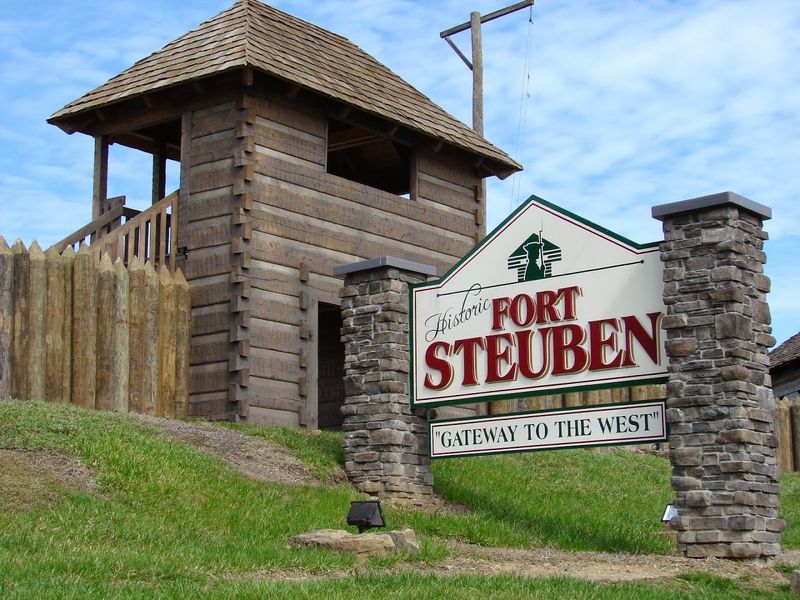
Not every historic site can say it stands on the exact ground where history actually happened. Historic Fort Steuben is one of the rare places that can make that claim with total confidence.
Back in 1786, the United States government needed to survey the Northwest Territory, a massive stretch of land that would eventually become several American states. The problem was that the land was contested and dangerous for surveyors working alone.
So the Army built a fort right here on the Ohio River to protect them. The fort was named after Baron Friedrich Wilhelm von Steuben, the Prussian military officer who helped train George Washington’s Continental Army at Valley Forge. That name alone carries serious historical weight.
When the surveying work was done, the original fort was abandoned and eventually disappeared. Centuries later, historians and community members came together to rebuild it from scratch using careful research and period-accurate methods.
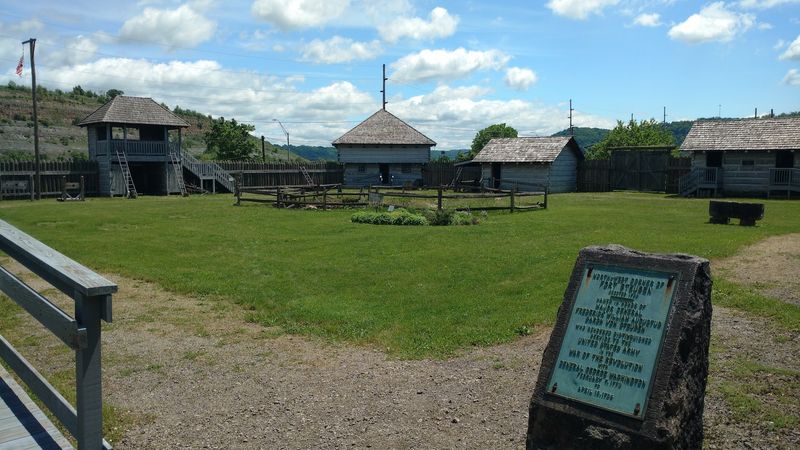
What stands today is not a guess. It is a detailed reconstruction built on the authentic original site. The history here is not behind glass. It is all around you, in the timber walls, the dirt paths, and the quiet weight of 1786 still hanging in the air.
Walking Inside The Walls
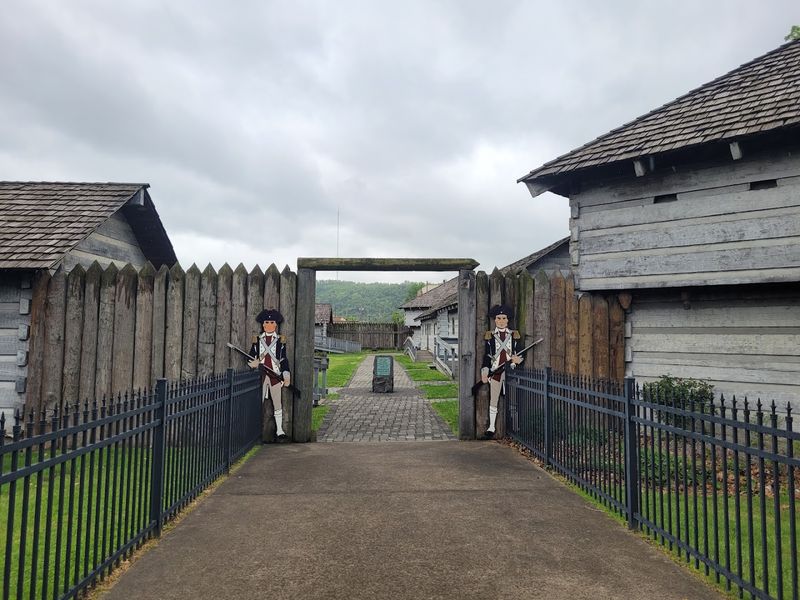
Once you pass through the entrance, the modern world quietly fades behind you. The fort’s interior is compact but packed with detail, and every corner has something worth stopping to look at.
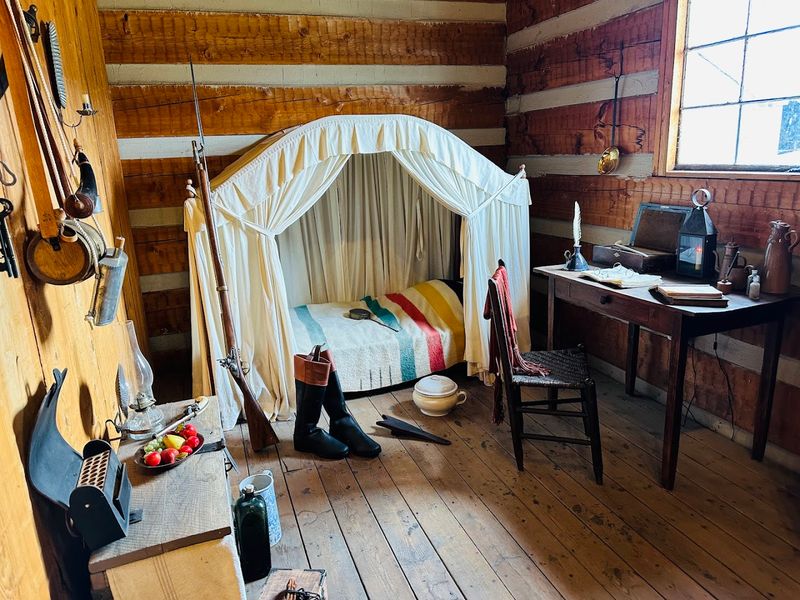
The reconstructed barracks are the first thing most visitors notice. Long wooden buildings with simple bunks, rough-hewn furniture, and period tools line the walls.
You can see exactly how soldiers lived during their time stationed here, and the word “comfortable” would be a generous stretch for their conditions.
The guardroom is another standout space. It was the nerve center of daily operations, where soldiers received orders, logged activity, and kept watch. Standing inside it, you can almost hear the creak of boots on the floorboards and the scratch of a quill on paper.
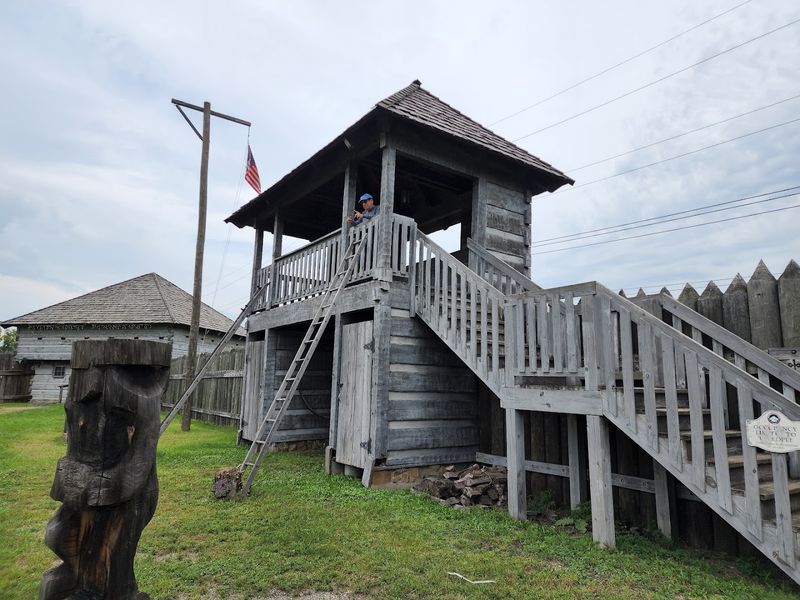
The timber palisade walls surrounding the entire fort are impressively tall and solid. They were designed to create a clear boundary between the fort and the wilderness beyond, and they still do exactly that today.
Every structure inside was built using research-backed methods that reflect how the original fort actually looked. Nothing here was invented for drama or tourism.
The goal was accuracy, and the result is a space that genuinely transports you. What surprises most first-time visitors is how immersive the whole experience feels without any screens or special effects.
The Interpreters Who Bring 1786 To Life
Some historic sites hand you a brochure and wish you luck. Fort Steuben takes a completely different approach, and it makes all the difference.
The interpreters at this fort are the secret ingredient that turns a visit from interesting into unforgettable. These are knowledgeable, enthusiastic people who know their 18th-century history inside and out.
They walk you through daily routines, explain what soldiers ate, show you the tools they used, and answer questions with genuine enthusiasm.
One interpreter might demonstrate how rations were measured and prepared, giving you a very real appreciation for how little soldiers had to work with. Another might walk you through the survey process, explaining why protecting those surveyors was so critically important to the young nation’s future.
The conversations feel natural and engaging rather than scripted and stiff. You are not watching a performance. You are having a real discussion with someone who genuinely loves this history and wants you to love it too.
Kids especially respond well to this kind of interaction. When a child gets to hold a period tool or ask a soldier interpreter what they do for fun in 1786, history suddenly becomes personal and real in a way no textbook can match.
The Seven Ranges Survey And Why It Changed America
Here is a piece of history that does not get nearly enough attention in school. The surveyors that Fort Steuben was built to protect were working on something called the Seven Ranges survey, and it fundamentally shaped how the United States grew westward.
The Land Ordinance of 1785 created a system for dividing and selling public land in the Northwest Territory. The Seven Ranges was the first area to be surveyed under this new system, and the work began right here, just across the river from where the fort stood.
The survey established a grid system of townships and sections that became the template for organizing nearly all public land in the country going forward. Look at a map of the American Midwest today and you will see perfectly square counties and rectangular fields that all trace back to this early work.
That means the land patterns across Ohio, Indiana, Illinois, and beyond were directly influenced by the surveying effort this fort was built to protect. It is one of those quiet historical facts that hits harder the longer you think about it.
Fort Steuben’s exhibits explain this connection in clear, engaging ways that make the significance land on you rather than fly over your head. Visitors often walk in thinking they are seeing a small military post and walk out realizing they are standing at the starting point of how the American West was organized.
Not bad for a little fort on the Ohio River, right?
Living History Events That Turn Visits Into Adventures

Visiting this place on a regular day is already a great experience. Visiting during one of its special events is a whole different level of fun.
The fort hosts living history weekends throughout the year, and these events bring the 18th century roaring back to life in a way that is hard to describe without sounding like you are overselling it.
Reenactors in period-accurate clothing fill the fort grounds, demonstrations run back to back, and the energy is electric without being overwhelming. Musket firing demonstrations are a crowd favorite.
The sound alone is enough to make you understand why those soldiers had to be seriously committed to their jobs. Children and adults both tend to freeze mid-step when that first shot goes off.
Craft demonstrations, cooking exhibits, and military drills fill out the schedule during these weekends, giving visitors a layered and deeply engaging look at what daily life actually involved in 1786. It is not just about battles and weapons. It is about survival, community, and ingenuity.
Planning your visit around one of these events is absolutely worth the extra coordination. Check the fort’s schedule before you book your trip, because the events calendar fills up with highlights across the warmer months.
The Berkman Amphitheater Next Door
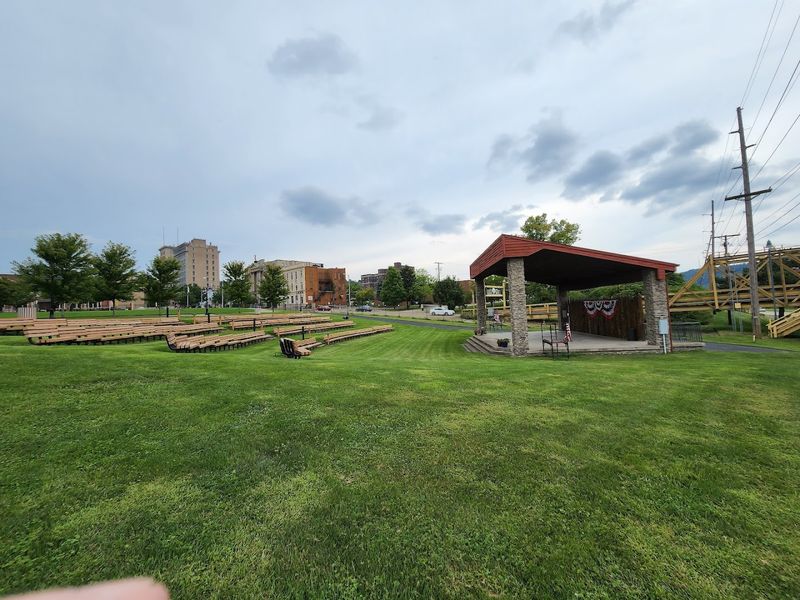
Right next to the fort sits something that might catch you off guard in the best possible way. The Berkman Amphitheater is an outdoor performance venue that shares the grounds with Historic Fort Steuben, and together they make for a surprisingly rich destination.
The amphitheater hosts concerts and community events throughout the year, turning the fort’s location into a lively cultural hub rather than just a static history exhibit. On certain evenings, the sound of live music drifts across the same ground where 18th-century soldiers once stood watch.
That is quite a contrast, and somehow it works beautifully. The setting along the Ohio River adds a natural backdrop that makes any performance feel a little more special.
There is something about watching live music with a river view that makes the whole experience feel effortless and relaxed. For visitors planning a longer stay in Steubenville, combining a daytime fort visit with an evening event at the amphitheater is a smart way to get the most out of the area.
It turns a half-day trip into a full and satisfying day out. Families, couples, and solo travelers all find something to enjoy in this combination of history and live performance. The two venues complement each other in a way that feels organic rather than forced
Tips For Planning Your Visit
A little planning goes a long way when visiting Historic Fort Steuben, and the good news is that it is genuinely easy to prepare for.
The fort is located at 120 S 3rd St, Steubenville, OH 43952, right in the heart of downtown Steubenville along the Ohio River. Parking is available nearby, and the downtown area is walkable, so you can easily combine your fort visit with a look around the surrounding neighborhood.
Visiting during the spring and summer months gives you the best chance of catching a living history event or outdoor program. The warmer seasons bring the fort to life in a way that cooler months simply cannot match, though the site is worth visiting year-round.
Comfortable walking shoes are a must. The fort grounds include dirt paths and uneven surfaces that are part of its authentic character, so leave the dress shoes at the hotel.
Plan to spend at least two hours on site if you want to do the experience justice. Rushing through a place this detailed means missing half of what makes it special. Slow down, ask questions, and let the interpreters guide you at a pace that feels natural.
The timber walls, period furnishings, and river views all make for genuinely striking photographs that capture the atmosphere far better than any souvenir could.
What is the best way to see Fort Steuben? Show up curious, leave your schedule flexible, and let the history do the rest.
Why Fort Steuben Deserves A Spot On Your Ohio Road Trip
Ohio road trips often follow the same familiar routes, hitting the same well-known stops along the way. This is the kind of place that quietly earns its way onto that list once people actually discover it.
The fort offers something that bigger, more famous attractions sometimes struggle to deliver: a personal, human-scale experience where history feels touchable rather than distant. There are no overwhelming crowds, no long lines, and no pressure to rush.
Just a genuinely fascinating place with a lot to offer. Steubenville itself is a city with real character, and visiting Fort Steuben gives you a reason to slow down and spend meaningful time here rather than just passing through on the highway.
For history enthusiasts, the fort’s connection to the Seven Ranges survey alone makes it a must-visit. For families, the interactive interpreters and hands-on atmosphere make it one of the most engaging educational experiences in the state.
For anyone who just wants something different and memorable, Fort Steuben delivers every single time. The best travel experiences are often the ones you did not see coming.