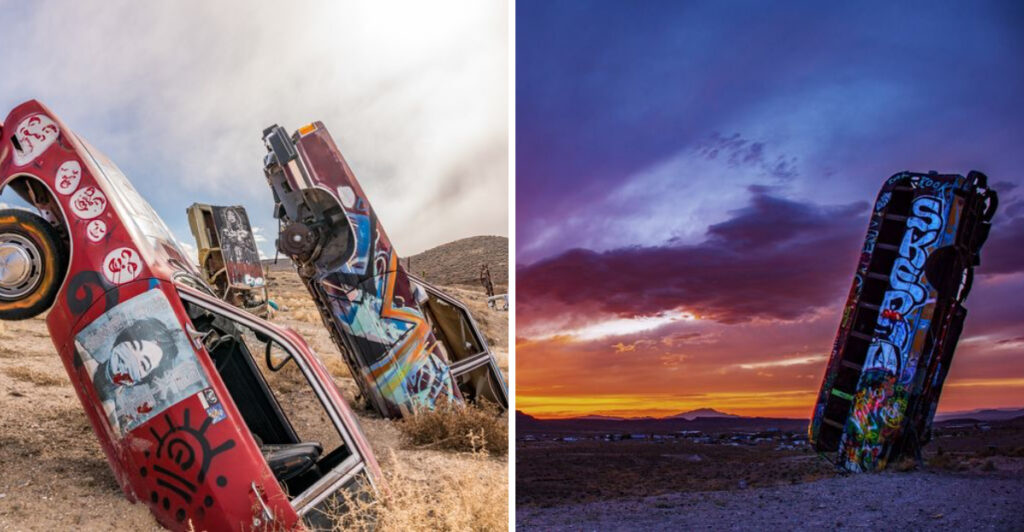
Cars buried nose-first in the Nevada desert, every inch of them covered in spray paint, stacked in towers, angled into the earth like something fell out of the sky and nobody cleaned it up.
It is free, open around the clock, and sitting just off the highway where most people drive right past without slowing down. Their loss.
What started as one man’s record-chasing idea in a small historic mining town grew into something genuinely difficult to explain without photographs.
Great Basin silence, rusted metal, bold murals, and the occasional jackrabbit wandering through. The kind of stop that takes twenty minutes to reach and considerably longer to stop thinking about.
How This Desert Art Project Got Its Unusual Start
Back in 2002, a Goldfield resident named Mark Rippie had an unusual dream: bury enough cars upright in the Nevada desert to set a Guinness World Record for the most upturned vehicles in a single art piece.
He owned 80 acres of land just off US Highway 95, and that wide-open stretch of desert became his canvas. Two years later, an artist joined the project and together they spent years planting vehicles into the ground, finishing the job by 2011.
The name “The Last Church” came from Rippie, who wanted it to represent personal, inner spirituality rather than organized religion. The “International Forest” part was a playful nod to national forests, inspired by visitors who traveled from all over the world to see it.
What started as one man’s record-chasing idea turned into a genuine landmark. The address, 1111 Crystal Ave, Goldfield, NV 89013, is now a recognizable stop on the Nevada road trip circuit.
The Desert Setting That Makes Everything Weirder
Context matters in art, and the setting here does a lot of heavy lifting. The International Car Forest sits in the middle of Nevada’s Great Basin high desert, surrounded by dry scrubland, rocky hills, and the kind of silence that makes you feel like you are the last person on Earth.
Goldfield itself is a small and historic mining town, and the land around it is vast, flat, and largely untouched. That emptiness makes the sight of upright cars jutting out of the ground even more striking.
The contrast between the rusted metal machines and the ancient, sun-baked earth creates a visual tension that photographs simply cannot fully capture. You have to stand there, in the heat and the quiet, to really feel how strange and wonderful the whole thing is.
Nevada has no shortage of odd roadside attractions, but few feel as organically tied to their landscape as this one does.
Over 40 Vehicles and Counting
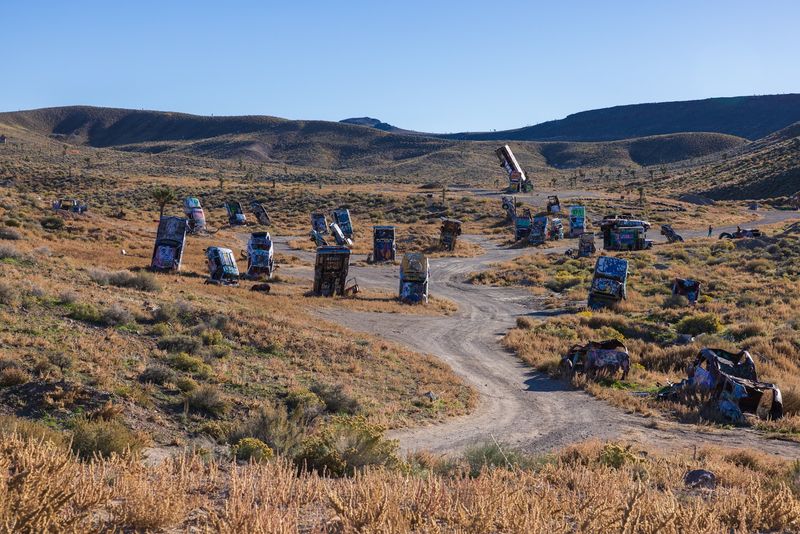
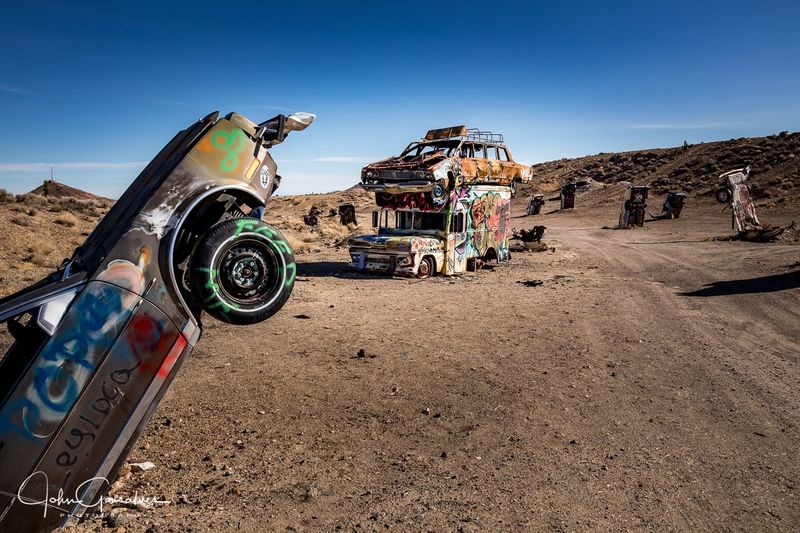
The sheer variety of vehicles at this site is part of what makes it so entertaining to explore. More than 40 cars, vans, trucks, and buses have been planted into the ground over the years, each one positioned in its own particular way.
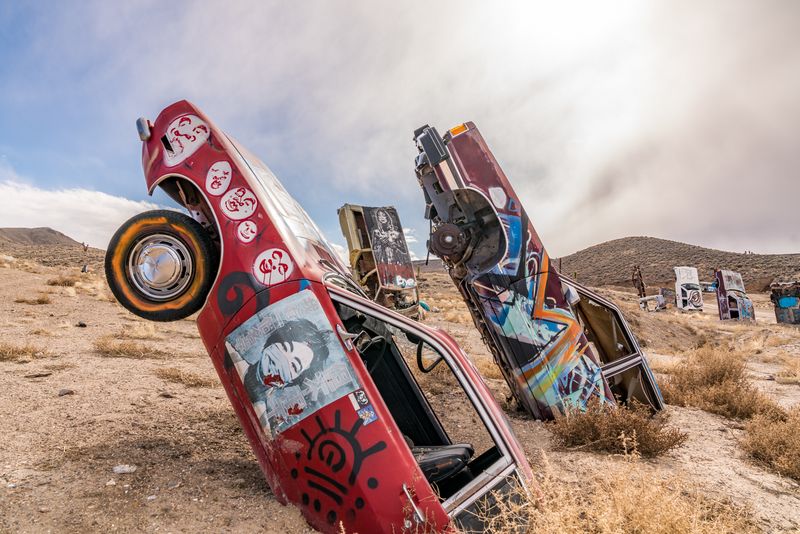
Some are buried nose-first at sharp angles, as if they drove into the earth at full speed and got stuck. Others are stacked on top of each other in precarious towers that look like they could topple with a strong wind, though they have been standing for years.
One visitor even spotted what appeared to be an airboat among the collection, which tells you that the definition of “vehicle” is interpreted loosely here.
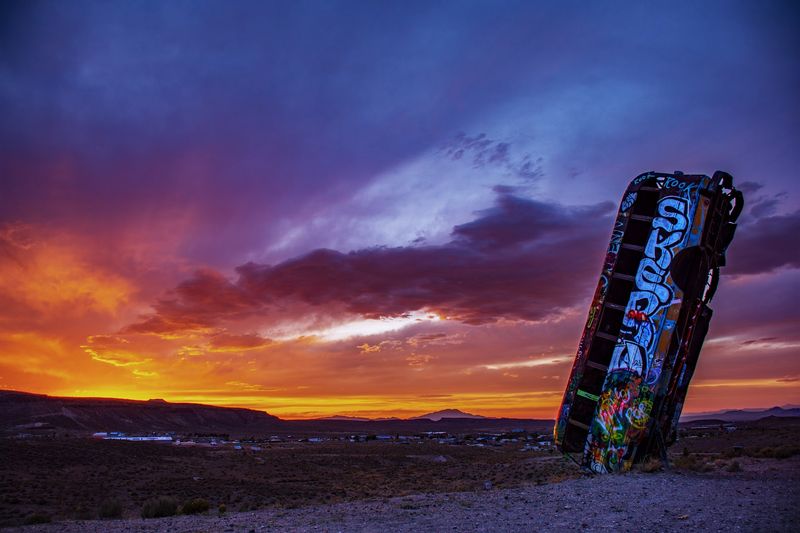
School buses with their flat noses pointed toward the sky are particularly eye-catching, rising above the desert floor like strange metal monuments.
New vehicles are reportedly added over time, so repeat visitors may find fresh surprises waiting for them.
Graffiti As Fine Art, Not Vandalism
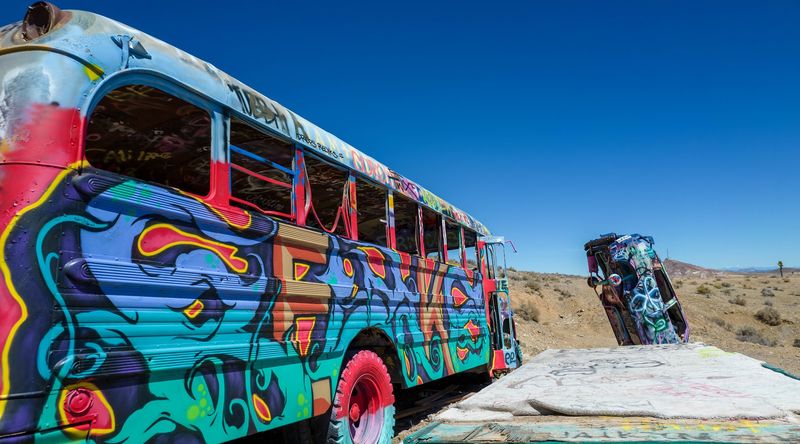
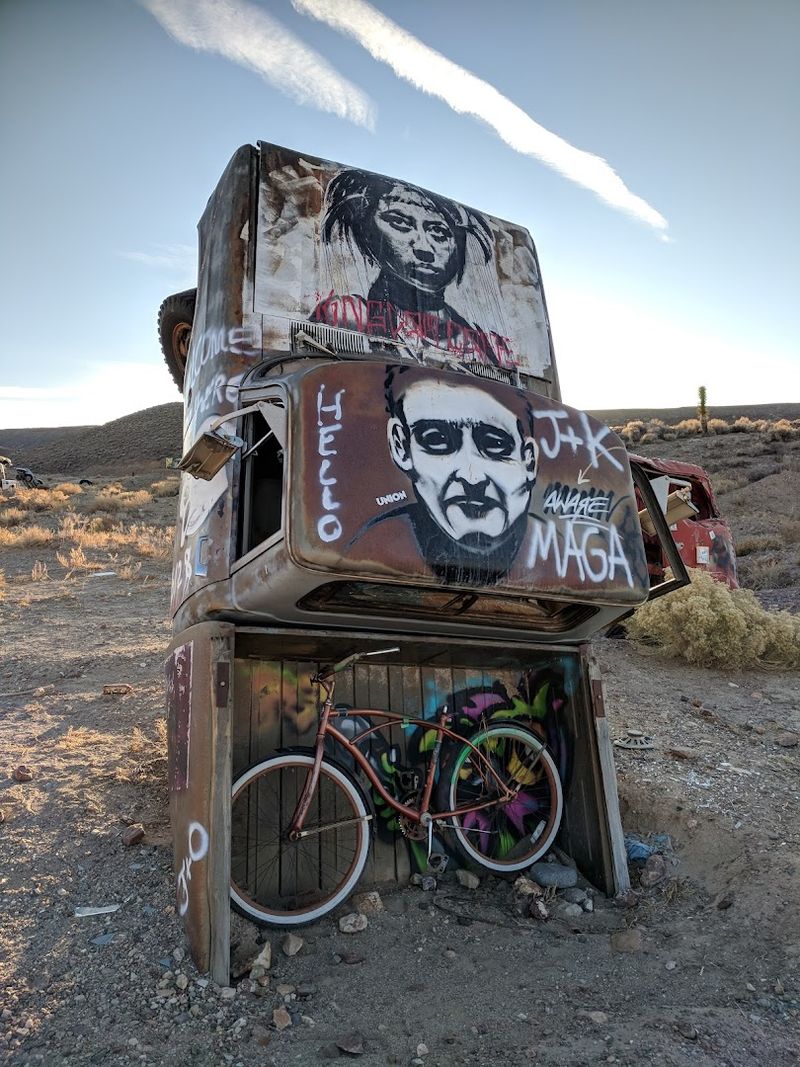
Every surface of every vehicle here is a canvas. Bright spray-painted murals, abstract patterns, bold lettering, and layered graffiti cover the cars from hood to trunk, turning rusted metal into something genuinely beautiful.
For years, visitors were actively encouraged to bring spray paint and add their own mark to the collection. That open-door creative policy gave the site an evolving, communal energy that few art installations can claim.
More recently, the approach has shifted slightly. Current efforts lean toward inviting specific artists to contribute more curated pieces, with the goal of elevating the overall artistic quality of the collection.
Visitors are now gently encouraged to use cameras rather than spray cans.
That shift reflects how the site has matured from a wild, anything-goes experiment into something more intentional. The layers of paint tell a visual history of everyone who passed through, making each vehicle a kind of time capsule wrapped in color and personality.
Free To Enter, But Donations Keep It Running
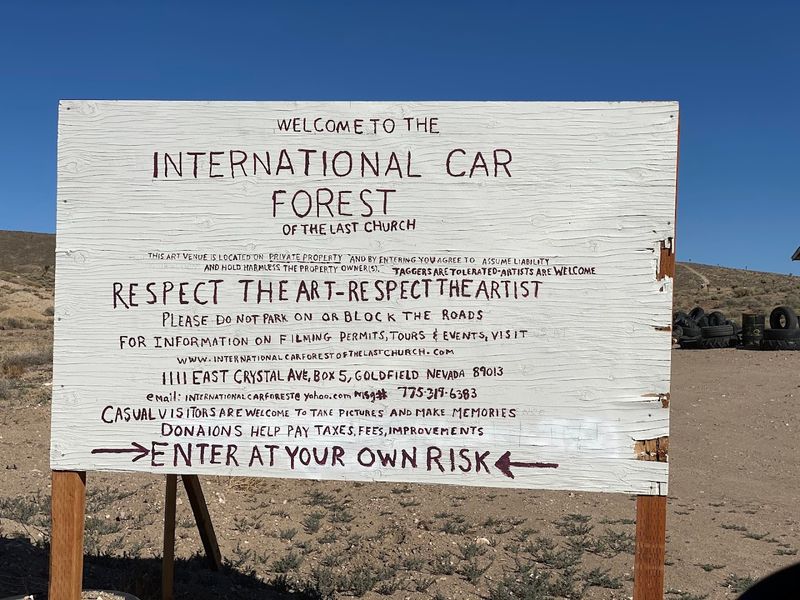
One of the most refreshing things about this place is that it costs nothing to visit. The site is open around the clock, every day of the year, and there is no ticket booth, no gate, and no charge at the entrance.
That said, maintaining a collection of over 40 vehicles spread across acres of desert is not free. A donation box near the entrance gives visitors a way to contribute to upkeep and future additions, and the people behind the project genuinely appreciate the support.
Free admission makes this an easy yes for road trippers working with a tight budget. Families, solo travelers, and groups can all spend as much or as little time as they want without watching a clock or worrying about getting their money’s worth.
In a travel landscape full of pricy tickets and crowded queues, stumbling onto something this unusual without paying a single cent feels like a small miracle. A small donation goes a long way.
Getting There Without Getting Stuck
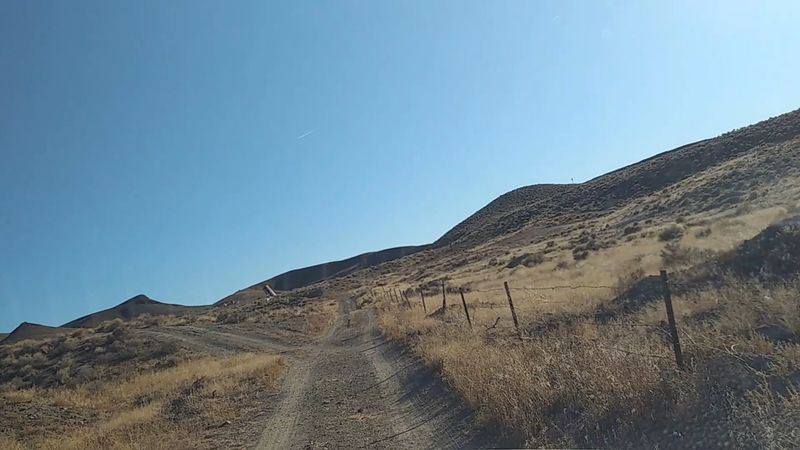
The road leading to the International Car Forest is not exactly a smooth highway. Crystal Avenue is a dirt road that runs roughly half a mile from US Highway 95, and it can be rough, rutted, and uneven depending on recent weather conditions.
After heavy rain, the road may become muddy or impassable. High-clearance vehicles or four-wheel drive are recommended for the most comfortable experience.
Though, many visitors report reaching the site successfully in regular passenger cars by driving carefully and avoiding the deeper ruts.
Parking on-site is informal. Visitors can drive around the open desert terrain to view the installation from their car, or they can park near the entrance and explore on foot.
Walking the site gives a much more immersive experience and lets visitors get up close to the vehicles.
The drive off the highway itself feels like part of the experience, a short adventure that signals you are leaving the ordinary world behind for something a little more unusual.
What To Watch Out For On The Ground
Exploring this open-air installation on foot is highly recommended, but it pays to come prepared. The terrain is uneven, and the ground around the vehicles is littered with the kinds of hazards that come with decades of outdoor metal art in the Nevada desert.
Rusty metal edges, broken glass, and sharp debris are common around the base of the cars, so sturdy footwear is a smart choice. Sandals or thin-soled shoes are not ideal for navigating the site safely and comfortably.
Warm weather brings additional considerations. Rattlesnakes are known to inhabit the desert around Goldfield, and visitors should watch where they step, especially near rocks, low brush, and shaded spots under the vehicles.
Thorny desert plants are also scattered throughout the property.
On the brighter side, wildlife sightings can be a bonus.
Some visitors have reported spotting jackrabbits and lizards while exploring the grounds, giving the place a lively, wild feel that adds to the overall desert experience.
The Atmosphere Changes With The Light
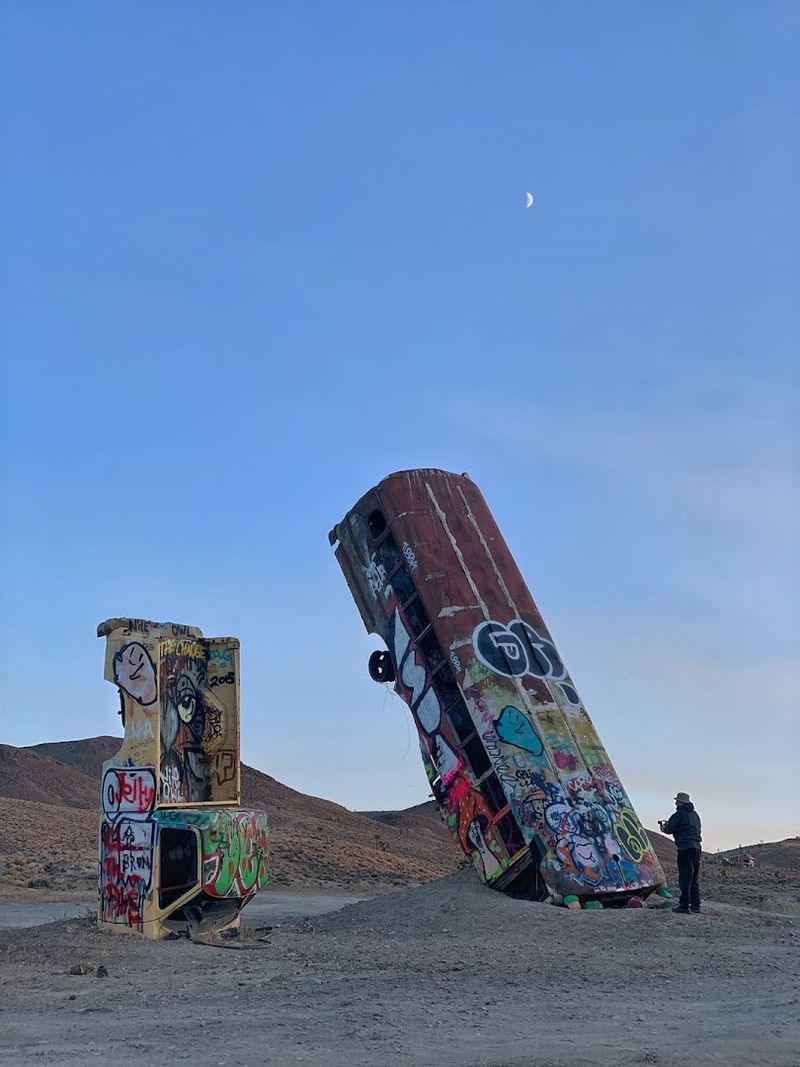
Timing a visit to the International Car Forest can dramatically change the whole experience. The site looks completely different depending on the time of day, and many who have been there more than once say sunrise and sunset are the most rewarding times to show up.
At golden hour, the warm desert light catches the painted metal surfaces and turns the entire installation into something almost cinematic. Shadows stretch long across the cracked earth, and the colors of the graffiti glow in ways that midday sun simply cannot replicate.
Midday visits in summer can be brutally hot, as the Nevada desert does not hold back when the sun is directly overhead. Bringing water, wearing sunscreen, and having a hat on hand are all practical moves for warmer months.
Early morning visits tend to be quieter, with fewer other visitors around and cooler temperatures making the walk more enjoyable. The stillness of the desert at that hour gives the whole place an almost meditative quality.
A Photographer’s Playground In The Desert
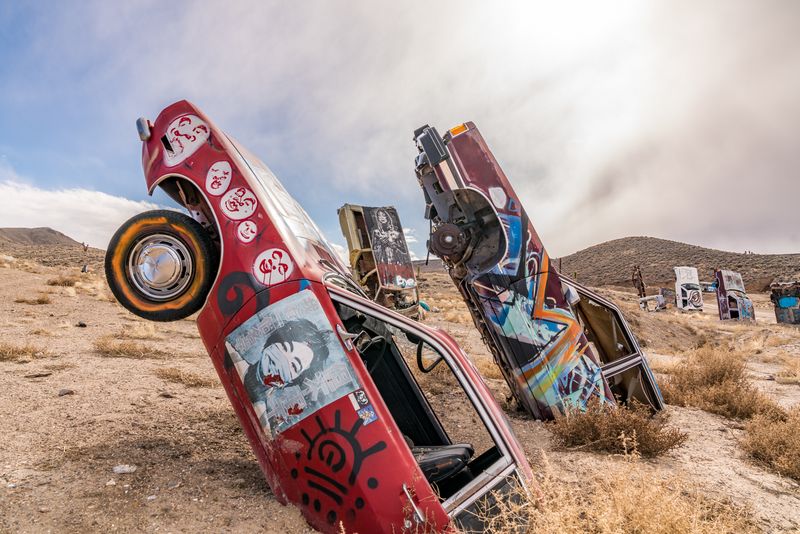
Few roadside stops in the American West offer as much photographic potential as this one. The combination of vivid painted surfaces, dramatic angles, open sky, and stark desert landscape gives photographers an almost endless variety of shots to work with.
Wide-angle shots capture the surreal scale of the installation, with vehicles jutting out of the earth in every direction against a backdrop of empty Nevada terrain. Getting close reveals intricate layers of graffiti, faded paint, and texture that tell their own visual stories.
Drone footage is particularly impressive here, as aerial views reveal the full layout of the installation and how the vehicles are distributed across the land.
Visitors have reported capturing stunning footage without crowds getting in the way, especially during quieter visits on weekdays or early mornings.
Even visitors who do not consider themselves serious photographers tend to pull out their phones and start shooting.
The place practically demands documentation, because explaining it to someone who has not seen it is genuinely difficult without visual evidence.
How It Compares To Other Car Art Installations
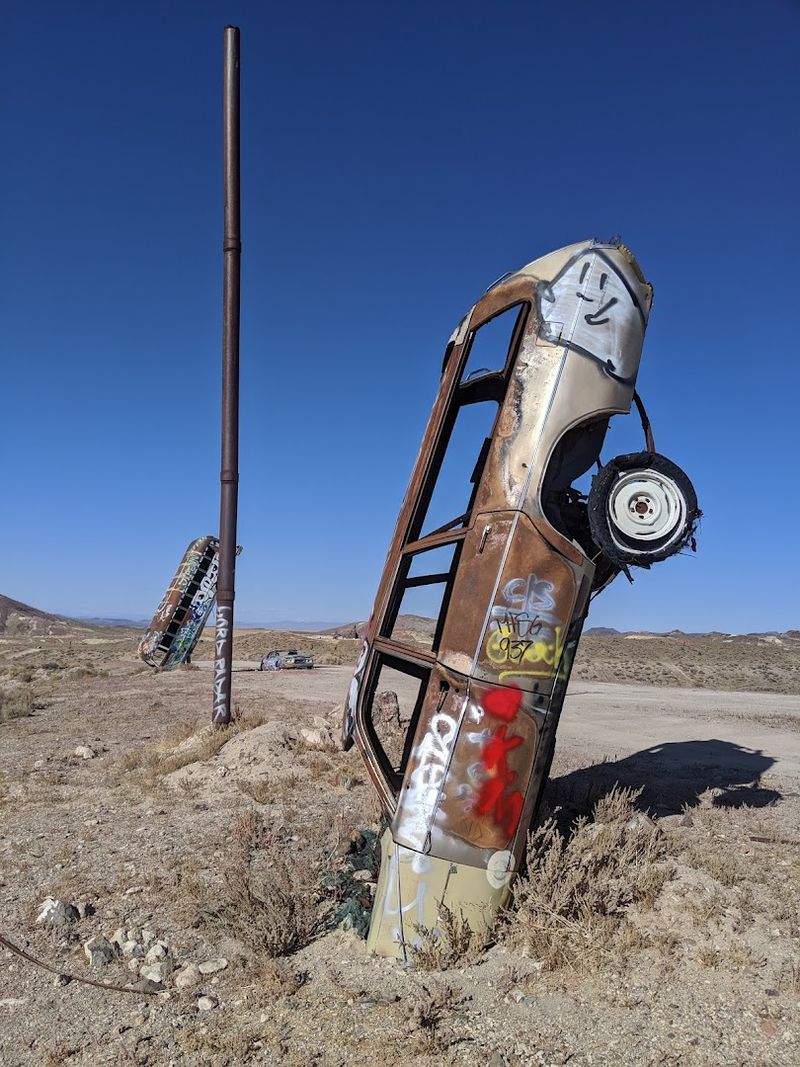
Car art installations are a surprisingly specific genre of American roadside art, and the International Car Forest has some notable company.
Cadillac Ranch in Texas and Carhenge in Nebraska are two of the most well-known examples, and both draw significant tourist traffic each year.
What sets the Goldfield installation apart is its scale. It is widely considered the largest car art installation of its kind in the United States, with over 40 vehicles spread across a much larger footprint than its counterparts.
The graffiti-covered, evolving nature of the collection also gives it a rawer, more underground feel compared to the more polished or preserved installations elsewhere.
It feels less like a planned monument and more like something that grew organically out of the desert over many years.
For road trippers who have already visited the Texas or Nebraska versions, this Nevada site offers something genuinely different: more vehicles, more chaos, more desert, and a backstory that is harder to neatly summarize.
Goldfield Itself Is Worth A Slow Look
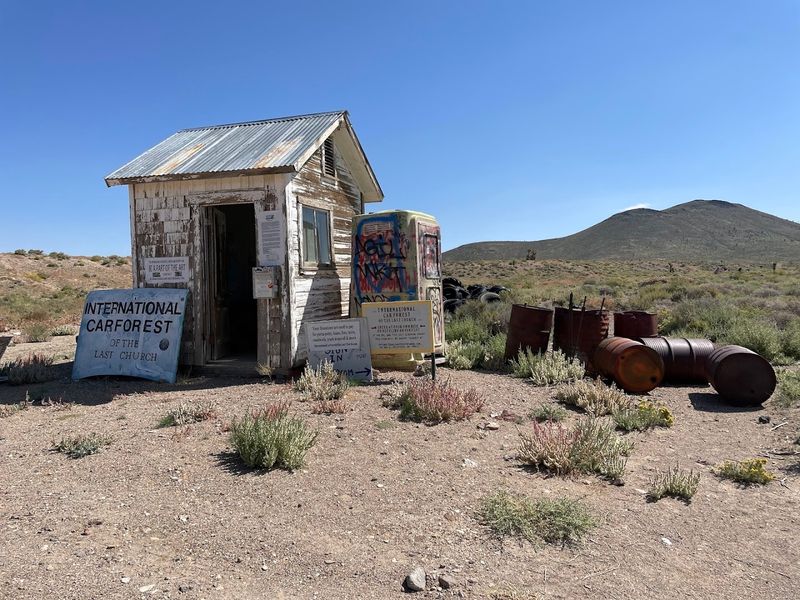
The International Car Forest does not exist in isolation. It sits on the edge of Goldfield, Nevada, a small town with a fascinating and layered history that rewards curious visitors who take a little extra time to look around.
Goldfield was once one of the most populated cities in Nevada, fueled by a massive gold rush in the early 1900s. At its peak, the town had a booming population, grand hotels, and the energy of a city on the rise.
Today, it is a quiet shadow of that era, with historic buildings and empty streets that carry a distinct sense of the past.
Some visitors report that the town itself feels almost as surreal as the car forest, with old structures standing alongside occupied homes and the occasional sign of modern life. It is the kind of place where time seems to have moved at a different pace than everywhere else.
Pairing a visit to the car forest with a slow drive through Goldfield makes for a richer, more complete experience overall.
Why This Place Sticks With You Long After You Leave
Most roadside stops are forgotten within a few miles. This one tends to stay with people.
The combination of scale, strangeness, and genuine artistic ambition gives the International Car Forest an emotional weight that is hard to shake.
Part of what makes it memorable is the sense that it was made by real people with a real vision, not a corporate team or a tourism board.
The whole project grew from one person’s eccentric idea and another artist’s willingness to commit years of work to bringing it to life in the Nevada desert.
Visitors frequently describe the site as eerie, peaceful, thought-provoking, and fun, sometimes all in the same sentence.
That range of reactions says something about how layered the experience actually is.
Whether someone stops because they saw a sign, followed a travel blog recommendation, or simply got curious about that dirt road off the highway, most leave glad they turned off.
Some even start planning a return visit before they have made it back to the main road.