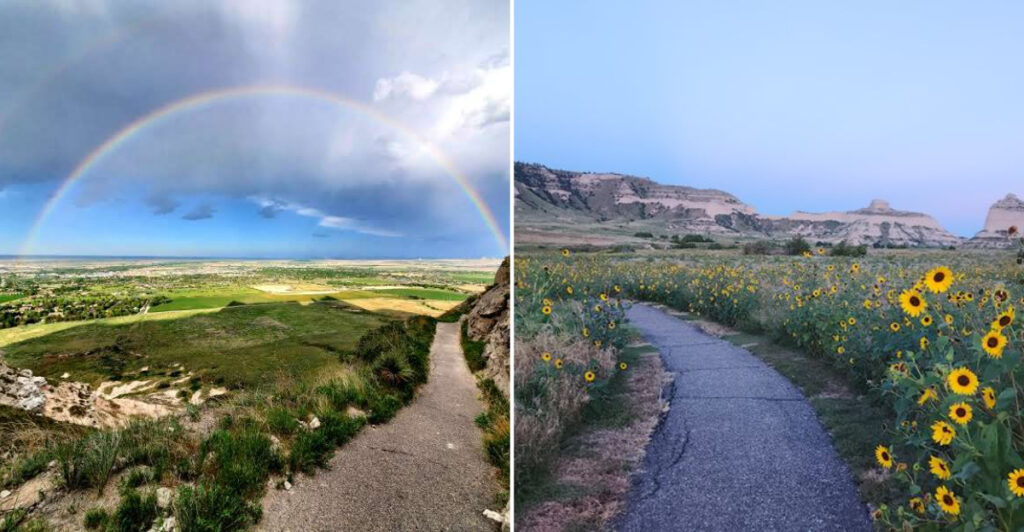
Eight hundred feet above the valley floor, commanding the sky like it has always owned it. Nebraska has a landmark that stops people mid-sentence, and the view from the top is the kind that makes everyone go completely quiet.
This is not a gentle stroll with a decent view at the end. Trails wind upward through hand-carved tunnels, past rock formations millions of years old, and out onto overlooks that feel almost impossible to believe are real.
The panorama waiting at the summit stretches so far in every direction that no photo ever fully captures it. That is not a warning. That is a reason to go see it in person.
Does a hike that rewards every single step with a view this extraordinary sound like exactly the kind of Nebraska adventure worth lacing up the boots for? The bluff has been waiting millions of years.
It can wait a little longer. But the trip is absolutely worth making sooner rather than later.
The Trail That Surprises
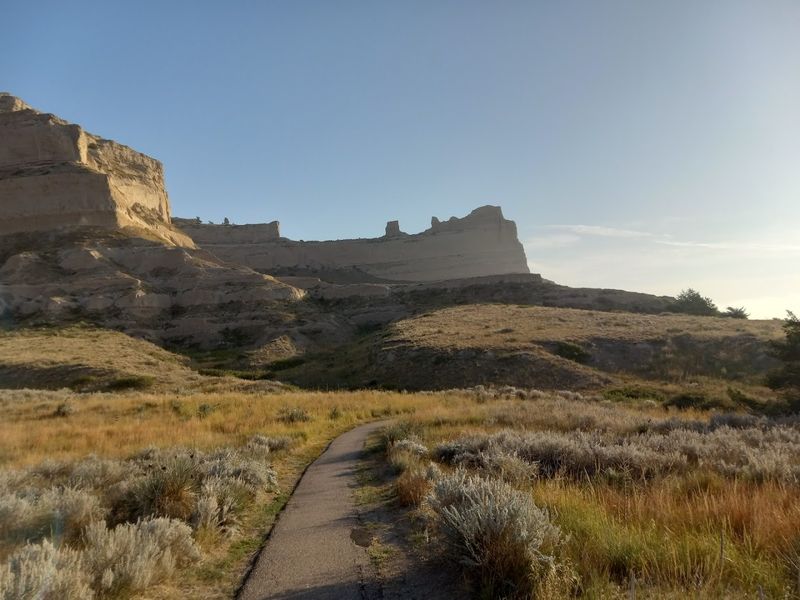
Not every trail comes with a hand-carved tunnel, but Saddle Rock Trail does, and that alone makes it worth lacing up your boots. This 1.6-mile paved path climbs from the Visitor Center all the way to the summit, gaining around 435 to 550 feet in elevation along the way.
It is a moderate hike that most visitors can handle at a comfortable pace. The tunnel section is genuinely cool.
Workers carved it directly through the rock, and walking through it feels like the mountain is letting you in on a secret passage. Kids absolutely love it, and honestly, so do adults.
The trail surface is paved, which makes it more accessible than most backcountry hikes. You do not need special gear or extreme fitness, just good shoes and a willingness to keep moving upward.
One visitor described it as the most unexpected hike they had ever done in the Midwest. That reaction is pretty common once people actually get out there and start climbing.
Have you ever walked through a tunnel carved straight into a bluff? This trail gives you exactly that experience, wrapped inside one of Nebraska’s most dramatic landscapes.
The summit waiting at the other end makes every uphill step feel completely worthwhile.
Views That Stop Time
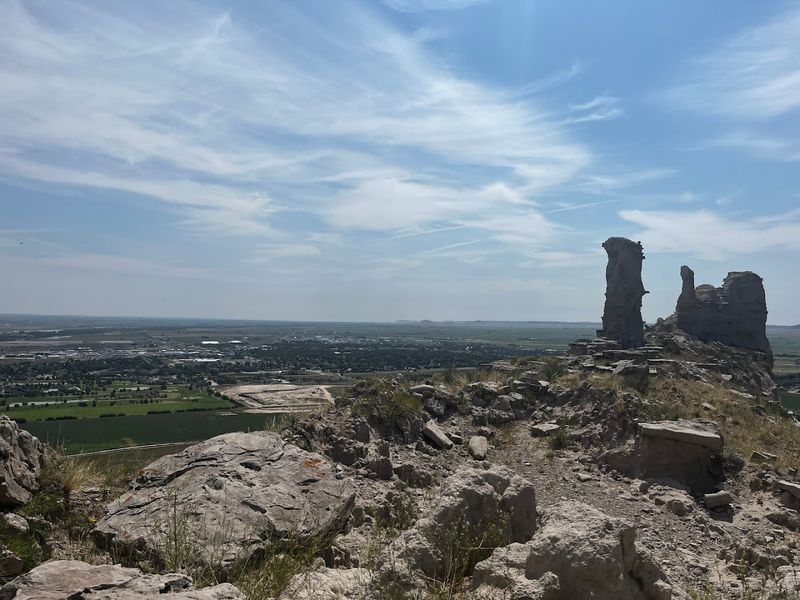
Standing on the summit of Scotts Bluff and looking out over the North Platte River Valley is one of those moments that genuinely makes you stop breathing for a second.
The landscape rolls out in every direction, open and enormous. On a clear day, you can spot Chimney Rock sitting 23 miles to the east and Laramie Peak standing 100 miles to the west. That kind of visibility is rare and remarkable.
The North Overlook Trail, a short 0.5-mile round-trip walk from the summit parking lot, delivers sweeping views of the river valley, the badlands, and the nearby cities of Gering and Scottsbluff spread out below like a map.
The South Overlook Trail, just 0.3 to 0.4 miles round-trip, points you toward Mitchell Pass and the faint traces of the Oregon Trail still visible on the ground. History and scenery together in one glance.
Visitors consistently say the views feel bigger than expected, which is saying something for a state people often underestimate. How often do you find a viewpoint where you can see landmarks nearly 100 miles away?
The summit is one of those places where a short hike delivers a payoff that feels completely out of proportion to the effort, in the best possible way.
Geology Worth Geeking Over
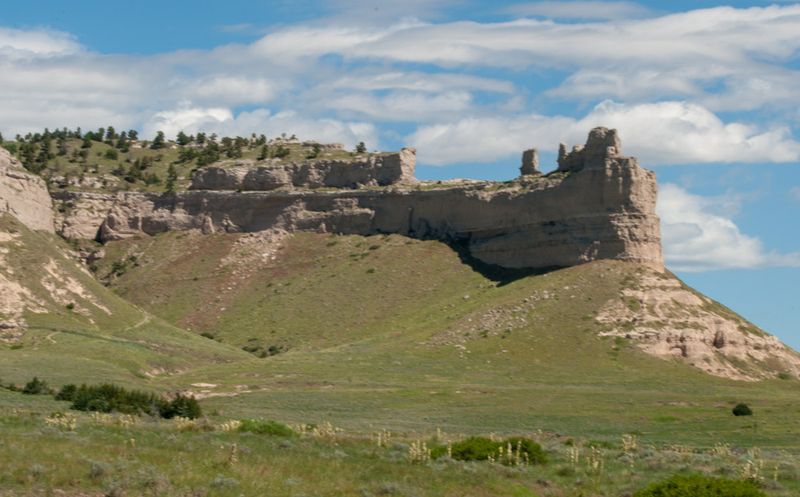
The bluff itself is between 22 and 31 million years old, built from layers of sandstone, siltstone, and volcanic ash topped with a hard protective caprock that kept it standing while the surrounding land eroded away.
Think about that for a moment. While everything around it slowly wore down over millions of years, Scotts Bluff held its ground. That caprock is the reason you get to hike up it today.
The exposed rock layers tell a story that spans tens of millions of years, and you can actually see those layers as you walk the trail. The colors shift from pale gold to deep rust depending on the light and the time of day.
Early morning light tends to make the formations glow in a way that photographers chase specifically. The texture of the rock face up close is just as impressive as the sweeping views from the top.
A geology enthusiast once spent three hours on the trail just photographing different sections of the rock face. Most hikers do not go quite that deep, but the formations genuinely reward a slower, more curious pace.
What does 30 million years of Earth history look like? Come to Scotts Bluff and you can run your hand along the answer. The rock does not just sit there quietly, it practically tells you its own story.
Pioneers Passed Right Here
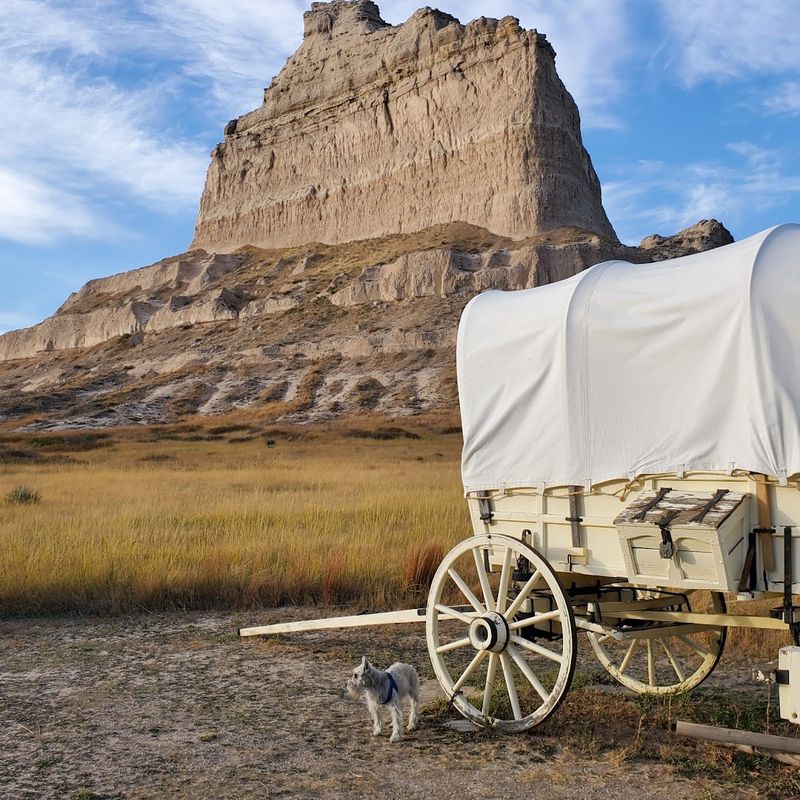
Over 250,000 pioneers traveled through Mitchell Pass at the base of this bluff between 1843 and 1869. They were heading west on the Oregon, California, Mormon Pioneer, and Pony Express Trails, and Scotts Bluff was one of the most important landmarks they used to measure their progress.
When those travelers spotted the bluff on the horizon, it meant they had made it through a significant stretch of the journey. It was not just a rock formation to them. It was a milestone with real emotional weight.
Today, you can still see faint wagon ruts pressed into the ground near Mitchell Pass. Those impressions were made by thousands of wagon wheels over decades of continuous travel, and they have never fully disappeared.
The South Overlook Trail gives you a direct view of the pass and those remnants of the trail below. Standing up there and looking down at the same path those pioneers walked is a genuinely moving experience.
One family visiting from out of state said their kids became obsessed with pioneer history after the trip, which is exactly the kind of spark a place like this can ignite.
Best Time To Visit
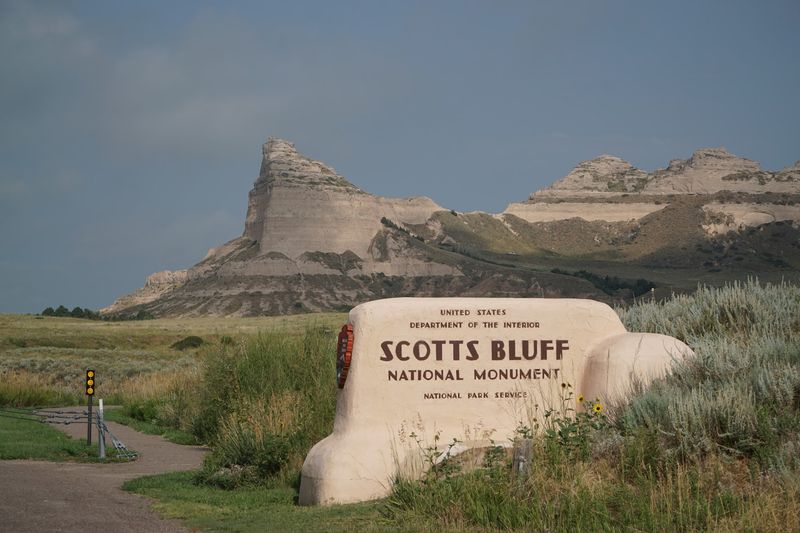
All trails at Scotts Bluff National Monument are open year-round from sunrise to sunset, which means you have a lot of flexibility when planning your visit. That said, some times of year are noticeably more rewarding than others.
Spring and early fall tend to be the sweet spots. Temperatures are comfortable for hiking, the crowds are lighter than peak summer, and the light on the bluff during those seasons has a quality that makes every photo look like it was taken by a professional.
Summer is busy and can get warm, but early morning hikes in July and August are genuinely beautiful. The air is still cool, the light is soft, and the summit feels calm before the day heats up and more visitors arrive.
Winter visits are surprisingly peaceful. Snow on the rock formations creates a stark, dramatic look that very few people get to see because most skip the idea entirely.
Nebraska winters are cold, so layer up and go slow.
A photographer who visited in late October described the golden afternoon light hitting the bluff as something she had been chasing for years without knowing it existed here. What time of day would you pick to stand on that summit?
Sunrise and sunset from the overlooks are particularly spectacular, and both are absolutely free to experience any day of the year.
Wildlife Along The Way
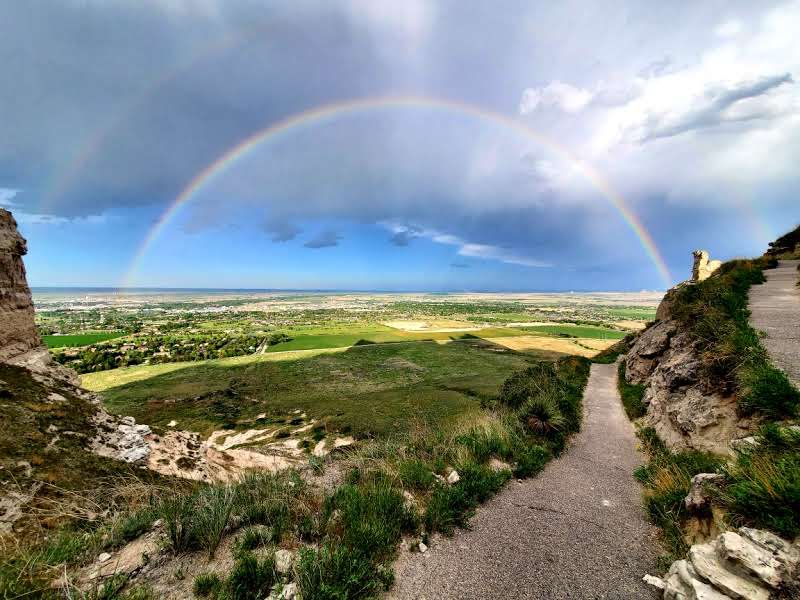
The trail does not just deliver geological drama and historic views. It also puts you in the middle of a surprisingly active ecosystem that most visitors do not fully expect.
Mule deer are frequently spotted near the base of the bluff and along the lower sections of the trail. They move through the sagebrush with a calm confidence that suggests they know exactly who owns the territory here.
Prairie falcons and other raptors ride the thermals rising off the rock face, circling high above the summit. If you watch the sky from the overlook, you will almost certainly spot something with wings doing something impressive.
Smaller wildlife, including lizards, ground squirrels, and a variety of songbirds, shows up regularly along the trail edges. The habitat transitions as you climb, which means the mix of species changes with the elevation.
Leashed pets are welcome on all trails, which makes this a great outing for dog owners who want to share the experience with their four-legged hiking partner. Just keep in mind that the paved sections can get warm in direct sun.
A family hiking the Saddle Rock Trail once counted four different bird species in a single hour without even trying. What will you spot on your way to the top? Pack a small pair of binoculars and you will not regret it.
Planning Your Visit Well
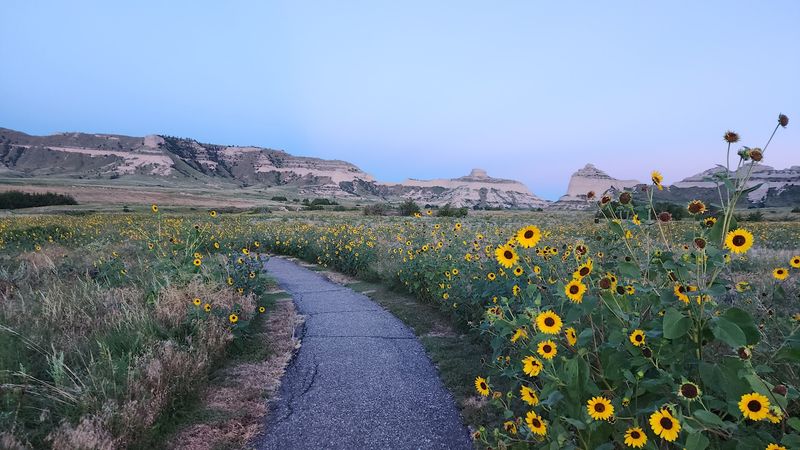
Getting to Scotts Bluff National Monument is straightforward.
The Visitor Center is a great first stop. It has exhibits covering the geology, pioneer history, and ecology of the monument, and the staff there are genuinely helpful when it comes to trail recommendations based on your fitness level and how much time you have.
Parking is available at both the Visitor Center and the summit lot, which you can reach by driving the park road if hiking the full Saddle Rock Trail is not in your plan. The summit lot puts you right at the start of the shorter overlook trails.
The address is 190276 Old Oregon Trail, Gering, NE 69341, and it sits just outside the city of Gering in western Nebraska, easy to reach by car from the surrounding region.
There is no need to pack an elaborate supply kit for the shorter trails, but water is always a smart call, especially in warmer months. Sun exposure on the open summit can catch people off guard.
A solo traveler who visited on a Tuesday morning said the summit felt like her own private lookout tower for nearly an hour before anyone else arrived.
Why Nebraska Surprises Everyone
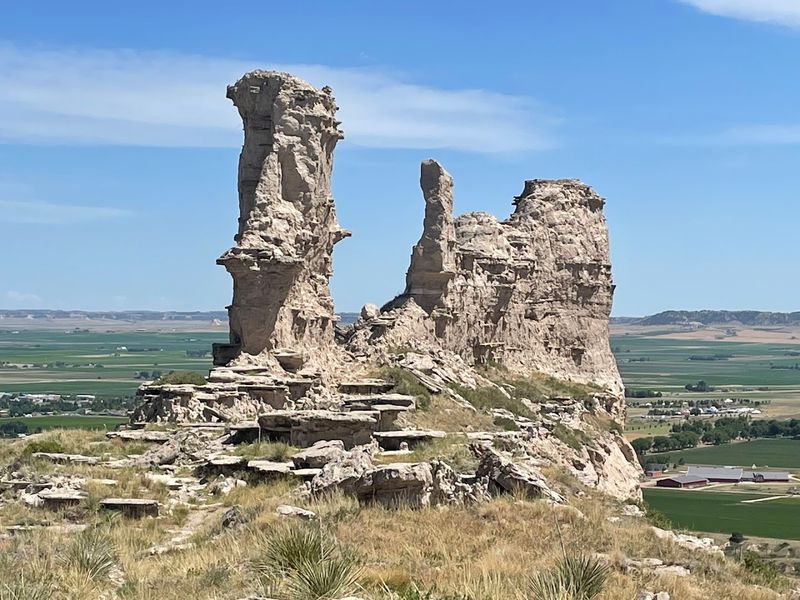
People arrive in Nebraska with certain expectations, and Scotts Bluff has a consistent habit of blowing those expectations completely out of the water.
The sheer scale of the bluff rising above the surrounding flatlands is visually striking in a way that photographs only partially capture. You genuinely have to stand at the base and look up to understand what you are dealing with.
Nebraska as a state does not always get credit for its dramatic landscapes, but the western part of the state tells a completely different story than the flat agricultural stretches further east. The badlands, the river valley, and the bluff formations out here belong in a different conversation entirely.
Visitors who come expecting a mild, unremarkable hike often end up standing on the summit longer than planned, just absorbing the scale of what surrounds them. The horizon feels almost impossibly far away in every direction.
A couple on a cross-country road trip described Scotts Bluff as the unexpected highlight of their entire journey, a stop they had almost skipped. That kind of reaction is not unusual for this place.
Nebraska rewards the curious traveler who is willing to leave the highway and follow a sign toward something unfamiliar. Scotts Bluff National Monument is exactly the kind of place that makes that instinct pay off in a big, wide-open way.