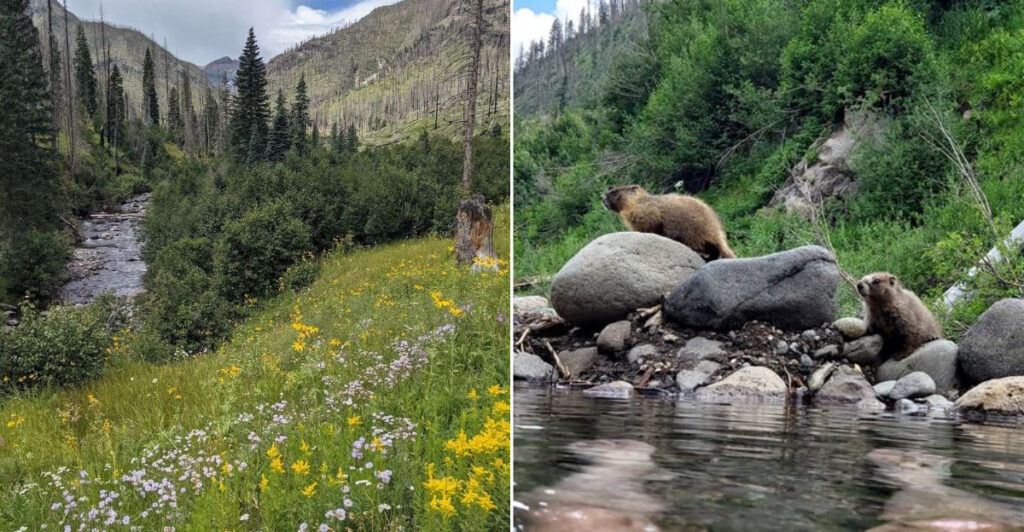
Warm rock-walled pools and pure wilderness. No entrance fees, no resort crowds, and absolutely no shortcuts to get there. That last part is the point.
This hot spring sits miles deep into the backcountry, and the trail that leads there tests the legs in all the right ways before delivering one of the most satisfying payoffs in the entire state.
Visitors who make the effort slip into those warm pools, look up at nothing but pine forest and mountain sky, and immediately stop caring how far they walked to get there. This is Colorado doing what Colorado does best.
Hiding something extraordinary behind a trail that weeds out everyone who is not serious about finding it. Does earning a backcountry hot spring through miles of genuine mountain hiking sound like exactly the kind of adventure the weekend has been missing?
The trail is ready. The pools are warm. The only thing left is the decision to go.
The Hike That Starts It All
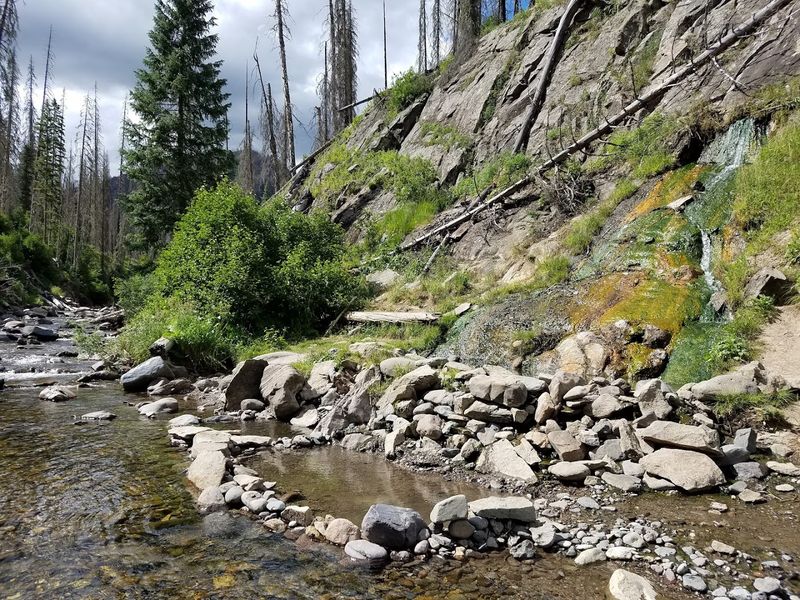
The best kind of adventure begins before the first big view, and this one starts with a simple sign pointing toward something truly special.
The West Fork Trailhead sits at 9,040 feet elevation, accessible via West Fork Road (Forest Road 648) off US-160 East, about 15 to 16 miles northeast of Pagosa Springs.
The trail, officially West Fork Trail 561, winds through dense pine forest, follows the banks of the West Fork of the San Juan River, and passes Borns Lake along the way.
You will hike approximately 5.3 miles one way to reach the springs, making it a solid 10 to 12 mile round trip depending on your pace and path.
Plan for 3 to 5 hours each direction, plus soaking time. The first mile crosses private property, so stay on the marked path.
The last mile is widely considered the toughest stretch of the whole journey.
What keeps hikers moving? Dozens of small waterfalls tucked along the riverbanks, open meadows that open up without warning, and canyon edges that make you stop mid-step just to stare.
Have you ever hiked a trail that felt like it was showing off? This one absolutely does.
Elevation, Fitness, And Preparation
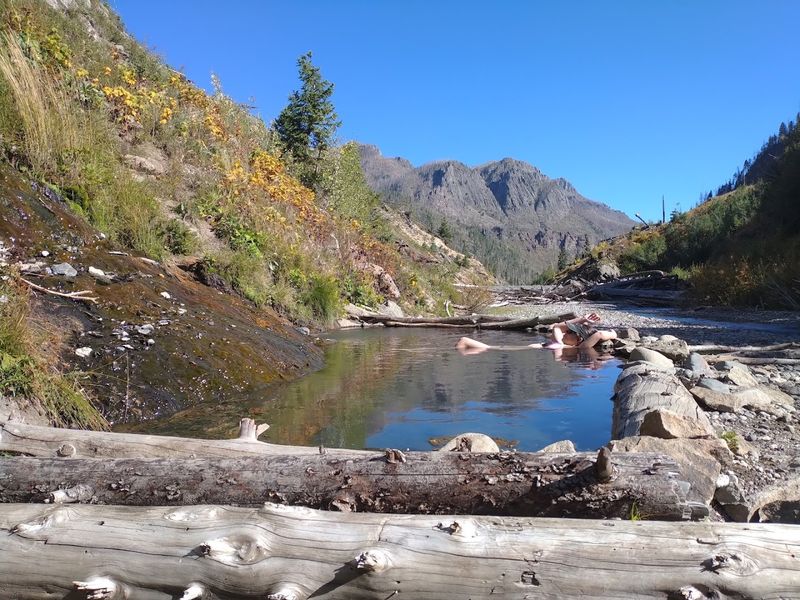
This trail is rated moderate to difficult, and that rating is honest. With roughly 1,000 feet of elevation gain and a round trip that pushes 12 miles, casual strollers will want to think twice before lacing up.
Colorado altitude is no joke, especially starting at over 9,000 feet.
Visitors who are not acclimatized to the elevation find the climb significantly harder than expected. Give yourself a day or two in the mountains before attempting this hike if you are coming from lower elevations.
Your lungs will thank you later. Water is non-negotiable. Pack 3 to 4 liters per person, or carry a water filter to use from the river.
Waterproof hiking boots are strongly recommended because the trail can turn muddy and soggy after rain, and there are sections where the path dips right into river crossings.
Trekking poles are a smart addition, particularly for the rocky descents on the return trip. Start early in the day so you have plenty of daylight, and always pack rain gear because mountain weather in Colorado shifts fast and without much warning.
Two Pools Worth Earning
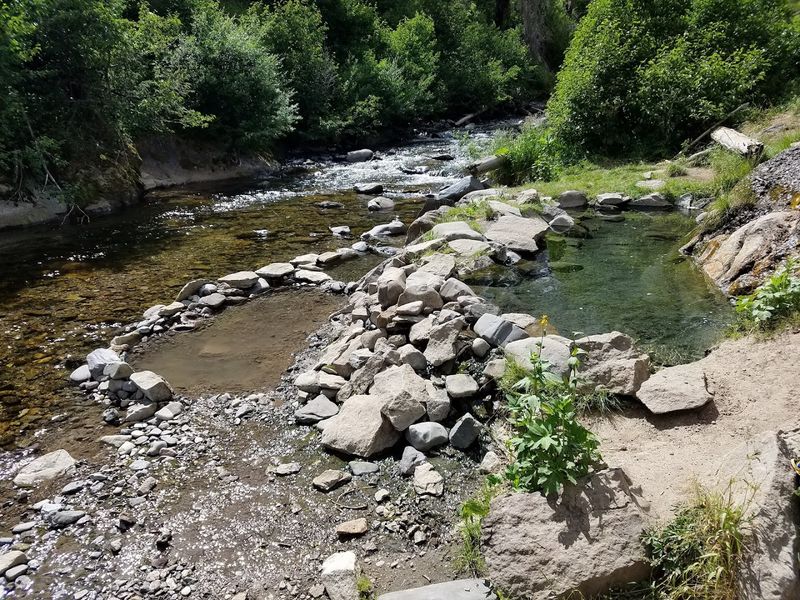
After miles of trail, forest, and river crossings, the reward reveals itself quietly. Two primitive, rock-walled pools sit right along the edge of the San Juan River, looking like the mountains built them just for tired hikers.
The upper pool sits closer to the geothermal source and averages around 105 degrees Fahrenheit. The lower pool is larger and rests directly on the river’s edge, averaging closer to 95 degrees Fahrenheit.
The source itself runs at approximately 110 degrees, so the water arriving in the pools has already cooled to something far more comfortable.
Here is the fun part: you can actually adjust the rocks in the pools to control the mix of hot spring water and cooler river water. Too warm?
Shift a rock. Want more heat? Push it back. It is a surprisingly satisfying DIY spa experience in the middle of the Colorado wilderness.
The pools are naturally occurring, which means they contain algae and silt. That is completely normal for wild hot springs and part of the authentic experience.
The pools sit near campsites 6, 7, and 8 along the trail, so look for the numbered campsite markers when you are close.
Camping Under Colorado Stars
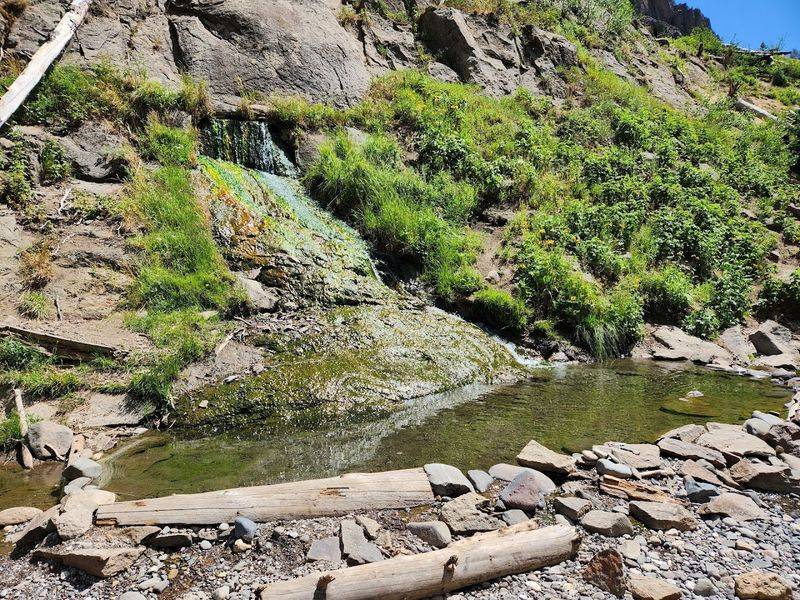
Day hikers get the soak, but overnight campers get the full wilderness story. Many visitors choose to backpack in and spend the night near Rainbow Hot Springs, turning a long day hike into a proper two-day adventure through the San Juan National Forest.
Designated campsites are marked with numbered posts near the springs, and the area around campsites 6, 7, and 8 puts you closest to the pools. Camping is free, but there are important rules to follow.
All campsites must be at least 100 feet from water sources to protect the riparian ecosystem.
There is a restricted camping zone immediately around the hot springs, so plan your site accordingly. The extra effort of packing in overnight gear pays off in a big way.
Winter camping here is a serious undertaking that requires advanced backcountry skills, snowshoes or skis, and significant cold-weather gear, as the road to the trailhead closes seasonally.
For most visitors, late spring through early fall offers the most accessible and enjoyable overnight experience. Is there a better alarm clock than a mountain river running ten feet from your tent?
Wildlife Around Every Bend
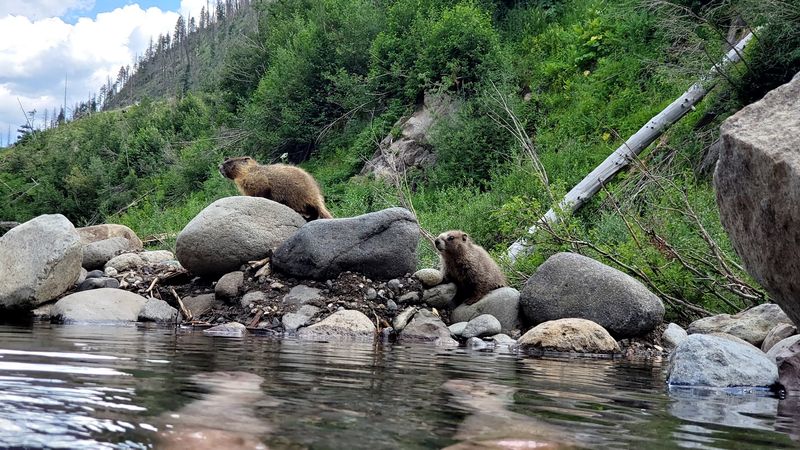
One visitor once sat perfectly still in the lower pool and had a chipmunk jump directly onto their knee. Another spotted a pair of marmots waddling past like they owned the place.
Wildlife encounters on this trail are not rare, they are part of the experience.
The West Fork Trail connects to a broader backcountry system in the San Juan National Forest, which means animals move through freely and regularly. Deer are common sightings along the river corridor.
Horses and mules from pack trips share the trail without much fuss. Black bears, however, require a bit more attention.
Carrying bear spray is strongly recommended when hiking to Rainbow Hot Springs. Keep food sealed and stored properly, especially if you plan to camp overnight near the springs.
Dogs are welcome on the trail but must remain on a leash at all times.
The trail passes through areas still recovering from past wildfires, which means sections are open and exposed rather than fully canopied. That exposure actually improves wildlife spotting because sight lines extend much farther than in dense forest.
Has a chipmunk ever interrupted your mountain soak?
Best Seasons To Visit
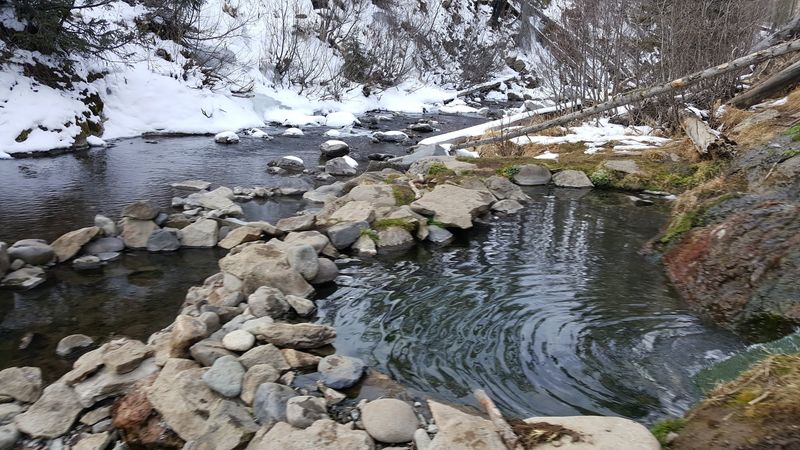
Timing your visit to Rainbow Hot Springs makes a real difference in what kind of experience you walk away with.
Late spring through early fall is the sweet spot, offering accessible roads, manageable trail conditions, and temperatures that make a long hike feel worthwhile rather than punishing.
Summer mornings are ideal for starting the trail. Colorado afternoon thunderstorms are a regular feature from July onward, and being caught on an exposed burn area during a storm is not a pleasant situation.
Starting by 7 or 8 in the morning gives you a comfortable buffer to reach the springs and soak before clouds build.
Spring visits come with extra mud and potential snowmelt flooding along the river sections of the trail. Early season hikers report river crossings running higher and faster than usual, which adds challenge and requires careful footing.
Winter access is genuinely difficult. Forest Road 648 closes seasonally, adding significant mileage to an already long journey.
Only experienced backcountry travelers with full winter gear should attempt a cold-season visit. Colorado winters in this terrain are not forgiving to the underprepared, and the San Juan wilderness in deep snow is a completely different world.
Free, Wild, And Completely Yours
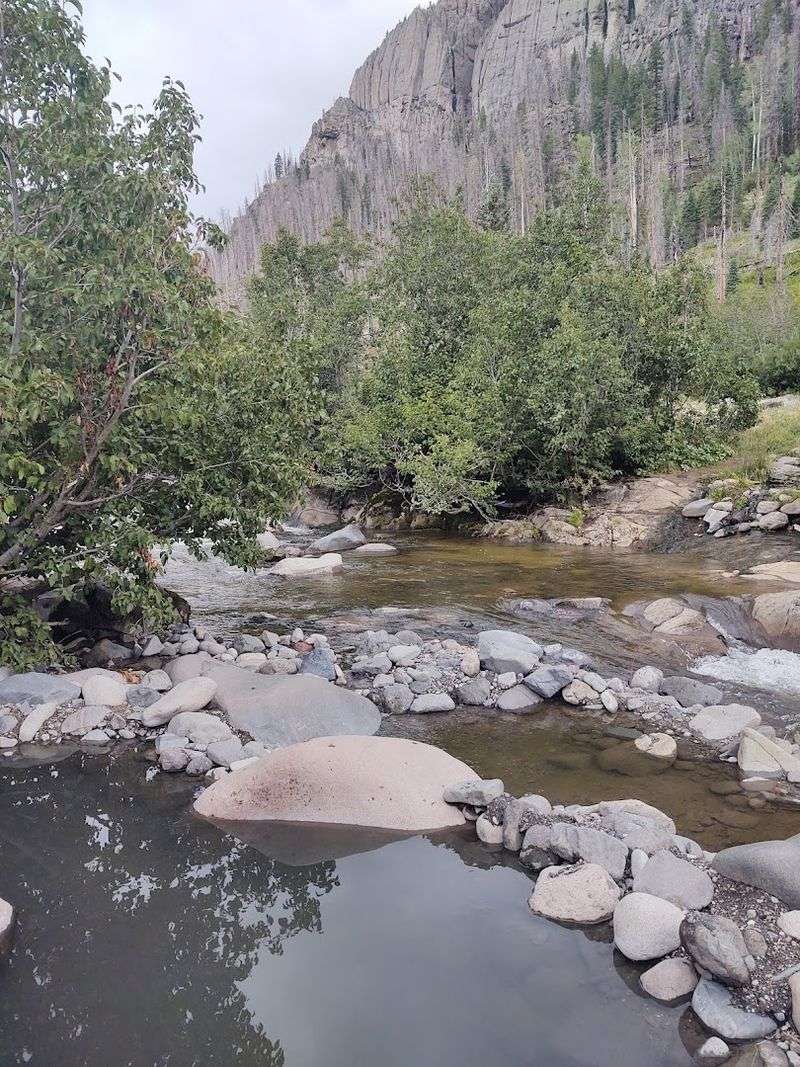
There are no entry fees at Rainbow Hot Springs. No reservations. No wristbands. No attendants asking if you want a locker.
Just a trailhead, a long walk, and a wild hot spring that has been here long before anyone thought to charge admission for it.
This is one of Colorado’s genuinely free hot springs, sitting on public land within the Weminuche Wilderness Area of the San Juan National Forest. The pools belong to everyone, which is exactly what makes them feel so special.
Visitors who arrive after a full day on the trail describe the experience as earning something real.
Clothing is optional by long-standing tradition at the springs. That detail surprises some first-timers but fits naturally into the overall atmosphere of the place.
Out here, surrounded by wilderness with no amenities in sight, formality feels out of place anyway.
The pools are primitive, meaning no concrete edges, no chemical treatments, and no heated changing rooms waiting nearby.
What you get instead is algae-tinged water that is warm and mineral-rich, rocks you can rearrange yourself, and the sound of the San Juan River moving past just a few feet away.
Trail Scenery That Stops You Cold
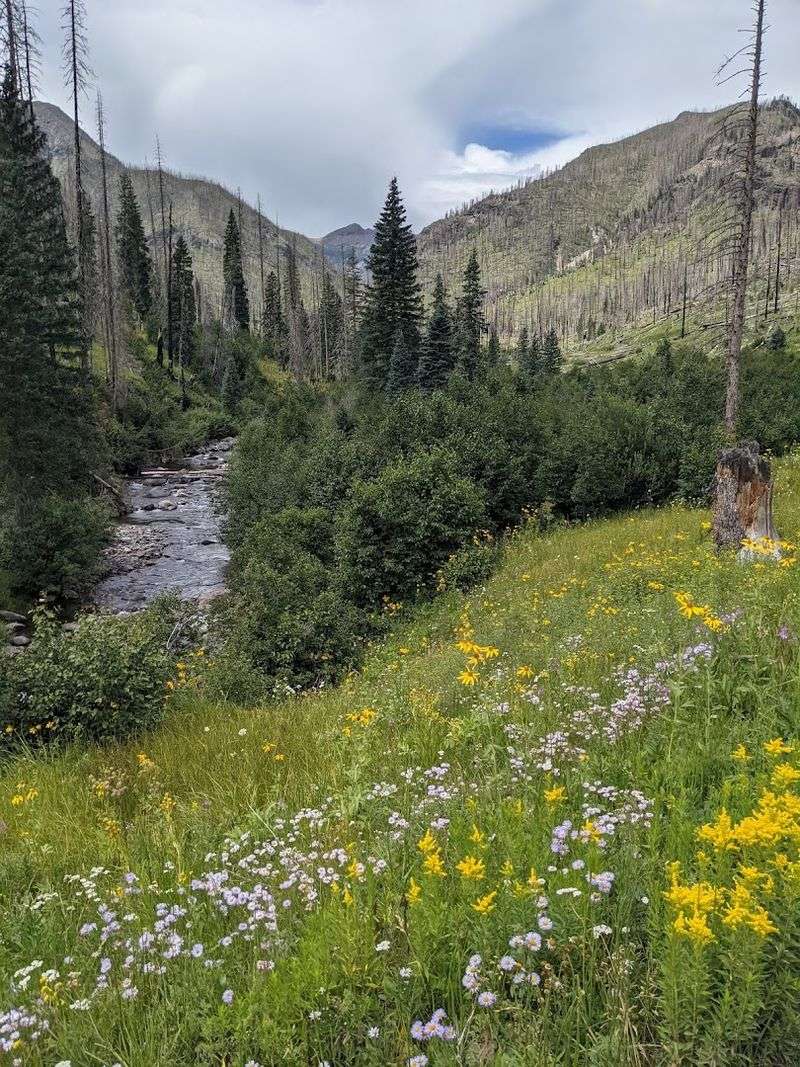
Visitors who have done this hike multiple times consistently say the trail itself is the main event. The hot springs are the goal, but the 5 to 6 miles getting there offer scenery that makes you stop walking just to look around and appreciate where you are.
The trail follows the West Fork of the San Juan River for long stretches, passing dozens of small waterfalls tucked into the canyon walls.
Open meadows appear between forest sections, offering wide-sky views that feel completely different from the shaded river corridor just minutes behind you.
The variety keeps the miles moving.
Large sections of the trail pass through areas affected by past wildfires. The contrast between fire-scarred trunks and the vivid green of new forest growth is striking in a way that feels more honest than manicured.
Nature recovering on its own terms has a particular kind of beauty that no landscaping can match.
The exposed burn sections also mean unobstructed views across canyon edges and ridgelines that would otherwise be hidden behind tree cover.
On a clear Colorado morning, those views stretch for miles and deliver the kind of perspective that makes city life feel very far away. Visitors say the hike back, mostly downhill, hits differently once you have soaked your legs and reset your entire outlook on the day.