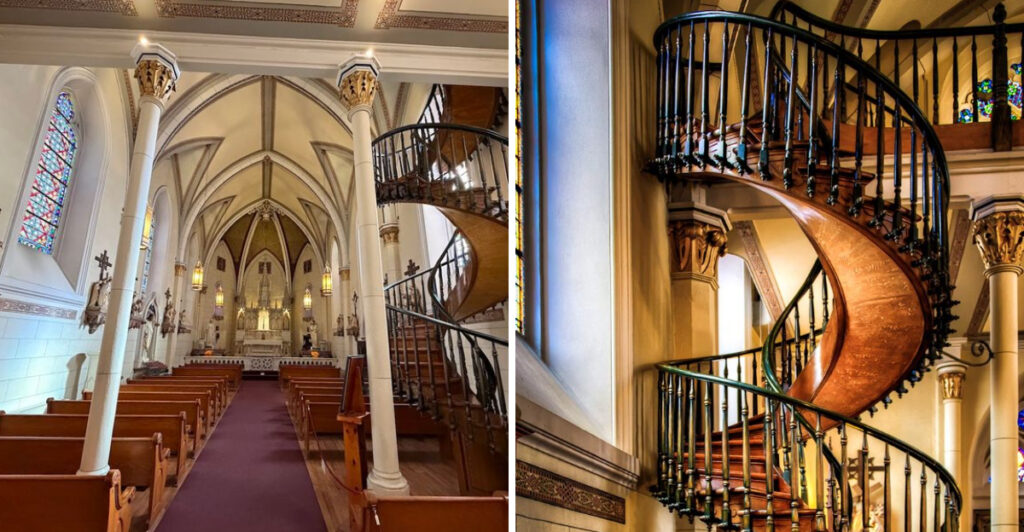
People walk into this old New Mexico chapel expecting a quick history stop. Then they spot the staircase and completely forget what they were talking about.
The entire thing twists upward in two smooth spirals without a central support pole, which sounds impossible once you realize how spiral staircases are normally built. Local legend says a mysterious carpenter showed up after days of prayer, worked alone, finished the staircase, and disappeared before collecting payment or even leaving his name behind.
That story alone would draw attention, but seeing the staircase in person is what really gets people. Visitors stand underneath it staring up, zooming in on photos, and trying to figure out where the support is hiding.
Some people call it miraculous. Others say it was simply the work of an incredibly skilled craftsman.
Either way, travelers from across the country keep adding this chapel to road trip plans just to finally see the staircase themselves.
A Gothic Chapel Built For Lasting Wonder
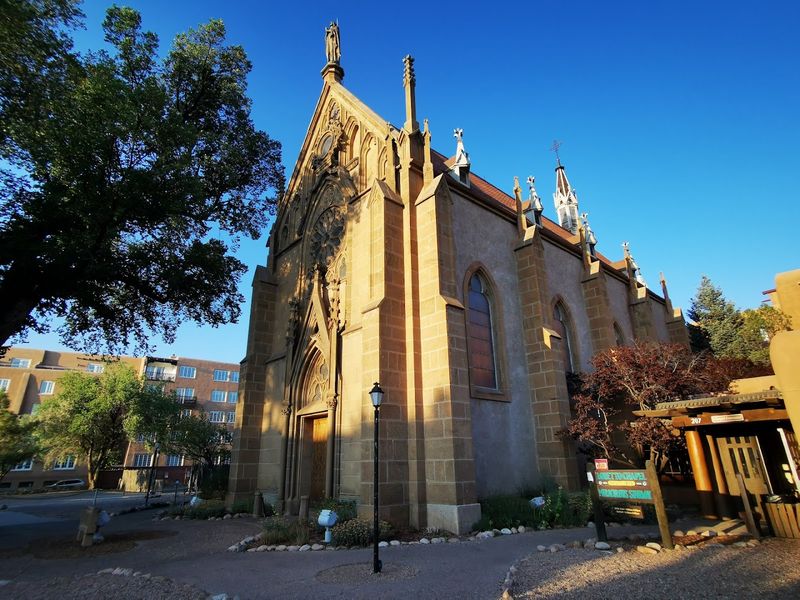
The first thing that caught me off guard about this chapel was how dramatically different it felt from everything surrounding it, and that surprise made the visit even more memorable.
The building itself is a Gothic Revival masterpiece inspired by the famous Sainte-Chapelle in Paris, which makes it feel wildly out of place among the adobe structures of the surrounding Southwest landscape.
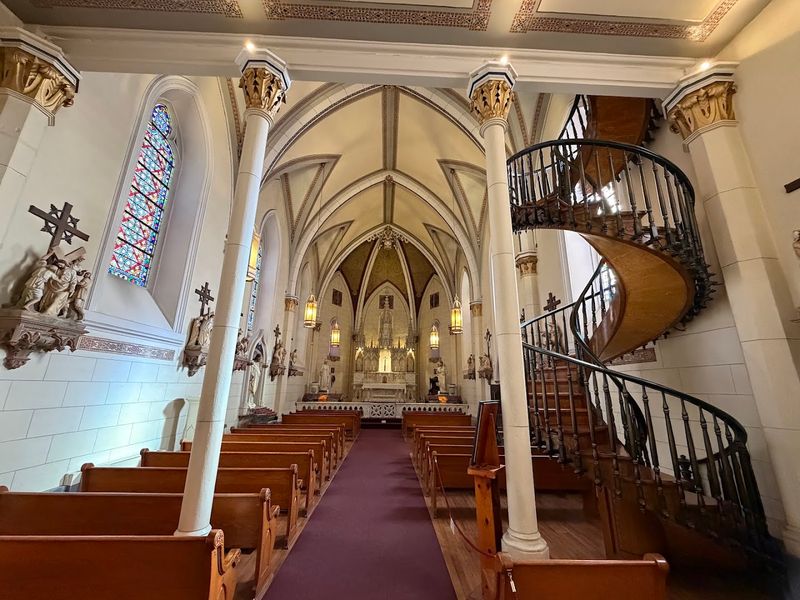
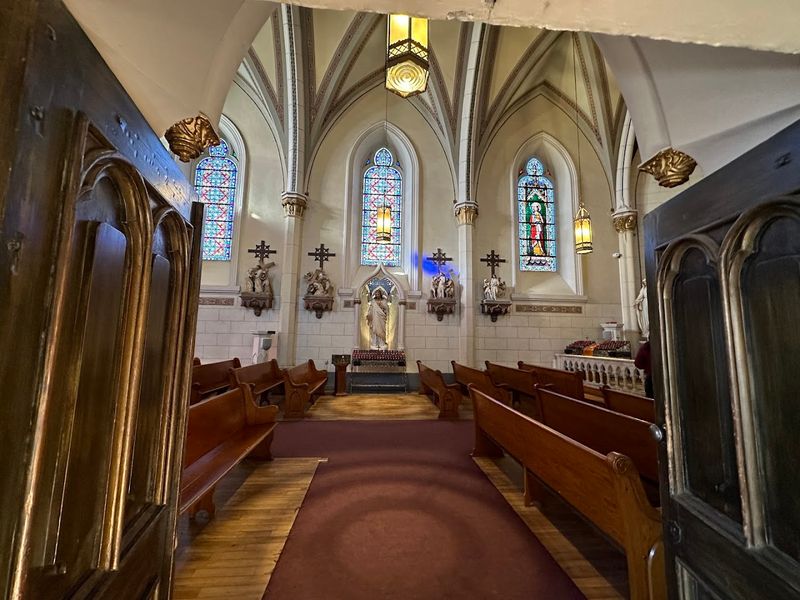
Pointed arches rise overhead, stained glass windows scatter colored light across the stone floor, and the altar stands with a quiet authority that commands attention the moment you cross the threshold.
Construction of the chapel began during the 1870s under the direction of French architect Antoine Mouly, and it was completed in 1878 for the Sisters of Loretto, a Catholic religious order dedicated to education.
The chapel measures only about 25 feet wide and 75 feet long, so the intimacy of the space actually amplifies every detail rather than letting anything get lost in a grand expanse.
Many visitors describe feeling an unexpected sense of calm the moment they step inside, a quality that even non-religious guests often mention afterward.
You can find this extraordinary little building at Loretto Chapel Museum, 207 Old Santa Fe Trail, Santa Fe, NM 87501.
The Missing Stairway To The Choir Loft
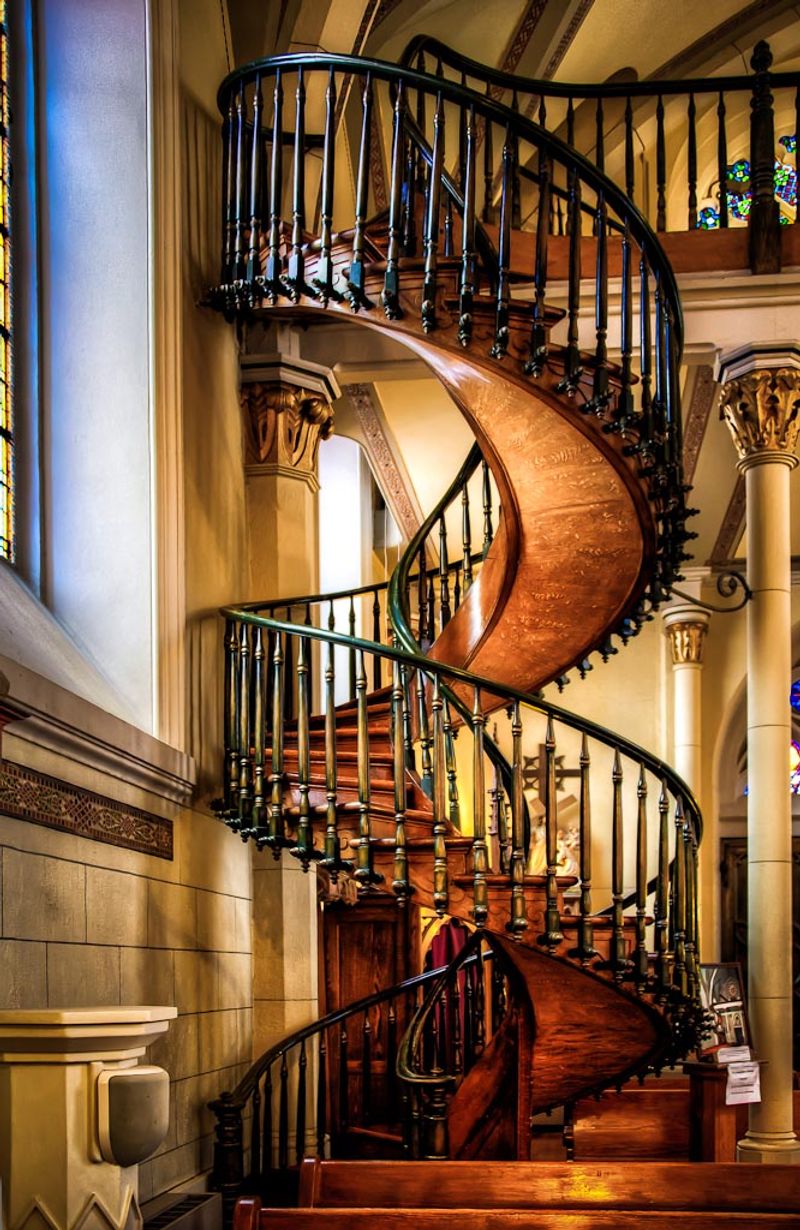
Picture finishing a brand-new chapel in 1878 only to realize nobody had included a practical way to reach the choir loft above.
The loft sat about 20 feet above the chapel floor, and the original plans apparently did not include a staircase before the architect died around the end of construction.
Carpenters and builders were consulted after the chapel was completed, and the general consensus was grim: any conventional staircase would eat up so much floor space that it would ruin the chapel’s intimate layout entirely.
The Sisters of Loretto faced a serious architectural dilemma, and the only realistic alternatives being suggested were ladders, which were considered completely unacceptable for a house of worship.
Problems like this did not come with easy solutions in the 1870s, especially in a remote territory like New Mexico where specialized craftsmen were not exactly easy to find.
The sisters reportedly spent nine days in prayer asking for intercession from St. Joseph, the patron saint of carpenters, before anything changed.
What happened next remains the part of the story that nobody has ever fully explained to everyone’s satisfaction.
A Carpenter Who Arrived After Prayer
Right after the Sisters of Loretto completed their nine-day novena, a stranger reportedly appeared at the chapel door carrying nothing but a few simple tools and a donkey.
He asked if he could take on the job of building the staircase, and the sisters agreed, apparently sensing something trustworthy about the quiet, unassuming man.
He worked alone for approximately six months, allowing no one to observe his process closely, and when the staircase was finished, he simply disappeared without leaving a name, an address, or any request for payment.
The sisters placed advertisements in local newspapers trying to locate the carpenter so they could pay him, but no one ever came forward to claim the fee or identify the builder.
Over the years, the legend grew, and many believers came to the conclusion that the mysterious carpenter was St. Joseph himself, sent in answer to the sisters’ prayers.
Researchers have proposed other theories as well, including the idea that the builder may have been a French-trained craftsman named Francois-Jean Rochas, though definitive proof has never surfaced.
Standing in front of the finished staircase, it is genuinely hard not to feel that something remarkable happened in this space, regardless of which explanation you find most convincing.
The Double Spiral That Still Draws Stares
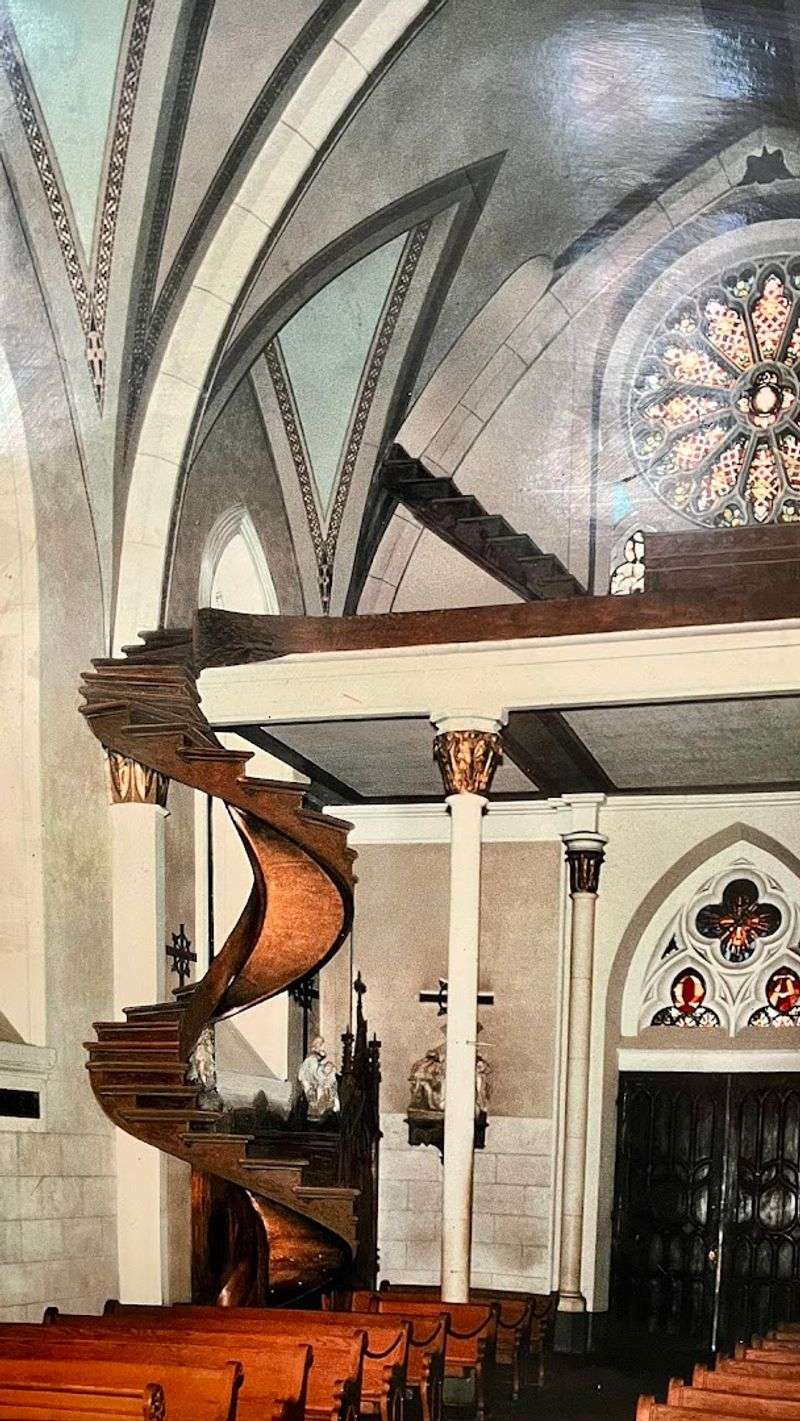
Photos really do not prepare you for the moment the staircase comes into view, because the structure seems to rise almost impossibly once you stand beneath it.
The staircase makes two complete 360-degree turns as it rises from the chapel floor to the choir loft, forming a shape that continues to fascinate woodworkers and engineers alike.
What makes it especially unusual is the absence of a central support pole, since the structure instead relies on curved stringers and carefully balanced construction for stability.
Experts who have examined the staircase describe the design as an extraordinary feat of craftsmanship, especially considering the tools and materials available in the 1870s American Southwest.
I stood in front of it for a solid ten minutes, tilting my head at different angles, trying to locate a hidden support structure that simply is not there.
The wood has developed a rich, warm patina over the decades, and the curves are so smooth and consistent that they look almost machine-made rather than hand-crafted.
Visitors are not permitted to climb the stairs, which are blocked off for preservation, but you can walk close enough to appreciate every detail of the joinery.
Wooden Pegs Instead Of Ordinary Nails
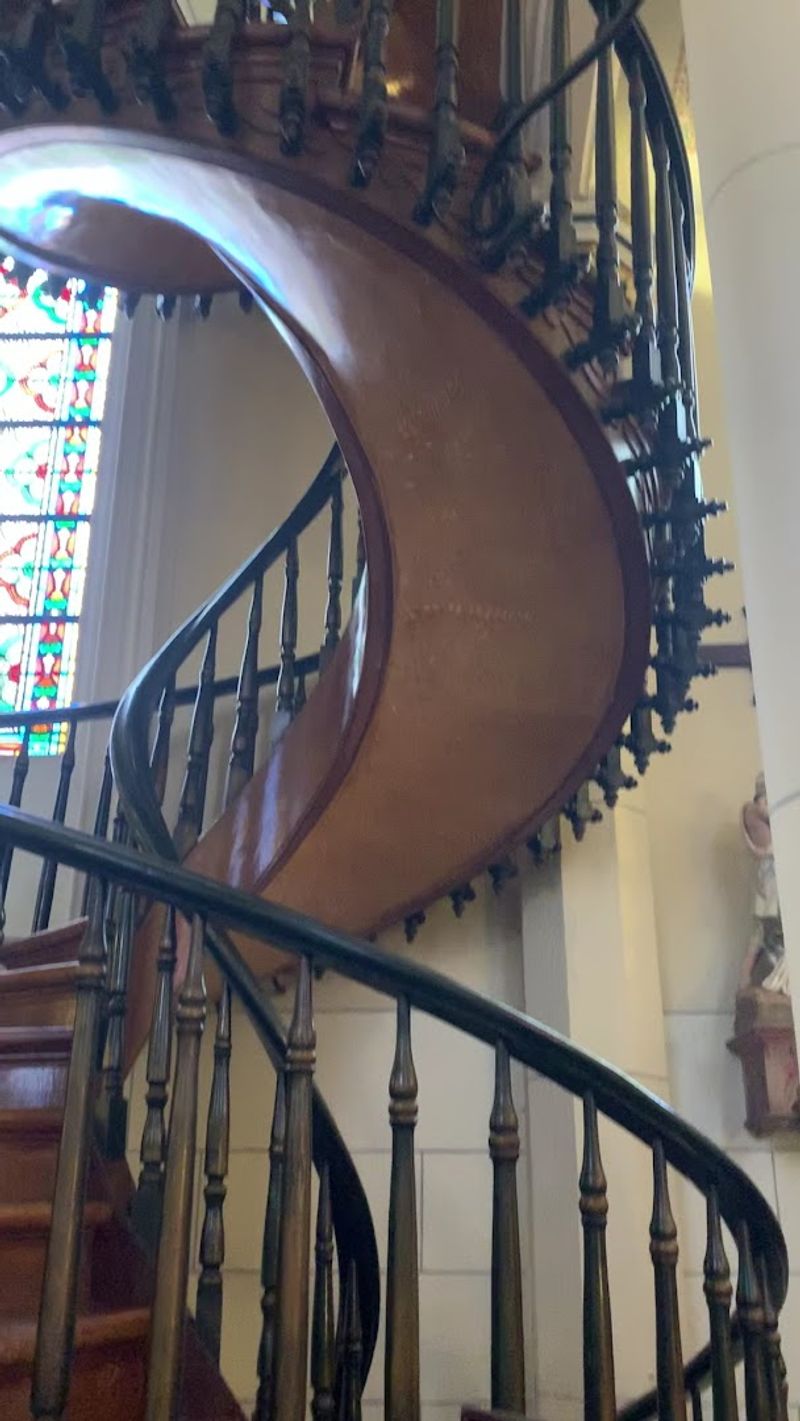
One detail that immediately catches the attention of woodworkers and builders is the fact that not a single metal nail was used in the staircase’s original construction.
Instead, the builder relied entirely on wooden pegs to join the curved stringers, the treads, and every other element of the structure together, a technique that requires extraordinary precision to execute correctly.
Wooden peg joinery is not unusual in historical carpentry, but using it to construct a freestanding spiral staircase that would bear regular human traffic is a significantly more demanding application.
The staircase curves so tightly and consistently that many visitors struggle to understand how anyone could have shaped the wood so precisely without modern equipment.
The wood used in the staircase has been identified as a type of spruce that was likely not native to New Mexico, adding yet another layer of mystery to the question of where the builder sourced the materials.
Every peg sits flush and precise, with no visible gaps or signs of stress despite the staircase having supported visitors and choir members for well over a century.
That kind of craftsmanship, achieved with hand tools alone, is enough to leave even the most skeptical observer quietly impressed.
A 20-Foot Rise With 33 Steps
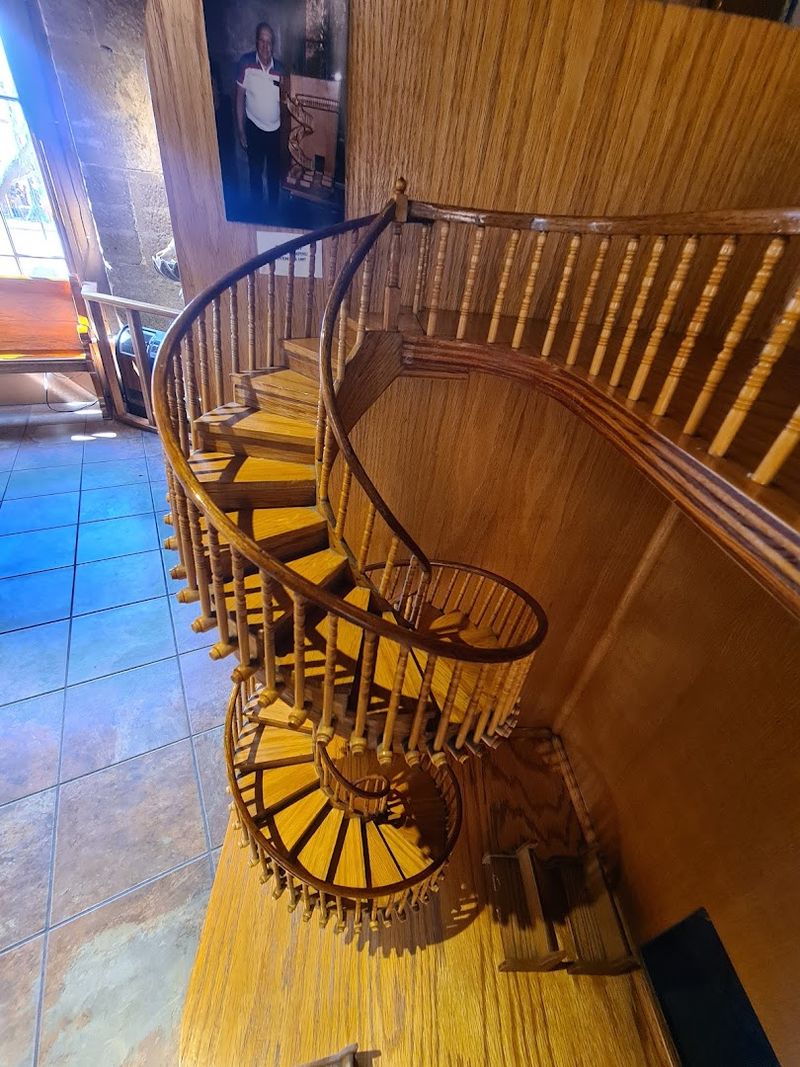
The numbers behind this staircase are modest on paper but impressive in practice: 33 steps carry the structure through two full rotations and rise approximately 20 feet from the chapel floor to the choir loft above.
One especially striking detail is that the original staircase was built without a handrail, which must have made climbing it a genuinely nerve-wracking experience for the sisters who used it regularly in the years after its completion.
A handrail was added later, and that addition actually required its own careful engineering work to avoid compromising the structural integrity of the original design.
The number 33 has not gone unnoticed by faithful visitors who come here, since 33 is also traditionally associated with the age of Jesus Christ at the time of the crucifixion, a detail many believers find deeply meaningful.
Each individual step is a curved piece of wood that had to be shaped and fitted with extraordinary care, since any slight error in the curve would compound across 33 steps and result in a staircase that either leans or fails to close its spiral properly.
The fact that it closes perfectly, rising smoothly to the loft with no wobble or drift, is a testament to the builder’s almost impossible level of skill.
Looking up through the spiraling treads from the base creates one of those rare visual experiences that instantly makes you feel small in the best possible way.
The Mystery Behind The Unnamed Builder
The identity of the carpenter who built the Loretto staircase remains one of the most debated questions in the history of New Mexico architecture, and the debate has not cooled down in all the years since 1878.
Researchers spent years examining the question and eventually proposed that the builder may have been Francois-Jean Rochas, a French immigrant craftsman working in the Santa Fe area whose skills matched the level of expertise visible in the staircase.
Rochas reportedly died in the mid-1890s, and some historians believe the timing and location of his life align closely enough with the staircase’s construction to make him the most probable candidate.
However, no contract, receipt, sketch, or written record has ever been found that directly links Rochas or anyone else to the staircase, which means the identification remains a theory rather than a confirmed fact.
The sisters themselves never publicly named the carpenter, and their own accounts consistently described him as a stranger who appeared without introduction and left without explanation.
That uncertainty, whether intentional or simply a result of the era’s record-keeping habits, has allowed the mystery to breathe and grow across generations of visitors and researchers.
Personally, I find the unresolved nature of the story far more compelling than any tidy answer could ever be.
The Debate Between Craftsmanship And Miracle
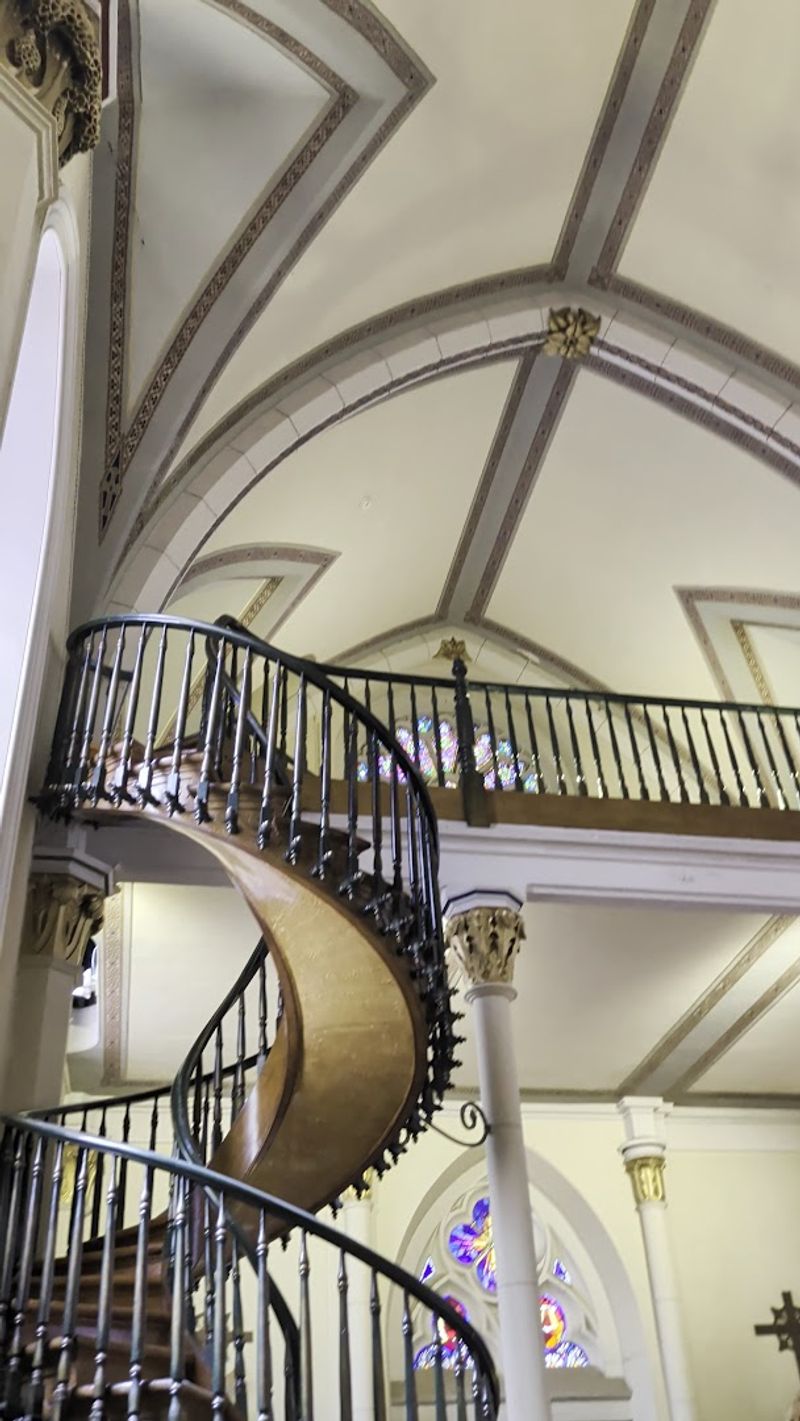
Few places I have visited split a crowd so naturally down the middle, with engineers and woodworkers on one side and the faithful on the other, yet both groups usually end up standing in the same spot with the same wide-eyed expression.
Viewed strictly as a structural achievement, the staircase represents a remarkable feat of 19th-century woodworking, with its unsupported helical appearance, precisely curved stringers, and peg-only joinery pushing the boundaries of what hand tools and raw timber could accomplish.
Later structural examinations concluded that the staircase is stable and self-supporting, which answered the question of whether it works but did little to explain how someone built it with the resources available at the time.
For believers, the engineering mystery simply reinforces what the Sisters of Loretto already believed: that their prayers were answered in a deeply tangible way.
The chapel’s audio narration, which plays softly inside the museum, presents both perspectives respectfully and lets visitors draw their own conclusions without pressure.
I appreciated that balance enormously, because it made the space feel welcoming to everyone rather than exclusive to any particular worldview.
No matter what you believe before stepping inside, the staircase has a way of making people pause, reconsider, and leave with a story they will probably retell for years.