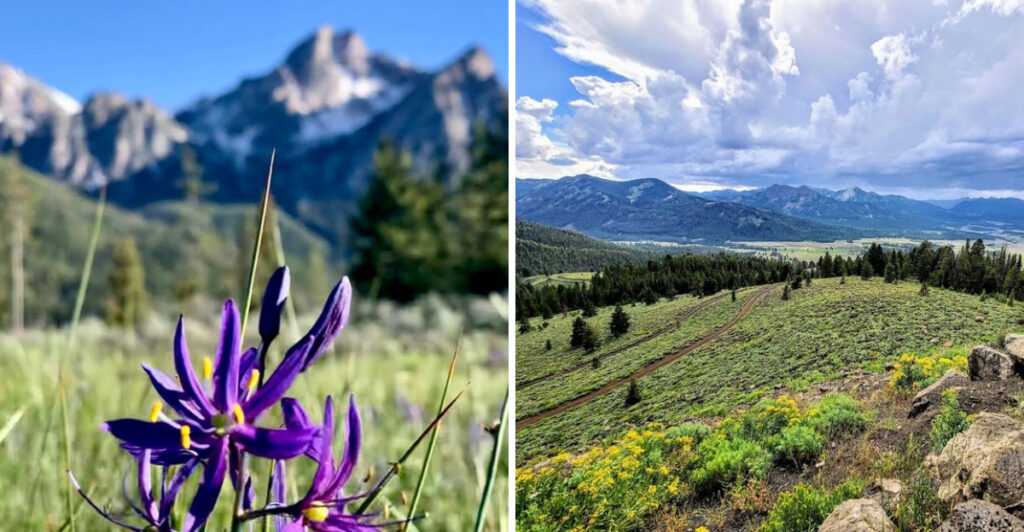
What if the most jaw-dropping wildflower display in Idaho was hiding in plain sight, and almost nobody thought to stop?
Picture a mountain pass so high it practically brushes the clouds, where rugged peaks stack along the horizon and vast valleys drop away in every direction below.
Then, for a few electric weeks each summer, the slopes transform from muted greens and browns to something that looks almost painted by hand.
Lupine, balsamroot, and Indian paintbrush erupt across an open alpine meadow in rolling waves of purple, yellow, and blazing red.
Idaho keeps its very best secrets tucked high up in the mountains, and timing this visit just right might be the very best outdoor decision you make all summer.
The Pass That Sits Above The Clouds
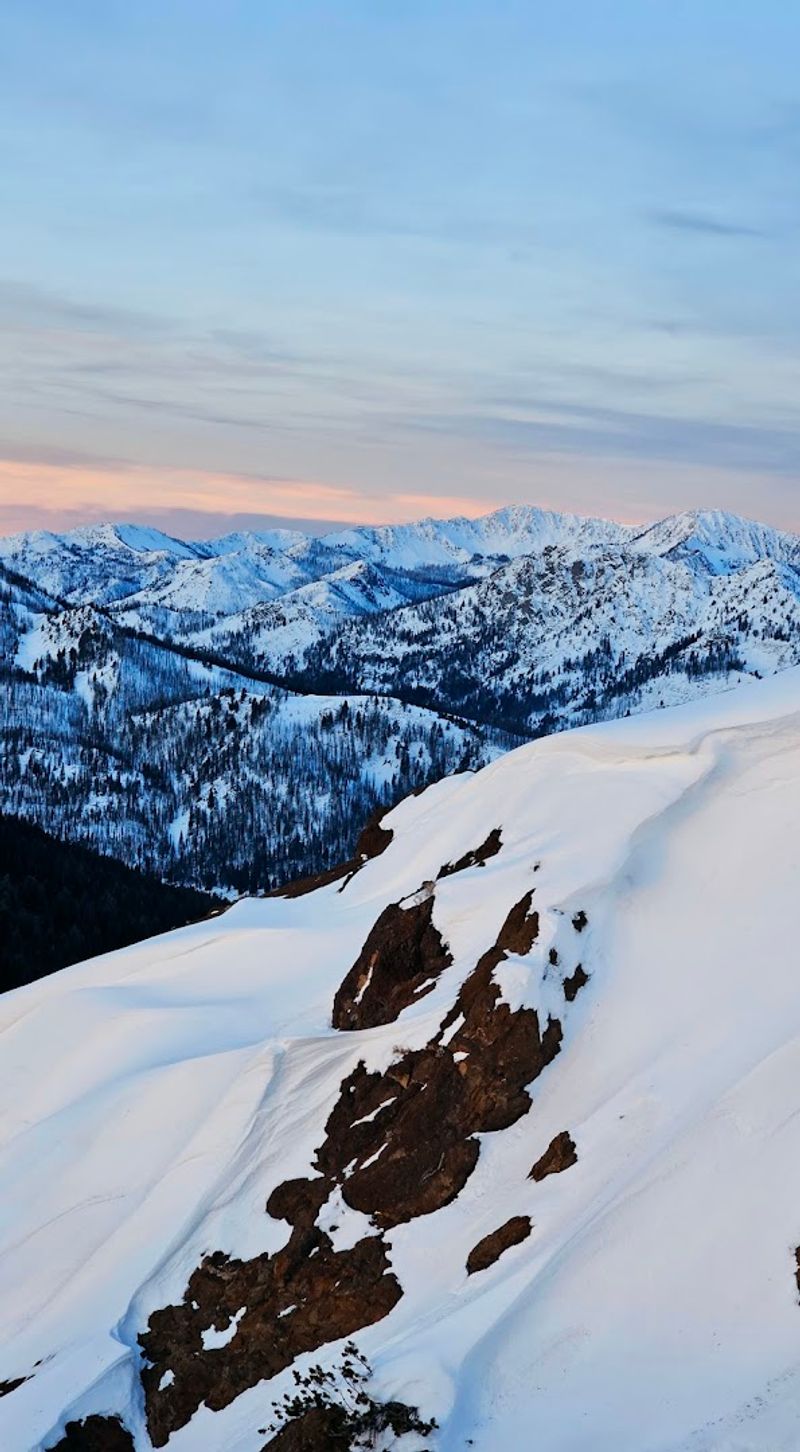
At 8,701 feet above sea level, Galena Summit is not messing around. The elevation alone makes this mountain pass one of the more dramatic stops along State Highway 75, also called the Sawtooth Scenic Byway, in Idaho.
Blaine County holds this pass within the Boulder Mountains, and the terrain up here is rugged, raw, and genuinely impressive. The road curves upward through increasingly open landscape as drivers climb toward the crest.
At the top, the view opens in every direction without warning. Mountain ranges stack against the horizon, valleys drop away below, and the sky feels unusually close.
Two fixed binoculars are available at the pullout for anyone who wants to scan the ridgelines or spot distant landmarks. The stop itself is simple, just a wide spot off the road, but what it offers visually is hard to match anywhere in the region.
This is a pass worth building a drive around.
Why July Is The Magic Month
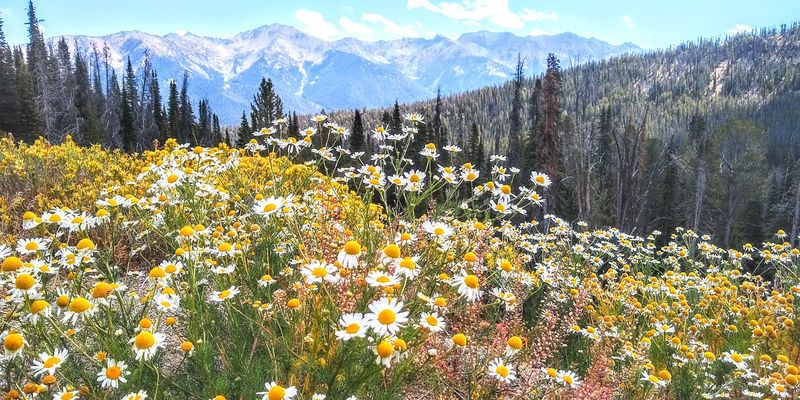
Timing matters enormously at Galena Summit, and July tends to be the sweet spot. The wildflower season across Idaho broadly runs from May through July, but higher elevations operate on a different schedule.
Up at this altitude, the snowpack lingers longer into spring, which pushes the peak bloom later in the season. By mid-summer, conditions align just right, and the meadows near the summit respond with an almost theatrical burst of color.
The surrounding landscape goes from muted greens and browns to something that looks almost painted. Lupine, penstemon, buttercup, and balsamroot all tend to peak around the same time, layering colors across the open ground.
Galena Lodge, situated nearby, runs its summer operations from mid-June through mid-September, which lines up neatly with prime wildflower viewing. Visiting in early July offers a reasonable chance of catching the bloom near its most intense, though exact timing shifts from year to year depending on conditions.
The Wildflowers That Show Up Every Year
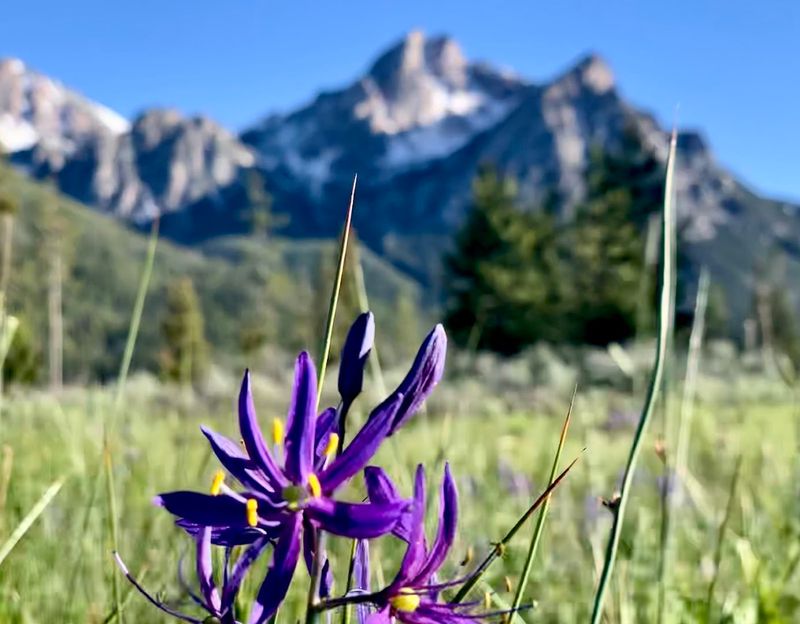
Purple penstemon rises in tall spikes from rocky soil. Yellow arrowleaf balsamroot spreads across open slopes in cheerful clusters.
Lupine arrives in shades of purple, blue, and occasionally pink, filling the air with a faint sweetness.
These are the main characters of the Galena Summit wildflower show, and they tend to perform reliably each summer. Indian paintbrush also appears regularly, adding flashes of bright red and orange to the mix.
Yellow buttercup rounds out the cast with smaller, more modest blooms that carpet the lower areas of the meadow. Together, these species create a layered, multi-toned display that covers the ground from the roadside all the way up into the open slopes above.
Each flower has its own preferred microhabitat, which means the bloom shifts and changes as you move through the area. Paying attention to where each species clusters adds an extra layer of interest for anyone who enjoys botany or simply loves a good wildflower hunt.
Senate Meadows And The Short Walk Worth Taking
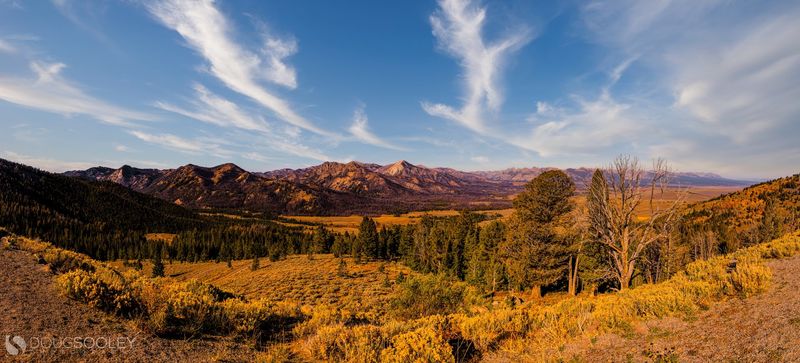
Senate Meadows sits within walking distance of Galena Lodge, which is located near Galena Summit. This meadow is one of the most accessible wildflower viewing spots in the entire area, requiring very little effort to reach.
The meadow earns its reputation during peak bloom season. Wildflowers erupt across the open ground in dense, colorful waves that stretch toward the surrounding ridgelines.
The scale of it is genuinely surprising for somewhere so easy to access.
Galena Lodge serves as a practical base point for exploring Senate Meadows and the trails that fan out from it. The lodge operates through summer and offers a familiar landmark for orientation in an otherwise open landscape.
Even a short walk out into the meadow puts visitors well beyond the road noise and into something that feels far more remote than it actually is. For anyone visiting Galena Summit during wildflower season, Senate Meadows should be on the list without question.
It rewards even a brief visit.
The Sawtooth Scenic Byway Connects It All
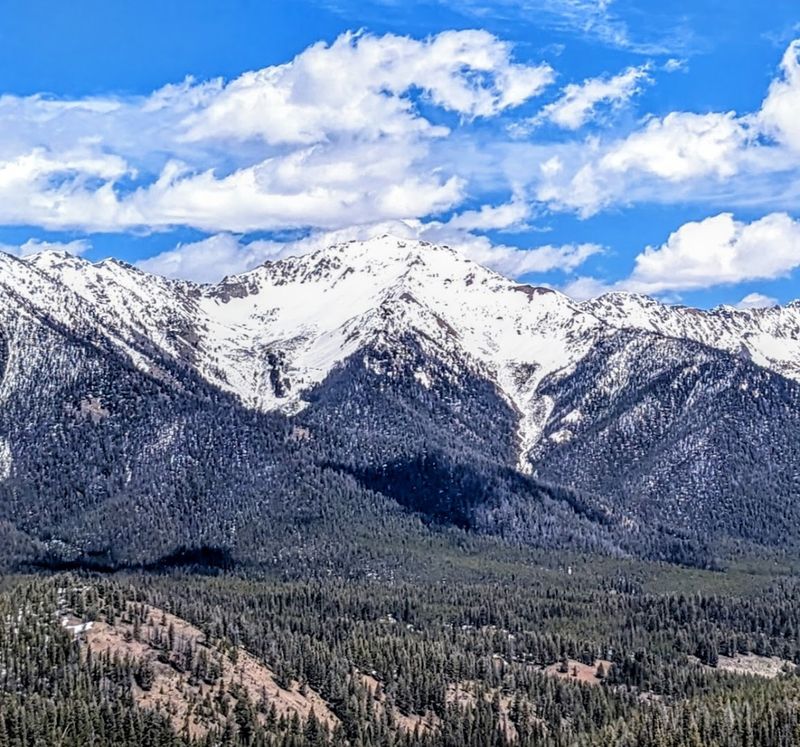
State Highway 75 carries a lot of weight in Central Idaho. Known as the Sawtooth Scenic Byway, this road links together some of the most visually striking landscapes Idaho has to offer, and Galena Summit sits squarely along its route.
Ketchum and Sun Valley lie to the south of the summit, while the Stanley Basin and Redfish Lake open up to the north. Drivers traveling between these areas pass directly over the summit, which makes it a natural stopping point for anyone making the journey.
The byway itself is celebrated for its mountain scenery, river views, and access to the Sawtooth National Recreation Area. Galena Summit adds a high-altitude exclamation point to the drive, offering one of the most dramatic vistas along the entire corridor.
For travelers unfamiliar with this stretch of Idaho, the byway serves as both a scenic route and a practical connector between popular destinations. Galena Summit makes the drive feel like more than just transit.
What The View From The Top Actually Looks Like
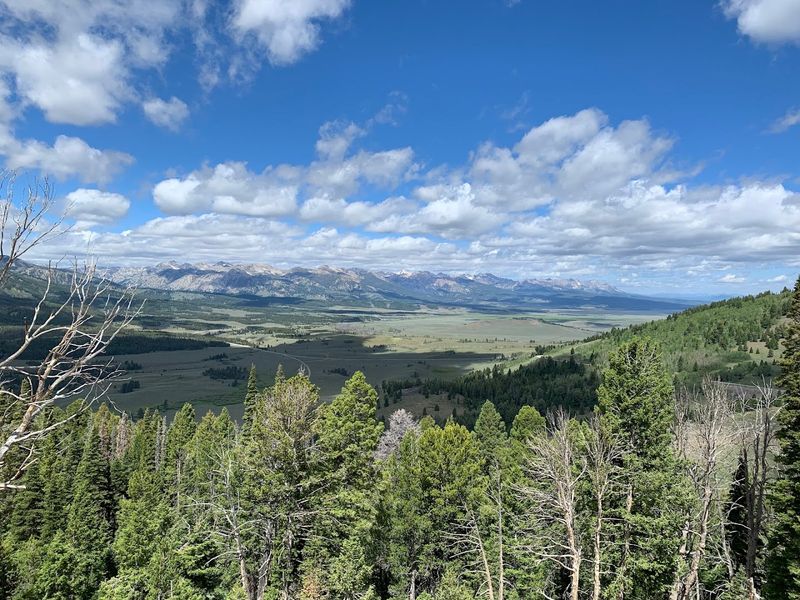
Standing at the Galena Summit pullout and looking north, the Sawtooth Mountain Range comes into view in a way that stops most people mid-sentence. The jagged peaks line up along the horizon with the kind of dramatic profile that belongs on a postcard.
To the south, the Wood River Valley stretches out below, with the terrain softening as it descends toward Ketchum. The contrast between the rugged summit environment and the valley below is striking from this elevation.
On clear days, the visibility extends far enough to make the binoculars feel genuinely useful rather than decorative. Mountain ridges, forested slopes, and distant peaks all come into sharper focus when viewed through them.
During wildflower season, the foreground of this view shifts dramatically. Instead of bare ground and scrubby vegetation, the slopes below the summit fill with color that adds warmth and texture to an already impressive scene.
The combination of wildflowers and mountain scenery is genuinely difficult to improve upon.
How The Boulder Mountains Shape This Place
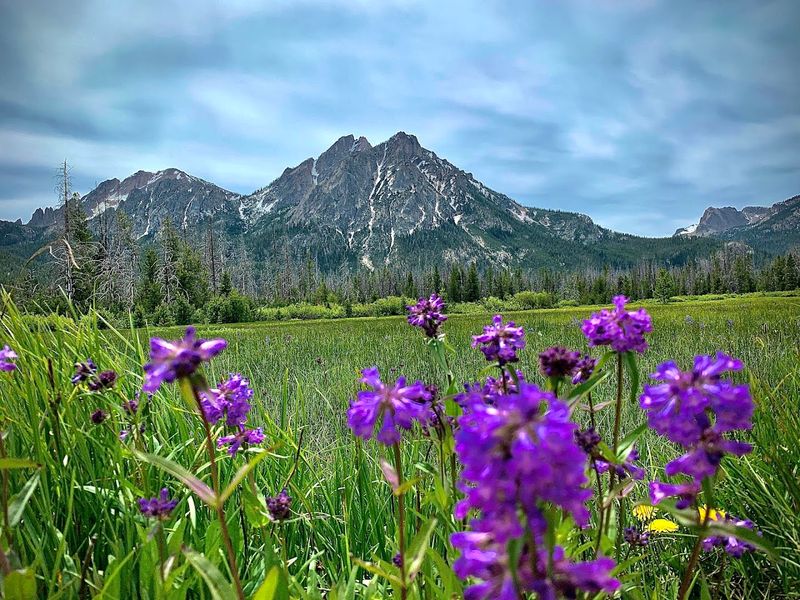
The Boulder Mountains form the geological backbone of the Galena Summit area. This range runs through Blaine County in Central Idaho, and its character is noticeably different from the more famous Sawtooth Range just to the north.
The Boulders tend to be rounder and less jagged than the Sawtooths, but they carry their own kind of presence. The high ridgelines, open slopes, and rocky terrain create the conditions that make wildflower displays possible at this elevation.
Snow accumulates deeply in the Boulder Mountains through winter and spring. That snowpack feeds the meadows with moisture as it melts, which is precisely what drives the summer wildflower bloom.
Without those wet conditions, the floral display would be far less impressive.
Understanding the mountains helps explain why Galena Summit behaves the way it does seasonally. The elevation, the snowmelt, and the open terrain all work together to produce something that feels almost engineered, even though it is entirely the result of natural forces playing out year after year.
Galena Lodge And The Best Kept Secret Nearby
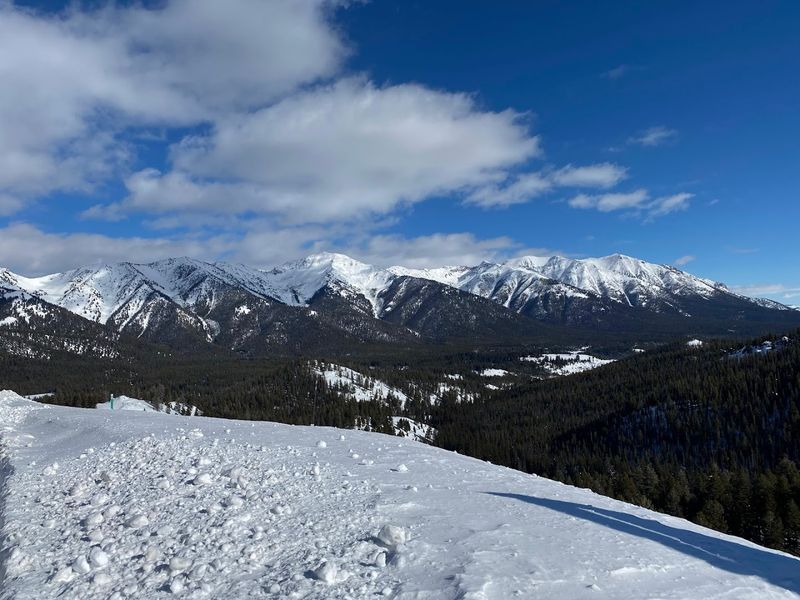
Galena Lodge sits near the summit and has earned a reputation as one of the valley’s best kept secrets. That phrase gets used casually, but in this case it feels earned.
The lodge operates during summer months and provides a genuine anchor point for exploring the surrounding area.
Its location near Galena Summit, along Highway 75, Ketchum, ID 83340, places it at the edge of some of the most scenic terrain in Central Idaho.
The surrounding trails and meadows are accessible directly from the lodge, which makes it a practical base for day explorations.
During wildflower season, the lodge grounds themselves take on a different character. The open land around the building fills with blooms, and the mountain backdrop makes the setting feel almost theatrical.
For visitors who want more than a quick roadside stop, Galena Lodge offers a reason to slow down and spend real time in the area. The combination of access, scenery, and relative obscurity makes it genuinely worth seeking out during the summer season.
The Animals That Share The Summit
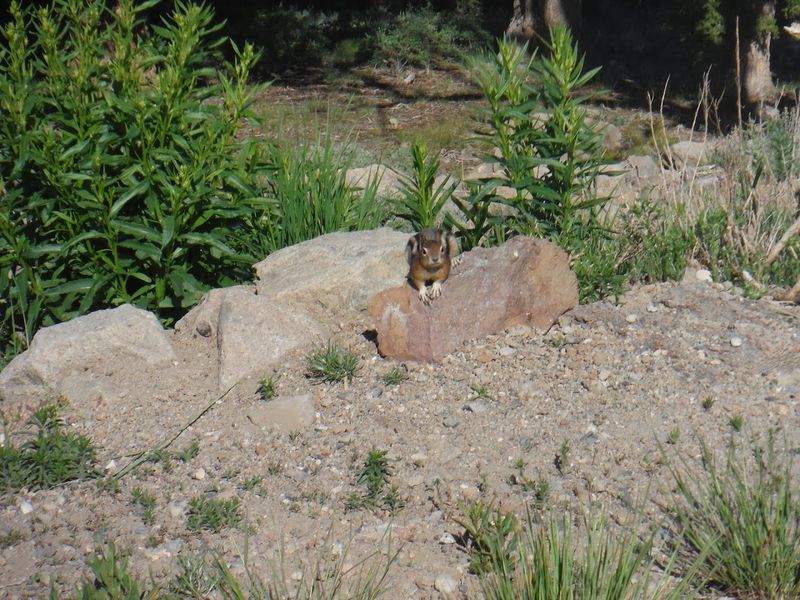
Wildflowers are not the only living things that respond to summer conditions at Galena Summit. The meadows and surrounding terrain support a range of wildlife that becomes more active as the season warms.
Mule deer move through the open slopes during morning and evening hours. Elk are also present in the broader region and occasionally visible from the road during quieter times of day.
The high terrain and open sightlines make wildlife spotting more likely here than in heavily forested areas lower down.
Smaller animals are equally active. Ground squirrels work the meadow edges, and various bird species use the open habitat for foraging.
Raptors sometimes cruise the thermals above the ridgelines, which adds another layer of interest to the sky above the summit.
The wildlife presence is a reminder that Galena Summit is not just a viewpoint. It is part of a functioning alpine ecosystem, and the wildflower bloom is one piece of a larger seasonal cycle that plays out across the Boulder Mountains each summer.
Practical Tips For Visiting During Peak Bloom
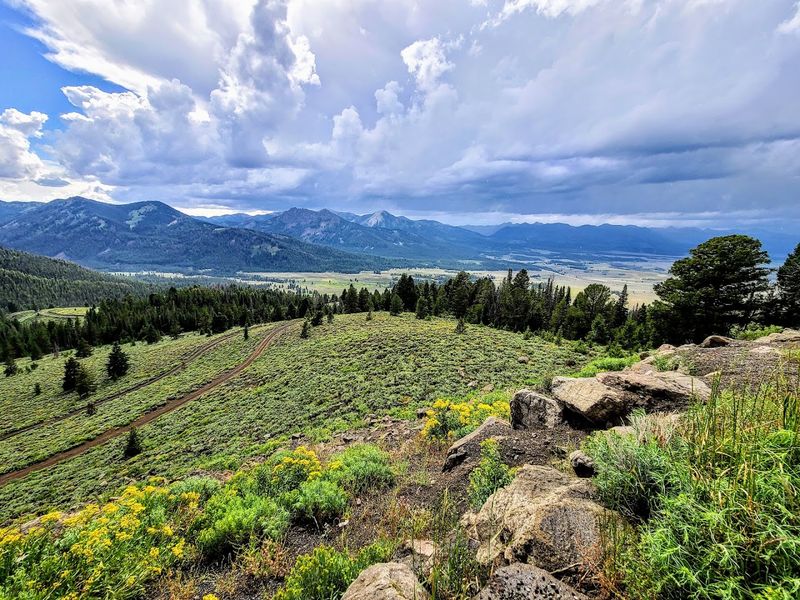
Getting the most out of a visit to Galena Summit during wildflower season takes a bit of planning. The bloom window is short, and the timing shifts depending on the year’s snowpack and spring temperatures.
Visiting in July offers the best odds, but checking local conditions before the trip is always a sensible move.
Morning light tends to be the most flattering for both photography and general enjoyment. The air is cooler, the crowds are thinner, and the flowers often hold their best color before the midday sun intensifies.
The pullout at the summit is not large, so arriving early helps with parking. The road up is curvy and requires attentive driving, particularly for those unfamiliar with mountain passes.
Taking it slow on the way up is genuinely good advice, not just a polite suggestion.
Bringing layers is worthwhile even in summer. At just over 8,700 feet, temperatures can shift quickly, and a cool wind is common at the top.