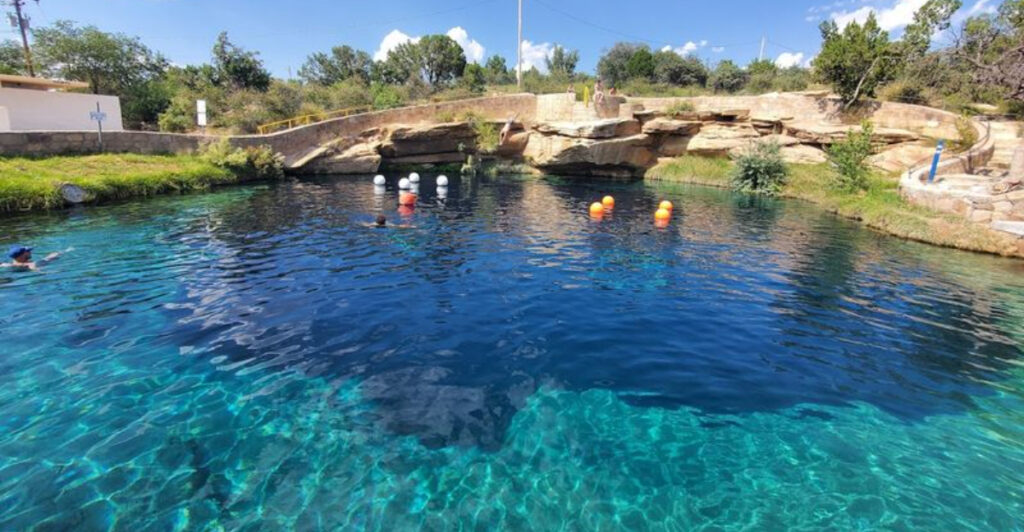
I didn’t expect to find water this blue in the middle of a hot desert afternoon, but New Mexico has a way of surprising you. The sun was brutal.
My shirt was sticking to my back. Then I walked up to the edge and forgot about all of it.
Below me, the water looked almost unreal. I could see rocks deep under the surface, sitting so still they seemed close enough to touch.
They weren’t. They were about sixty feet down.
That’s the wild part. People drive out here to swim or dive, then take that first shocked look.
Some places feel bigger in person than they ever do in photos, and this is one of them. Stick around, because this blue spring has a backstory, a strange pull, and a few facts that make it even harder to forget.
You’ll see why pretty fast.
Crystal Waters In The Desert
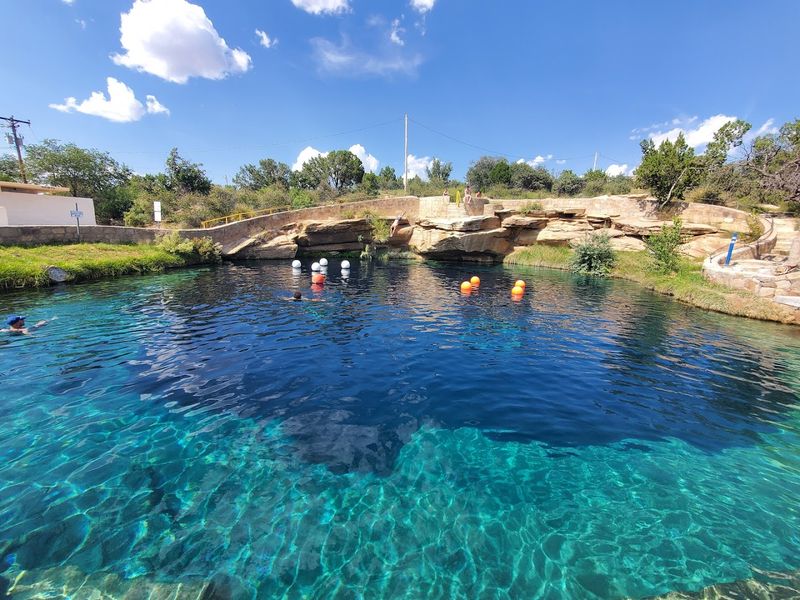
Nothing quite prepares you for the moment the Blue Hole comes into view for the first time, especially when everything around it is the color of dust and dry brush.
The water is a shade of cobalt blue so saturated and consistent that it almost looks like someone poured food coloring into a perfectly circular basin carved from stone.
That color is not a trick of the light or a clever Instagram filter.
It comes from the extraordinary clarity of the water itself, which maintains a visibility of roughly 100 feet thanks to the continuous flow of a deep underground spring.
The spring draws from the Ogallala Aquifer, one of the largest underground water systems in North America, pumping an astonishing 3,000 gallons per minute into the pool.
That constant renewal, happening every six hours around the clock, keeps the water impossibly clean and free of the murk you would expect from a desert pool.
I remember leaning over the edge and feeling genuinely dizzy from how transparent the water was, the bottom appearing close enough to touch even from several feet above the surface.
Welcome to the Blue Hole at 1085 Blue Hole Road in Santa Rosa, New Mexico 88435, one of the most visually striking natural formations in the American Southwest.
A Sapphire Circle Beneath The Sky
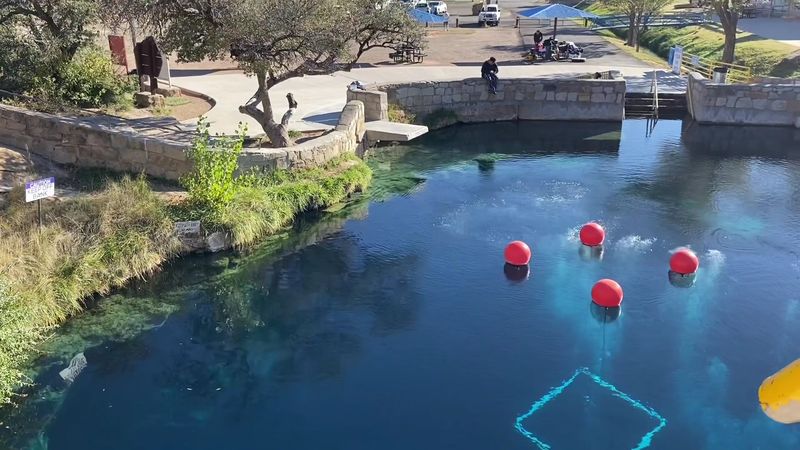
Geometry rarely shows up this dramatically in nature, but the Blue Hole is a nearly perfect circle at the surface, measuring about 80 feet in diameter, which makes it feel more like an intentional design than a geological accident.
At the rim, looking straight across the pool, you get a sense of the symmetry that has fascinated visitors and scientists alike for generations.
The pool then expands as it descends, widening to approximately 130 feet at its base due to its bell shape, a formation that makes this artesian spring feel even more unusual.
That widening at the bottom is part of what makes this spot so appealing to scuba divers, who can explore the flared walls in every direction once they descend below the surface.
The sky reflects off the water in a way that makes the blue look even more intense on a clear day, turning the pool into a kind of natural mirror framed by rough sandstone.
I spent a long stretch of time just sitting at the edge, watching the water shimmer and shift as swimmers moved below the surface like slow-moving shadows.
The circle feels deliberate, almost sacred, and the stillness at its center draws your eye downward with quiet, steady force.
Cool Depths And Sunlit Stone
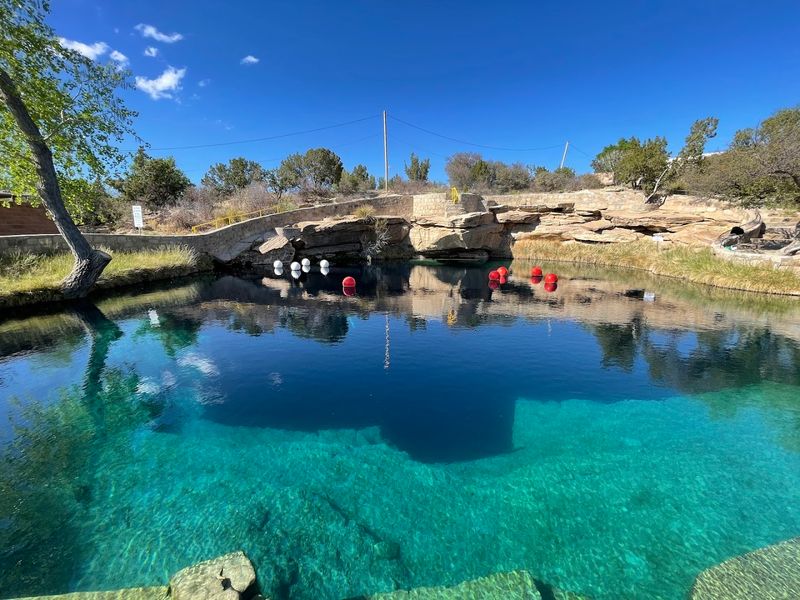
The first jump into the Blue Hole is a full-body shock, and I mean that in the best possible way.
The water holds a constant temperature of 61 to 62 degrees Fahrenheit year-round, which means there is no warm season for your toes and no acclimatization period that actually works.
You just have to commit, push off the rock, and let the cold announce itself all at once.
Beneath the surface, the experience shifts completely from the chaos of the entry splash into something calm, weightless, and visually stunning.
The walls of the spring are layered stone, and sunlight filters down from above in shifting columns that illuminate the water in pale gold and deep blue simultaneously.
Scuba divers who visit regularly describe the underwater environment as one of the clearest and most accessible dive sites in the entire Southwest, earning the Blue Hole the nickname Scuba Diving Capital of the Southwest.
The main pool reaches a depth of 81 feet down to a metal grate, with a sealed cave system extending beyond 190 feet that is closed to the public for safety reasons.
Many divers prefer a full 7mm wetsuit when planning to spend meaningful time underwater, as the cold at depth is relentless and surprisingly efficient at draining your energy.
Route 66’s Quiet Oasis
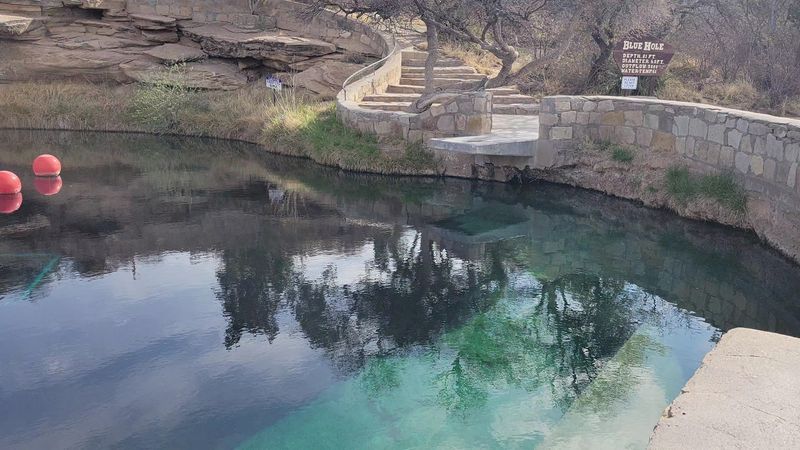
Long before social media turned this pool into a road trip destination, the Blue Hole was already serving travelers. It offered exactly what it still does today: cold, clean, refreshing water in the middle of a hot and unforgiving stretch of road.
Santa Rosa sits along the historic Route 66 corridor, and for decades the Blue Hole was a known stop for cowboys on cattle drives, nomadic tribes moving through the region, and later for motorists cruising the famous highway.
That history gives the place a layered character that goes well beyond its visual appeal.
In 1932, the site was put to practical use as a fish hatchery, which speaks to how reliable and consistent the spring flow has always been.
Today, the area around the pool includes picnic tables, restrooms, a dive center, and simple visitor facilities, making it a surprisingly complete stop for families traveling through eastern New Mexico.
Parking typically runs about ten dollars for a day pass, which also grants access to a nearby swimming area up the road.
I pulled in on a Tuesday afternoon with a cooler and a towel, and the whole visit felt relaxed and unhurried, the way a classic road trip stop should feel.
Route 66 has given the world a lot of memorable roadside stops, but few of them are this genuinely spectacular.
Desert Views Around Clear Blue Water
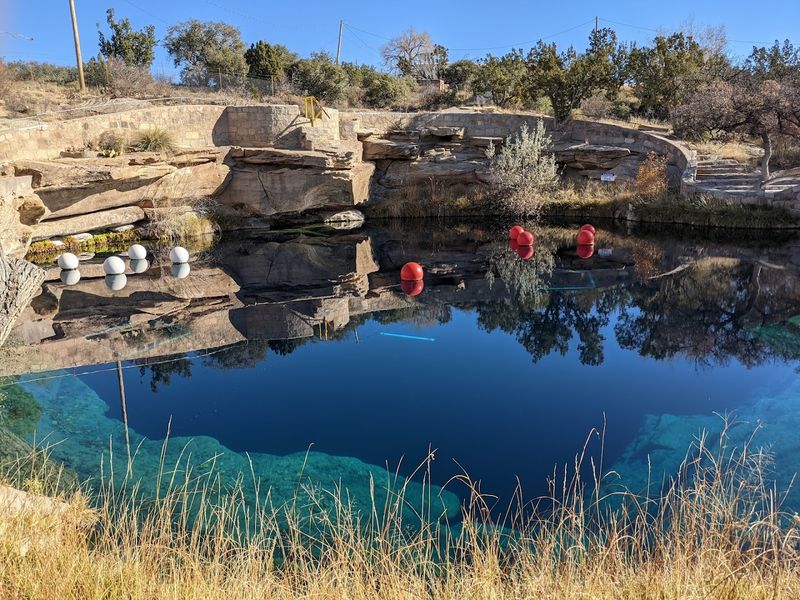
The contrast between the landscape surrounding the Blue Hole and the water itself is one of the most visually striking things about the entire experience.
In every direction beyond the pool, the terrain is dry, pale, and low-lying, with scrubby desert plants and sun-bleached rock stretching toward distant mesas that sit flat and quiet on the horizon.
Then there is the pool, impossibly blue and perfectly still at the surface, sitting in the middle of all that dryness like a color that does not belong and yet feels completely at home.
The rugged stone rim around the pool adds texture to the scene, with layers of sedimentary rock creating natural ledges that visitors use for sitting, watching, and launching themselves into the water below.
I found a flat rock on the eastern side of the pool that caught the afternoon sun perfectly and spent about twenty minutes just watching other visitors jump from the higher ledges while scuba divers geared up nearby.
The views from the rim are modest in scale but rich in atmosphere, the kind of scenery that rewards slow observation rather than a quick photograph and a drive away.
Everything about the setting feels stripped back and honest, and that simplicity is a large part of what makes the Blue Hole so easy to fall for.
A Natural Pool With Hidden Depths
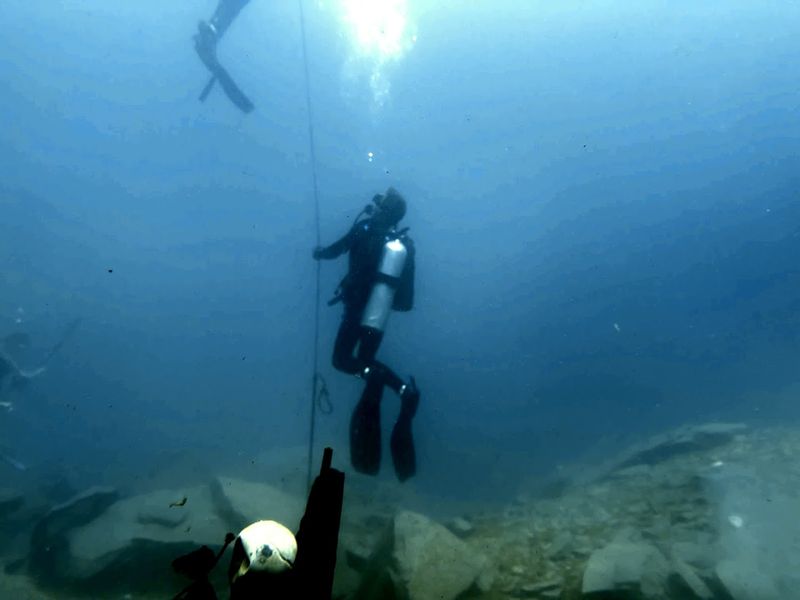
Most natural pools are straightforward: you see them, you swim in them, and that is the full story.
The Blue Hole operates on an entirely different level, and much of what makes it fascinating is hidden from plain sight.
The bell shape of the pool means that the base is nearly twice as wide as the opening at the surface, creating a submerged chamber that only reveals itself once you are underwater and looking outward toward the flared walls.
Below the 81-foot grate, a deeper cave system continues into the earth, sealed off from public access but responsible for much of the mystique that surrounds this place.
The Ogallala Aquifer feeds the spring from below with relentless pressure, pushing 3,000 gallons of fresh water per minute upward through the earth and into the pool.
That constant upward flow is what keeps the water so extraordinarily clear, flushing the pool completely every six hours and helping prevent sediment and cloudiness from settling for long.
Divers who have explored the accessible depth describe the experience as both humbling and exhilarating, with the walls of the spring curving away in every direction beneath them.
The Blue Hole rewards curiosity, and the more you look, the more you realize how much is happening just below what the eye can see from the rim.
Still Water Framed By Dry Mesas
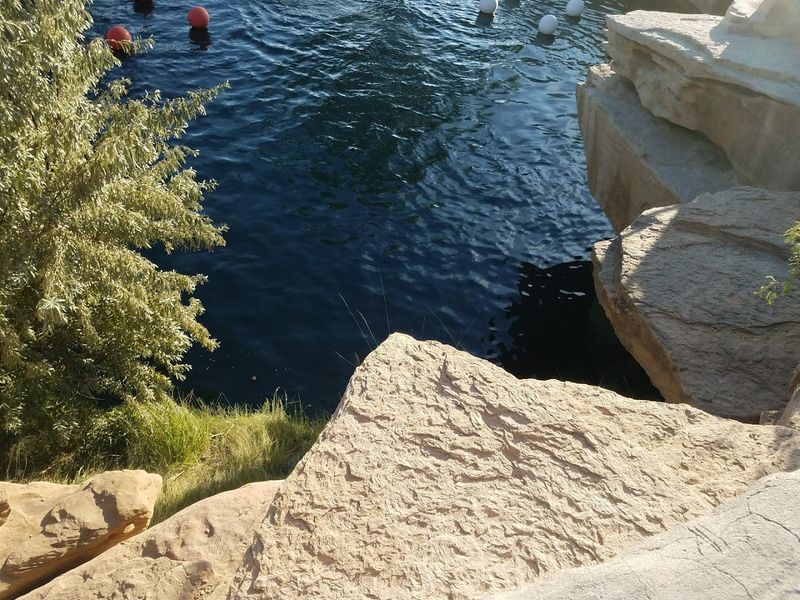
Most visitors never see the quietest version of the Blue Hole, the one that appears early in the morning before crowds arrive and the surface has been disturbed.
I arrived early on my second visit, and the pool was so still that the reflection of the sky on the water made it look like a window into another dimension rather than a hole in the ground.
The dry mesas that frame the distant horizon caught the early light in warm tones, and the contrast with the cold blue of the pool below felt almost theatrical.
At that hour, the only sounds were a light wind moving through the scrub and the faint gurgle of the spring pushing fresh water up from the deep.
Posted hours can vary by season and facility, so it is worth checking the official site before planning an early or late visit.
Arriving early can still give you a real chance to experience the Blue Hole in a calmer state, before the busiest stretch of the day begins.
Peaceful is not a word I use lightly for popular tourist spots, but the Blue Hole in the early morning genuinely earns it, wrapped in quiet desert light and absolute stillness.
A Roadside Escape With Rare Color
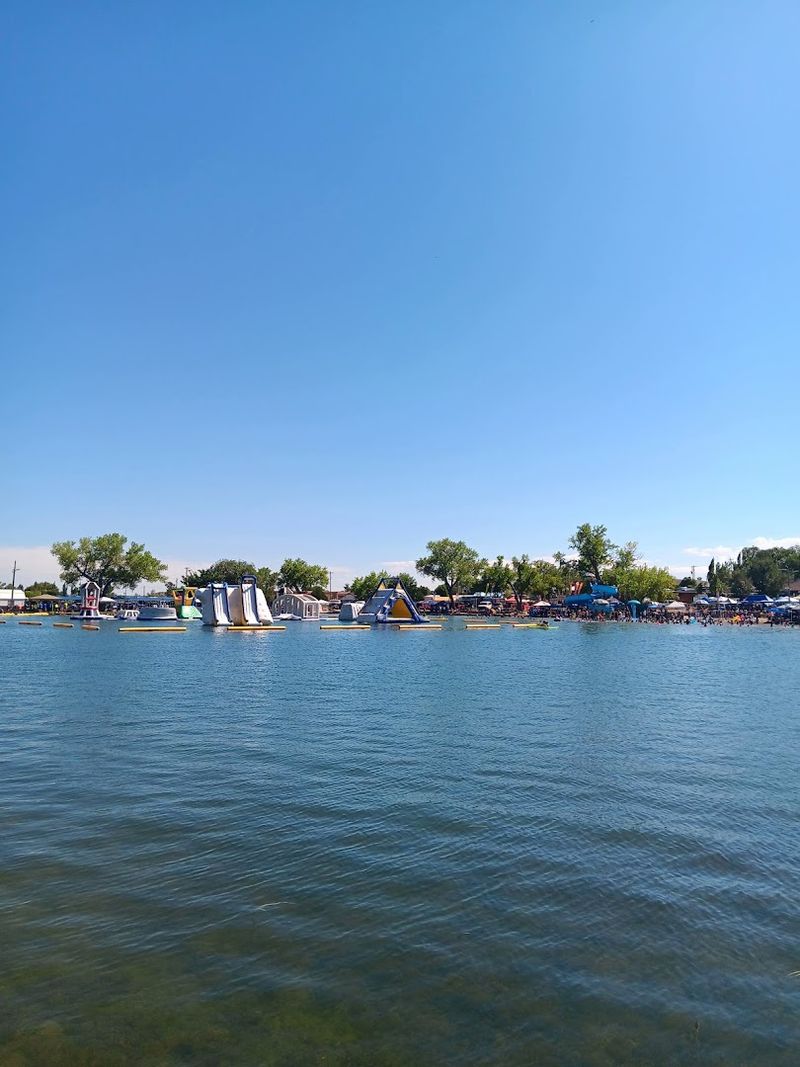
Very few places on a road trip across the American Southwest can stop you in your tracks the way the Blue Hole does, and the combination of its location and its color is the reason why.
You are driving through flat, sun-hammered terrain with nothing but highway and heat shimmer ahead of you, and then suddenly there is a sign for a cobalt blue pool fed by an ancient underground aquifer, and the decision to pull off practically makes itself.
The experience on arrival is immediate and tactile: you walk across a gravel parking lot, round the corner past the dive shop, and the pool appears in front of you with that absurd shade of blue that no photograph ever quite captures accurately.
Families spread out on the picnic tables nearby while kids dare each other to jump from the higher ledges, and scuba students run through pre-dive checklists with their instructors at the water’s edge.
The energy is relaxed but alive, the kind of place where strangers cheer each other on and nobody seems to be in a hurry to leave.
Swimming is at your own risk, so families visiting with younger children should keep a close eye on the water and posted safety rules.
Whether you are a seasoned diver chasing that perfect Southwest dive site or simply a road tripper who stumbled onto something spectacular, the Blue Hole delivers a payoff that is genuinely hard to match anywhere along this stretch of New Mexico highway.