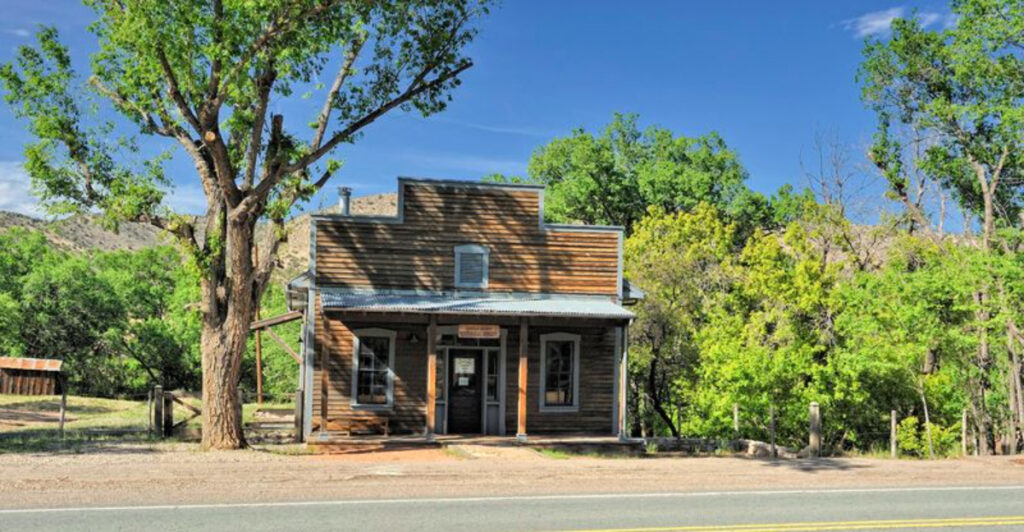
At first, it looks quiet. Then the story starts catching up with you.
There is a small town in New Mexico where the streets still feel charged with Old West tension. The kind of place where a doorway can make you pause, because something serious once happened on the other side.
This town is tied to one of Billy the Kid’s most daring escapes, and that alone would make it worth knowing. But the setting makes the story hit harder.
The old buildings still stand with a worn feeling. The walls have seen fear move through town, along with gossip that traveled faster than a horse.
Nothing about it feels staged. That is why people remember it.
You walk in expecting history, then realize the place still has a pulse.
Keep reading for facts about this preserved town that turns a famous legend into something you can almost feel.
Sunbaked Adobe Along A Quiet Frontier Street
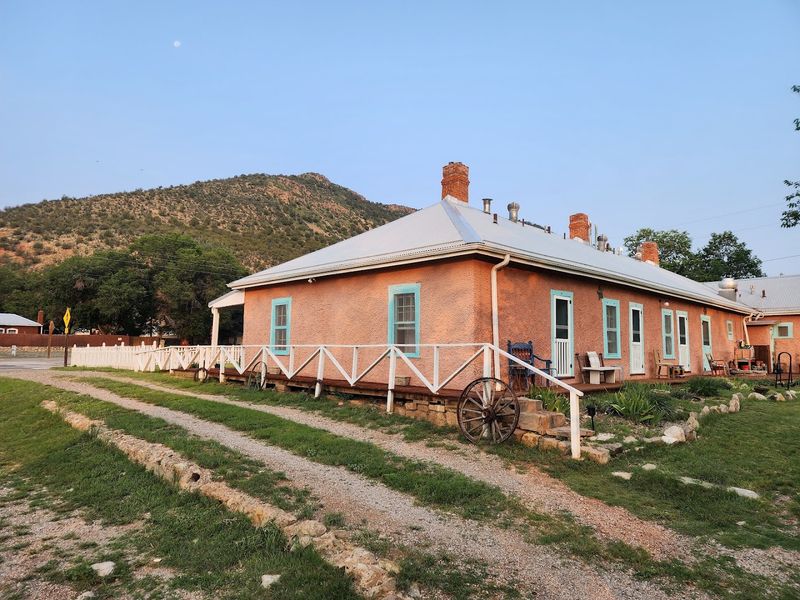
The main road here feels quiet at first. Then the dry New Mexico sun starts pressing down on walls tied to some of the most turbulent episodes in American frontier history.
The adobe construction is not just decorative scenery for tourists. Many of these preserved structures are original or historically maintained buildings, shaped by the same regional methods that defined Lincoln when it was a rough and active settlement in the late 1800s.
Adobe walls absorb heat slowly and release it gradually, which is why so many Southwestern buildings used this method. By afternoon, the surfaces can still hold a faint warmth even as the air begins to cool.
The street itself is narrow and unhurried, with very little modern intrusion to break the illusion of another era. No franchise signs, no modern storefronts, just the honest texture of a preserved frontier town doing what it has always done.
Lincoln Historic Site at 988 Calle la Placita, Lincoln, New Mexico 88338 holds this rare streetscape intact for every visitor who arrives curious.
Courthouse Balconies With Old West Shadows
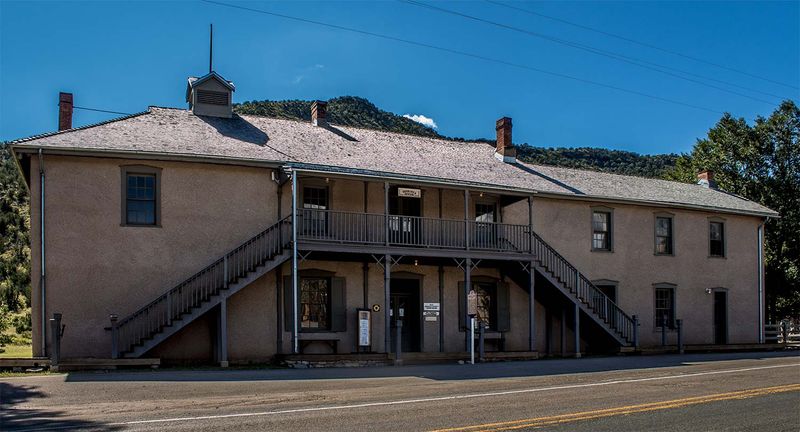
Few buildings in the American Southwest carry as much dramatic weight as the old Lincoln County Courthouse. Once I stood beneath its balcony, I understood why people travel hundreds of miles just to see it.
On April 28, 1881, Billy the Kid made his celebrated escape from this very building. Popular accounts say he escaped from the second floor after overpowering a guard, then appeared at an upper window or balcony area before riding out of town.
The wooden balcony structure still projects outward from the second floor. It casts angular shadows across the courtyard below in a way that feels almost theatrical.
Inside the building, interpretive displays walk visitors through the escape step by step. They place them near the spots where events unfolded.
The building originally served as the Murphy-Dolan Store before becoming the county seat and later a museum.
From that upper floor, the yard below makes the scene easy to imagine. History has a way of feeling very close when the original setting is still right there in front of you.
Sunlit Doorways And Historic Stone Walls
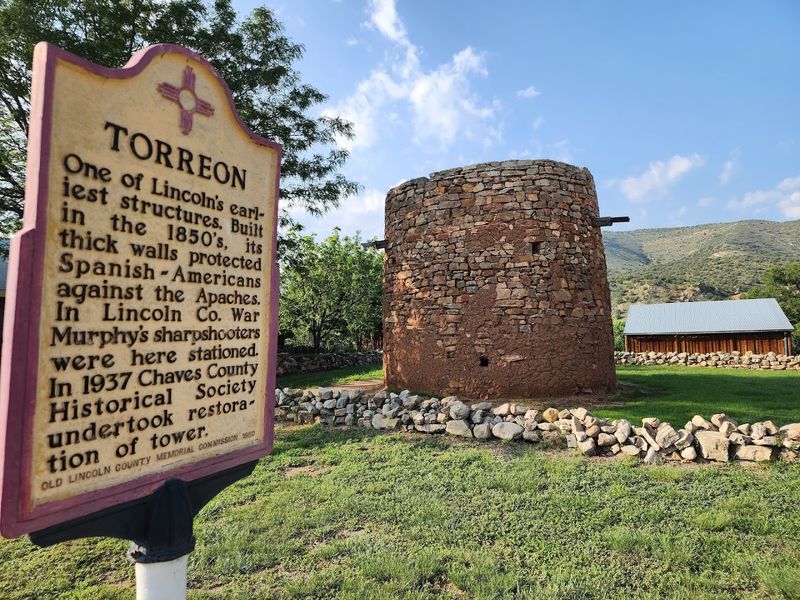
One of the quieter pleasures of visiting this site is noticing how light moves across the stonework at different times of day, turning ordinary doorways into something almost painterly.
El Torreón, a defensive stone tower constructed in the 1850s, is among the most striking examples of this stonework. Built as a refuge during periods of conflict with Apache raiders, its thick walls and narrow openings tell a story of survival rather than decoration.
Running my hand along one of the exterior stone surfaces, I was struck by how irregular and deliberate the construction felt. Each stone was placed with purpose, not poured or molded, and that handmade quality comes through clearly even after more than 170 years.
The doorways throughout the historic district frame views in unexpected ways. Step through one and you might find a courtyard, a museum room, or a stretch of mountain landscape beyond.
That sense of discovery around every corner is part of what makes a walking tour here so rewarding.
Stone and sunlight together create a visual texture that photographs struggle to fully capture, and that gap between image and reality is exactly why showing up in person matters so much at a place like this.
A Quiet Main Road Framed By Mountain Views
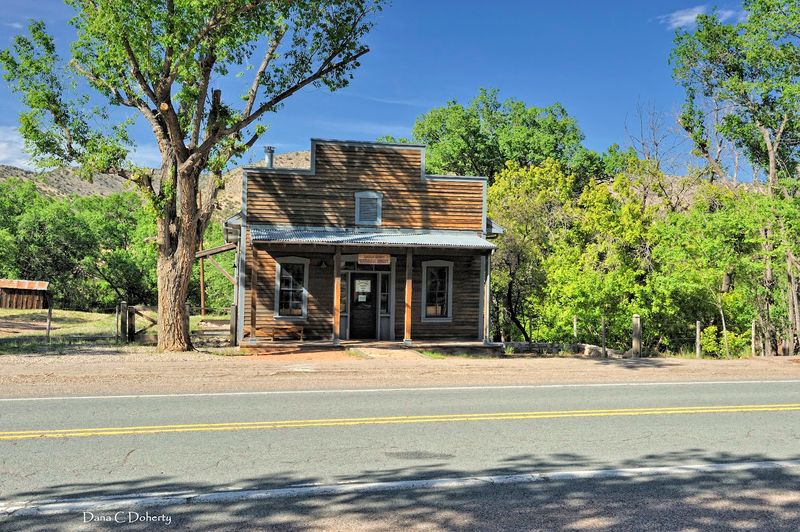
President Rutherford B. Hayes once called Lincoln’s main street the most dangerous street in America, which makes it all the more striking to walk it today in near-total quiet.
The road runs through the valley in a straight, unhurried line, with the Capitan Mountains rising in the distance and providing a backdrop that feels almost too cinematic to be real. Several visitors I spoke with mentioned that the mountain views alone were worth the drive out.
The surrounding landscape is high desert terrain, with grasses, scrub, and open sky in every direction once you step beyond the cluster of historic buildings. That openness gives the site a quality that indoor museums simply cannot replicate.
I arrived on a weekday morning when the crowds were thin, and for a stretch of about twenty minutes I had the road almost entirely to myself. The silence was the kind that makes you slow your pace and actually look at things carefully.
Taking a scenic route back toward Ruidoso along the Capitan Mountains added another layer to the visit, turning what could have been a quick stop into a full afternoon that I was genuinely reluctant to end.
Museum Rooms Filled With Frontier-Era Details
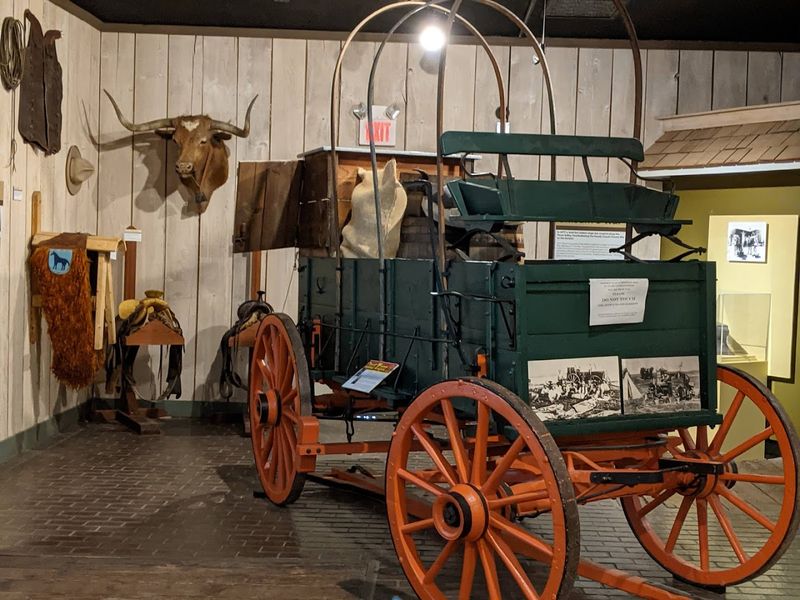
The visitor center and museum are where most people begin. That is genuinely good advice, because the context they provide makes everything else on the walking tour click into place.
A short film introduces the Lincoln County War. The conflict was rooted in competition over government supply contracts and local political power, and the displays that follow expand on the key figures, factions, and events with real depth.
What impressed me most was that the museum does not reduce the history to a simple hero-versus-villain story. The interpretive materials acknowledge the complexity of the Lincoln County War, including the economic pressures and corruption that drove it, without losing the narrative thread.
Artifacts on display include period weapons, documents, photographs, and personal items connected to people involved in the events. Many are tied to the 1870s and 1880s.
A handwritten letter or an original firearm from that era creates a connection that digital content cannot match.
Admission covers access to the open buildings in the historic district. That makes the current seven-dollar adult entry fee one of the better values I have encountered at any historic site in New Mexico.
Preserved Adobe Facades With Frontier Character
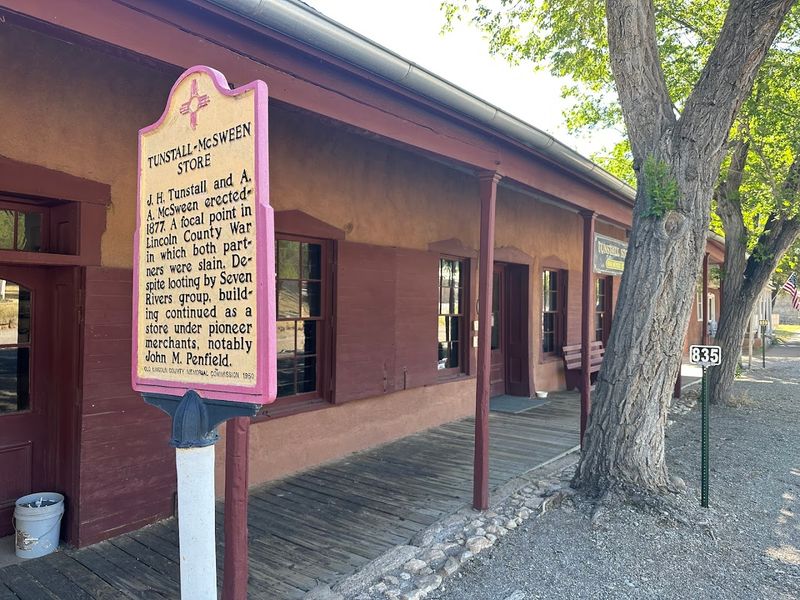
A town that refuses to smooth away its old edges can feel quietly remarkable. Lincoln is one of the most consistent examples of that kind of preservation I have come across anywhere in the United States.
The site manages 17 structures and outbuildings in the community, with several open to the public as walk-through museums. The coordination required to maintain that many historic buildings in authentic condition is considerable, and the results speak clearly for themselves.
Adobe facades tend to soften over time. Their edges round slightly, and their surfaces take on a layered quality that newer construction simply does not have.
That visual softness is part of what makes the streetscape here feel genuinely old rather than merely themed.
Window frames, doorway proportions, and roofline shapes all follow patterns consistent with the construction methods of the period. The buildings do not look like replicas built to suggest the past.
They look like the past itself, held together with care and consistent attention.
The facades reward a slow look, especially when you notice the small variations between buildings. It is easy to think about all the different people who passed through these same doorways over the course of a century and a half.
Rustic Storefronts With A Timeworn Western Feel
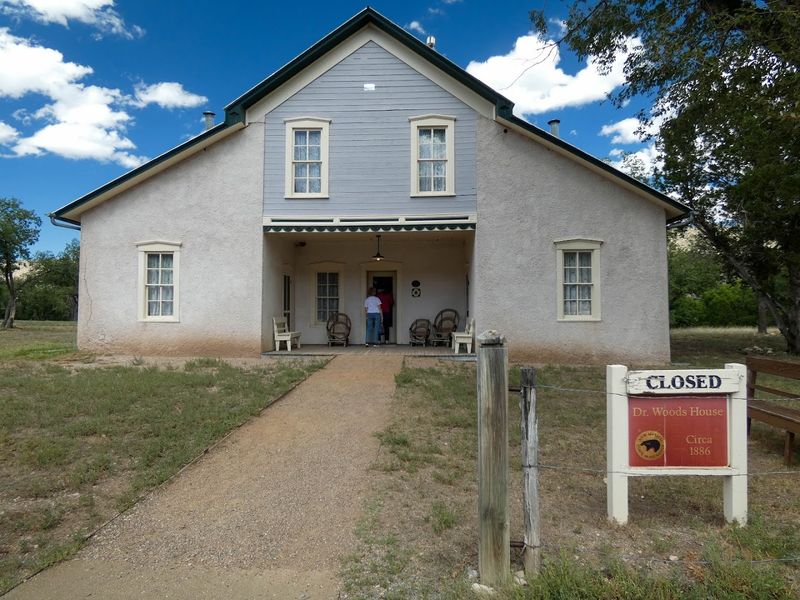
The Tunstall Mercantile is the kind of place that stops you mid-step the moment you walk through the door. Its shelves and cases display original 19th-century merchandise in a way that preserves the feel of a working frontier store.
The store was opened as a direct competitor to the Murphy-Dolan operation. That rivalry became one of the central tensions of the Lincoln County War.
Its connection to Billy the Kid, who worked there as a ranch hand, made the story one of the most personal threads running through the whole conflict.
The merchandise on display includes dry goods, tools, fabric bolts, and historic containers arranged in original shelving and cases. That preserved quality gives the interior an authenticity that carefully curated museum reproductions rarely achieve.
Wooden counters, original flooring, and period shelving set the mood immediately. The room feels less like a museum and more like a place that simply paused one afternoon and never reopened for business.
I spent more time in the Tunstall store than I had planned. The labels, objects, and dense historical detail in that one room are genuinely hard to pull yourself away from.
Quiet Courtyards And Stories In Every Wall
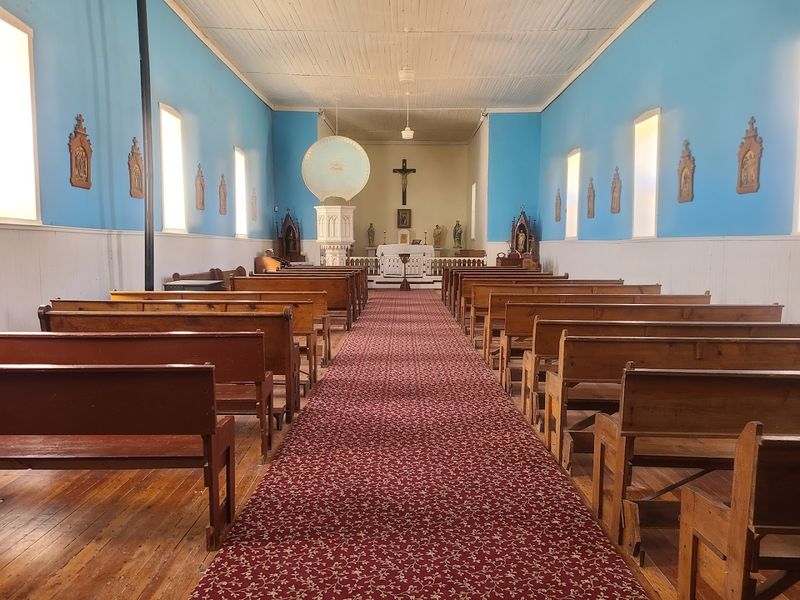
By the time I reached the quieter corners of the historic district, the present felt far away. Away from the main road and deeper into the courtyards, the sense of stepping into old New Mexico was almost complete.
The San Juan Mission Church is one of the more serene historic structures on the walking tour. Visitors should check current access before going, because it has recently been listed as temporarily closed for structural and safety concerns.
The small religious building has served the community through the same turbulent decades that shaped everything else in Lincoln.
Courtyards throughout the district offer natural pauses in the walking tour. These spaces let you stop, look around, and absorb the surrounding architecture without feeling rushed.
Several visitors I noticed were simply sitting quietly, taking notes or sketching the walls around them.
Interpretive signs and room displays add useful context throughout the open buildings. That information in the actual historic rooms makes a real difference to how much you take away from a visit.
Lincoln keeps its stories in more than exhibits. They are embedded in the physical fabric of every wall, doorway, and courtyard that has survived intact across more than 140 years of New Mexico history.