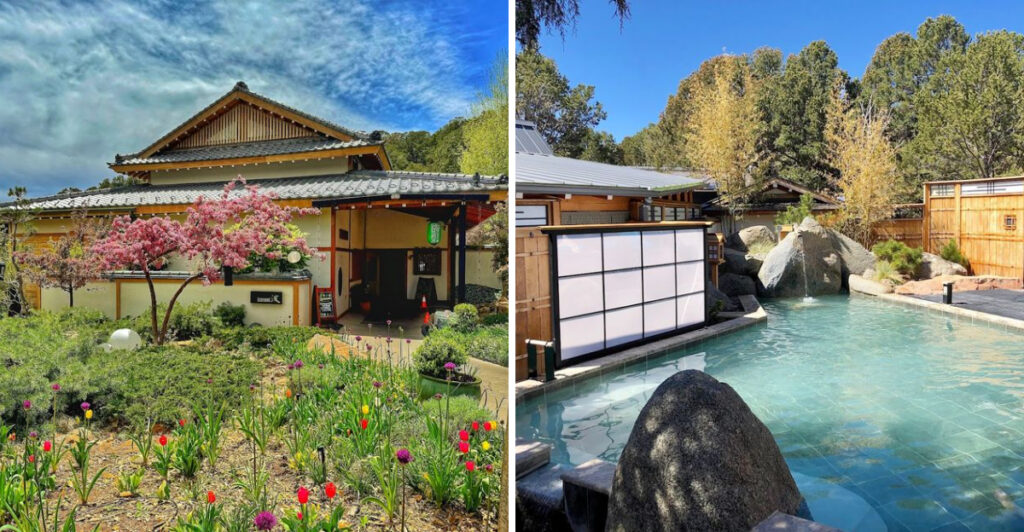
The drive from the city is short, but the reset feels huge. Streets fade as the road climbs.
Then the trees close in and steam lifts from the baths like a signal to stop checking the clock.
That is the pull of this mountain spa just beyond downtown. It takes Japanese bathing customs and places them against the high desert landscape of New Mexico, creating a calm that feels different from the usual spa day.
Less polished performance. More quiet exhale.
I’ve visited spas that impressed me right away, then slipped from memory by the next week. This one did the opposite.
It stayed with me because the setting feels like part of the treatment, not just a pretty backdrop.
For more than 40 years, travelers and locals have made their way up to these baths. Here are the facts that explain why the place still feels memorable today for so many people.
Lantern-Lit Paths Through The Pines
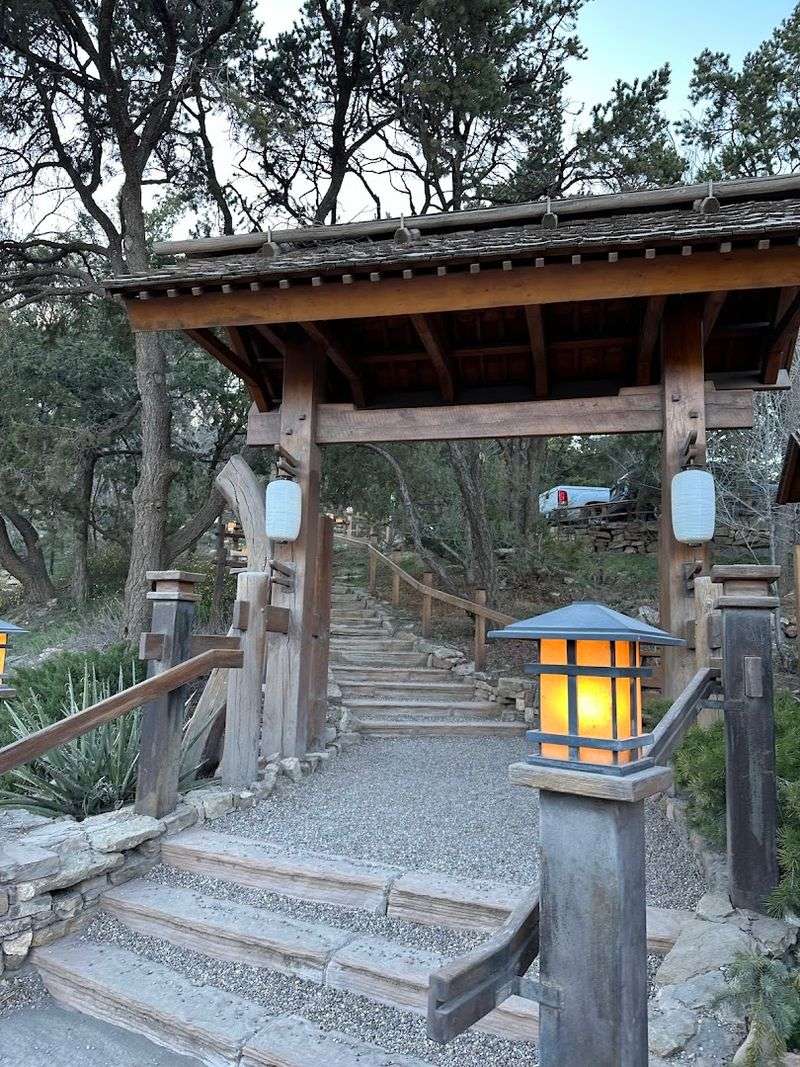
The first few steps onto the property feel quietly theatrical. Ahead of you, stone lanterns cast a warm amber glow through the ponderosa pines.
The effect is immediate and almost disorienting in the best possible way, because nothing about the scenery around you says “New Mexico” in the way you might expect.
The spa opened in 1981 after being shaped by Japan’s mountain onsen culture, and that original vision still shows up in every carefully placed lantern and every mossy stone border along the walking paths.
The landscape design feels intentional without feeling forced, as if the pines and the Japanese aesthetic simply agreed to coexist here at roughly 7,000 feet above sea level.
Those paths between treatments became one of my favorite parts of the whole visit, especially as the light faded and the lanterns grew brighter against the darkening tree line.
Few design choices at a spa have ever made me slow down and actually pay attention to where I was putting my feet. That mindful pace turned out to be the perfect warm-up for everything that followed at Ten Thousand Waves, located at 21 Ten Thousand Waves Way, Santa Fe, NM 87501.
Outdoor Soaks With Mountain Views
Hot water, cool air, and a forested mountain ridge make stress feel surprisingly far away. For a while, the usual urgency just drops off.
The private hot tub suites here are designed to frame those views deliberately, with open-air decks and minimal railings so that nothing interrupts the sweep of pines and sky stretching out beyond the water’s edge.
The Ofuro hot tub suite has become especially popular for its open-air setting, and after spending time in one of the outdoor soaking spaces myself, I understood the appeal almost immediately and settled into the quiet without much effort.
The elevation plays its own role in the experience, since the cool mountain air creates a satisfying contrast against the hot water that you simply cannot replicate at a lower-altitude spa.
Each private suite typically includes a hot tub, sauna, and its own changing room, so the whole environment feels self-contained and genuinely unhurried rather than rushed or transactional.
Reservations are strongly recommended well in advance, because these outdoor soaking spaces fill up fast, especially on weekends when Santa Fe visitors make the drive up from downtown.
Quiet Corners Wrapped In Wood
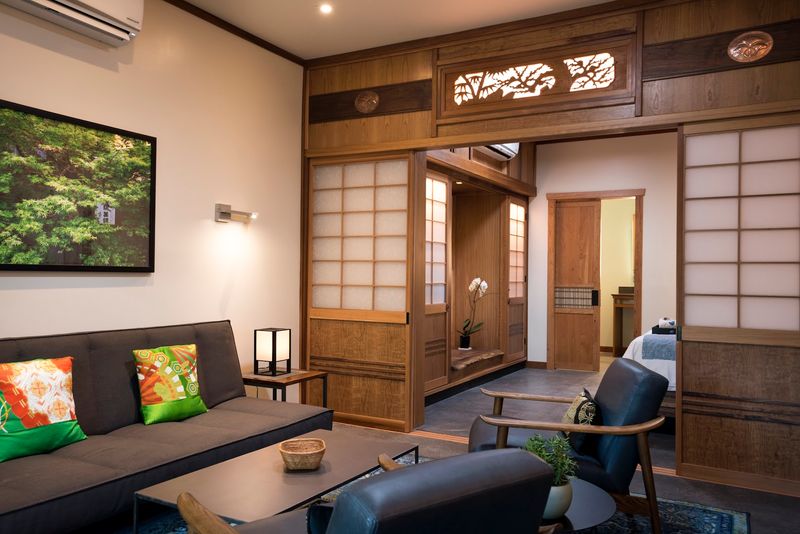
Wood defines this place from the first interior you enter. Not in a rustic-lodge way, but in a careful, Japanese-influenced way that lets the room breathe.
The treatment rooms, changing areas, and relaxation spaces all lean heavily on natural timber, smooth stone surfaces, and the kind of restrained ornamentation that keeps your nervous system from having to process too much visual noise.
Guests staying in the Houses of the Moon lodging rooms often mention the shoji-style details, the fireplaces, and the sense that every object in the room was chosen rather than simply placed.
I noticed during my own visit that even the smallest corners of the property, from covered benches to quiet alcoves along the walking paths, had that same considered quality, almost like the pauses were designed as carefully as the rooms.
The Japanese-adobe aesthetic that the property is known for blends regional earthen building sensibilities with clean East Asian design lines in a way that sounds unlikely on paper but works beautifully in person.
In one of those wooden quiet corners between treatments, I found myself doing something I almost never do at a spa: absolutely nothing, and feeling completely fine about it.
Steam Rising Over High Desert Forest
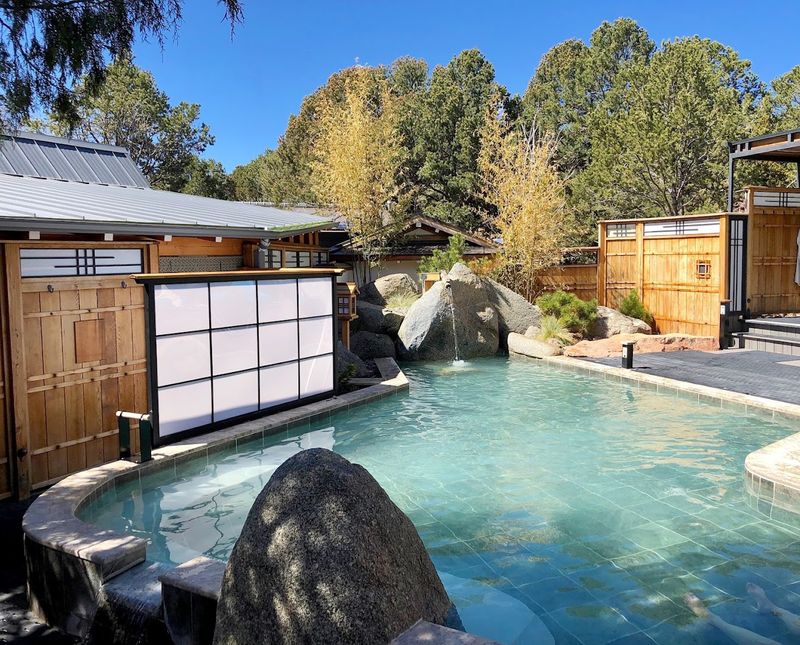
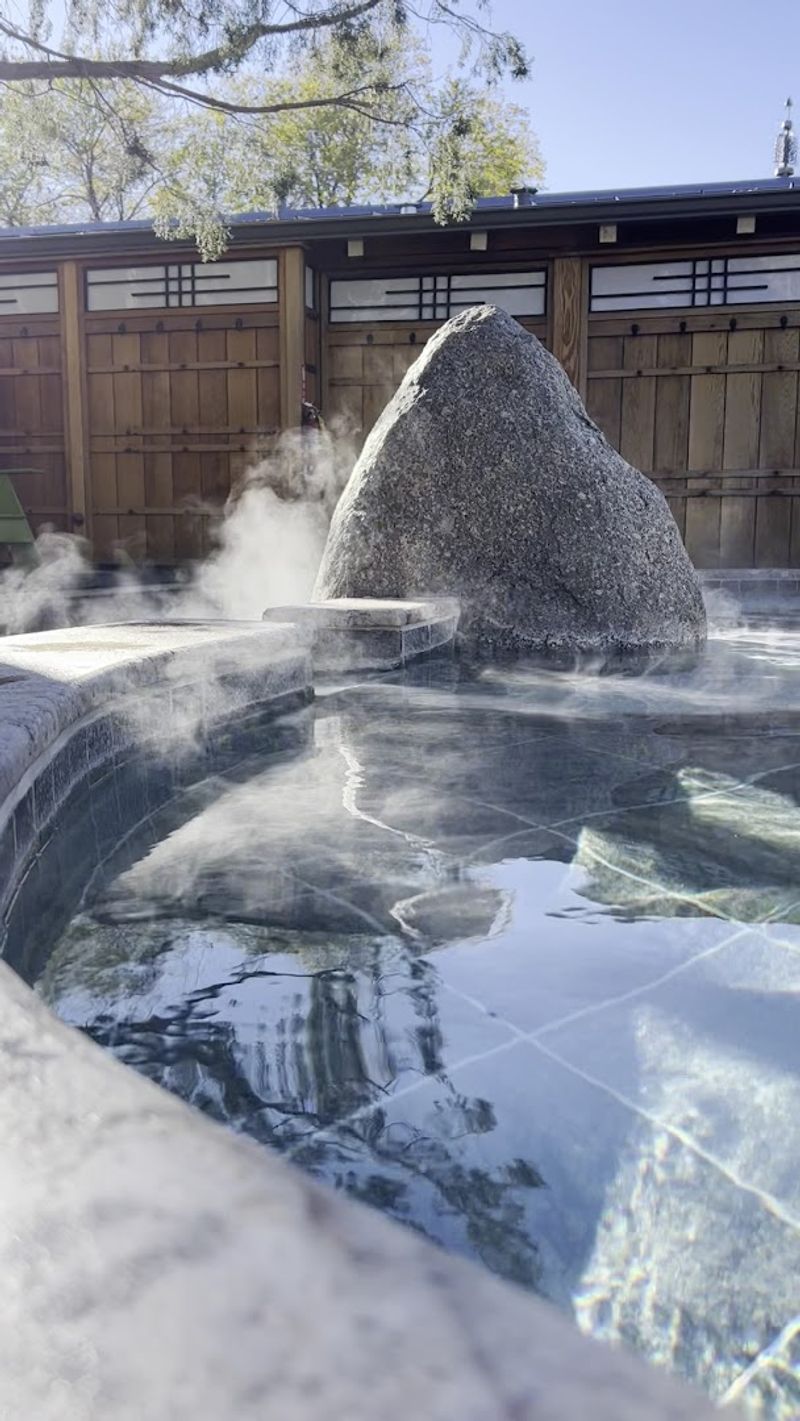
This image stuck with me more than almost anything else from the visit. Steam curled up from the water and dissolved into the cold, clear sky above the pines.
The high desert setting amplifies everything about the steam experience because the air is so dry and thin that the vapor rises fast and visible, almost theatrical in the way it catches the morning or evening light.
That is exactly the kind of atmosphere this place is built around, with Japan’s great mountain hot spring resorts serving as the inspiration and the altitude, forest, and hot water doing much of the quiet work.
The Grand Bath, which is available to guests who book massage or facial treatments, features a communal hot soaking pool, a cold plunge, and a sauna, and that steamy outdoor space feels especially memorable when the surrounding forest stays perfectly still around you.
The whole scene earns its reputation without needing much exaggeration, because the mix of cool air, warm water, wood, stone, silence, and mountain light does the convincing on its own once you are actually there, wrapped in steam and looking out toward the trees.
Japanese Calm Meets Southwest Scenery
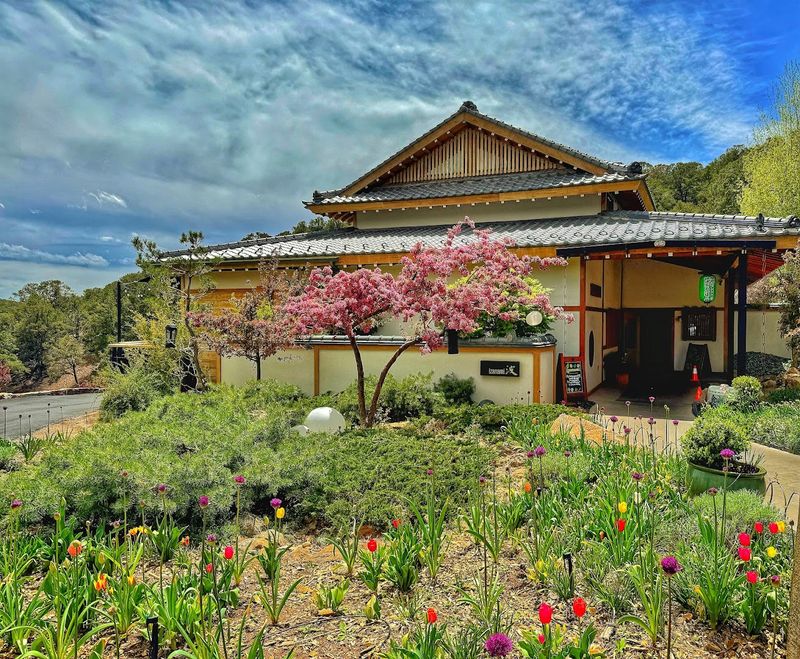
These two design worlds should probably feel more at odds. Instead, the Japanese aesthetic and the local high-desert landscape settle into a surprisingly natural conversation.
Rock gardens sit alongside adobe walls, wooden torii-style gates frame views of pinon-covered hillsides, and the warm terracotta tones of the Southwest blur gently into the cooler grays and natural timbers of traditional Japanese architecture.
This hybrid style, which the property describes as Japanese-adobe, grew organically over more than forty years of refinement since the spa first opened in 1981, and it shows in the way nothing feels bolted on or decorative for its own sake.
The surrounding foothills of the Sangre de Cristo Mountains provide a backdrop that genuinely enhances the Japanese mountain resort feeling rather than undermining it, since the terrain and the tree cover give the whole setting a natural sense of retreat.
I kept stopping on my walks between buildings just to look at the way the pine shadows fell across the stone pathways, which is not something I typically do at a spa but felt completely natural here.
The whole property sits on twenty wooded acres, and that space gives the Japanese-Southwest blend room to breathe and feel cohesive rather than cluttered, especially once the pines start to close around the paths.
Serene Baths Beneath The Trees
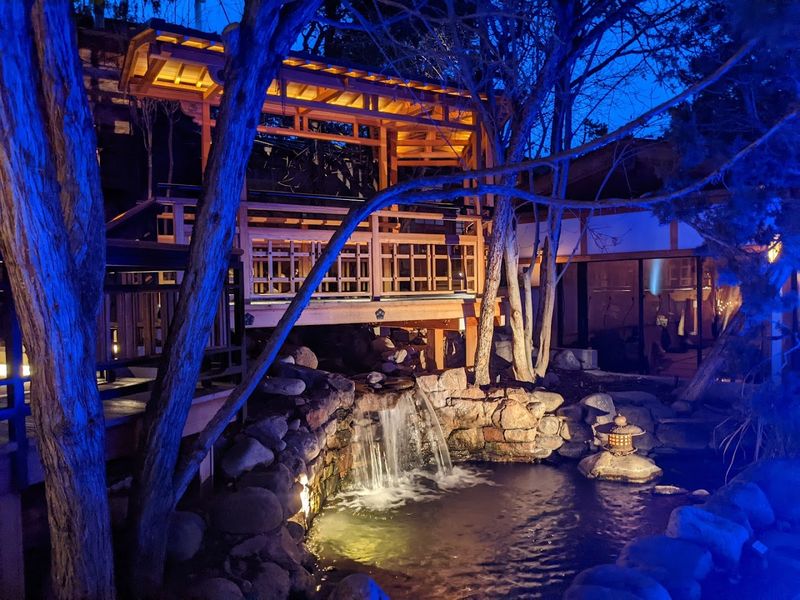
Beneath the mature ponderosa pines, the private soaking areas feel less like spa amenities. They feel more like small sanctuaries built for losing track of the day.
The private bath suites are self-contained worlds, each one enclosed enough for total privacy but open enough to the sky and trees that you never lose the sense of being outdoors and surrounded by living forest.
Suite setups vary, but they may include soaking tubs, a cold shower, a sauna, and the quiet essentials needed for a genuinely restorative session that feels private, simple, and easy to settle into.
The sound design of these spaces is part of what makes them so effective: wind through the pines, the occasional creak of timber, and the steady, low sound of water filling a tub create an acoustic environment that no playlist could improve.
Private bath reservations are strongly advised well ahead of your visit, since availability moves quickly and the experience is different enough from the communal Grand Bath to justify planning around it specifically.
After time in one of those pine-shaded tubs, the cool mountain air feels even sharper. It becomes easy to understand why people return year after year without needing much convincing.
Hidden Walkways And Warm Water
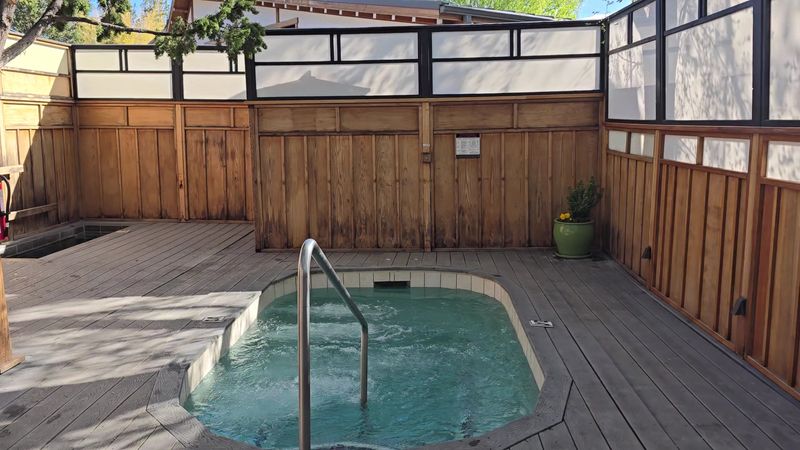
This property rewards anyone willing to move slowly. The walkways between buildings, treatment rooms, and soaking areas are winding, slightly hidden routes that feel like small discoveries each time.
Stone steps rise and fall with the natural contour of the hillside, and the paths are narrow enough that you walk single file and pay attention to your surroundings rather than scrolling a phone or rushing to the next appointment.
The entrance approach and stepped paths are part of the experience, especially if you let yourself arrive on foot instead of treating the walk as something to get through quickly before the spa day begins.
Warm water and water features appear throughout the property in ways that fit the setting, from soaking areas to small quiet corners where the sound of moving water softens the stone and timber around it.
I found one calm spot almost by accident, tucked into a covered alcove between two wooden structures, and spent twenty minutes there that were not on my original itinerary but turned out to be among the most relaxing of the whole day.
Hidden is the right word for so much of what this property offers, and the reward for wandering is almost always warm water and a reason to sit down, breathe, and stop checking the clock for a little while.
Minimal Interiors With Mountain Stillness
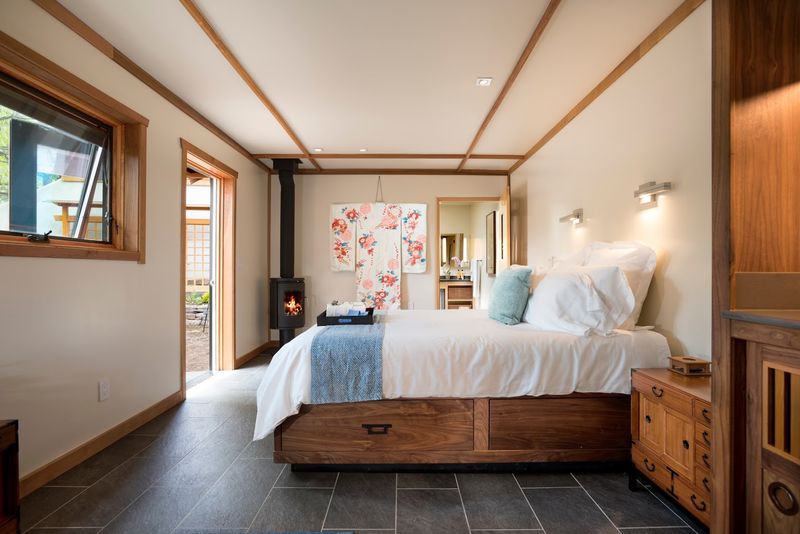
An overnight stay in the Houses of the Moon feels different from a day spa visit. The interiors help explain why the experience feels restorative rather than simply pleasant.
The rooms are designed in the spirit of a Japanese ryokan, which means the emphasis falls on clean lines, natural materials, and a deliberate absence of visual clutter rather than on the kind of maximalist luxury that many high-end hotels default to.
Guests are offered yukata, the casual cotton kimonos worn at traditional Japanese inns, to wear around the property and to the onsite Izanami restaurant, which turns the act of moving between spaces into something that feels ceremonial and unhurried.
Details like fireplaces, comfortable beds, Japanese snacks, robes, and carefully chosen room touches add up to a feeling of being genuinely cared for rather than processed through a hospitality checklist.
The mountain stillness that surrounds these rooms is not incidental but structural, since the property sits far enough from downtown Santa Fe that road noise and city sounds simply do not reach the buildings in the same way.
You can find all of this waiting for you at Ten Thousand Waves, where the minimalism and warm water have been quietly perfecting the art of stillness since 1981, one quiet stay at a time.