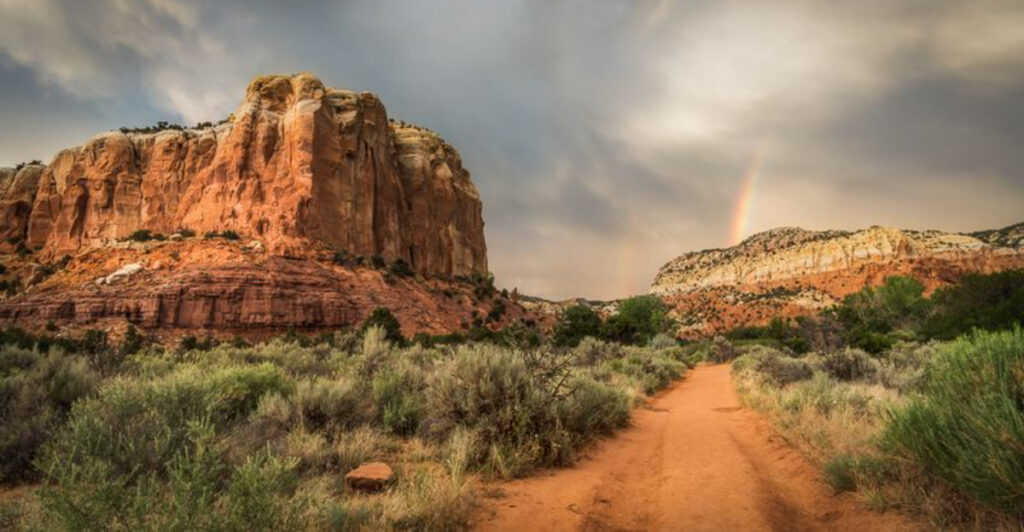
You know those places that make you stop mid-sentence? This village does that.
One look at the cliffs against that huge northern New Mexico sky, and suddenly the usual travel words feel too small.
It is not loud here. That is part of the pull.
The land does the talking. The light moves across the rocks and makes everything feel personal, like the view changed just because you showed up.
Georgia O’Keeffe felt that pull for decades. She kept returning to these shapes and this space, drawn to a beauty that never seemed to run out of meaning.
After a few minutes here, her paintings feel less mysterious and more like an honest reaction.
This article shares facts about the village and the art it inspired, showing why a visit feels less like a casual stop and more like walking straight into a painting that is still breathing.
Adobe Streets Beneath Painted Skies
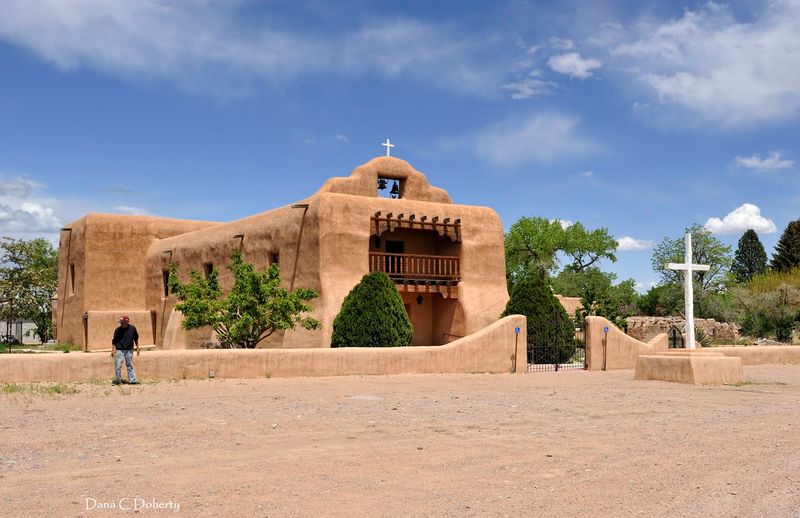
The streets make the sky feel like part of the village, always pulling your attention upward.
The adobe structures here are the color of the earth they were built from, a warm mix of tan, rust, and clay that seems to glow differently depending on the hour of the day.
Georgia O’Keeffe spent decades absorbing exactly this kind of quiet, grounded beauty, and her adobe hacienda became both her home and her studio from 1949 until 1984.
She famously enlarged a picture window inside her studio to frame the panoramic views of the Chama River Valley and the Jemez Mountains, essentially turning the landscape into a living artwork she could study daily.
The streets themselves are narrow and unhurried, with a 2010 census population of 231, though newer estimates are lower, which keeps the village feeling small and quietly tucked away.
The feeling is profoundly grounding on ground that inspired so many iconic works of American art, and Abiquiu delivers that feeling with every single step.
Red Cliffs And Quiet Desert Roads
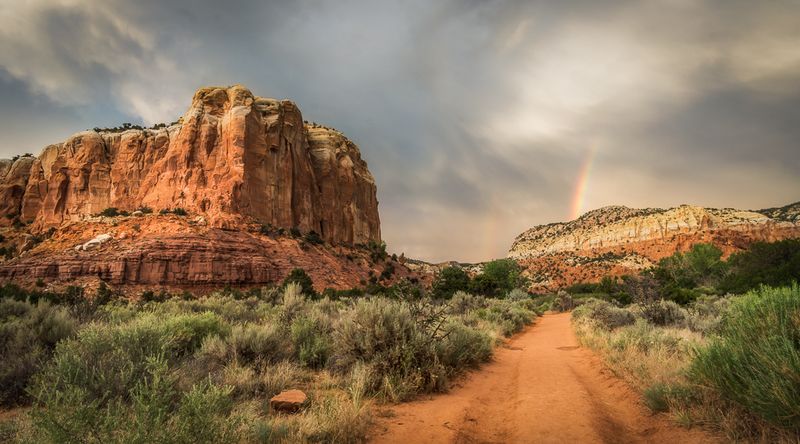
Some roads are made for speed, and some roads are made for staring, and the desert roads around Abiquiu fall firmly into the second category.
The red and yellow cliffs that line the routes near this small village are the same geological features that caught Georgia O’Keeffe’s eye and refused to let go, inspiring a body of work that redefined American landscape painting.
These formations are not subtle, with vivid bands of red, ochre, and rust layered across the clifffaces in a way that almost looks deliberate, like someone applied color with intention.
The geology of northern New Mexico is genuinely dramatic, featuring mesas of yellow and purple alongside earth-toned adobe structures set against a turquoise sky, a visual palette that feels almost too rich to be real.
I drove these roads slowly, which is honestly the only sensible speed, because every bend revealed another view worth pulling over for.
The quiet here is not empty, it is full of the kind of stillness that makes you realize how rarely you actually stop and look at where you are.
Canyon Views Framed By Stillness
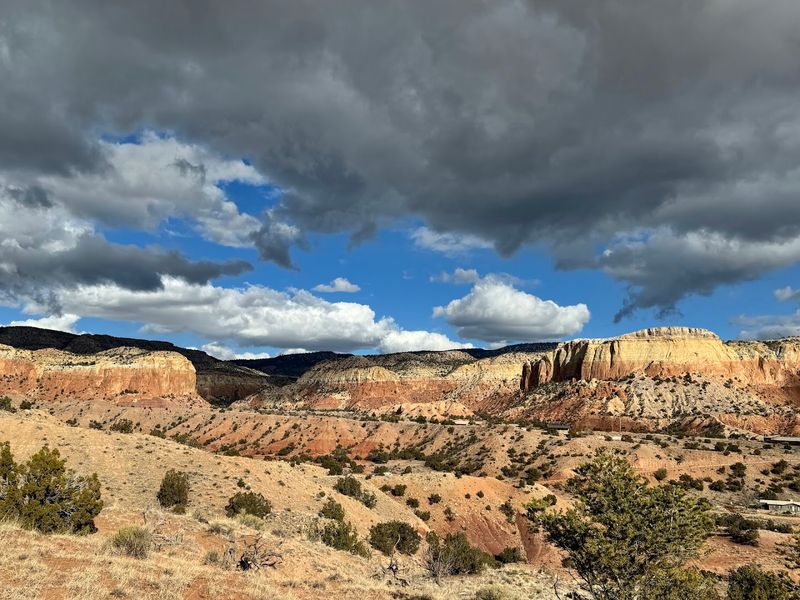
A canyon edge near Abiquiu can make your daily to-do list feel completely irrelevant.
The canyon landscapes here are part of what made this region so magnetically attractive to O’Keeffe, who understood that its vast expansiveness had a character all its own.
She was repeatedly drawn to the unique quality of light in this area, and to the way distance and scale seemed to shift before her eyes.
That light is still here, stretching across canyon walls and rock faces in ways that change by the minute as the sun moves across the sky.
I found myself on a flat rock for far longer than I planned, just watching the shadows migrate across the canyon floor in slow motion.
The stillness around Abiquiu is not the absence of sound so much as the presence of a deep, almost ancient quiet that the canyon views seem to amplify with every passing hour.
Sunlit Walls And High Desert Air
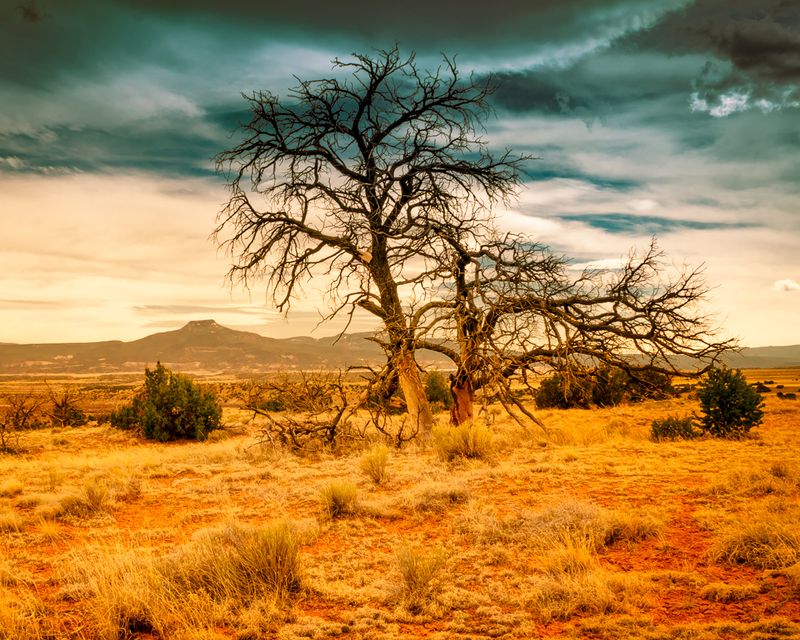
Abiquiu’s air is difficult to describe without sounding like you have been reading too much poetry.
It is dry and clean and carries the faint scent of sage and sun-warmed earth, the kind of air that makes you breathe more deeply without even deciding to.
The sunlit adobe walls throughout the village absorb this light in a way that makes them look almost molten in the late afternoon, shifting from pale cream to deep amber as the hours pass.
O’Keeffe understood this quality of light better than almost anyone, and her studio was deliberately designed with an enlarged picture window to capture the way the sun transformed the landscape of the Chama River Valley and Jemez Mountains throughout the day.
You can sit outside in that high desert air and watch the walls around you change color as the sun drops lower.
It is one of those experiences that earns its own dedicated memory.
Abiquiu sits at roughly 6,000 feet elevation, which adds a crispness to the atmosphere that makes everything feel sharper, brighter, and more present than you expected.
Dusty Paths Through Rugged Beauty
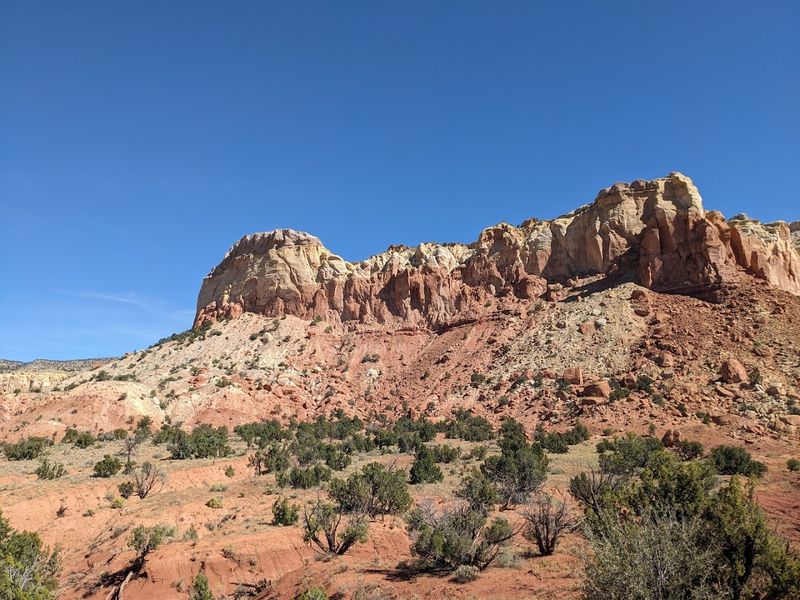
Plaza Blanca, known locally as The White Place, feels like a destination from another planet.
Located near Abiquiu, this surreal area is characterized by pale white rock formations of the Abiquiu Formation that rise from the desert floor in shapes that are both alien and oddly beautiful.
O’Keeffe painted these formations repeatedly, drawn to their stark contrast against the vivid blues and reds that dominate the surrounding landscape, and the paths that wind through them are still dusty, narrow, and wonderfully unpolished.
The place quickly shows you why she kept returning, because the formations look different from every angle and in every light, offering an endlessly shifting subject for a painter who was clearly never short of ideas.
The rugged terrain demands sensible footwear and a water bottle, but it rewards that small preparation with views that feel genuinely earned rather than handed to you from a paved overlook.
A dusty path into The White Place near Abiquiu brings the kind of quiet beauty that does not need to announce itself loudly.
Soft Light Across Ancient Landscapes
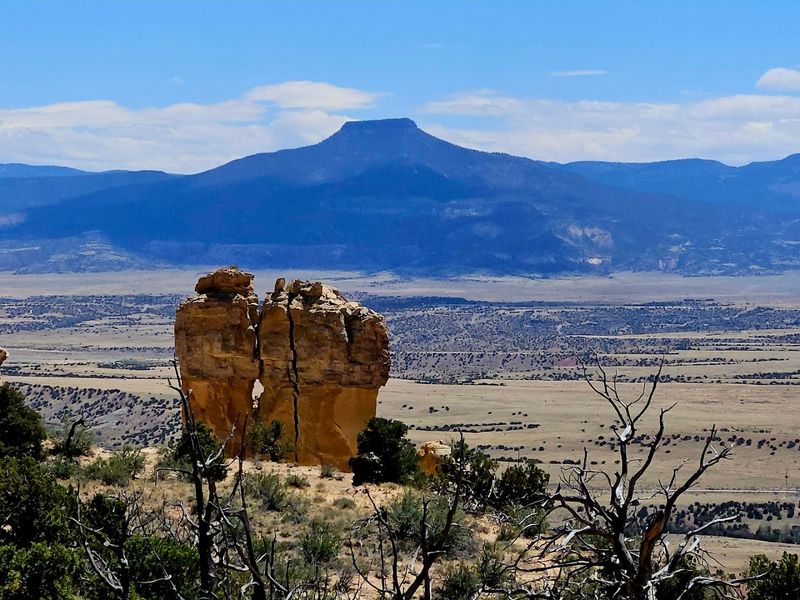
Cerro Pedernal is a flat-topped mountain near Abiquiu, and it rises with the kind of quiet authority that makes artists understand obsession fast.
O’Keeffe was deeply attached to this mountain, depicting it in dozens of works across her career, and she once said that God told her that if she painted it enough, she could have it.
In the soft light of early morning, Pedernal does something remarkable, it seems to float above the surrounding mesas and valleys, its flat top catching the first pale colors of dawn while the land below remains in shadow.
The ancient quality of this landscape is not just visual, it is felt, a kind of geological permanence that puts your own brief presence on the planet into a very clarifying perspective.
I watched the light shift across Pedernal one morning from a pull-off on the road heading north, and I genuinely lost track of time in a way that felt entirely appropriate.
Soft light and ancient stone are a combination that Abiquiu has perfected over millions of years, and it shows absolutely no signs of stopping anytime soon.
Hidden Corners Of The Desert Valley
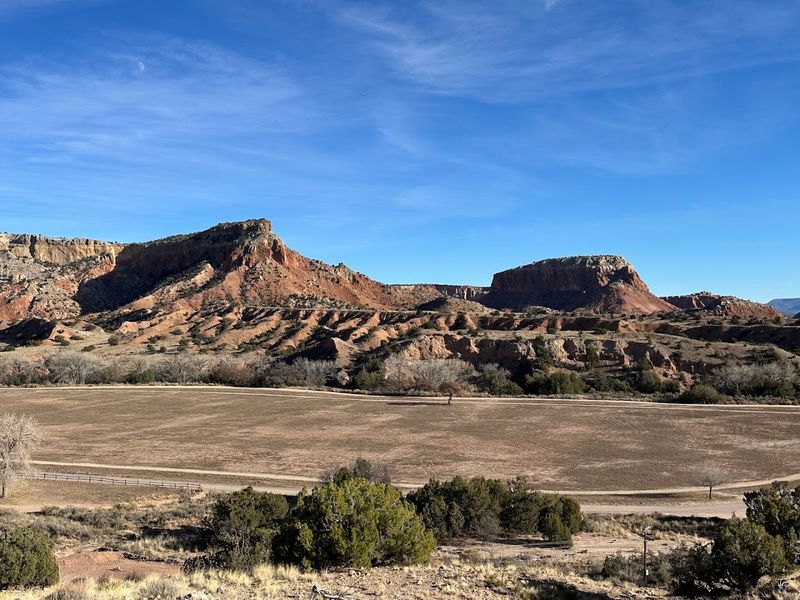
Ghost Ranch sits north of Abiquiu and carries a name dramatic enough to make you slow down before you even arrive.
This was O’Keeffe’s summer retreat, a place where she found what she described as artistic freedom, painting vivid landscapes including the red and gray hills and the striking Kitchen Mesa that still define the property’s visual character today.
The ranch covers thousands of acres of high desert terrain, and its hidden corners include geological formations, quiet arroyos, and stretches of valley floor where the silence is so complete you can hear your own footsteps with unusual clarity.
Beyond Ghost Ranch, the Chama River Valley itself contains pockets of unexpected lushness, with cottonwood trees lining the riverbanks and turning brilliant gold in autumn, a seasonal contrast to the surrounding desert that feels almost theatrical.
These hidden corners reward the kind of traveler who is willing to wander without a specific destination, following a dirt track to see where it leads rather than checking a map every five minutes.
The desert valley around Abiquiu keeps its best details tucked away from the main road, which makes finding them feel like a genuine discovery every single time.
Wide Horizons With An Artistic Soul
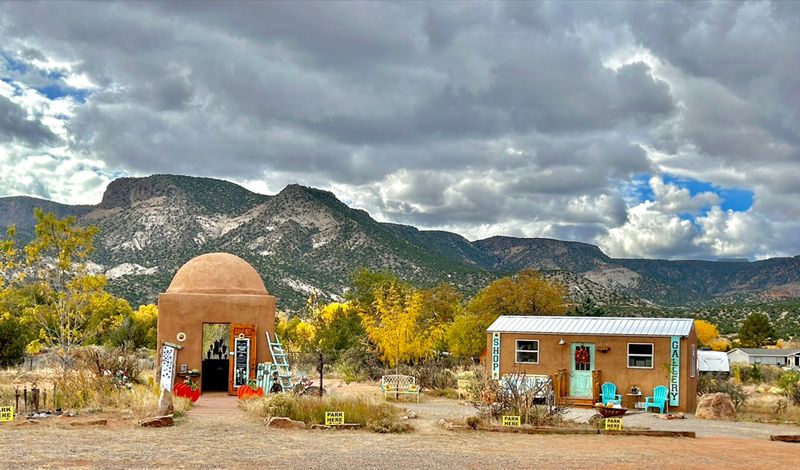
The horizon around Abiquiu does not really end, it simply keeps going.
It stretches across mesas, valleys, and distant mountain ranges in a panorama that feels almost recklessly generous.
This expansiveness was central to O’Keeffe’s artistic vision, and the unique quality of light around Abiquiu helped her perceive and portray vast distances in her work with unusual clarity.
The region’s stark, colorful geology, featuring red and yellow cliffs, mesas of yellow and purple, and earth-toned adobe structures set against a turquoise sky, creates the kind of visual palette that makes artists want to stay permanently.
O’Keeffe did stay permanently, making Abiquiu her primary residence from 1949 until 1984, and her presence here shaped not only her own work but the way the entire world perceives this corner of the American Southwest.
That artistic history adds a layer of meaning to every view, turning a simple drive down a desert road into something closer to a pilgrimage.
Wide horizons and an artistic soul are Abiquiu’s most enduring gifts, and they are available to anyone willing to make the drive to this remarkable, quietly extraordinary place.