Some places make you stop mid-step, because the light shifts and suddenly the whole street feels brand new again.
This city is one of them.
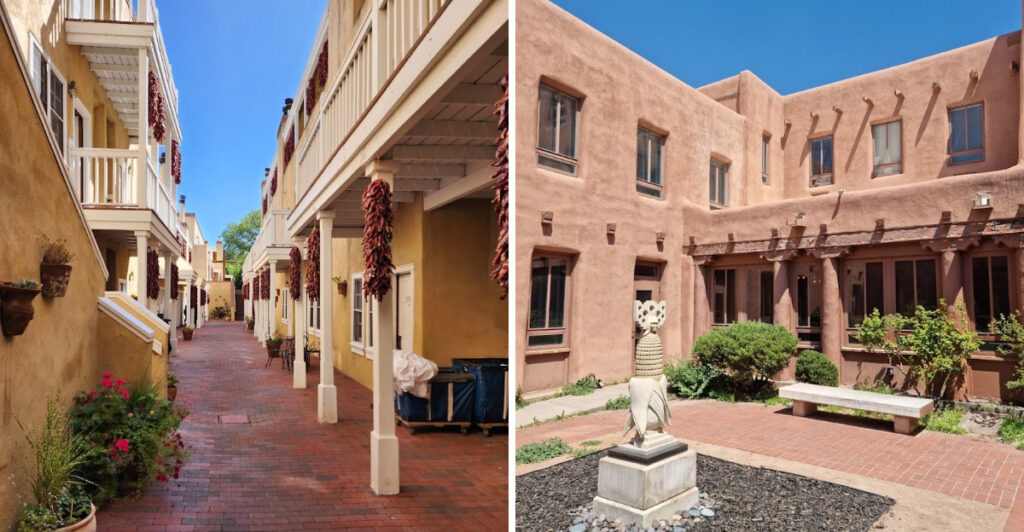
The streets bend like they know secrets. Adobe walls catch the sun in a way that feels unreal.
Every few steps, something slows you down. A painted door.
A courtyard filled with silence. A wall that looks like it has been holding stories for centuries.
I thought I was visiting another memorable place in the Southwest. I was wrong.
Here, the desert does not sit in the background. It sets the mood.
The air smells like piñon. The buildings feel born from the soil.
Creativity moves quietly through the streets and keeps pulling you forward.
Somewhere in New Mexico, this place feels old without feeling tired.
Go with time to wander. That is when it starts to work on you, slowly and fully today.
Adobe Walls And Sunlit Courtyards
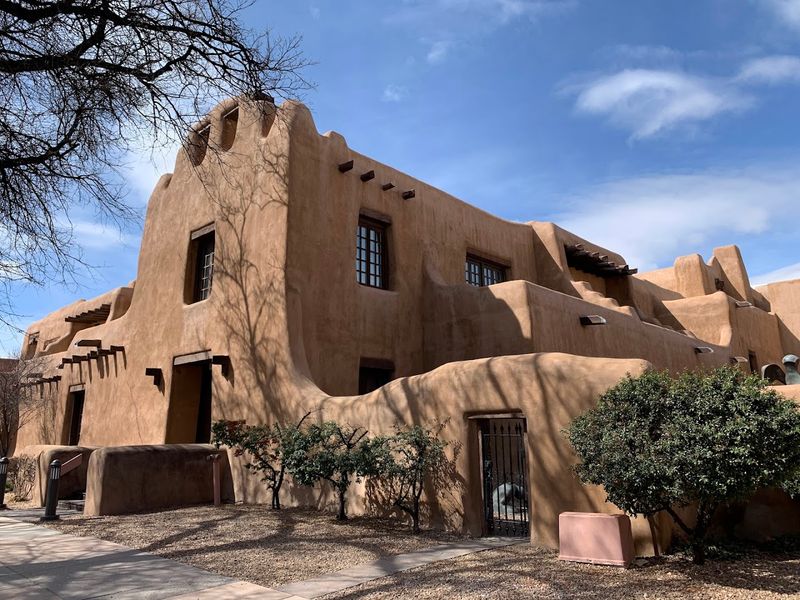
I did not expect a building wall to feel alive. But the first time I pressed my hand against sun-warmed adobe in this city, that is exactly what happened.
Adobe and adobe-style architecture are not just design choices here; Santa Fe actively protects its signature look through strict historic district rules that have kept the skyline low, earthy, and deeply human in scale.
The walls absorb heat during the day and release it slowly at night, which means the buildings are not just beautiful but genuinely smart engineering passed down from Pueblo peoples over centuries.
Courtyards tucked behind wooden gates reveal potted cacti, carved benches, and small fountains that turn ordinary afternoon light into something that feels almost theatrical.
I spent one slow morning simply wandering from courtyard to courtyard, completely unhurried, letting the textures and warm tones do all the talking.
The historic district near the Plaza in Santa Fe, New Mexico, 87501, is where this adobe magic feels most concentrated and most rewarding to explore on foot.
Canyon Roads Framed By Color
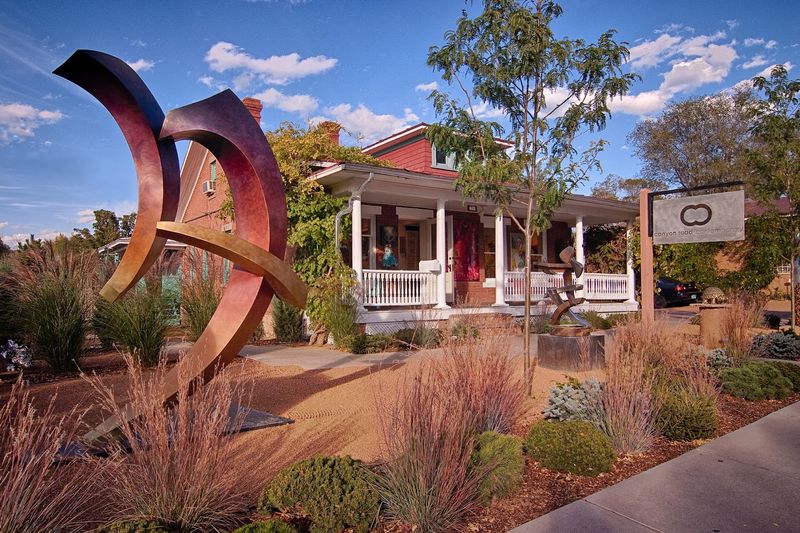
Few streets in the United States carry as much creative weight in such a small stretch as Canyon Road. The first time I walked its winding path, I genuinely lost track of time for nearly three hours.
This legendary half-mile area in Santa Fe is home to more than 100 galleries, boutiques, studios, and restaurants, many tucked inside historic adobe buildings tied to the city’s long creative life.
The colors here are relentless in the best possible way: turquoise doors against terracotta walls, crimson bougainvillea spilling over low fences, bronze sculptures catching the afternoon sun from small garden courtyards.
Every gallery has its own personality, ranging from contemporary abstract work to traditional Pueblo pottery to sweeping landscape paintings that look ripped straight from the surrounding desert.
I made the rookie mistake of trying to visit every gallery in one afternoon, and I paid for it with gloriously sore feet and a very full notebook.
A Friday evening visit during one of the seasonal art walks felt much smarter, especially when galleries stayed open late and the street filled with artists and collectors.
Desert Light On Historic Streets
The high desert light in New Mexico has a particular magic to it. Painters have chased it for well over a century, and standing in it for the first time feels like stepping inside a painting yourself.
Santa Fe sits at roughly 7,000 feet above sea level, and that elevation means the atmosphere is thinner, the sky is a deeper shade of blue, and sunlight arrives with an intensity that makes every adobe wall and terracotta tile glow in a way that lower elevations simply cannot replicate.
Early morning is my favorite time to walk the historic streets, when the light is still soft and golden and most of the tourists have not yet ventured out from their hotels.
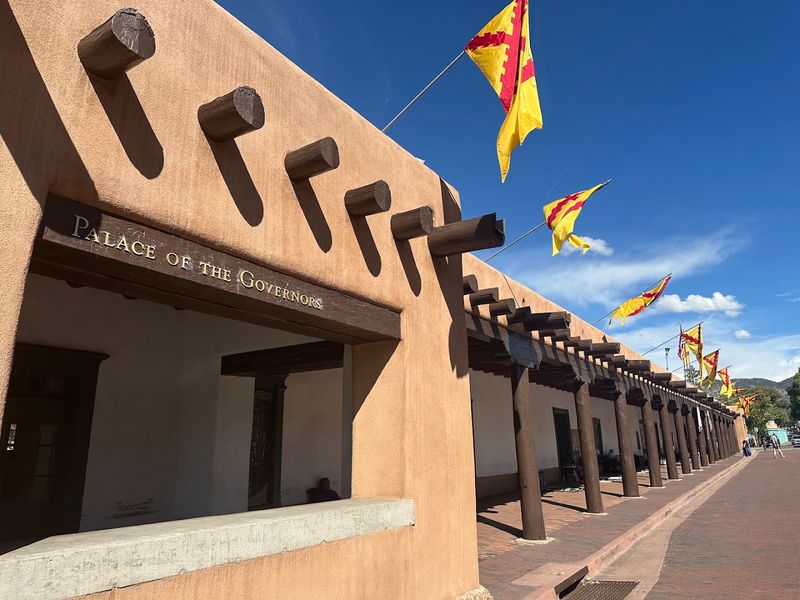
The Palace of the Governors, dating to 1610, is considered the oldest public building in continuous use built by European settlers in the continental United States, and it looks especially striking in that gentle morning light.
Native American artisans set up their jewelry and pottery displays along that portal each day, adding living color and culture to one of the most historically significant facades in the country.
That daily ritual of light meeting history is one of those small, perfect details that makes Santa Fe feel genuinely irreplaceable.
Art-Filled Corners Around Every Turn
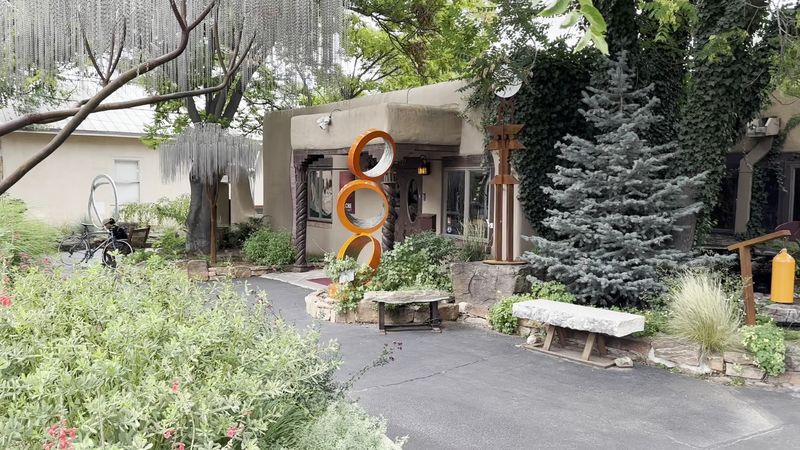
Santa Fe is often described as one of the most important art markets in the United States. That is a staggering reputation for a city with a population of roughly 90,000 people.
That statistic becomes completely believable the moment you start walking around, because art is not confined to galleries here; it spills onto sidewalks, wraps around building corners, and appears in the form of mosaic benches, painted utility boxes, and bronze figures frozen mid-stride in public plazas.
The Georgia O’Keeffe Museum, dedicated to the iconic American painter whose later work was deeply shaped by the New Mexico landscape, is one of the most visited and most talked-about cultural institutions in the Southwest.
I spent an entire afternoon there and left feeling like I finally understood why she never wanted to leave this place.
Arts and culture are a major economic force in Santa Fe and across the state, where cultural industries have been estimated to support nearly one in ten jobs.
A small outdoor sculpture garden tucked between two buildings on a quiet side street reminded me that the best art experiences here rarely require a ticket or a plan.
Pueblo Revival Details In Warm Earth Tones
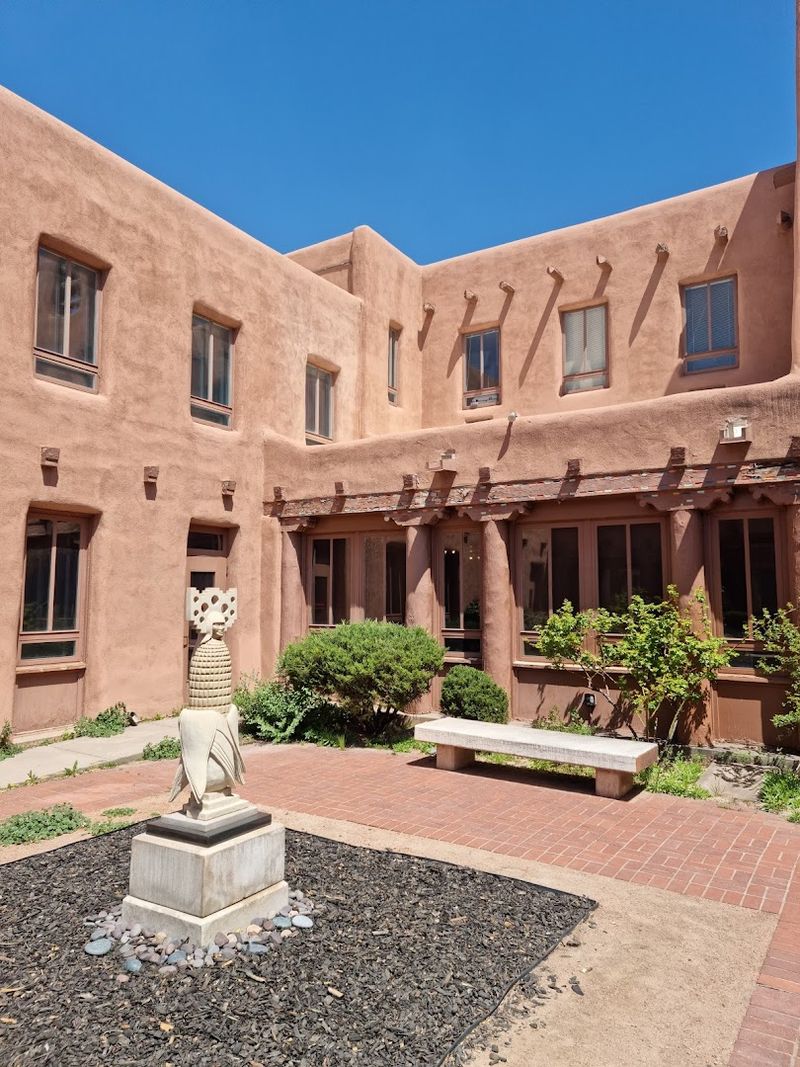
Architectural styles usually evolve and shift with passing decades, but Santa Fe made a deliberate choice to preserve its Pueblo-Spanish and Territorial character, and the result is a cityscape unlike anything else in the country.
The defining features of Pueblo Revival architecture are unmistakable once you know what to look for: thick adobe walls with slightly rounded corners, flat roofs, and exposed wooden beams called vigas that poke out horizontally from the upper walls like a row of wooden fingers.
Those vigas are not merely decorative afterthoughts; they are often the structural bones of the building, a construction technique that has been used in this region for hundreds of years and remains both practical and visually distinctive.
City design rules protect this aesthetic in key historic areas, meaning new construction must respect the same general character, which is why Santa Fe looks cohesive and intentional rather than scattered and modern.
I found myself photographing doorways, window frames, and rooflines obsessively because the warm ochre, sienna, and sand tones shift dramatically depending on the time of day and the angle of the sun.
A city with this much visual confidence knows exactly what it looks like and does not need to apologize for it.
Mountain Views Beyond The Rooftops
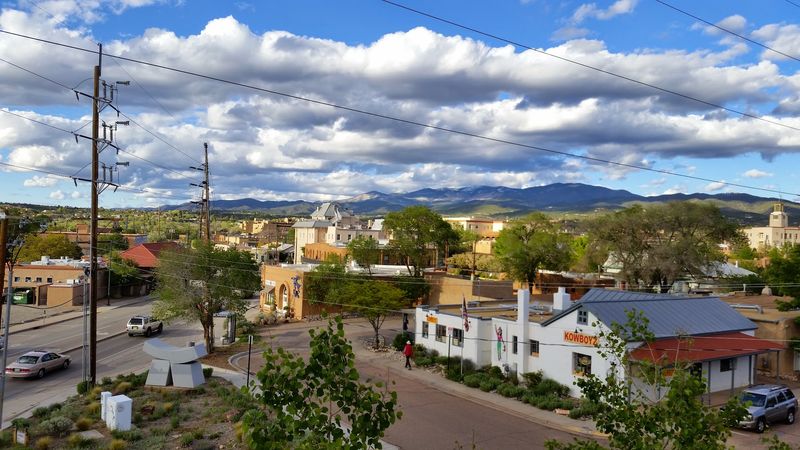
One of the unexpected pleasures of walking Santa Fe is the moment when a gap between buildings suddenly reveals the Sangre de Cristo Mountains looming behind the rooftops like a painted backdrop that someone forgot to roll up.
The range gets its name, which translates to Blood of Christ in Spanish, from the deep red and purple hues the peaks take on at sunrise and sunset, and seeing that color shift in person is one of those travel moments that genuinely stops your internal monologue cold.
Santa Fe Ski Basin sits just 16 miles from the Plaza, making this one of the rare cities where you can browse world-class galleries in the morning and be on a ski run by early afternoon without breaking a sweat getting there.
During summer, the mountains become a hiking destination, with trails threading through aspen groves and pine forests that feel completely removed from the desert city just a short drive below.
I took a short hike up the Atalaya Mountain Trail one crisp October morning and looked back down at the city spread out against the high desert plateau, adobe rooftops glowing in the early light.
That view alone was worth the elevation gain, and honestly, worth the entire trip.
Quiet Plazas With Southwestern Charm
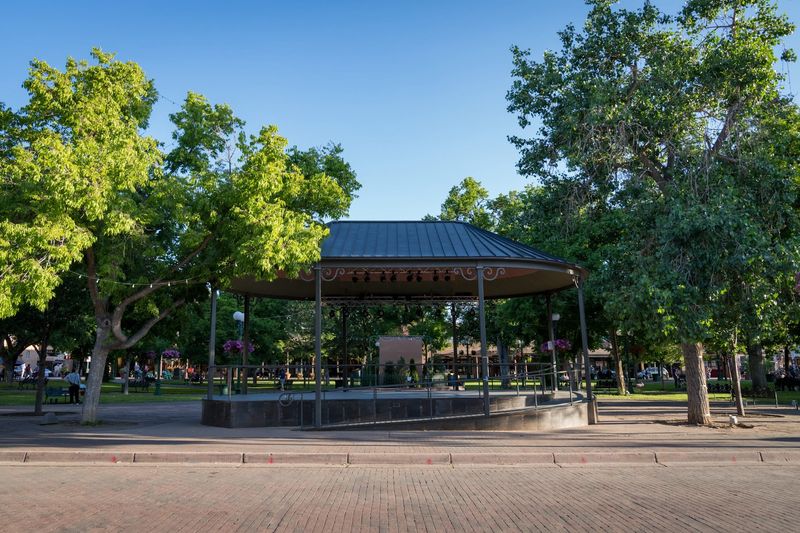
Plazas in the Spanish colonial tradition were designed as the beating heart of a community, and the Santa Fe Plaza, established when the city was formally founded around 1610, still functions that way more than four centuries later.
On any given weekday morning, the Plaza feels genuinely unhurried: locals cut through on their way to work, a vendor arranges handmade jewelry on a folded blanket, and the shade trees do their quiet job of making the high desert heat feel manageable.
The surrounding buildings, including the Palace of the Governors and the Cathedral Basilica of Saint Francis of Assisi just a short walk away, give the plaza a gravitational pull that keeps drawing you back to it throughout the day.
I ate lunch on a bench there twice during my visit and both times ended up in a conversation with someone who had been coming to the Plaza for decades, which tells you something about the kind of community this space creates.
Weekend markets bring handcrafted pottery, textiles, and silver jewelry from local artisans, turning the plaza into an open-air showcase for the region’s creative traditions.
Few public spaces in the American Southwest manage to feel both deeply historical and genuinely alive at the same time the way this one does.
Hidden Galleries And Textured Doorways
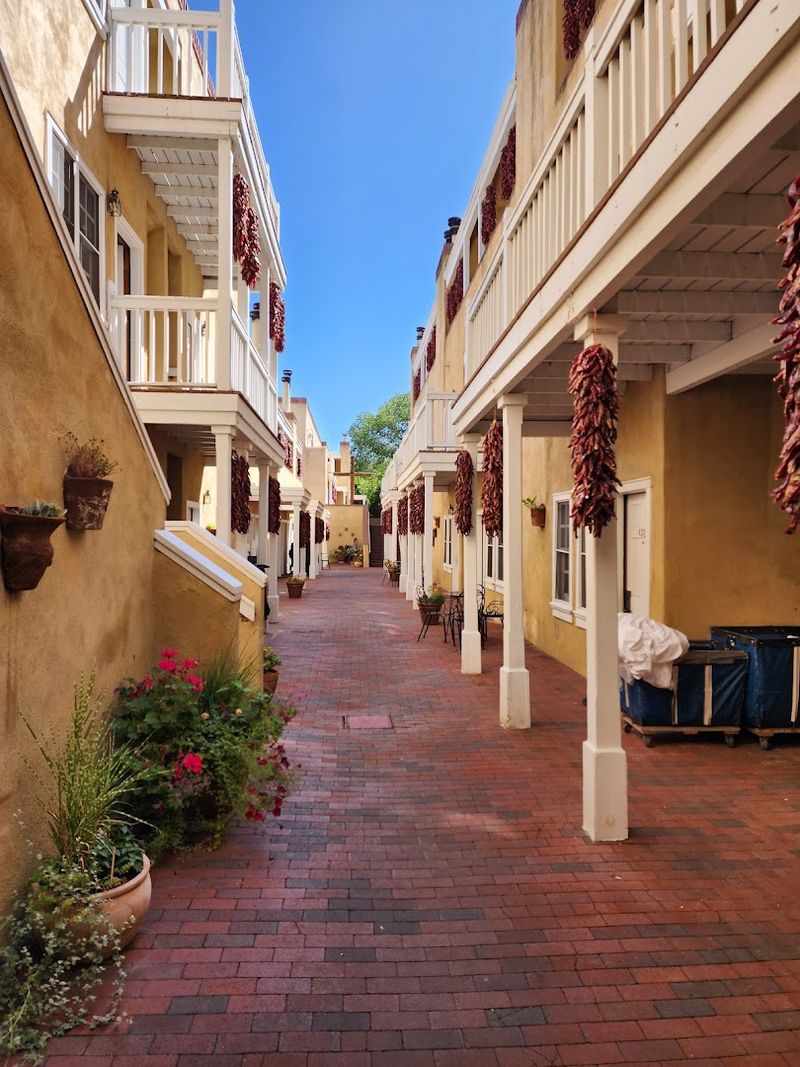
Some of the best art I encountered in Santa Fe was not in the well-known galleries on Canyon Road but in small, almost secretive spaces tucked down alleys and behind unmarked wooden doors that I nearly walked past a dozen times.
The doorways themselves deserve attention as a separate category of visual experience: hand-carved wooden panels painted in deep blues and greens, iron hardware worn smooth by generations of hands, and thresholds that drop slightly below street level because the surrounding earth has been building up around them for centuries.
San Miguel Chapel, often described as the oldest church building in the continental United States, originated around 1610 and has one of those doorways that makes you pause before entering.
I found a tiny printmaking studio down a side street near the Guadalupe District where a local artist was pulling fresh prints off an antique press, and she spent twenty minutes explaining her process to a complete stranger, which felt very much in keeping with the spirit of this city.
That kind of spontaneous, unhurried creative encounter is not something you can schedule or find on a map; it is simply what happens when a city has built its entire identity around art and welcomes curiosity at every turn.