Somewhere in New Mexico, on a street calm enough to miss, there is a house that made me stop mid-walk. At first, I thought it would be a quick look.
A photo, then back outside after a minute. Nope.
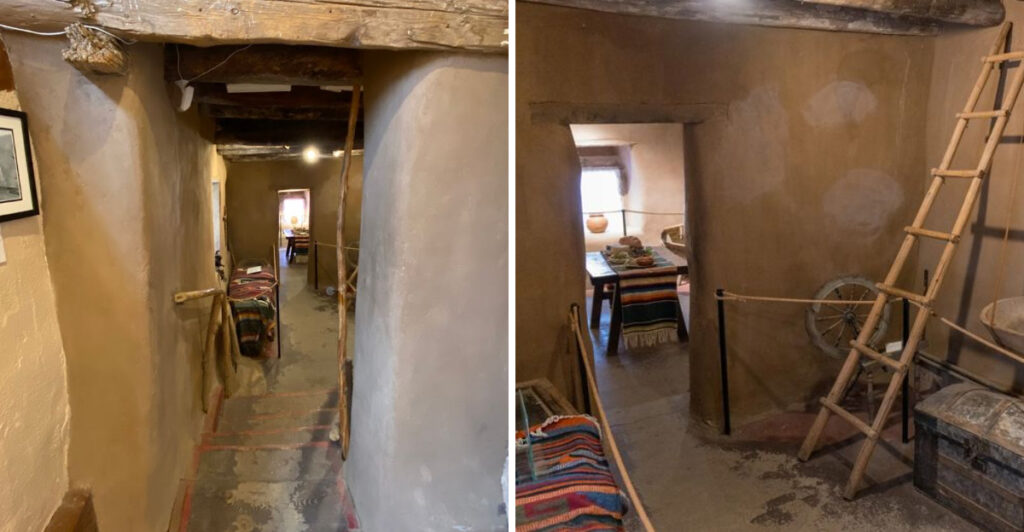
The second I stepped through the doorway, the place changed the pace of my whole afternoon. The ceiling felt low enough to make me notice my own height.
The walls were thick enough to make the street outside disappear. Inside, the feeling was less like visiting a building and more like standing inside a memory that refused to fade.
Many believe this is one of the oldest surviving houses in the United States, and honestly, you feel that before anyone tells you. Nothing about it is flashy.
The place does not beg for anyone’s attention today. Instead, it just stands there, quietly proving that some of America’s biggest stories still live in the smallest rooms.
Adobe Walls And Timeless Textures
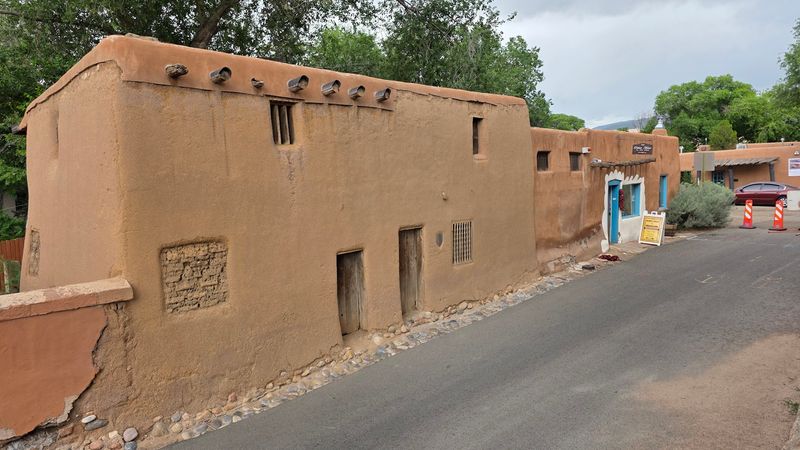
My hand brushed the outer wall, and that was when I realized I was touching something genuinely ancient.
The oldest parts of the adobe here are not just a modern reproduction or a carefully staged prop for tourists.
Some of the lower sections feature what historians call puddled adobe, an indigenous building technique used by Pueblo peoples long before Spanish settlers ever arrived in the Southwest.
That technique involves pressing wet earth into layers rather than shaping it into uniform bricks, and the result has a rough, organic quality that feels sculptural.
The Spanish colonial builders who came later added adobe bricks on top of that original foundation, creating a layered record of two distinct cultures written directly into the walls.
Standing outside and looking at the surface, you can almost read the timeline in the texture itself, darker and rougher at the base, more regular higher up.
Few places in the country offer this kind of tactile connection to the past, where the building material itself tells the story.
The address, Oldest House Museum at 215 E De Vargas St, Santa Fe, NM 87501, is where that story begins.
Quiet Rooms With Centuries Of Character
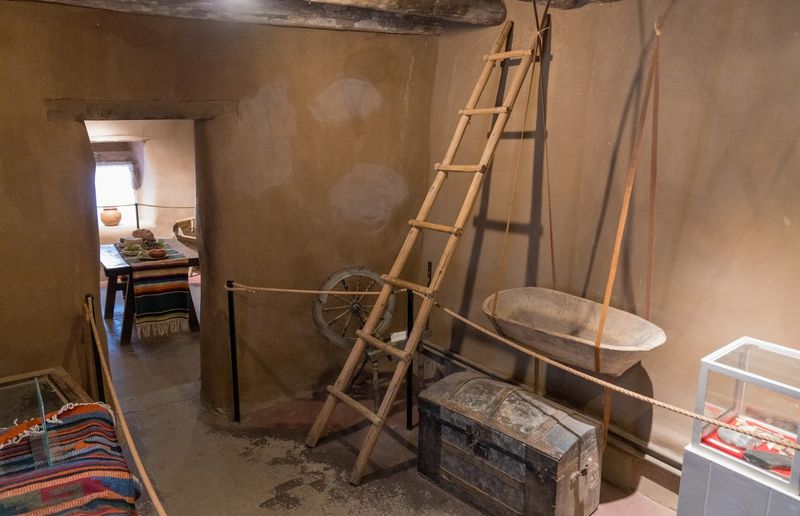
Two rooms, that is all you get, and somehow that is exactly enough.
The moment I stepped through the low doorway and into the first room, the outside world seemed to fall away completely.
There is a hushed quality inside that has nothing to do with sound dampening and everything to do with the sheer age of the space surrounding you.
The walls are thick enough to keep the interior cool even on a warm Santa Fe afternoon, a practical feature that the original inhabitants relied on for basic comfort.
Small displays line the walls with historical context about the house, its construction, and the people who lived within it across different eras.
The second room sits lower than the first, requiring a careful step down, and that shift in floor level is itself a clue about the layers of time buried beneath you.
Artifacts and period objects are arranged simply, without the elaborate staging of larger museums, which gives the whole experience an honest, unpolished charm.
Spending time here feels less like touring an exhibit and more like being a quiet guest in a very old home.
Sunlit Doorways And Earthen Details
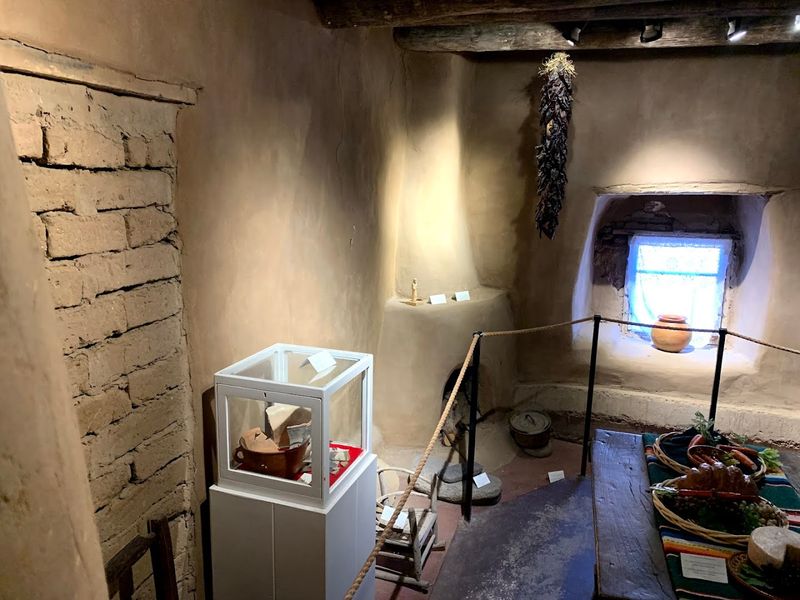
Sunlight behaves differently inside an adobe structure, and this house demonstrates it perfectly in the quietest, most natural, almost theatrical way.
Light enters through small, deep-set openings in the walls, casting long rectangles across the earthen floor that shift slowly as the day moves forward.
The doorways are noticeably low by modern standards. That detail immediately reminds you this building was designed for a world with different expectations and different bodies moving through it.
Each frame is slightly irregular, shaped by hand rather than machine, and that imperfection gives every entrance a handmade warmth that no prefabricated structure could replicate.
The transition from the bright New Mexico sunlight outside to the cool dimness inside happens in a single step, and the contrast is striking enough to make you pause for a moment.
Adobe absorbs and releases heat slowly, so the interior holds a steady temperature that feels almost meditative compared to the outside air.
Details like worn wooden thresholds and slightly uneven wall edges are not flaws here, they are the fingerprints of the people who built and maintained this place across generations.
Every small imperfection is, in its own quiet way, a kind of historical document.
Historic Interiors With Rustic Warmth
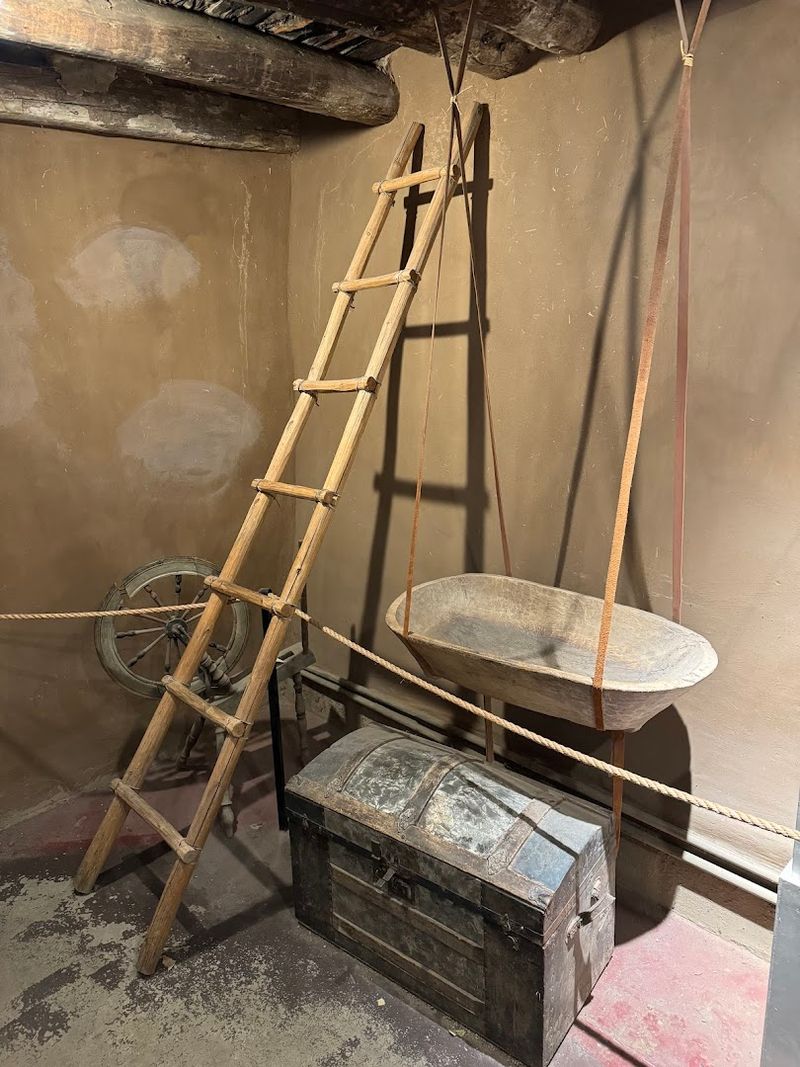
Rustic is a word that gets overused in travel writing, but inside this house it earns every letter.
The furnishings are simple and period-appropriate, placed without the kind of over-curation that sometimes makes historic homes feel like stage sets rather than real places.
What strikes you immediately is how small the scale of daily life must have been here, compact sleeping areas, minimal storage, and a total absence of the spatial excess that modern homes take for granted.
The earthen walls absorb sound and light in a way that creates an atmosphere of genuine stillness, something that feels rare and almost jarring in a good way.
Historical photographs and written panels offer context for what you are seeing, connecting the physical space to the broader story of early colonial Santa Fe and the Indigenous communities that preceded it.
Some displays may feel unexpected to younger visitors, so parents may want to preview the rooms first before settling in fully or walking through too quickly with little notice at first.
Despite its compact size, the interior manages to communicate a remarkable amount about how people lived, cooked, slept, and survived in this part of the world centuries ago.
Warmth here is not just a temperature, it is a mood the whole room carries.
Low Ceilings, Wooden Beams, And Old-World Charm
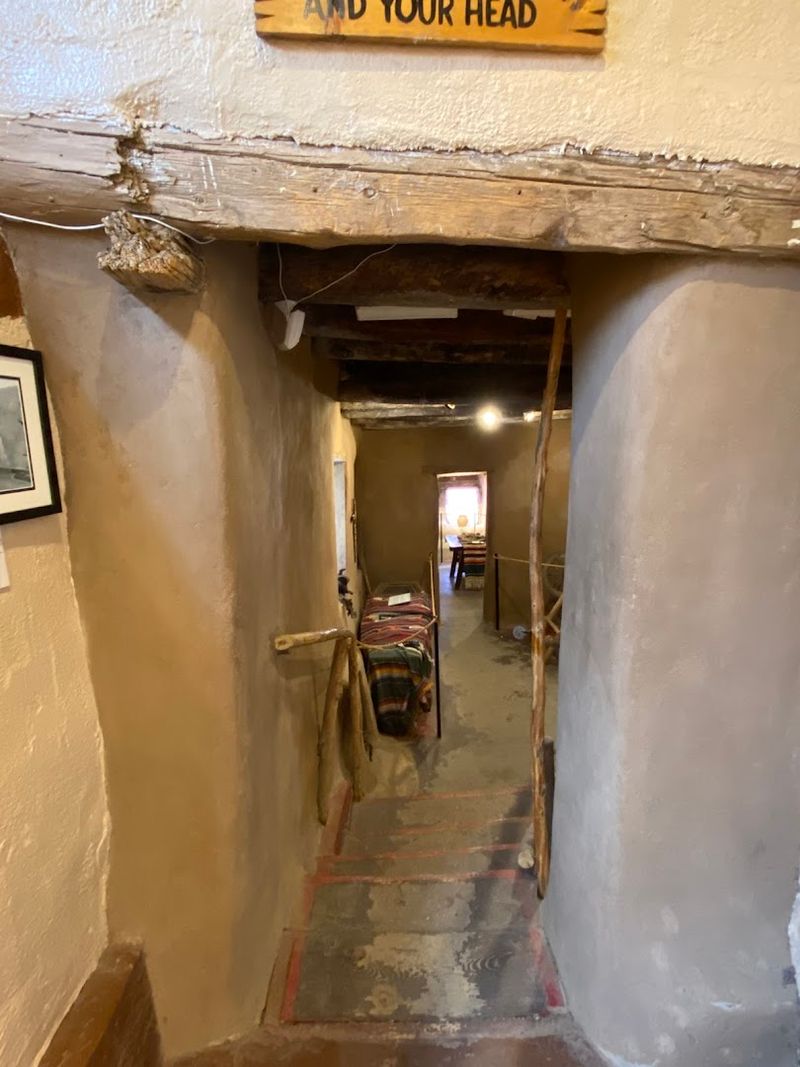
I did not expect to duck beneath ceiling beams in a museum, but here it felt completely right.
The wooden vigas, those rounded timber beams running across the ceiling, are among the most studied features of this building.
Tree ring studies of the ceiling timbers are often cited as pointing to cutting dates between 1740 and 1767. Other local materials give a broader possible range, which keeps the debate alive about exactly when the structure as it stands today was completed.
Regardless of the precise date, the beams themselves are genuinely old, and looking up at them while standing on a floor that may rest on a Pueblo foundation from around 1200 CE creates a dizzying sense of layered time.
The ceiling height forces a kind of physical humility, a slight bow of the head that feels almost appropriate given the age of the space.
Old-world charm is not something this house performs for visitors, it simply exists here, baked into the timber and clay by centuries of use.
The beams are dark with age and slightly irregular in shape, which makes them far more interesting than any modern architectural detail could ever be.
I kept wondering how many people must have looked up at these same pieces of wood.
A Glimpse Into Early Southwestern Living
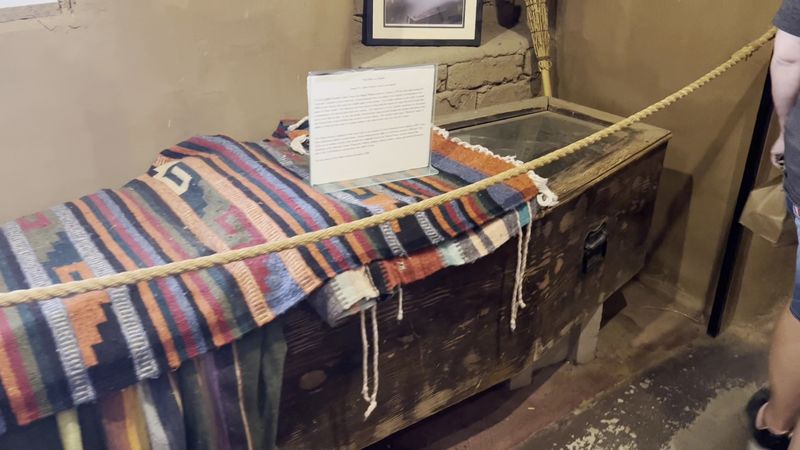
Very few places can compress centuries of daily life into two small rooms the way this house manages to do.
The displays inside focus on the practical realities of early Southwestern living, what people ate, how they built shelter, their tools, and how Spanish colonial traditions blended with the Indigenous practices established in the region.
The house sits within the Barrio de Analco Historic District, one of the oldest residential neighborhoods of European origin in the United States.
The district developed in the early 1600s around Spanish settlement and included working-class Spanish colonists, Tlaxcalan people from Mexico, and other Native Americans.
That neighborhood context matters because it frames the house not as an isolated curiosity but as part of a historical district with deep roots in multiple cultures.
The structure itself is believed to incorporate building techniques from both Spanish colonial adobe brick construction and the older puddled adobe method used by Pueblo peoples, making it a physical record of cultural exchange.
Visiting here gave me a clearer picture of how complicated and layered early Southwestern local history really is, far beyond simplified versions that appear in textbooks.
This is history you can stand inside, which makes it land differently than anything you could read on a page.
Hidden Corners Filled With Local History
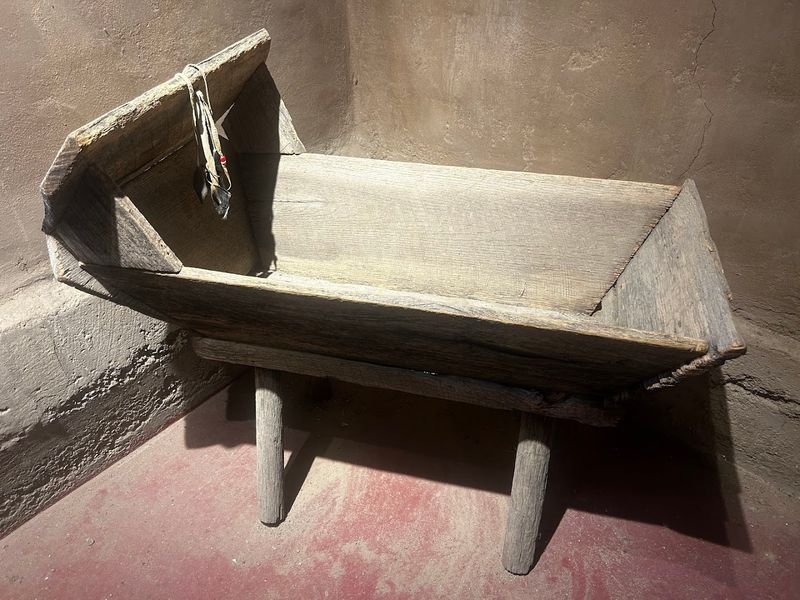
Just off the main tourist path through Santa Fe, this small building rewards the curious visitor who takes a moment to look past the gift shop and really pay attention.
The walls of the museum rooms are lined with photographs, written histories, and small artifacts that connect this specific address to the broader sweep of regional cultural history.
One of the most interesting aspects is the proximity to San Miguel Chapel, located directly across the street. It is widely considered one of the oldest church buildings in the United States and still hosts religious services.
Together, the house and the chapel form a kind of open-air history lesson about the early layers of European settlement in this part of North America.
The museum admission has traditionally been free or donation-based, though visitors should check current details before going, especially during holidays, special events, or busy travel periods in Santa Fe, when details can change.
Visitors who slow down and read the informational panels come away with a much richer understanding of the neighborhood, the building techniques, and the cultural tensions that shaped this corner of Santa Fe.
Every corner of this small space seems to hold another detail waiting to be noticed, which makes it more rewarding than its square footage might first suggest.
Simple Spaces With A Deep Sense Of Time
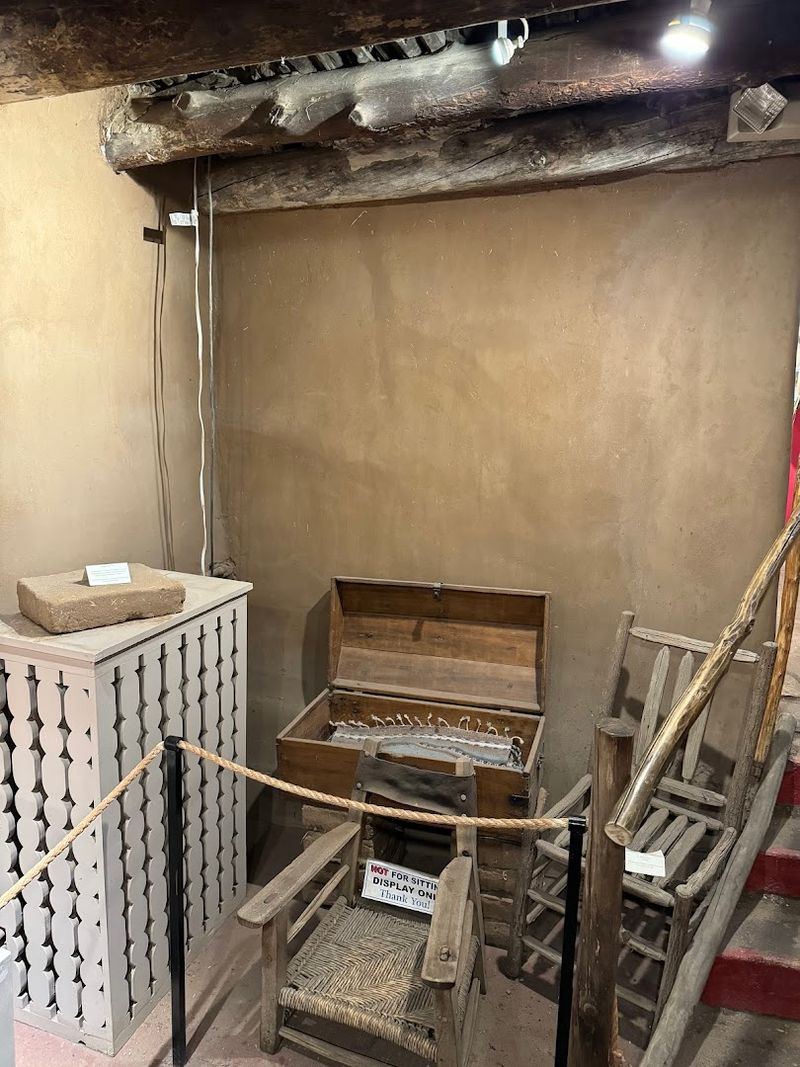
Very old places create a particular kind of quiet, and this house has it in abundance.
The simplicity of the two rooms is not a limitation, it is the point, because the emptiness around you makes space for the weight of time to settle in.
The floor may rest on foundations from around 1200 CE. Around you, walls blend Indigenous and Spanish colonial construction methods, creating a physical sense of how long this specific patch of earth has been occupied and shaped by human hands.
The museum is generally open Monday through Saturday from 10 AM to 5 PM and Sunday from 11 AM to 5 PM. It is closed on Easter, Thanksgiving, and Christmas, and hours should still be checked before visiting.
Entry has traditionally been free or donation-based, and the attached gift shop offers a genuinely impressive selection of locally made and regionally inspired souvenirs that go well beyond the typical tourist fare.
The experience usually takes about fifteen minutes, but those fifteen minutes tend to linger in the memory far longer than most half-day attractions and tours through much larger historic sites around the local area.
Simple, honest, and unexpectedly moving, this little building asks almost nothing of you and gives back something that is surprisingly hard to put into words.