Kansas rewards the curious. Take a turn off the obvious route, follow a quieter road, or stop in a town you almost passed, and suddenly the state starts showing off in ways people do not always expect.
Hidden adventures here can mean prairie views that feel endless, small-town landmarks with big personality, strange roadside wonders, peaceful trails, historic surprises, lakeside escapes, and local stops that make the whole day feel more memorable.
The best part is how unforced it all feels. You are not chasing crowds or checking off the same old places. You are finding the version of Kansas that feels personal, spacious, and full of character.
I would choose this kind of adventure with a half-made plan, a full tank, and enough curiosity to let the best detours decide the day.
1. Little Jerusalem Badlands State Park, Logan County
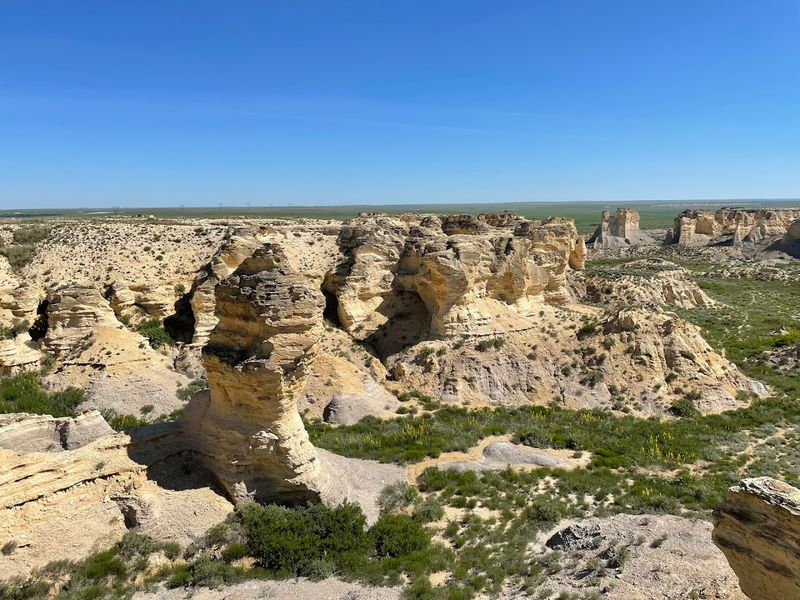
Standing at the edge of the viewing platform here, it feels less like Kansas and more like a scene from a Western film set on another planet.
Little Jerusalem Badlands State Park in Logan County protects one of the state’s most dramatic Niobrara Chalk landscapes, and the formations are genuinely stunning from the overlooks.
The park opened in 2019 after a partnership between The Nature Conservancy and Kansas State Parks, making it one of the newest additions to the state park system.
Short public trails lead visitors to scenic viewpoints, while access onto the fragile chalk formations is restricted to protect this delicate landscape.
Wildlife is active here too, with raptors commonly spotted riding thermals above the chalky ridges. Spring and fall offer the most comfortable hiking temperatures, and crowds are minimal even on weekends.
Little Jerusalem Badlands is the kind of place that quietly rewires what you thought Kansas looked like.
2. Monument Rocks National Natural Landmark, Oakley Area
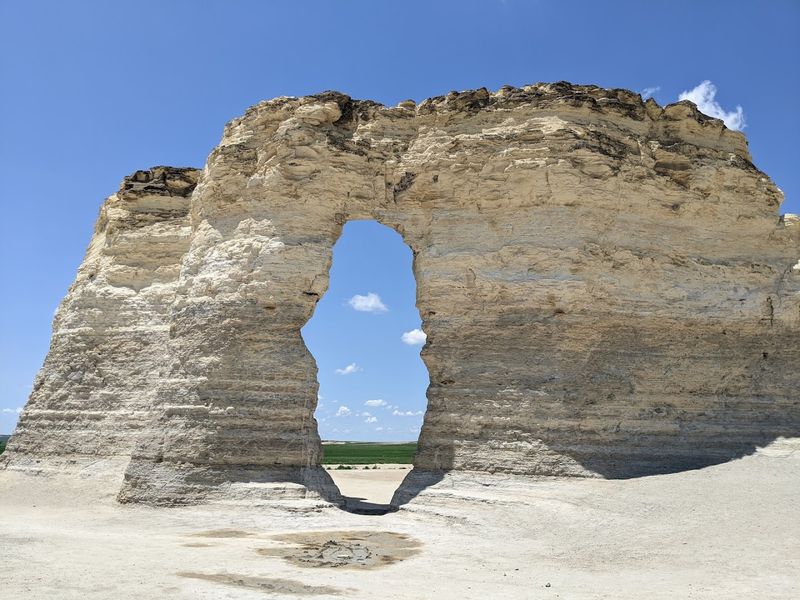
Long before European settlers arrived, these towering chalk spires served as navigation landmarks for travelers crossing the Great Plains, and standing beside them today, it is easy to understand why.
Monument Rocks National Natural Landmark, located in the Oakley area of western Kansas, was designated as Kansas’ first National Natural Landmark back in 1968.
The formations rise dramatically from the prairie and contain marine fossils from a prehistoric inland sea that once covered this entire region millions of years ago.
Access is free and open year-round, though the dirt road leading to the site can get muddy after rain, so checking conditions before heading out is smart planning.
Photographers especially love Monument Rocks at sunrise when the low light carves deep shadows across the chalk faces, creating a sense of scale that midday light simply cannot match.
Pack a lunch, bring plenty of water, and give yourself at least two hours to soak in every angle of this remarkable place.
3. Mushroom Rock State Park, Marquette
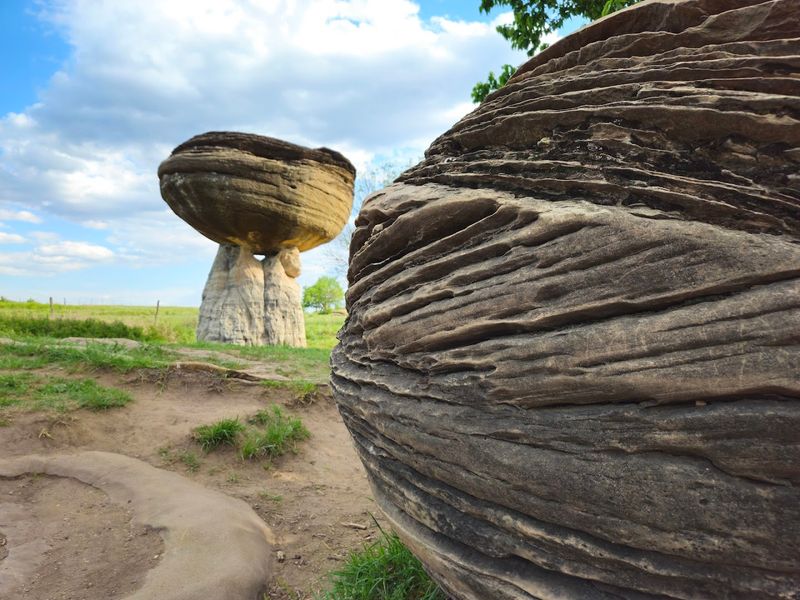
Geology pulled off something genuinely weird here, and the result is worth a detour off the highway.
Mushroom Rock State Park near Marquette in central Kansas features a collection of large concretion boulders that have been shaped by centuries of wind and water erosion into forms that look exactly like giant stone mushrooms.
The park is actually one of the smallest in the Kansas state park system, covering only about five acres, but those acres pack a visual punch that far exceeds the size.
These formations are made of Dakota sandstone and were once used as a meeting place by Kansa and Osage peoples, giving the site both geological and cultural significance.
A short, easy walking path connects the main rock clusters, making Mushroom Rock State Park accessible for visitors of all ages and fitness levels.
Bring a camera with a wide-angle lens because fitting these bulbous formations into a single frame is a satisfying puzzle that every photographer here tries to solve.
4. Rock City Park, Minneapolis
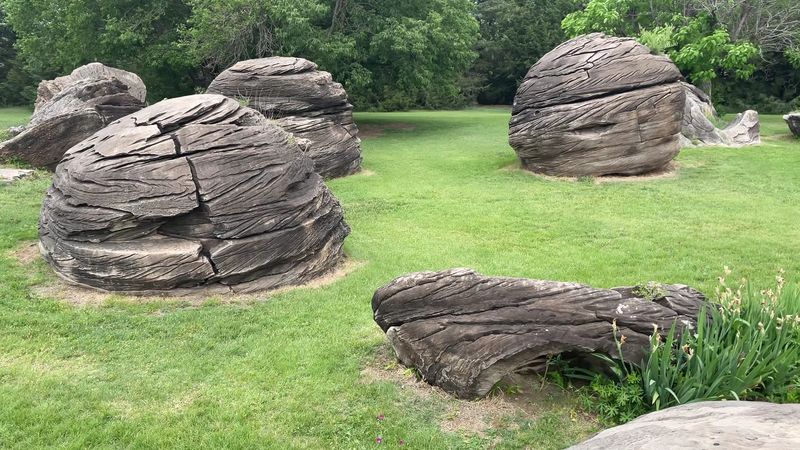
A farmer once tried to blast these enormous boulders out of his field, and thankfully, the effort failed, because Rock City Park near Minneapolis, Kansas, turned out to be one of the most unusual natural sites in the entire Midwest.
The park contains more than 200 sandstone concretion spheres, some measuring up to 27 feet in diameter, all naturally formed within the Dakota sandstone layer over millions of years.
Rock City Park is a National Natural Landmark, and a small admission fee helps maintain the trails and picnic areas that wind through this surreal open-air gallery of stone spheres.
Kids absolutely love scrambling around the boulders, and the open layout means parents can keep easy track of everyone while exploring at their own pace.
The site is best visited in the morning when the light is soft and the temperatures are cooler, especially during Kansas summers.
Rock City Park rewards curiosity, and every angle reveals a new arrangement of these gravity-defying stone giants worth photographing.
5. Arikaree Breaks, St. Francis Area
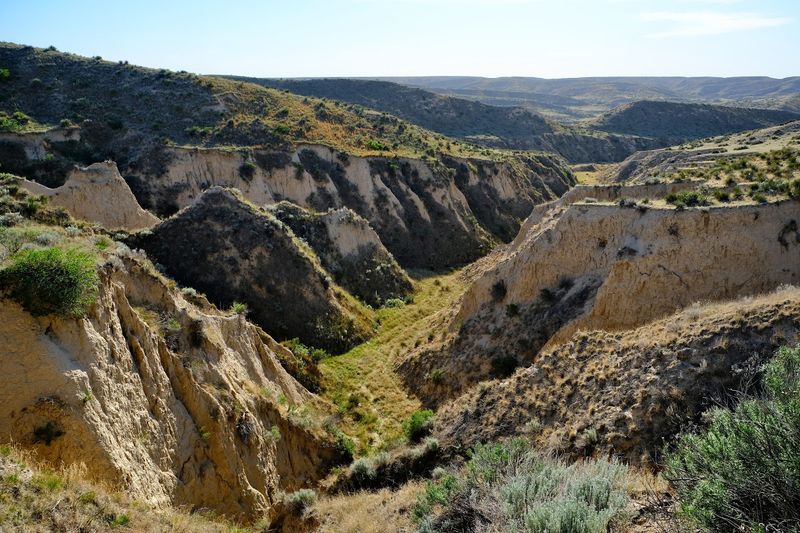
Most people drive through northwest Kansas without a second glance, which means the Arikaree Breaks near St. Francis remains one of the best-kept secrets in the entire state.
This stretch of dramatically eroded ravines and gullies runs along the northern edge of Cheyenne County and looks more like badlands country than anything many travelers expect to find in Kansas.
The landscape here is rugged and largely undeveloped, which means visits require some preparation, including a reliable vehicle, a good local map, and enough water for a longer scenic drive.
Wildlife thrives in the Arikaree Breaks, with mule deer, wild turkey, and other prairie species making their homes in the broken terrain.
Because this area includes private land and rural roads, it is worth contacting local St. Francis visitor resources before planning a trip to make sure access points and driving routes are current.
The Arikaree Breaks rewards the adventurous traveler with a raw, cinematic landscape that feels completely off the beaten path.
6. Elk River Hiking Trail, Elk City State Park
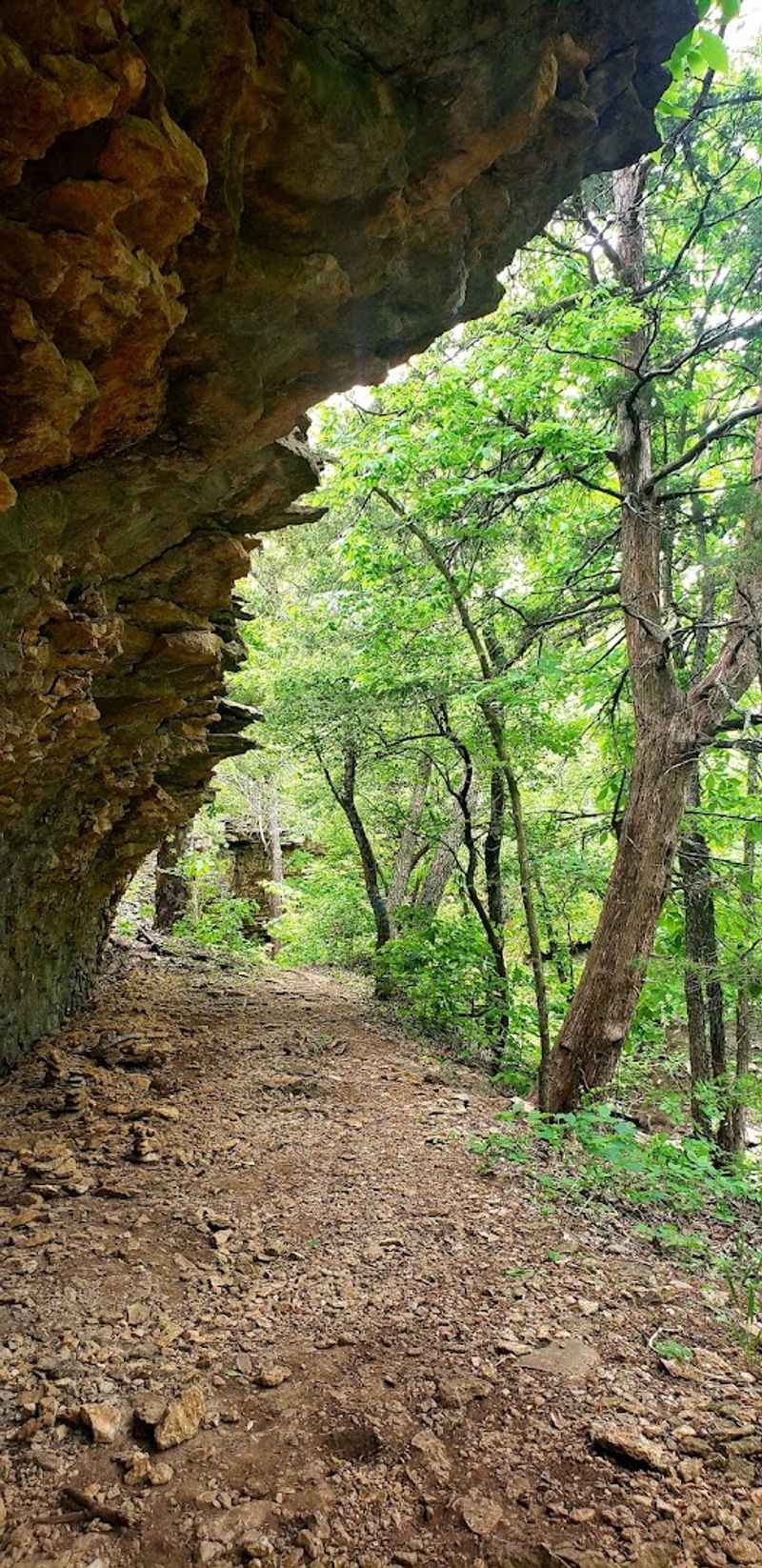
Southeast Kansas has a lush, forested side that surprises nearly everyone who expects flat, open prairie, and the Elk River Hiking Trail is the best way to experience that green, hidden world.
Located near Elk City State Park and Elk City Lake, this trail stretches about 15 miles from the west end of the dam to the US-160 bridge over the Elk River.
The trail is rated as moderately challenging, with some elevation changes and rocky sections that keep things interesting without being overwhelming for most hikers.
Backpackers can use primitive camping opportunities along the route, turning the Elk River Hiking Trail into a longer adventure through some of the most beautiful woodland scenery in the state.
Fall is especially spectacular here when the oaks, hickories, and maples turn the hillsides into a patchwork of red, orange, and gold.
Pack your hiking poles, leave the earbuds at home, and let the sounds of the river and rustling leaves do all the entertaining on this remarkable trail.
7. Strataca, Hutchinson
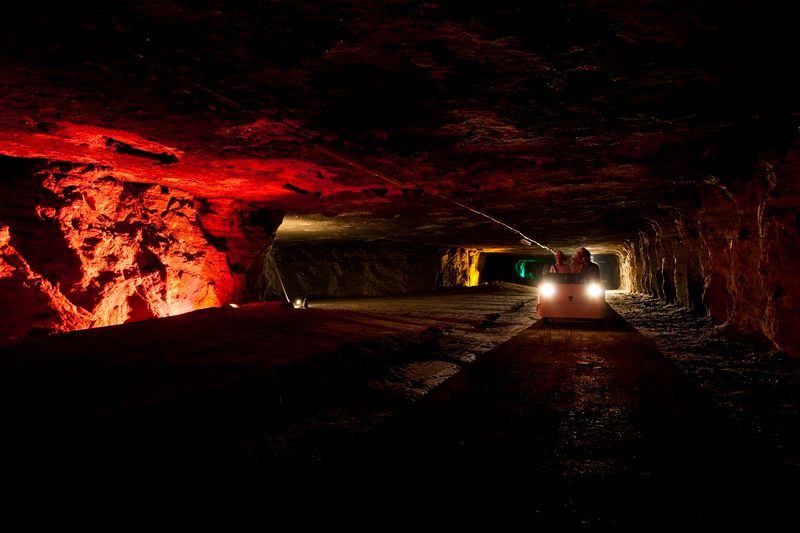
Going 650 feet underground in an elevator might sound intense, but the experience waiting at the bottom of that shaft is completely worth the brief drop.
Strataca in Hutchinson, Kansas, is a working underground salt mine turned museum, and it offers one of the most genuinely unique attractions in the entire central United States.
The mine sits within a massive salt deposit left behind by an ancient sea, and the tours take visitors through tunnels that stretch for miles beneath the Kansas prairie above.
One of the most popular experiences at Strataca is the Dark Ride, where visitors board a tram for a journey deep into the unlit sections of the mine, giving a real sense of the scale and darkness miners work within.
The constant underground temperature hovers around 68 degrees Fahrenheit year-round, making Strataca a perfect destination on both scorching summer days and cold winter afternoons.
Strataca consistently ranks among the most memorable stops in Kansas, and a visit here changes how you think about what lies beneath your feet.
8. Coronado Heights Castle, Lindsborg
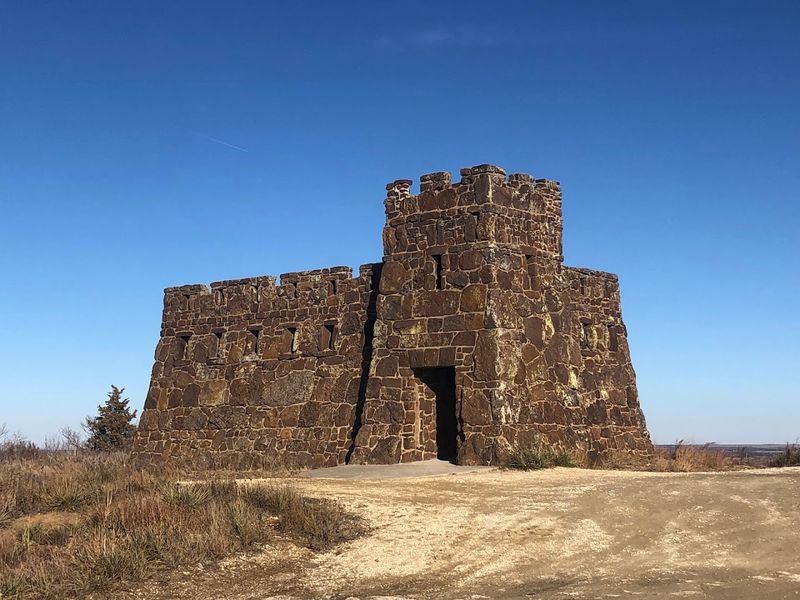
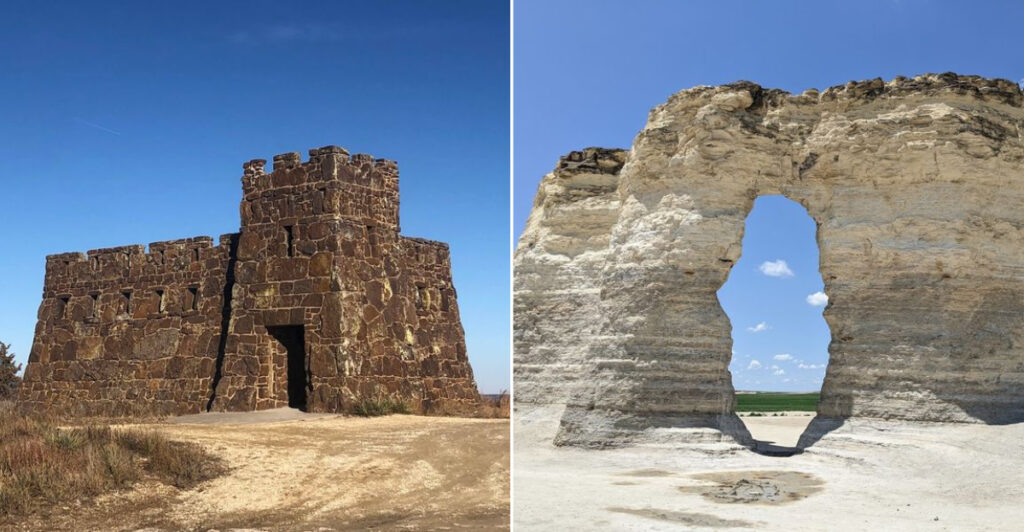
A hand-built stone castle sitting on a windswept hill above the Kansas plains sounds like something out of a fairy tale, but Coronado Heights near Lindsborg is absolutely real.
The castle-like picnic shelter was constructed by the Works Progress Administration during the 1930s on a site traditionally associated with Spanish explorer Francisco Vásquez de Coronado’s 1541 expedition across North America.
The hilltop location provides sweeping views across the surrounding Smoky Hills landscape, and on clear days, the horizon seems to stretch on endlessly in every direction.
Coronado Heights is a popular spot for picnics, and the park area around the castle has shelters, grills, and open space for relaxing after the short trip up to the summit.
The nearby town of Lindsborg celebrates its Swedish heritage enthusiastically, so combining a visit to Coronado Heights with a stroll through town adds a full cultural dimension to the day.
Sunset from the top of Coronado Heights is the kind of view that stays with you long after you have driven home.
9. Garden Of Eden, Lucas
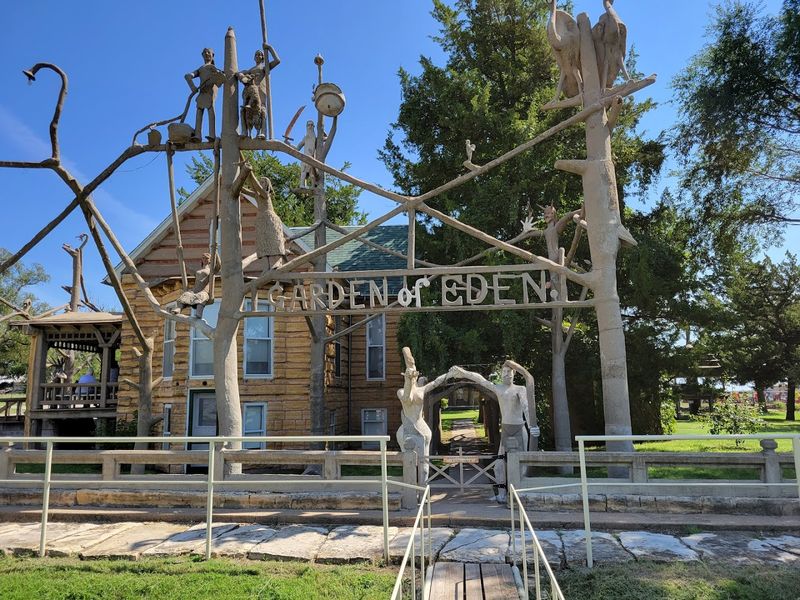
Samuel Perry Dinsmoor spent decades building a concrete folk art environment around his limestone “log” cabin home in Lucas, Kansas, and the result is one of the most eccentric and fascinating outdoor art installations in American history.
The Garden of Eden features about 150 concrete figures depicting biblical scenes, political commentary, and Dinsmoor’s personal philosophical views, all constructed by hand starting in 1907.
The sculptures are arranged across the yard and connected by a concrete tree canopy that arches overhead, creating a shaded walkway through what feels like a completely alternate world.
Inside the cabin, tours share the story of Dinsmoor’s life and the remarkable dedication it took to create the Garden of Eden over more than two decades.
The site is on the National Register of Historic Places and draws visitors from around the world who come specifically to see this one-of-a-kind example of outsider art in the heart of the Kansas plains.
The Garden of Eden is proof that the most unexpected creativity can take root in the most unexpected places.
10. Big Brutus, West Mineral
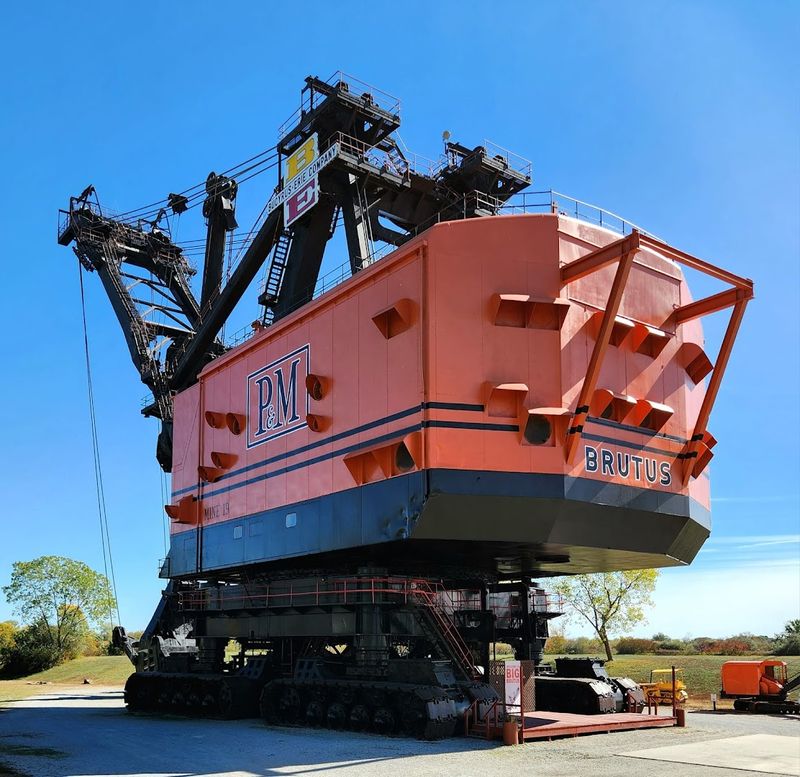
Few industrial relics in America match the sheer, staggering scale of Big Brutus, and standing at the base of this machine makes every other piece of heavy equipment you have ever seen feel like a toy.
Big Brutus is a retired Bucyrus-Erie 1850-B electric coal shovel located in West Mineral in southeast Kansas, and it was the second-largest electric shovel of its type when it operated in the 1960s and 1970s.
The machine stands 16 stories tall and weighs about 11 million pounds, and visitors can climb inside the cab for a view across the surrounding reclaimed mining land that is genuinely hard to forget.
The museum surrounding Big Brutus tells the story of strip mining in the Midwest, the communities that grew up around the coal industry, and the environmental reclamation efforts that followed.
A small campground and picnic area make Big Brutus a comfortable overnight stop for road trippers moving through the southeast corner of the state.
Big Brutus earns its name every single time you see it.
11. Historic Lake Scott State Park, Scott City
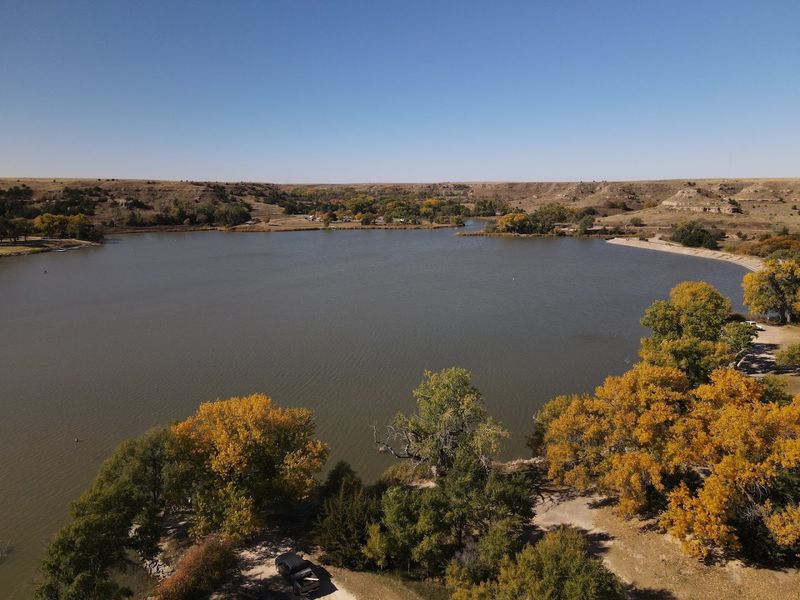
Hidden within the otherwise flat landscape of western Kansas, Historic Lake Scott State Park near Scott City drops suddenly into a canyon that feels like a geographical surprise you never saw coming.
The park surrounds a spring-fed lake tucked into a dramatic canyon carved through the High Plains, and the combination of water, trees, and rocky walls creates an oasis that feels worlds away from the open prairie above.
Historic Lake Scott State Park also contains El Cuartelejo, the northernmost known pueblo ruin in the United States, built by Pueblo people who sought refuge here in the late 1600s.
Fishing, swimming, paddleboating, and hiking are all popular activities in the park, and the campground is one of the most scenic in the state park system.
Wildlife sightings are common here, with white-tailed deer frequently spotted along the canyon edges at dawn and dusk.
Historic Lake Scott State Park is the rare destination that delivers both natural beauty and genuine historical depth in one compact, easy-to-reach location.
12. Castle Rock Badlands, Quinter Area
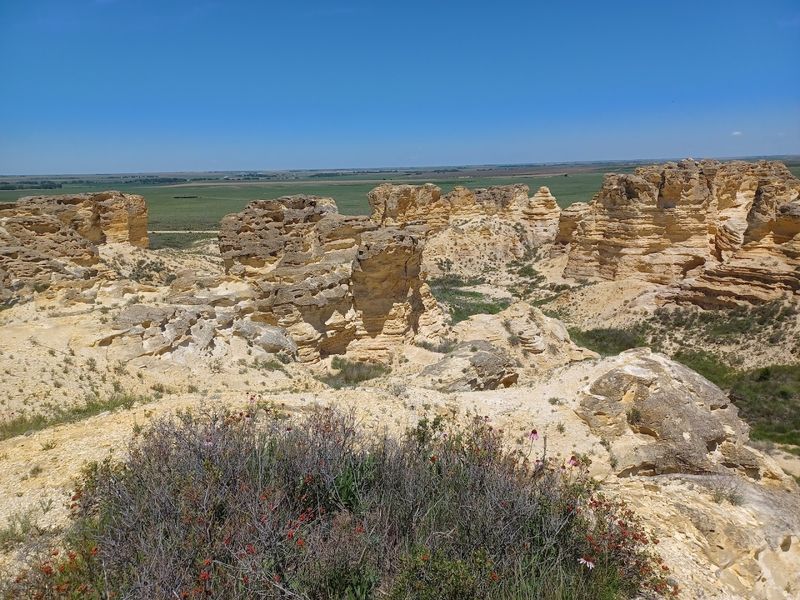
Somewhere between Quinter and the middle of nowhere, a chalk formation rises out of the flat Kansas prairie with such authority that early travelers used it as a landmark from miles away.
Castle Rock in the Quinter area of Gove County is a freestanding chalk formation shaped by millions of years of erosion from the same Niobrara Chalk that forms Monument Rocks to the west.
The site is free to visit and sits on private land with public access allowed, making it one of those rare, low-barrier adventures that rewards travelers willing to navigate a few miles of unpaved road.
Castle Rock Badlands, the surrounding area of eroded chalk hills and gullies, extends the visual drama well beyond the main formation, and exploring the smaller formations nearby adds another layer to the visit.
Fossil hunters have found marine specimens in this area for generations, as the chalk layers are rich with ancient sea life preserved in stone.
Castle Rock Badlands is the kind of place that makes the long drive across western Kansas feel like the best decision you made all trip.