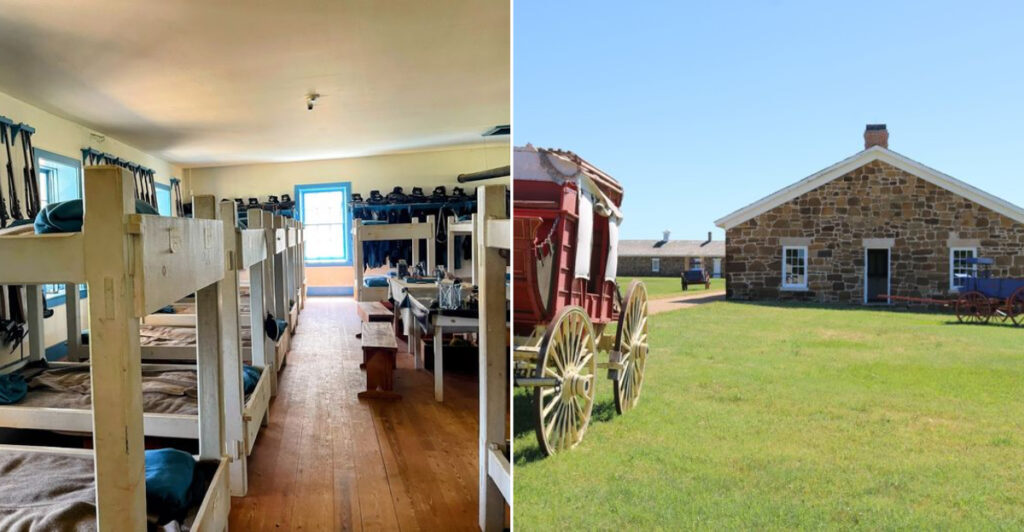
Some historic places ask you to imagine the past. This Kansas fort practically puts dust on your boots.
With old barracks, parade grounds, military buildings, prairie views, and the weight of frontier history all around, it offers the rare chance to walk through a setting that still feels connected to the Old West.
The appeal is in how real it feels. You can picture soldiers on duty, wagons moving across the plains, travelers following dangerous routes, and stories unfolding under that wide Kansas sky.
It is not a flashy attraction. It is quieter than that, stronger than that, and far more immersive than a simple history lesson.
I would wander those grounds slowly, trying to match each building to the lives that passed through it, and probably leave feeling like Kansas history had become a little less distant.
Fort Larned Was Built To Protect The Santa Fe Trail
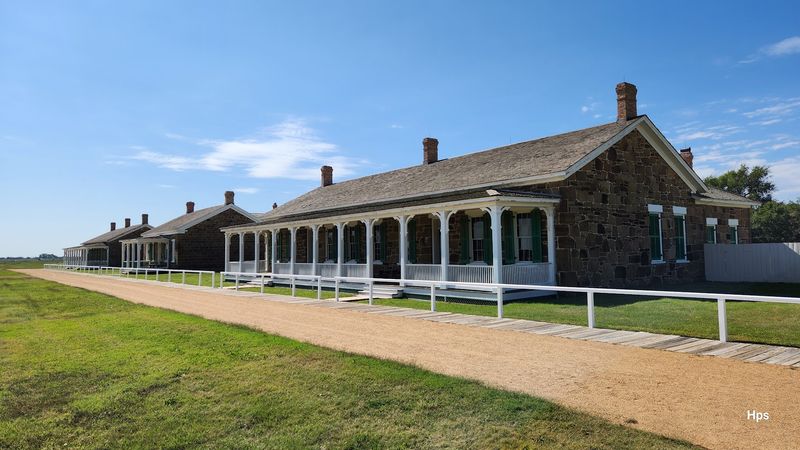
Long before interstate highways crossed the plains, the Santa Fe Trail was the lifeblood of westward commerce in America.
The post that became Fort Larned began in 1859 as Camp on Pawnee Fork, established to protect travelers, traders, and mail carriers moving along that critical route through central Kansas.
The fort served as a base for U.S. Army soldiers tasked with keeping the trail safe during one of the most turbulent periods in American frontier history.
Conflicts between settlers and Native American tribes were frequent, and the soldiers stationed here played a direct role in shaping how the West developed.
Visitors from far away have described feeling genuinely moved when they learn just how strategically important this location once was.
Standing on the same ground where cavalry troops once assembled is a powerful reminder that real history happened right here in Kansas.
The Stone Buildings Are Remarkably Well Preserved
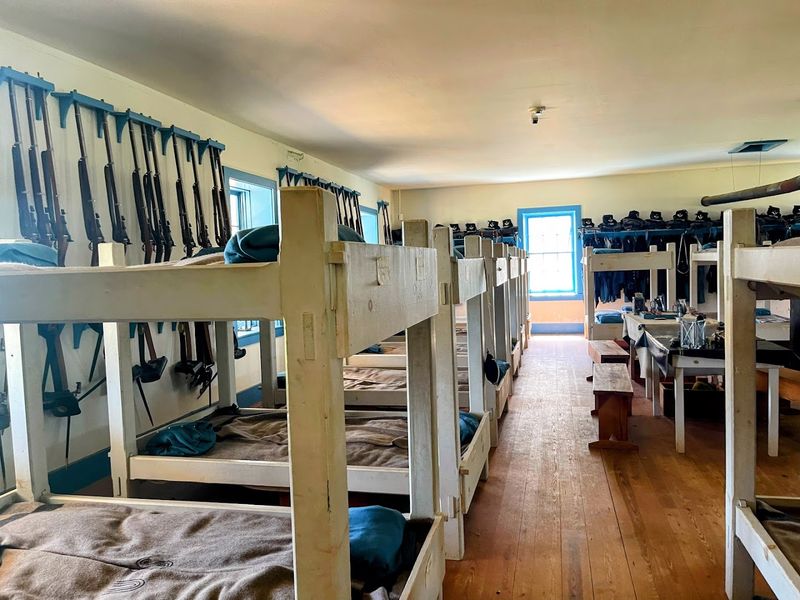
One of the first things that stops most visitors in their tracks is just how intact the buildings at Fort Larned look.
Unlike many frontier forts that exist only as foundations or faded photographs, the sandstone structures here have survived over 150 years with impressive integrity.
The fort’s buildings include barracks, officers’ quarters, a commissary storehouse, and more, all constructed from locally quarried stone that has proven remarkably durable against the Kansas elements.
Walking through the rooms feels less like touring a museum and more like stepping into a preserved moment in time.
Even visitors who drove all the way from Ohio just to check off a passport stamp have admitted they stayed far longer than planned, completely absorbed by how authentic everything looks and feels.
The attention to historical accuracy in the preservation effort here is something that genuinely sets Fort Larned apart from similar sites.
Admission Is Completely Free
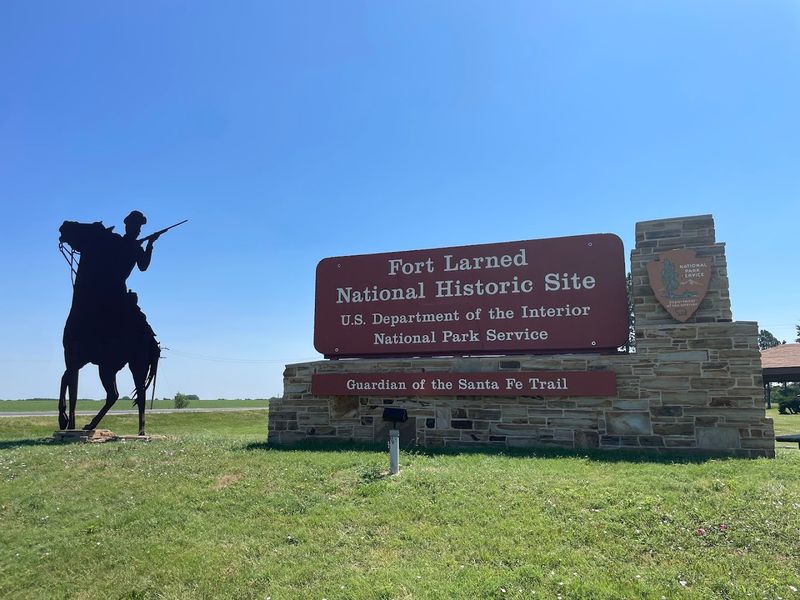
Here is a fact that tends to make people do a double take: visiting Fort Larned National Historic Site costs absolutely nothing.
No entry fees, no parking charges, and no reservation required. It is one of those rare National Park Service sites where the entire experience is open to everyone at no cost.
That generosity extends to the parking area as well, which accommodates cars, RVs, buses, and trailers with plenty of space.
Wheelchair-accessible options are also available near the lot, making the site welcoming for visitors of all mobility levels.
Families traveling on a budget, retired couples on a road trip from Ohio, and solo travelers just passing through on U.S. Route 156 all get the exact same full experience.
The only thing the park asks in return is that you appreciate what has been preserved here, and that part tends to come naturally once you set foot inside.
A Short Walk Across A Wooden Bridge Opens Up The Entire Site
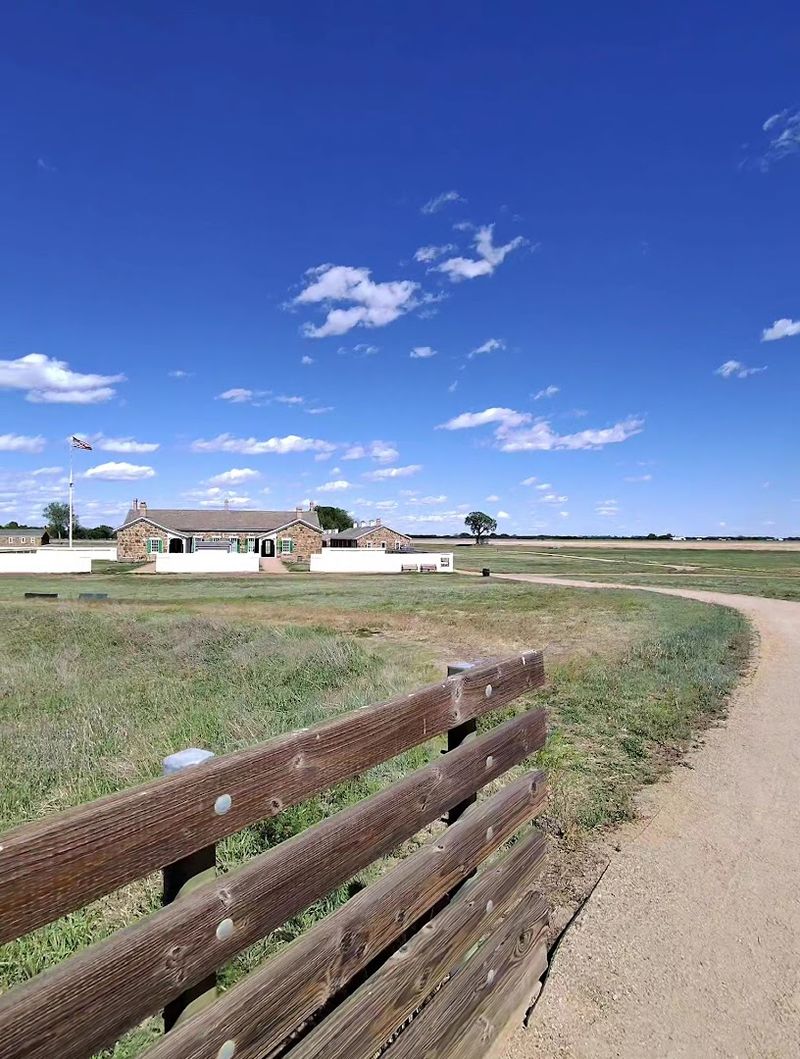
From the parking lot, the fort itself is not immediately visible, which makes the approach feel like a small adventure.
Visitors follow a well-maintained path, cross a charming wooden bridge over a small stream, and then suddenly the full sweep of the 19th-century post opens up before them.
That moment of revelation is something many people describe as genuinely surprising.
The transition from a modern parking area to a full historic site in the span of a short walk creates a sense of time travel that no museum exhibit can fully replicate.
The path is easy enough for children and older adults alike, and the surrounding prairie landscape adds to the atmosphere in a way that feels completely natural.
On a clear Kansas morning, with birds calling across the open fields, that short walk across the bridge might just be one of the most quietly memorable parts of the whole visit.
The Visitor Center Features Engaging Exhibits And A Free Film
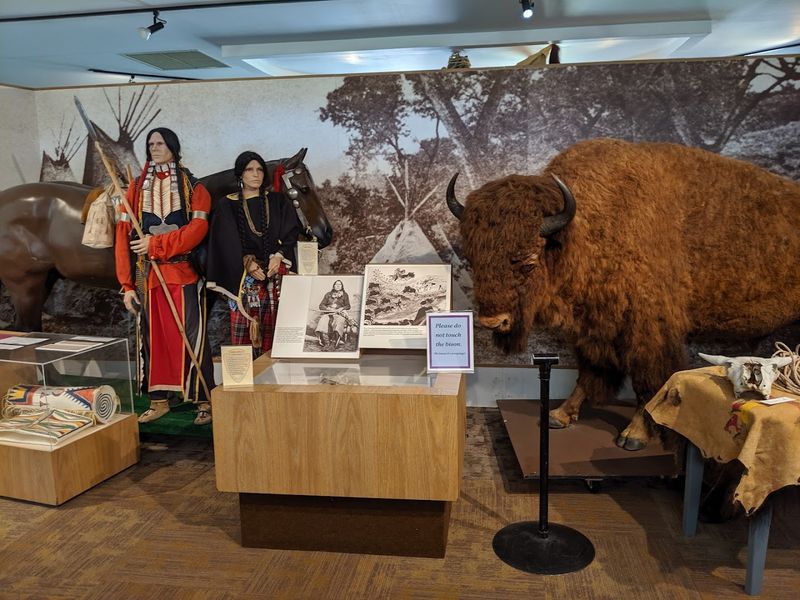
Once inside the visitor center, which is located within one of the fort’s historic sandstone barracks buildings rather than at the entrance, guests are greeted by a thoughtfully designed exhibit hall packed with historical context.
Displays cover everything from daily soldier life to the fort’s role in U.S. and Native American relations, and they manage to be informative without feeling overwhelming.
A free park film is available and provides an excellent overview of the fort’s history before you explore the grounds.
Park rangers are usually on hand to answer questions, and many visitors have praised the staff for being both knowledgeable and genuinely friendly.
The exhibit hall also includes interpretation of how westward expansion, commerce, soldiers, traders, Indian agents, and American Indians were all connected to the fort’s story, adding real depth to the experience.
Passport stamp collectors will also find cancellation stamps available here, a bonus that national park enthusiasts especially seem to appreciate.
Most Buildings Are Open For Self-Guided Exploration
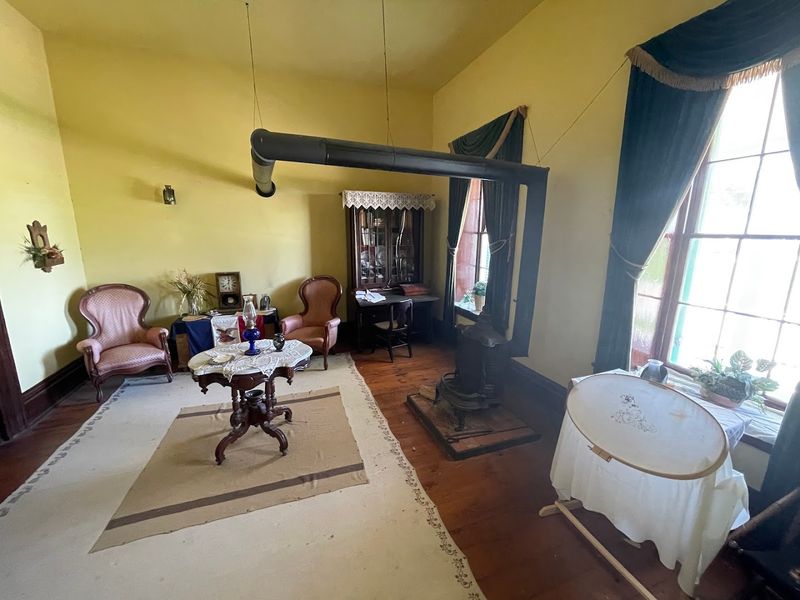
One of the most appealing aspects of Fort Larned National Historic Site is how accessible the buildings actually are.
Unlike some historic sites where you can only peer through glass at roped-off rooms, here the original sandstone buildings can be explored through ranger tours, brochures, or the NPS app.
The rooms have been staged to reflect how they would have looked during the fort’s active years, complete with period furniture, military equipment, and personal items that help tell the story of the soldiers who lived there.
Some spaces even contain original artifacts, not just reproductions.
Kids especially tend to love the freedom to move through different parts of the site at their own pace, and parents appreciate that the site does not feel stuffy or overly formal.
Families often find that children keep talking about the fort long after their visit, which says a lot about how engaging the layout really is.
A Working Blacksmith Demonstration Brings History To Life
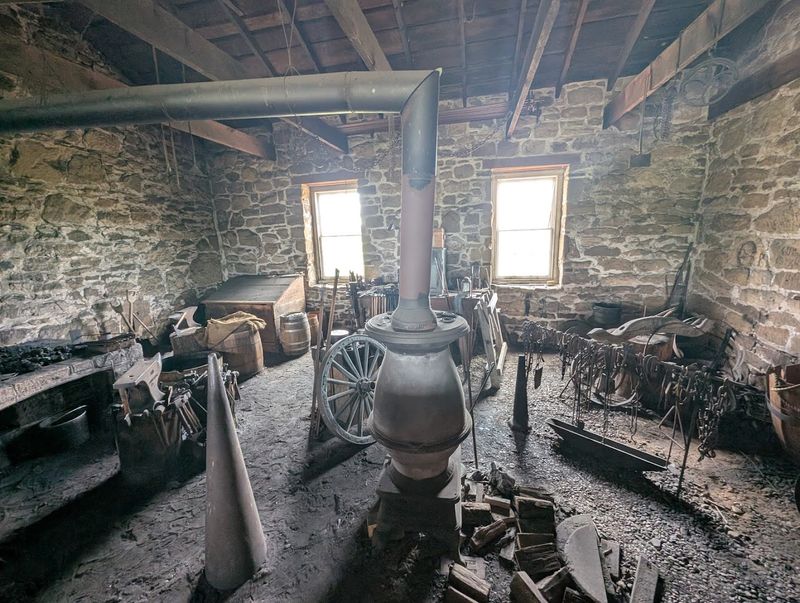
If timing works in your favor, you might catch the fort’s blacksmith in action, and that is an experience worth planning around.
Watching a skilled craftsman shape hot metal at a traditional forge inside a 19th-century stone workshop is about as immersive as living history gets.
The blacksmith demonstrations at Fort Larned have been a consistent highlight in visitor accounts for years.
On lucky days, the blacksmith has even been known to give away small hand-forged items to visitors, a gesture that turns a history lesson into a tangible keepsake.
During special events like the annual Labor Day weekend reenactment, the blacksmith is joined by cannon-firing demonstrations and a full cast of historical reenactors, turning the entire site into a living, breathing recreation of the 1860s frontier.
For anyone who has only ever experienced history through textbooks, watching those skills practiced in real time at Fort Larned is a genuine revelation.
Native American History Is Told With Honesty And Respect
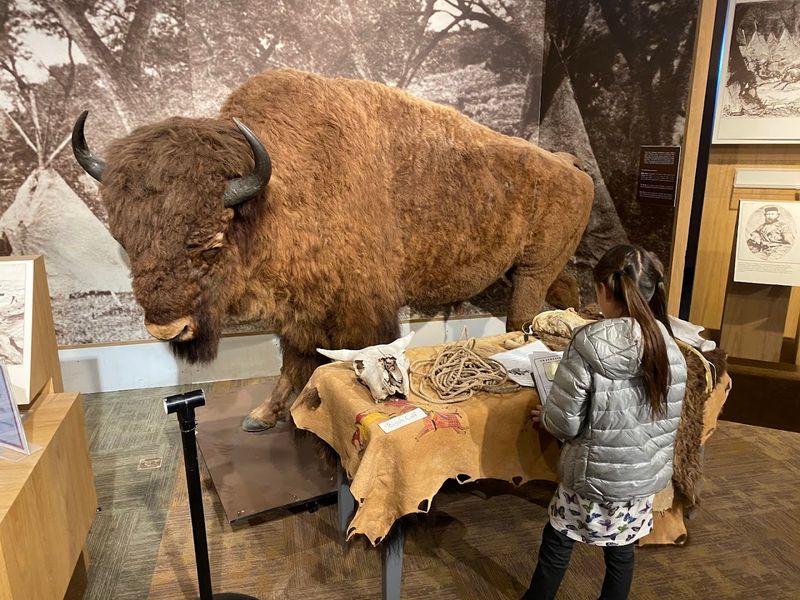
Fort Larned National Historic Site does not shy away from the complicated history surrounding the U.S. Army’s presence on the Great Plains.
The exhibits and ranger presentations include Native American perspectives, acknowledging the broken treaties and hardships that accompanied westward expansion.
That commitment to honest storytelling is something that sets this site apart from many other historical landmarks.
The visitor center interpretation connects American Indians, soldiers, traders, Indian agents, and westward commerce in a way that gives the fort’s history more depth than a simple military story.
Travelers from across the country have praised the balanced approach to telling a story that involves multiple communities with very different experiences of the same events.
Fort Larned treats this history with the seriousness and respect it deserves, making the educational value of a visit here genuinely exceptional.
Living History Events And Reenactments Are A Major Draw
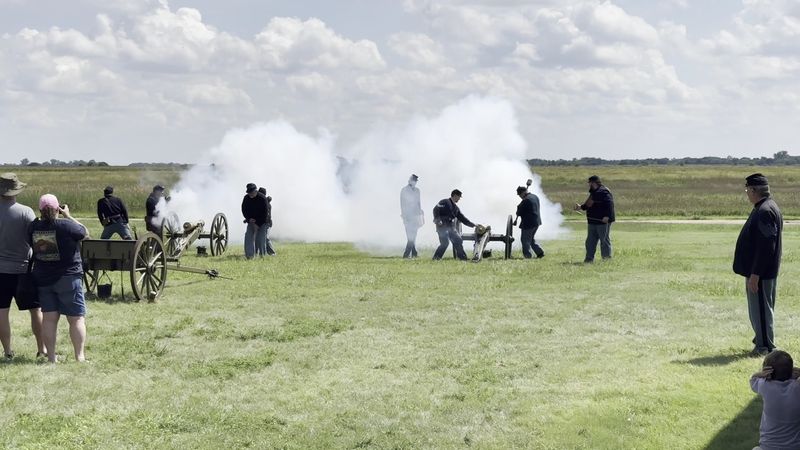
Fort Larned National Historic Site hosts living history events throughout the year that transform the already-atmospheric grounds into something even more extraordinary.
The Labor Day weekend event is the most popular, drawing reenactors who portray soldiers, traders, Native Americans, and frontier civilians with impressive authenticity.
Cannon firings, musket demonstrations, period cooking, and blacksmithing all take place during these events, giving visitors a multi-sensory experience that goes far beyond reading a placard on a wall.
The reenactors are typically well-researched and enthusiastic about answering questions from curious visitors.
Planning a trip around one of these events is highly recommended if the schedule allows.
Even visitors who initially stopped only to grab a National Parks Passport stamp have found themselves staying for hours, completely caught up in the spectacle.
Fort Larned has a way of making history feel urgent and alive rather than distant and abstract, and the living history events are the best possible proof of that.
Practical Tips For Planning Your Visit
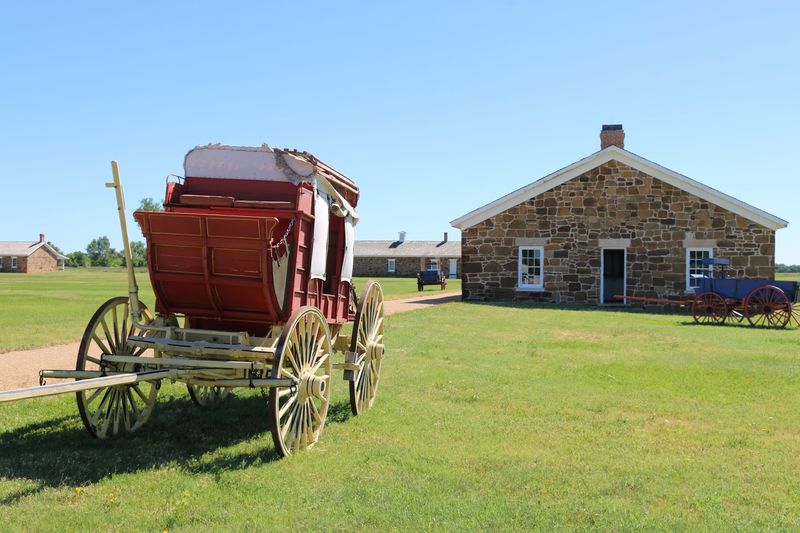
Fort Larned National Historic Site is open every day of the week from 8:30 AM to 4:30 PM, making it an easy stop to fit into a road trip itinerary across central Kansas.
The address is 1767 KS-156, Larned, KS 67550.
Plan to spend at least two to four hours to see the buildings and exhibits comfortably, though a full day is worth considering if you want to walk the nature and history trails on the property.
Cell service can be limited on site, so downloading maps or information in advance is a smart move.
A shaded picnic area near the parking lot is perfect for a midday break, and the surrounding Kansas landscape is genuinely beautiful in its own wide-open way.
Visitors from Ohio and beyond consistently rate Fort Larned among the most rewarding free stops they have ever made on a road trip.