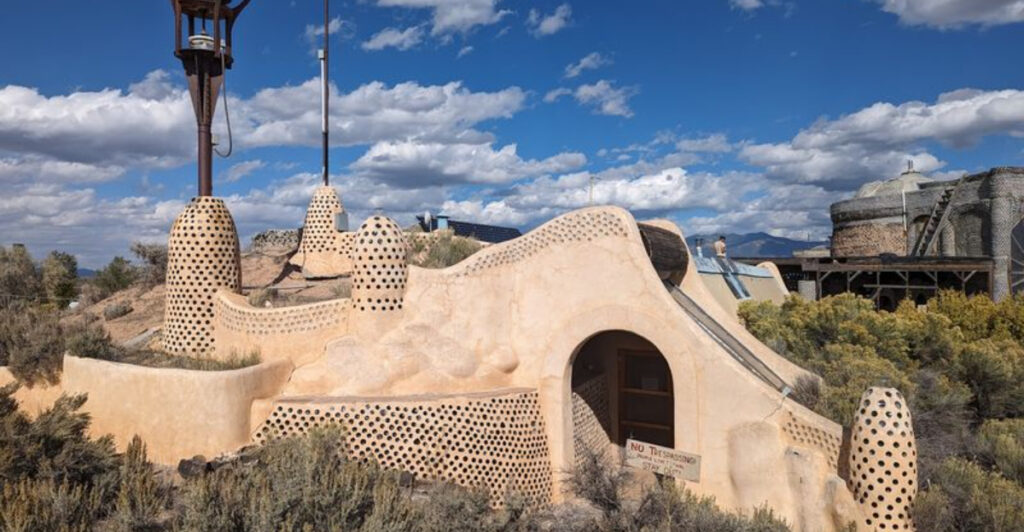
You know that moment when you’re driving along, not expecting much, and suddenly the road makes you do a double take? That is what happens when these earth-built homes appear against the desert.
They do not look like regular houses. They look like somebody finally asked why normal had to be the default.
I wish I could say I kept driving calmly. Nope.
I slowed down, then pulled over like a person who had just found a question sitting in the sand.
This New Mexico community runs on a different idea. A home can collect water and use sunlight without feeling like a survival experiment.
Comfort does not have to come with waste baked into the blueprint.
That is the part that stuck with me. This off-grid community makes sustainable living feel surprisingly human, and honestly hard to forget once you actually see it.
Desert Homes With A Futuristic Soul
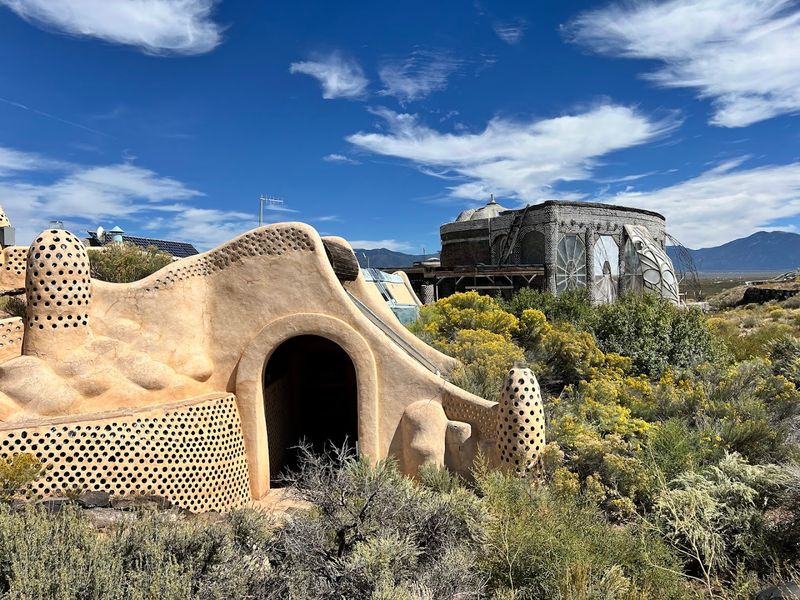
At first glance, one of these structures can feel less like a home and more like a film set for a science fiction story.
Architect Michael Reynolds began developing this style of building in the 1970s, driven by a straightforward idea: what if a house could take care of itself.
The result is a style of construction that looks futuristic on the outside but is rooted in ancient principles of working with the land rather than against it.
Each home is designed to generate its own electricity through photovoltaic solar panels and sometimes small wind turbines, storing that energy in deep-cycle battery systems tucked neatly out of sight.
No grid connection, no utility bill, no landlord calling about the thermostat.
The community grew into one of the world’s best-known off-grid subdivisions, spread across hundreds of acres of stunning high desert terrain.
Residential planning for the neighborhood formally began in 1996, and today the site includes dozens of Earthship structures.
You can find all of this waiting for you at the Greater World Earthship Community, located at 2 Earthship Way, Tres Piedras, New Mexico 87577.
Glass Walls Facing The High Desert
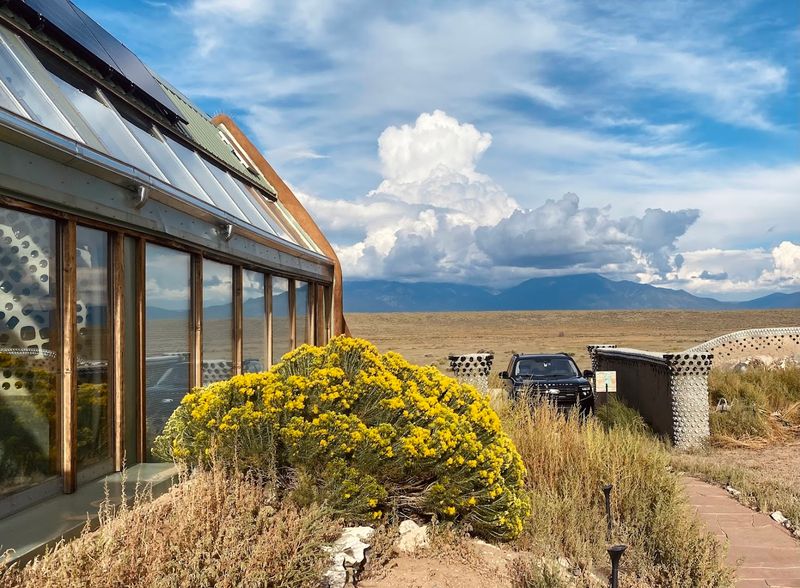
One detail stopped me first: the walls. Light moves through them like stained glass in a cathedral built from someone’s recycling bin.
Builders press aluminum cans and glass bottles directly into the mortar, and the result is a surface that catches the sun and turns an ordinary afternoon into something worth photographing.
Earthship designs use a significant share of natural and recycled material, which means creativity is not optional but rather built into the foundation.
Those glass-bottle walls sit near the large south-facing windows that are a signature feature of Earthship design, maximizing solar gain during cooler months.
The high desert light in northern New Mexico is already dramatic on its own, but filtered through blue, green, and amber glass embedded in an earthen wall, it becomes something else entirely.
Visitors on the self-guided tour, which currently runs daily from 9 AM to 4 PM for $9 per adult, get a clear view of these walls up close.
Every angle reveals a new combination of color and texture that makes the whole place feel like a living art installation rather than a neighborhood.
Sunlit Greenhouses Inside Earthen Walls
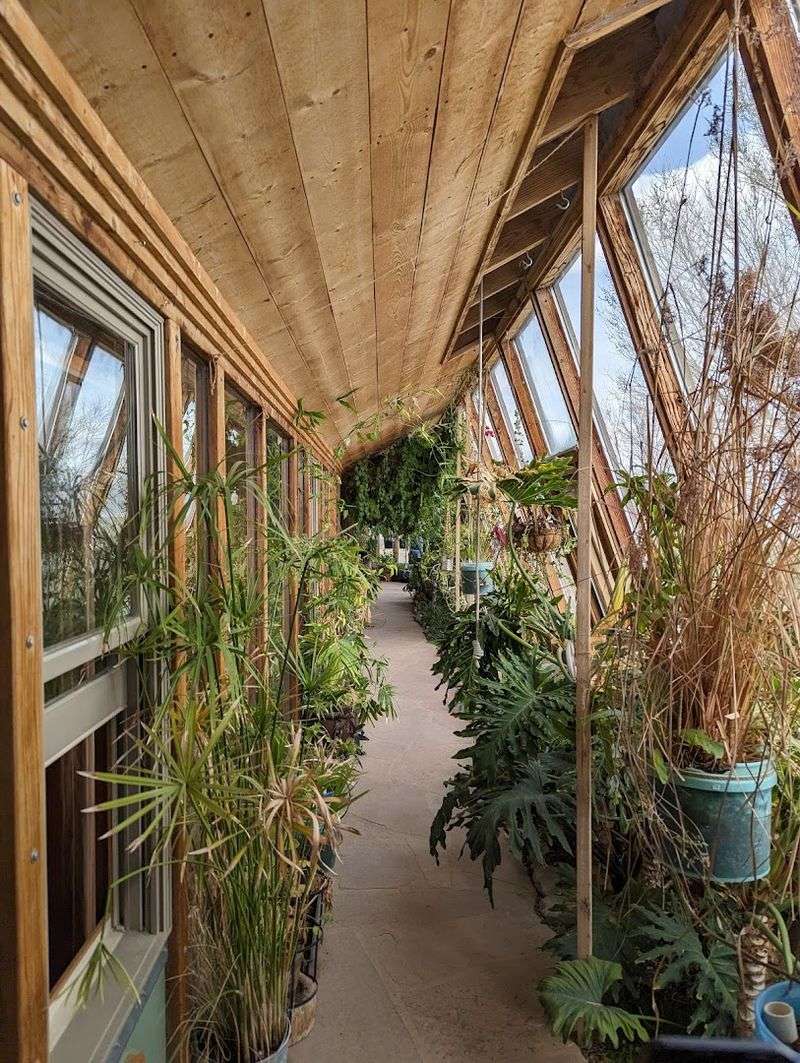
Between the thick outer wall and the main living space of every Earthship, one feature quietly steals the show. It is a fully functioning indoor greenhouse.
These integrated growing spaces use recycled water from the home’s own greywater system, meaning the plants are fed by water that has already done one job and is simply being put to work again.
Bananas, herbs, tomatoes, and even some tropical fruits can grow inside these corridors, helping supplement a resident’s food supply without a single trip to a grocery store.
The greenhouse also plays a role in temperature regulation, acting as a buffer zone that helps keep indoor spaces comfortable through passive solar principles.
Botanical cells within the greenhouse further filter greywater before it moves on to irrigate the plants, turning what would be waste into a resource.
Inside the visitor center, I kept pausing at the plant walls, genuinely surprised by how lush everything looked in the middle of a high desert landscape.
The whole setup is a quiet reminder that good design can make a building feel less like a structure and more like a living, breathing system.
Curved Forms Built Into The Mesa
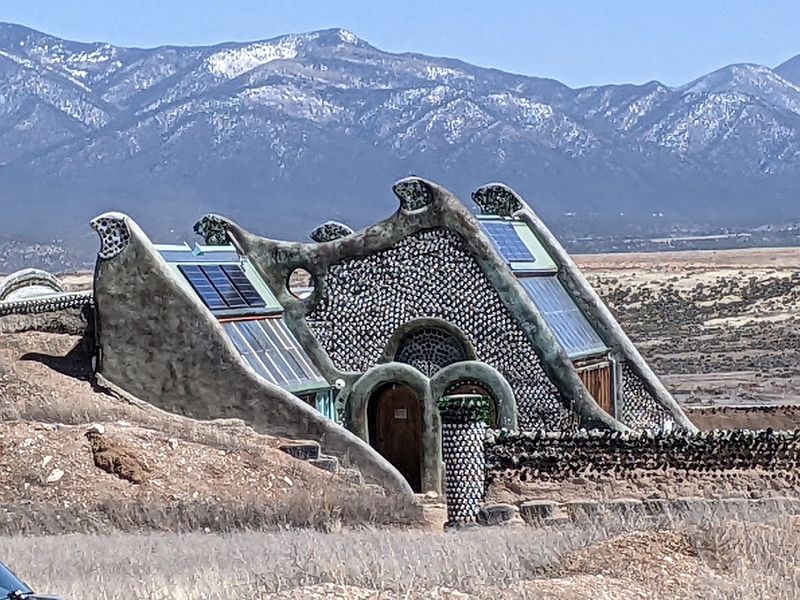
From a distance, the Earthships look less like houses and more like the mesa itself decided to take on a new shape overnight.
The curved rooflines, rounded walls, and earth-toned exteriors blend so naturally into the surrounding terrain that spotting them from the road requires a second look.
This is not an accident but a deliberate choice rooted in the philosophy that a building should belong to its landscape rather than impose on it.
The primary structural walls are built from earth-packed tires, which are rammed with soil and stacked like oversized bricks to create a thermal mass that holds heat during cold nights and stays cool during blazing summer afternoons.
That thermal mass helps interior temperatures stay remarkably stable, often described as hovering near 70 degrees Fahrenheit without a furnace or an air conditioning unit running in the background.
Natural ventilation comes from cooling tubes buried in the earth and convection skylights that pull warm air out and draw cooler air in.
The Sangre de Cristo Mountains frame the whole scene from the east, adding a backdrop that makes the community look even more like something that grew here naturally rather than something that was built.
A Quiet Landscape Of Self-Sufficient Design
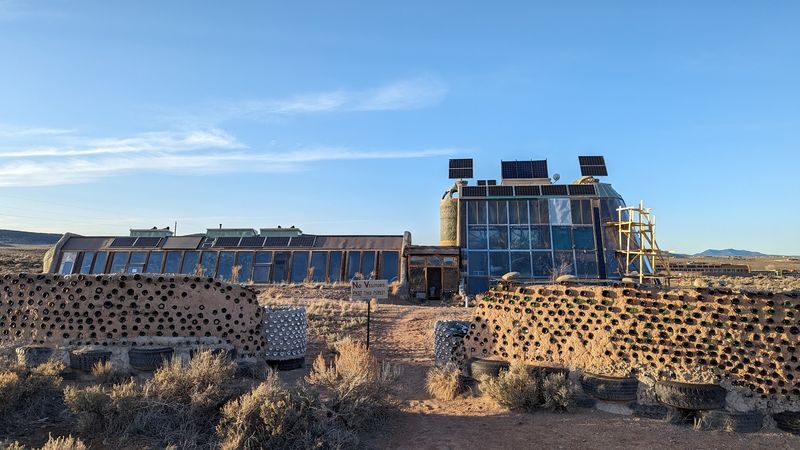
This community has a particular kind of quiet I did not expect. It comes from a neighborhood where very little hums, buzzes, or rattles the way conventional infrastructure tends to do.
No power lines cut across the sky, no gas meters tick on the side of the house, and no water trucks rumble through as part of ordinary daily life.
Earthships collect rainwater and snowmelt directly from their rooftops, channeling it into cisterns where it is filtered and made ready for drinking, cooking, bathing, and irrigating those indoor gardens.
Greywater from sinks and showers cycles back through the botanical cells before being used again, and the system keeps turning water into a resource rather than a waste product.
Solar panels handle the electricity, batteries store what is not immediately used, and the whole design is meant to minimize or eliminate conventional utility connections.
On a clear morning, the grounds made me think about how much invisible infrastructure most of us take for granted every single day.
This place strips much of that away and replaces it with something that feels both radical and, once you understand how it works, surprisingly sensible.
Recycled Details With Unexpected Beauty
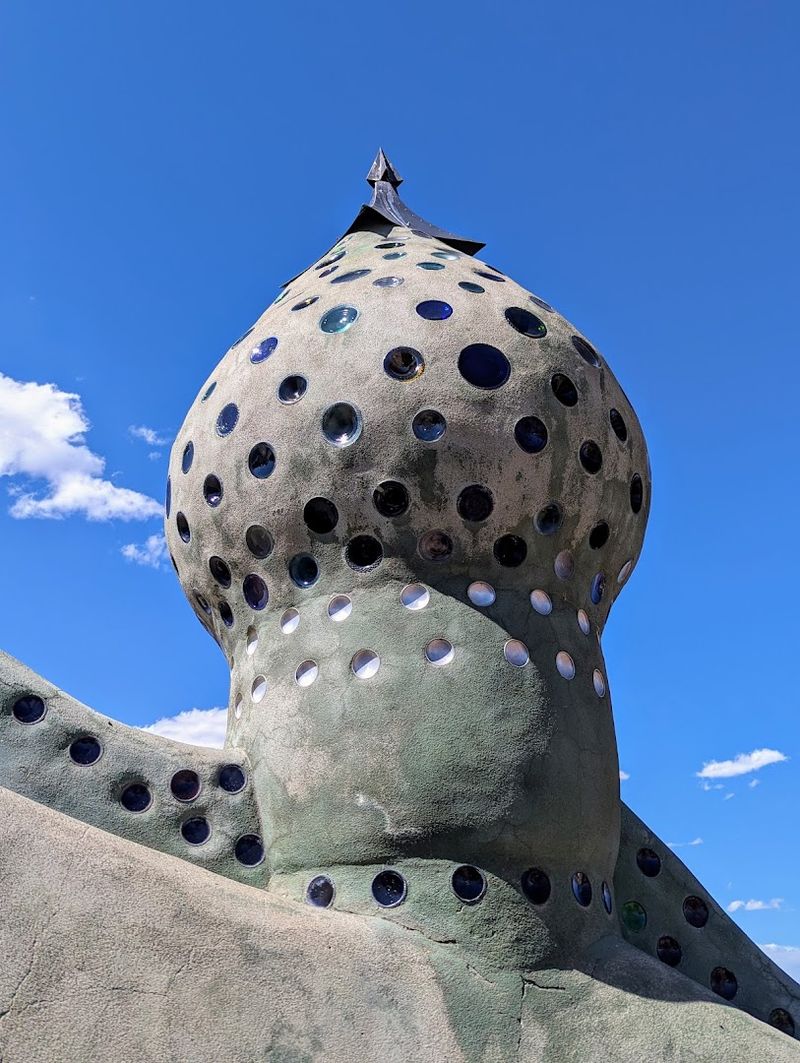
The most visually striking parts of these homes often come from materials most people would have sent to the landfill without a second thought.
Old tires, aluminum cans, glass bottles, and reclaimed wood all show up here not as afterthoughts but as featured design elements that give each structure its own distinct personality.
Earthship design has long relied on a significant amount of natural and recycled material, which means builders have to think creatively about every wall, every surface, and every decorative detail.
The result is that no two Earthships look exactly alike, and a visit through the public tour areas feels like flipping through a portfolio of experiments in upcycled design.
Some walls shimmer with rows of glass bottles arranged by color, creating patterns that shift depending on where the sun is sitting in the sky.
Others incorporate vintage license plates, ceramic tiles, and found objects in ways that feel playful rather than cluttered.
Photographers visiting the community tend to linger here far longer than they planned, and I was absolutely no exception to that pattern.
Where Desert Views Meet Living Architecture
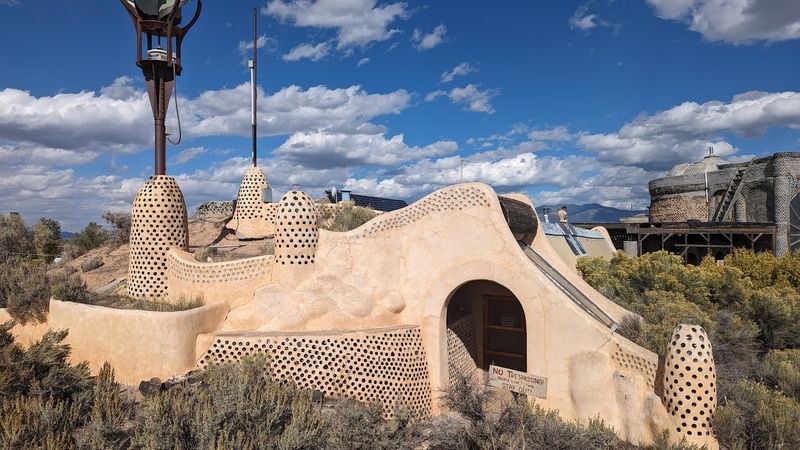
Every south-facing wall of an Earthship feels like a giant window. Inside, the Sangre de Cristo Mountains fill the view without making the design feel showy.
The large glazed facades are not just for the view, though the view certainly does not hurt anything.
They are the primary mechanism through which the home collects solar energy passively, warming the thick earthen walls that then release that heat slowly through the night.
The design means that the building is always in conversation with its environment, responding to the angle of the sun, the temperature of the air, and the rhythm of the seasons.
Visitors who book one of the overnight rentals available through the community get to experience this firsthand, waking up to a panoramic stretch of high desert framed by glass and earthen walls.
The visitor experience focuses on designated areas, since the Greater World Earthship Community is also a private residential neighborhood.
The visitor center is currently open daily from 9 AM to 4 PM, and even a short walk through the public areas makes it clear why this place stays with people long after they leave.
Hidden Corners Of An Off-Grid Dream
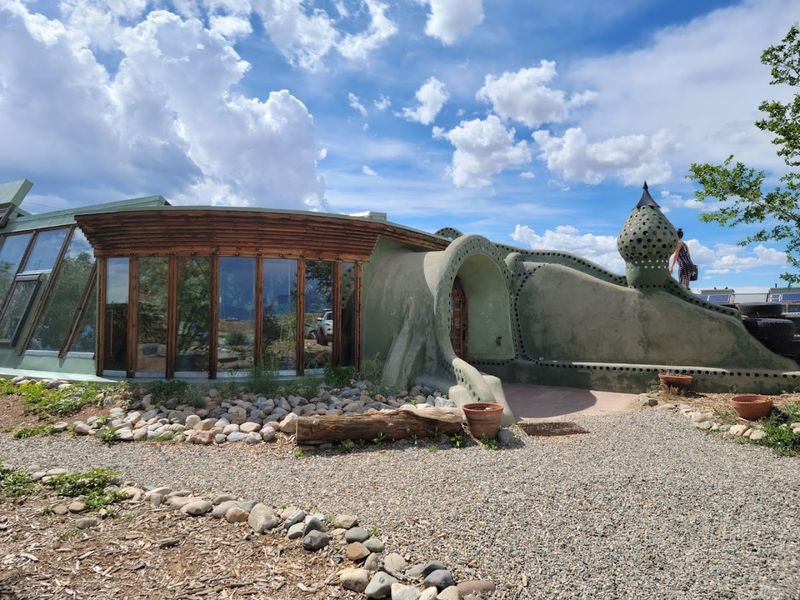
Beyond the visible solar panels and the striking glass-bottle walls, the Greater World Earthship Community holds smaller details that only reveal themselves when you slow down and pay attention.
Hand-plastered curves soften every interior corner, and natural light from convection skylights above creates a glow that no artificial fixture could replicate.
The gift shop at the visitor center carries books about Earthship design, and the people answering questions make the visit feel more like a conversation than a transaction.
Guided tours are currently listed daily at 4 PM and offer a deeper look at the systems and stories behind the structures, while the $9 self-guided option gives casual visitors plenty to absorb at their own pace.
Some of the homes within the community are available as short-term rentals, and staying overnight turns a fascinating afternoon stop into a full immersion in off-grid living.
One guest mentioned bringing biodegradable soap and settling into a rhythm that felt surprisingly luxurious for a place designed without conventional utility connections.
Decades after Reynolds first began imagining homes that could help sustain themselves, the Greater World Earthship Community in New Mexico continues to make that dream look not just possible but genuinely beautiful.