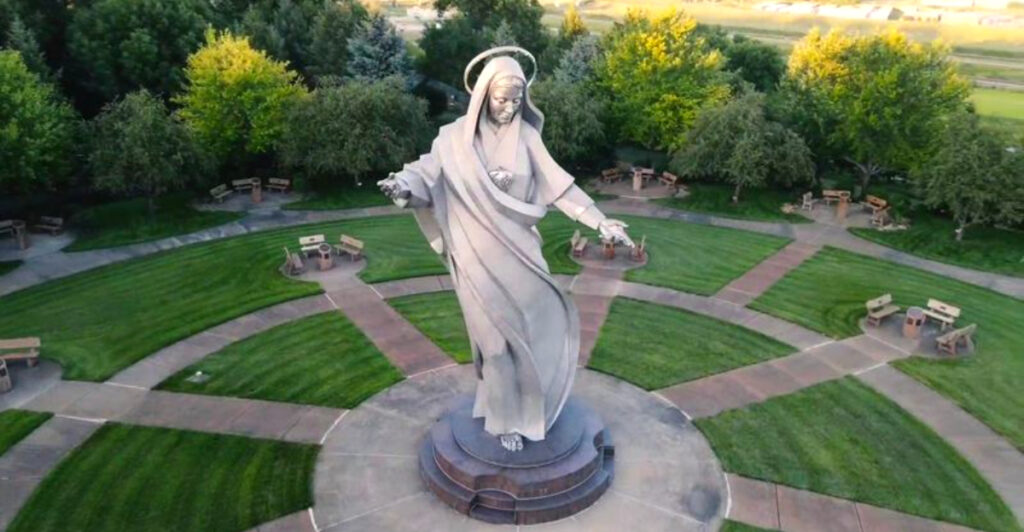
Northwest Iowa has a quiet sanctuary that does not exactly ease into its first impression.
Before you even reach the entrance, two massive steel sculptures rise above the gardens, one 30 feet tall and the other 33 feet, making the whole place feel far larger than its peaceful setting suggests.
The grounds offer much more than a quick photo stop. Inside and around the property, visitors find a rare hand-carved wood depiction of The Last Supper, a grotto, a chapel, thoughtful garden paths, benches for slow wandering, and a gift shop that feels genuinely worth browsing.
It is calm, surprising, and quietly powerful in a way that sneaks up on you. Iowa has plenty of unexpected places, but this Sioux City sanctuary makes a strong case for being one of the most memorable.
Two Towering Steel Sculptures That Redefine the Skyline
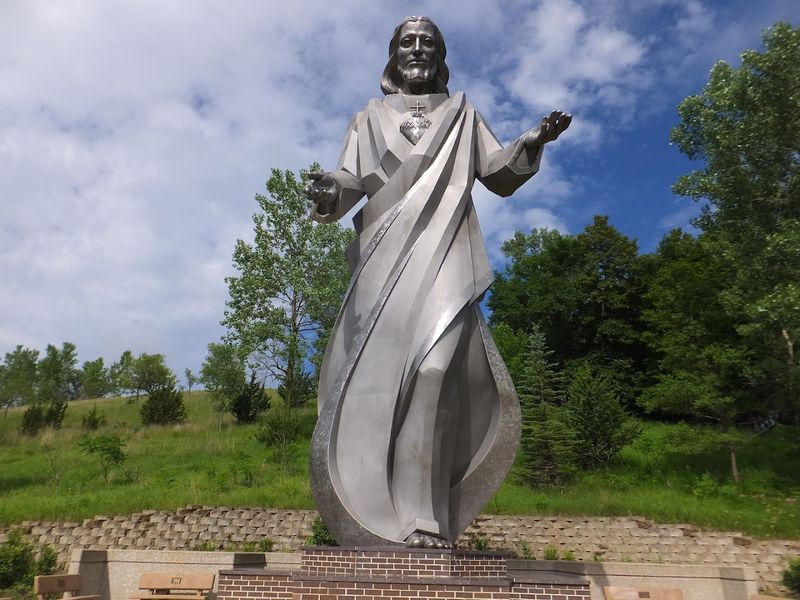
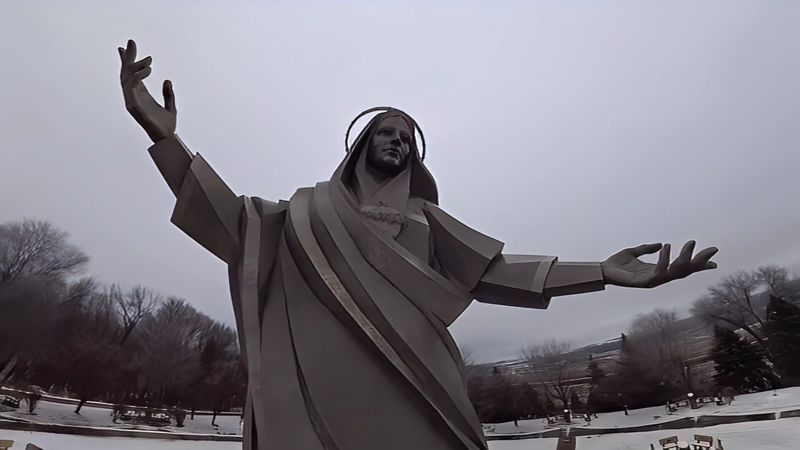
Most sculptures wait politely inside a museum, but the two massive figures at Trinity Heights clearly had bigger plans.
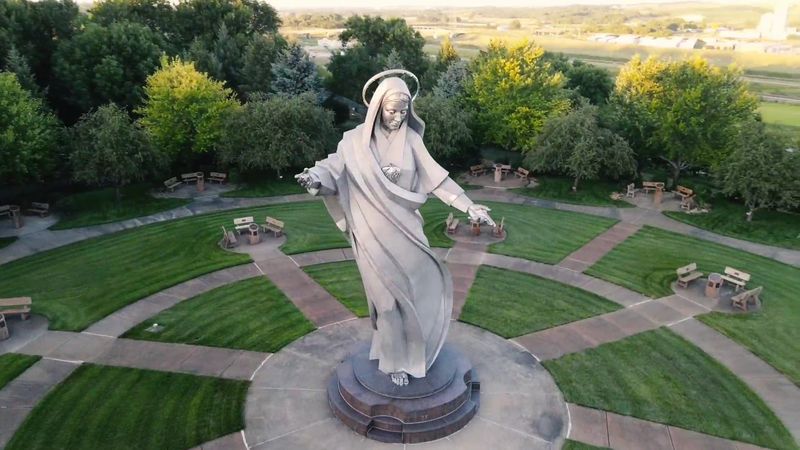
The Sacred Heart of Jesus stands 33 feet tall, while the Immaculate Heart of Mary, Queen of Peace rises 30 feet nearby, creating a first impression that is hard to forget.
Together, they anchor the outdoor grounds in a way that makes the whole sanctuary feel larger, quieter, and more powerful the moment you arrive.
No photo really prepares you for the scale. You can try to fit both sculptures into one frame, but your camera may start negotiating for better working conditions.
The metalwork is detailed enough to reward a closer look, but the full effect really lands when you step back and see the figures against the open Iowa sky.
These are not simple decorative pieces. They are the heart of the property, and the surrounding gardens are designed to guide your attention toward them from several directions.
The grounds are beautifully maintained, which makes the whole setting feel peaceful, intentional, and carefully cared for.
Standing in front of something this large and quietly commanding is a surprisingly moving experience, whether you come for faith, art, or simple curiosity. You will find Trinity Heights at 2511 33rd St, Sioux City, IA 51108.
The Last Supper Wood Carving That Belongs in a Different Century
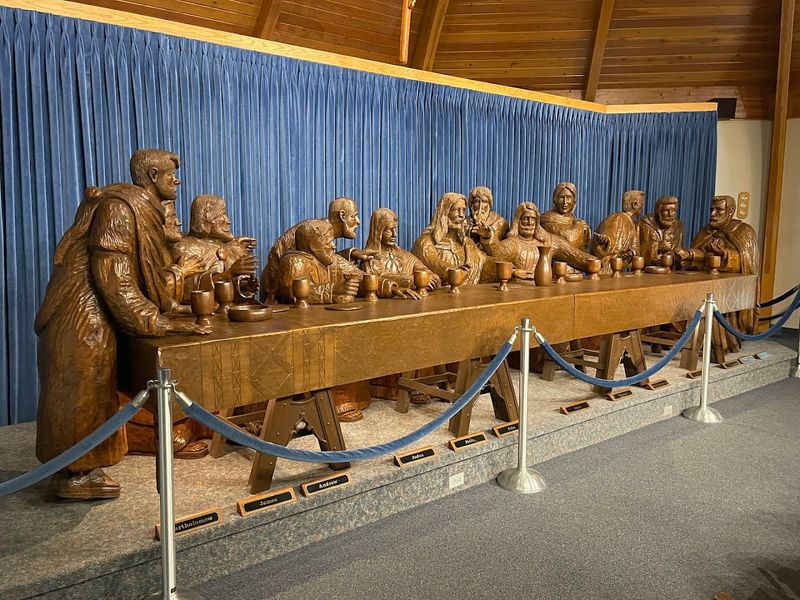
Jerry Trauffler was a self-taught woodcarver from Le Mars, Iowa, and what he created inside the St. Joseph Center at Trinity Heights may be the most jaw-dropping thing in the entire state.
His 22-foot-long, life-size wood carving of The Last Supper is based on Leonardo da Vinci’s famous painting, and it is one of only three in-the-round design wood sculptures of its kind in the world.
The detail is absurd in the most complimentary sense. Every fold of fabric, every expression on the apostles’ faces, every hand position carved from wood by a man who taught himself how to do it.
That context makes the whole thing hit differently than it would in a formal art institution.
The sculpture includes 12 apostles and Jesus, individually carved goblets, unleavened bread, and a massive table, with the work made from basswood and pine. This piece alone justifies the drive, no matter how far you are coming from.
I spent more time in this room than I planned, and I was not alone. A couple near me stood completely silent for several minutes, which felt like the appropriate response.
The Chapel and Its Quiet Indoor Spaces
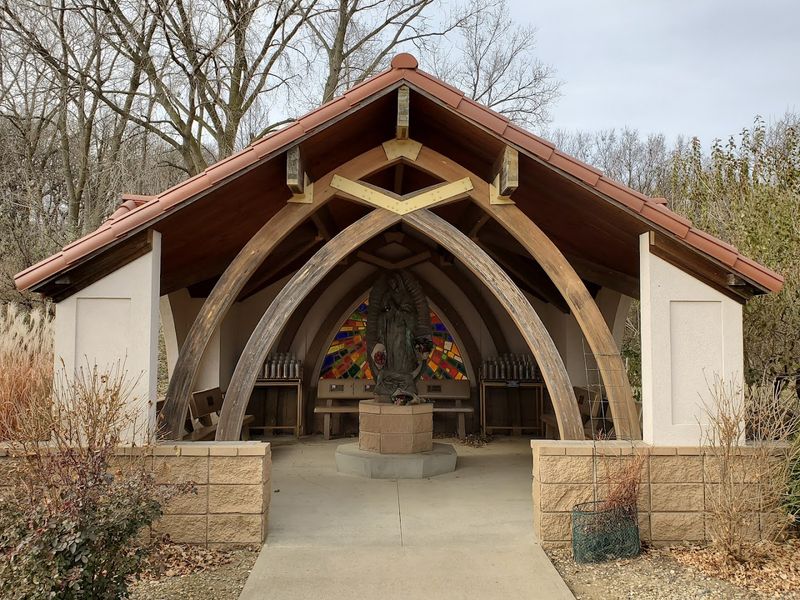
Off to one side of the main complex sits a chapel that feels like it belongs in a much older country.
The religious details inside are arranged carefully, and the lighting is low enough that you instinctively lower your voice when you walk in.
Trinity Heights includes indoor spaces connected to prayer, reflection, and religious art, and whether or not you share the faith behind them, there is something genuinely arresting about the craftsmanship and the history packed into such a compact space.
The chapel connects smoothly to the rest of the indoor exhibits, so moving from the wood carving to the chapel to the outdoor gardens feels like a single continuous journey rather than a series of separate stops. I noticed that the chapel draws a quieter crowd than the outdoor areas.
Families with young kids tend to linger outside, while the chapel seems to attract people who came specifically looking for a moment of stillness.
Both groups seem to leave satisfied with what they found.
The Stations of the Cross Leading Up to the Jesus Sculpture
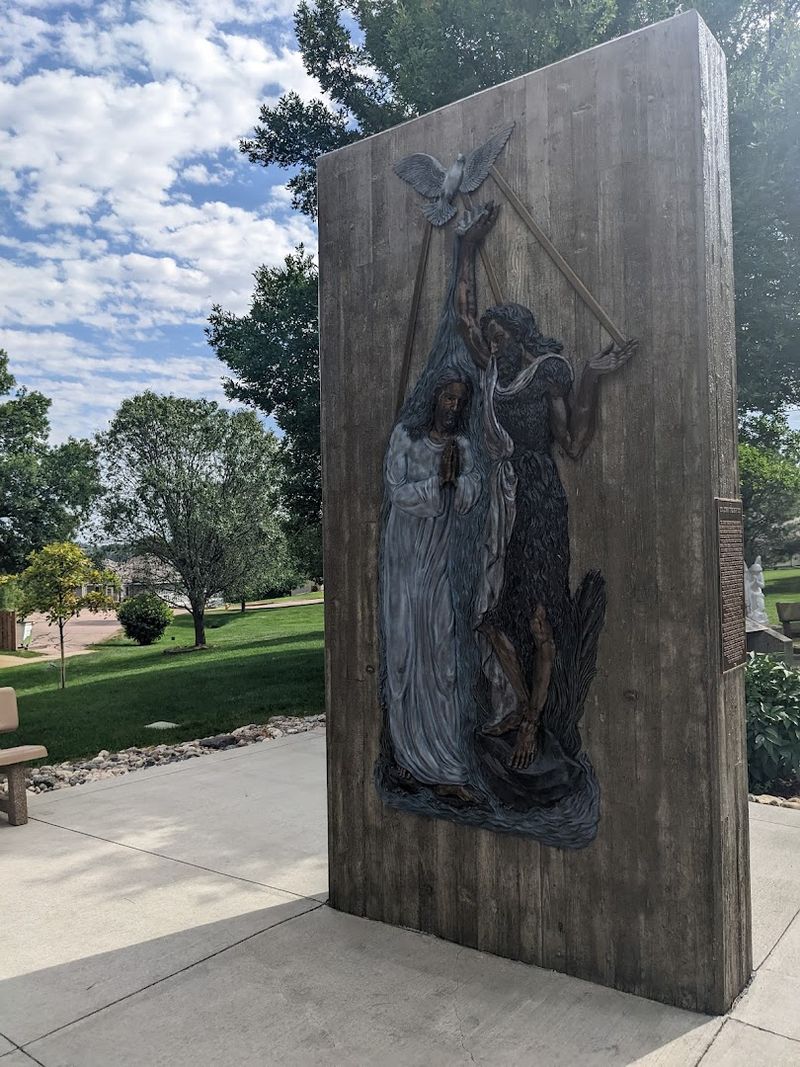
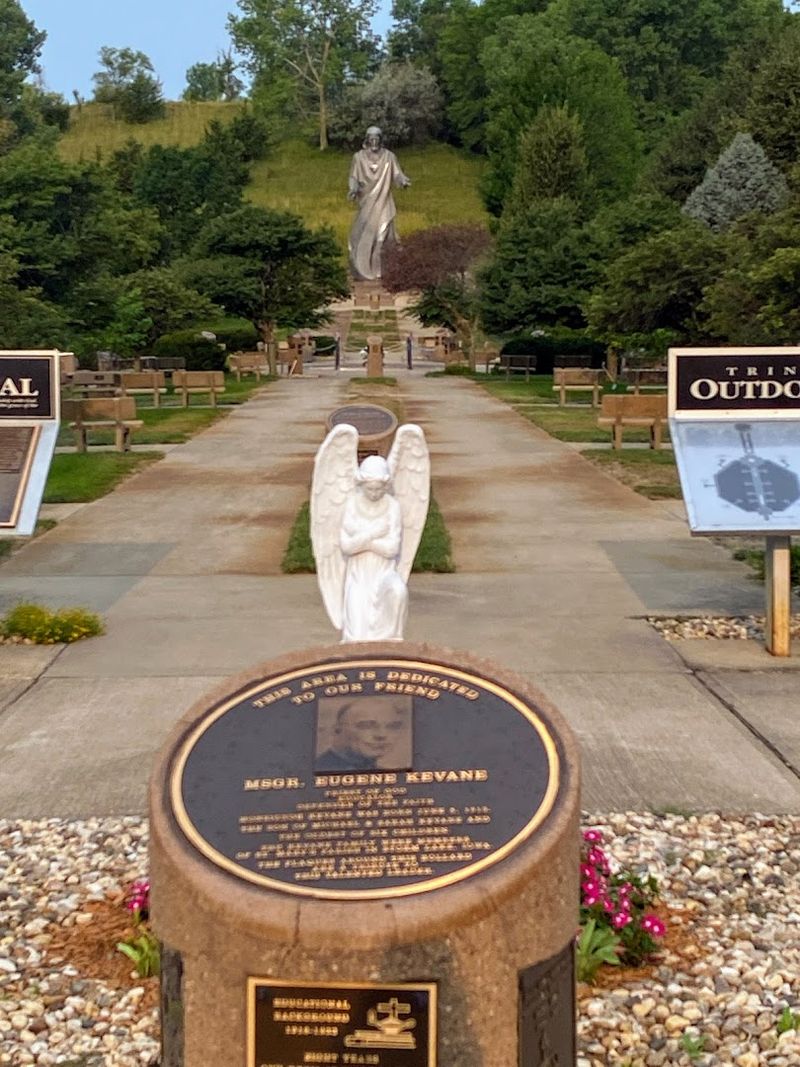
The path leading up to the 35-foot Jesus sculpture is lined with the Stations of the Cross, each one rendered in detailed metalwork panels that illustrate the corresponding moment.
Reading through all fourteen stations while walking the path takes about 20 minutes at a relaxed pace, and the layout makes it feel purposeful rather than perfunctory.
The metalwork itself is worth pausing over independently of the religious narrative. Each panel has a sculptural quality that rewards close inspection.
The artists clearly put as much thought into the craftsmanship as into the theological content, and the two elements reinforce each other in a way that works even if you are approaching it purely as an art walk.
By the time you reach the base of the main sculpture, the scale of it feels earned rather than sudden.
The gradual approach gives you time to shift gears mentally, and arriving at the statue after walking the full path carries a different weight than simply driving up and parking in front of it.
That sequencing was clearly intentional, and it is one of the smarter design decisions on the property.
The Grotto and Garden Grounds Worth More Than a Quick Glance
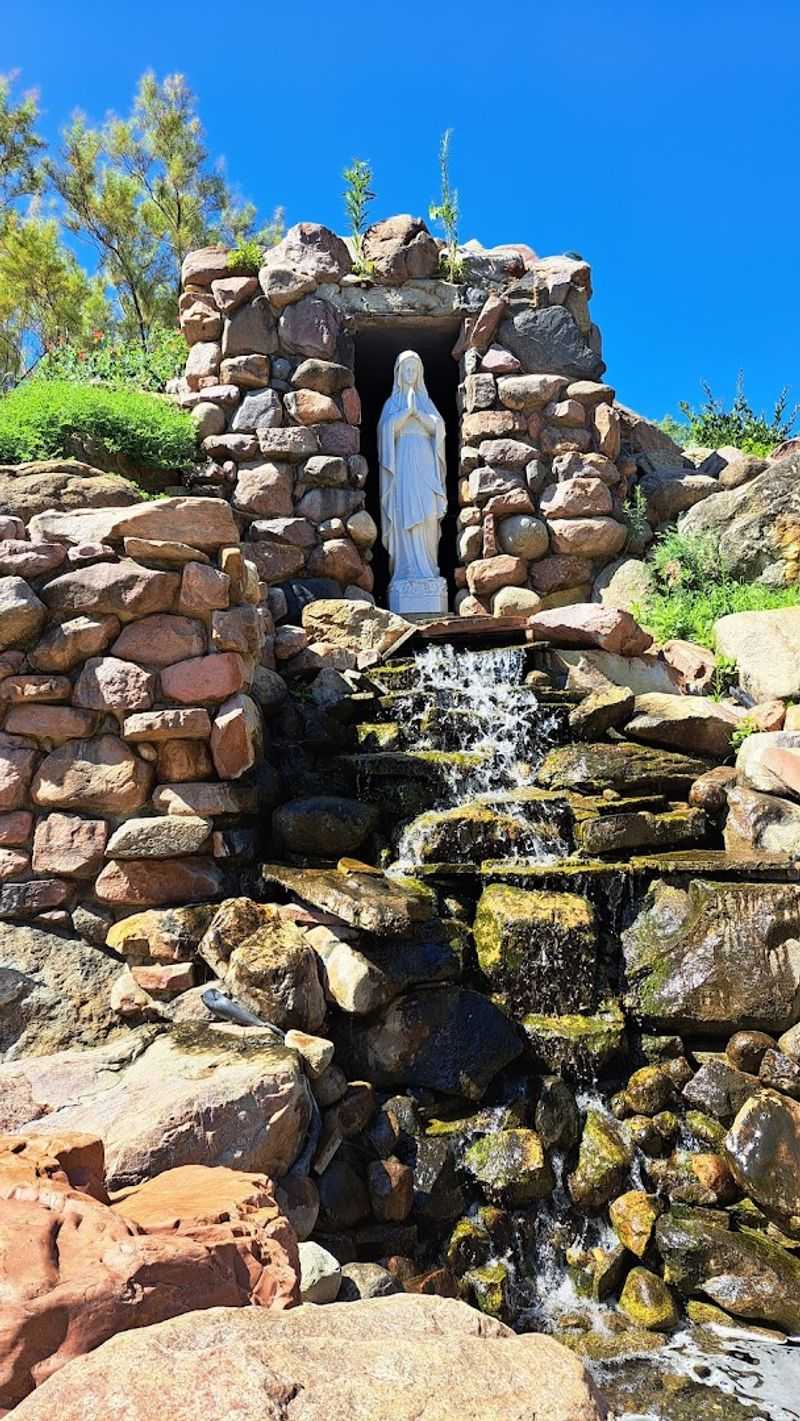
A lot of people walk the main path, see the two big sculptures, and consider the visit complete. That is a reasonable instinct, but the grotto is the part that catches people off guard.
Multiple people who have been to Trinity Heights more than once mention it as the detail they underestimated on their first visit.
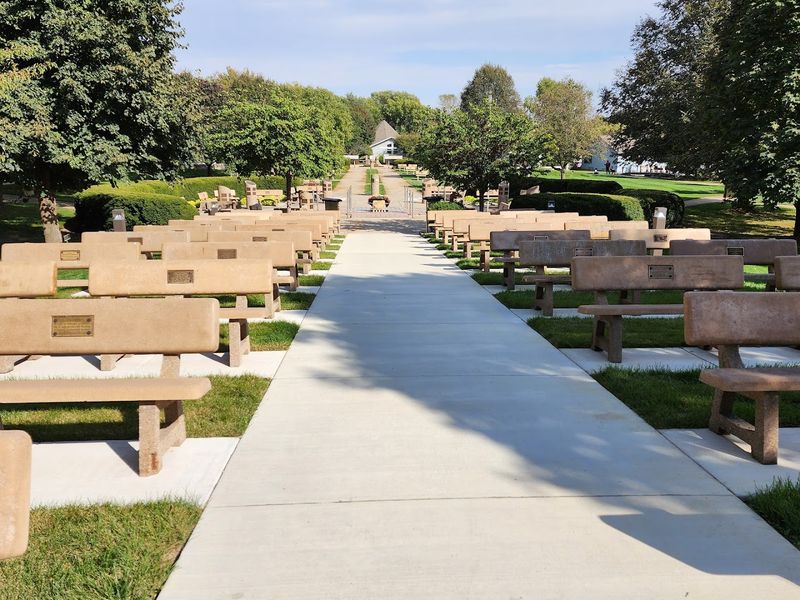
The garden grounds are dotted with statues of saints, and benches are positioned throughout so that sitting down for a while feels invited rather than incidental. The landscaping is maintained at a level that would make a botanical garden curator nod approvingly.
Every section of the grounds has been thought through, and nothing feels like an afterthought or a filler piece.
I went on a weekday afternoon and had stretches of the garden almost entirely to myself. The quiet is real, not the kind of quiet you get when a place is simply empty, but the kind that comes from a space that was designed with stillness in mind.
If you have a habit of rushing through outdoor attractions, this is a good place to practice slowing down.
A Free Admission Policy That Runs on Donations
Trinity Heights does not charge admission. The entire property, including the indoor exhibits, the chapel, the gardens, and the grotto, is free to enter.
That fact alone makes it one of the more generous cultural offerings in Iowa, and it explains why the place draws visitors from several states away without requiring a single ticket purchase.
The operation runs on donations, and the gift shop also helps support the grounds. The shop carries both Catholic and non-Catholic religious items, and the selection is more thoughtful than the average tourist gift shop.
It is the kind of place where you might actually find something you want to keep rather than something you buy out of obligation.
A 96-year-old volunteer was apparently still helping out on the grounds as recently as a few years ago, which tells you something about the community investment behind this place. The staff is described consistently as helpful and welcoming.
Dropping a donation in the box on your way out feels less like a transaction and more like a small thank-you for something that clearly took decades of care and effort to build.
What to Know Before Your First Visit
Trinity Heights has different hours depending on which part of the property you want to visit.
The outdoor grounds are open daily from 9 AM to 9 PM, while the Gift Shop and St. Joseph Center are open Monday through Saturday from 10 AM to 4 PM and Sunday from 12 PM to 4 PM.
Most people who do a thorough walkthrough, including the indoor exhibits and the outdoor grounds, spend between two and three hours on the property.
That estimate feels accurate based on my own visit.
The address is 2511 33rd St, Sioux City, IA 51108, and parking is available on site. The grounds are outdoors for the most part, so weather matters.
The place holds up in cold weather, though checking ahead is smart during snowy or rough conditions.
That said, the gardens are at their most visually rewarding in warmer months when everything is in bloom.
One practical note worth mentioning: dogs are not permitted on the grounds. That rule has frustrated at least one visitor, so if you are traveling with a pet, plan accordingly.
The phone number is 712-239-8670 if you need to confirm hours or ask questions before making a long drive. The official website also has updated information.
Why Non-Catholics Feel Welcome Here Too
Trinity Heights is rooted in Catholic faith, and that context shapes everything from the artwork to the chapel to the layout of the Stations of the Cross.
At the same time, multiple people who identify as non-Catholic Christians have noted that the place never felt exclusionary during their visits.
The art and the architecture do a lot of the work here. A hand-carved depiction of The Last Supper that is one of four in the world does not require a specific theological framework to appreciate.
The scale of the outdoor sculptures reads as a statement about human effort and devotion regardless of your personal beliefs.
That openness seems to be part of the founding intention rather than a happy accident. The gift shop carries items that are not exclusively Catholic, and the grounds are designed for reflection and quiet rather than instruction or conversion.
Families from a range of backgrounds show up regularly, and the atmosphere accommodates them without making anyone feel like they wandered into the wrong room.
That kind of hospitality is harder to design than it looks, and Trinity Heights pulls it off consistently.
The Ongoing Construction and What Is Still Coming
Trinity Heights is still growing. A new chapel has been under construction on the property, and that means the version of Trinity Heights you visit today may continue changing as the project moves forward.
That is either mildly inconvenient or genuinely exciting depending on how you look at it.
Recent reporting has described the chapel project as being built in stages as donations come in, with the new chapel planned to seat more than 145 people.
That captures something true about the place: it is worth coming back to, and the ongoing development gives repeat visitors a reason to do exactly that.
The full 16-acre shrine remains open seven days a week, and the completed sections are more than enough to fill a half-day visit. Nothing about the current state of the grounds feels unfinished in a way that diminishes the experience.
The open sections are polished, maintained, and fully operational. When the new chapel is complete, Trinity Heights in Sioux City, Iowa will likely draw an even wider audience than it already does.