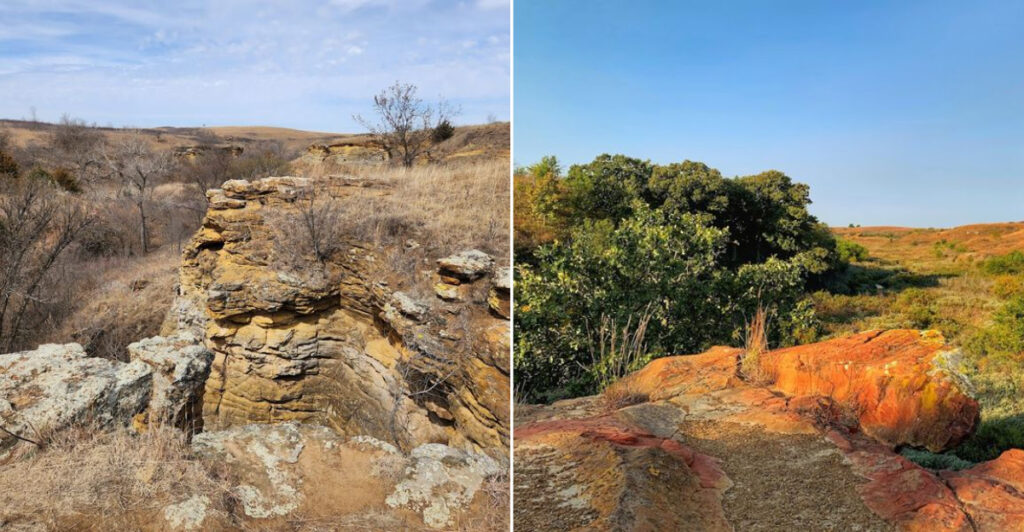
Kansas loves to surprise anyone who thinks the state is all soft horizons and open farmland.
Out beyond the familiar highway views, the ground suddenly breaks into something wilder, with carved stone, sandy bends, wind-shaped walls, shadowy cuts, and a rough-edged beauty that feels borrowed from a desert postcard.
The trail has that rare “wait, this is Kansas?” effect, the kind that turns a simple hike into a double take.
Every turn seems to pull the scenery farther from what you expected, with just enough grit, quiet, and drama to feel like a secret landscape hiding in plain sight.
It is rugged without feeling overwhelming, scenic without trying too hard, and memorable in the best road-trip way.
I always get excited when a place challenges my assumptions, and this canyon country feels like the kind of discovery that makes you slow down, look around, and wonder how many other surprises Kansas has been keeping to itself.
The Canyon Landscape That Defies Kansas Stereotypes
Forget everything you think you know about Kansas terrain, because Horsethief Canyon Trail delivers a landscape that genuinely stops people mid-step.
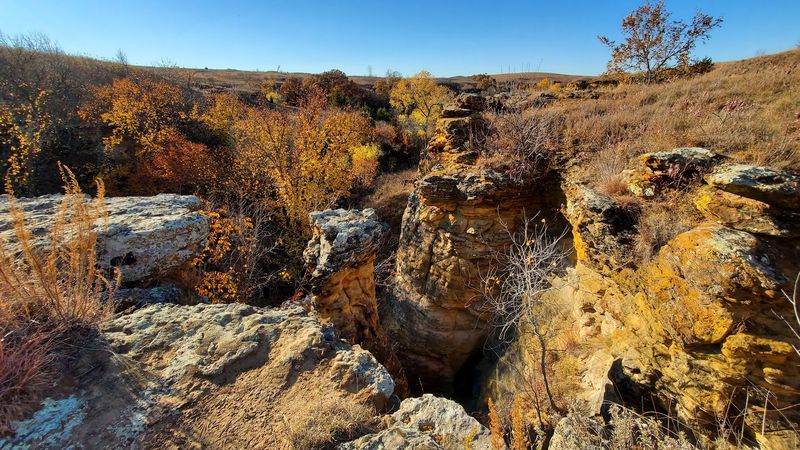
Towering sandstone bluffs rise sharply from the canyon floor, casting long shadows across rocky paths below.
The canyon walls display layers of warm amber, rust, and cream-colored stone that took millions of years to form.
Visitors frequently compare the scenery to places in New Mexico or Colorado, not the flat plains most outsiders associate with this state.
Kanopolis State Park sits in central Kansas near Marquette, and it preserves this remarkable terrain within an easy drive of Wichita or Salina.
The trail earns its dramatic reputation honestly, with real elevation changes and exposed rock faces that feel genuinely wild.
A Trail System With Serious Mileage And Variety
The trail network around Horsethief Canyon is part of a broader 31.59-mile system that winds through woods, bluffs, open grasslands, and canyon corridors.
Hikers can choose from routes such as Horsethief Trail, Rockin’ K Trail, Prairie Trail, and Alum Creek Trail, building anything from a shorter outing to a much longer adventure.
That kind of flexibility is rare and genuinely appreciated. Whether someone has two hours or a full day, the trail system accommodates different fitness levels and time frames without feeling like a compromise.
The Horsethief Canyon section itself rewards those who push a little farther into the route.
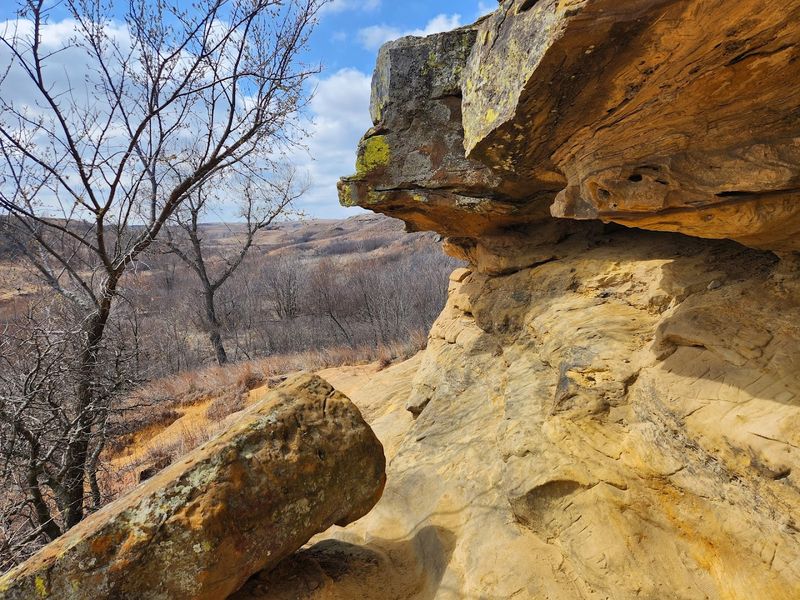
The trail is known for craggy canyons, Buffalo Creek crossings, caves, and rugged Smoky Hills scenery that feels far more dramatic than many visitors expect.
Trail variety here rivals what you might find in much more celebrated hiking regions, and that surprises visitors who arrive expecting the flatter, softer Kansas landscape they have seen from the highway.
Creek Crossings That Add Real Adventure
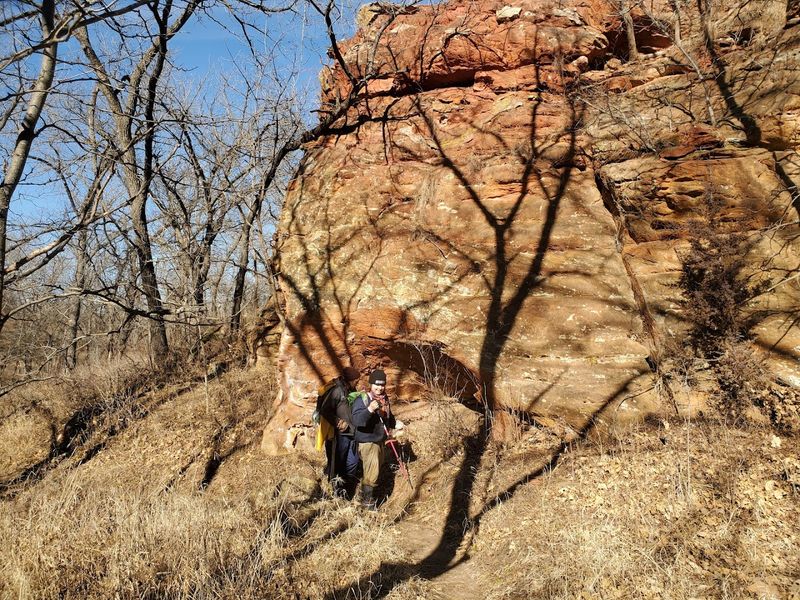
One of the most memorable features of hiking through this canyon system is navigating the creek crossings scattered along the route. These are not symbolic trickles you step over casually.
Depending on the season and recent rainfall, some crossings require careful footing across stones and logs placed by other hikers over time.
The crossings add a genuine sense of exploration to the experience.
You earn each new section of trail by committing to getting your boots a little muddy, and that physical engagement makes the scenery feel even more rewarding when you reach it.
The unpredictability keeps things interesting and gives the Horsethief Canyon Trail a character that polished, paved paths simply cannot replicate.
Wildlife Encounters That Keep You Alert
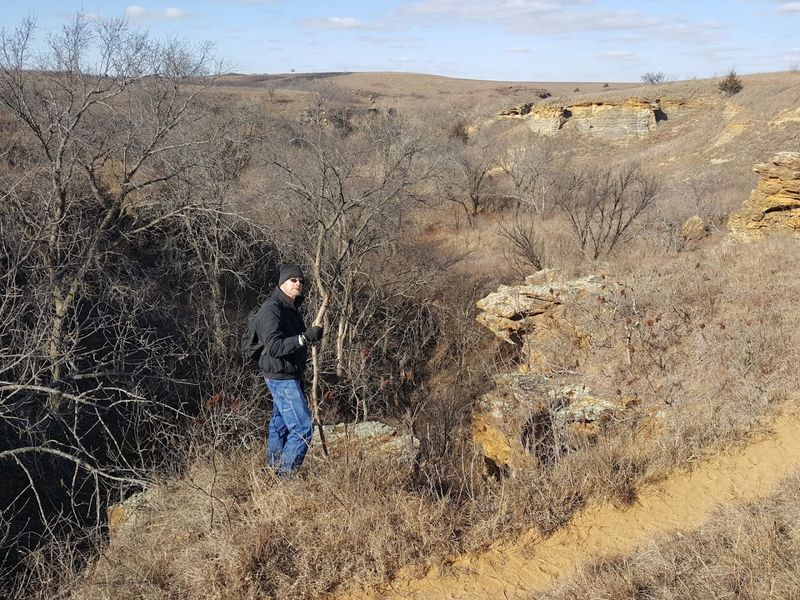
The canyon corridor functions as a natural wildlife highway, and patient hikers are frequently rewarded with memorable sightings.
Wild turkeys, white-tailed deer, raptors, and smaller woodland animals all move through this mix of creek bottom, canyon wall, grassland, and forest.
Bird activity can be especially interesting around the bluffs and open spaces, where vultures and hawks ride thermal updrafts above the canyon rim.
The diversity of species packed into this relatively compact area genuinely impresses naturalists and casual hikers alike.
There is one wildlife encounter worth preparing for specifically: snakes.
This is rugged Kansas terrain, and hikers should watch where they step and where they place their hands near rocks, ledges, and shaded crevices.
That does not mean the trail should feel frightening, only that awareness matters.
Staying on marked paths, giving wildlife plenty of room, and avoiding careless steps around rock piles will help keep the experience safe, scenic, and memorable for the right reasons.
The Geology Behind Those Stunning Cliff Walls
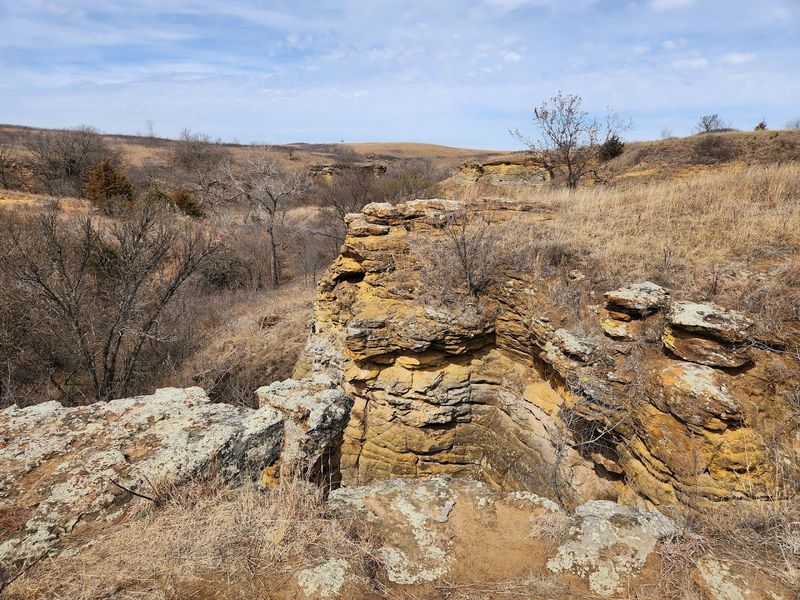
Those jaw-dropping canyon walls are not just pretty backdrops. They are a geology lesson written in stone over vast stretches of time.
The rock formations at Horsethief Canyon are part of Kansas’s Dakota sandstone country, with red and orange sandstones from the Dakota Formation and older Kiowa Formation helping shape the bluffs, caves, crevices, and rugged canyon corridors visible today.
Wind, water, and time have carved these materials into the dramatic features that make the trail feel so unexpected.
The layered patterns visible in the cliff faces tell the story of ancient environments that existed long before any human set foot on the continent.
Rock enthusiasts and curious hikers alike find themselves pausing to examine these walls up close, noticing color shifts, concretions, cross-bedding, and textures that reveal just how much natural history is packed into this landscape.
Kanopolis State Park is one of the best places in Kansas to see that geology turn into scenery.
How The Trail Got Its Outlaw-Inspired Name
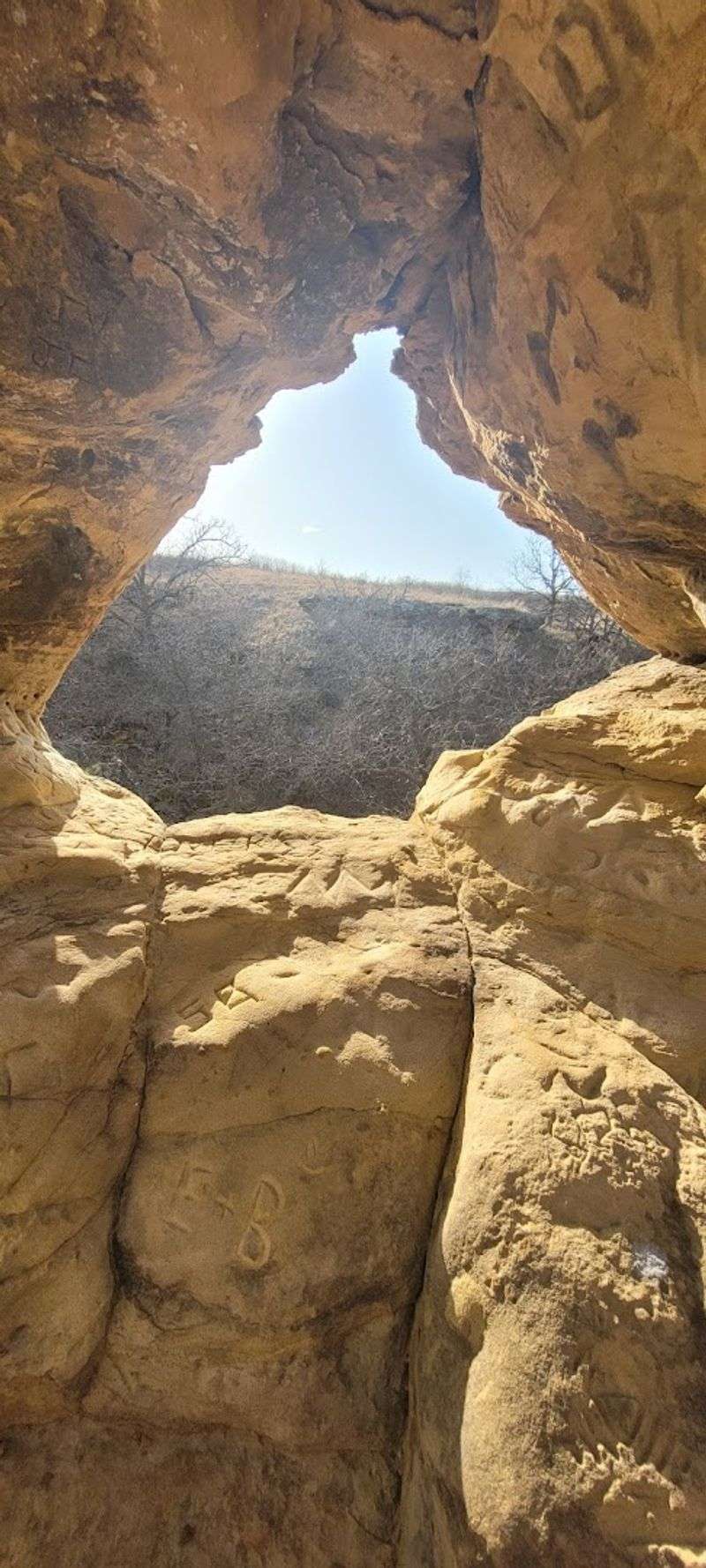
The name Horsethief Canyon carries genuine historical weight.
According to local lore, outlaws and cattle rustlers once used these remote canyon passages to hide stolen horses from law enforcement during the frontier era of the 1800s.
The dramatic terrain provided natural concealment, with winding passages and high walls that made pursuit difficult.
That colorful backstory gives the trail a personality beyond its physical features.
Hiking through the canyon, it is easy to imagine riders moving quietly through these same passages under cover of darkness, using the landscape as both shelter and escape route.
Kansas has a rich and often underappreciated frontier history, and places like Horsethief Canyon preserve that story in a tangible, walkable form.
Visitors from other eastern states who associate frontier history primarily with museums and textbooks often find it striking to stand inside a landscape where those stories actually played out in real life.
Best Seasons And Practical Timing For A Visit
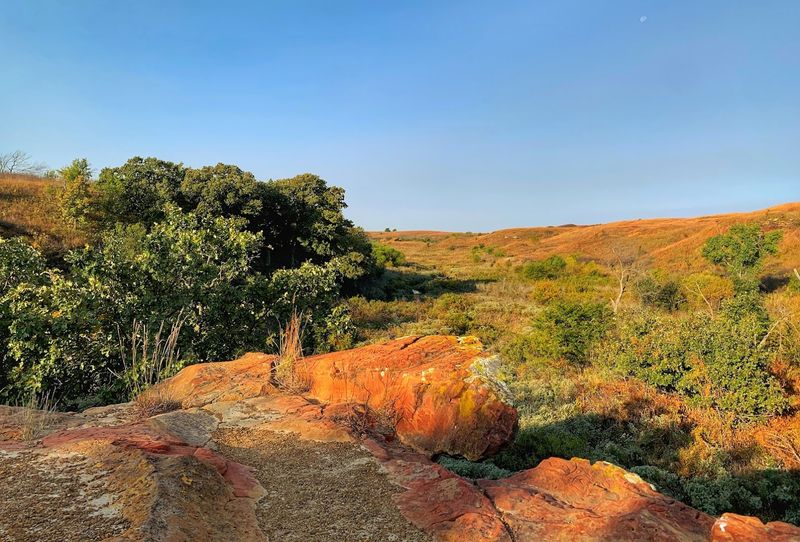
Timing a visit to Horsethief Canyon Trail makes a real difference in what you experience. Spring and fall are widely considered the best windows, offering cooler temperatures, manageable trail conditions, and spectacular light for photography.
Wildflowers in spring add bursts of color against the tan canyon walls, and the white blossoms hikers have mentioned carry a genuinely lovely fragrance.
Summer hiking is possible but comes with significant trade-offs.
Heat intensifies quickly in the canyon, trails become overgrown, ticks and spiders are far more active, and some sections can flood after heavy rain. Serious hikers generally avoid midsummer unless they start very early in the morning.
Winter visits offer solitude and crisp air, with fewer crowds and better visibility through the bare trees.
The park office at 200 Horsethief Rd, Marquette, KS 67464.
Camping Options That Extend The Canyon Experience
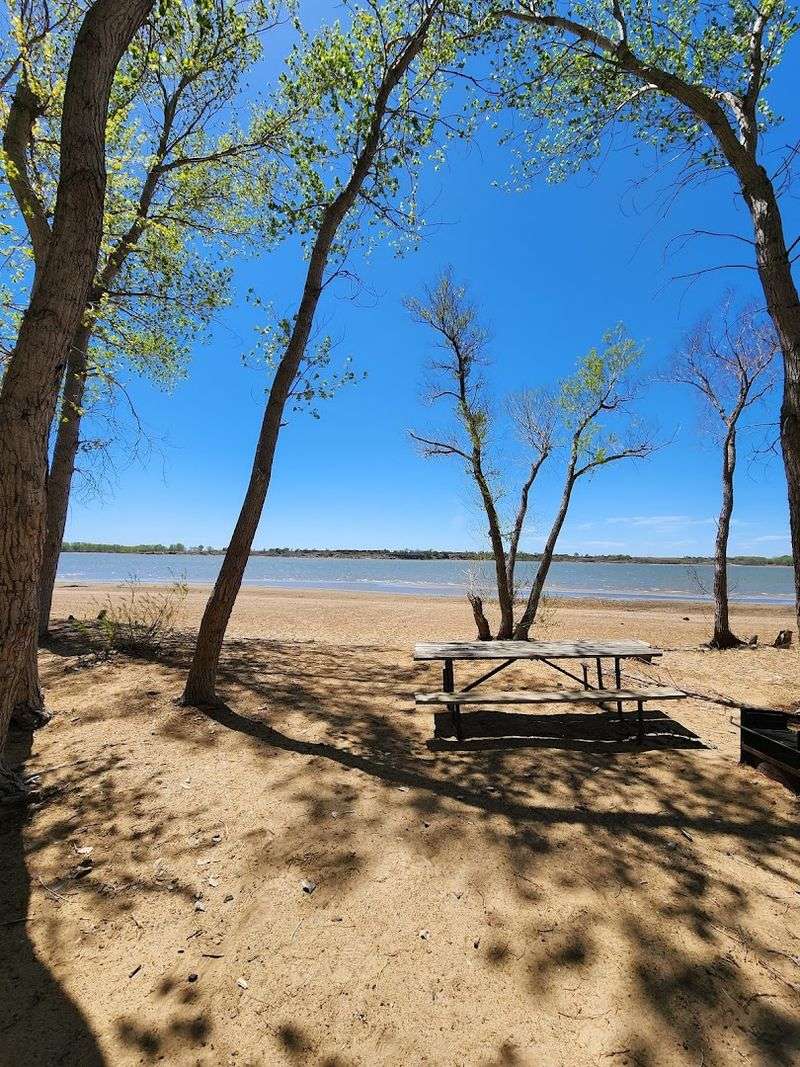
Spending a single afternoon on the trail is satisfying, but staying overnight transforms the entire experience.
Kanopolis State Park offers a range of camping options, from standard campsites to cabins, spread across several campground areas around the reservoir.
The equestrian campground, known as Rockin’ K, is a standout feature for riders who want to explore the trails on horseback.
It is the designated campground for equestrians and includes water-and-electric sites, electric sites, and primitive campsites, giving riders several ways to plan an overnight stay.
Campsites near the lake offer peaceful views that make mornings feel particularly rewarding.
For those new to camping or coming from more urban areas, the cabin options provide a comfortable entry point without sacrificing the sense of being genuinely immersed in the landscape.
Visitors who make the drive out will find the overnight options well worth the extra planning and preparation involved, especially if they want enough time to explore both the canyon trails and the broader park.
What To Pack Before You Hit The Canyon Trail
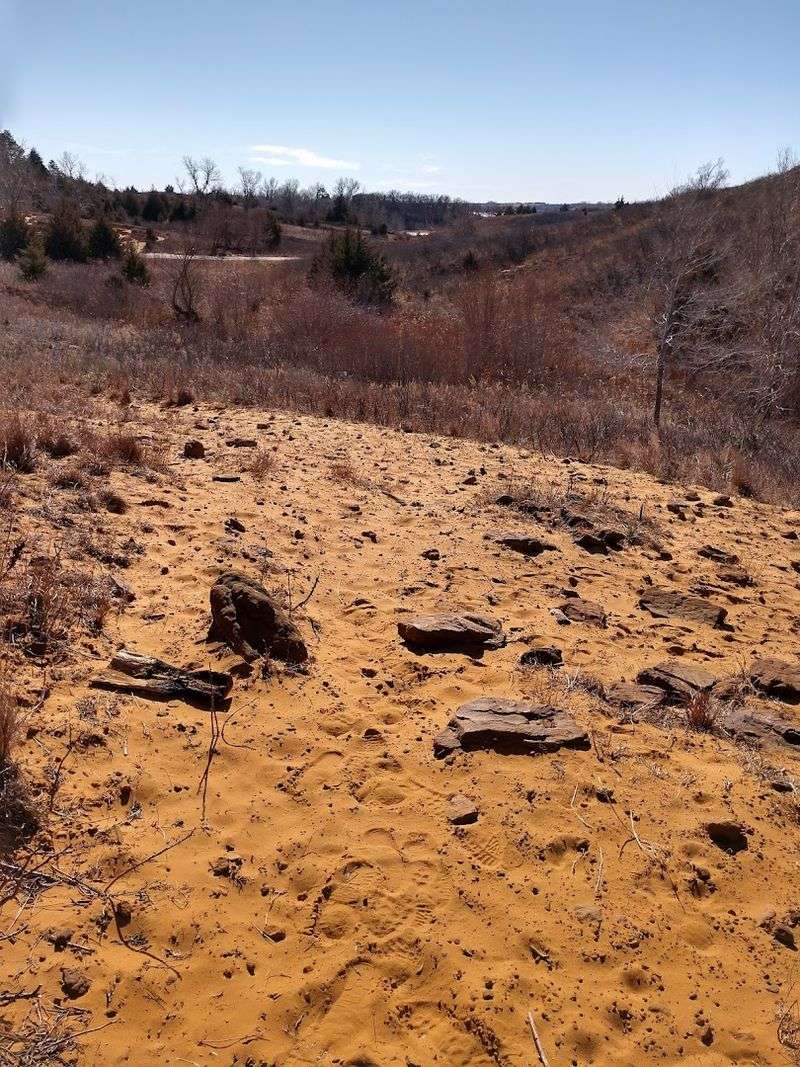
Preparation separates a great canyon hike from a miserable one, and Horsethief Canyon Trail has a few specific demands worth knowing before you leave the trailhead parking area.
Water is the most critical item, as there are no water sources along the trail itself, and the canyon terrain can be surprisingly dehydrating even on mild days.
Trekking poles earn their weight on this trail.
The elevation changes, rocky surfaces, and occasional muddy creek crossings create conditions where extra stability genuinely helps, especially on the descent sections where loose gravel can catch hikers off guard.
Tick and insect repellent is non-negotiable, particularly from late spring through early fall when bugs are most active.
A downloaded offline map is also strongly recommended, since trail maps are not always easy to find on the state park website.
Why This Kansas Canyon Belongs On Every Hiker’s Radar
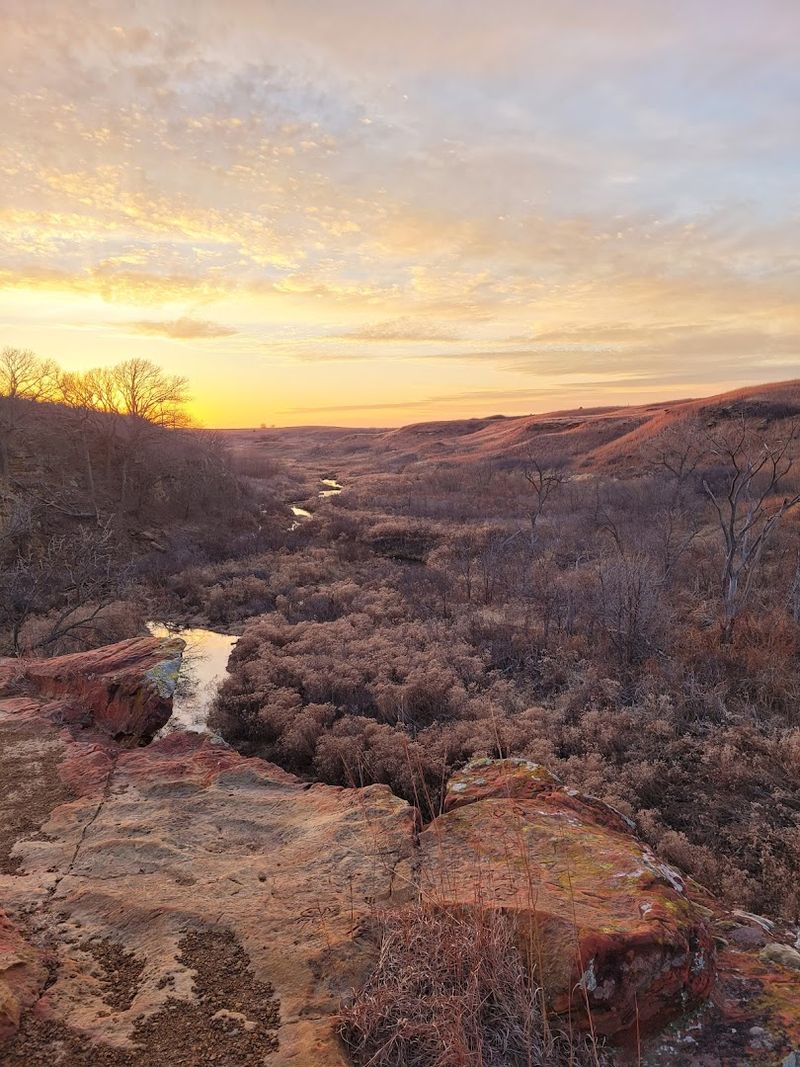
Horsethief Canyon Trail at Kanopolis State Park earns a spot on any serious hiker’s destination list for one simple reason: it delivers an experience most people never expect to find in Kansas.
The combination of rugged geology, diverse wildlife, genuine frontier atmosphere, and a well-developed trail network creates something that feels rare and special.
The park is known for Dakota sandstone bluffs, caves, crevices, creek crossings, and more than 30 miles of trails, which gives visitors much more variety than a quick glance at the map might suggest.
People come expecting a pleasant state park and leave talking about canyon walls and rocky passages for months afterward.
For hikers across the Midwest who want a rugged outdoor adventure without flying across the country, this trail is a genuinely compelling option.
A Kansas road trip pays off in ways that are hard to fully describe until you are standing near the canyon rim yourself, looking out over a landscape the state has been quietly keeping to itself.