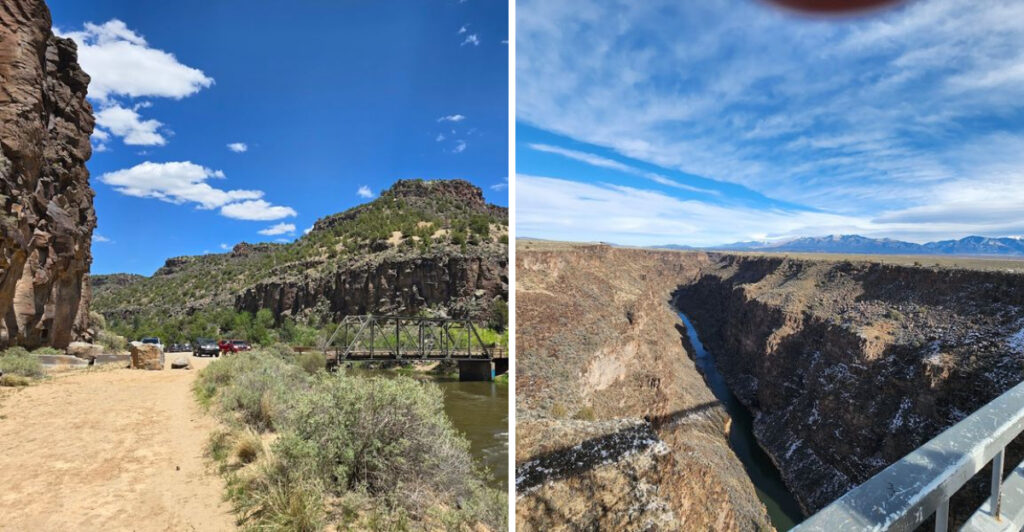
You know those places that make conversation stop in the car?
This is one of them.
Northern New Mexico has a way of opening up all at once, and then suddenly there it is: an 800-foot gorge with the Rio Grande running far below. The land looks cracked open, like the earth decided to show off a little.
During the day, the views feel almost too big to process. You keep looking back because your brain wants another second with it.
Then the sun drops.
The darkness comes in fast, and the stars start taking over the sky. Not a few polite stars either.
A full ceiling of light, bright enough to make you forget every notification waiting on your phone.
This is for campers who want quiet and hikers who like rough ground. It’s also for anyone who needs a trip that feels bigger than a weekend away.
Canyon Views Under Endless Skies
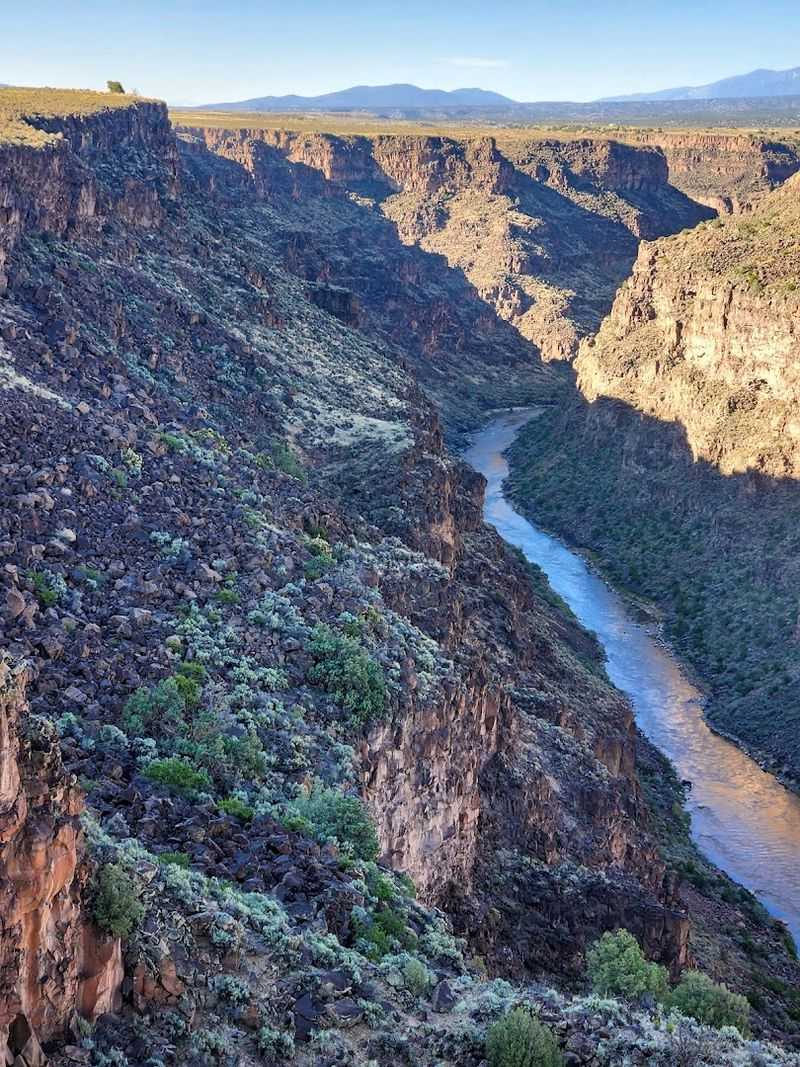
My first look from the rim of the Rio Grande Gorge made me forget to breathe for a moment.
The canyon drops roughly 800 feet through layers of volcanic basalt, and the river threading along the bottom looks almost impossibly far away.
That kind of vertical drama is rare, and it hits you with full force the second you step close to the edge.
The gorge was carved over millions of years as the Rio Grande cut through ancient lava flows, leaving behind walls that glow in shades of rust and deep amber depending on the time of day.
The views feel bigger than expected out here, especially with so much open space around the rim and far fewer crowds than many famous park overlooks.
I found a bench along one of the marked rim trails and just sat there watching shadows shift across the canyon walls as the sun moved overhead.
The Rio Grande Gorge Visitor Center near Taos offers helpful context about the geology, recreation areas, and safe ways to explore the monument.
Honestly, no photograph I have ever taken comes close to capturing what standing on that rim actually feels like at Río Grande del Norte National Monument, New Mexico 68, Embudo, NM 87531.
Where Volcanic Plains Meet The River
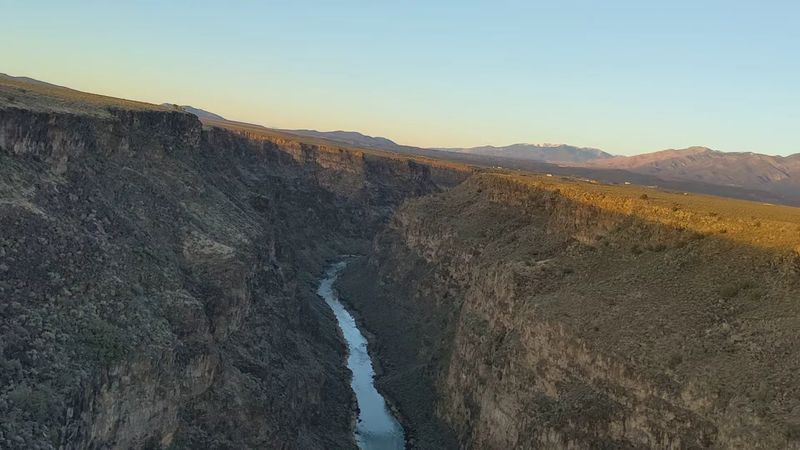
Few places in the American Southwest hold this kind of contrast. Here, a river gorge and a field of volcanic cones can sit in the same sweeping view.
The landscape covers more than 242,000 acres of Bureau of Land Management land, sitting at an average elevation of around 7,000 feet across wide, wind-brushed plains dotted with ancient volcanic formations.
I remember driving across that open terrain and feeling like I had arrived on a different planet entirely, one where the ground had clearly had a dramatic past.
Those volcanic cones are remnants of eruptions that shaped this region millions of years ago, and they give the whole area a raw, unfinished quality that I found oddly thrilling.
The contrast between the flat plains and the sudden, dramatic drop of the gorge is one of the most visually striking features of the entire monument.
Wildlife thrives out here too, with pronghorn and mule deer moving freely across the open land in the early morning hours.
The sense of geological history layered into every rock formation makes even a slow drive through the area feel like a quiet education.
Quiet Trails Along The Gorge
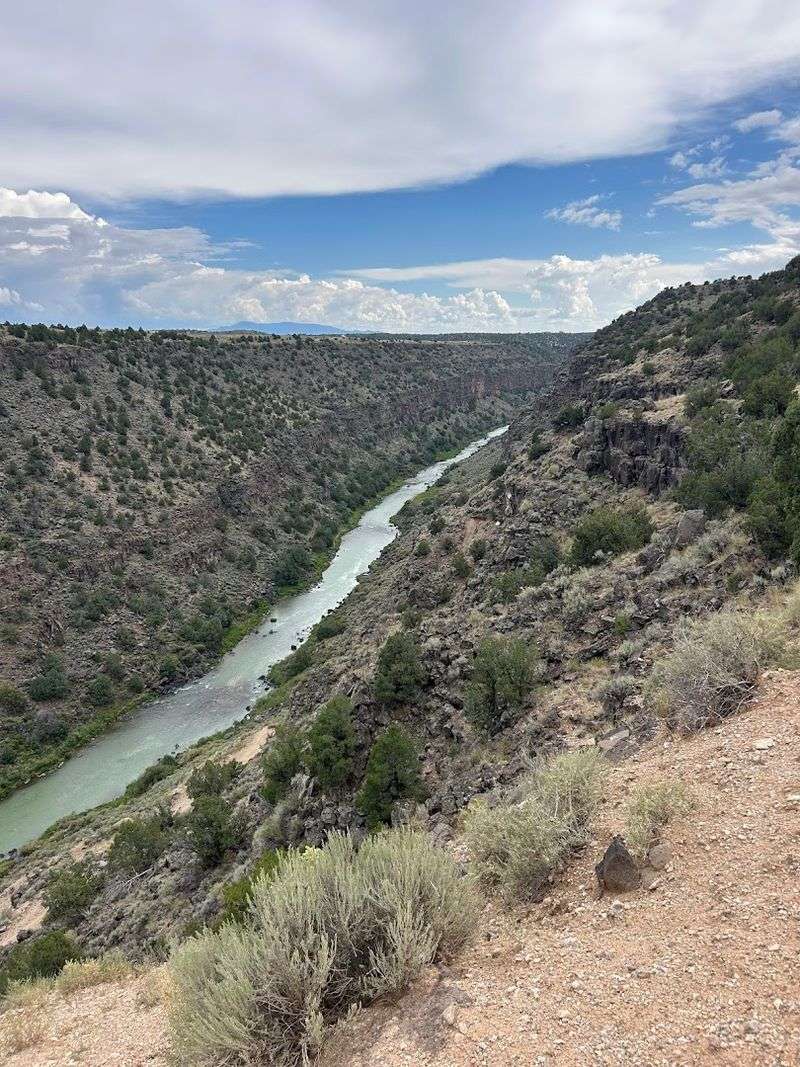
The trails here do not come with crowds, coffee kiosks, or paved paths, and honestly that is a large part of their appeal.
Several routes wind along the gorge rim and dip down steep, rocky switchbacks toward the river below, offering a range of difficulty levels for different types of visitors.
I tackled the trail at El Aguaje campground, which is about three-quarters of a mile but includes some genuinely steep sections that had my legs working harder than expected.
The trail down to the river rewards the effort with a completely different perspective, looking up at those towering basalt walls from the water’s edge rather than peering down from above.
Cacti appear along the path, and if you visit in the right season, you might spot tarantulas moving through the scrubby vegetation, which I found fascinating rather than alarming.
Rocky Mountain bighorn sheep can sometimes be seen on the cliff faces, navigating terrain that would stop most hikers cold.
Trail conditions vary, so wearing sturdy footwear and carrying enough water is genuinely important rather than just standard advice.
Every bend in the path here reveals a new angle of the gorge that feels worth the extra steps.
Golden Light Across The High Desert
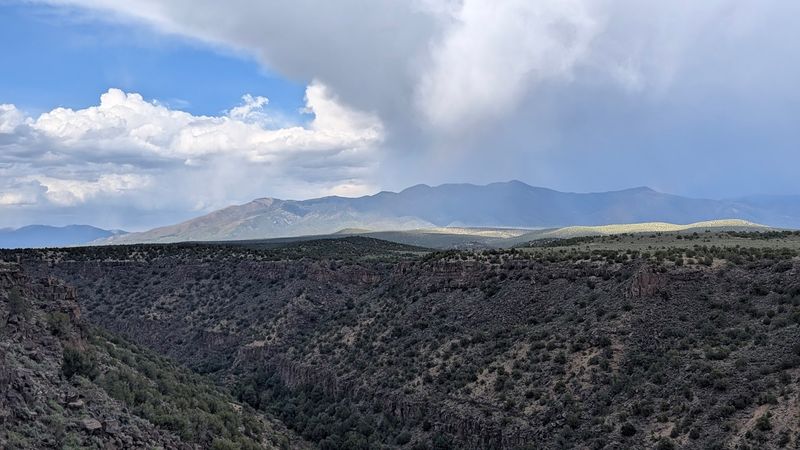
Northern New Mexico has a kind of light that painters and photographers have chased for generations. I finally understood it when the sun dropped toward the western horizon here.
The high desert at 7,000 feet elevation catches late afternoon light differently than lower terrain, with the golden hour stretching longer and the colors shifting from warm amber into deep rose before fading into violet.
I pulled over on an open stretch of road and watched the volcanic cones turn from gray-brown to a glowing copper as the shadows lengthened around them.
The autumn season adds another layer entirely, with cottonwood trees along the river corridor turning vivid yellow and creating a striking contrast against the dark basalt canyon walls.
In October, the colors can feel almost unreal, with yellow cottonwoods, blue sky, and green river corridor vegetation sharpening the whole scene.
Morning light brings its own rewards, with a cool stillness across the plains before the wind picks up and the day gets going.
Pack a camera with a wide-angle lens if you have one, because the scale of this landscape demands it.
The desert here does not just sit quietly; it performs.
A Wild Escape Beneath The Stars
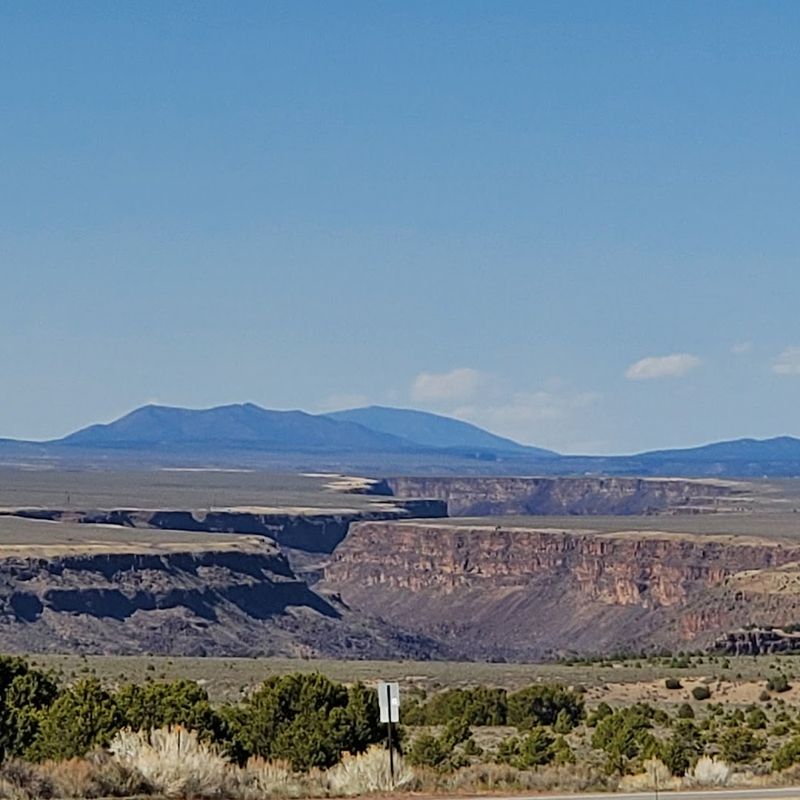
A night on Bureau of Land Management land within the monument can genuinely reset something in your brain.
You pick a designated or approved spot, set up your tent under an open sky, and suddenly the only sounds are wind and whatever wildlife happens to be moving through the dark around you.
The monument is known for excellent stargazing conditions, thanks to dark skies and wide-open views, and guided stargazing experiences near the Rio Grande Gorge Bridge can help visitors understand the night sky.
I laid out on a sleeping pad one clear night and counted more stars than I had seen in years, with the Milky Way arching overhead in a way that felt almost theatrical in its clarity.
Some of the best campsites do require rough-road confidence to access, so checking road conditions and coming prepared matters a great deal.
Campfire rules can change by season and area, so visitors should check current BLM restrictions and use established facilities where required.
A night beneath these skies is, without question, one of the most memorable outdoor experiences this landscape can offer.
Rugged Cliffs And River-Carved Views
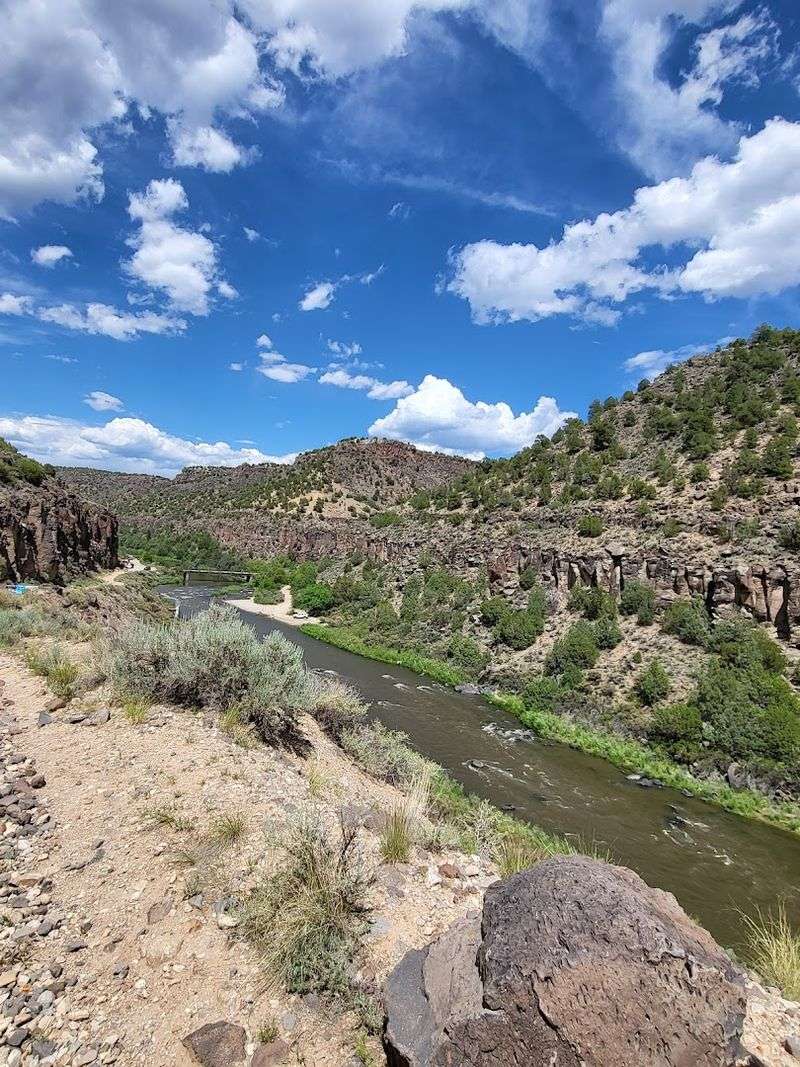
The cliffs inside the Rio Grande Gorge are not subtle, and they make absolutely no attempt to be.
Layers of dark volcanic basalt stack hundreds of feet high on both sides of the river, telling a geological story that spans millions of years in every visible stratum.
I hiked down to the river level on one of the steeper trails and spent a long time just looking up at those walls, trying to process the sheer scale of what the river had carved out over time.
Raptors nest in the cliff faces here, and watching an eagle or hawk launch from a rocky ledge and ride a thermal upward is one of those sights that never gets routine no matter how many times you see it.
The river itself offers whitewater rafting opportunities for those looking to experience the gorge from the water rather than from above, and fishing is also popular along accessible stretches of the Rio Grande.
Several viewpoints along the rim provide dramatic overlooks without requiring a steep descent, making the cliffs accessible to visitors of varying fitness levels.
The raw, unpolished character of these canyon walls is exactly what makes this place feel so far removed from the ordinary world.
Open Roads Through Desert Stillness
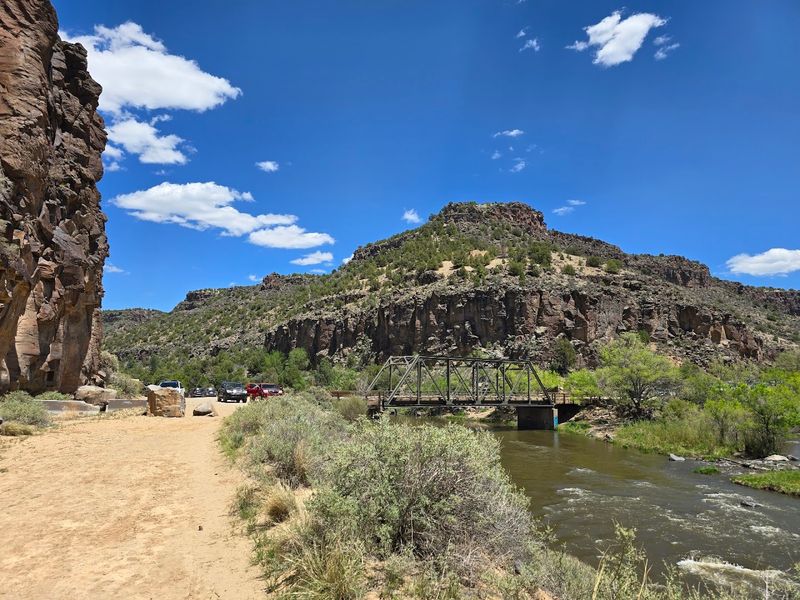
On a quiet weekday morning, the monument gave me long stretches of road entirely to myself. That felt like a small luxury in a world that rarely offers that kind of space.
The roads here pass through open volcanic terrain where the landscape unfolds slowly, rewarding patient travelers with unexpected views around each gradual curve.
Embudo is a small, unincorporated community along the Rio Grande corridor, and its slower pace fits naturally with the surrounding high-desert landscape.
The drive along New Mexico 68 through this area connects travelers between Taos and communities farther south, with roadside pull-offs where you can stop, step out, and simply stand in the open air for a while.
I passed a rest area one afternoon where small local craft booths added an unexpected and pleasant human element to an otherwise very wide-open drive.
Road conditions on certain access routes into camping areas can get rough quickly, and a vehicle with decent clearance makes a noticeable difference.
Open desert roads have their own kind of freedom when no deadline is pushing you forward, and this place delivers that feeling without any effort at all.
Hidden Overlooks With Big Sky Energy
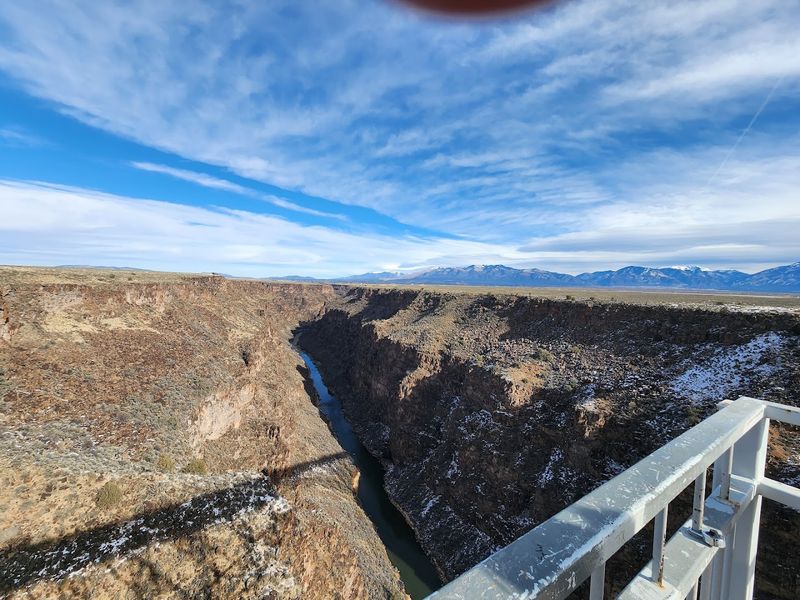
Some of the best views in this monument are away from the busiest stops. Finding them takes a good sense of direction and a willingness to explore quieter, legal access points.
On my last trip, I spent more time away from the main pull-offs and followed the landscape slowly instead of rushing from one marked stop to the next.
The payoff was a series of overlooks with completely unobstructed views in every direction, the kind of big-sky perspective that makes you feel simultaneously very small and very lucky.
The monument also carries deep historical weight, with petroglyphs and prehistoric dwelling sites scattered across the landscape, evidence of human presence here stretching back thousands of years.
In 1888, Embudo became the site of the first United States Geological Survey stream-gauging station, adding a layer of scientific history to the area’s already rich story.
Time at these quieter overlooks, away from the main viewpoints, gives you a more personal connection to the land and its long, layered past.
Río Grande del Norte National Monument stretches across a broad area near Taos, Questa, Pilar, and Embudo, and every overlook you discover can feel entirely your own.