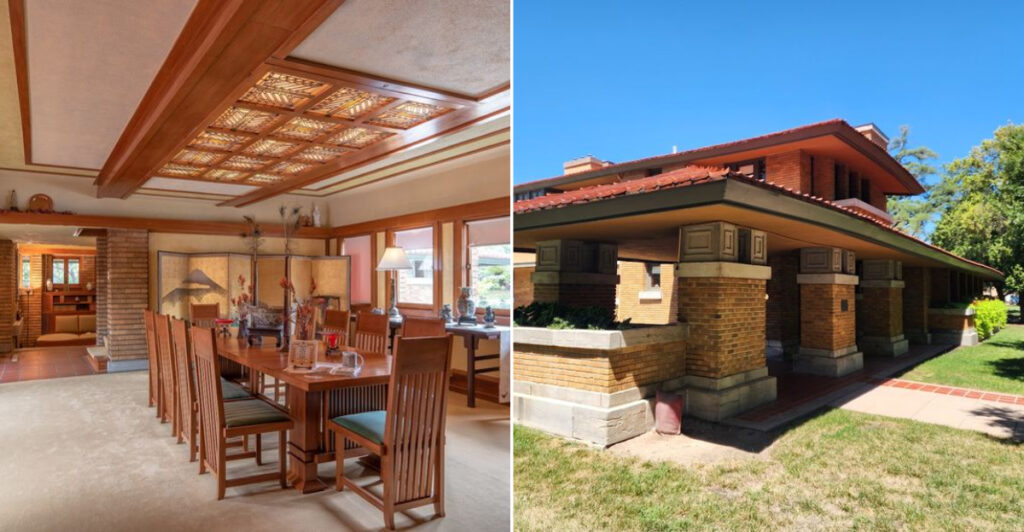
Some houses do not shout for attention. They wait for you to notice what makes them extraordinary. This Kansas landmark may look simple at first, but that is exactly where the intrigue begins.
Every choice feels intentional, turning an ordinary idea of “home” into something much more thoughtful. For architecture lovers, it is a chance to see how beauty can hide in proportion, flow, and restraint.
For casual visitors, it is the kind of place that slowly changes from interesting to unforgettable the longer you look. That quiet reveal is part of its magic.
I used to think the most impressive homes had to be grand right away, but places like this remind me that the best designs sometimes win you over one detail at a time.
Built in 1918, It Was Wright’s Last Prairie-Style Masterpiece
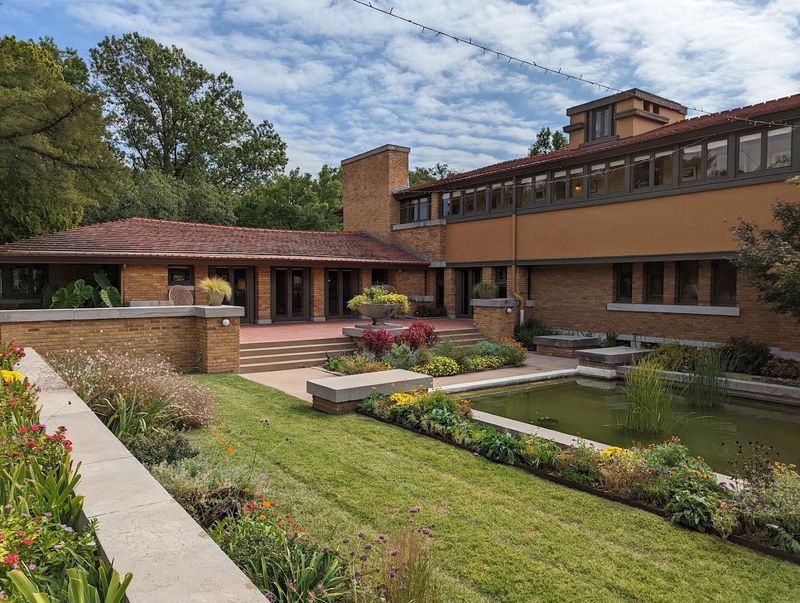
Most people picture skyscrapers or swooping museums when they think of Frank Lloyd Wright, but his heart belonged to the Prairie style he pioneered in the early 1900s.
The Allen House, completed in 1918, stands as the final and most refined example of that style.
By this point, Wright had spent nearly two decades perfecting horizontal lines, open floor plans, and deep overhanging roofs that hug the earth rather than reach for the sky.
Think of it as the closing chapter of a long artistic story, written in brick, wood, and glass. Every design choice here carried the weight of everything Wright had learned up to that moment.
The result is a home that feels both grounded and graceful, like it grew naturally from the Kansas soil beneath it. It is genuinely the last great Prairie house Wright ever built.
Every Single Detail Was Designed By Wright Himself
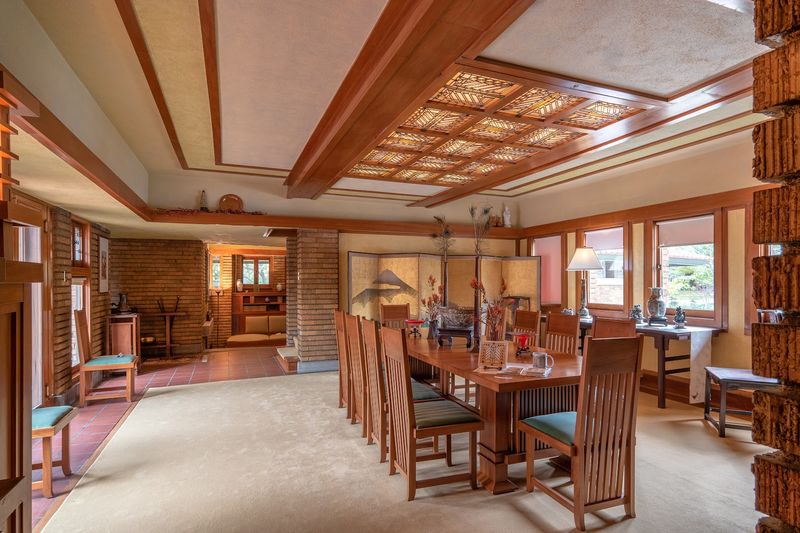
Here is something that sets the Allen House apart from Wright projects: the architecture was conceived as one unified environment.
The furniture, the light fixtures, the art glass windows, the built-ins, the garden walls, and even the garden house were connected to Wright’s original vision.
Much of the furniture was designed by Wright in collaboration with George M. Niedecken, helping complete the interior.
That level of coordination is extraordinarily rare in the world of architecture. Visiting the house today feels less like touring a historic home and more like stepping inside a three-dimensional painting.
Each room connects visually and philosophically to the next, creating a sense of flow that feels almost musical.
Wright believed a home should be a total environment, and the Allen House is one of the places where that belief came closest to perfection.
The Original Art Glass Windows Are Still Intact
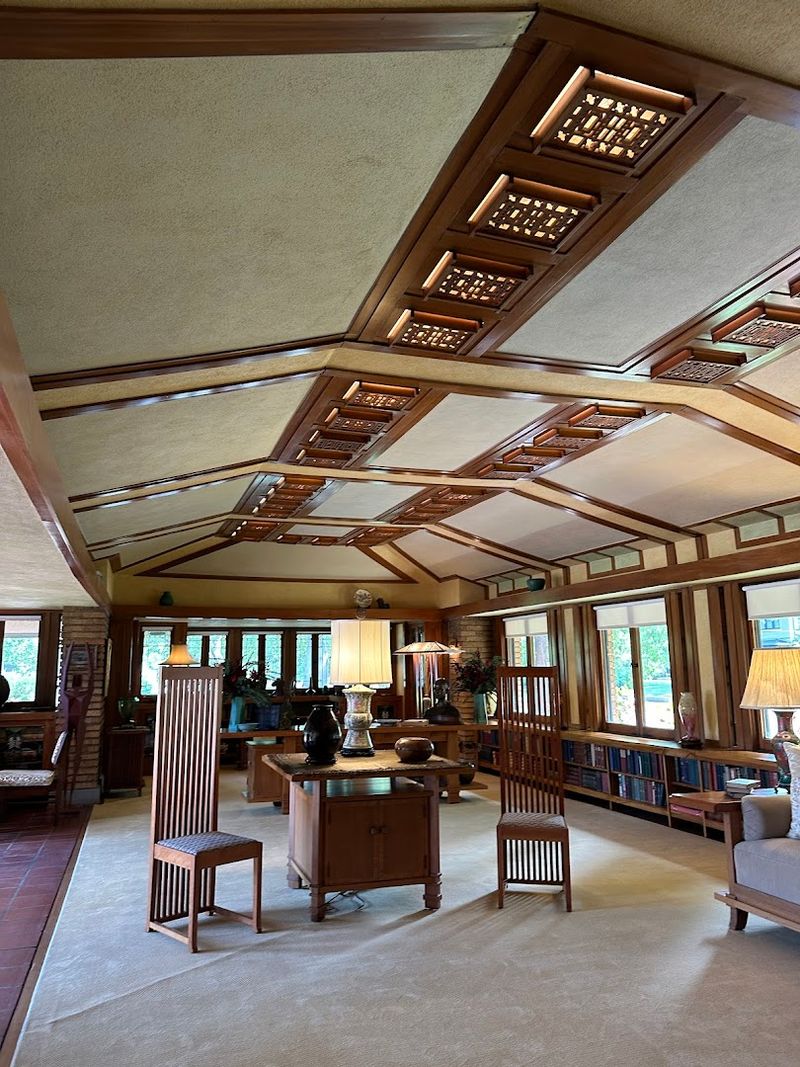
Art glass is one of Wright’s most beloved signatures, and the Allen House still holds its original windows after more than a century of Kansas weather.
These are not replacements or reproductions. The geometric amber and clear glass patterns filtering light through the rooms are the exact same panes that Wright specified back in 1917 and 1918.
That kind of preservation is almost unheard of in historic architecture.
Sunlight behaves differently in every room depending on the time of day, casting shifting patterns across the floors and walls.
Visitors who take the evening tour often describe the effect as nothing short of magical, especially during summer sunsets.
The windows serve a practical purpose too, since they provide privacy while still allowing natural light to flow freely.
Wright designed them to blur the boundary between inside and outside, a theme that runs through his entire career.
Henry J. Allen Was A Governor And A Newspaper Publisher
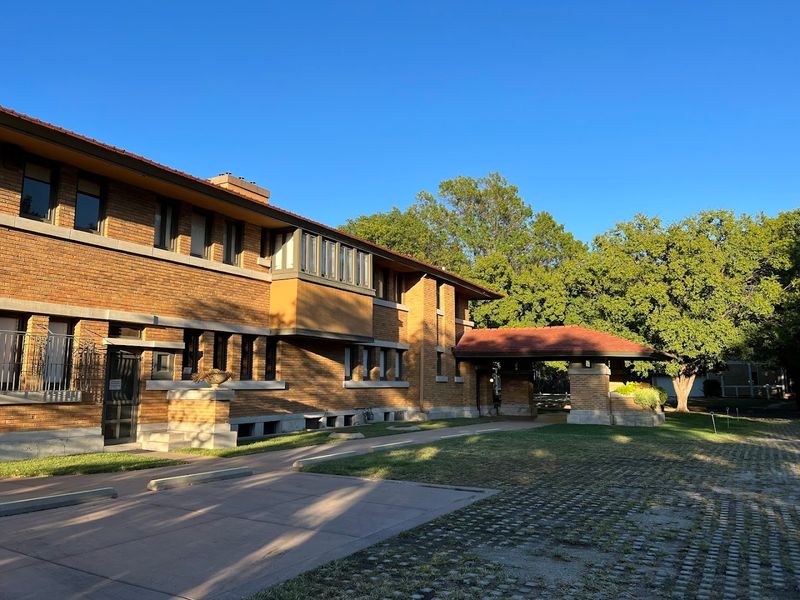
The house was commissioned by Henry J. Allen, a man who wore many hats with impressive style.
Allen served as the Governor of Kansas from 1919 to 1923 and was also the owner and publisher of the Wichita Beacon newspaper.
He was not simply a wealthy client looking for a fancy home. Allen was a civic leader deeply invested in the cultural and political life of Kansas, and he wanted a house that reflected serious intellectual ambition.
Choosing Frank Lloyd Wright was itself a bold statement at a time when most wealthy Midwesterners preferred traditional European-inspired architecture.
The collaboration between these two strong personalities produced something neither could have achieved alone.
Learning about Allen’s life during a tour adds a fascinating layer to the experience.
The house stops being just a building and becomes a portrait of a particular kind of ambitious, forward-thinking American life in the early twentieth century.
The Garden And Grounds Are Part Of The Original Design
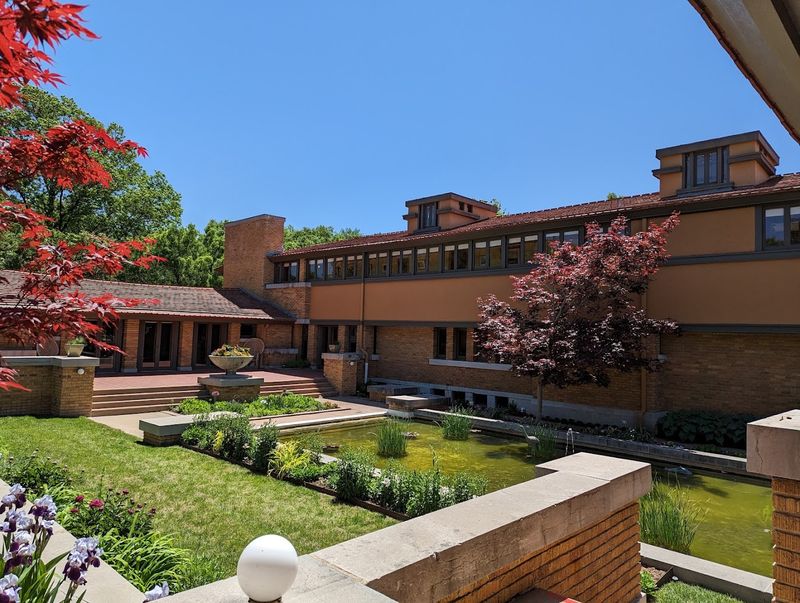
A lot of historic homes preserve the building but let the landscape go. The Allen House took a different approach, and the gardens and surrounding grounds remain faithful to Wright’s original vision.
Wright designed the garden walls, the terraces, and the planting areas as extensions of the house itself. In his philosophy, the boundary between architecture and landscape should be as invisible as possible.
Walking through the grounds before entering the house gives a real sense of how Wright thought about space.
The low brick walls guide your eye and your feet in specific directions, creating a choreographed arrival experience long before you reach the front door.
The enclosed garden, lily pool, and garden house still reinforce the Japanese-influenced design that made the property so distinctive from the beginning.
Few Wright properties anywhere in the country can claim this level of outdoor preservation alongside the carefully restored interior spaces today, either.
Tours Range From 90 Minutes To A Full Three-Hour Grand Tour
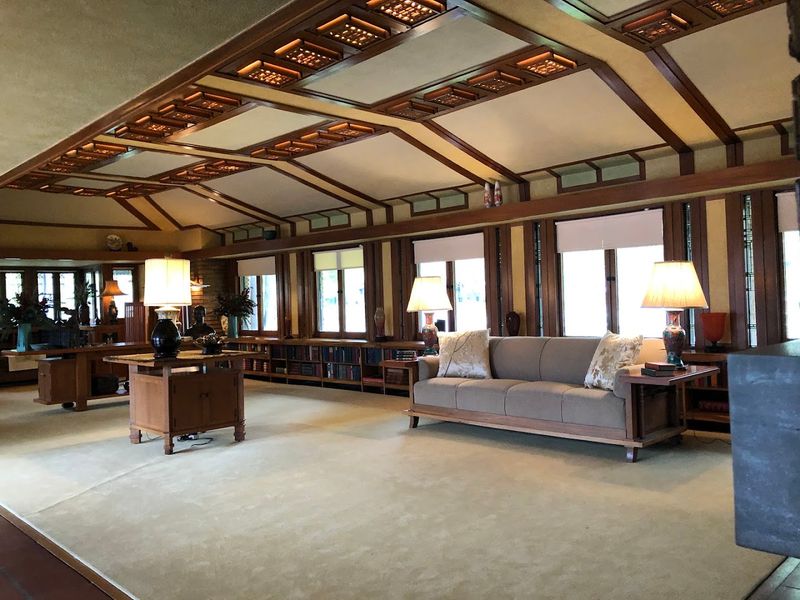
Not all tours are created equal at the Allen House, and choosing the right one can make a big difference in what you take away from the visit.
The standard tour runs about 90 minutes and covers the main rooms on both floors with a knowledgeable docent leading the way.
The Grand Tour runs about two to three hours and goes much deeper into the history of the Allen family, the construction process, and Wright’s design philosophy.
The Grand Tour is also limited to ten people, which makes it feel more like a private conversation than a museum walkthrough.
It is the only tour option that allows interior photography, which is worth knowing before you book.
Tours run Tuesday through Saturday on a calendar-based schedule, with advance reservations strongly recommended because spots fill up faster than most first-time visitors expect during busy travel seasons every year now, too.
Photography Inside Is Restricted Unless You Book The Grand Tour
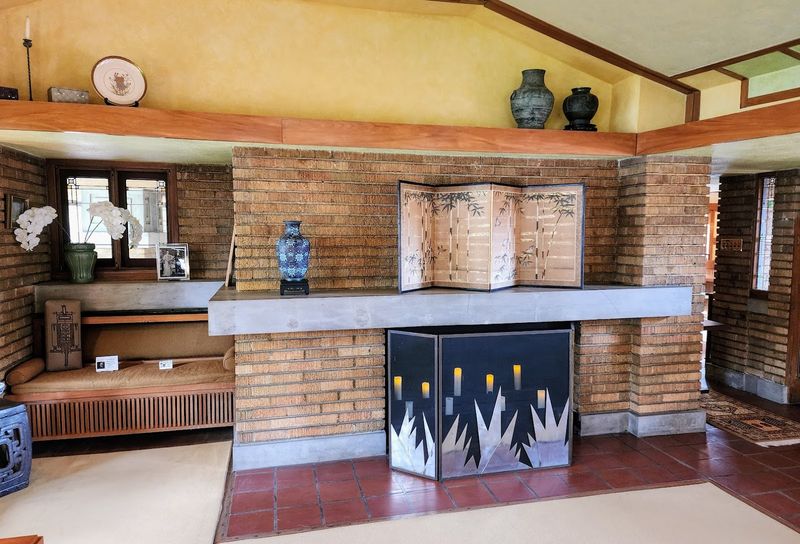
One of the first things visitors mention when sharing their experience is the no-photography rule for standard tours.
It catches many people off guard, especially those who arrive with a camera ready to document every room. The restriction is not arbitrary.
The house contains original furniture, textiles, and art objects that are sensitive to repeated flash photography, and the policy helps maintain the integrity of the collection for future generations.
Some visitors actually find that putting the camera away forces them to be more present and observant during the tour.
You end up noticing details you might have missed while staring at a screen. If capturing images is important to your visit, the Grand Tour is the clear answer.
That option grants photography access and gives you significantly more time in each room. Either way, the house itself is the kind of place that tends to stick in your memory long after you leave.
The House Survived Decades Of Neglect Before Being Restored
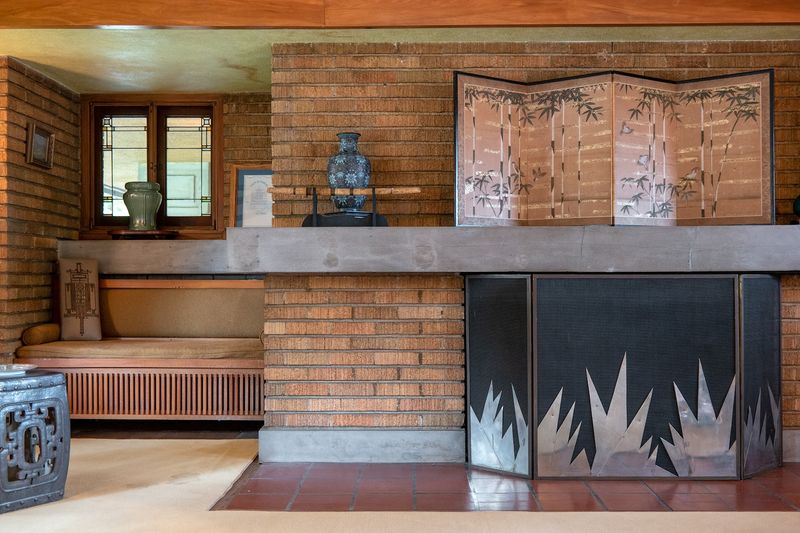
Not every great building gets a second chance, but the Allen House did. After the Allen family no longer occupied it, the house passed through several owners and endured decades of gradual decline.
By the time serious preservation efforts began, significant restoration work was needed to bring it back to its original condition.
Dedicated volunteers, historians, and preservation organizations spent years carefully researching original materials and methods to ensure the restoration stayed true to Wright’s intent.
The effort paid off in a way that is clearly visible today. The house does not feel like a dusty museum piece frozen in time.
It feels alive and cared for, which is exactly what a home designed to be lived in deserves.
The restoration story adds real emotional weight to the visit. Knowing how close the house came to being lost forever makes every original window and original chair feel like a small triumph worth celebrating.
Wright Connected This House To His Broader Philosophy Of Organic Architecture
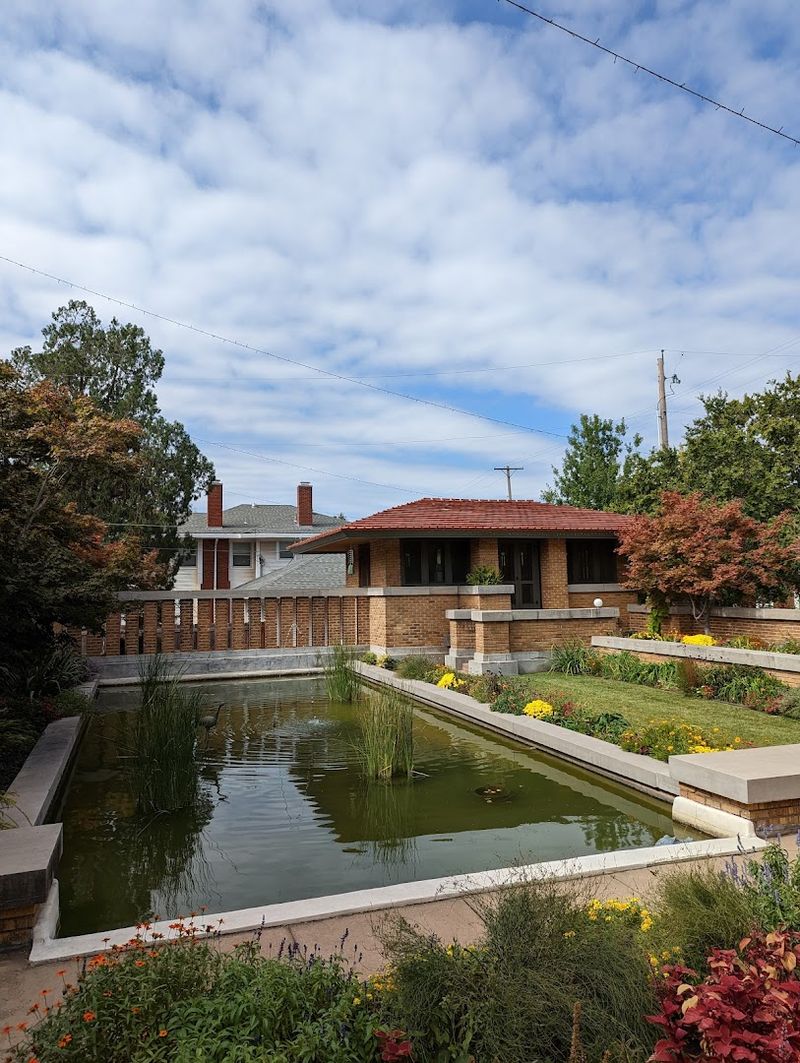
Wright spent his entire career arguing that buildings should grow from their environment rather than be imposed on it.
He called this idea organic architecture, and the Allen House is one of its clearest expressions.
The low ceilings create a sense of shelter and intimacy rather than grandeur. The horizontal lines of the exterior echo the flat Kansas landscape stretching out in every direction around Wichita.
The large windows frame garden views like living paintings, constantly reminding you that the outdoors is part of the experience.
Every material choice, from the warm brick to the natural wood trim, reinforces a connection to the earth. Nothing about the house feels cold or industrial, even though the design is precise and deliberate.
Wright believed that living in a well-designed space could genuinely improve a person’s quality of life. Spending time inside the Allen House makes that argument surprisingly easy to believe.
The Allen House Is One Of Only A Few Wright Homes Open To The Public In The Midwest
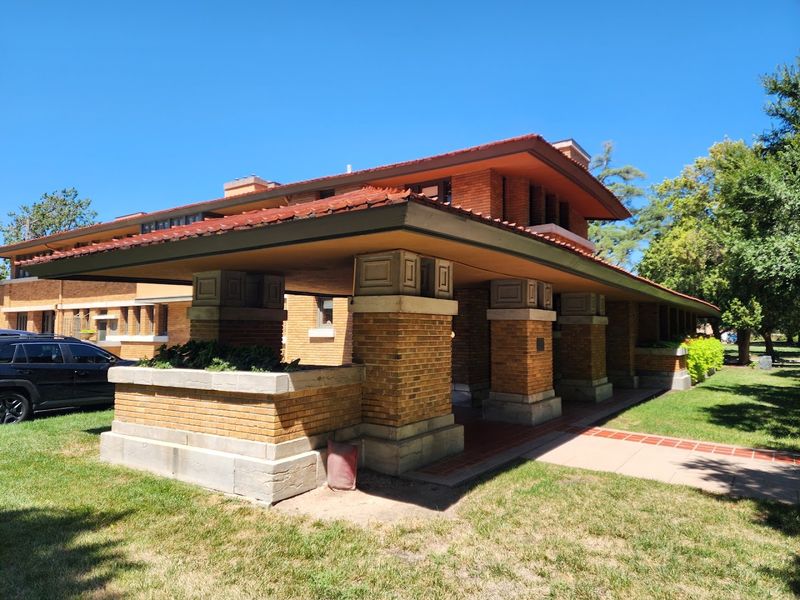
Frank Lloyd Wright designed over a thousand structures during his long career, but only a portion of his private residences are open to the public today.
The Allen House is one of those rare exceptions, and its location in Wichita makes it especially significant for the Midwest.
Wright enthusiasts who have toured houses in Illinois, New York, Wisconsin, or nearby states often note that the Allen House holds its own against any of them.
Other Wright sites have their own strengths, but the Allen House offers a completeness that makes it especially compelling. That level of preservation speaks directly to the house’s reputation.
For anyone building a personal tour of Wright’s work across the country, Wichita belongs on the list right alongside Chicago, Buffalo, Springfield, and Taliesin.
The Allen House is not a footnote in Wright’s broader national story. It is one of the loudest chapters in that story today, period.