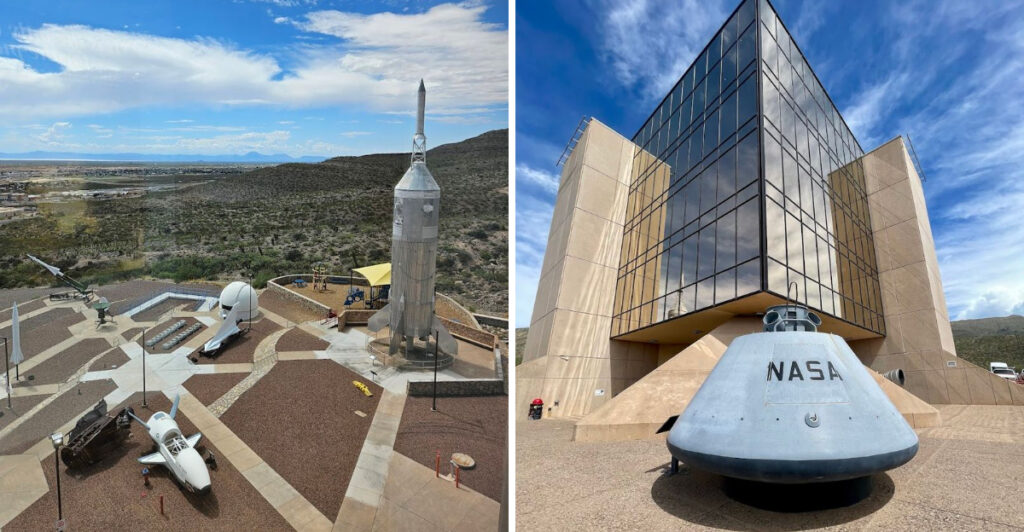
An 86-foot rocket has a funny way of making everyone act the same. People go quiet, and heads tilt back.
Suddenly, space history does not feel like old footage on TV anymore.
That feeling is all over this outdoor rocket garden in New Mexico. It is one of those museum spaces where the displays do not feel distant.
They feel immediate. You can walk past a captured German V-2 and sense the weight of its story, then move toward Apollo-era boosters that point your imagination straight at the moon.
The whole place has a Facebook-post-worthy surprise factor because so many travelers have no idea it is there. They expect desert views.
They do not expect rockets rising out of the sand.
This stop feels bigger than a quick museum visit. It is the kind of place you leave talking about, because nobody warned you it would feel cool up close afterward.
Rockets Rising Against The Desert Sky
Walk up to the outdoor exhibit area at this museum and the first thing that hits you is pure vertical drama, rockets and missiles of every size pointing straight up at the open New Mexico sky.
The outdoor collection is officially named the John P. Stapp Air and Space Park, a tribute to the aeromedical pioneer whose groundbreaking research helped make human spaceflight survivable.
Unlike indoor exhibits where glass cases keep history at arm’s length, this park puts you right beside the hardware, close enough to see rivets, seams, and the honest wear of machines that once pushed boundaries.
The desert setting is not just a backdrop but genuinely part of the experience, with wide skies and mountain views framing each artifact in a way that no indoor hall could replicate.
You will find yourself craning your neck upward repeatedly, which is exactly the kind of physical reminder of scale that photographs simply cannot deliver.
This is where you can find the New Mexico Museum of Space History at 3198 State Rte 2001, Alamogordo, NM 88310, ready to surprise even the most seasoned museum visitors.
A Hilltop View Over The Basin
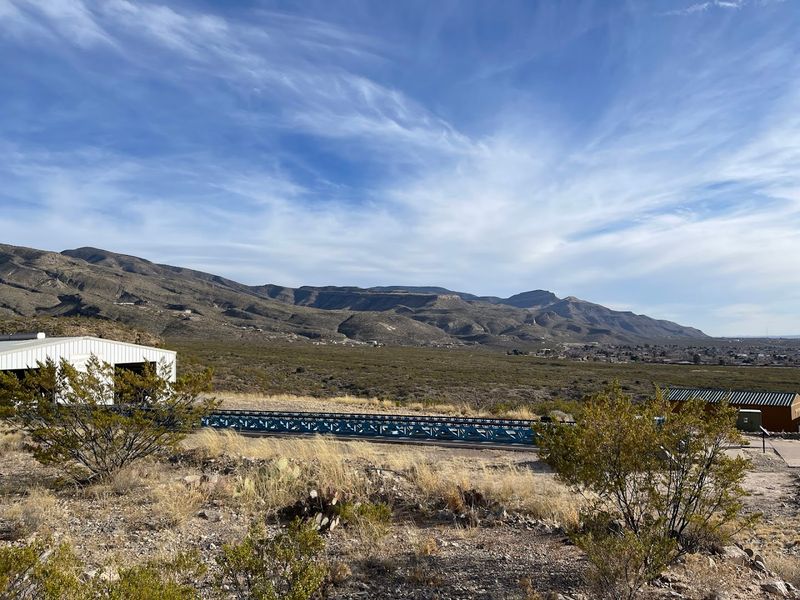
The museum sits along the western side of the Sacramento Mountains. From its elevated perch, visitors get one of the most sweeping views of the Tularosa Basin you can find without a helicopter.
From the rocket garden, the white gypsum dunes of White Sands National Park shimmer on clear days, stretching across the basin floor like a brushstroke of pale paint.
That geographic context matters more than it might seem, because the entire region below was the testing ground for the very rockets and missiles now standing beside you in the park.
Early morning brings some of the best light for both photography and contemplation, with the basin catching a warm glow before the midday sun flattens everything out.
The combination of altitude, open desert, and towering rocket hardware creates an atmosphere that feels genuinely cinematic, the kind of place where you half-expect a countdown to echo across the hillside.
The view adds an unexpected bonus to the entire trip, lifting the visit well beyond a standard museum afternoon.
Space-Age Stories In Every Gallery
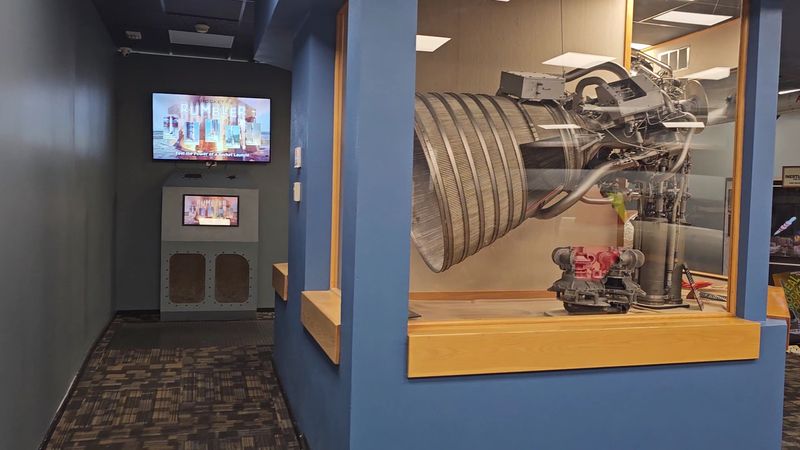
The indoor galleries here are arranged in a clever way. You take an elevator to the fifth floor, then follow a gently sloping ramp down through different eras of space and missile history.
That spiral descent means no stairs along the main path, which helps make the museum easier to navigate for strollers, wheelchairs, and anyone who just prefers a smooth route through history.
Each floor covers a distinct chapter, from early rocket science and the German V-2 program through the missile race, the Apollo era, and into modern space exploration, so the story builds naturally as you descend.
Interactive displays let visitors try on space suits, test their knowledge, and even experience a simulated Space Shuttle landing, which tends to be a crowd favorite for families with kids.
A section tied to science fiction and pop culture explores how shows like Star Trek influenced real technology, a quirky and thoughtful addition that broadens the museum’s appeal.
Two to four hours can pass easily here, and anyone who stops to read every panel may still be catching new details near the end of the visit.
Outdoor Relics With Monumental Scale
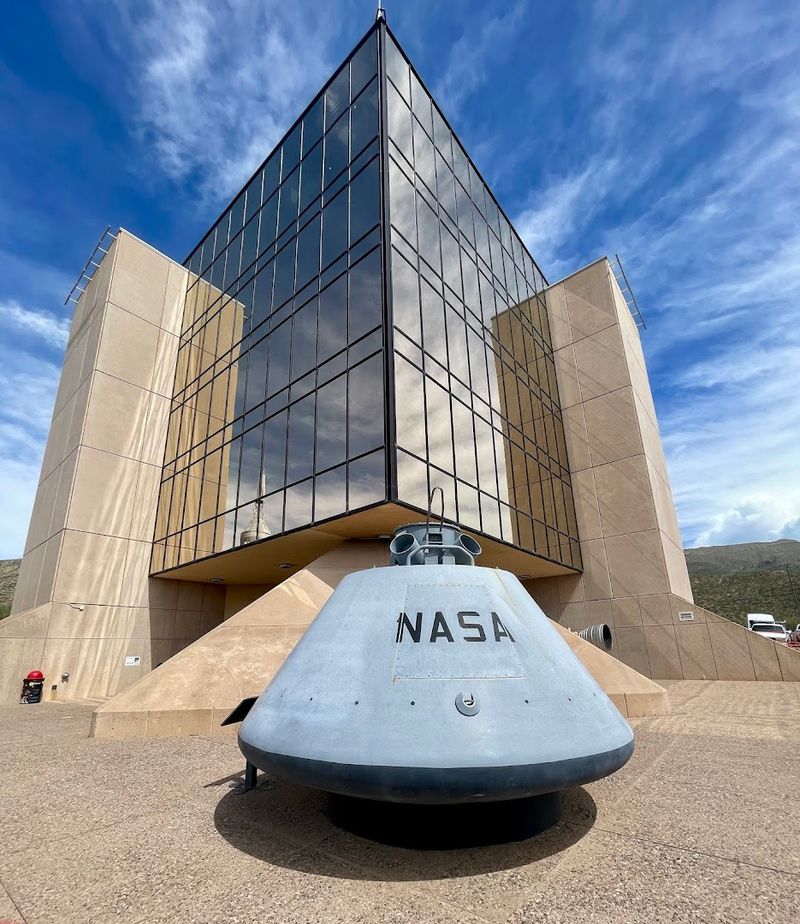
The outdoor rocket garden has one artifact that towers above the rest. Little Joe II, an Apollo-era booster, stands 86 feet tall and holds the record as the largest rocket ever launched from New Mexico.
That height is not something you fully appreciate in photographs, but standing at its base and tilting your head all the way back delivers a genuine moment of awe that stays with you.
The Little Joe II was used to test the Apollo command module’s in-flight abort system, essentially verifying that astronauts could escape a failing rocket during a lunar mission, which made it a critical piece of the safety puzzle.
What makes this artifact even more remarkable is its rarity: only two Little Joe II rockets still exist anywhere in the world, and this is one of them.
The museum announced a restoration project for this booster in 2025, decades after it was originally delivered to the park in 1985.
Few outdoor museum displays in the entire country can match the combination of historical significance and raw physical presence that this single rocket delivers.
Where Desert Light Meets Rocket History
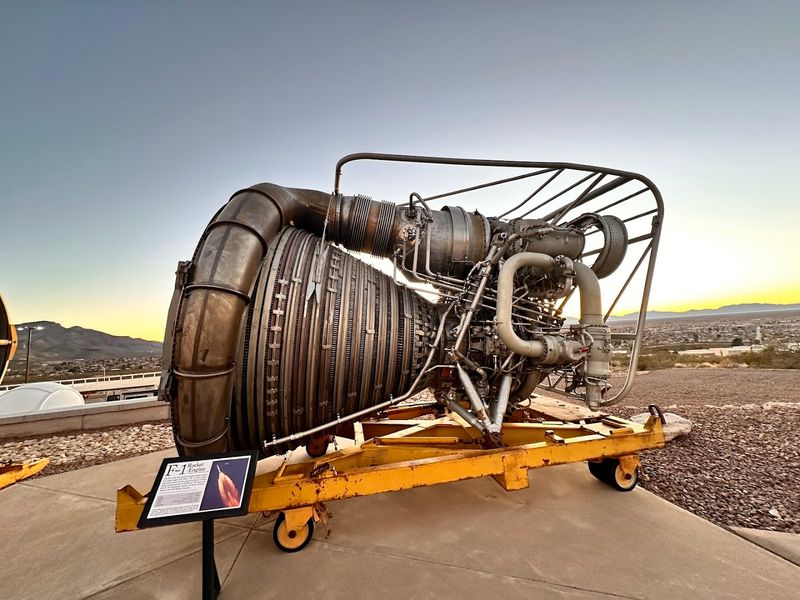
The outdoor collection holds one artifact with a truly gripping backstory. The Sonic Wind I rocket sled looks almost too simple for the extraordinary story attached to it.
Dr. John P. Stapp, the very man the park is named after, rode this sled to a speed of 632 miles per hour in 1954 to measure how the human body responds to sudden, violent deceleration.
That research was not abstract science; it helped inform the design of ejection seats, aircraft safety harnesses, and restraint systems later used in high-risk aerospace environments.
In person, the Sonic Wind I feels battered by time and desert sun, making Dr. Stapp’s courage feel immediate rather than historical.
The desert light at different times of day transforms the surface textures of these artifacts, making the outdoor park almost as much a photography destination as a history lesson.
Late afternoon in particular wraps the sled and surrounding rockets in a warm amber glow that turns the entire park into something that feels almost reverential.
A Quiet Walk Through Cosmic Landmarks
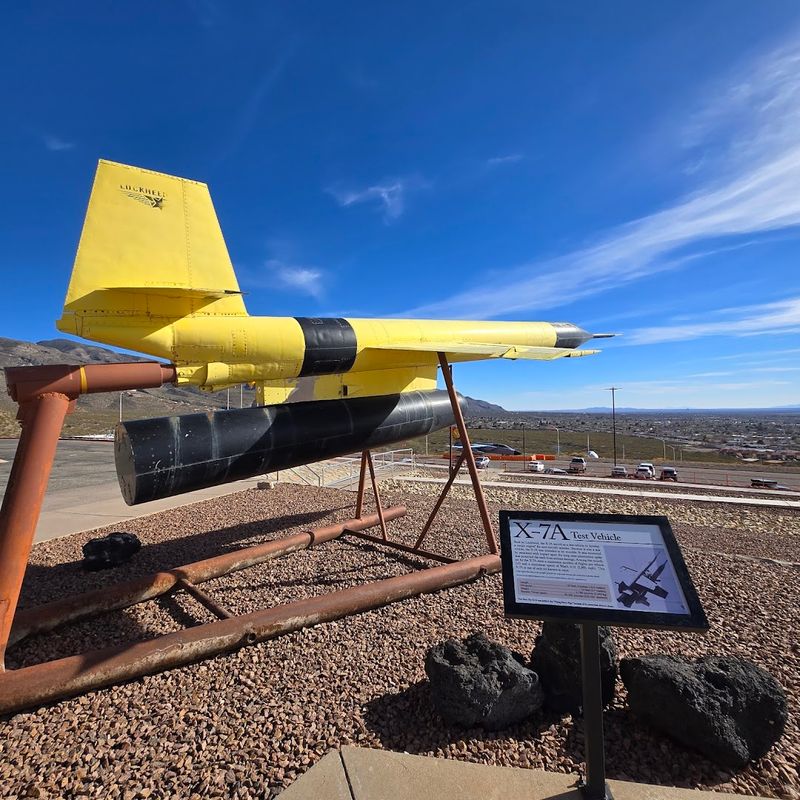
The tallest rocket grabs attention first, but the outdoor park rewards slow visitors. Read every placard, examine every artifact, and the smaller pieces begin to feel just as important.
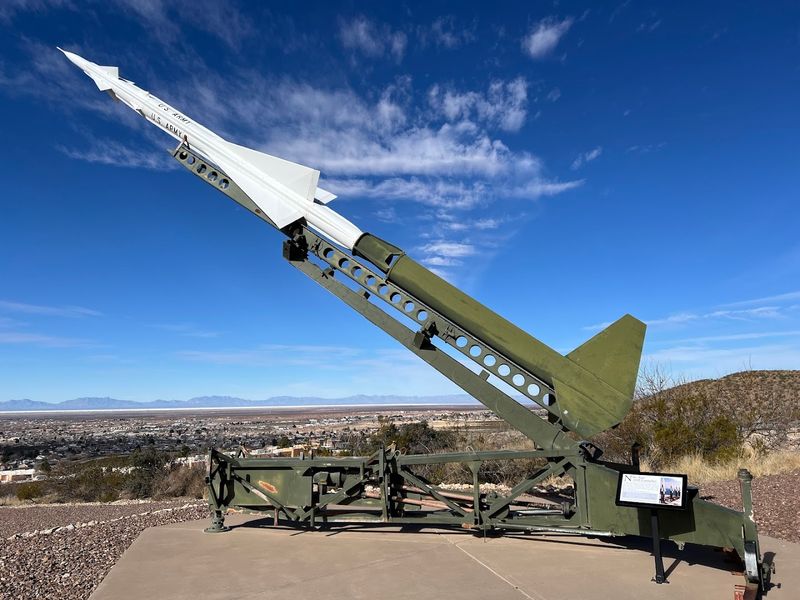
The collection has included artifacts such as Athena missiles, Nike Ajax anti-aircraft missiles, sounding rockets, and other Cold War and space-research hardware, each one representing a specific chapter in the story of how humans learned to reach beyond the atmosphere.
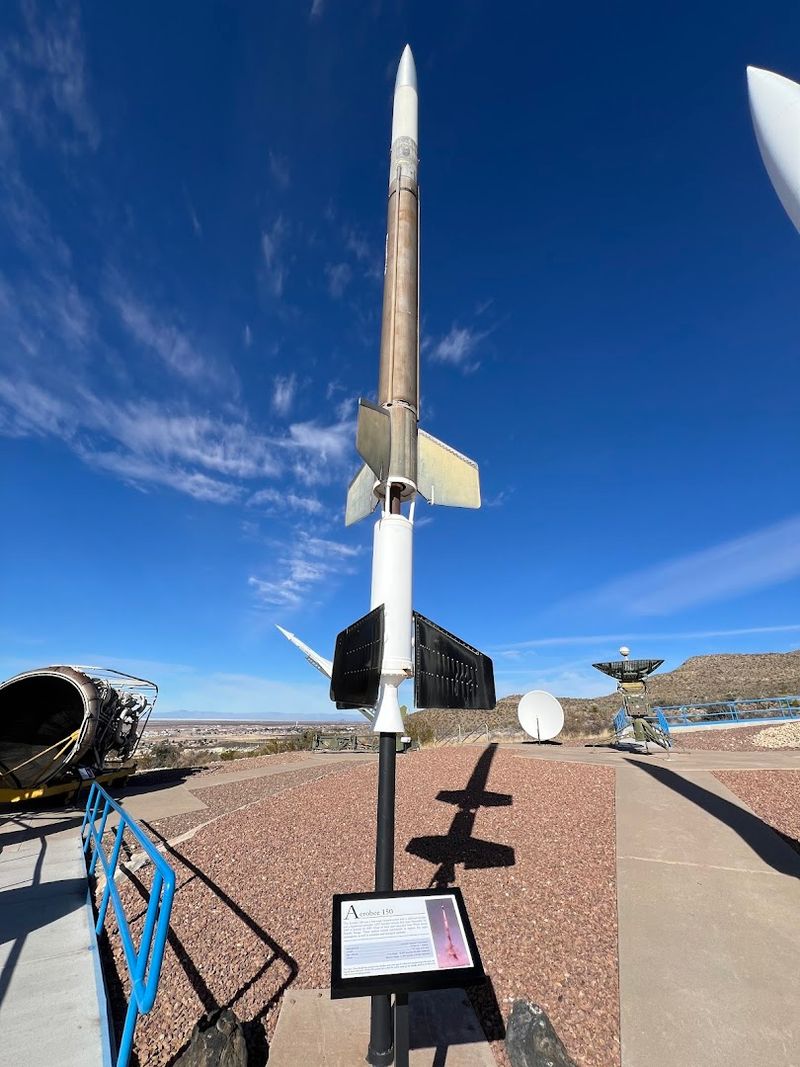
Sounding rockets like the Aerobee were workhorses of early scientific research, carrying instruments into the upper atmosphere to study cosmic rays, solar radiation, and atmospheric chemistry long before satellites became practical.
The Nike Ajax, by contrast, was a purely military machine, designed to intercept enemy aircraft at a time when the Cold War made air defense a daily national priority, and its presence here adds a sobering geopolitical layer to the park’s narrative.
On a quiet weekday morning, the path between these artifacts can feel like a private conversation with the machines that shaped the modern world.
The thoughtful spacing of the exhibits gives each artifact room to breathe, so nothing feels crowded or rushed, which is a small but meaningful curatorial choice.
Retro Space Details And Big-Sky Views
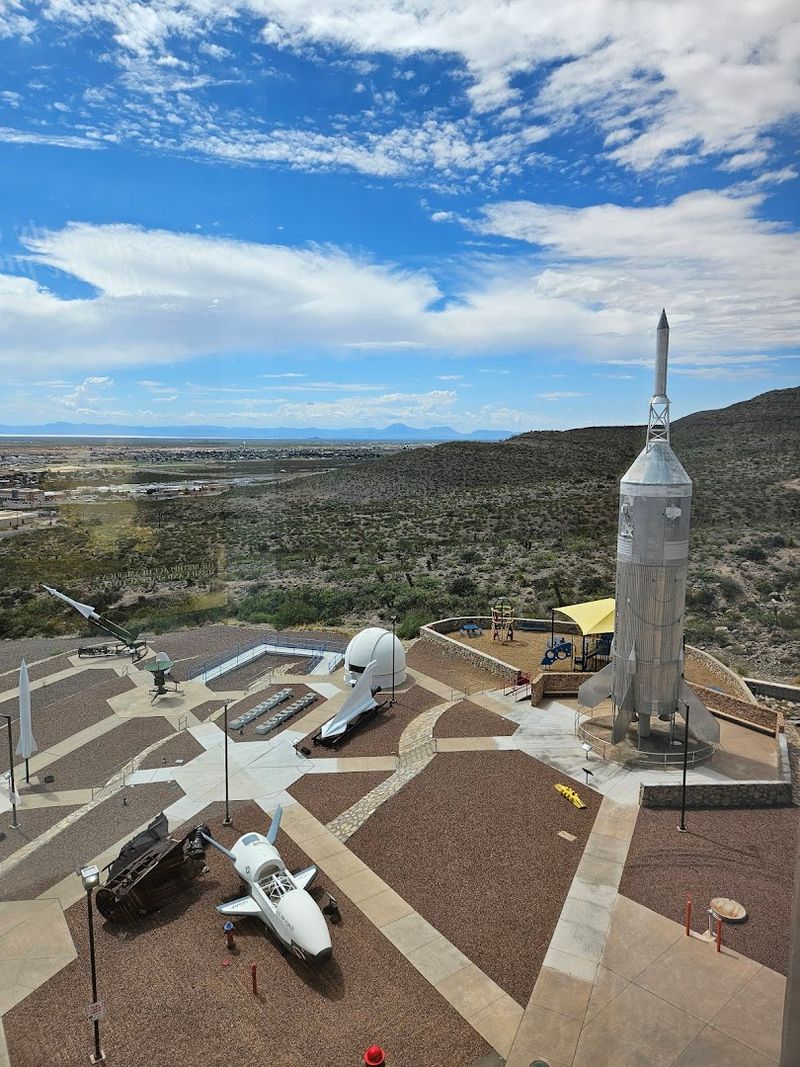
One artifact in the outdoor collection tends to stop visitors mid-stride. It is the remains of a captured German V-2 rocket.
The V-2 is widely recognized as the world’s first long-range guided ballistic missile, developed in Germany during World War II and later tested extensively at White Sands Missile Range just a short drive from the museum.
Those White Sands tests were foundational, providing American and captured German scientists with data that fed directly into the early US missile program and eventually the rockets that carried astronauts to the Moon.
A physical remnant of that machine feels especially powerful in this desert. The landscape around it is part of the same region where V-2 testing helped shape early American rocket research.
The retro aesthetic of the V-2, all riveted steel and angular fins, contrasts sharply with the sleek lines of later American rockets displayed nearby, making the park feel like a visual timeline of engineering ambition.
That contrast, old world engineering standing beside Cold War American hardware under a boundless blue sky, is one of the most quietly powerful visual experiences the museum offers.
Underrated Corners Of America’s Space Legacy
Most people driving through southern New Mexico are focused on White Sands or Carlsbad Caverns. That helps this museum feel genuinely undervisited, even with artifacts that belong in any serious conversation about American space history.
The combination of the outdoor rocket garden, the accessible indoor galleries, a planetarium, and a surprisingly reasonable admission price makes this one of the strongest value propositions of any science museum in the Southwest.
Operating hours run Wednesday through Monday from 10 AM to 5 PM, with Sunday hours starting at noon, and Tuesday is the one day the museum stays closed, so planning around that detail saves a wasted trip.
Families with young children can enjoy the interactive elements, including a playground area and hands-on displays, while adults who lean toward history will find the depth of the missile and rocket collections more than satisfying.
New Mexico library card holders may also be able to borrow a FamilyPass through participating public libraries, a useful detail for nearby residents who have not made the trip yet.
Every corner of this place holds something worth pausing over, and that density of discovery is exactly what makes the New Mexico Museum of Space History a destination that lingers in your memory long after you leave.