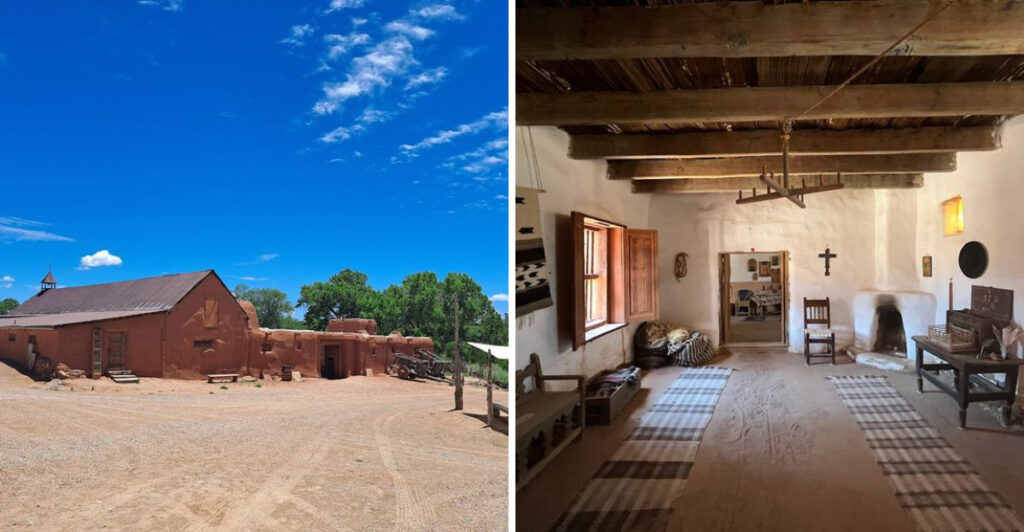
Just south of Santa Fe, a farming valley holds one of those places that makes people stop mid-walk and say, “Wait, this is real?” The setting does not feel polished for a quick photo. It feels alive.
Adobe buildings stand where stories happened. Animals move through the grounds.
Costumed interpreters turn old routines into moments you can actually picture.
This 500-acre living history museum brings New Mexico’s past forward without making it feel like a lecture. You can walk through rooms, ask questions, watch demonstrations, and start to understand how much skill daily life once required.
The best part is how naturally it pulls you in. One minute you are looking at a building.
The next, you are imagining the people who cooked meals there and raised families there. Keep reading for fascinating facts about a destination where history feels less like a subject and more like a visit.
Adobe Walls Beneath Wide Desert Skies
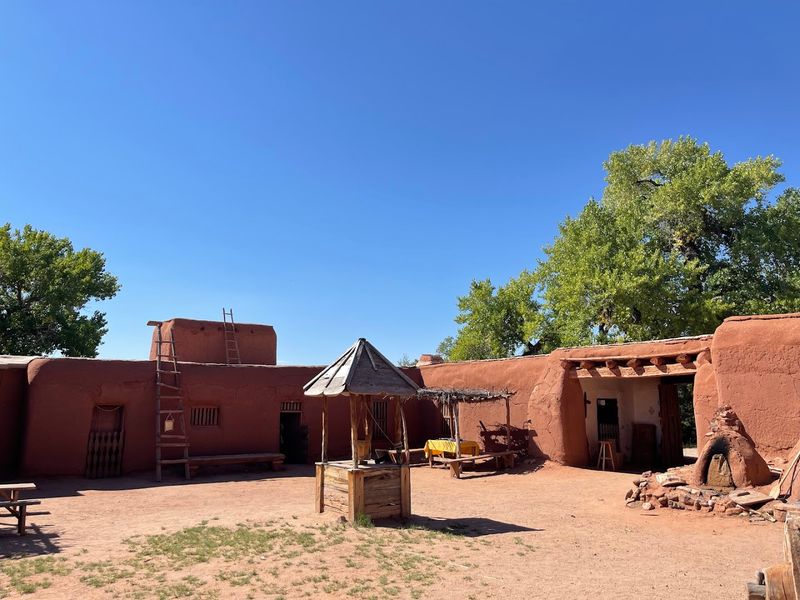
These old adobe walls have a way of slowing everything down. Some of the original structures on this ranch date back to the early 1700s, shaped from earth, straw, and water by hand.
The adobe construction at this ranch is not just decorative or rebuilt for show. Several original structures still stand, surviving centuries of New Mexico sun, wind, and rain with quiet stubbornness.
Adobe walls work as natural insulation, keeping interiors cool during blazing summer afternoons and warm during chilly desert nights. Visitors can sense that density, that solidity, that feeling of something made to last.
The buildings sit beneath enormous open skies that stretch across the valley, making the whole scene feel both ancient and alive. The contrast between the earthy tan walls and the vivid blue sky overhead is the kind of view that stops people mid-step.
Few architectural experiences in the American Southwest feel as honest or as rooted as this one, which is why visitors keep returning to El Rancho de las Golondrinas at 334 Los Pinos Rd, Santa Fe, NM 87507.
A Quiet Walk Through Colonial Courtyards
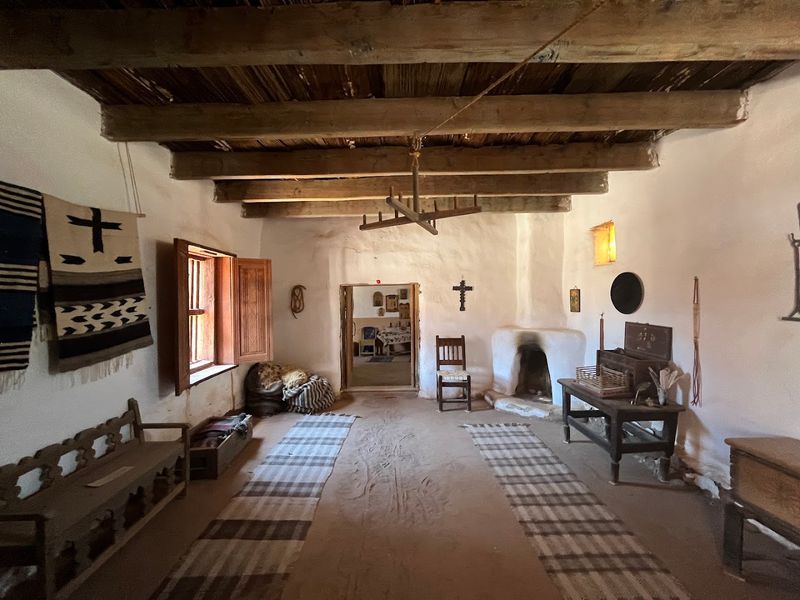
The main courtyard feels like the modern world has suddenly gone quiet. The moment you enter, the pace changes in a way that feels immediate and natural.
The layout of the ranch follows a traditional Spanish colonial hacienda plan, with rooms and outbuildings arranged around central open-air courtyards called plazas. This design was not purely aesthetic.
It was a practical response to frontier life, keeping families, animals, and supplies close together for safety and efficiency.
As visitors move through these courtyards, they pass doorways that lead into small rooms furnished with period-accurate tools, textiles, and household objects. Each space tells a specific story about daily colonial life here before the region became part of the United States.
The courtyards themselves are unpaved, with hard-packed earth underfoot and occasional shade from old trees that have been growing here for generations. It creates a sensory experience that no indoor museum can fully replicate.
Guided docent tours through these spaces are especially rewarding. Knowledgeable volunteers bring the architecture and objects to life with stories that connect the past to the present in surprisingly personal ways.
Weathered Doorways And Timeless Ranch Views
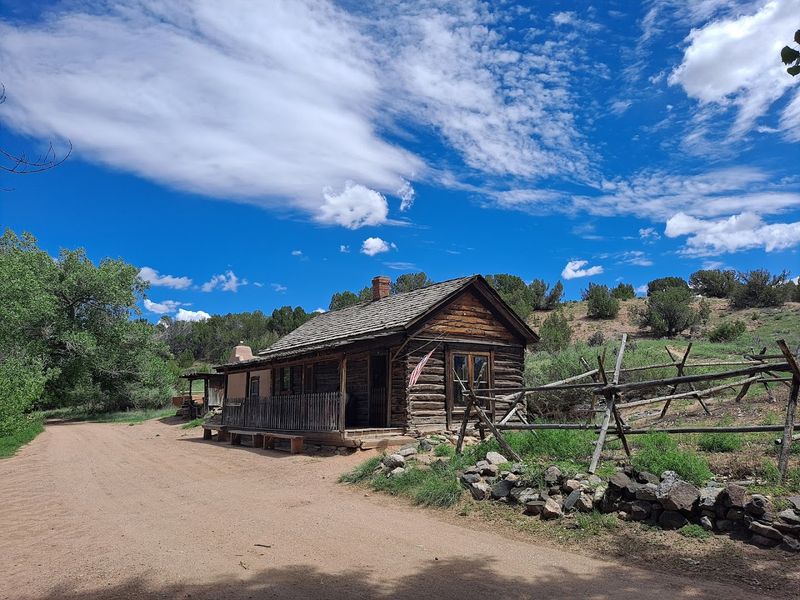
Every doorway on this property looks like it belongs in a painting. That sounds dreamy, but it is also true in the most practical sense.
The wooden doors throughout the ranch are original or period-accurate reproductions, with hand-forged iron hardware, deep-set frames, and surfaces worn smooth by generations of hands pushing them open. A view from one of these doorways can feel like one of those travel moments that genuinely stops time for a second.
The ranch sits in a rural farming valley, and the views from higher parts of the property stretch across open land framed by low hills and the vast sky. From many spots, the landscape still feels remarkably open, giving visitors a strong sense of how this place might have looked centuries ago.
Photographers and painters often come here for the quiet views, weathered textures, and seasonal light. The property has the kind of visual character that makes even a simple doorway feel worth studying for a while.
The combination of aged architecture and preserved natural scenery creates a visual experience that rewards anyone willing to slow down and actually look at what surrounds them here.
Historic Paths Framed By Valley Light
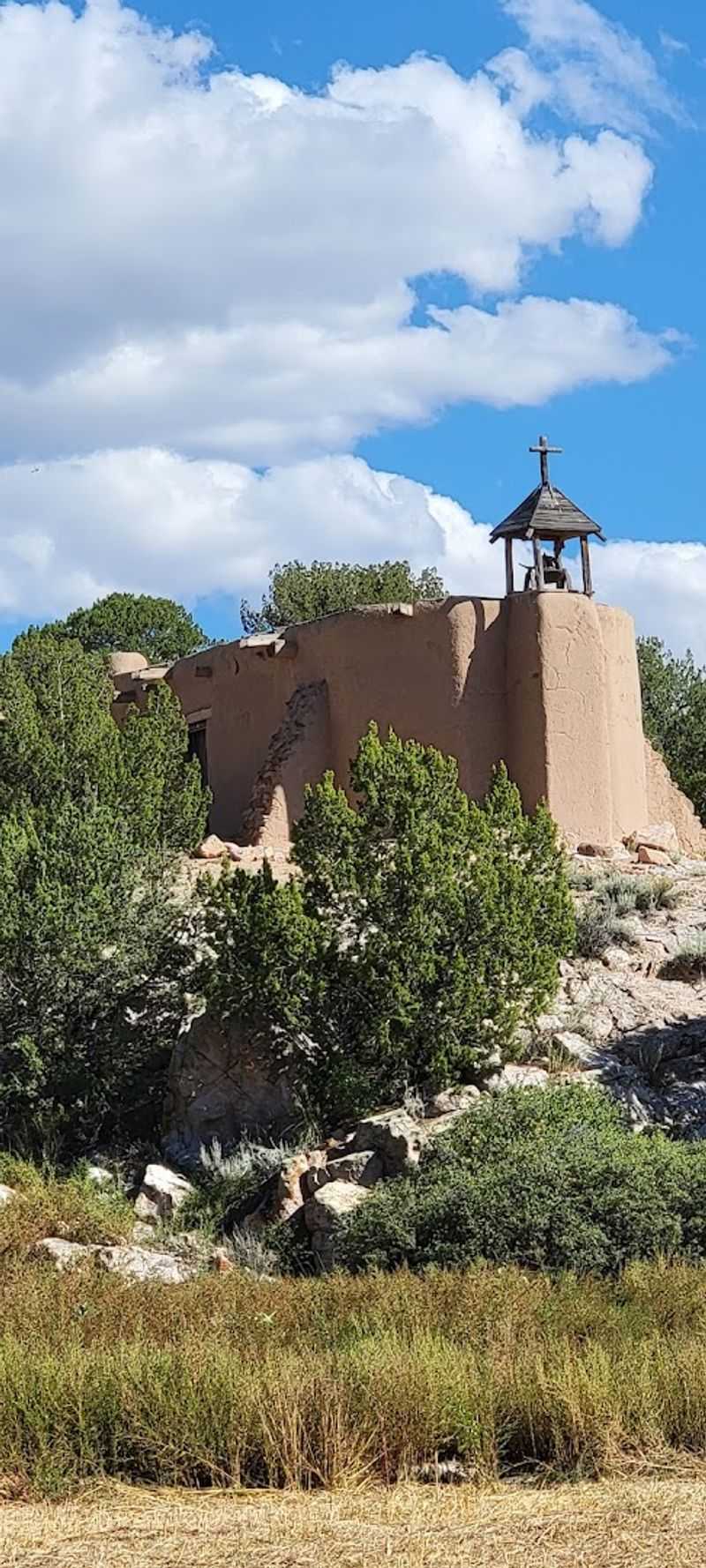
The paths across this property cover a serious amount of ground. That is part of what makes the experience so different from a typical museum visit.
Across 500 acres in a genuine farming valley, the ranch requires real walking to explore properly. Most visitors should allow at least two hours on the grounds, and the self-guided tour map numbers each building so that nothing gets missed along the way.
The terrain is mostly hard-packed earth, with some uneven and hilly areas that require extra care. Strollers and mobility needs may be manageable in some sections, though a few paths near the chapel and upper areas can take more effort.
As the day moves, the light shifts across the valley in ways that change the mood of each area completely. Morning visits offer cooler temperatures and softer light, while afternoon visits bathe the adobe walls in warm gold tones that make every photo look effortless.
Water and good shoes matter here, especially in summer. New Mexico heat is not something to underestimate, and the most practical advice is simple: dress comfortably, bring water, and give yourself time.
The paths connect more than just buildings. They connect moments across centuries in a way that feels earned with every step.
Rustic Rooms Filled With Old Southwest Character
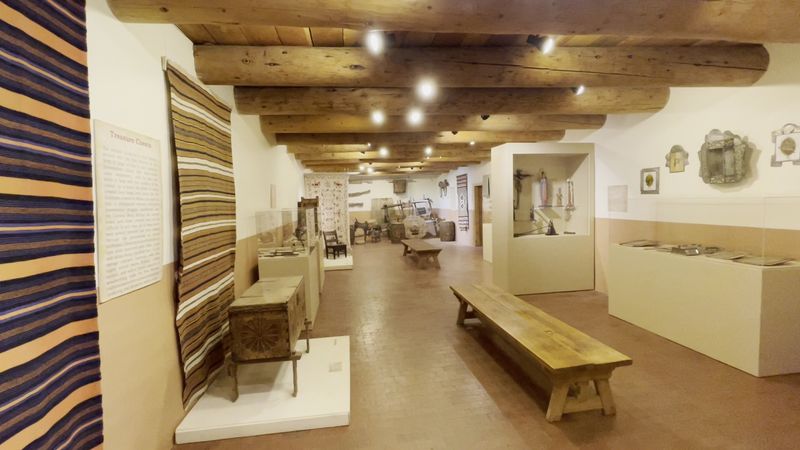
The individual rooms feel like a three-dimensional history book. You can notice the wood, the cool air, and the texture of handwoven wool in a way a regular display could never fully capture.
Over thirty historic buildings are spread across the ranch, including original colonial structures, carefully relocated buildings from other parts of the region, and period-accurate reproductions. Each one is furnished or equipped to represent a specific aspect of 18th or 19th century life, from a working blacksmith shop to a traditional schoolhouse where children once split their days between lessons and household chores.
The schoolroom in particular draws strong reactions from visitors. The small desks, simple instructional materials, and handwritten information about students’ farm chores make the past feel surprisingly close and human.
Costumed interpreters stationed throughout the buildings during the main operating season bring additional depth to each space, demonstrating trades like tin stamping, weaving, and corn grinding with the kind of hands-on energy that makes history genuinely interesting rather than just informative.
Every room has its own personality, and that variety keeps the experience fresh from one building to the next throughout the entire visit.
Quiet Corners Of A Preserved Frontier Past
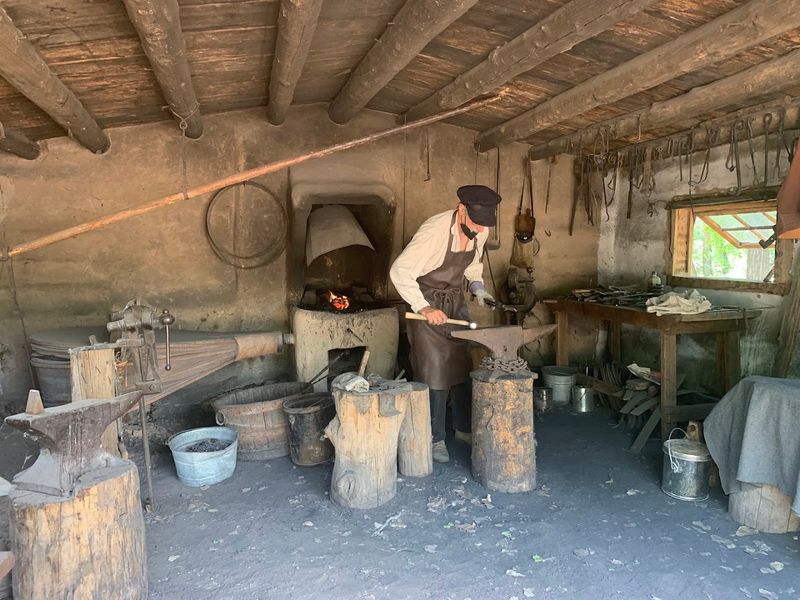
One real pleasure of exploring this property is how often it rewards curiosity. The quieter corners can be just as memorable as the main buildings.
On some visits, guides share detailed historical context that goes well beyond what the printed self-guide contains. That kind of generous storytelling can transform what could be a passive walk into something that genuinely sticks with you.
The ranch also contains an attached ecological wetland preserve, which adds a natural history dimension that many visitors do not expect. The relationship between the land, the water, and agricultural practices makes the whole picture of frontier survival feel more complete and more impressive.
Archaeological work has also taken place on the grounds, and past visitors have sometimes reported excavation activity during their visits. Because that kind of work changes over time, it is better understood as an occasional possibility rather than something every visitor should expect.
The property began moving toward its current mission after it was purchased in 1932, and it officially opened as a museum in the spring of 1972. That layered history makes every hidden corner feel like part of a larger story waiting to be noticed.
Sunlit Adobe Buildings Across The Ranch Grounds
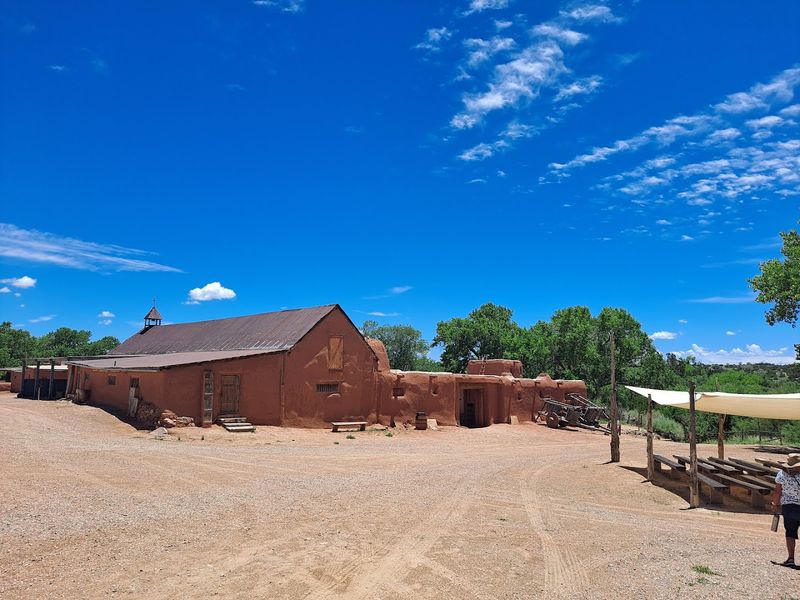
From an elevated point on the property, the scale of this place finally starts to click. The adobe buildings spread across the ranch in a way that makes the setting feel much larger than a single museum stop.
The museum features more than thirty structures, including plazas, a mountain village, a working water mill, a church, a schoolhouse, and a blacksmith shop. Some are original to the site, dating back to the early 1700s, while others were carefully relocated from other parts of northern New Mexico to preserve them from demolition or neglect.
The ranch held a historically significant position on El Camino Real, the Royal Road that once connected Mexico City to Santa Fe. It served as an official rest stop, called a paraje, for travelers and trade caravans making the long journey north.
That context adds weight to every sunlit wall and every shaded doorway you pass.
The buildings are not treated like distant objects behind glass. Visitors walk through many of them, stand inside them, and interact with the interpreters who work within them, which creates a sense of genuine presence rather than distant observation.
Sunlight on adobe has a particular quality here that makes the whole ranch glow in the late morning hours, and arriving close to the 9 AM opening time captures it at its most striking.
A Slow, Scenic Step Into New Mexico History
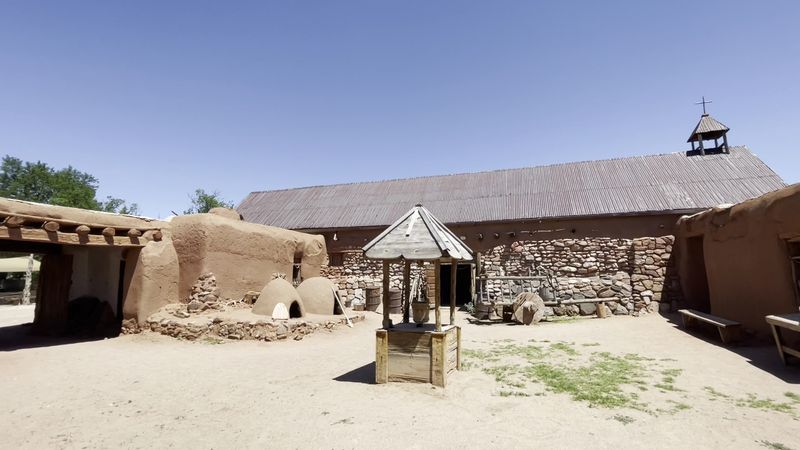
Some places reward speed. This ranch does the opposite, and that is meant as the highest possible compliment.
The museum’s regular season currently runs from early June through early November, with standard hours from 9 AM to 3 PM Wednesday through Sunday. Hours can vary during festival weekends and special events, so checking the current calendar before visiting is a smart move.
During the operating season, the ranch hosts festivals and themed weekends celebrating New Mexican culture, including a Spring Festival, a Renaissance Faire, and a Harvest Festival where kids can enjoy seasonal activities such as pumpkin picking and hay rides.
Heritage farm animals including churro sheep, burros, and goats live on the property year-round, helping the ranch feel like a working agricultural landscape rather than just a preserved set piece. A churro sheep grazing near a 300-year-old wall is the kind of detail that no exhibit description can fully prepare you for.
New Mexico residents currently receive free museum admission on Fridays from June through October with a valid state ID. The on-site gift shop and cafe near the entrance offer a pleasant way to finish the visit, and bread baked fresh in traditional hornos, the outdoor adobe ovens, is often mentioned as something worth tracking down before leaving.
Every slow step through El Rancho de las Golondrinas carries the weight of centuries, and that is exactly what makes it worth every minute.