Somewhere along a quiet bayou road in southern Louisiana, hundreds of concrete sculptures stand in silent formation: lizards, pelicans, faces with unreadable expressions, spiraling forms that look like they grew out of the ground rather than were placed upon it.
One man built all of them by hand over the course of several years, working alone, explaining his vision to nobody. Then one day he simply left.
No note, no forwarding address, no dramatic farewell, just an empty workshop plus a garden full of questions that will never get answered.
The Chauvin Sculpture Garden is equal parts outdoor museum and unsolved mystery, a place where art meets abandonment on the same patch of Louisiana soil.
Walking through it feels like reading a story whose last chapter was torn out: compelling, beautiful, maddeningly incomplete. An otherworldly Louisiana garden like this one does not just display art, it becomes the art, mystery and all.
First Impression: Arrival And Approach
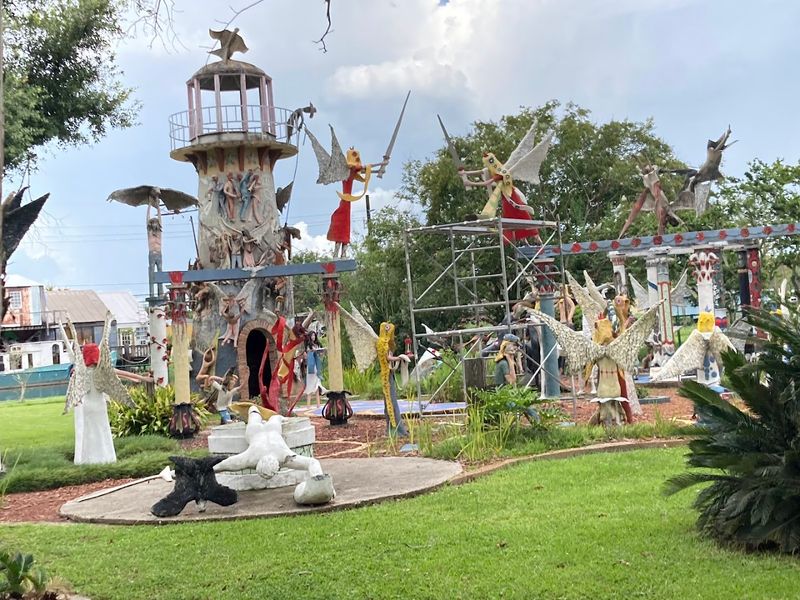
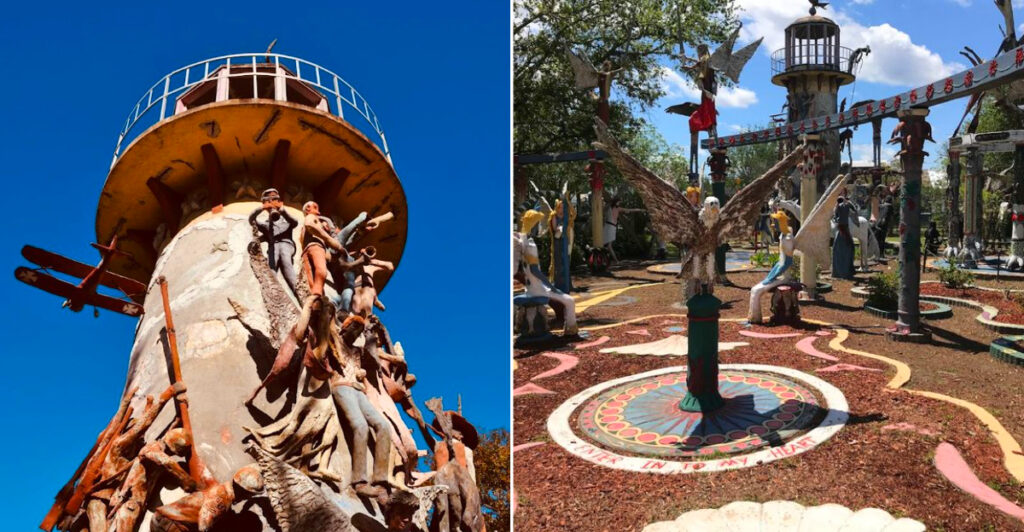
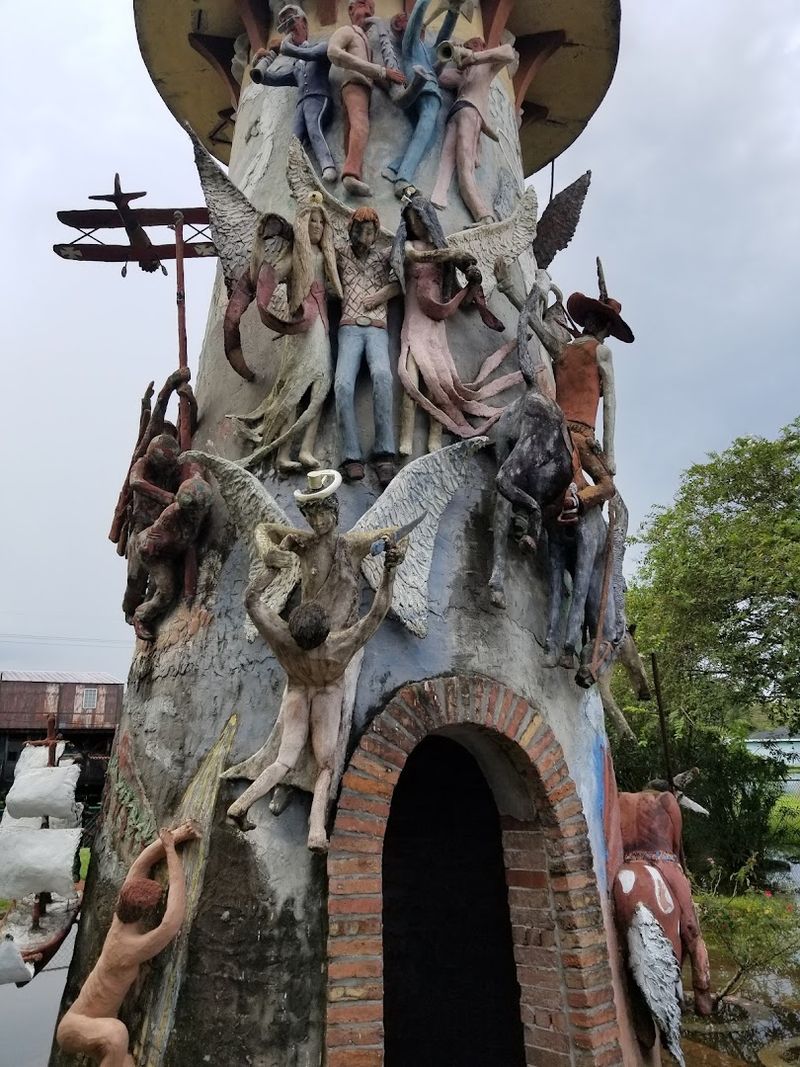
The first thing you notice when arriving is the silence and the way the sculptures sit like weathered witnesses to the bayou. That hush makes the 45-foot lighthouse loom even larger, a brick beacon wrapped in figures that read like a crowded memory.
Walking in feels like stepping into someone’s long, unfinished prayer, a personal theology in cement and wire.
The drive itself matters: shrimp boats and marsh give context and slow you down so the garden’s peculiar intimacy lands properly. Park respectfully and take a moment at the edge to orient yourself before moving between the clustered figures and pathways.
Take only photographs and leave only footprints.
Folk Art Where The Bayou Gets Strange
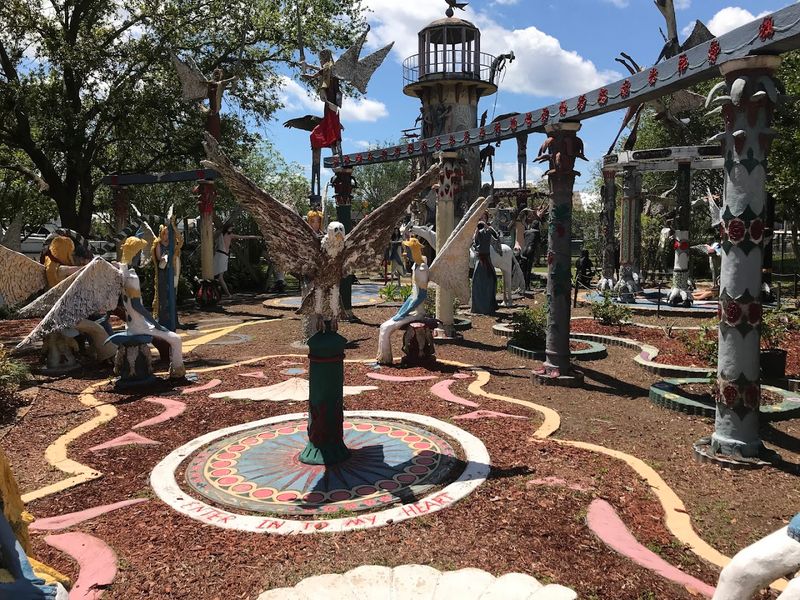
Chauvin Sculpture Garden & Art feels like a roadside vision that refused to stay small, with angels, towers, mosaics, and concrete figures rising from the bayou-side garden.
You’ll find it at 5337 Bayouside Dr, Chauvin, Louisiana 70344, along Bayou Petit Caillou in South Louisiana.
Arrive slowly, park, and walk in ready for something strange and handmade.
This is not a polished museum stop; it feels more like stepping into one person’s wild private dream after the road finally runs out of excuses.
History: Who Made It And When
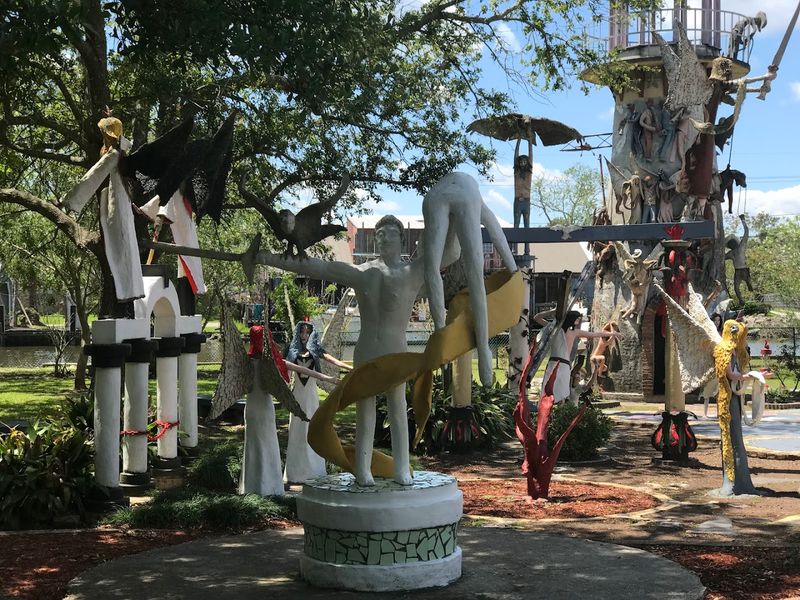
Kenny Hill arrived in Chauvin in 1988 and began building out the sculpture garden around 1990, working through materials he knew from his bricklaying trade.
Over roughly a decade he fashioned more than one hundred concrete sculptures using metal piping, wire mesh and quick-dry cement, culminating in a 45-foot lighthouse built from about 7,000 bricks.
The pieces plainly reflect an individual vision shaped by personal trials and religious imagery. In 2000 Hill disappeared, leaving behind his art and belongings; accounts suggest disputes with a new landowner and concern over personal losses.
The garden was nearly demolished but was rescued and later opened to the public in 2002 under Nicholls State University stewardship with support from the Kohler Foundation.
Architectural Feature: The Lighthouse Centerpiece
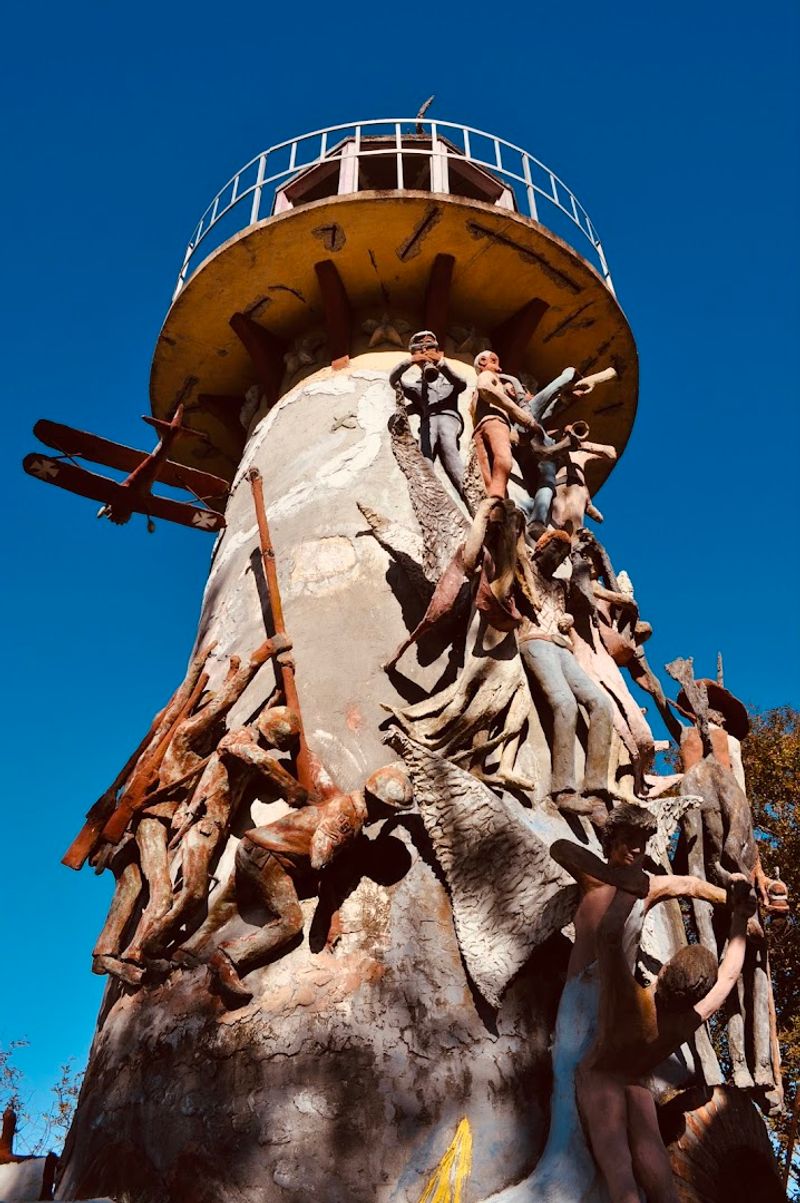
The lighthouse dominates the garden both physically and narratively, a 45-foot tower built from roughly 7,000 bricks and encrusted with figures that include angels, soldiers, cowboys and depictions of the artist himself.
Seen from the base the structure reads like a vertical storyboard, each sculpted addition layered onto a core of brickwork.
The tower’s scale and density make it impossible to ignore and reward slow circling.
Materials matter: brick, wire mesh and quick-dry cement create a resilient but fragile-looking surface that invites close viewing.
Note the placement of figures and the way Hill used repetition to create rhythm across the tower’s facade. Stand back to take in the full effect then move nearer to inspect details.
Technique And Materials: How The Sculptures Were Made
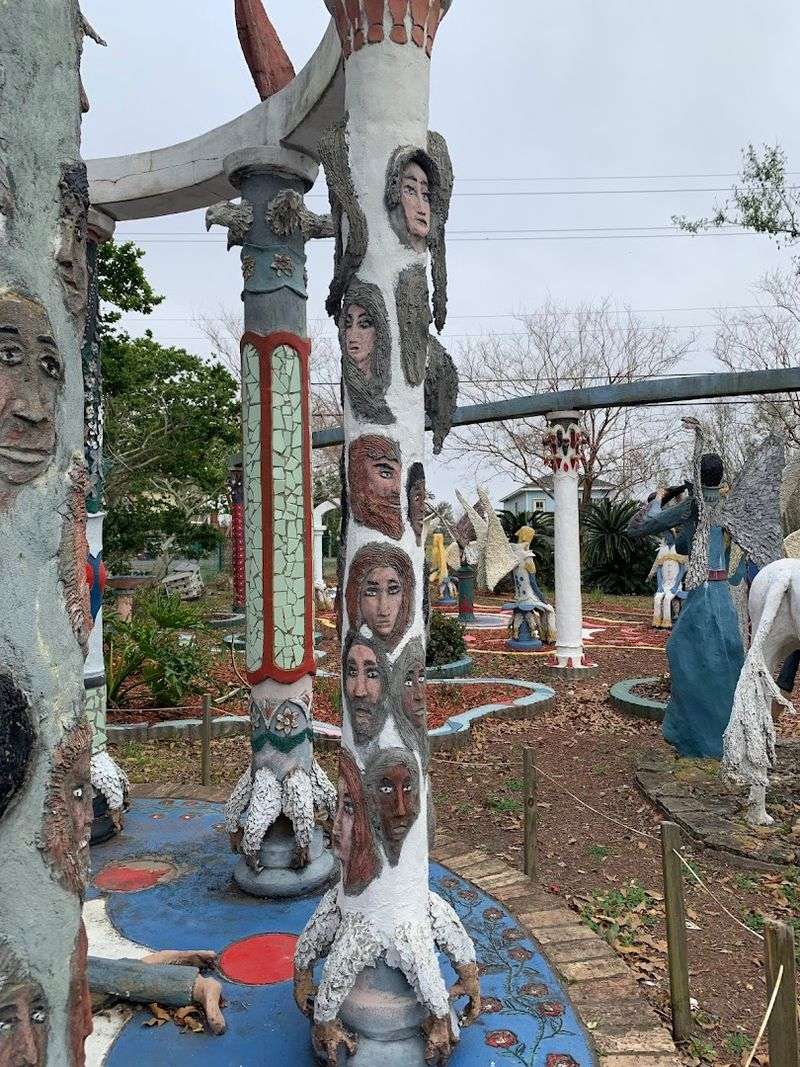
Hill combined bricklaying skills with improvisational armatures of metal piping and wire mesh before coating forms in quick-dry cement, producing sculptures that feel both constructed and carved.
The technique yields expressive faces and detailed clothing textures despite the rough medium; small marks and tool impressions remain visible and add to the work’s humanity. Repeated motifs across pieces suggest both plan and impulse at work.
The choice of materials suited the swampy climate but also created conservation challenges, especially after storms. Hurricane Ida later caused damage, confirming that the garden needs careful stewardship to preserve Hill’s intent and the fragile surfaces he left behind.
Look for repair traces and patched areas that tell their own stories.
Preservation: Rescue And Stewardship
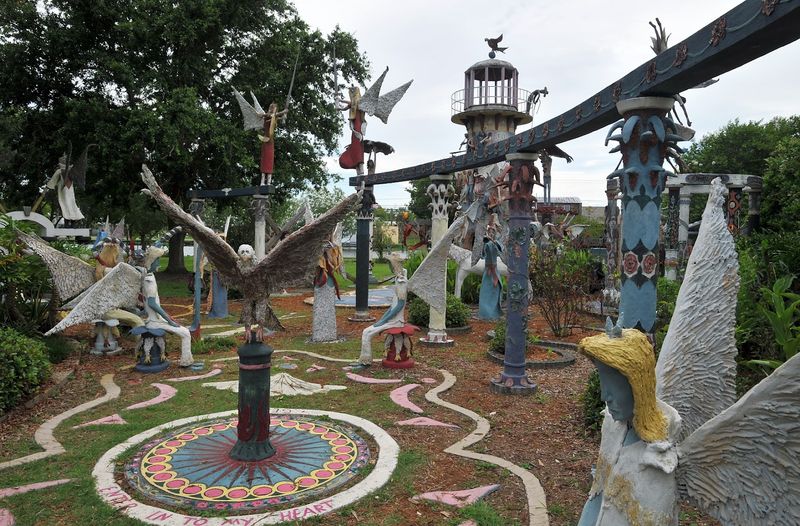
The garden might have been lost if not for timely intervention, Nicholls State University accepted the site for long-term care after the Kohler Foundation helped secure the property. That partnership allowed public access to continue and supported early restoration efforts following the artist’s disappearance.
Since opening in 2002 the site has relied on volunteers, docents and university staff to maintain both the sculptures and the landscape.
Storm damage and occasional vandalism have posed setbacks, including notable impact from Hurricane Ida. Preservation here is an ongoing human effort that balances repair with respect for Hill’s original methods; you can often see repair work where cement was patched or armatures reinforced.
The garden remains a fragile cultural artifact worth protecting.
Visitor Logistics: Hours, Access, And Onsite Amenities
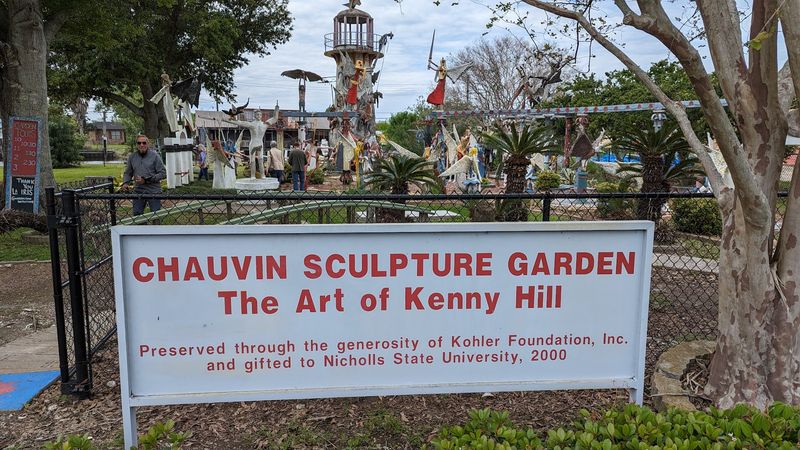
Access is straightforward, the garden is open daily during daylight hours with free admission and regular hours from 8 AM to 5 PM according to posted information.
Weekends often have docents available and a modest gift shop that helps fund upkeep; guided tours typically run on weekends and can add helpful context if you want stories about Hill and the work.
Parking is informal along the road in many cases so arrive with patience and respect for neighbors.
Bring sun protection and bug spray in warmer months, and plan on walking uneven paths that can be damp after rain. The site phone is listed for questions and local directions if needed.
Respect posted rules and remember photography is welcome while observing any posted restrictions.
Local Culture: The Garden In Community Context
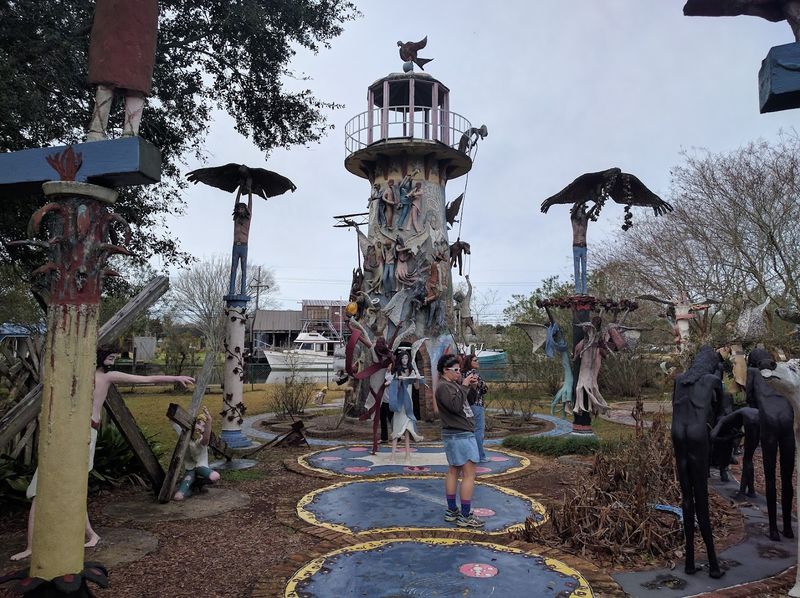
The garden sits squarely within south Louisiana life, shrimp boats, local churches and bayou culture frame the experience and give the work neighborhood context.
Community events have been held on site including a sculpture garden fest linked with local traditions like the Blessing of the Fleet, which ties the art into seasonal rhythms and communal memory.
That connection helps explain why locals advocated for preservation when the garden faced demolition.
You’ll notice regional food trucks or nearby spots on event days and a friendly, low-key vibe from neighbors who remember Hill. Appreciating the site means seeing it as part of a living landscape rather than a standalone oddity.
Seasonal Quirks: Best Time To Visit
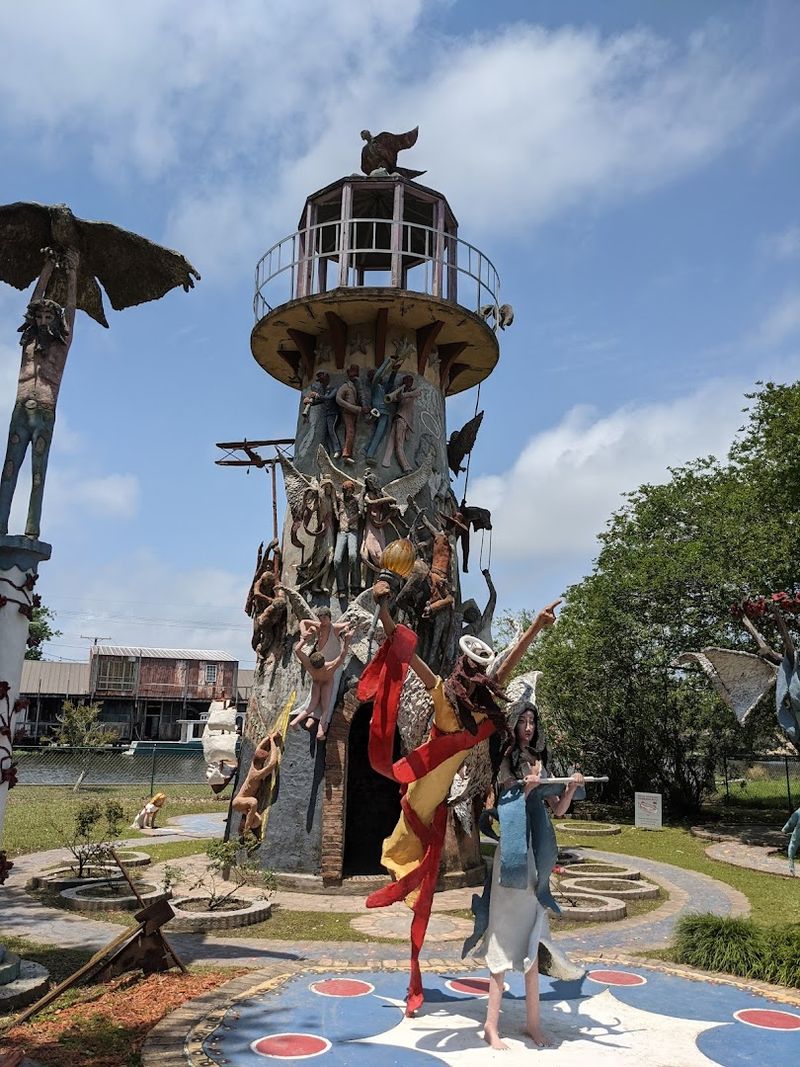
Late autumn and winter mornings offer crisp air and softer light that flatter the concrete textures and reduce mosquitoes; those seasons make wandering between figures more comfortable and contemplative. Summer visits bring lush vegetation and louder insects, which add to the bayou feel but can distract from close viewing.
Early morning or late afternoon light highlights sculptural reliefs and casts dramatic shadows across the lighthouse and surrounding figures.
Check weather and tide conditions for the broader area, and avoid storm-threatened days: hurricane season has previously caused damage. Weekdays tend to be quieter if you prefer solitude and uninterrupted viewing time among Hill’s scenes.
Visitor Tips: How To Get The Most Out Of A Visit
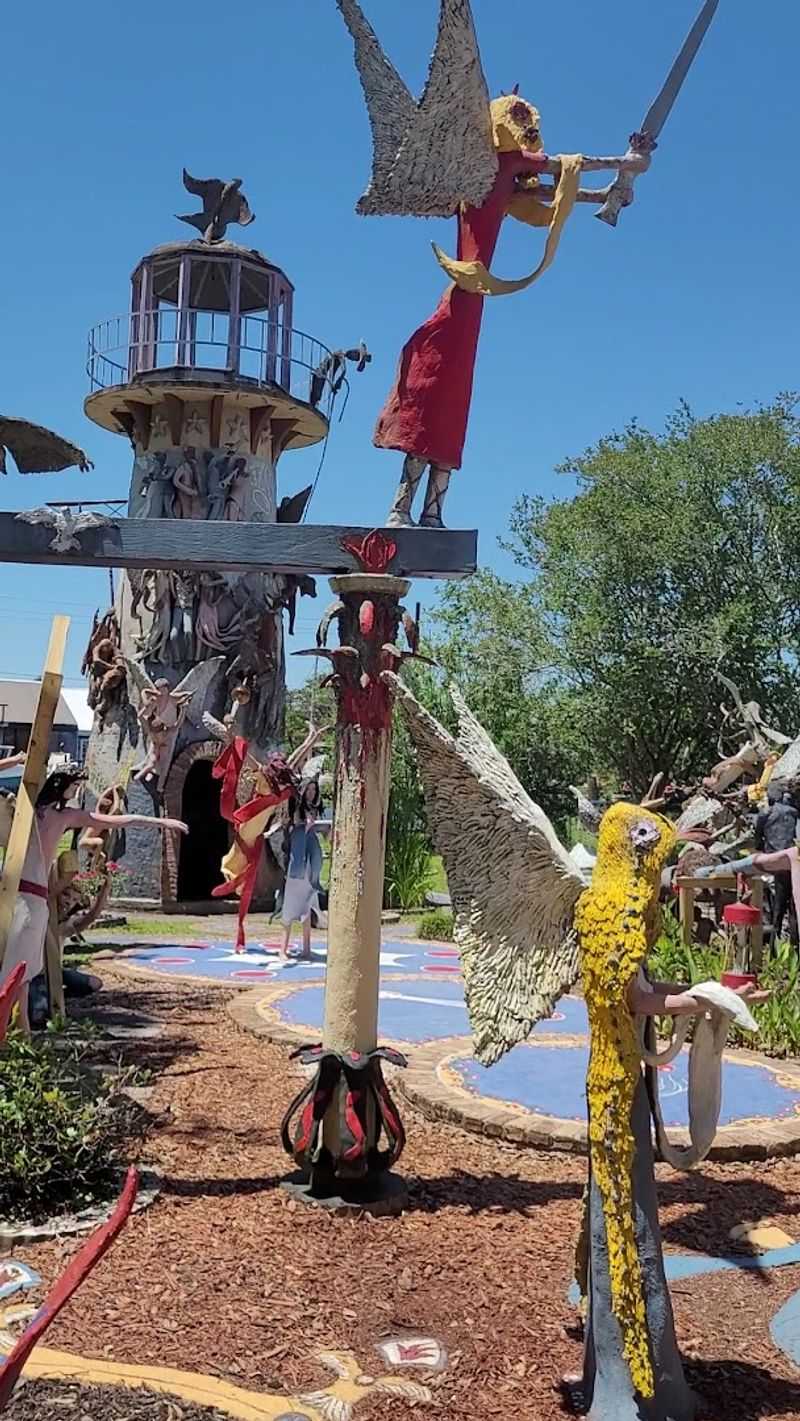
Approach the garden slowly, read the introductory signage and let the circular plan guide you through layers of imagery. Take notes or photos of details that catch you, then step back to consider context, especially the lighthouse which organizes the composition.
Weekends often have docents who share factual background and anecdotes that enrich understanding if you prefer guided context.
Wear comfortable shoes and bring water, plus insect repellent in warm months. Respect the sculptures by not climbing and by observing any barrier signs.
A quiet picnic nearby can extend the visit and let the place settle in, but always clean up and follow site rules so future visitors enjoy the same atmosphere.
Conservation Spotlight: Storm Damage And Repairs
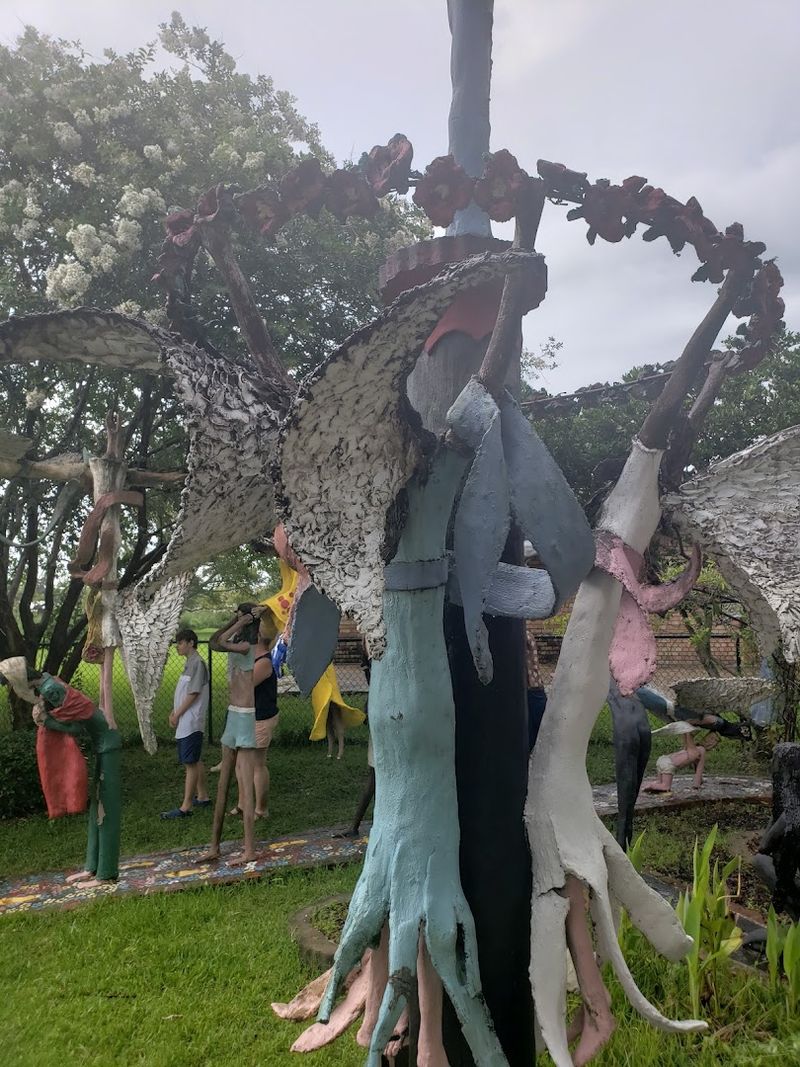
Hurricane Ida and other storms have left visible marks on the garden, with broken pieces and patched areas that tell the site’s recent story. Conservation here balances stabilization with fidelity to Hill’s original methods; repairs often use similar materials to preserve visual continuity while reinforcing internal armatures.
Visitors can spot patched joints, reinforced wire mesh and new mortar that contrast subtly with aged surfaces.
The ongoing restoration underscores the fragility of outsider art in exposed environments and highlights the importance of local stewardship. If you see active conservation work, respect barriers and ask docents about volunteer opportunities or ways to support preservation through donations or university programs.
Legacy And Unanswered Questions: The Artist’s Disappearance
Kenny Hill’s disappearance in 2000 remains part of the garden’s narrative and shapes how many visitors read the work. Accounts suggest he left after disputes over property, possible family loss and eviction threats; neighbors recall a fractured last chapter that included knocking the head off a Jesus sculpture before leaving.
That act and a found sign reading “HELL IS HERE, WELCOME” add a raw human punctuation to the place’s spiritual imagery.
The unanswered questions are part of what draws people to the site: a powerful personal saga embedded in concrete. The art and its absence feel joined, and the rescue by Nicholls State University ensures the story remains accessible while honoring the work’s complexity.