Somewhere in northern New Mexico, near the Rio Grande, there’s a place I almost missed.
That might be why it hit me so hard.
I arrived expecting a quiet stop, maybe a few old walls and a short walk. Instead, I found myself slowing down without even deciding to.
The adobe seemed to hold on to voices. The paths felt less like a route and more like an invitation to pay attention.
This land has carried a lot.
Tewa farmers worked this soil long before the Spanish land grants changed its future. Later, a Boston socialite filled the rooms with conversation and visitors like Georgia O’Keeffe.
What stayed with me was not just the history. It was the feeling that none of it had fully disappeared.
Some places explain the past. This one makes you stand inside it for a minute and feel how close it still is today, somehow.
Adobe Walls With Centuries Of Quiet Stories
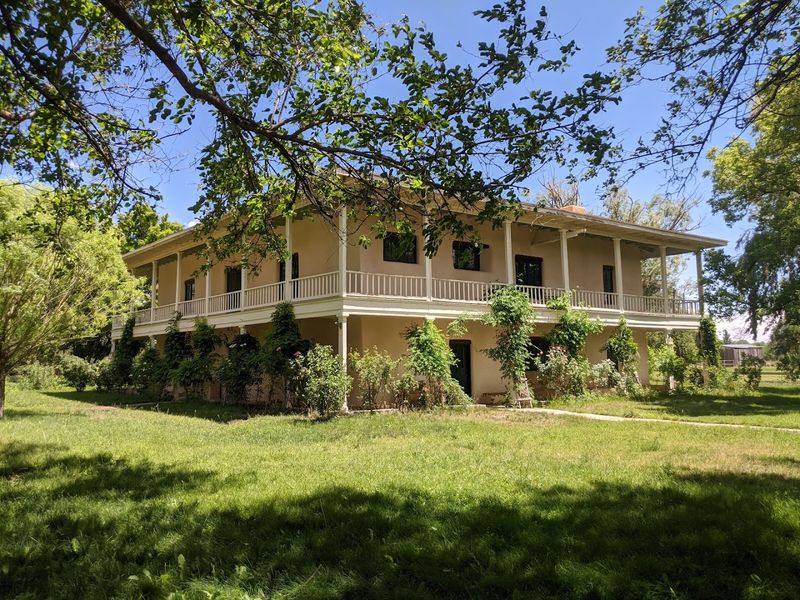
My hand brushed the sun-warmed adobe walls of the Hacienda at this historic northern property. It felt less like touching a building and more like pressing my palm against a timeline.
The structure dates back to 1705, making it one of the oldest standing adobe homes in the region, and its walls carry the kind of quiet authority that only three centuries of survival can earn.
A second floor was added during the mid-1800s in the Territorial style, blending the original colonial form with the architectural trends of a changing era.
At 5,700 square feet, the Hacienda is the centerpiece of the entire property, and even with restoration work limiting access during my visit, its presence was impossible to ignore.
The craftsmanship on the doors alone stopped me in my tracks, with carved woodwork that seemed too detailed and too deliberate to have survived this long without a story of its own.
You can find this remarkable structure at Los Luceros Historic Site at 253 Co Rd 41, Alcalde, NM 87511, where the past refuses to stay quietly in the background.
Cottonwood Shade Along The Rio Grande
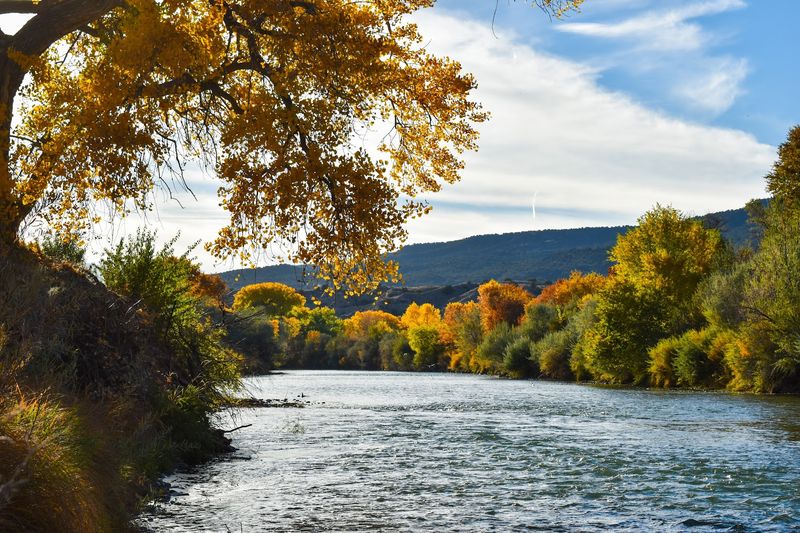
Walking into the bosque at Los Luceros felt like stepping into a completely different world from the open desert I had been driving through all morning.
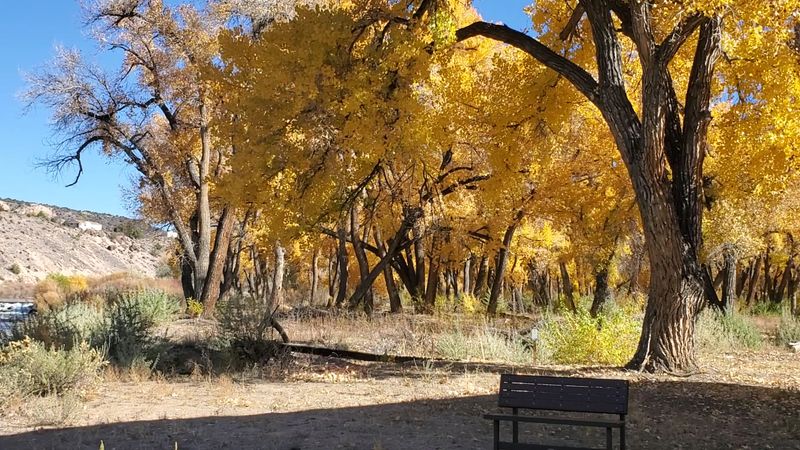
The cottonwood trees along the Rio Grande stretch high and wide, creating a canopy of shifting green and gold that filters the New Mexico sun into something almost gentle.
This ribbon of riverside woodland is not just beautiful scenery; it is a living habitat that supports birds, native plants, and a kind of natural calm that is hard to find anywhere else in the region.
The site staff mentioned that a Bosque loop trail of about three quarters of a mile runs through this section, making it one of the best spots on the property for birding enthusiasts.
I watched a hawk circle lazily overhead while cottonwood seeds drifted past like slow snow, and for a few minutes the entire outside world felt very far away.
The contrast between the open orchard, the thick riverside woodland, and the historic structures nearby gives Los Luceros a layered landscape that rewards every visitor who takes the time to wander slowly.
A Peaceful Ranch Wrapped In History
A visit to a place that still works as a ranch feels unexpectedly grounding. At Los Luceros, that feeling comes through almost immediately.
Los Luceros keeps live sheep on the property, and on the afternoon I visited, a small group of them was grazing near one of the outbuildings with complete indifference to my presence, which I found oddly charming.
This area holds more than a thousand years of cultural history, while the property itself is described as a place people have called home for more than 600 years.
Archaeological evidence points to a Tewa farming and fishing village called Po’yege existing on this same ground centuries ago, long before Spanish land grants reshaped its future.
A Spanish land grant awarded to Captain Sebastian Martin-Serrano around 1703 formalized European ownership of the property, acknowledging military service and setting the stage for the hacienda that still stands today.
The irrigated pastures, the old outbuildings, and the general rhythm of the place all suggest a history of people who understood that this land was worth tending carefully.
Visitors who take the full grounds tour get a real sense of how agriculture, culture, and daily life have layered themselves onto this same patch of earth across wildly different eras.
Orchard Views And Old New Mexico Charm
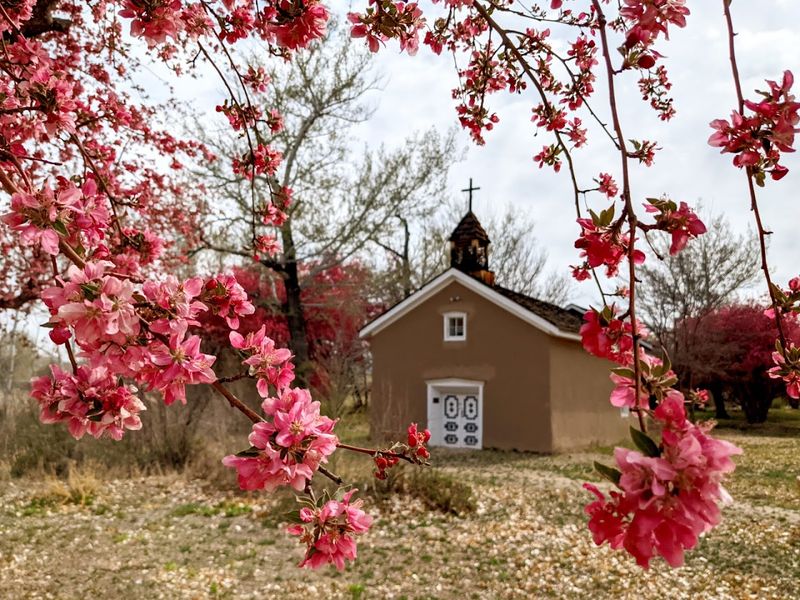
Few things surprised me more at Los Luceros than the apple orchard. More than a thousand trees seemed to stretch out around me.
The site is recognized as one of the early Spanish colonial places where apple trees were planted in New Mexico, giving the orchard a lineage that reaches deep into the region’s past.
Past harvest events have included apple picking, though visitors should check the current year’s festival details before planning a trip around that part of the experience.
Even outside of harvest season, the orchard has a particular kind of beauty, with gnarled trunks and low-hanging branches creating a landscape that feels both productive and poetic at the same time.
After seeing it in late season myself, I have every reason to believe that spring here, when the orchard blooms, must be something worth planning a trip around.
The orchard is one of those details that makes Los Luceros feel less like a museum and more like a place that still breathes.
A Chapel Corner Frozen In Time
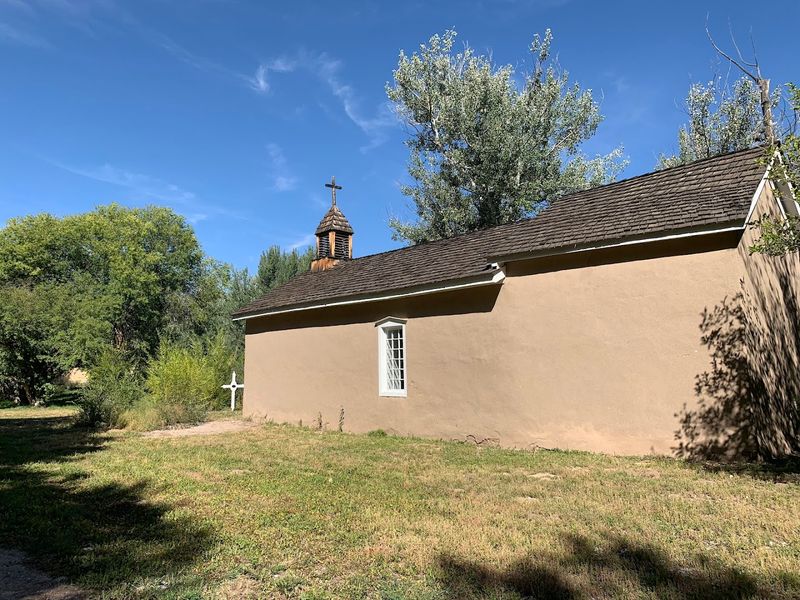
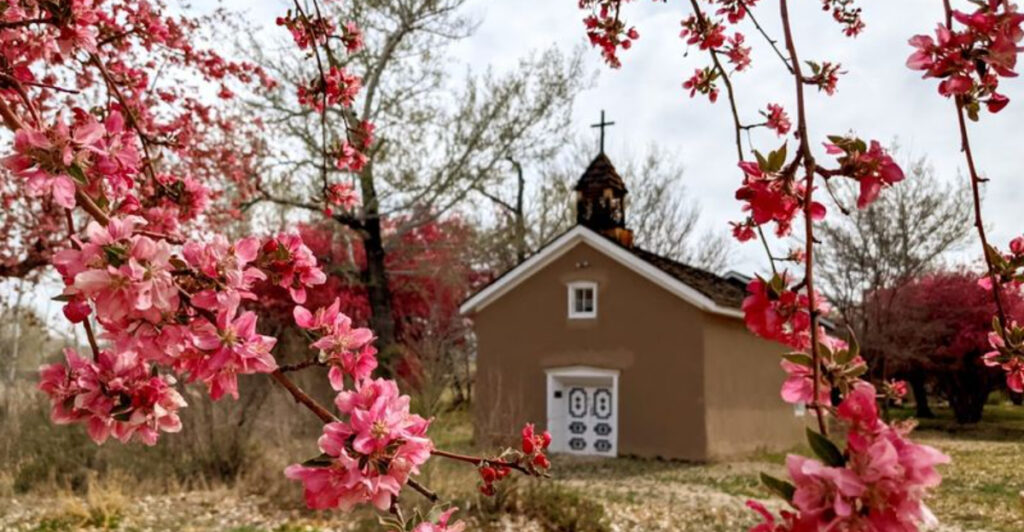
The chapel sits quietly on the property. It feels like a thought that never needed to be spoken aloud.
Known as a capilla, this small place of worship is believed by the historic site to have roots in the early 1700s, though some summaries describe it as a later historic chapel.
It remains under the ownership of the Archdiocese of Santa Fe, which gives it a continuous religious and community identity even as the surrounding property changed hands multiple times over the centuries.
The exterior is simple in the way that only genuinely old buildings can be, with an economy of form that suggests the people who built it were more interested in devotion than decoration.
I stood in front of it on a quiet weekday afternoon, with no other visitors nearby and just the sound of wind moving through the cottonwoods.
For a few minutes, the stillness felt like something most modern buildings simply cannot produce.
The detail work on the doors throughout the property, including near the chapel, is another small reminder of how much care survived here.
Chapels like this one are rare survivors, and the fact that it still stands here, still connected to its original spiritual community, makes it quietly extraordinary.
Territorial Architecture Beneath Wide Desert Skies
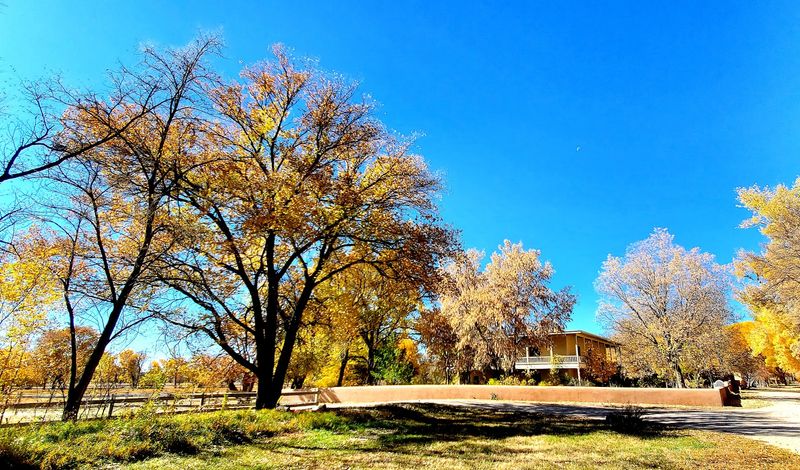
Territorial architecture has always struck me as one of the most honest building styles in American history. It shows what happens when different cultural traditions share a wall.
The Hacienda at Los Luceros demonstrates this perfectly, with its original 1705 adobe construction anchoring the ground floor while the mid-1800s second-story addition introduces the brick coping details and more formal proportions associated with the Territorial period.
This style emerged as New Mexico shifted from Spanish colonial rule through Mexican governance and into American territorial status, and the architecture embodies that layered political and cultural history in its brickwork and window trim.
Under the wide northern sky, I kept looking up at the Hacienda and noticing how the building manages to feel both rooted and adaptive.
It seems to have quietly negotiated with every new era rather than resisting it.
The site earned official designation as a New Mexico Historic Site in 2019, after the state Department of Cultural Affairs acquired it in 2008, giving the architecture the institutional protection it clearly deserves.
Even from accessible exterior viewpoints, the Hacienda offers a slightly different architectural lesson from every angle, and I found myself walking around it twice just to catch details I had missed the first time.
Hidden Farmyard Paths And River Views
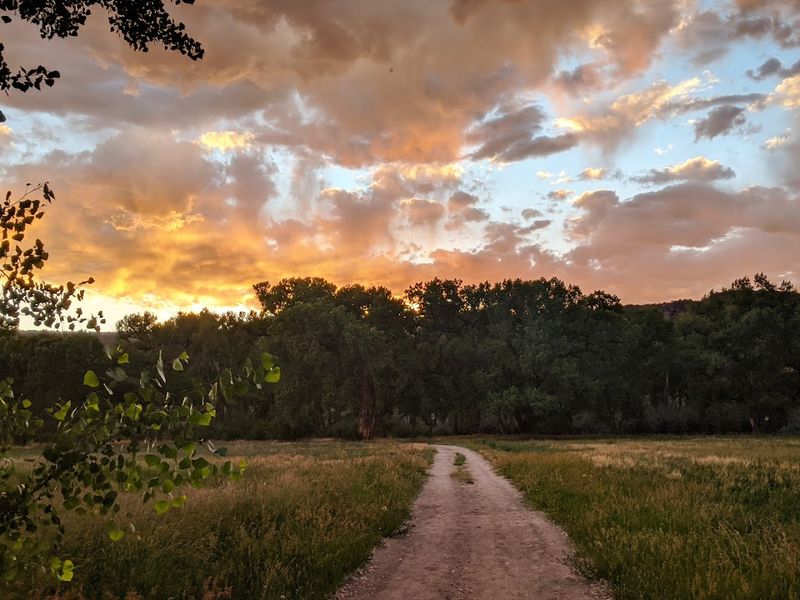
One genuine pleasure of Los Luceros is the way the grounds reward slow walking. The more carefully you move, the more you notice.
The site includes an original jailhouse, which stopped me completely when I rounded a corner and found it sitting there with the same matter-of-fact permanence as everything else on the property.
Gravel paths connect the various outbuildings, the orchard, the bosque trail, and the river access areas, creating a loose network of routes that visitors can follow in any order depending on their interests.
Accessibility is strongest around the Visitor Center, where ADA-compliant facilities and some accommodations help visitors experience the site, though many historic-area paths remain unpaved and some buildings have steps or limited access.
The Rio Grande runs along the edge of the property, and catching glimpses of the river through the cottonwood trunks while following the farmyard paths adds a geographic context that makes the whole landscape feel even more coherent.
By the time I had circled back to the visitor center, I realized I had been wandering the grounds for nearly two hours without once feeling like I had run out of things to notice.
A Slow Walk Through Living History
Some places carry their history like a burden, displaying it behind glass and keeping visitors at a careful distance, but Los Luceros takes the opposite approach entirely.
The site actively hosts cultural, educational, and environmental programs throughout the year, including seasonal events like sheep shearing days that bring the working ranch identity of the property to life in a way that no exhibit panel could replicate.
In the early 20th century, the property became a cultural gathering point where artists and writers spent time, adding another layer to its already deep Indigenous and Hispanic history.
That convergence of Indigenous, Hispanic, and Anglo-American cultural histories is not just a footnote here; it is the entire story, woven into every structure, every tree, and every path on the property.
The site is open Wednesday through Sunday from 10 AM to 4 PM, with free admission on the first Sunday of each month for state residents, making it genuinely accessible to the community it serves.
I walked out through the gate after my visit with the particular satisfaction of a place that had given me more than I expected and left me already thinking about a return trip.