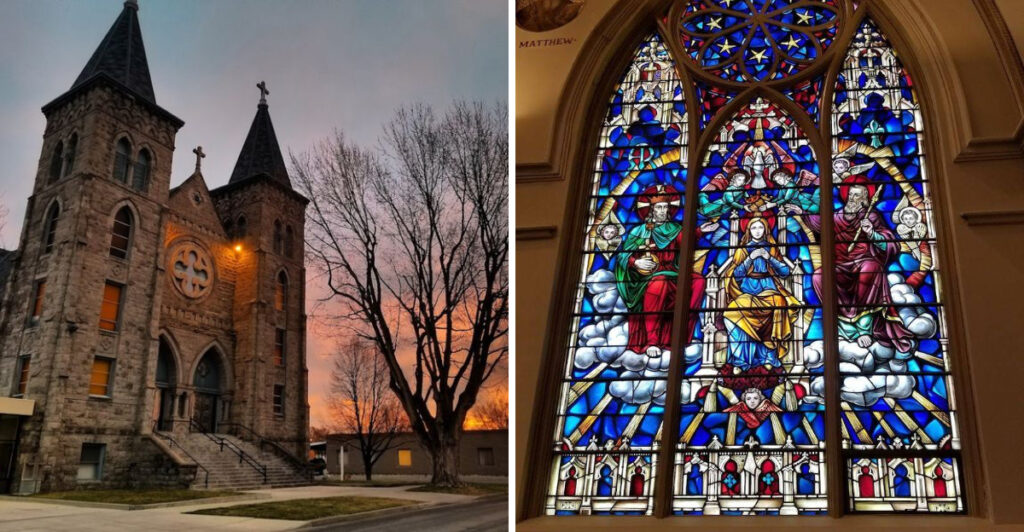
Head east across the Cascades, deep into high desert country, and a Gothic cathedral built from volcanic rock rises over a small Oregon city skyline. Twin spires, a rose window, hand-installed stained glass spanning three generations.
Nothing on the coast prepares you for this. The cathedral is the real thing, not a replica, not a scaled-down imitation.
Volcanic tuff quarried from the surrounding landscape gives the walls a texture that polished limestone never could match. Inside, colored light shifts across stone floors as the sun tracks across the high desert sky.
The building has stood here since 1908 and shows no signs of apologizing for its ambition. Oregon rewards the travelers who push past the obvious, and Baker City is exactly that kind of reward.
Plan the drive.
Twin Spires That Own The Baker City Skyline
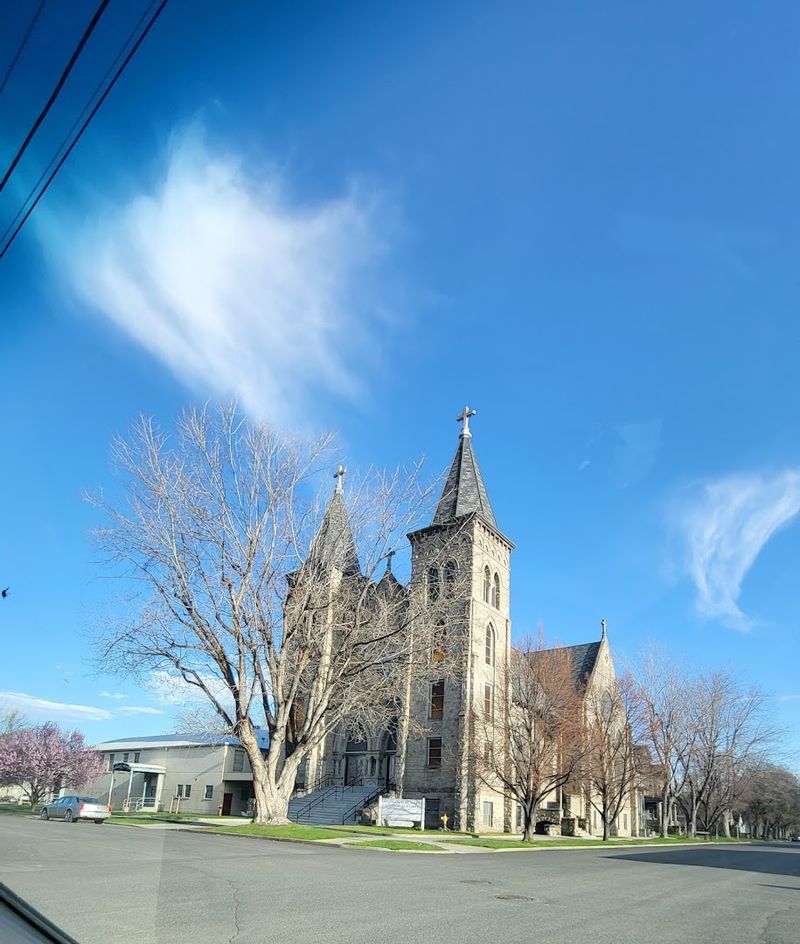
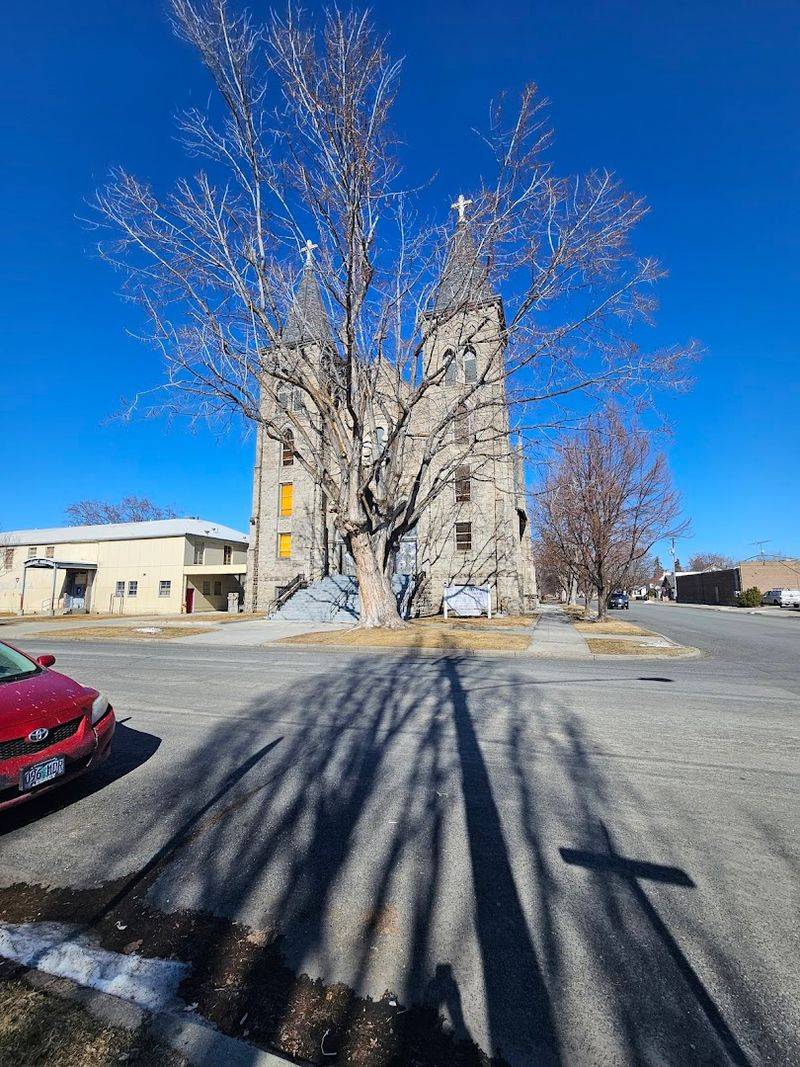
Two towers rise from the main facade, perfectly matched in height, each one capped with an octagon-shaped spire and a cross. They do not compete with each other.
They work together, framing the sky above Baker City like a pair of stone sentinels that have been standing guard since 1908.
From a distance, those spires are the first thing the eye catches. Oregon east of the Cascades is flat enough in many stretches that the cathedral announces itself long before you reach First Street.
The silhouette is unmistakable against the high-desert horizon.
Up close, the towers reveal finer details, narrow lancet openings, carefully cut stone edges, and the way each spire tapers with precision toward the cross at its peak. The proportions feel deliberate and confident.
Whoever designed this building understood that height creates awe, and that two matching towers create something even more powerful than one. The effect holds up more than a hundred years later.
A Rose Window Worth The Drive Alone
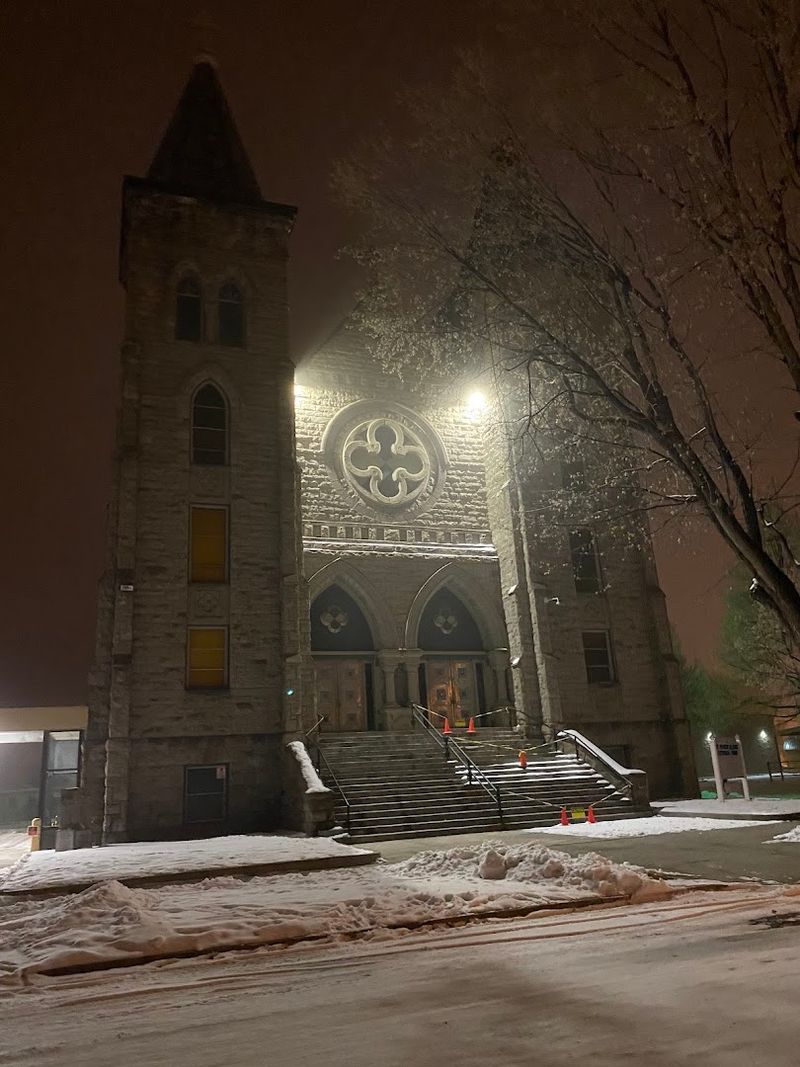
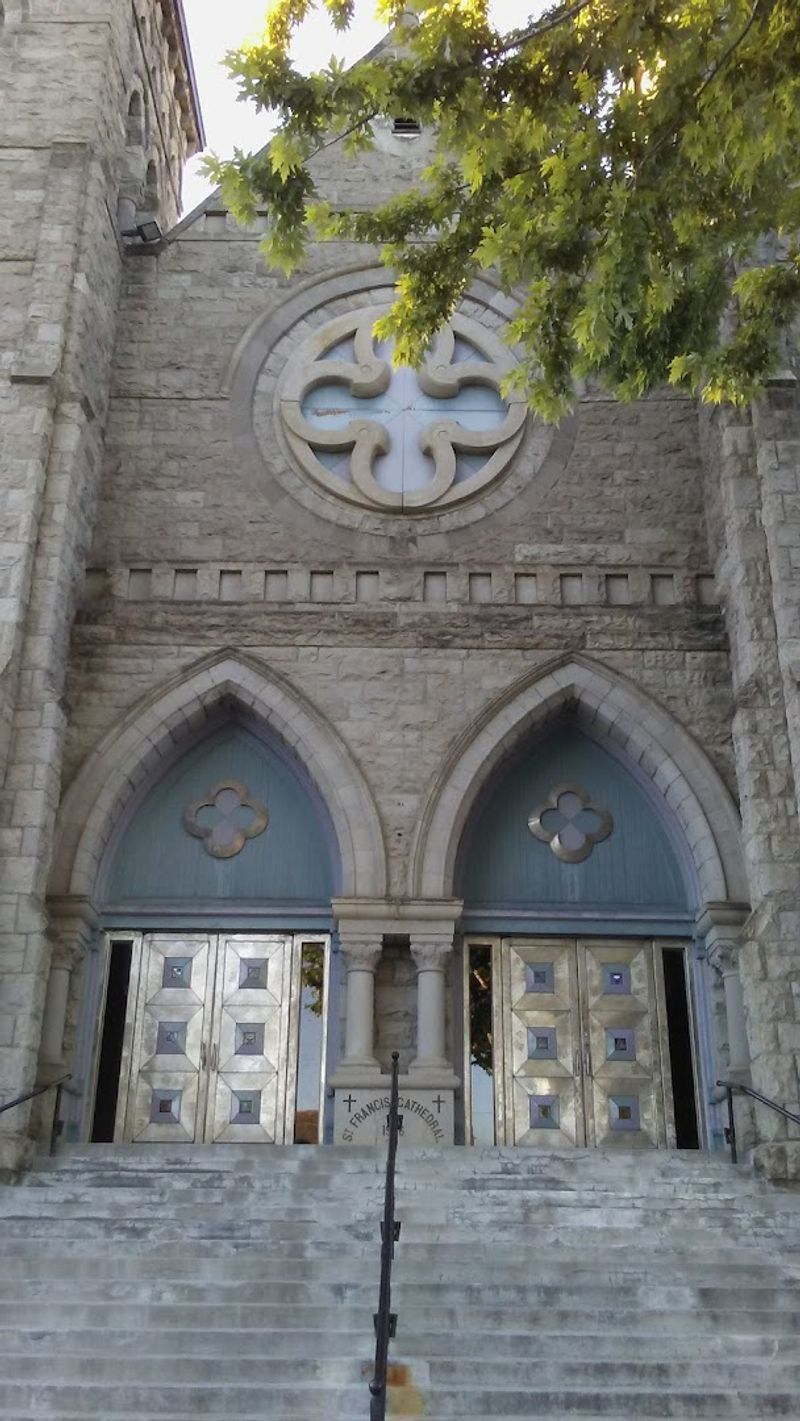
Right in the center of the main facade, above the double entryway and between the two towers, sits a rose window that stops foot traffic cold. It is one of those architectural details that photographs well but rewards the in-person experience far more generously.
Rose windows have been a signature of Gothic church design for centuries, used to flood interiors with colored light while telling visual stories through glass. This one follows that tradition faithfully.
The stone tracery holding the glass in place is intricate without being fussy, structured without feeling rigid.
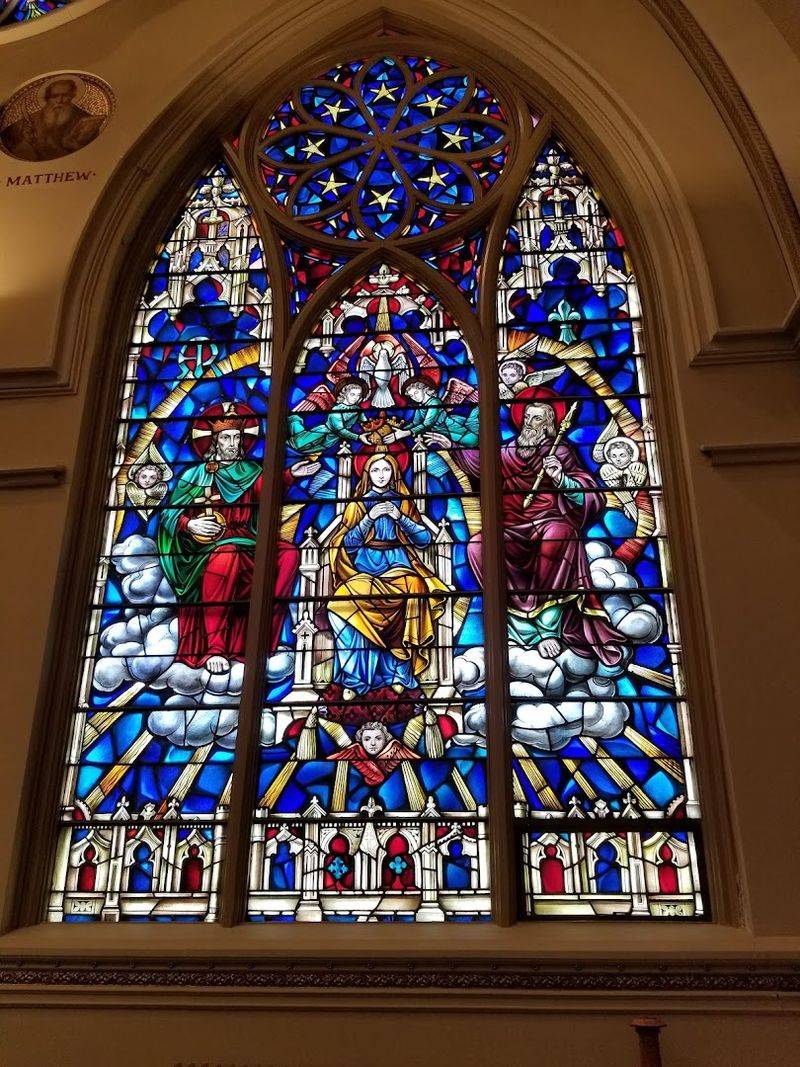
The stained glass panels installed at various points throughout the cathedral date to 1923, 1959, and 1965.As of late 2025, a five-year restoration project is actively working to bring the 1923 originals back to their earliest condition. The first phase of that effort carries a price tag of $168,000, a figure that signals just how seriously this community takes its cathedral.
The Cathedral That Volcanic Rock Built
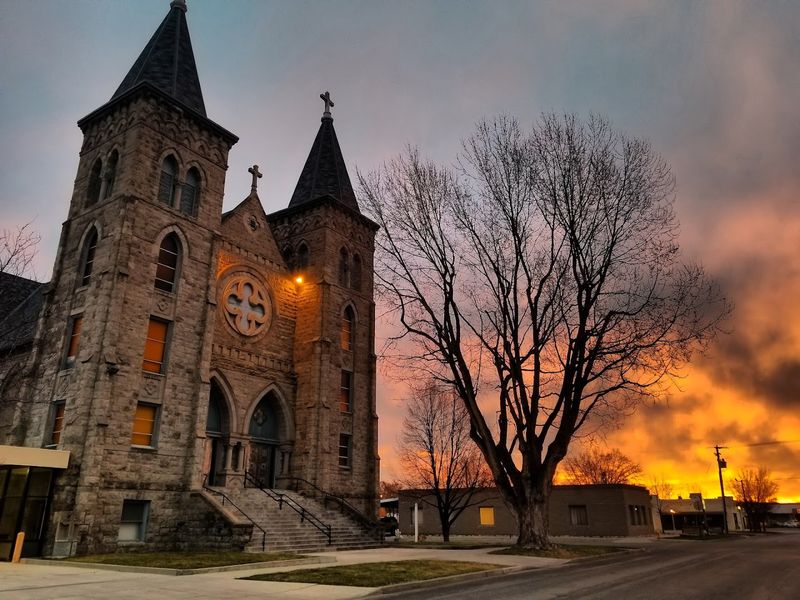
Volcanic rock is not the first material most people picture when imagining a Gothic cathedral. Yet that is exactly what gives Saint Francis de Sales Cathedral its raw, rugged personality.
The entire structure was raised using local volcanic tuff, a porous stone quarried from the surrounding Oregon landscape.
The rock is rough-faced, rusticated, and laid in careful, regular courses. It gives the building a texture that polished limestone or brick simply cannot match.
Up close, the walls look almost geological, like the earth itself decided to grow a church.
Construction ran from 1906 to 1908, and the exterior has changed very little since then. That kind of architectural consistency over more than a century is genuinely rare.
The volcanic tuff weathers slowly, holding its color and character through Oregon winters without losing its integrity. What stands today is almost exactly what the original builders saw when they stepped back and looked up for the first time.
The Interior Logic Of A Basilican Plan
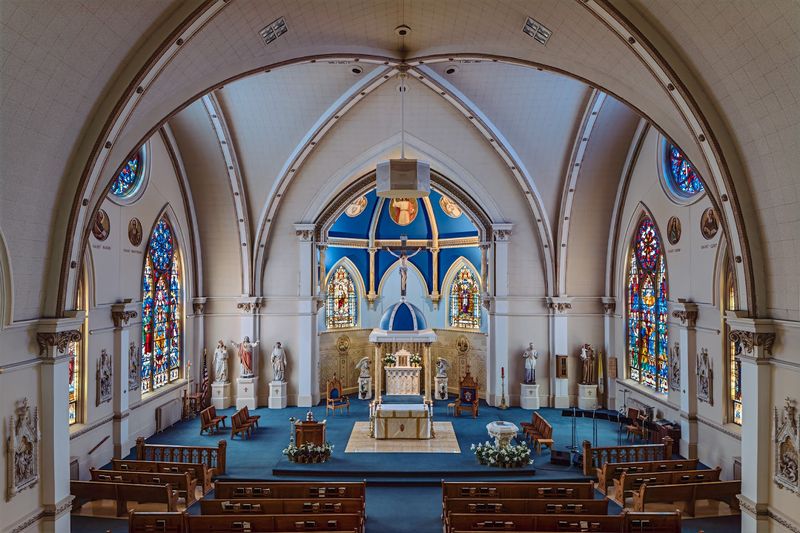
Step through the double doors and the floor plan reveals itself immediately. The cathedral follows a basilican layout, meaning the nave runs long and uninterrupted without side aisles breaking up the space.
The result is a clean, focused sightline from the entrance all the way to the apse.
Three pointed-arch windows line each side of the main nave, positioned between exterior buttresses. They pull natural light into the space at regular intervals, creating a rhythm that feels both architectural and almost musical.
The light shifts throughout the day as the sun moves, making the interior a different experience morning versus afternoon.
The transept opens on both sides with two larger pointed-arch windows below a second rose window on each elevation. Two more pointed-arch windows sit in the apse.
The whole composition is layered and deliberate. Every window placement serves both function and beauty, which is the mark of a designer who understood Gothic principles rather than simply copying their surface appearance.
Stained Glass That Takes Your Breath Mid-Step
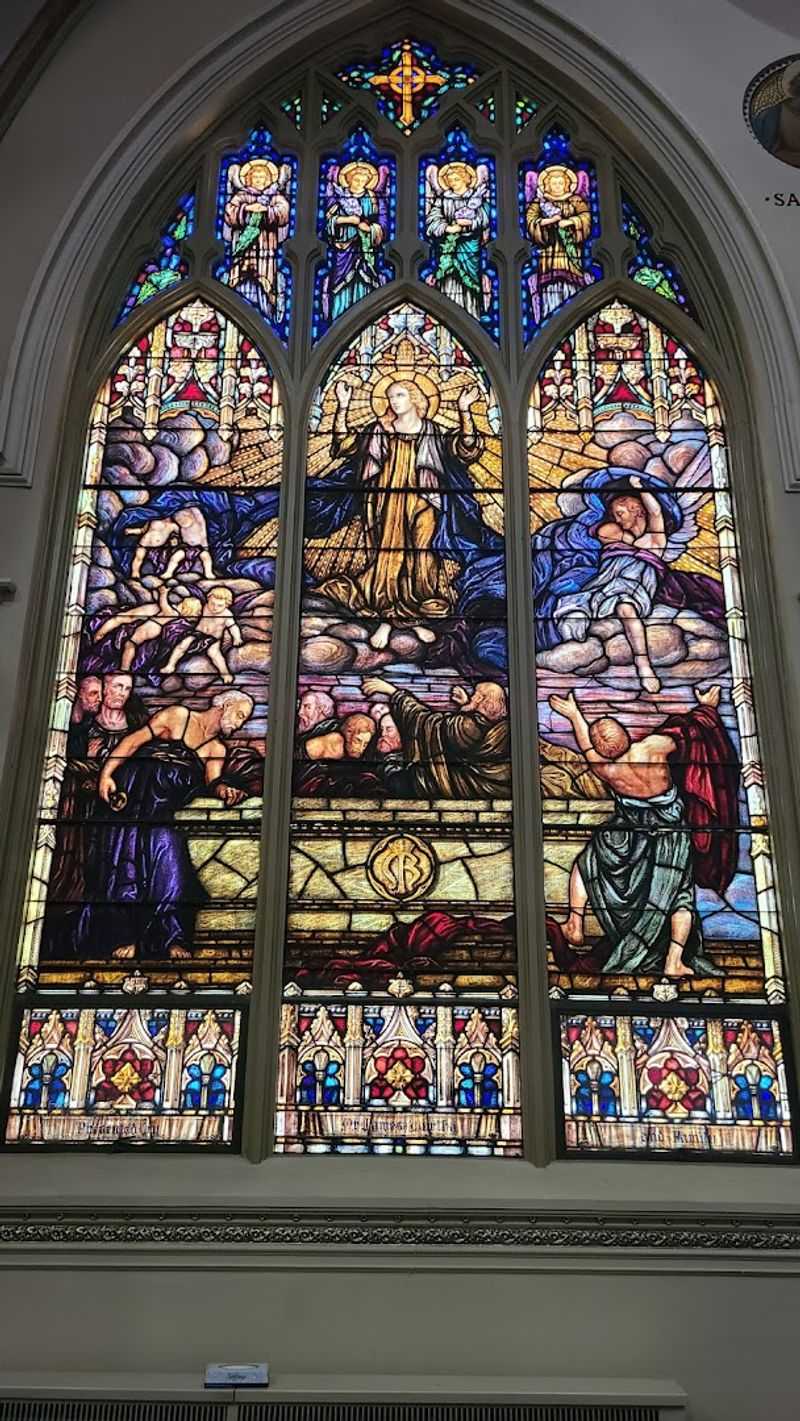
Visitors who have stepped inside consistently point to the stained glass as the detail that stops them cold. The windows arrive in waves across three different installation periods, 1923, 1958, and 1965, each generation of glass adding another layer to the visual story inside the cathedral.
The 1923 windows are the oldest and arguably the most historically significant. Their ongoing restoration, which began recently and spans five years, reflects a commitment to preserving the original craftsmanship rather than replacing it with modern reproductions.
Restoration work at this level treats the glass as an artifact, not just a decorative element.
The Stations of the Cross inside the cathedral have drawn particular attention from visitors who describe them as among the most beautiful they have encountered anywhere. That is a meaningful statement given how widely that particular devotional artwork appears in Catholic churches across the country.
The combination of the windows and the Stations creates an interior that rewards slow, unhurried attention rather than a quick walkthrough.
How A Small Oregon Town Became A Cathedral City
Baker City in the early twentieth century was a frontier town still finding its footing. The decision to build a full Gothic Revival cathedral there was bold by any measure.
The Diocese of Baker was established in 1903, and almost immediately, St. Francis de Sales Church was elevated to cathedral status to serve as its seat.
The diocese itself covers an enormous geographic footprint, encompassing all of Oregon east of the Cascade Mountains. That is a vast stretch of high desert, ranch land, and mountain terrain with a relatively scattered Catholic population.
Building a cathedral of this ambition in Baker City was a statement of permanence and intention.
The completed building in 1908 sent a clear message. This was not a temporary outpost church.
It was a permanent institution built to last generations. More than a century later, that message has proven accurate.
The cathedral still anchors Baker City’s First Street and remains the mother church of the Diocese of Baker, though the diocese’s pastoral offices are now based in Redmond.
National Register Status And What It Actually Means
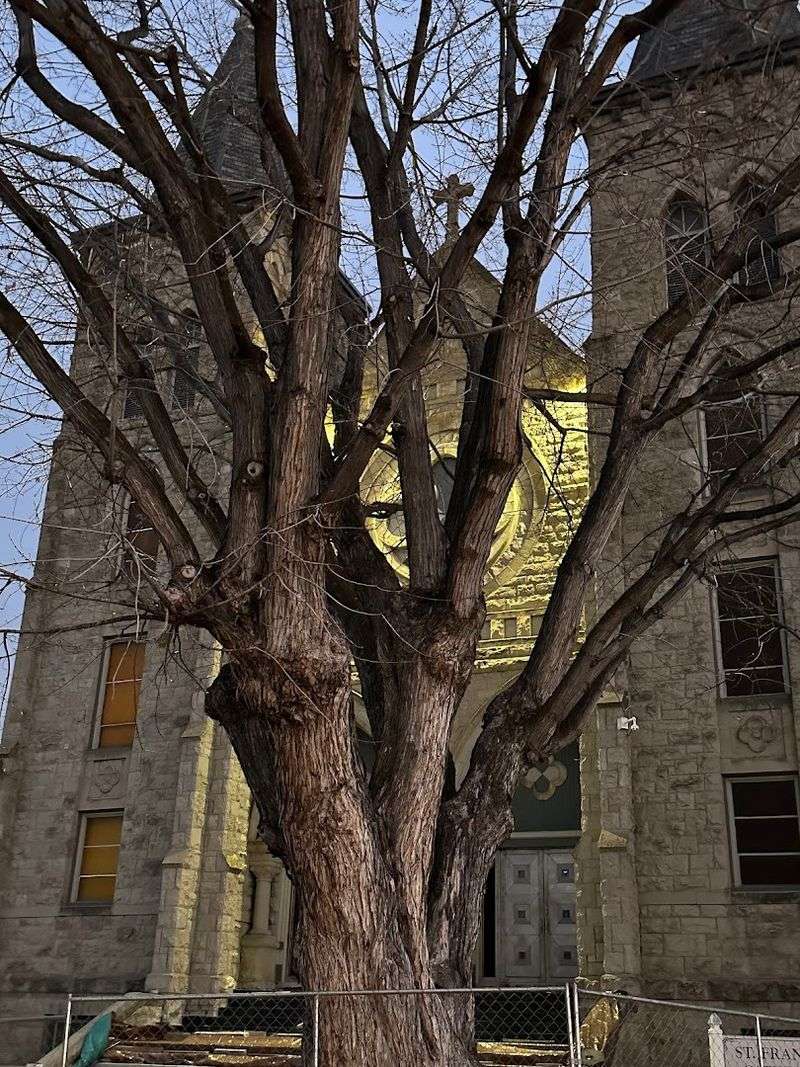
In 1978, both the cathedral church and its rectory were listed as contributing properties in the Baker Historic District on the National Register of Historic Places. That designation matters more than it might initially seem.
It places the building in a legally recognized category of structures worth preserving for future generations.
Contributing properties in a historic district are evaluated for their architectural integrity, historical significance, and their relationship to the broader story of the district they anchor. The cathedral earned its listing on all those counts.
Its Gothic Revival design, its volcanic tuff construction, and its role as the seat of a diocese all factored into the recognition.
Practical benefits follow from that status. Restoration projects can access specific funding streams and tax incentives not available to unlisted buildings.
The ongoing stained glass restoration currently underway benefits from the kind of preservation framework that National Register listing helps establish. The 1978 designation was not just ceremonial.
It created real protections that continue to shape how the cathedral is maintained and restored today.
Renovations That Respected The Original Vision
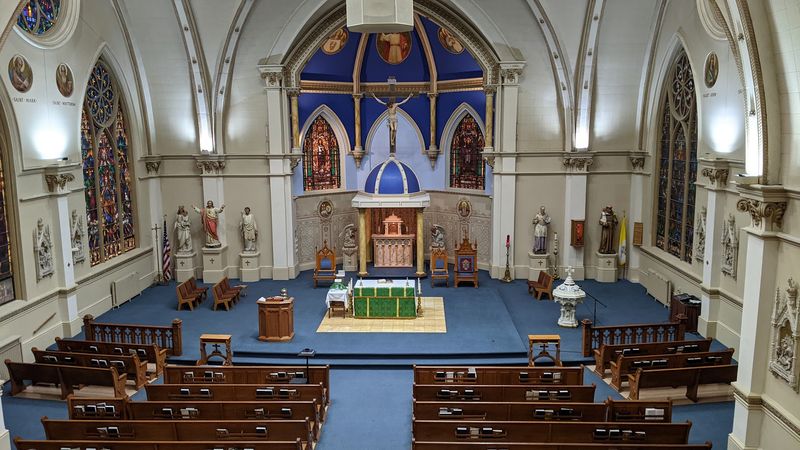
Keeping a century-old building functional without erasing what makes it special is one of the harder problems in historic preservation. Saint Francis de Sales Cathedral has navigated that challenge through renovations including a large-scale project in the early 1980s and a significant effort completed in mid-2007.
Each renovation phase addressed the practical needs of a working parish while trying to leave the architectural character intact. The exterior, built from that distinctive local volcanic tuff, has remained largely unchanged since 1908.
That consistency is a preservation success story in itself, given how many historic churches have lost their original facades to well-meaning but ultimately damaging updates.
The 2007 renovation was the most substantial in recent memory. Details of exactly what it covered are not fully public, but the result is a building that functions as a modern parish while still reading unmistakably as the 1908 structure it has always been.
Accessible features, including an elevator for visitors who cannot manage the stairs, have also been incorporated without compromising the historic feel of the space.
Where Baker City Keeps Its Quiet Grandeur
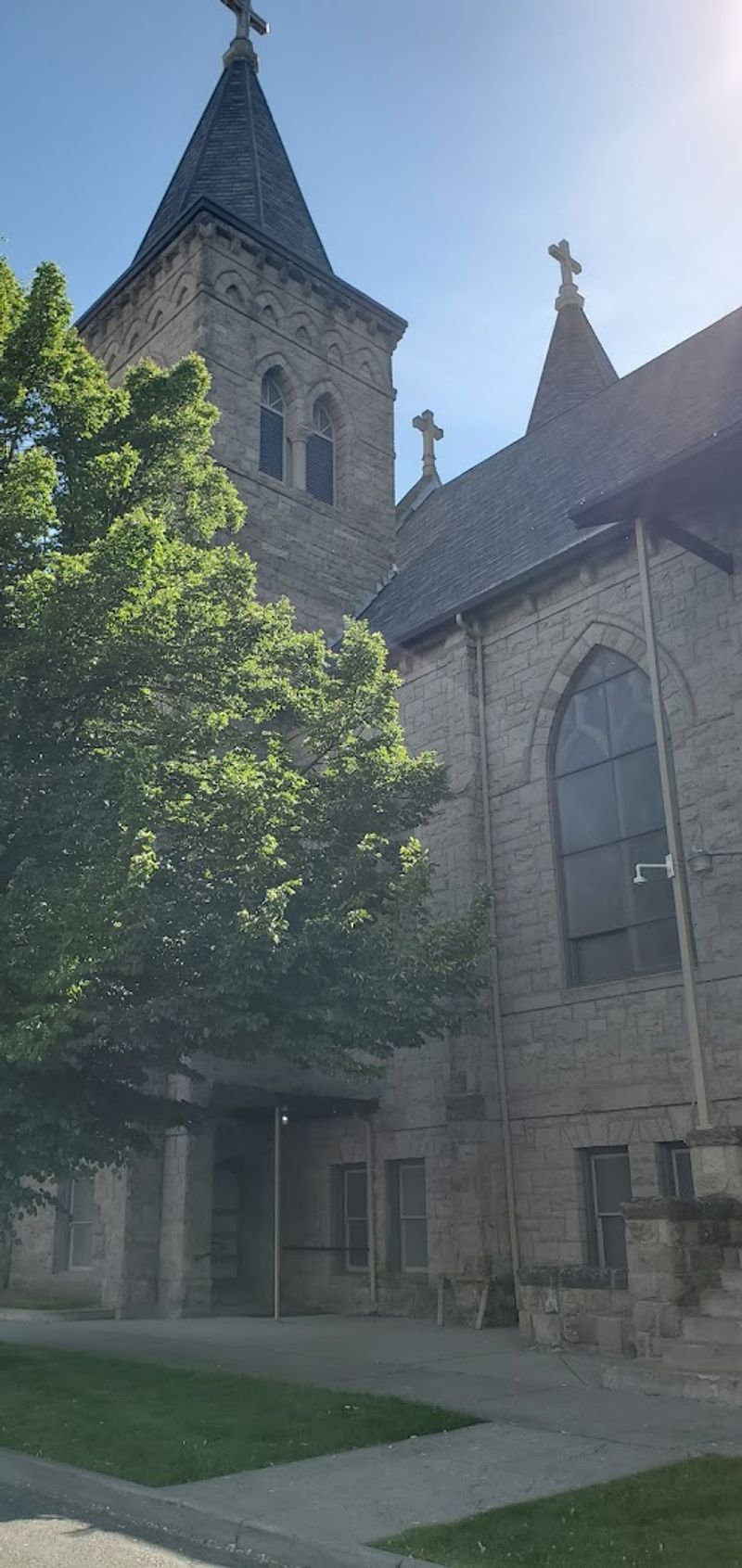
Baker City is not a large city by any standard. It sits in the high desert of eastern Oregon, far from the population centers of Portland or Eugene.
That context makes the cathedral’s scale even more striking when encountered in person.
The address, 2235 First Street, Baker City, OR 97814, places it right in the fabric of the town rather than on some isolated hilltop. It shares a streetscape with everyday Baker City life, which creates an interesting contrast between the cathedral’s European Gothic ambitions and the practical, grounded character of a small Oregon community.
Parking around the building is relatively easy to find, which matters for visitors arriving specifically to see the architecture. The surrounding neighborhood is quiet and walkable.
Spending time outside the building studying the facade, the spires, the rose window, and the volcanic stone texture is a worthwhile experience on its own, even before stepping through the doors. The exterior alone justifies making Baker City a deliberate stop.
The Atmosphere Inside Is Unlike Most American Churches
Visitors who have spent time inside Saint Francis de Sales Cathedral consistently describe the atmosphere as peaceful and restful in a way that feels distinct from typical American parish churches. The combination of stone walls, pointed arches, and layered stained glass creates an acoustic and visual environment that slows the pace of thought almost immediately.
The traditional character of the mass celebrated there adds another layer. The liturgical style has been described as reverent and rooted in older Catholic practice, which contributes to the sense that this space exists slightly outside of ordinary time.
That quality is hard to manufacture and harder to maintain. This cathedral seems to have held onto it.
Even visitors who are not Catholic and who stop by simply to photograph the building often comment on the atmosphere once they step inside. The building rewards quiet attention.
It is the kind of place where sitting still for ten minutes in an empty pew feels like a genuinely worthwhile use of travel time, not a pause but an experience in itself.
Gothic Architecture In The American West, Explained
Gothic Revival architecture in the American West carries a specific kind of weight. The style originated in medieval Europe, reached its design peak in the great cathedrals of France and England, and then crossed the Atlantic as Catholic communities in America sought to build institutions that connected to that tradition.
Bringing Gothic Revival to eastern Oregon in 1906 required both ambition and resourcefulness. Local volcanic tuff replaced the limestone or sandstone that European builders would have used.
The basilican plan without side aisles simplified construction while preserving the essential proportions of the style. The twin octagonal spires and the rose window kept the design recognizably Gothic even within those practical constraints.
The result is a building that does not feel like a copy of something European. It feels like a translation, one that used what Oregon had available and produced something with its own regional character.
A local priest once noted that it compares favorably with churches in Malta, a comparison that points toward the Mediterranean Gothic tradition rather than the French or English one.
Planning A Visit To Baker City Worth Getting Right
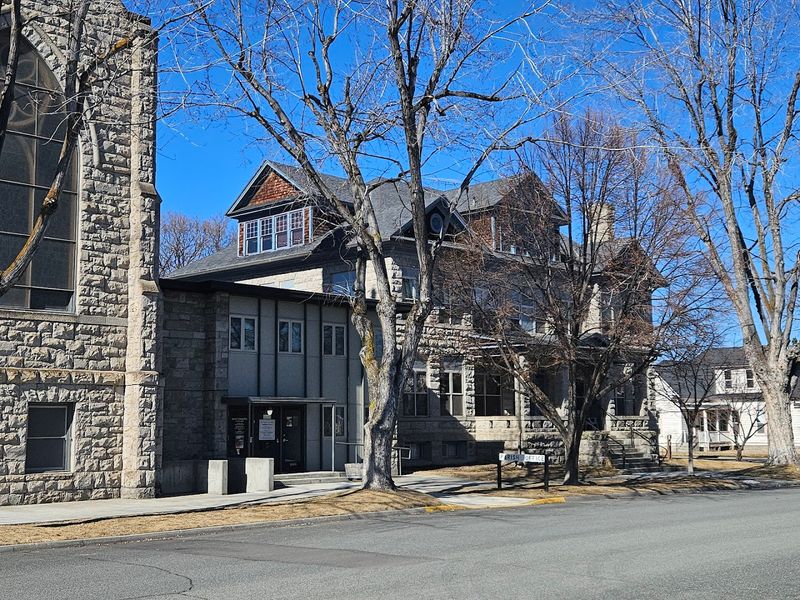
Baker City rewards visitors who plan with a little intention. The cathedral is a working parish, not a museum, so the experience of visiting depends partly on timing and partly on what kind of visit is being sought.
Arriving outside of mass times allows for a quieter, more architectural experience of the exterior.
The surrounding Baker Historic District offers additional context. Walking the nearby blocks reveals a town that has held onto a surprising amount of its early twentieth century character.
The cathedral fits naturally into that landscape rather than standing apart from it, which says something about how deeply it is woven into Baker City’s identity.
Eastern Oregon as a whole tends to be overlooked by travelers who stick to the coast or the Willamette Valley. That oversight is Baker City’s advantage.
The crowds that descend on more famous Oregon destinations simply do not materialize here, which means the cathedral can be experienced at a genuinely unhurried pace. That kind of quiet access to something this architecturally significant is increasingly rare anywhere in the country.