Iowa does not need to shout to surprise you.
Some of its best stops sit quietly off the main road, waiting for the curious traveler who takes one extra turn. That is usually where the fun starts.
You might find a glowing bridge, an ancient fossil bed, a hand-built grotto, or a crooked street that looks like it lost a bet with gravity.
These places make a simple drive feel like a scavenger hunt. Pack the camera, clear a little phone storage, and let Iowa pull a few tricks from its back pocket.
1. Shrine of the Grotto of the Redemption, West Bend
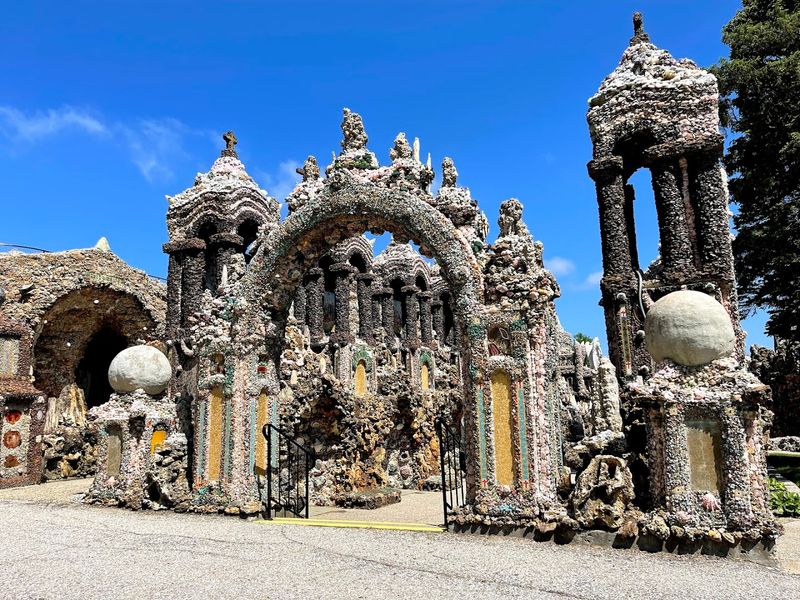
Father Paul Dobberstein spent 42 years constructing this jaw-dropping structure in West Bend, Iowa, and every single stone was placed with intention.
The Shrine of the Grotto of the Redemption is considered the largest grotto in the world, made from minerals, fossils, and precious stones collected from every corner of the globe.
Nine separate grottos make up the full structure, each one telling a different chapter of the Christian story of redemption.
The sheer variety of materials is staggering. You will spot petrified wood, stalactites, Brazilian amethyst, and even a piece of moon rock on display in the adjacent museum.
Visiting in the evening is especially worthwhile because the grottos are lit up and the atmosphere feels almost otherworldly.
The site is located at 208 1st Avenue NW and admission to the grounds is free, though donations are warmly welcomed.
A small Christmas museum and gift shop sit nearby, making this a full afternoon experience rather than just a quick stop.
This is one of those places where you arrive expecting to spend 20 minutes and leave two hours later, completely speechless.
2. High Trestle Trail Bridge, Madrid
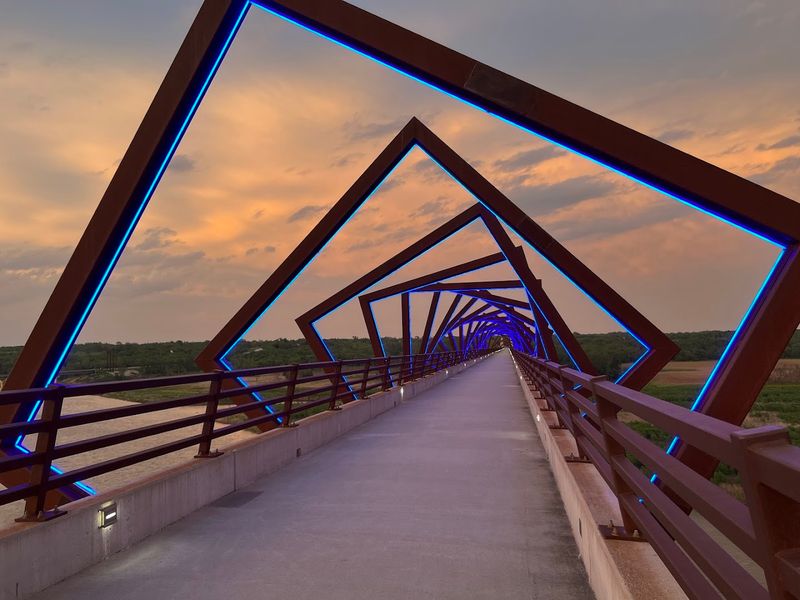
There are bridges, and then there is this one. The High Trestle Trail Bridge near Madrid, Iowa, stretches 2,526 feet across the Des Moines River valley and stands 13 stories tall.
What makes it genuinely unforgettable is the steel artwork integrated into the bridge deck itself. As you walk through it, angular frames gradually rotate around you, creating the optical illusion that the structure is twisting.
At night, the whole bridge lights up in blue LED illumination, and the effect is so striking that photographers drive from neighboring states just to capture it.
The bridge is part of the High Trestle Trail, a 25-mile recreational path that connects several small towns and is popular with cyclists, joggers, and casual walkers alike.
You can access the bridge from 2335 QF Lane in Madrid, and parking is free.
Sunrise visits offer a softer, golden atmosphere, while sunset and after-dark visits deliver the full neon drama.
Bring comfortable shoes, because the walk across and back is worth every step, and the views from the center are the kind that make you forget about everything else for a moment.
3. Devonian Fossil Gorge, Iowa City
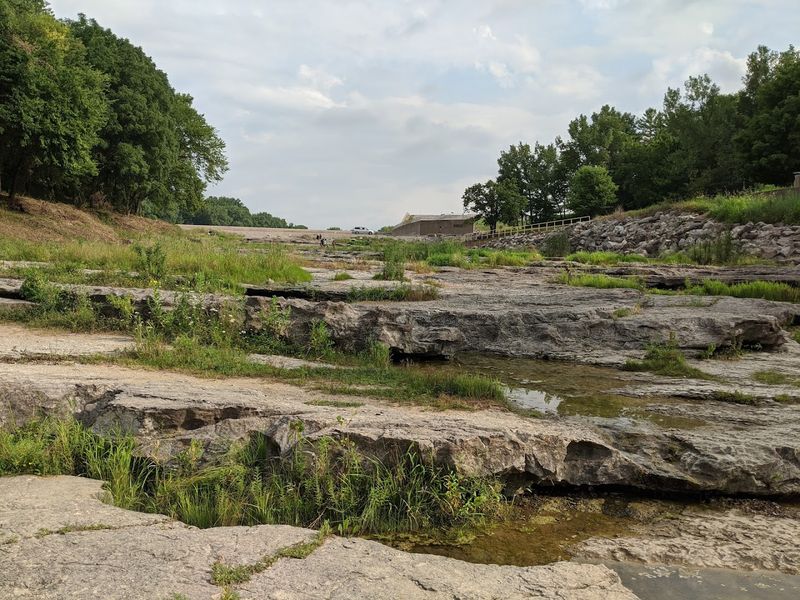
About 375 million years ago, this part of Iowa was covered by a warm, shallow sea, and the proof is literally beneath your feet.
The Devonian Fossil Gorge near Iowa City was exposed after the Coralville Reservoir flooded in 1993 and again in 2008, stripping away layers of soil and revealing an ancient limestone seafloor packed with fossils.
Brachiopods, horn corals, crinoids, and trilobites are all visible right on the surface, and you do not need any special tools or expertise to spot them.
Located at 2850 Prairie Du Chien Road NE, the gorge is free to visit and open year-round, though the best viewing conditions come when the water levels are low.
Interpretive signs throughout the site explain what you are looking at, making it genuinely educational for kids and adults alike.
Touching the fossils is allowed, which adds a tactile thrill that most museum displays simply cannot offer.
The gorge sits adjacent to the Coralville Lake recreation area, so it pairs naturally with a picnic or a walk along the nearby trails for a full day outdoors.
4. Crystal Lake Cave, Dubuque
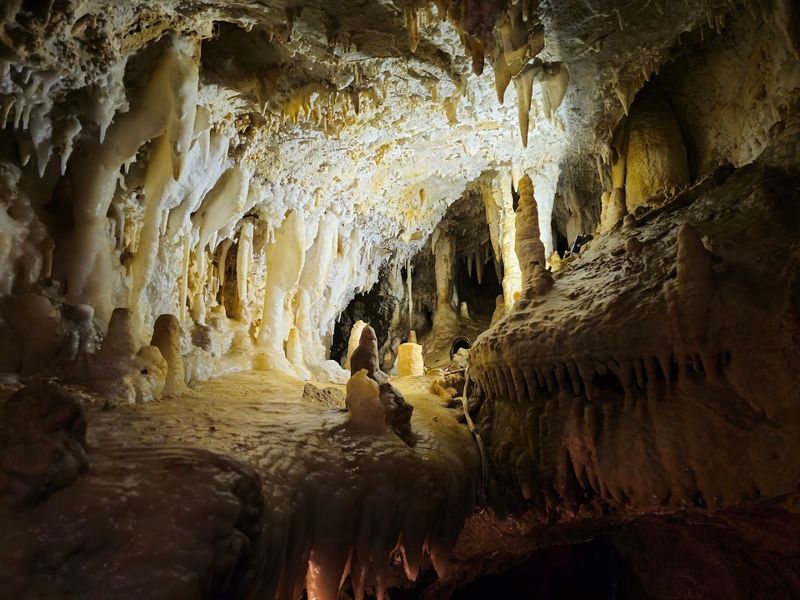
Underground Iowa is a whole different world, and Crystal Lake Cave in Dubuque is one of the best places to experience it.
Discovered in 1868 by lead miners, the cave stretches through natural limestone formations that took millions of years to develop. Guided tours lead visitors through rooms filled with stalactites, stalagmites, flowstones, and cave coral, all dramatically lit to highlight the textures.
The cave maintains a constant temperature of around 50 degrees Fahrenheit year-round, so bringing a light jacket is a smart move regardless of the season.
Located at 6684 Crystal Lake Cave Road, the cave sits on a scenic hilltop property with views of the surrounding bluffs and woodland.
Tours run regularly throughout the day during the warmer months, and the knowledgeable guides share both the geology and the history of the site in a way that keeps everyone engaged.
Outside the cave, the property offers picnic areas and a small gift shop worth browsing.
For anyone who has never explored a natural cave before, this is a wonderfully accessible introduction that manages to feel both adventurous and completely family-friendly at the same time.
5. Matchstick Marvels Museum, Gladbrook
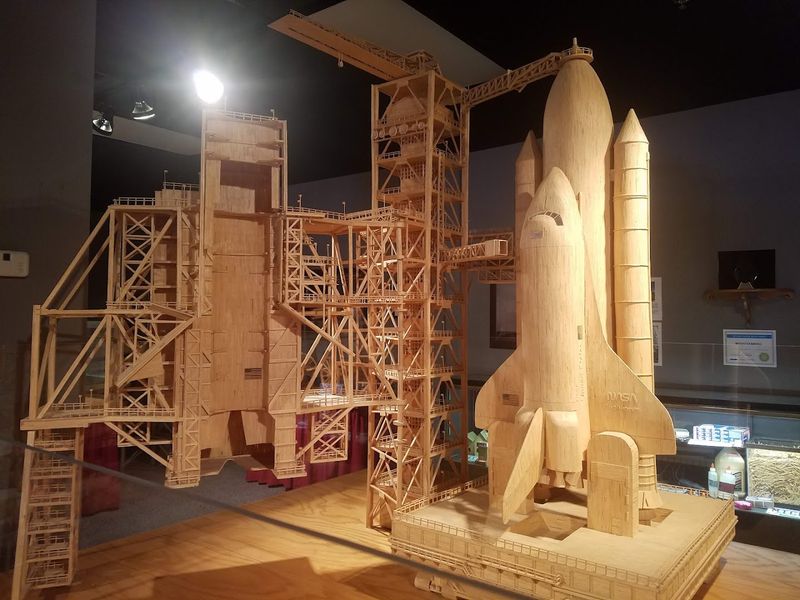
Patrick Acton has spent decades turning matchsticks into masterpieces, and his work in Gladbrook, Iowa, has to be seen to be believed.
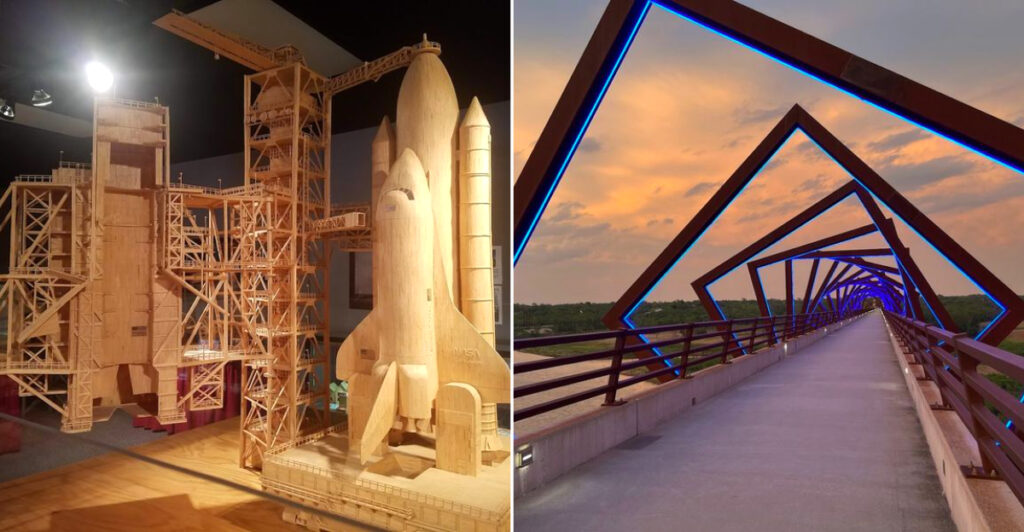
The Matchstick Marvels Museum at 319 2nd Street houses an extraordinary collection of large-scale models built from wooden matchsticks and wood glue, including a replica of the Space Shuttle Challenger, a detailed Notre Dame Cathedral, and a model of the Hogwarts castle from the Harry Potter films.
The level of detail in each piece is genuinely hard to process. Acton has glued millions of ordinary wooden matchsticks into intricate models, building his creations one tiny piece at a time.
Admission is very affordable, and the museum is small enough to tour in about an hour without feeling rushed.
Gladbrook is a tiny town, which makes the existence of this world-class collection feel even more surprising and special.
Acton is often present at the museum and is known for chatting with visitors about his process, which adds a personal touch that larger attractions rarely offer.
If you appreciate patience, precision, and a healthy dose of the unexpected, this museum will absolutely deliver on all three counts.
6. Bily Clocks Museum and Antonin Dvorak Exhibit, Spillville
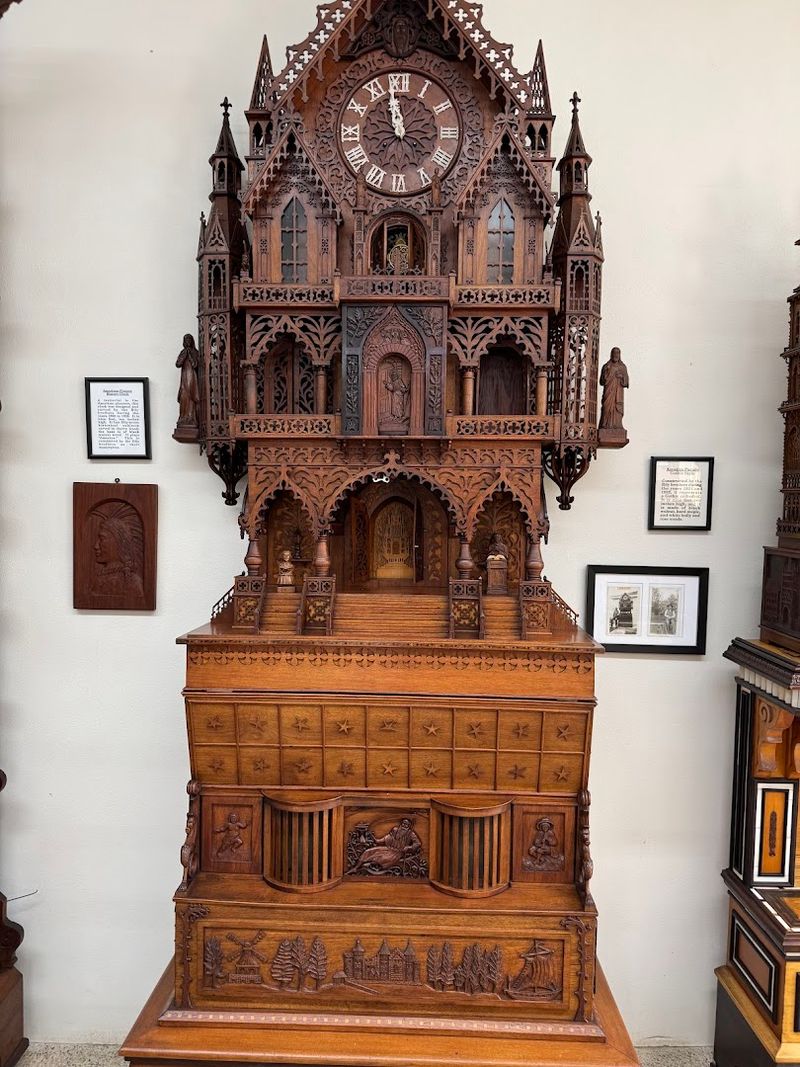
Two bachelor brothers, Frank and Joseph Bily, spent their Iowa winters doing something most people could never imagine: hand-carving monumental wooden clocks of breathtaking complexity.
The Bily Clocks Museum at 323 S. Main Street in Spillville preserves their life’s work, which includes the towering American Pioneer History Clock and the Apostle Clock, both covered in tiny carved figures and moving parts.
The brothers never sold a single piece, and when asked about selling, Frank reportedly said the clocks were not for sale at any price.
The same building also houses the Antonin Dvorak Exhibit, dedicated to the famous Czech composer who spent the summer of 1893 in Spillville. During his time there, he wrote the celebrated American String Quartet and worked on other music connected to his American period.
Spillville itself is a small Czech-heritage community in northeastern Iowa, and the cultural layering of the two exhibits makes the museum feel richer than its modest size might suggest.
Guided tours explain both the clockmaking process and Dvorak’s time in the area, connecting art, music, and history in one compact and deeply satisfying visit.
7. American Gothic House Center, Eldon
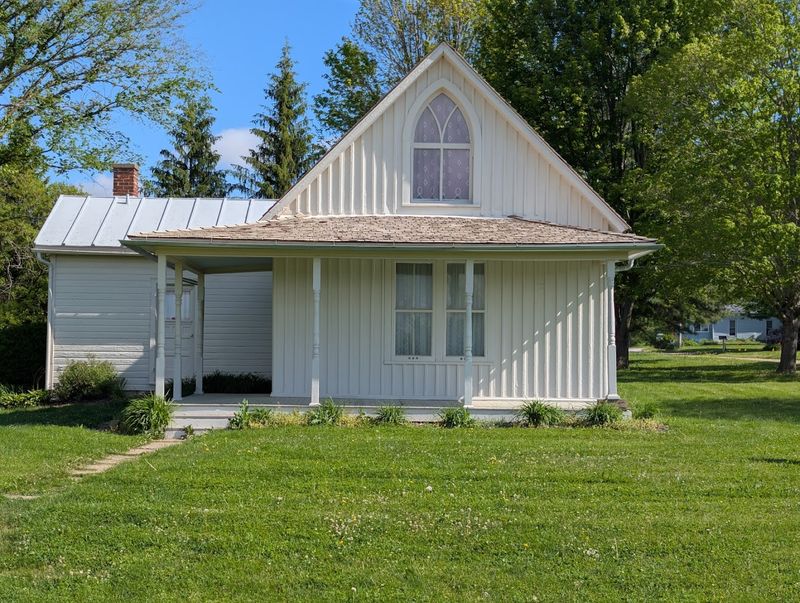
Grant Wood painted one of the most recognized images in American art history in 1930, and the farmhouse that inspired it still stands in Eldon, Iowa.
The American Gothic House at 300 American Gothic Street is a charming white structure with a distinctive Carpenter Gothic window that Wood spotted and used as the backdrop for his famous painting.
The adjacent American Gothic House Center tells the full story of the painting, the artist, and the surprisingly complex debates the image has sparked over the decades about American identity and rural life.
Visitors are encouraged to pose in front of the house with pitchforks provided on-site, recreating the iconic image in their own way. It sounds cheesy, but it is genuinely fun.
The house is listed on the National Register of Historic Places, and its interior is open only on select dates and special programs rather than as a regular walk-through attraction.
Eldon is a small, quiet town in southeastern Iowa, and the house sits in a neighborhood that feels pleasantly unhurried.
Art lovers, history buffs, and anyone who enjoys a good photo opportunity will find plenty of reasons to make the trip out here.
8. Pammel Park, Winterset
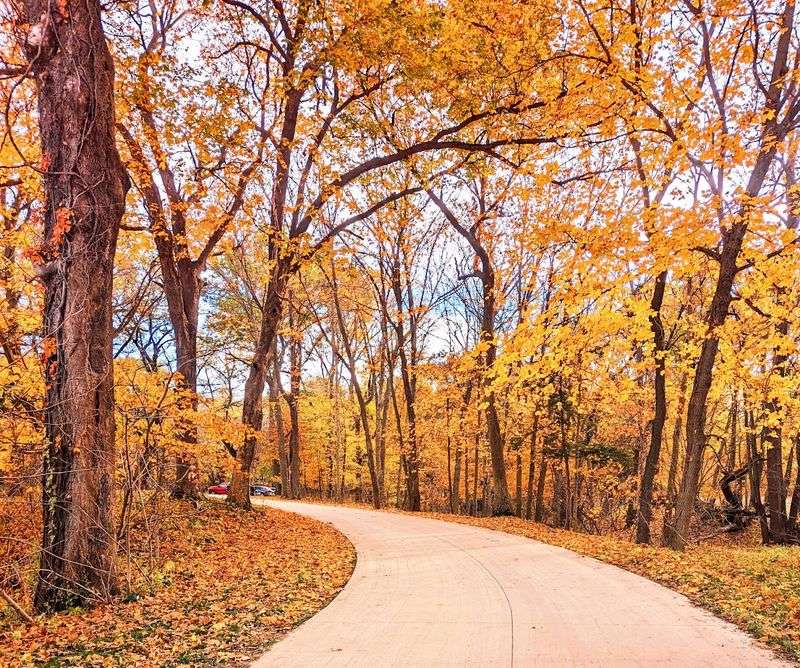
Most people who visit Winterset come for the covered bridges, but Pammel Park quietly steals the show for anyone willing to wander a little further.
Located at 1900 Pammel Park Road, this Madison County park features dramatic limestone canyon walls, a winding creek, dense woodland, and some of the most photogenic trail scenery in the entire state.
The canyon section of the park feels genuinely remote, with walls rising on both sides of the trail and moss-covered rocks framing the path in every direction.
The park also has Harmon Tunnel, Middle River Ford, a picnic shelter, and a playground, making it a practical stop for families with kids of different ages and interests.
Wildflowers bloom prolifically in spring, and the fall foliage transforms the canyon walls into something that looks almost painted.
Trails range from easy to moderately challenging, and most loops can be completed in under two hours.
Admission is free, parking is easy, and the park rarely feels overcrowded even on weekends.
Pammel is the kind of place that rewards anyone who decides to skip the obvious tourist stop and look just a little bit sideways.
9. Hitchcock Nature Center, Honey Creek
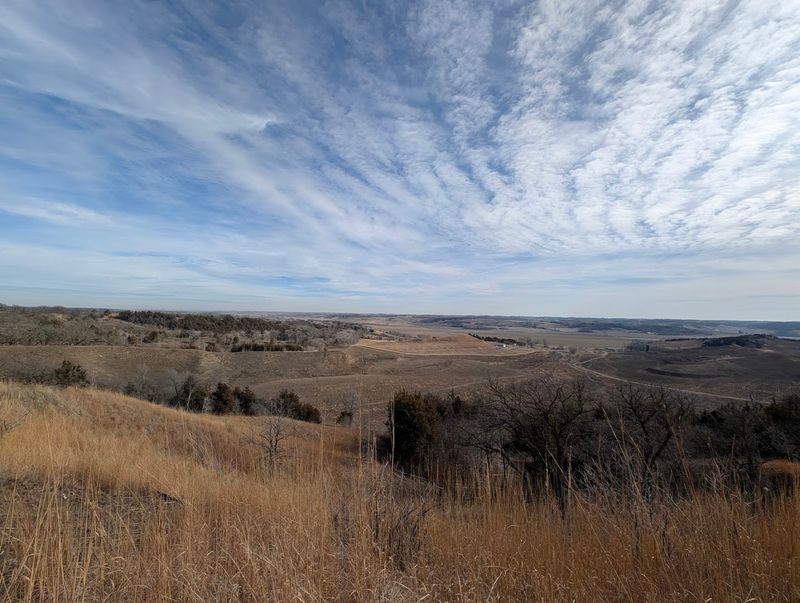
Standing on the observation tower at Hitchcock Nature Center, you get the kind of wide-open view that makes you realize Iowa has been hiding some seriously beautiful landscape all along.
Located at 27792 Ski Hill Loop in Honey Creek, the center sits within the Loess Hills, a rare and globally significant landform with especially deep deposits found in western Iowa and in China.
The hills were formed by windblown silt deposited after the last ice age, and their steep ridges and deep valleys create terrain that feels nothing like the flat Iowa many people imagine.
A 14-mile unpaved trail system winds through prairies, oak savannas, and woodlands across the property, offering something different depending on which route you choose.
The center also features a lodge, cabin rentals, and educational programming, making it a strong destination for overnight stays as well as day trips.
Birdwatching is excellent here, particularly during spring and fall migration seasons when the hills funnel large numbers of raptors and songbirds through the area.
Sunrise hikes along the ridge trails reward early risers with views that are hard to put into words and even harder to forget.
10. Dunning’s Spring Park, Decorah
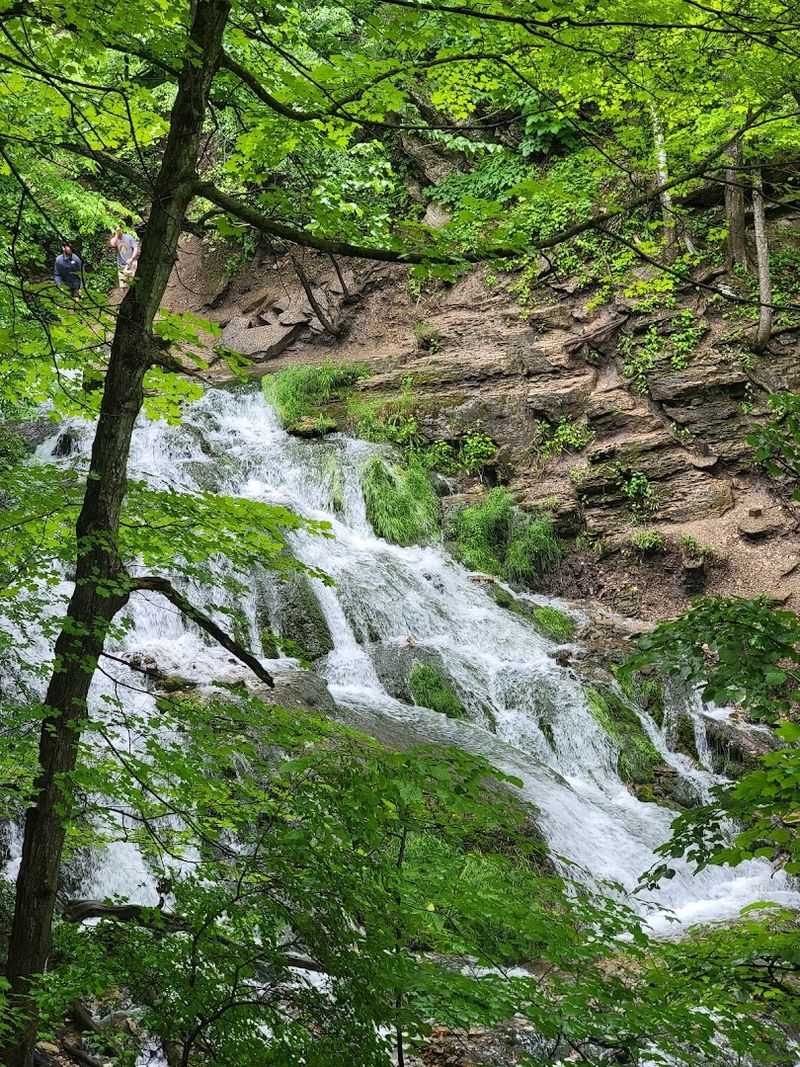
Tucked into a wooded ravine just off Ice Cave Road in Decorah, Iowa, Dunning’s Spring Park is the kind of place that makes you feel like you stumbled onto a movie set.
A waterfall drops from a limestone cliff into a small pool below, surrounded by ferns, mossy rocks, and a canopy of trees that keeps the whole area cool even in summer.
The park is free to visit and easily walkable from downtown Decorah, which is itself one of the most charming small cities in the state.
Decorah has a strong Norwegian heritage, and the surrounding landscape of bluffs, trout streams, and wooded valleys feels more like Scandinavia than the Midwest.
The spring that feeds the waterfall runs year-round, so visits in winter offer a completely different experience with ice formations building up on the cliff face.
A short trail connects the park to other natural areas nearby, making it easy to extend the outing without needing a car.
Photographers and nature lovers tend to arrive early in the morning when the light filters through the trees and the falls catch a soft golden glow worth every early alarm.
11. Snake Alley, Burlington
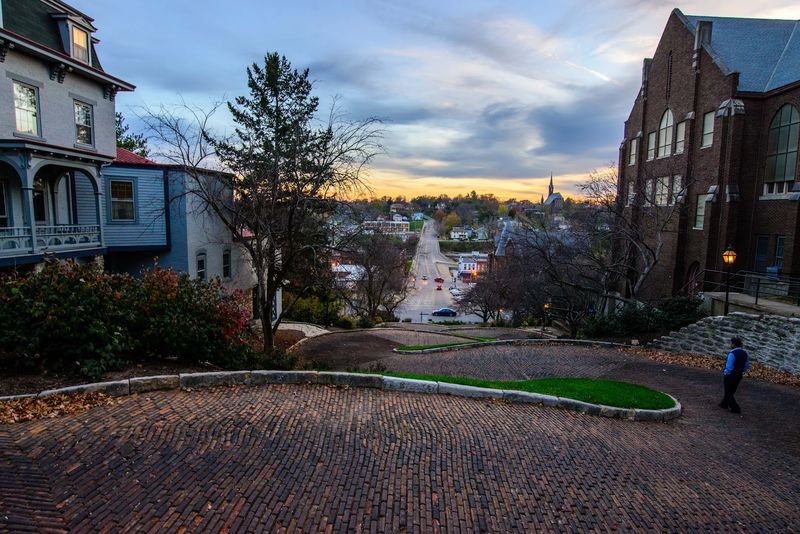
Ripley’s Believe It or Not once called it the most crooked street in the world, and after walking it yourself, you will not argue with that assessment.
Snake Alley runs along N. 6th Street in Burlington, Iowa, and was built in 1894 as an experiment to give horses a safer way to navigate a steep hillside. The result is a tight series of curves that zigzag dramatically down the slope in a way that is both impractical and completely captivating.
The alley is paved with old-style curved bricks that add to the historic character of the whole scene.
Every May, Burlington hosts the Snake Alley Criterium, a bicycle race where riders tackle the sharp curves at speed, which is as thrilling to watch as it sounds.
The alley sits in the Heritage Hill Historic District, surrounded by Victorian homes and mature trees that make the surrounding neighborhood worth exploring on foot.
Views from the top of Snake Alley look out over the Mississippi River, adding a scenic reward at the end of the short but steep climb.
It is quirky, photogenic, and historically interesting, which is a combination that very few streets anywhere in the country can honestly claim.
12. Mines of Spain State Recreation Area, Dubuque
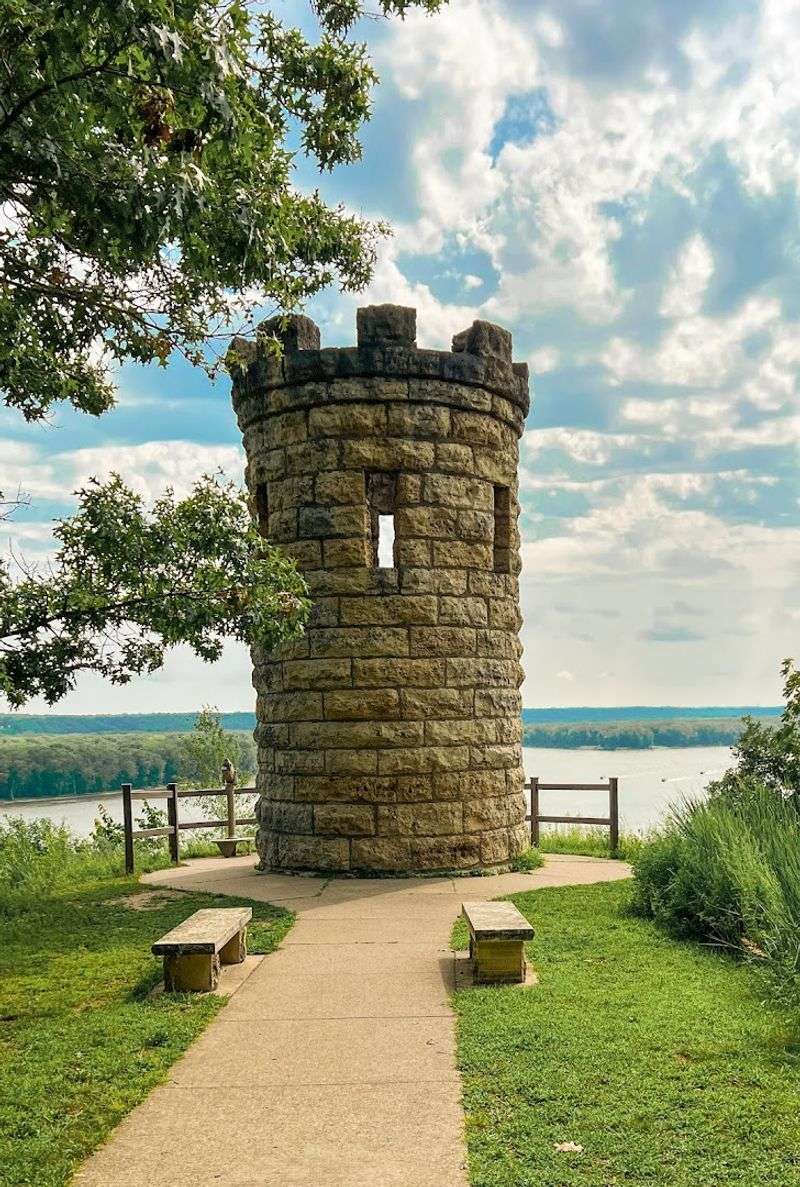
History and nature overlap in a particularly compelling way at the Mines of Spain State Recreation Area, located at 8991 Bellevue Heights just south of Dubuque, Iowa.
The area was named for a 1796 land grant to Julien Dubuque, the first European settler in Iowa, who mined lead from the bluffs here with permission from the local Meskwaki people. That history gives the landscape a weight that you feel even on a casual walk.
More than 1,400 acres of bluffs, prairies, savannas, and river bottomlands make up the recreation area, with 15.1 miles of trails ranging from flat riverside paths to steep ridge climbs with sweeping views of the Mississippi River.
The E.B. Lyons Interpretive Center at the entrance offers exhibits on the natural and cultural history of the site and serves as a great starting point for planning your route.
Wildlife is abundant here. White-tailed deer, wild turkeys, and a wide variety of bird species are regular sightings throughout the year.
Fall is the most visually dramatic season, when the bluffs above the river turn vivid shades of orange and red.
This is the kind of place that earns a spot on every Iowa outdoor itinerary without needing to make any grand promises to do so.