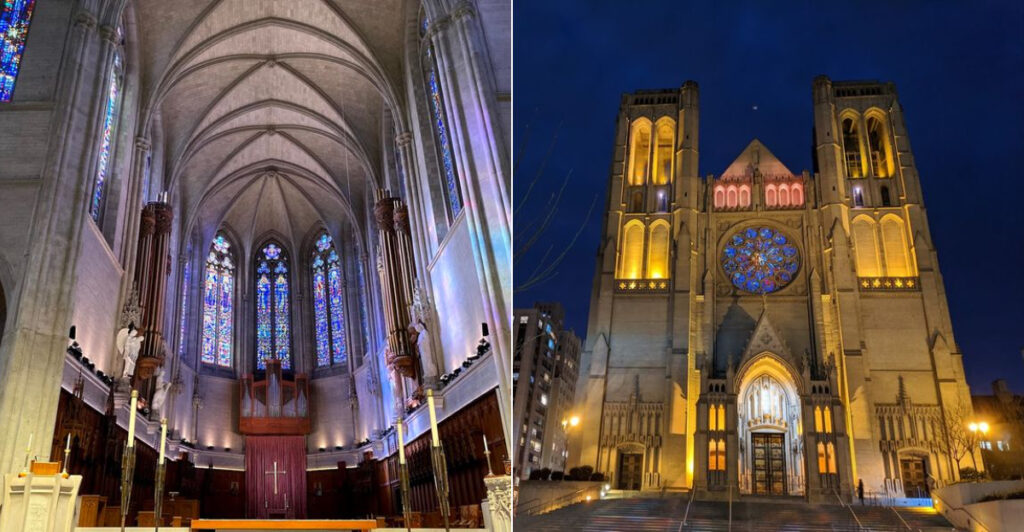
Most people walk past it the first time. Then they stop, tilt their heads back, and just stare.
This California cathedral has bronze doors cast from Ghiberti’s Gates of Paradise, over seven thousand square feet of stained glass, two labyrinths, and a Keith Haring chapel inside.
It was one of the last great Gothic Revival structures ever built anywhere in the world. What happens when a building this extraordinary sits in one of the most visited cities in the country and still manages to surprise people?
It becomes the kind of place that changes how visitors remember a whole trip. The hilltop location alone is worth the walk.
Everything waiting inside is worth far more than that.
Plan for at least two hours and arrive ready to slow down.
The Ghiberti Doors Story
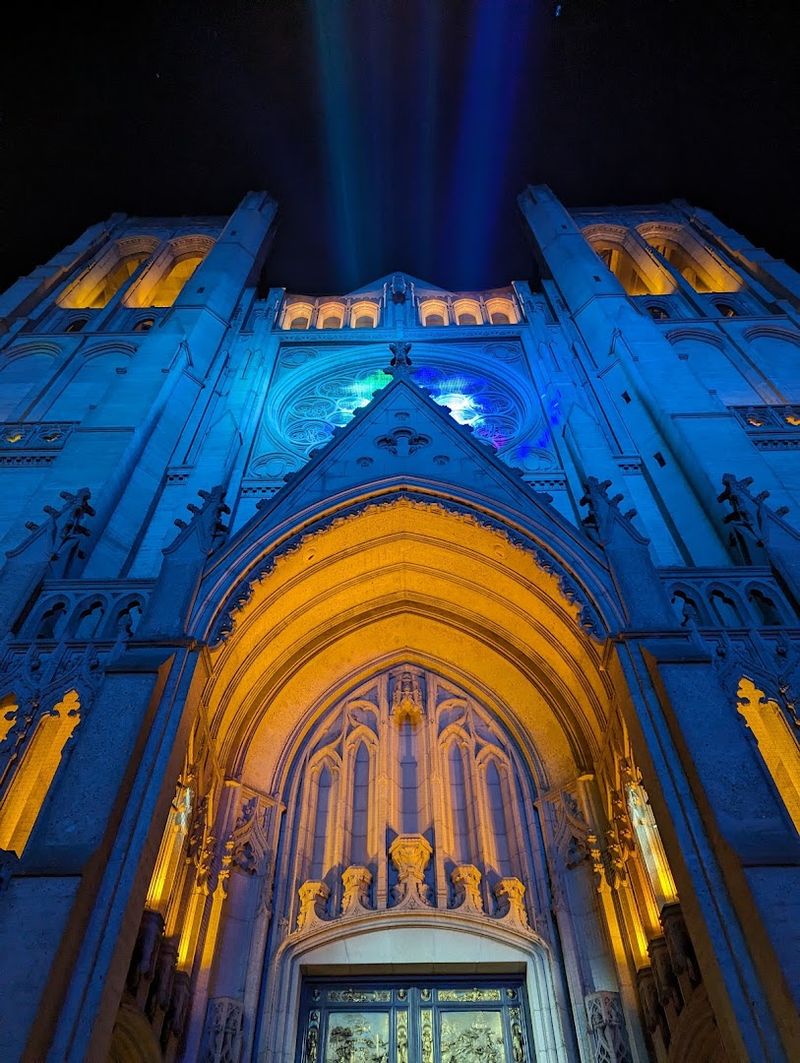
Before you even step inside Grace Cathedral, the entrance itself gives you a reason to stop and stare. The main doors are bronze replicas of Lorenzo Ghiberti’s famous “Gates of Paradise,” originally created for the Florence Baptistery in the 15th century.
Each door stands 16 feet high, 5 feet wide, and 4 inches thick.
The panels tell stories from the Old Testament in breathtaking detail. Scenes of Adam and Eve, Moses, and Solomon are sculpted so precisely that you can spend a long time just studying one panel.
Visitors often press their faces close to the bronze just to catch every tiny figure carved into the surface.
What makes these doors especially remarkable is their California connection. They were cast right here, made to honor the same artistic tradition that inspired some of Europe’s greatest cathedrals.
The craftsmanship is genuinely hard to believe up close. Have you ever seen a door that made you forget to go inside?
These doors might do exactly that. Standing in front of them, it is easy to understand why visitors call this entrance one of the most striking in all of San Francisco.
French Gothic Architecture Secrets
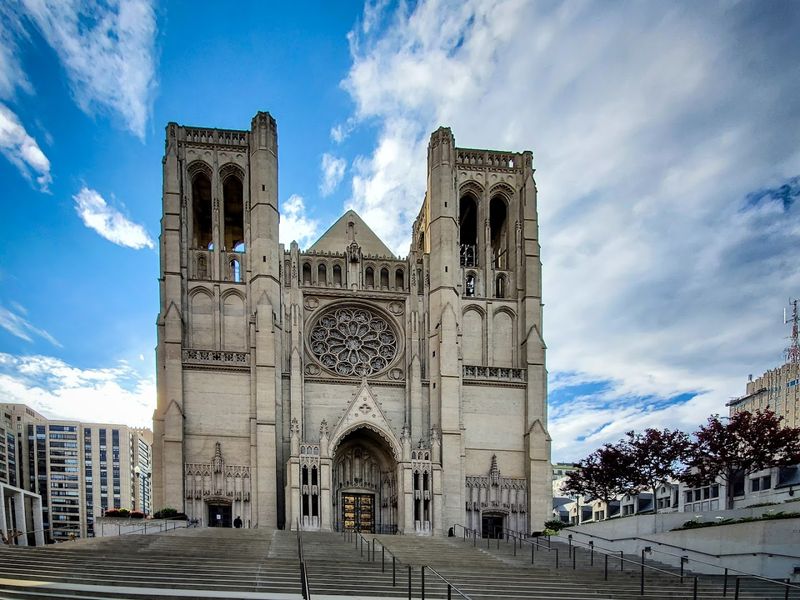
Most people do not realize that Grace Cathedral is not made of stone at all. The soaring walls, pointed arches, and elaborate decorative details that look centuries old are actually built from reinforced concrete and steel, with pre-fabricated cast stone layered on top.
The design was intentional, built to survive California’s earthquakes while still capturing the full drama of French Gothic style.
Architect Lewis P. Hobart drew inspiration from Notre Dame, Chartres, and Amiens when designing the cathedral.
Construction began in 1927 and was largely completed by 1964, making it one of the last major Gothic Revival structures ever built anywhere in the world. That is a title worth pausing over.
Inside, the vaulted ceilings soar overhead, lined with Guastavino acoustic tiles that give the space an almost musical quality even when it is silent. The proportions are enormous, yet the space feels surprisingly intimate once you settle in.
Can a building this massive somehow feel personal? Grace Cathedral manages it.
The cathedral stands at 1100 California St, San Francisco, CA 94108, and its location on Nob Hill means the architecture commands the skyline in a way that photographs simply cannot capture fully.
7,290 Square Feet Of Glass
Imagine a single building holding 7,290 square feet of stained glass windows. That is not a typo.
Grace Cathedral’s collection of stained glass is one of the largest and most diverse on the entire West Coast, featuring work by some of the most respected artists in the craft.
The windows portray over 1,100 figures, ranging from Adam and Eve to Albert Einstein and poet Robert Frost. It is the kind of artistic range that makes you do a double-take.
A cathedral window featuring a Nobel Prize-winning physicist is not something you find every day.
The largest collection of windows by artist Charles Connick anywhere on the West Coast lives right here in California. On a sunny afternoon, the light pouring through those windows transforms the interior into something almost impossible to describe.
Colors shift across the floor and walls as the sun moves, turning the space into a slow, silent light show that costs nothing extra to enjoy. Which window will catch your eye first?
That is a question every visitor ends up answering differently. The stained glass alone makes a visit worth planning, and most people leave wishing they had stayed longer to watch the light change.
Walking The Cathedral Labyrinth
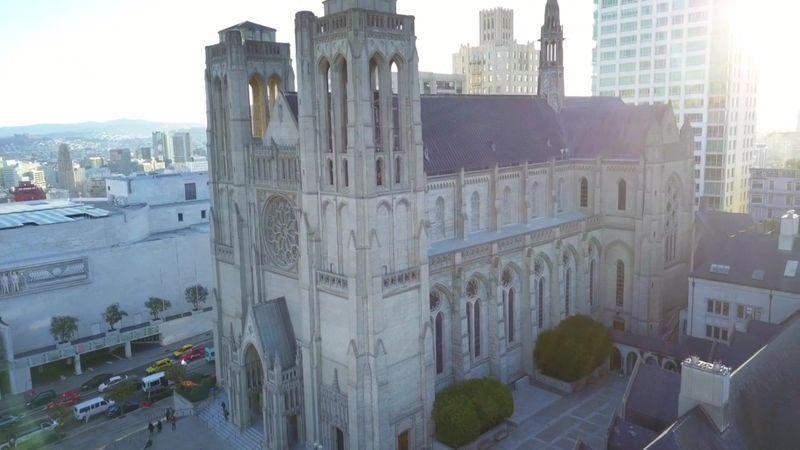
Not many cathedrals in the world offer two labyrinths, but Grace Cathedral has made them a signature feature. One labyrinth is laid into the floor inside the cathedral, and a second is set into the outdoor terrace.
Both are modeled after the famous 13th-century labyrinth at Chartres Cathedral in France.
Walking a labyrinth is not the same as navigating a maze. There are no dead ends and no wrong turns.
The path winds inward to a center point and then back out again, and the act of walking it slowly is considered a form of moving meditation. Visitors who try it often describe a surprising sense of calm settling in after just a few minutes.
The outdoor labyrinth is free to walk anytime, which makes it a popular spot even for people just passing through Nob Hill. On a clear California morning, walking the outdoor labyrinth with a view of the city around you is a genuinely peaceful experience.
Have you ever tried meditating while walking? The labyrinth is a beginner-friendly way to find out what that feels like.
Many visitors say it is the most unexpectedly moving part of their entire visit to Grace Cathedral.
Keith Haring’s Final Masterpiece
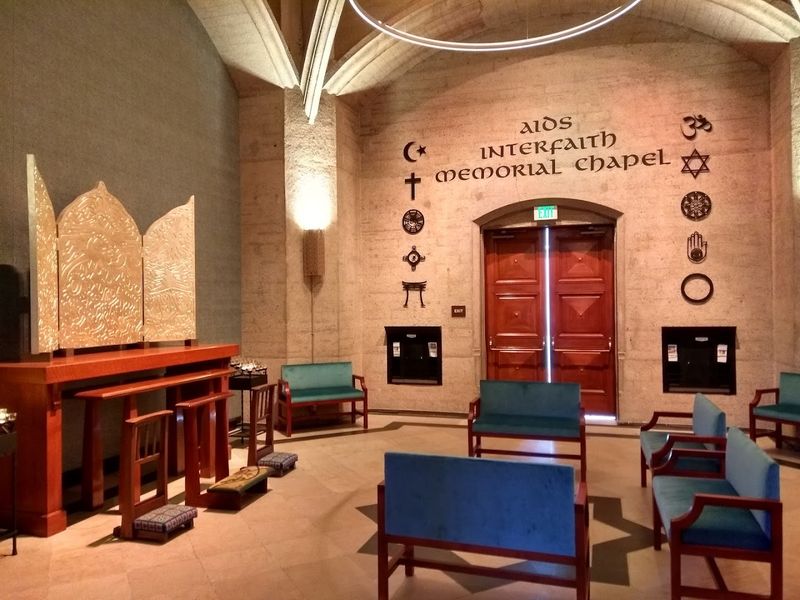
Tucked within Grace Cathedral is a chapel that carries one of the most powerful stories in the building. The AIDS Interfaith Memorial Chapel houses “The Life of Christ” altarpiece created by pop artist Keith Haring, completed just before his passing from AIDS-related illness in 1990.
It was his final major work.
Haring’s bold, graphic style might seem unexpected in a Gothic cathedral, but the contrast works in a way that surprises almost everyone who sees it. The vivid figures and thick outlines bring an energy to the chapel that feels both urgent and deeply tender.
The chapel was completed in 2000 and serves as a place of remembrance for those lost to AIDS.
Visitors who know Haring’s street art background often feel a quiet jolt of recognition when they see his style translated into this sacred space. It is a reminder that art does not belong to just one world.
California has long been a place where unexpected combinations create something meaningful, and this chapel is a perfect example of that spirit. What does it feel like to see pop art in a Gothic cathedral?
Most people find the answer is far more moving than they expected when they walk through that chapel door.
The Aura Light Experience
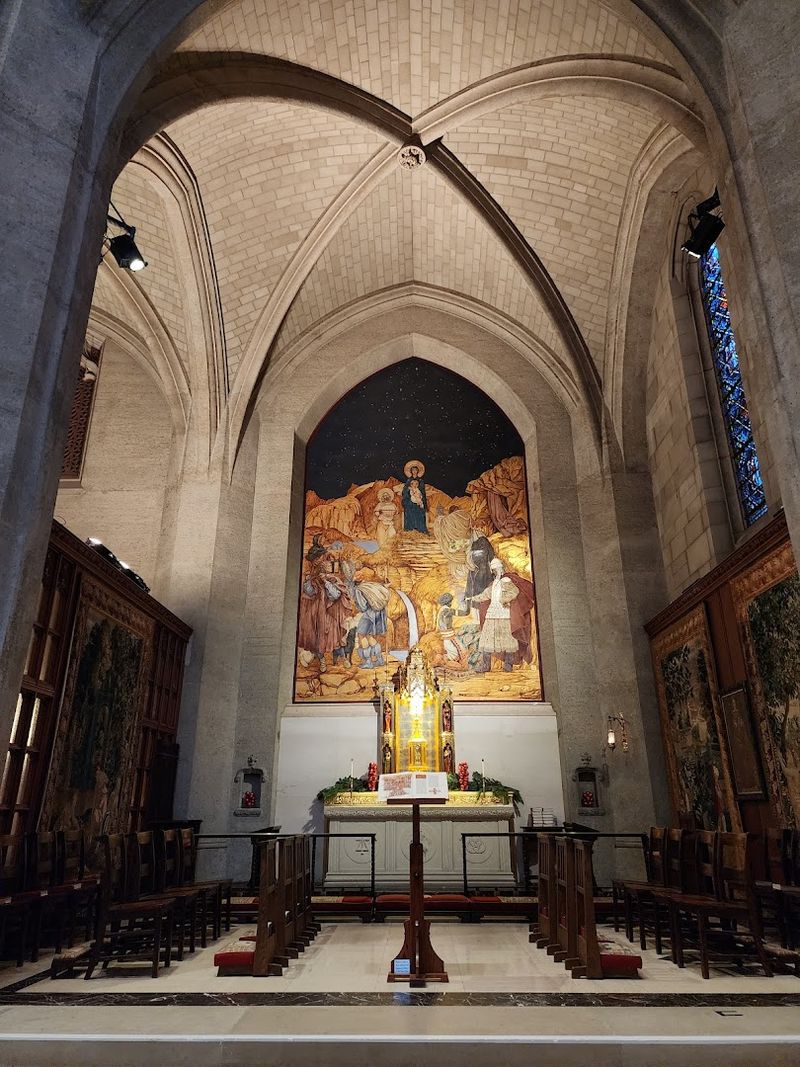
Grace Cathedral has a nighttime personality that is completely different from its daytime self. The Aura experience transforms the interior into an immersive light and sound show, using the cathedral’s architecture as the canvas.
The vaulted ceilings, stone columns, and arched windows become part of a moving, breathing display that visitors describe as genuinely unforgettable.
The show runs approximately 45 minutes and fills the entire space with shifting projections and music. Visitors say the acoustics inside the cathedral make the sound feel almost physical, surrounding you completely rather than just reaching your ears.
Sitting toward the back of the cathedral gives you the widest view and saves your neck from the strain of looking straight up for an extended time.
Tickets for Aura sell out, so booking early is a smart move. The cathedral’s staff are consistently described as warm and welcoming, which makes the whole evening feel comfortable from the moment you arrive.
Is there a better way to spend a San Francisco evening than watching light dance across a Gothic cathedral ceiling? Visitors who have attended Aura tend to say no. It is the kind of experience that people talk about long after they have returned home from their California trip.
Behind The Scenes Tours
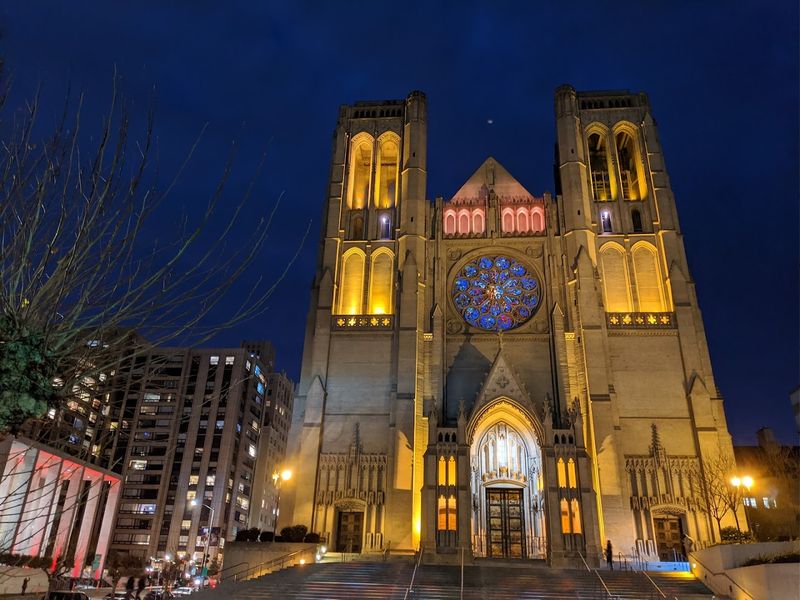
Most visitors see Grace Cathedral from the ground floor, but the Behind the Scenes tour takes things to a completely different level. Hidden perspectives, upper levels, and architectural details that are invisible from the main floor all become accessible.
Tour guides at Grace Cathedral are known for making history feel immediate and personal. Visitors say they came away knowing things about the building that genuinely changed how they saw it.
One visitor who had lived in the San Francisco Bay Area for years described it as one of the most surprising activities they had ever done in the city.
The bell tower tour is a separate option for those who want to go even higher and see the forty-four-bell carillon up close. The main organ inside the cathedral, built in 1934, is one of the largest in the western United States with 7,466 pipes, and learning about it during a tour adds a whole new layer of appreciation.
Have you ever looked at a building and wondered what it hides? Grace Cathedral hides quite a lot, and a tour is the most rewarding way to find out exactly what that is.
History Carved In Murals
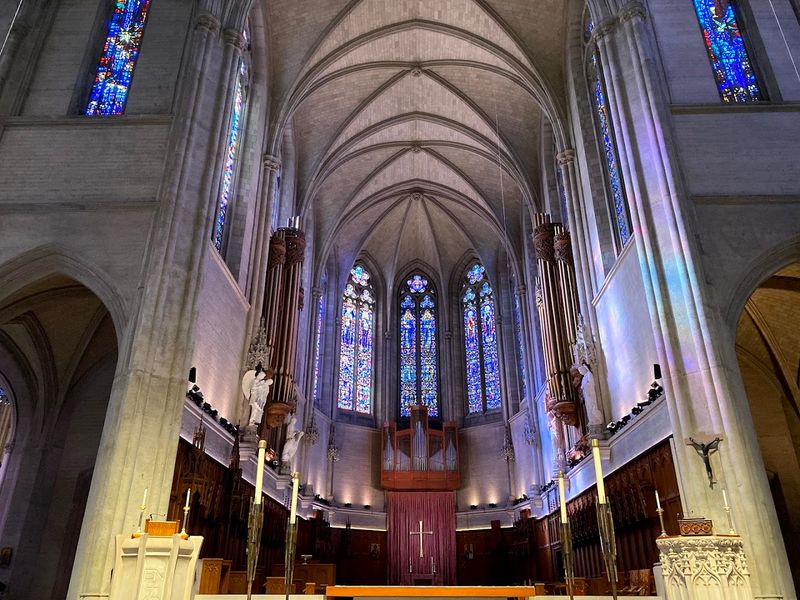
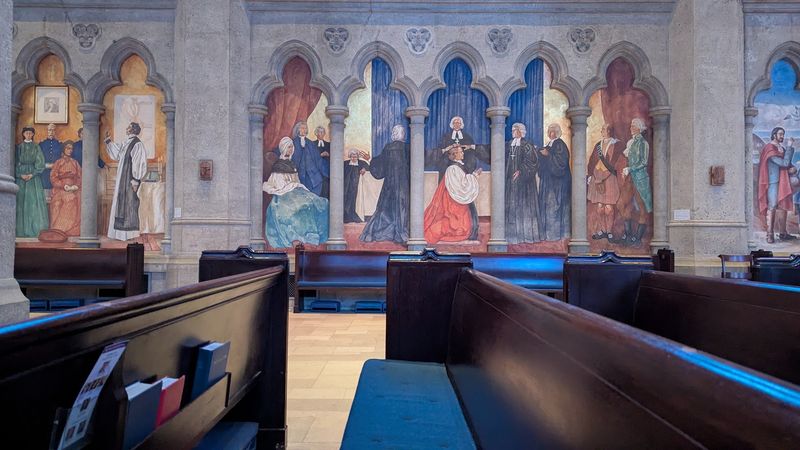
The walls of Grace Cathedral do not stay quiet. Murals by artist Jan Henryk De Rosen cover significant sections of the interior, depicting both religious events and pivotal moments in San Francisco’s own history.
The 1906 earthquake that destroyed the original Grace Church appears in one mural, a vivid reminder of how this cathedral came to exist at all.
The founding of the United Nations in San Francisco is also depicted, connecting the cathedral to world history in a way that feels genuinely surprising. It is not every day that a Gothic cathedral doubles as a record of international diplomacy.
The Crocker family donated the Nob Hill property after the 1906 disaster, and the parish itself dates back to the 1849 Gold Rush, giving Grace Cathedral roots that run deep into California’s story.
In 1964, Martin Luther King Jr. delivered a sermon inside this cathedral to approximately 5,000 people, adding yet another layer to an already remarkable history. Walking through the nave while knowing all of this changes how the space feels.
Every surface seems to carry a conversation between the past and the present. What would it mean to stand in a place that has witnessed that much history?
A visit to Grace Cathedral at 1100 California St answers that question in the most vivid way possible.