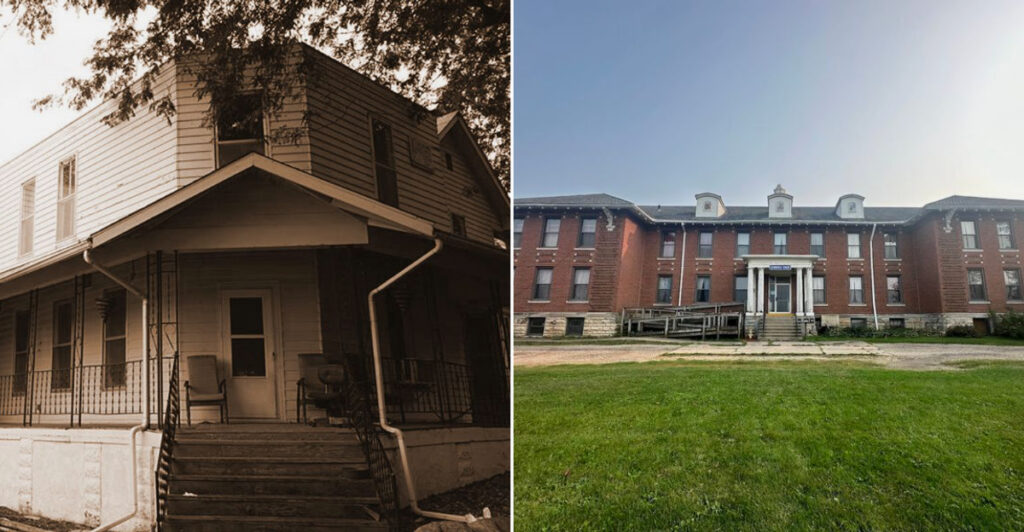
Iowa knows how to look calm in daylight.
The fields stretch out, the small towns move quietly, and the old buildings seem content to keep their secrets. Then the stories begin.
A flicker in a schoolhouse. A shadow in a hotel hallway.
A covered bridge that feels a little too still at dusk.
These Iowa mysteries add a spooky twist to places that already carry plenty of history. Some are famous among ghost hunters, while others feel like local legends whispered one back road at a time.
You do not have to believe every tale to feel the pull. Sometimes the fun is simply standing there, looking around, and wondering why the air suddenly feels different.
1. Villisca Ax Murder House, Villisca
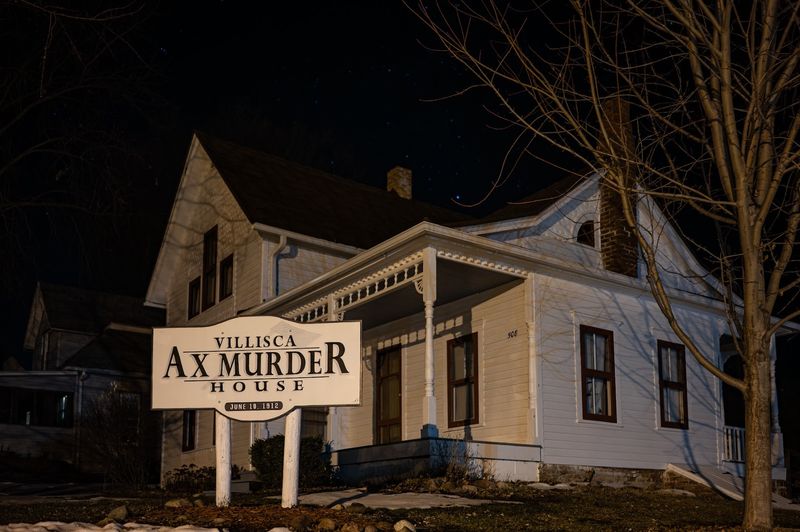
Few addresses in American history carry as much weight as 508 East Second Street in Villisca, Iowa, where eight people were found with fatal injuries one June morning in 1912.
The crime was never officially solved, and the house has stood largely unchanged since that fateful night, making it one of the most authentically preserved crime scenes in the country.
Today, visitors can tour the home during the day or book an overnight stay if they dare.
The rooms are furnished exactly as they would have been in the early 1900s, complete with period-appropriate beds, a wood-burning stove, and oil lamps that cast long shadows across the walls.
Paranormal investigators have reported hearing children’s voices, seeing moving shadows, and capturing strange readings on electromagnetic field detectors.
The house sits in a quiet residential neighborhood, which somehow makes it feel even more unsettling.
Local guides are incredibly knowledgeable about the case and share details that go well beyond what you will find in any textbook.
If you plan a visit, go prepared with an open mind and maybe a flashlight, because the darkness here feels like it has a history all its own.
2. Farrar Schoolhouse, Farrar
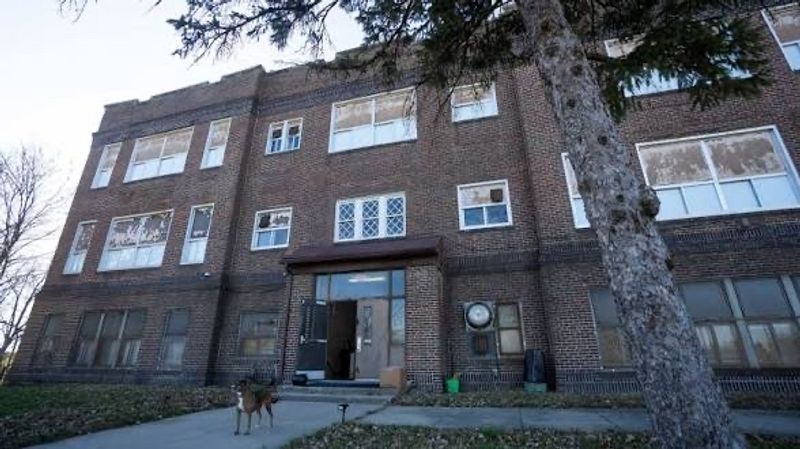
Tucked away in the tiny community of Farrar, Iowa, this abandoned red brick schoolhouse has earned a serious reputation among paranormal enthusiasts across the Midwest.
Built in 1921, the building served students for decades before closing its doors, and it has been a hotspot for unexplained activity ever since.
Previous owners opened it to ghost hunters and investigators after experiencing strange events themselves, including doors slamming on their own and lights flickering without any electrical explanation.
The basement is considered the most active area of the building, where visitors frequently report feeling watched, hearing footsteps, and sensing sudden drops in temperature.
Multiple television paranormal shows have featured the Farrar Schoolhouse, bringing it national attention and a growing community of dedicated investigators.
The building is large enough that you can spend hours exploring its hallways, classrooms, and utility spaces without covering the same ground twice.
Photography enthusiasts love the place because the peeling paint, broken windows, and dusty chalkboards create genuinely striking images.
Events are held regularly throughout the year, so checking the official schedule before making the drive out to this rural corner of Iowa is always a smart move.
3. Franklin Hotel, Strawberry Point
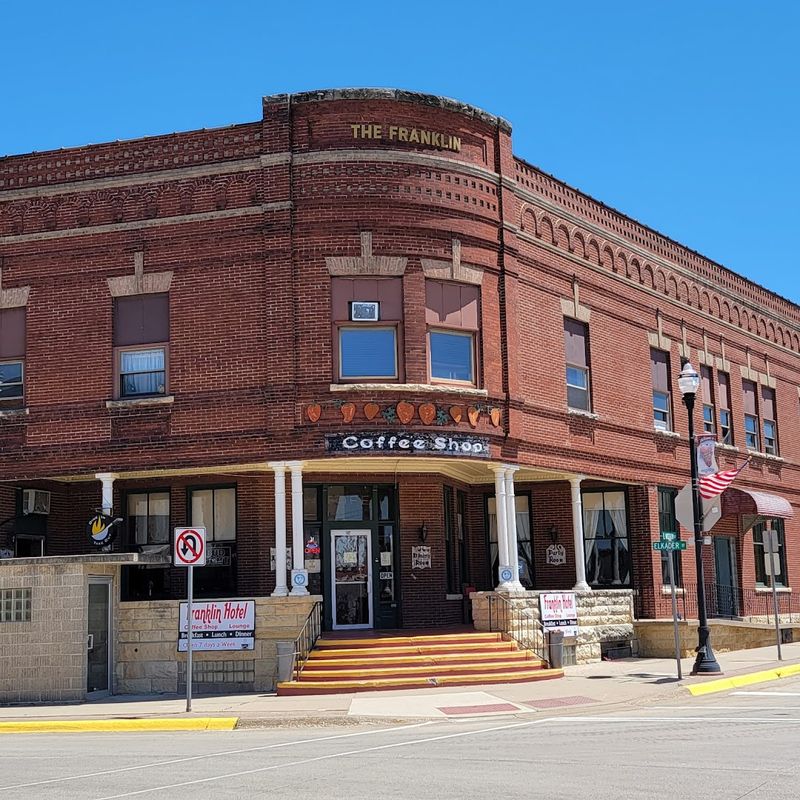
Strawberry Point is a charming small town in northeast Iowa, and the Franklin Hotel remains one of its most talked-about landmarks for reasons that go far beyond its historic architecture.
Built in 1902 and opened in 1903, the hotel has long been part of the town’s story, hosting travelers, locals, and generations of curious visitors over more than a century.
Current local lodging information lists the Franklin Hotel as temporarily closed, so visitors should not treat it as a guaranteed overnight option unless reopening details are confirmed directly.
The building still carries plenty of mystery, with stories tied to upper hallways, unusual sounds, and the kind of old-hotel atmosphere that makes every creak feel like it has a backstory.
What makes the Franklin Hotel especially interesting is that it remains a real historic landmark in the center of town, even when overnight stays are not available.
The building retains much of its vintage character, giving it an atmosphere that feels genuinely rooted in another era.
Strawberry Point itself is worth exploring, with local shops and a welcoming community that takes quiet pride in their town’s most mysterious landmark.
4. Edinburgh Manor, Scotch Grove
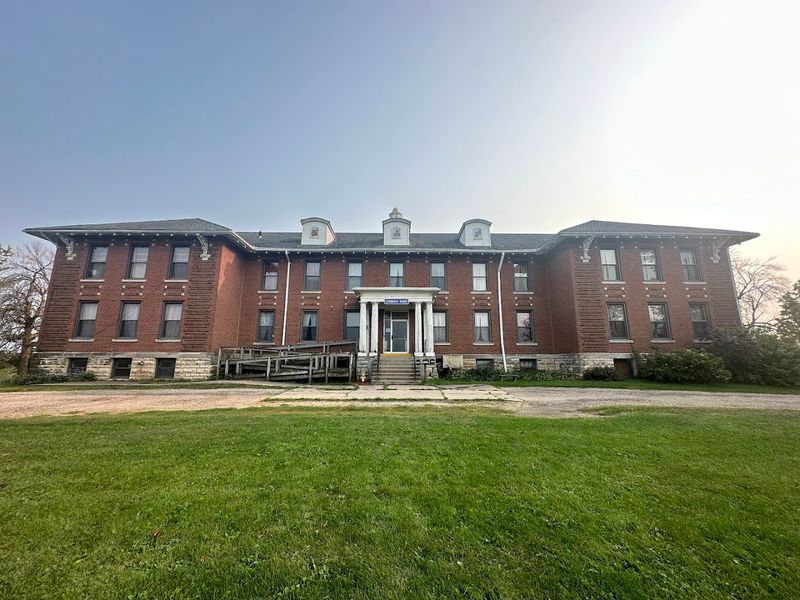
Tied to the history of the old Jones County Poor Farm, Edinburgh Manor in Scotch Grove, Iowa, has one of the most layered and sobering histories of any location on this list.
The current manor building was constructed from 1910 to 1911 to house people who were poor, elderly, or otherwise in need of county care.
The building remained in operation until November 2010 and has since become a private paranormal investigation site, drawing visitors who book day tours or overnight visits by reservation.
The sheer size of the structure is striking, with multiple floors, long corridors, and rooms that seem to hold the weight of every story that played out within them.
Investigators have reported apparitions, unexplained voices, and objects moving during sessions, making it one of the most talked-about paranormal locations in the state.
The owners have preserved much of the original character of the building rather than overdressing it for theatrical effect, which gives the experience a raw and authentic feeling.
Tours and overnight visits are available by reservation, so planning ahead is essential for anyone who wants to spend time inside the building.
This is the kind of place that stays with you long after you have driven back down the rural road and onto the highway.
5. Squirrel Cage Jail, Council Bluffs
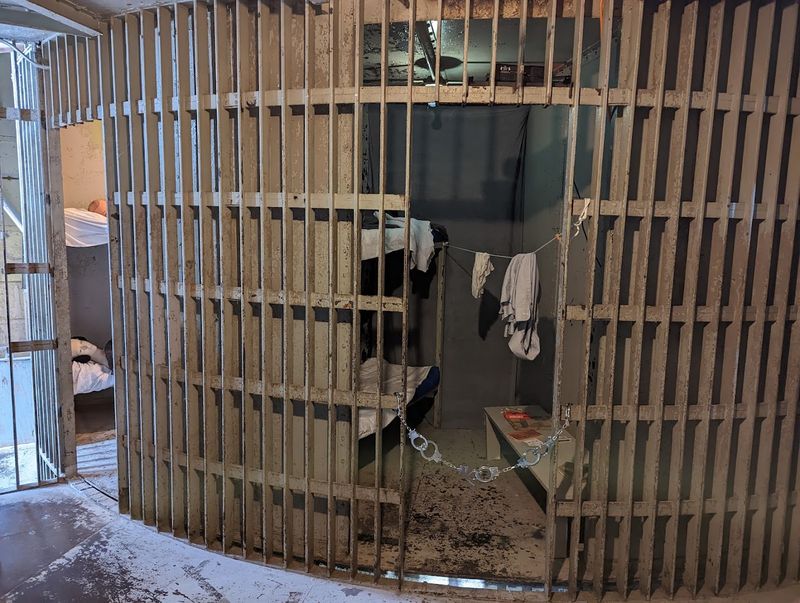
Council Bluffs, Iowa, is home to one of the most unusual jailhouse designs ever built in the United States, and the Squirrel Cage Jail more than lives up to its peculiar name.
Constructed in 1885, the building features a rotating cylindrical cell block, a design invented by William H. Brown and Benjamin F.
Haugh, who believed it would allow jailers to control access to the cells with minimal direct contact.
The mechanical system required only one opening in the outer shell, meaning prisoners could only enter or exit their cells when their cell aligned with the door, a concept that sounds clever in theory but created serious safety problems in practice.
The structure operated as a functioning jail until 1969 and now serves as a museum where visitors can explore the rotating cell block and learn about the facility’s complicated history.
Reports of paranormal activity have followed the building for years, with visitors describing cold spots, unexplained sounds, and shadows moving through the cell tiers after dark.
The Historical Society of Pottawattamie County owns and operates the site and has done an excellent job preserving both the mechanical system and the historical records.
Guided tours are available, and the staff brings genuine enthusiasm to every visit, making this one of Iowa’s most memorable and genuinely unusual stops.
6. Roseman Covered Bridge, Winterset
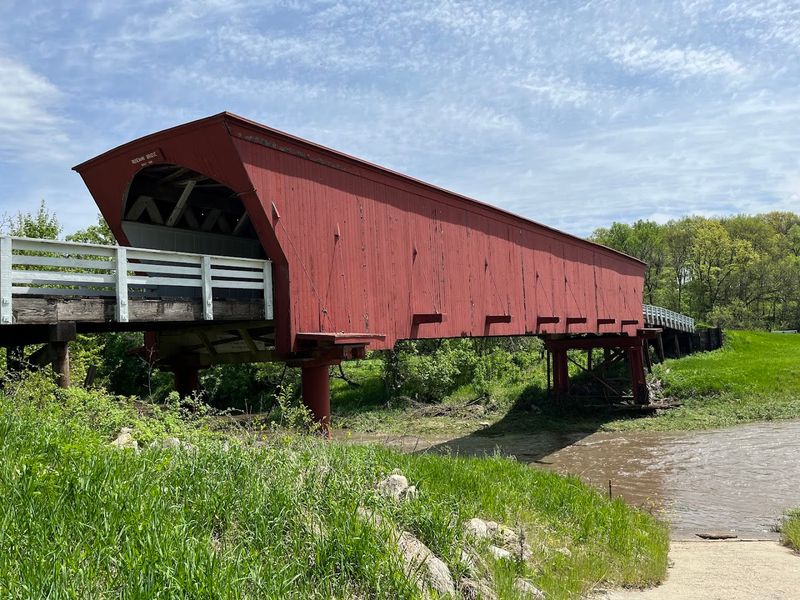
Most people know the covered bridges of Madison County, Iowa, through a famous novel and film, but Roseman Bridge carries a local legend that predates any Hollywood version of the story.
According to local folklore, a group of men chased a fugitive into the bridge one evening in the 1800s, only to watch him seemingly vanish into thin air with no way out.
The bridge has been called haunted ever since, and visitors who linger near it at dusk often describe an unsettling feeling of being watched from the tree line.
Built in 1883, the structure spans the Middle River and is one of six remaining covered bridges in Madison County, five of which are original historic bridges.
Roseman Bridge itself is listed on the National Register of Historic Places, and its setting is genuinely beautiful, especially in autumn when the surrounding trees frame the dark wooden bridge against a vivid sky.
Winterset, Iowa, is a lovely small town worth spending time in, with a charming town square and the John Wayne Birthplace Museum nearby.
Whether you believe in the ghost story or not, the Roseman Bridge rewards a visit with scenery, history, and a quiet kind of magic that feels entirely unique to the Iowa countryside.
7. Mars Hill Church, Bloomfield Area
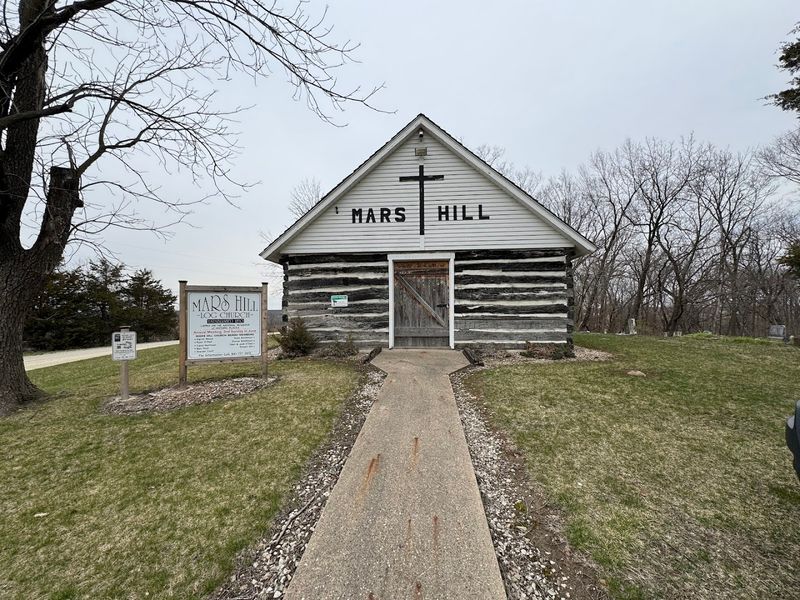
Somewhere in the rolling farmland near Bloomfield, Iowa, sits a weathered little church that has inspired more local ghost stories than perhaps any other rural structure in the southern part of the state.
Mars Hill Church is a modest white building surrounded by an old cemetery, and the combination of its remote location and long history has made it a magnet for curious visitors.
Local legends claim that strange lights have been seen moving through the graveyard at night, and that the church itself sometimes produces sounds with no clear origin.
The cemetery dates back to the mid-1800s, and many of the headstones are weathered to the point of being barely readable, which adds a layer of mystery to the place even in daylight.
Historians note that the area around Bloomfield has a rich and sometimes turbulent past, and old rural churches like this one often served as gathering points for entire communities during both joyful and difficult times.
Visitors are encouraged to be respectful of the cemetery and the property, as it remains an active and meaningful site for some local families.
The drive through Davis County to reach it is scenic and peaceful, offering a quiet reminder that Iowa’s rural landscape holds far more stories than its modest surface suggests.
8. Black Angel Statue, Council Bluffs
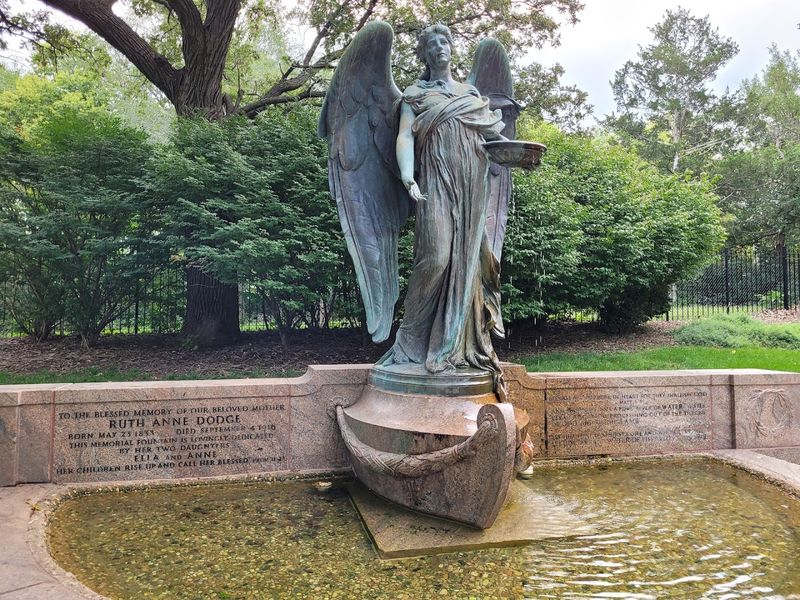
Standing in Fairview Cemetery in Council Bluffs, Iowa, the Black Angel is one of the most striking and debated monuments in the entire Midwest.
The statue was commissioned in the early 1900s by a woman named Ruth Anne Dodge, who reportedly claimed she had a vision of an angel offering her a cup of water, and she wanted the monument to reflect that vision.
Over the decades, the original bronze has oxidized to a deep, almost threatening black, which has fueled no shortage of local superstitions and ghost stories.
Some legends claim the statue brings misfortune to those who touch it, while others insist it glows faintly on certain nights, though no one has produced definitive proof of either claim.
What is undeniable is the visual impact of the piece, which stands at roughly eight feet tall and looms over the surrounding graves with its wings spread wide and its face cast in an expression that is difficult to read.
The cemetery itself is peaceful and well-maintained, making it a perfectly approachable destination even for visitors who are not particularly interested in the paranormal.
The Black Angel rewards a slow, thoughtful visit, the kind where you circle it a few times and let the stories settle around you like autumn leaves.
9. Malvern Manor, Malvern
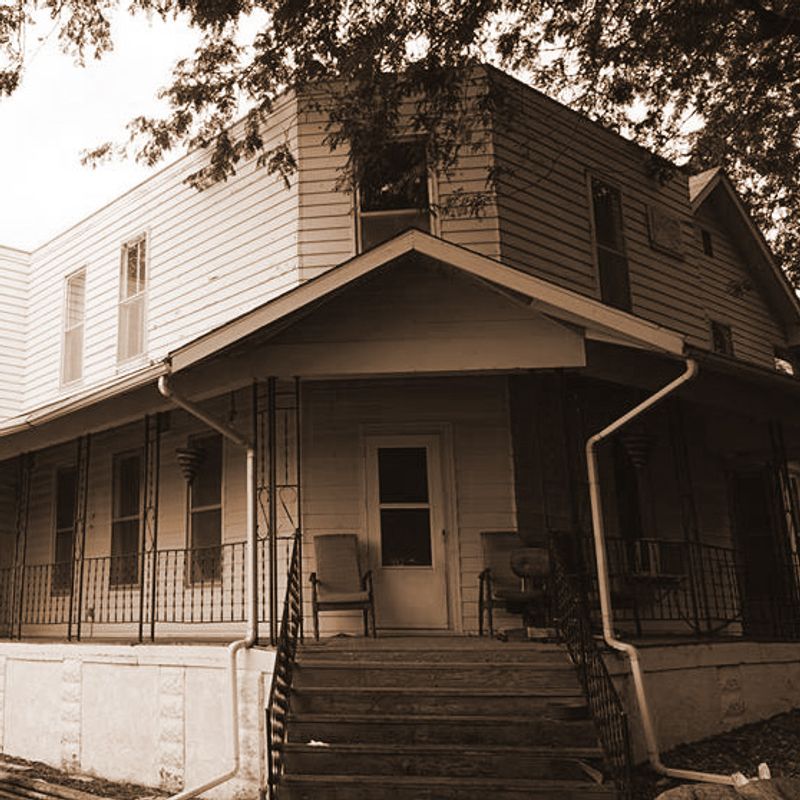
Not every creepy destination announces itself with crumbling walls and broken windows, and Malvern Manor in the small town of Malvern, Iowa, proves that point with quiet confidence.
The building was constructed in the late 1800s and has served as a hotel, a care facility, and eventually a well-known paranormal investigation destination that draws visitors from across the country.
The structure is surprisingly well-preserved, with original woodwork, period details, and a layout that feels like stepping into a different century the moment you cross the threshold.
Investigators and overnight guests have reported a wide range of unexplained activity here, including voices, moving objects, and apparitions that appear in mirrors and doorways.
The owners have invested in making the experience genuinely engaging, offering guided tours, investigation packages, and seasonal events that cater to both hardcore paranormal researchers and curious first-timers.
What sets Malvern Manor apart from many similar destinations is the personal attention that comes with a small-town operation, where the people running the tours actually know the building’s history inside and out.
Malvern itself is a quiet, welcoming community where the manor stands out as a point of local pride rather than something to be hushed up or ignored.
Come for the ghost stories and stay for the history, because Malvern Manor has plenty of both.
10. Hotel Blackhawk, Davenport
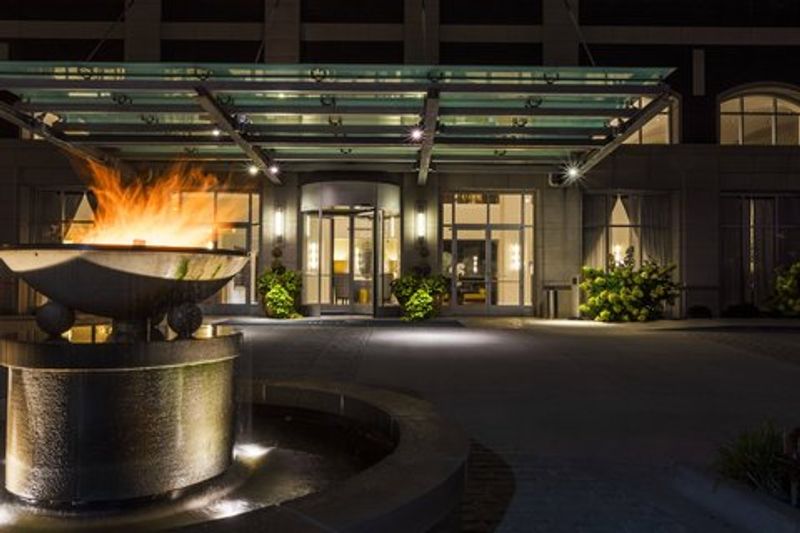
Davenport, Iowa, is a city with genuine urban energy, and Hotel Blackhawk is its crown jewel, a landmark that has been welcoming guests since 1915 with a level of elegance that few buildings in the state can match.
The hotel has hosted presidents, celebrities, and musicians over the decades, and its storied guest list has given rise to more than a few persistent ghost stories.
The most frequently reported presence is that of a woman in period clothing seen near the upper floors, though staff and guests have described a variety of unexplained events throughout the building.
Unlike many haunted locations, Hotel Blackhawk is a fully operational luxury hotel with beautifully restored interiors, a spa, and a restaurant, meaning you can enjoy a genuinely comfortable stay alongside whatever the building’s mysterious guests might have to offer.
The ballroom alone is worth a visit, with its soaring ceilings, ornate plasterwork, and the kind of golden light that makes you feel like a scene from a 1920s film is about to unfold around you.
Davenport sits along the Mississippi River and offers excellent dining, music venues, and riverfront scenery that make it one of Iowa’s most rewarding city destinations.
Hotel Blackhawk manages the rare trick of being both deeply historical and thoroughly welcoming, a place where the past and present share the hallways in surprisingly comfortable company.