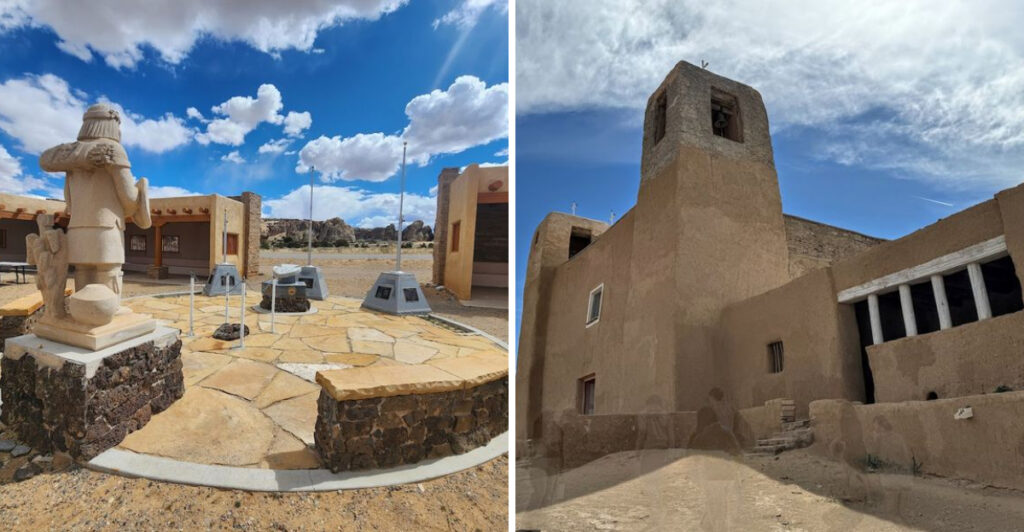
At first, I expected a beautiful view and a little history lesson. This ancient pueblo gave me something much bigger.
The road rises toward a community sitting nearly 370 feet above the desert floor, and before long, the whole place feels different. Not staged.
Alive in a way that makes you watch your words.
People still call this mesa home. That changes everything.
You are not walking through a leftover piece of the past. You are being allowed to witness a culture that kept going when so much around it tried to pull it apart.
That hit me hard during my first visit. The walls hold memory, but the people carry it forward.
This place in New Mexico is often called one of the oldest continuously inhabited communities in North America. I had heard that before.
I did not understand it until I stood there and listened closely that day, too.
Mesa-Top Adobe Views
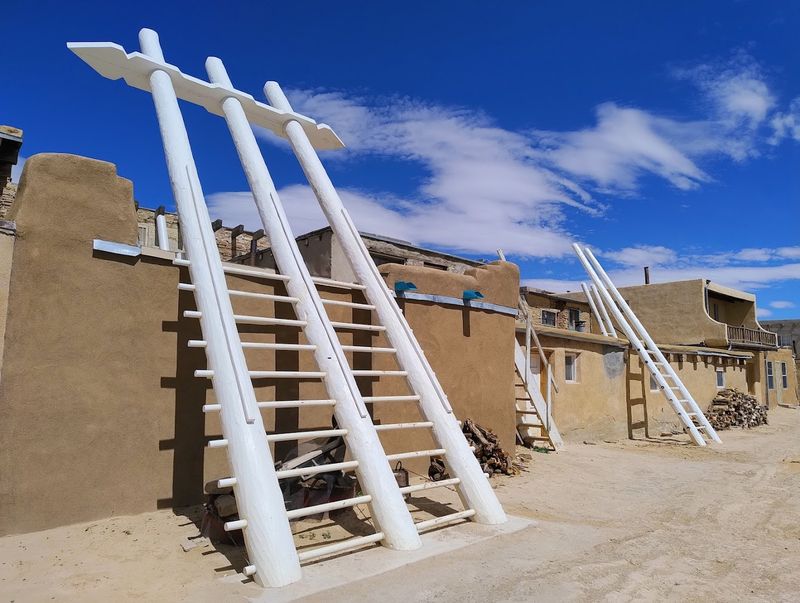
Stand at the edge of the mesa at Acoma Pueblo and the world below simply falls away in every direction, revealing a landscape so open it almost feels unreal.
The adobe homes up here have been stacked and shaped by generations of Acoma builders, and their warm earth tones blend so naturally into the sandstone that the whole village seems to have grown straight out of the rock itself.
I remember looking out from the top and trying to count the miles of desert I could see, but the horizon kept pushing further back, refusing to be measured.
The mesa sits roughly 367 feet above the surrounding valley floor, and that elevation gives every view a kind of quiet authority that no photo can fully prepare you for.
What makes this perspective so powerful is knowing that Acoma families have looked out over this same desert for centuries, watching seasons change and storms roll in from the same vantage point.
Every angle from up here tells a story older than most countries. The adobe walls hold that history without needing a single word of explanation at Sky City Cultural Center & Haak’u Museum at Haaku Rd, Acoma Pueblo, NM 87034.
Sunlit Stone Pathways
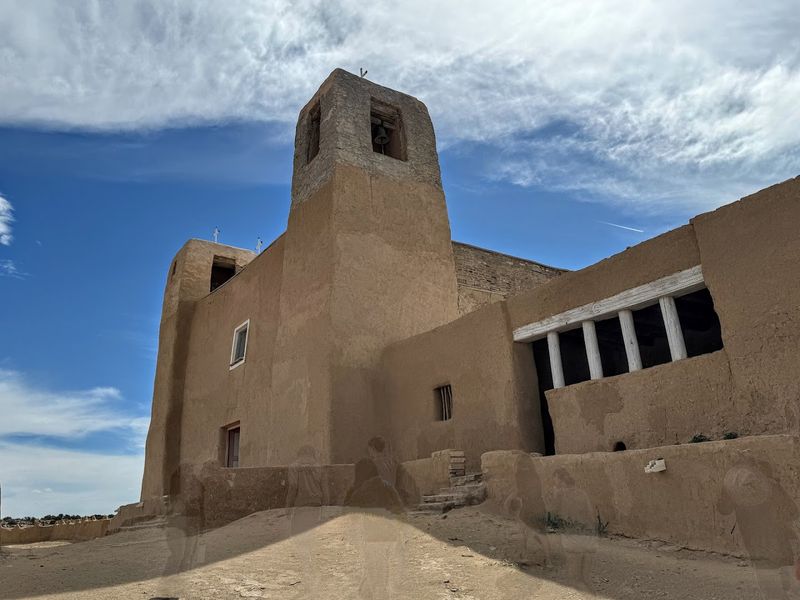
The pathways of Sky City Cultural Center & Haak’u Museum at Haaku Rd, Acoma Pueblo, NM 87034 feel less like a tour.
Every worn stone surface has absorbed centuries of footsteps, making the experience feel more like a conversation with the ground beneath your feet.
The paths between the homes are narrow and unpaved, shaped by use rather than design. The afternoon sun hits them at angles that make the whole village glow a deep amber color that feels almost theatrical.
I wore my most comfortable shoes and still found myself slowing down simply because the textures underfoot kept demanding attention.
No concrete, no asphalt, no modern paving of any kind interrupts the surface up here, which means you are walking on the same ground that Acoma people have crossed for generations.
The sunlight plays differently on these pathways depending on the time of day, and visiting later in the afternoon rewards you with long shadows and a warmth in the stone that almost radiates back at you.
Practical tip: bring water, because there are no beverages available at the top of the mesa, and the sun on those open pathways is relentless and completely unfiltered by shade.
Ancient Walls And Desert Air
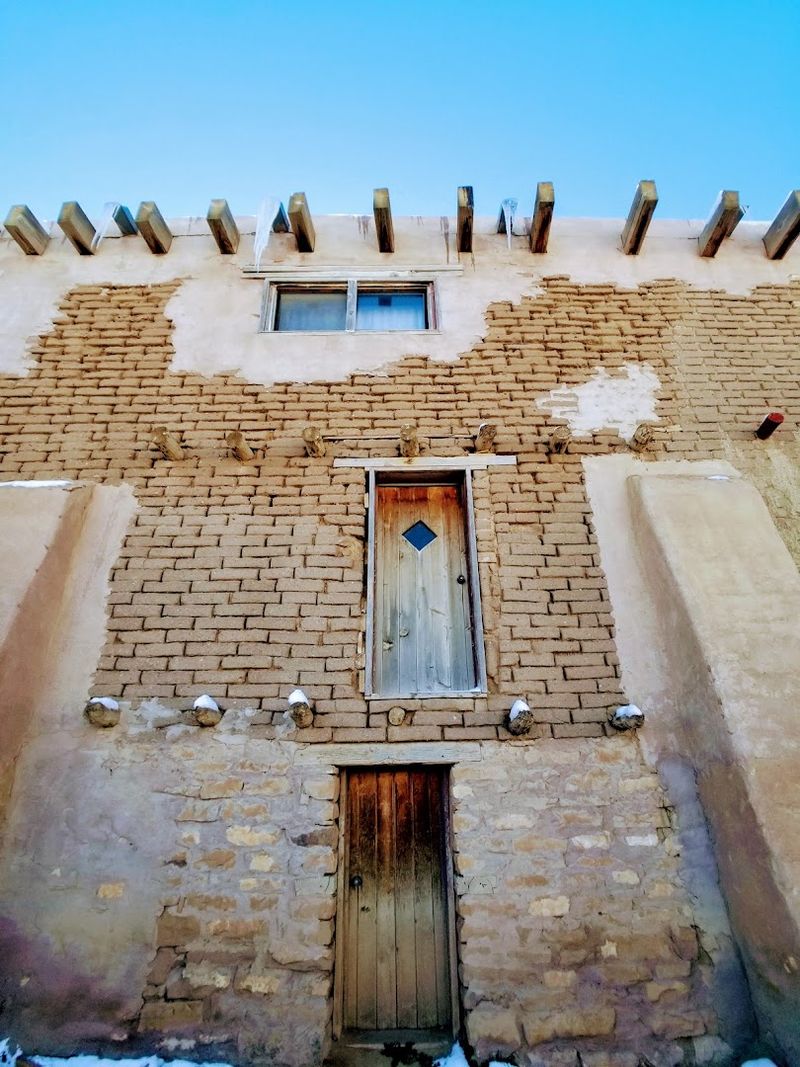
Few things prepare you for the feeling of pressing your hand against a wall that has stood for hundreds of years, still solid, still functional, still home to someone’s family.
The walls of Sky City are built from adobe and stone, crafted without modern tools or machinery, and yet they have survived New Mexico’s brutal heat, sudden hailstorms, and the weight of centuries without collapsing into memory.
The desert air up on the mesa is dry and clean in a way that city air simply never manages, and breathing it in while standing beside those ancient structures creates a sensory experience that is surprisingly moving.
Archaeological evidence places the oldest remaining structures at Acoma at around 1100 C.E., though Acoma oral history describes a community presence stretching back more than two thousand years.
I stood next to one of the older walls during my visit and felt genuinely small in the best possible way, the kind of smallness that comes from encountering something truly enduring.
The combination of that ancient craftsmanship and the wide-open desert air creates an atmosphere unlike anything else I have experienced in years of travel.
Quiet Corners Above The Valley
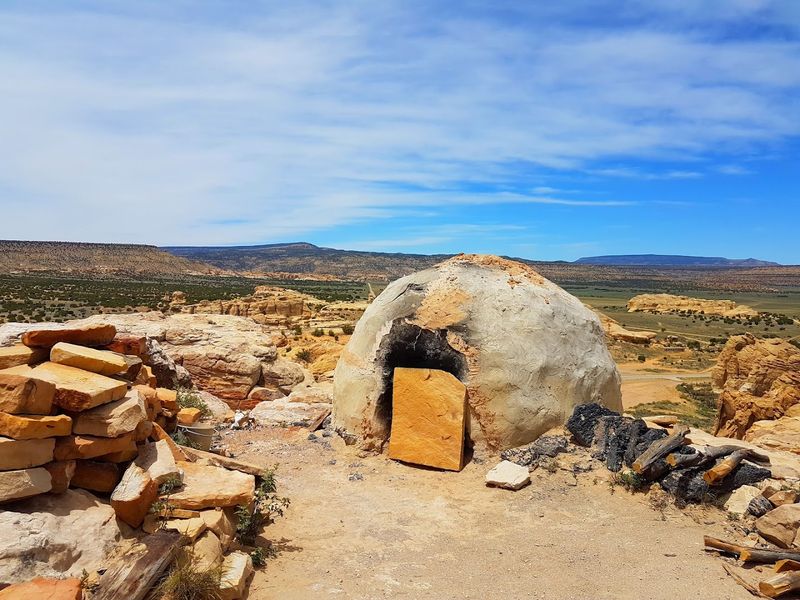
Not every part of Sky City demands your attention loudly; some of the most memorable moments happen in the quiet corners where the tour group has moved on and you are briefly alone with the view.
Up on the mesa, pockets of stillness exist between the homes and along the outer edges of the village where the land drops away sharply and the valley below spreads out in total silence.
I found one such corner near the edge of the mesa and stood there longer than I probably should have, watching a hawk work the thermals rising off the desert floor far below.
These quieter spots are where the real texture of life at Acoma reveals itself, through the small details like a weathered door frame, a carefully stacked pile of firewood, or a clay pot sitting in the shade.
The homes here are private family residences, not stage sets, and that reality gives the quiet corners a weight that polished tourist attractions rarely achieve.
Respecting the space and moving slowly through it rewards you with a kind of intimacy with the place that rushing through on a packed tour simply cannot replicate.
Earth-Toned Architecture In The Sun
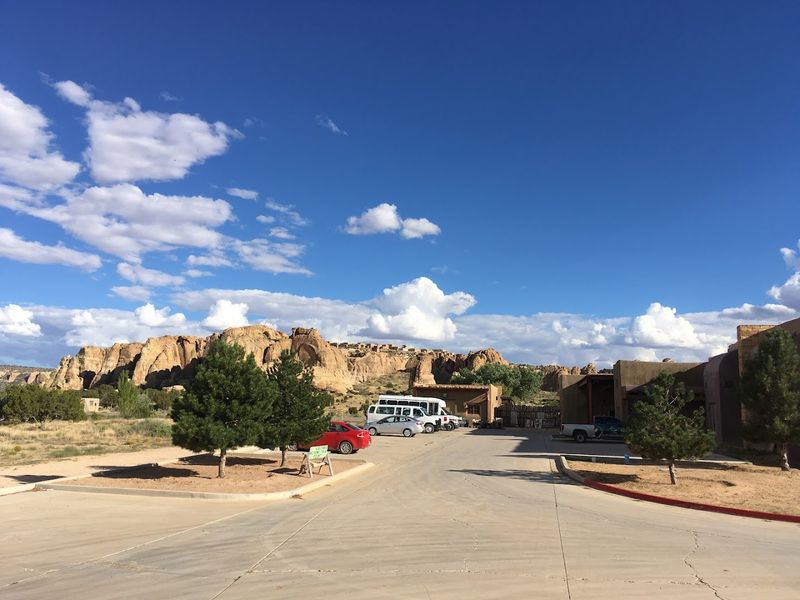
Acoma’s architecture is not designed to stand out against the landscape; it is designed to belong to it, and the effect in full sunlight is genuinely stunning.
The buildings rise in stacked tiers, some reaching three stories, all built from the same earthy palette of tans, reds, and warm browns that mirror the sandstone mesa beneath them.
Acoma society is matriarchal, meaning women own the dwellings and household possessions, and many of these homes have been passed down through generations of the same family without ever changing hands outside the lineage.
What strikes you most when the midday sun hits the village is how the architecture seems to shift in color and shadow with every passing minute, as if the buildings themselves are alive and responding to the light.
Many of the traditional homes lack electricity, running water, and sewer connections, yet families return to them for feast days and cultural celebrations, keeping the space genuinely inhabited rather than merely preserved.
That combination of ancient design and continued daily meaning gives the architecture of Sky City a warmth that no reconstructed historical site could ever manufacture or fake.
Timeless Streets With Sacred Stillness
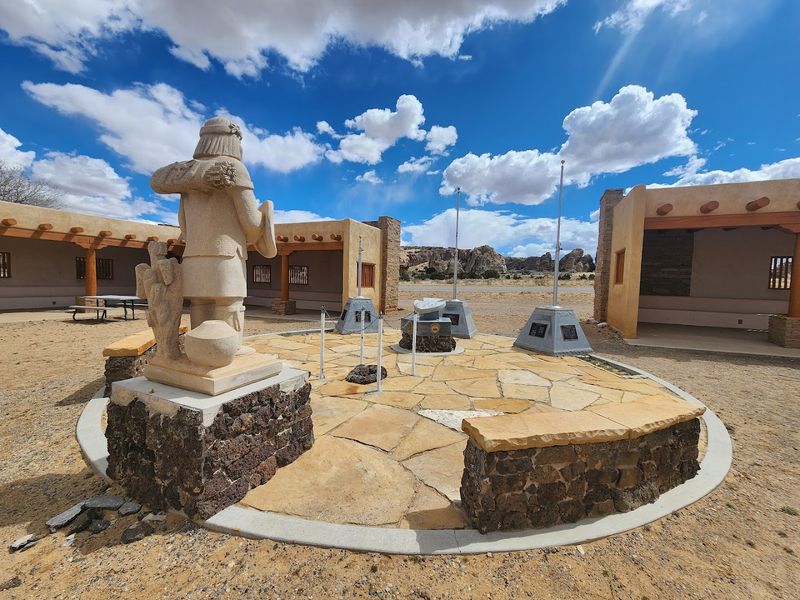
Some places carry a stillness that you can actually feel, a kind of atmospheric hush that settles over you the moment you step into it, and the streets of Sky City have exactly that quality.
The unpaved dirt lanes wind between private homes and communal spaces with no traffic noise, no electrical hum, and none of the ambient buzz that most people carry with them everywhere without realizing it.
Walking these streets, I kept lowering my voice instinctively, not because anyone asked me to, but because the place itself seemed to request a certain kind of quiet respect.
The San Esteban del Rey Mission Church, constructed between 1629 and 1640, anchors one end of the village with a presence that is both monumental and deeply solemn, its thick adobe walls absorbing sound as effectively as any cathedral built from stone.
The Acoma people maintain their customary traditions and return to this ancient space for tribal celebrations and feast days, which means the streets are not frozen in time but still pulse with real cultural life.
That living quality is what separates Sky City from a ruin, and it is what you carry home with you long after the tour ends.
Handmade Art And Living Culture
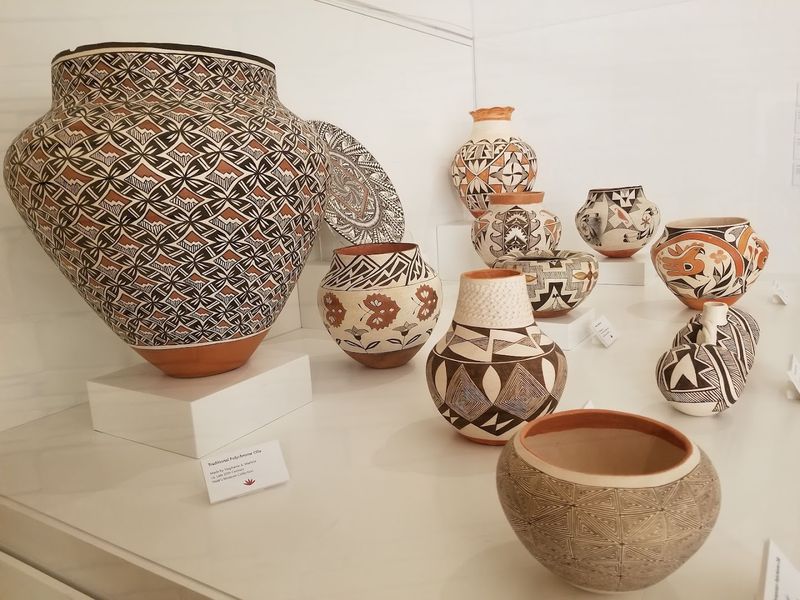
Acoma pottery is internationally recognized for a reason, and holding a piece of it in your hands for the first time makes that reputation feel completely earned.
The tradition of crafting thin-walled pottery with hand-painted geometric designs has been practiced at Acoma for centuries, and the potters who continue this work today are not recreating a lost art but carrying forward a living one that never stopped.
During the tour, local artisans set up along the pathways and offer their work directly to visitors, and the pieces range from small decorative items to full-sized vessels that represent dozens of hours of careful handwork.
I bought a small painted bowl from a vendor near the church and watched her describe the specific pattern on it, explaining its meaning and the family tradition behind the design with a calm pride that was genuinely moving.
The Sky City Cultural Center and Haak’u Museum also works to revitalize lost art forms and language, ensuring that the cultural knowledge embedded in each piece of pottery is not just sold but understood and protected.
Art here is not decoration; it is documentation, and every painted line connects the present to a past that the Acoma people have never allowed to fade completely.
Wide Desert Views From The Heights
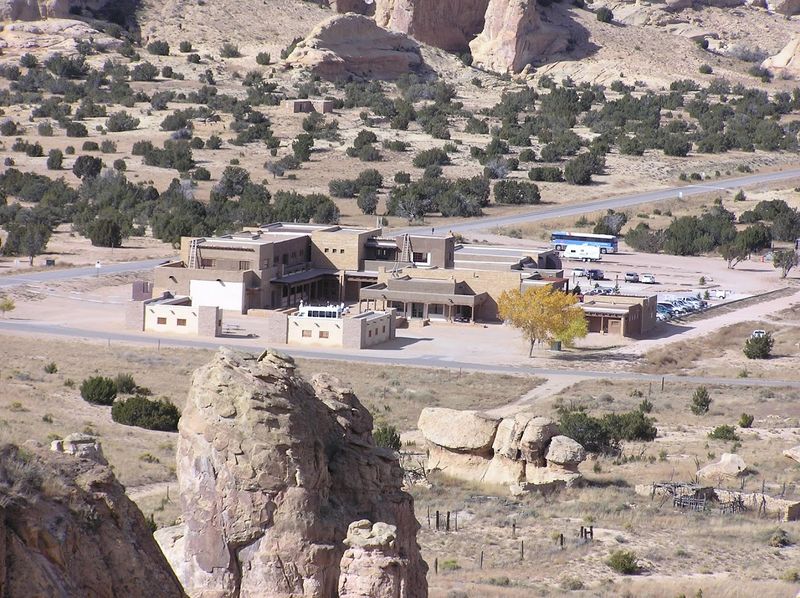
Few rewards in travel arrive as immediately and completely as the view from the top of the Acoma mesa on a clear morning, when the desert stretches in every direction without a single obstruction.
At roughly 367 feet above the valley floor, the mesa top offers sightlines that extend for miles across a landscape of red rock formations, scrubby desert vegetation, and distant blue ridgelines that seem to hover at the edge of the world.
I had seen photographs before visiting, and I still was not prepared for the scale of it, the way the open space seems to expand the longer you look at it.
The optional descent via the ancient rock stairs carved into the cliff face adds another dimension to the experience, offering close-up views of the mesa wall itself and a perspective on the height that the tour bus ride up simply cannot provide.
Visitors who are reasonably fit and comfortable with heights will find the stair descent one of the most memorable parts of the entire trip, a physical encounter with the landscape rather than just a visual one.
Sky City Cultural Center and Haak’u Museum at Haaku Rd, Acoma Pueblo, NM 87034 is the starting point for all of this, and it earns every mile of the drive to get there.