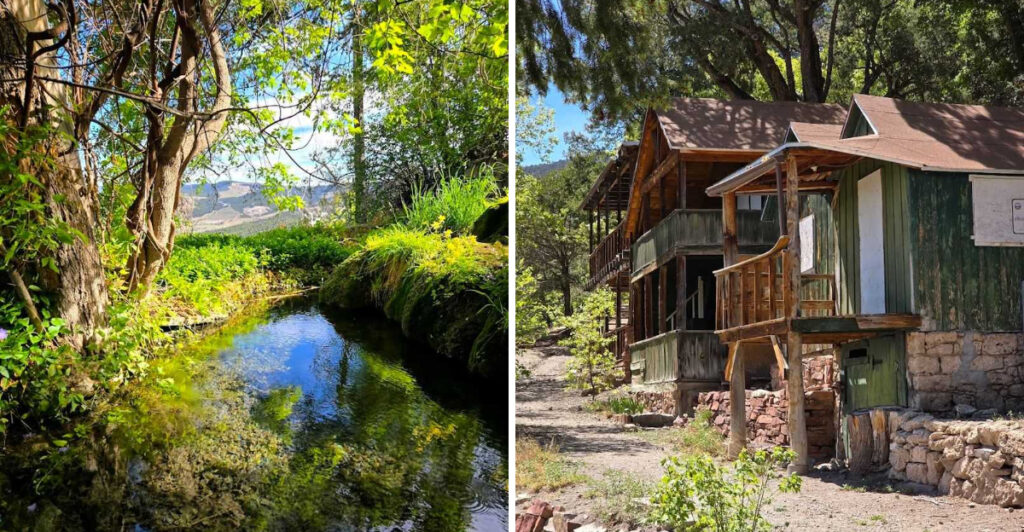
The trail doesn’t announce itself with drama. It pulls you in slowly, and then the Sandia Mountains rise behind you like the scene just changed.
A few minutes later, the old stone walls appear in the brush, and suddenly this is not just a hike anymore.
That was the moment I stopped rushing. The ponds felt almost too still.
The fruit trees made me wonder who cared for this land before hikers ever showed up. Every turn seemed to carry a question, and I wanted the answer.
My first visit caught me completely off guard. I expected a peaceful walk and a few nice views.
What I found felt closer to a story still breathing through the rocks.
This corner of New Mexico has the kind of trail people talk about long after they finally leave. Keep reading, because once the first ruin appears, the whole landscape starts feeling different.
Stone Pools Beneath The Trees
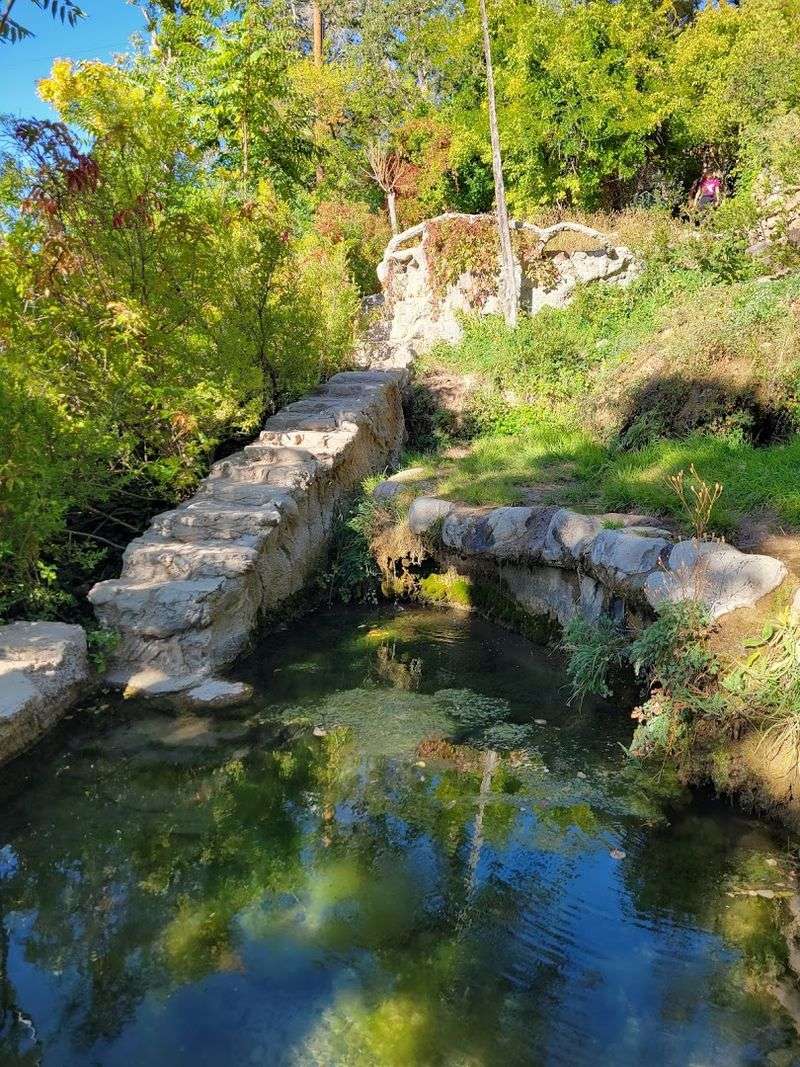
Water does something almost theatrical when it collects in hand-laid stone basins beneath a canopy of old-growth trees. The pools at this site are fed by a natural spring that has been flowing for well over a century, and standing beside them feels oddly ceremonial, like you have wandered into a space designed for quiet reflection rather than casual tourism.
The stonework surrounding the pools is aged and mossy, and you can tell skilled hands shaped it long ago with real intention. Each basin connects to the next in a tiered system that once served as both a practical water feature and an ornamental centerpiece for the resort that operated here in earlier decades.
Dragonflies hover above the surface, and on cooler mornings, the water catches the filtered light in a way that makes the whole scene feel almost painted. Visitors are asked to admire the pools rather than wade in, which honestly makes sense once you see how carefully the ecosystem around them has been preserved.
Standing at the edge of those pools, I felt the past pressing gently against the present in the most satisfying way at Carlito Springs Open Space, 82 Carlito Springs Rd, Cedar Crest, NM 87008.
A Quiet Trail Into History
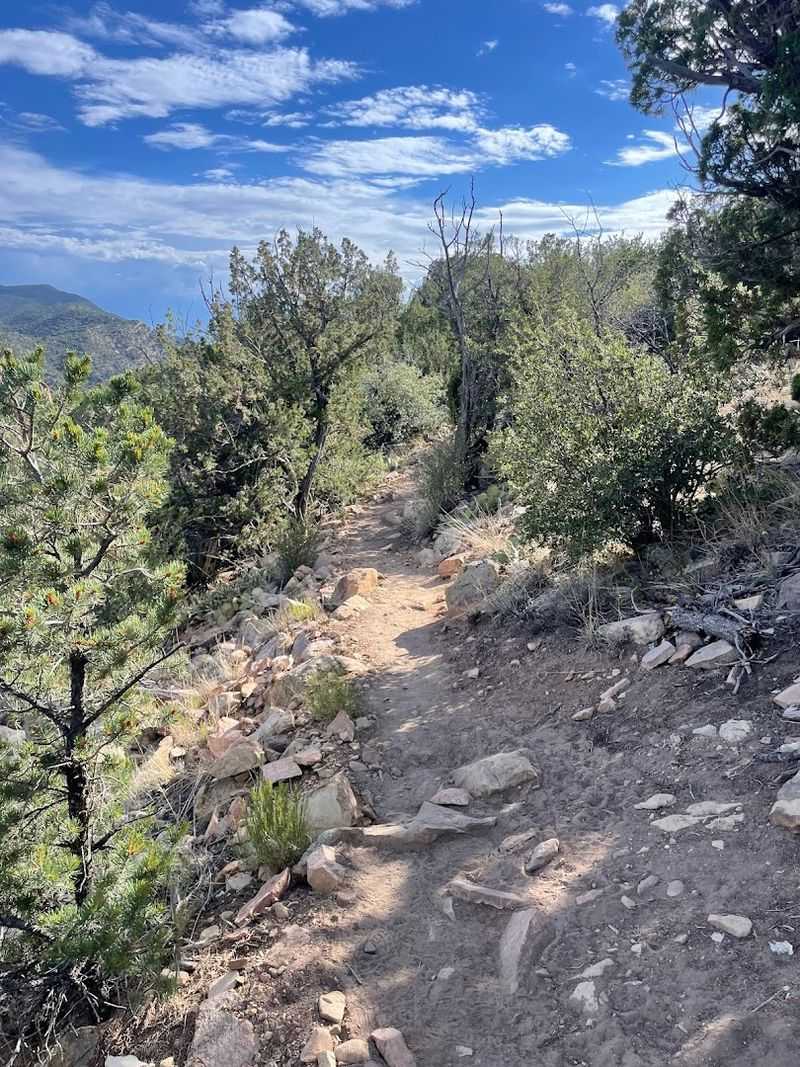
Most hiking trails offer scenery, but few offer a genuine sense of walking through someone else’s story. The loop trail here stretches roughly 1.75 miles and climbs steadily through pinon, juniper, and oak, rewarding patience with views that open up the longer you push uphill.
I took the left fork from the trailhead on my first visit, which sends you directly toward the springs and historic structures in about half a mile. The path is moderately steep in sections, with rocky footing that keeps you paying attention, but nothing that requires technical skills or specialized gear.
What sets this trail apart from a standard nature walk is the layered context around every bend. Apple trees appear where you least expect them, fossils peek out from red rock faces, and the remnants of terraced gardens confirm that the land was shaped by human hands over generations.
New Mexico has no shortage of beautiful hiking, but this particular trail delivers something rarer than a good view: it delivers a mood, a texture, and a quiet conversation with the past that lingers long after you have driven back down the mountain.
Spring Water In The Foothills
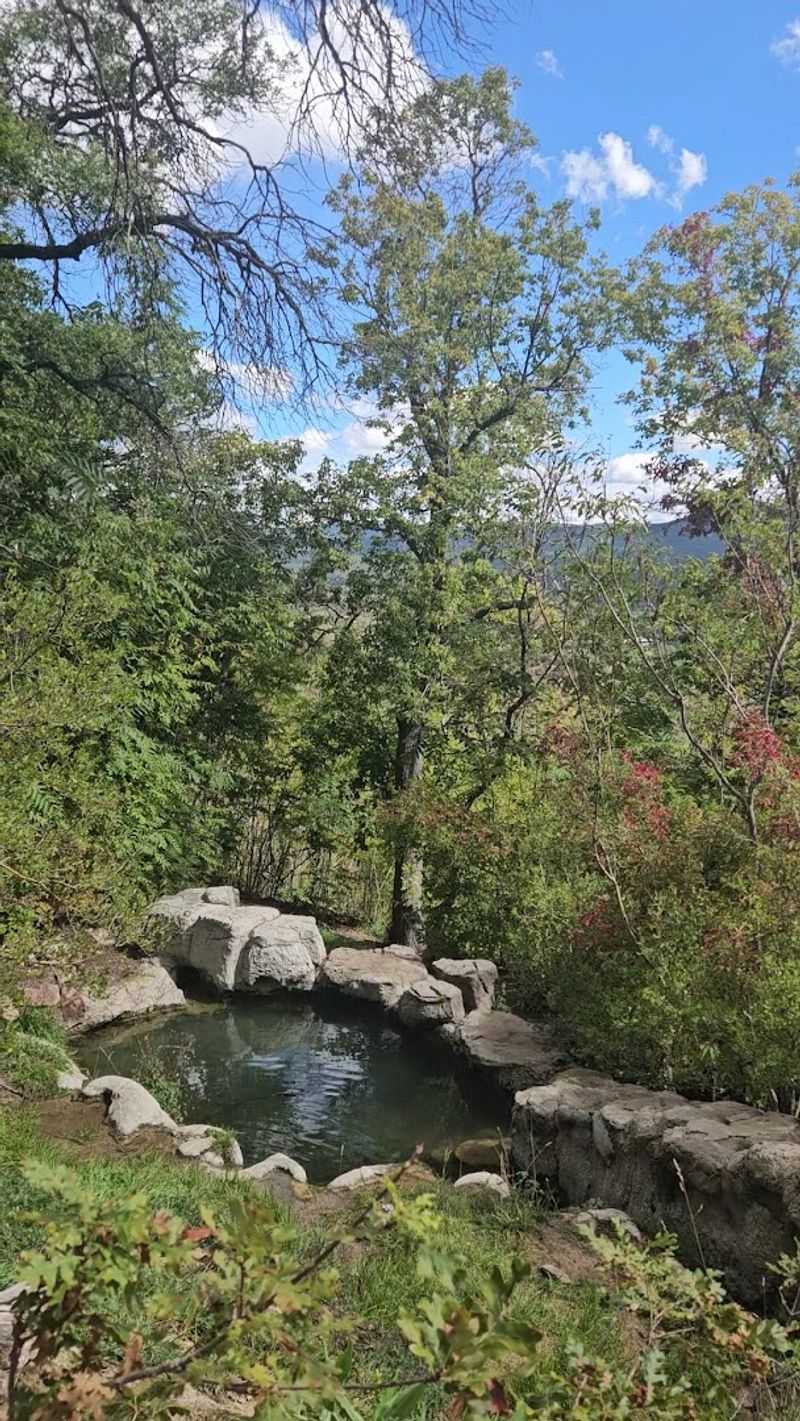
A natural spring in the high desert is not just a water source; it is an event. The spring at this open space has been drawing people, animals, and plants into its orbit for well over a hundred years, and the riparian corridor it feeds feels almost absurdly green compared to the dry scrub just a short distance away.
Water trickles audibly along much of the trail, creating a soft background sound that immediately slows your pace and lowers your shoulders. That trickling is not incidental; it is the whole reason this property became a resort destination in the late 1800s, when visitors rode six-horse stagecoaches from Albuquerque just to spend a day near running water in the mountains.
The spring continues to nourish wild grapes, prickly pear, and an impressive variety of bird species that make this a genuinely rewarding spot for wildlife observation. I spotted multiple bird species without even trying, simply because the water pulls everything in.
Foothills springs like this one are rare enough that their presence transforms entire ecosystems, and the contrast between the lush spring zone and the surrounding terrain is one of the most visually striking aspects of the whole visit.
Old Cabins And Orchard Shadows
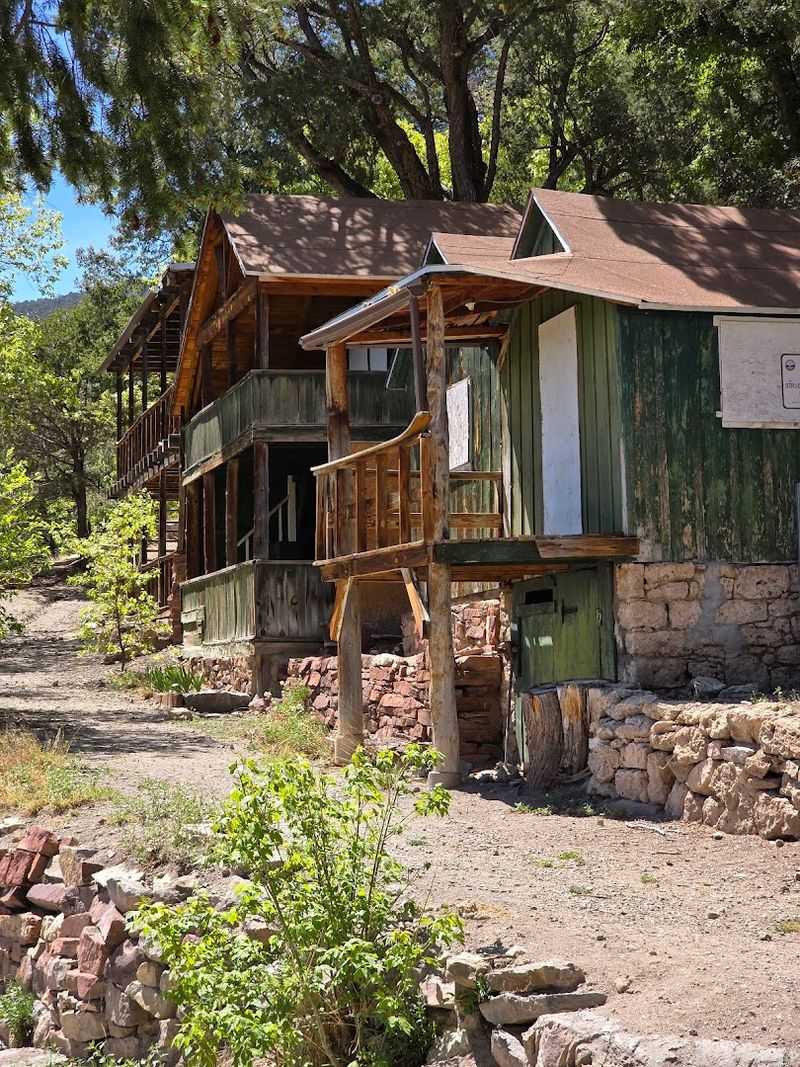
Few things are as quietly haunting as an apple tree that nobody tends anymore. The orchard at this open space still produces fruit each season, but the trees have gone their own way for years, growing gnarled and expressive in the way that untended things often do.
The cabins nearby are in various stages of preservation, with some structures stabilized and others left to show their age honestly. Bernalillo County has been working to restore key buildings over time, and you can see the difference between sections that have received attention and sections that still carry the full weight of a century of weather and use.
Carl Magee purchased this property in 1930 and named it Carlito after his son, and the structures he and earlier owners built still define the character of the place more than any trail marker or interpretive sign could. Walking through the orchard with cabin walls visible through the branches, I kept thinking about how many different versions of this place have existed on the same patch of ground.
The orchard and the ruins together create a layered sense of time that you simply cannot manufacture, and that authenticity is exactly what makes the site so memorable.
Mossy Corners And Mountain Air
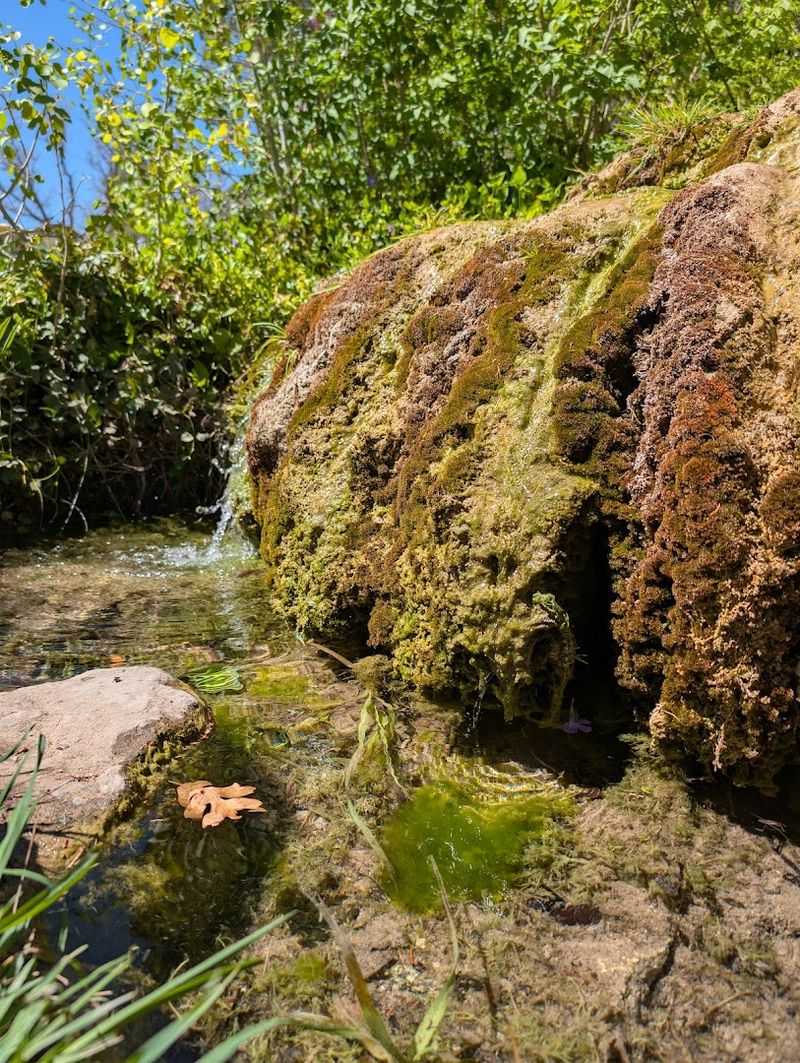
There is a specific kind of coolness that only exists in shaded mountain hollows where water is always nearby. At this site, you feel that coolness most intensely near the older stone structures, where moss has claimed every horizontal surface and the air carries a mineral freshness that no amount of air conditioning can replicate.
The Sandia Mountains create a microclimate that makes this corner of New Mexico behave differently from the desert floor far below. Temperatures drop noticeably as you climb toward the springs, and the shade provided by mature oaks and cottonwoods amplifies that effect in the best possible way.
I found myself slowing down near the mossy corners of the old stone walls, running a hand along the surface and noticing how different textures told different parts of the story. Some stones were clearly shaped by tools, while others were placed more roughly, suggesting different construction phases across different eras.
The mountain air here smells faintly of pine resin and damp earth, a combination that is almost aggressively pleasant. Every time a breeze moved through the canopy above those mossy walls, I felt like the place was exhaling right along with me.
Hidden Ruins Among The Greenery
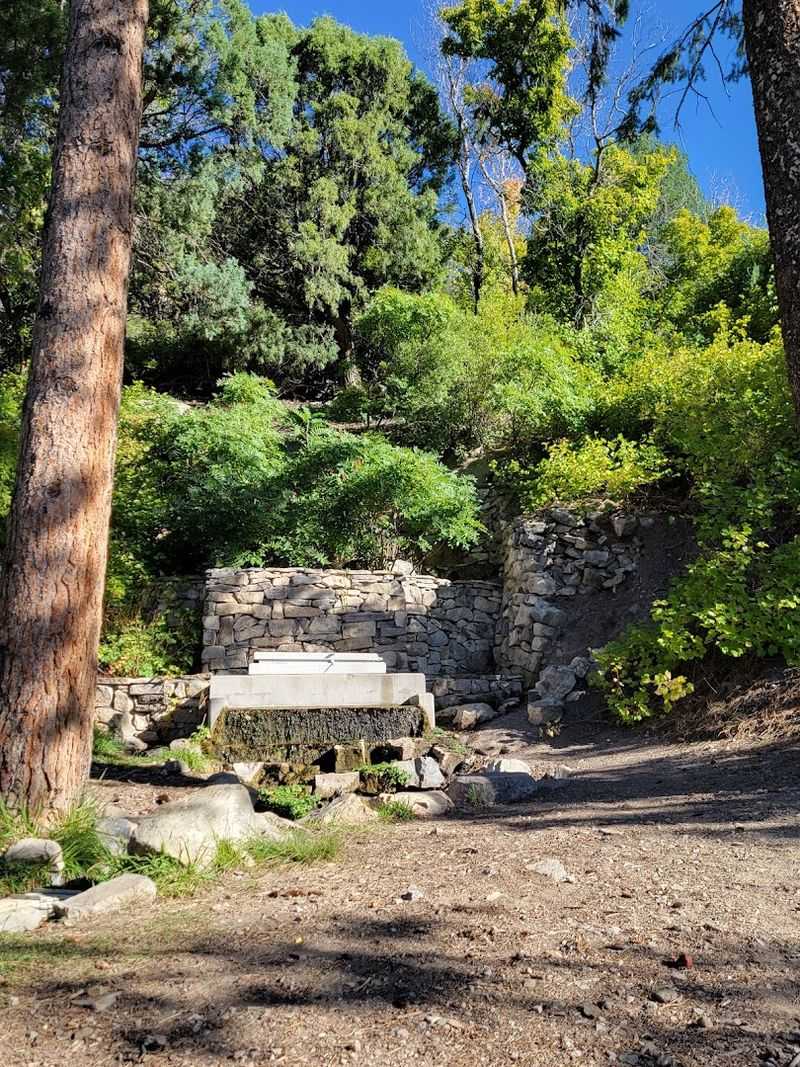
Ruins have a way of appearing when you stop looking for them. Along the trail and around the spring area, remnants of foundations, walls, and terraced landscaping emerge from the greenery at unexpected moments, each one a small puzzle about what this place used to be.
The property served as a homestead, a resort, a boys school, a tuberculosis sanatorium, and a private residence across its long history, and that variety of uses left behind a correspondingly varied set of physical traces. Some ruins are clearly structural, while others are more subtle, like a line of stones that suggests a garden border or a sunken area that was once a fountain basin.
Sunflowers and wild grasses grow directly through some of the older stonework, creating a visual effect that feels more like a painting than a park. I spent a long stretch of my visit simply wandering slowly near the main spring area, noticing how each ruin connected to the next in a loose spatial logic that still reflected the original design of the property.
Hidden ruins like these reward the kind of visitor who is willing to look sideways and slow down, because the real details only reveal themselves to people who are not in a hurry.
Faded Gardens In The Desert
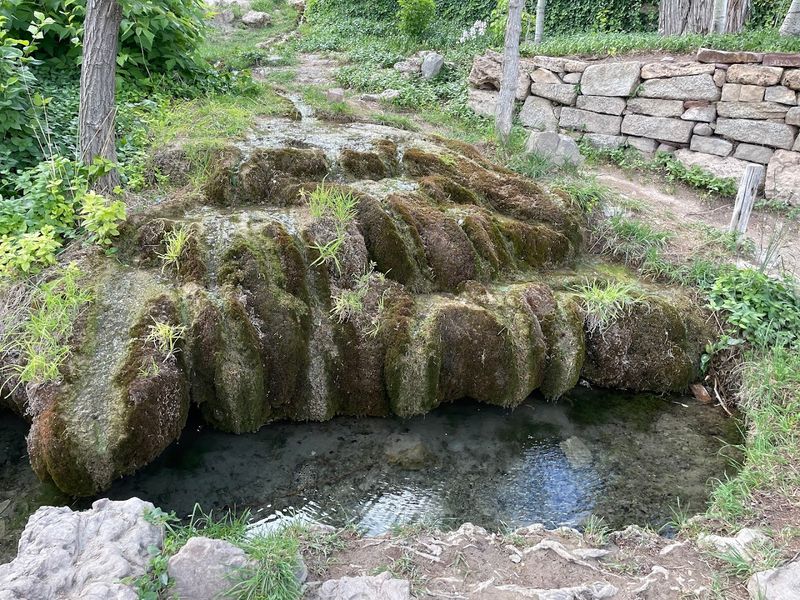
Ornamental gardens in the middle of a high desert landscape are a bold statement under any circumstances. The terraced gardens at this site were once a deliberate and carefully maintained feature, designed to impress the resort guests who made the long stagecoach journey from Albuquerque specifically to experience this unlikely oasis.
Today those gardens are faded but not gone, and the National Park Service recognized their significance by including the property on the National Register of Historic Places, specifically citing the terraced gardens and the human shaping of the landscape as key reasons for the designation. That recognition puts the gardens in rare company for a county open space.
Walking the terraces now, you can still read the original design intent in the way the land steps down toward the spring, each level creating a slightly different viewing angle toward the water and the mountains beyond. Wildflowers have moved into spaces where cultivated plants once grew, and the effect is a kind of accidental beauty that the original designers almost certainly never planned.
New Mexico has produced some extraordinary landscapes shaped by human ambition, and these faded gardens rank among the most quietly poignant examples I have personally walked through.
A Shaded Oasis With A Past
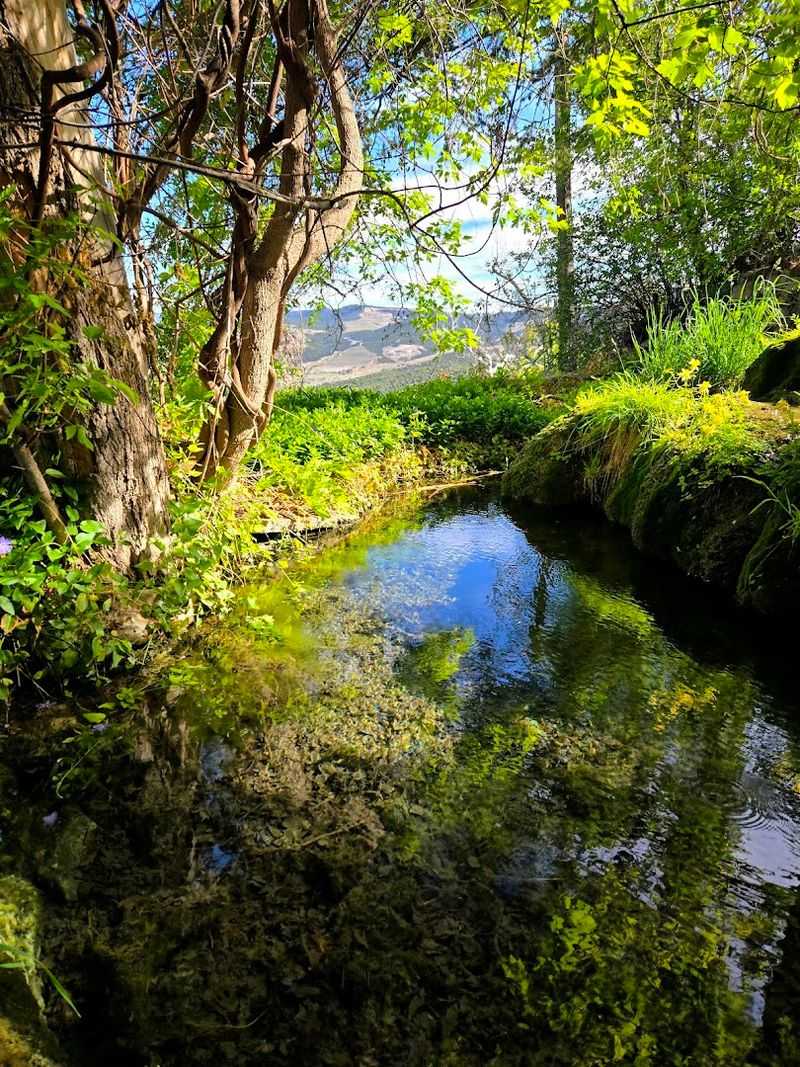
Some places earn their reputation through spectacle, and others earn it through depth. This open space belongs firmly in the second category, offering a kind of layered richness that reveals itself gradually rather than all at once.
The shade here is generous and real, provided by trees that have been growing for decades along a spring corridor that keeps the soil moist enough to support them through dry New Mexico summers. Families with young children, solo hikers, birdwatchers, and history enthusiasts all find something worth their time at this site, which is a rarer overlap than most parks can claim.
The property is open Wednesday through Sunday from 7 AM to 7 PM, which means early morning visits are not just possible but genuinely rewarding, especially on weekdays when the trail sees lighter foot traffic. Bernalillo County acquired the land starting in 2000 and opened it permanently to the public in August 2014, giving the site just enough time to settle into its identity as a beloved community resource.
Every layer of this place, from the spring water to the old stone walls to the apple trees nobody planted recently, tells part of a story that began at Carlito Springs Open Space.