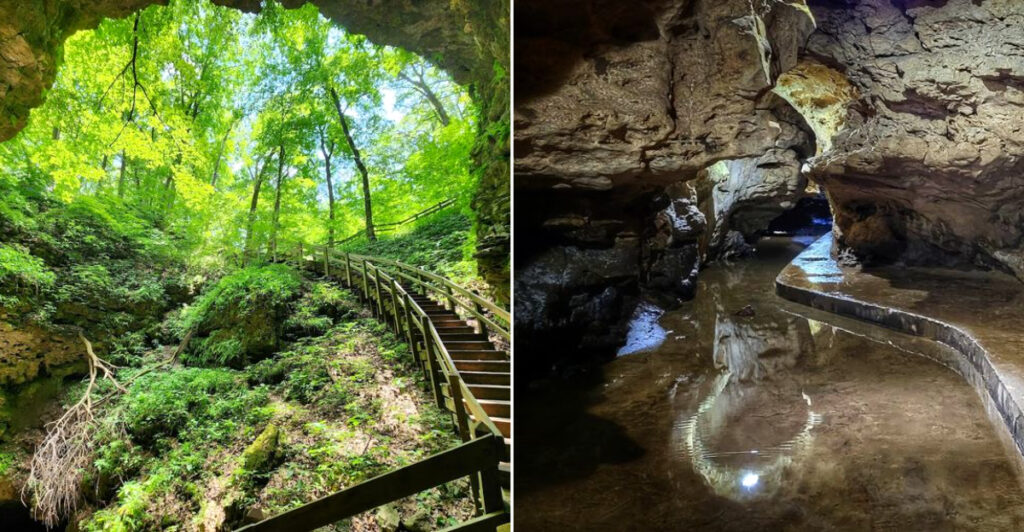
Iowa looks a little different when the trail suddenly drops underground.
In this eastern Iowa cave park, the adventure starts with limestone walls, cool air, wooden stairs, muddy shoes, and that small thrill of realizing the next passage might require a crouch instead of a casual stroll.
The range is what makes it so fun. One cave feels wide and easy.
Another turns into a headlamp-and-hands kind of challenge. Between them, trails wind past bluffs, trees, natural openings, and places that make the state feel far more mysterious than expected.
No big admission fee or polished tour script is needed here. Bring shoes with grip, a flashlight, and enough curiosity to follow the path a little farther than planned.
What Maquoketa Caves State Park Actually Is
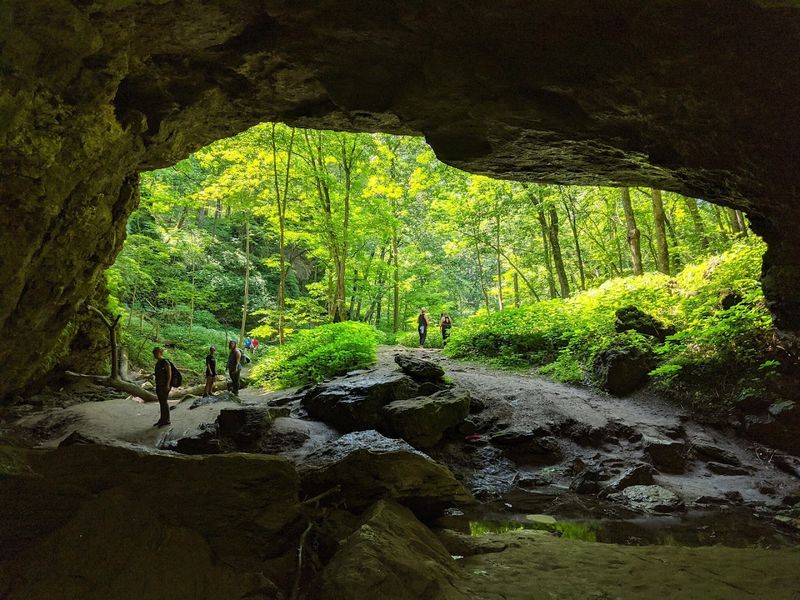
Maquoketa Caves feels like a surprise. One minute you are in eastern Iowa, and the next you are staring at limestone bluffs, cave openings, and trails that look far more adventurous than expected.
The park has more caves than any other state park in Iowa, which makes it one of the state’s most unusual outdoor destinations.
Its cave system ranges from big walk-through spaces to tighter, muddier passages that ask for a little crawling and a lot of curiosity.
That variety is part of the fun, because every stop along the trail feels slightly different from the last.
Some caves are easy enough for a casual look, while others feel like a real hands-and-knees adventure.
The surrounding trails add even more to the experience, with forest, limestone formations, stairs, natural bridges, and scenic pockets that make the whole park feel like a geological scavenger hunt.
Entry is free, but the caves close seasonally for bat habitat, so checking current alerts before you go is a smart move.
You will find Maquoketa Caves State Park at 9688 Caves Rd, Maquoketa, IA 52060.
Dancehall Cave and Why It Anchors the Whole Park
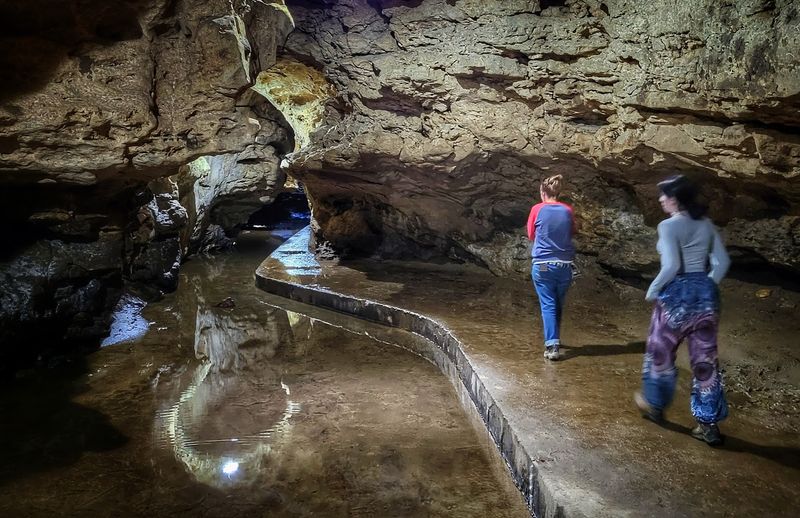
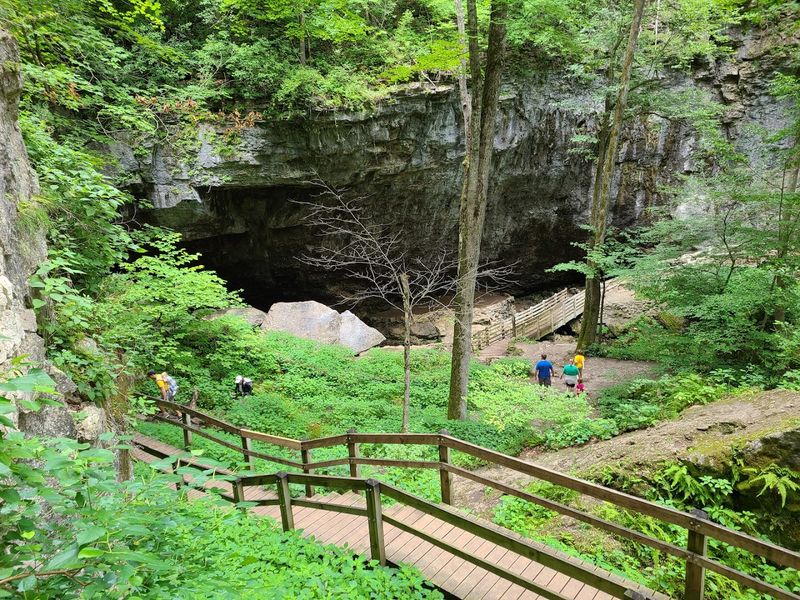
Dancehall Cave is the centerpiece of the park, and it earns that title without any argument.
It is the largest cave on the trail system, equipped with electric lights installed along the interior, so even visitors without flashlights can walk through it comfortably.
The cave stretches long enough that you enter on one side of the main road and exit on the other, passing underneath the pavement entirely.
That moment when you realize you are walking under a road inside a cave tends to get a good reaction from kids and adults alike.
The ceiling is high in the main chamber, giving the space a cathedral-like scale that explains the name. Local legend holds that the cave was large enough for dances and social gatherings in earlier times, and looking at the interior, that story is easy to believe.
Plan to spend at least 15 to 20 minutes inside just taking it in. The electric lighting helps, but bringing a small flashlight still lets you explore the edges and corners that the installed lights do not quite reach.
The Smaller Caves Are Where the Real Adventure Starts
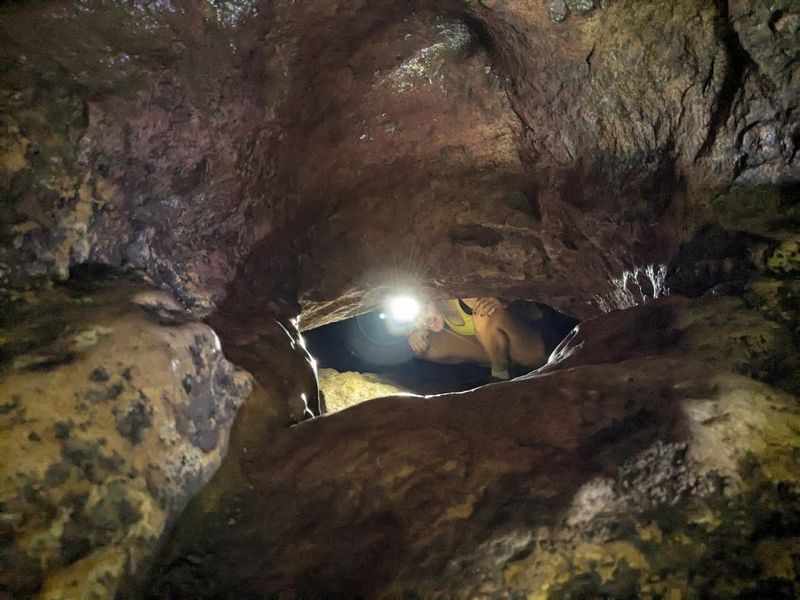
After Dancehall Cave sets a high bar, the smaller caves on the trail system take things in a completely different direction.
Several of them require crawling on hands and knees, and at least one involves squeezing through two tight openings before you can stand up inside.
These are not guided experiences with handrails and lighting. You bring your own flashlight, wear clothes you do not mind getting dirty, and figure out the passage as you go.
That is exactly what makes them fun.
Families with older kids tend to gravitate toward the crawl-through caves because the challenge feels rewarding without being dangerous.
One practical tip that comes up often: a headlamp works better than a handheld flashlight in tight spots because it keeps both hands free for climbing and balancing.
Some visitors have mentioned bringing a black light, which apparently makes certain minerals in the cave walls glow in unexpected ways.
That is the kind of low-cost upgrade that turns a good afternoon into a genuinely memorable one, especially for younger explorers who want something extra to look for.
The Trail System and How to Navigate It Without Getting Confused
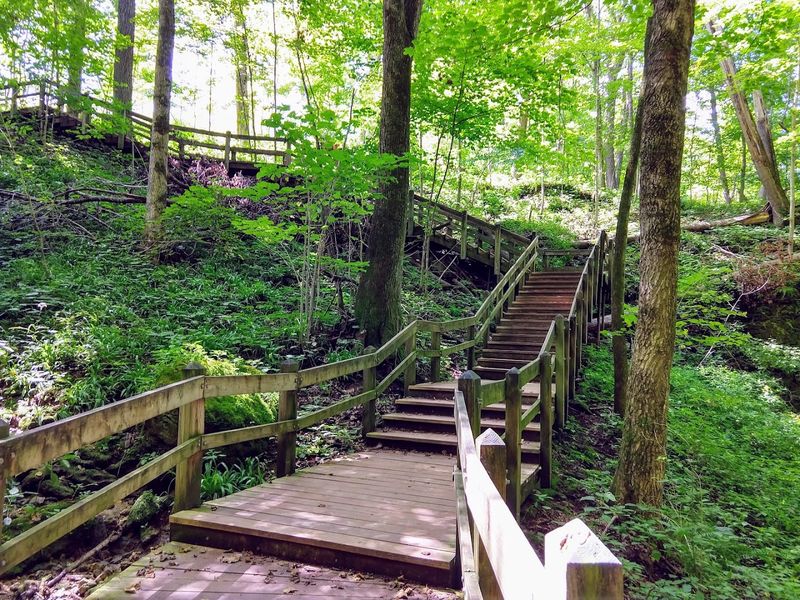
The trail network at Maquoketa Caves covers about six miles in total.
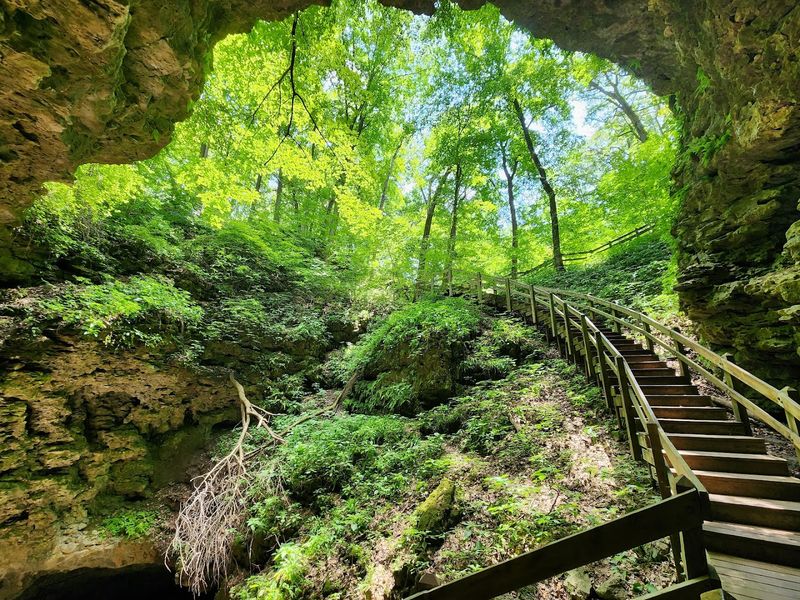
It connets the major caves, limestone formations, scenic overlooks, and park facilities through a combination of packed dirt paths, raised wooden platforms, and a significant number of stairs.
The elevation changes are real, and the stair count adds up fast.
One piece of advice that keeps coming up from people who have hiked the full route: study the park map before you start, then decide how much of the cave loop you actually want to tackle.
The park is compact enough for a focused visit, but the stairs, mud, and cave detours can make the outing feel bigger than the mileage suggests.
Trail signage along the route is decent but not perfect. Grabbing a paper map or downloading one before heading out saves a lot of backtracking.
The caves are labeled on the map, and those labels correspond to signs along the trail, so it is easy to track your progress once you understand the layout.
Current closures can affect the route, including boardwalk and trail closures near some cave sections, so checking Iowa DNR park alerts before you go is worth the minute it takes.
The full cave-and-trail experience can take a few hours at a relaxed pace, though shorter visits are easy if you focus on Dancehall Cave, Natural Bridge, and a few nearby cave entrances.
What to Wear and Bring Before You Head Underground
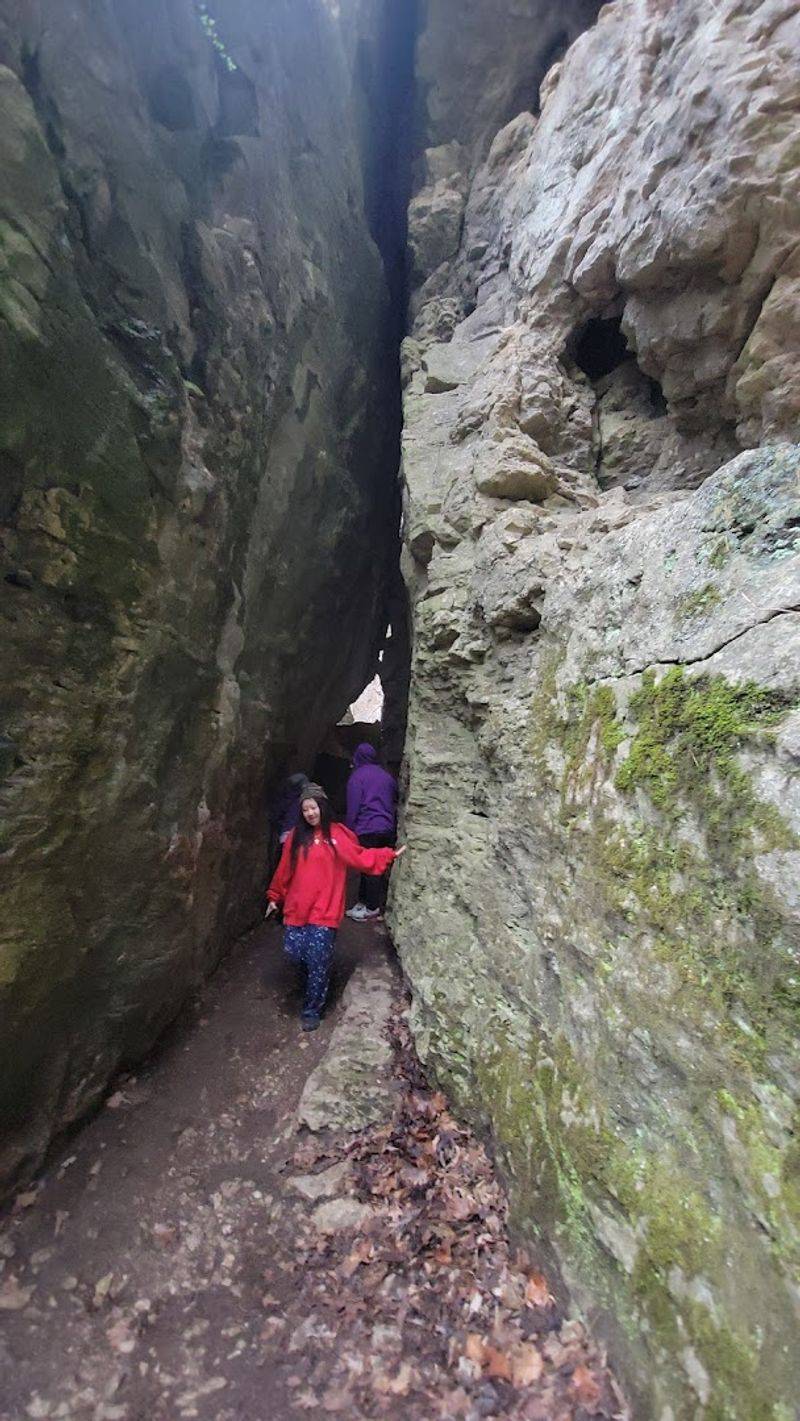
Showing up at Maquoketa Caves in sandals or dress shoes is a decision you will regret within the first ten minutes.
The terrain includes uneven rock, muddy patches, wooden stairs with gaps, and cave floors that get slick when wet.
Closed-toe shoes with grip are the baseline requirement. Hiking boots are ideal, but trail runners work fine for most of the park.
The caves stay cool year-round, so even on a hot summer day, a light layer is worth tucking into a bag for the longer cave passages where the temperature drops noticeably.
Water is easy to overlook on a hike that only covers 2.5 miles, but the combination of stairs, climbing, and warm weather means you will work up a real thirst. Bring more than you think you need, especially with kids in tow.
Old clothes or a change of clothes for the car are worth considering if you plan to tackle the crawl-through caves. The cave floors are not pristine, and kneeling on damp limestone leaves marks.
Nobody who has done this hike properly has come out looking the same as when they started.
Camping at the Park and What to Expect Overnight
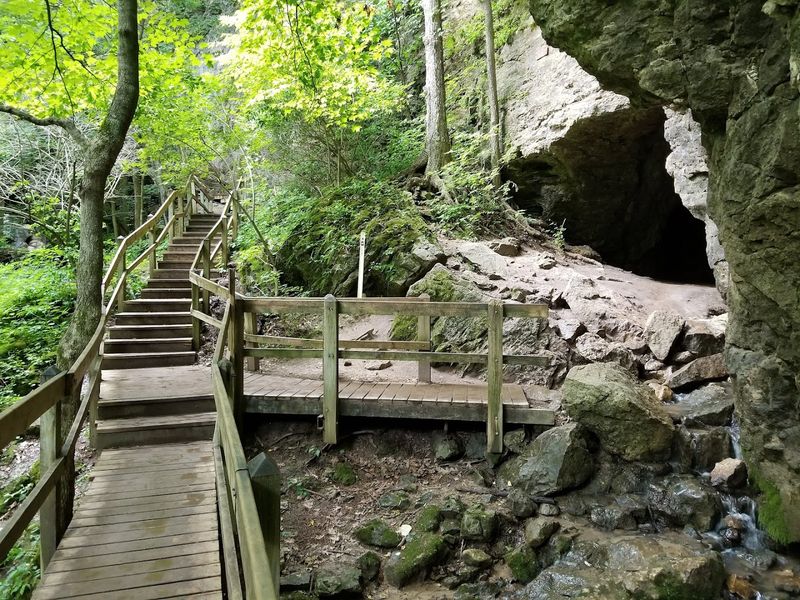
The campground at Maquoketa Caves is small, which is part of its appeal. The sites sit inside a forested area near the cave trails, and on weeknights especially, the whole place can feel quiet and genuinely off the beaten path.
The campground offers electric and non-electric sites, along with modern restroom and shower facilities.
Iowa DNR also lists primitive hike-in sites, and all campsites are reservable with a reservation required.
The campground accepts reservations March through November and is closed December through February, so this is mainly a spring, summer, and fall camping setup.
A children’s play structure is located between the campground and picnic area, and the park’s picnic shelters are available on a first-come, first-served basis.
Because the campground is popular and fully reservable, planning ahead is smart, especially for summer weekends. Same-day camping may be possible through the reservation system, but counting on availability during peak season is still a gamble.
One honest heads-up: this is a wooded campground in a busy state park, so keeping food sealed and stored properly overnight is just good camping practice.
The Natural Bridge and Ice Cave Worth Seeking Out
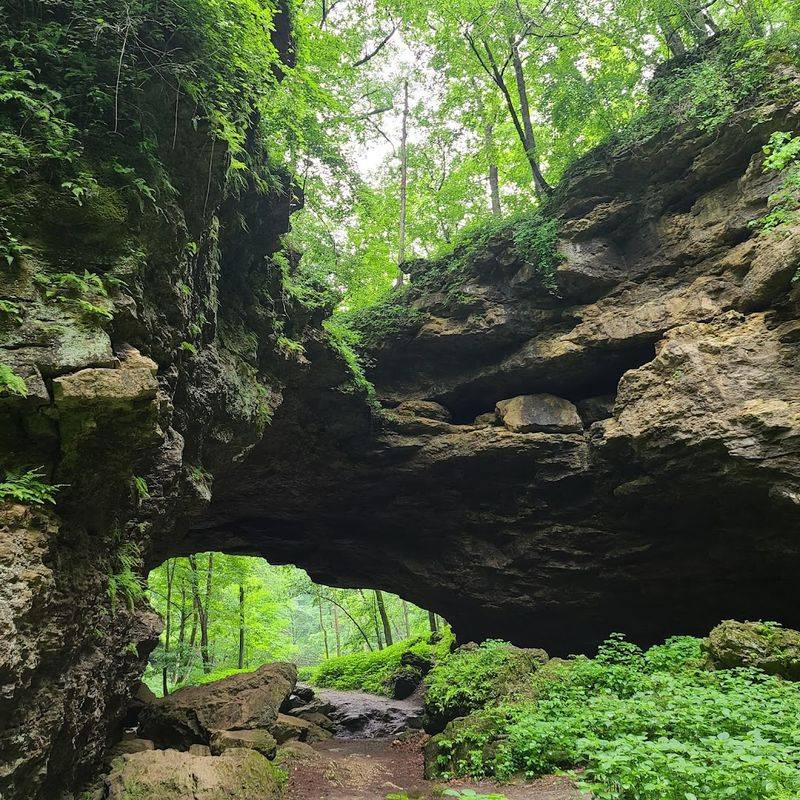
Two features on the trail system tend to get overlooked in favor of Dancehall Cave, but both are worth tracking down on the map.
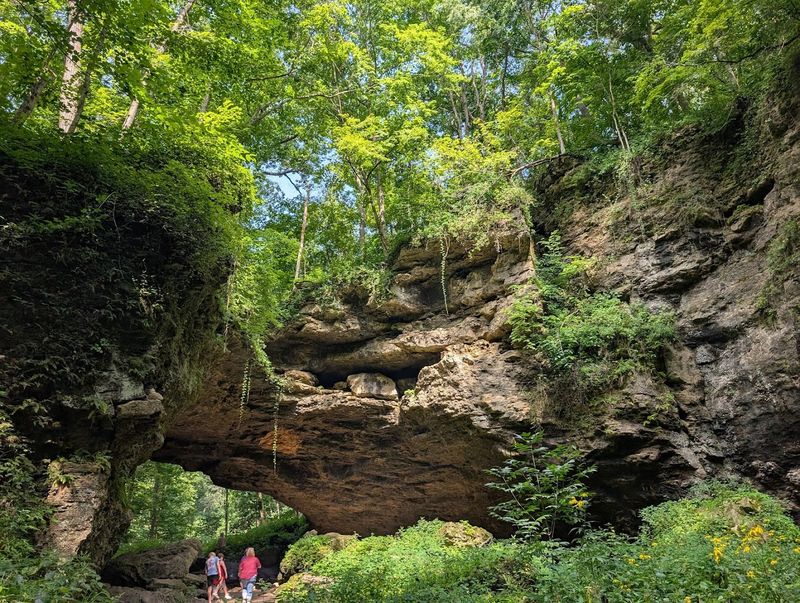
The Natural Bridge is one of the park’s signature formations, standing about 50 feet above Raccoon Creek and adding another dramatic limestone feature to the cave-country scenery.
The Ice Cave earns attention for the simple reason that cave air can feel noticeably cooler than the summer heat outside. Visitors who duck into the colder cave passages on a warm July afternoon tend to linger longer than they planned.
The park also highlights Balanced Rock, a 17-ton formation that gives the trail system another memorable stop beyond the caves themselves.
These features are marked on the park map, though signage on the trail itself can be easy to miss if you are moving quickly.
The Natural Bridge is best appreciated from a slight distance where the full span is visible, while the cooler cave passages are best experienced by actually stepping inside rather than just peering in from the entrance.
Adding these stops to your route makes the park feel less like a single-cave visit and more like a full geological scavenger hunt.
When to Visit and How Busy the Park Gets
The parking lot at Maquoketa Caves fills up faster than most people expect, especially on summer weekends.
Travel Iowa notes that the park has fewer than 150 parking spots and can see as many as 1,500 visitors on a summer weekend day, so arriving early makes a real difference.
By late morning, the lot can be at capacity, which means waiting or coming back later.
Weekday visits are noticeably more relaxed. A Friday morning hike feels completely different from a Sunday afternoon one, with fewer crowds on the stairs and more space to linger inside the caves without a line forming behind you.
Spring visits can be beautiful once the caves reopen, but the caves are closed every year from November 15 until April 1 because they serve as winter habitat for bats. Early-season trails can also be muddy, so sturdy footwear is important.
Fall is a strong second choice for timing. The tree canopy along the trails turns gold and orange in October, and the limestone bluffs look different framed against autumn color.
The crowds thin out after Labor Day, and temperatures in the caves stay comfortable well into the season.
Getting There and How Far It Is From Nearby Cities
Maquoketa Caves sits in Jackson County in eastern Iowa, and the drive in from several regional cities is shorter than most people realize.
From Dubuque, the park is about 30 miles southwest, making it an easy day trip without much planning involved.
Travelers coming from the Wisconsin side of the Mississippi River can reach the park in roughly an hour from the Platteville area. From Cedar Rapids, the drive runs about 90 minutes east on Highway 30 and connecting roads.
From the Twin Cities in Minnesota, the park is around a four-hour drive, which puts it in range for a long weekend.
The address is 9688 Caves Rd, Maquoketa, IA 52060, and GPS navigation handles the route reliably from any major highway.
The final stretch on Caves Road winds through farmland and then drops into the wooded valley where the park sits, giving first-time visitors a hint that the landscape is about to change.
Parking is free, and the park charges no entry fee, which makes the cost of a visit essentially just the gas to get there and whatever snacks you pack for the trail.
Why This Iowa Park Deserves a Spot on Your Short List
Few free outdoor destinations in the Midwest pack this much variety into a single afternoon.
A few hours at Maquoketa Caves can cover limestone bluffs, forested valleys, the 1,100-foot Dancehall Cave, a natural limestone bridge, Balanced Rock, and a handful of passages that require actual effort to get through.
The park’s appeal comes from that mix of easy access and real adventure. Visitors who want a simple walk can focus on Dancehall Cave and nearby overlooks, while more adventurous explorers can follow the trail system deeper into the smaller cave passages.
Scout troops have used it for day outings. Families come for the caves and trails.
Road-trippers from nearby states make detours because the park offers a kind of landscape people do not always expect from Iowa.
That range says something about how broadly the place connects with different kinds of visitors.
Iowa does not always get credit for its terrain, but the cave system at Maquoketa is a legitimate geological feature that stands on its own without needing comparison to anything else.
The park is open daily, costs nothing to enter, and sits close enough to the Iowa-Wisconsin border to work as a multi-state road trip anchor.
Pack a flashlight, check current cave and trail alerts, grab or download a map, and give yourself at least a few hours. The caves do the rest.