Providence is the place to go if you want to argue about food, and a few local dishes can start faster debates than a plate of hot wieners.
In the Olneyville section of the city, one counter has turned a small bun, meat sauce, mustard, onions, and celery salt into a Rhode Island ritual with a paper trail that reaches back to 1946.
The crowd tells you plenty before you take a bite anyway, but the real story sits in the details of this place.
Here is why this address still has to be on your eat to-do list if you want to understand Providence through one meal.
Start With The Words All The Way
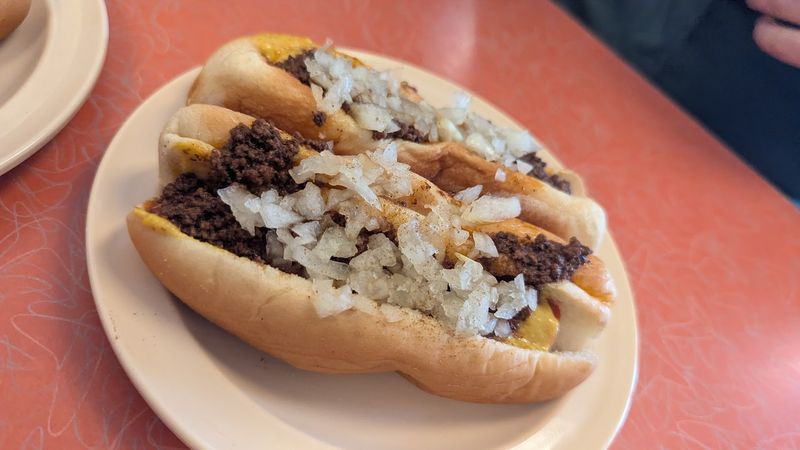
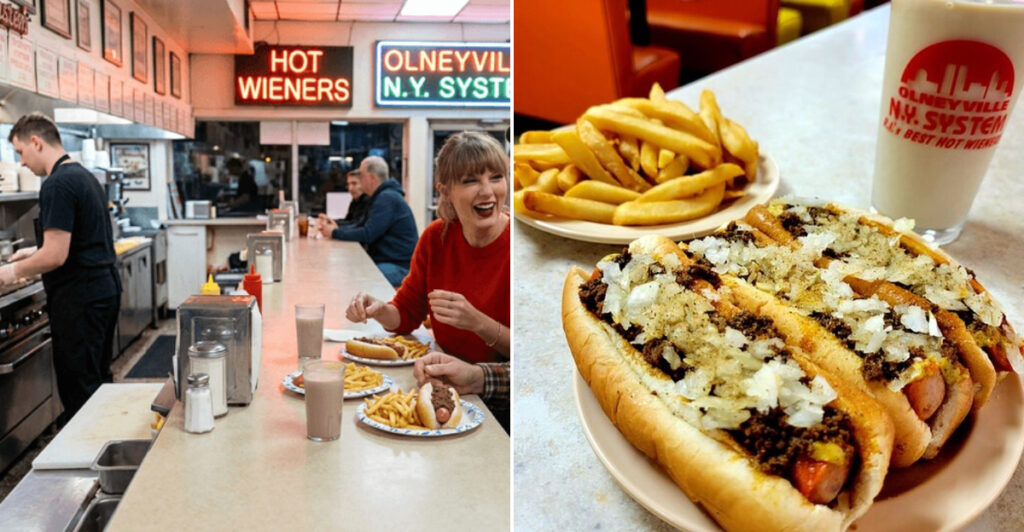
You can learn the whole menu language at Olneyville New York System Restaurant by mastering two words: all the way. That order means a hot wiener in a steamed bun with yellow mustard, seasoned meat sauce, finely chopped raw white onions, and a shake of celery salt.
I’m getting hungry as I’m writing this.
The combination sounds simple, but each topping has a job, and the celery salt matters as much as the mustard. Unlike a typical chili dog, this meat sauce does not behave like chili.
It isn’t that simple, come on.
It positions itself as a fine crumble, not a bean-filled spoonful, and cooks into the bun without drowning it.
Spice notes often include cumin, paprika, chili powder, allspice, cinnamon, and Worcestershire sauce, which explains why one bite reads differently from standard ballpark food. Something for everyone.
Remember, all the way.
That distinction matters because the signature order is not improvised at the counter. It follows a Rhode Island formula that locals recognize immediately and visitors remember after one tray.
Honestly, ordering their hot wieners all the way is a form of self-love. You are not choosing random toppings.
You are stepping into a regional food code that values proportion, repetition, and speed, with each ingredient applied in a fixed sequence that supports the next bite. So what should you watch for first?
Notice how the mustard cuts through the meat sauce, how the onions sharpen the middle, and how the celery salt finishes the top.
An Absolute Providence Institution Since 1946
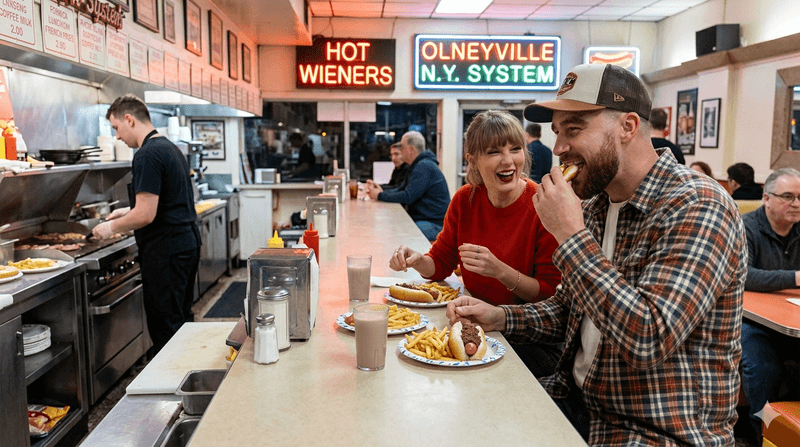
This story begins in 1946, when Greek immigrant Anthony Stavrianakos opened the restaurant with his son Nicholas. A cozy family story that makes me feel good about craving this place so much.
This date places the business in Providence’s postwar food landscape, when neighborhood counters anchored daily eating habits. The address is 18 Plainfield St, Providence, Rhode Island, if you’re already getting dressed to go.
The family line matters too. It always does.
The Stevens family now operates the establishment in its fourth generation.
That continuity helps explain why the food still follows a defined local pattern instead of chasing novelty for novelty’s sake. No microportions for me, please.
Providence changes block by block, yeah, but this restaurant’s timeline gives you a clean point of reference.
It connects mid-20th-century immigration, working-class lunch traditions, and a regional specialty that kept its very own vocabulary. Olneyville New York System Restaurant pays homage to that history does not require nostalgia when the ownership record already does the work.
The origin story also clears up a common misconception. Despite the name New York System, the style evolved into a distinctly Rhode Island food culture through Greek communities.
That makes the restaurant useful as more than a lunch stop because it maps culture, adaptation, and local identity onto one plate. Dates can sound dry on paper, but this one has more heart than most.
The Wieners
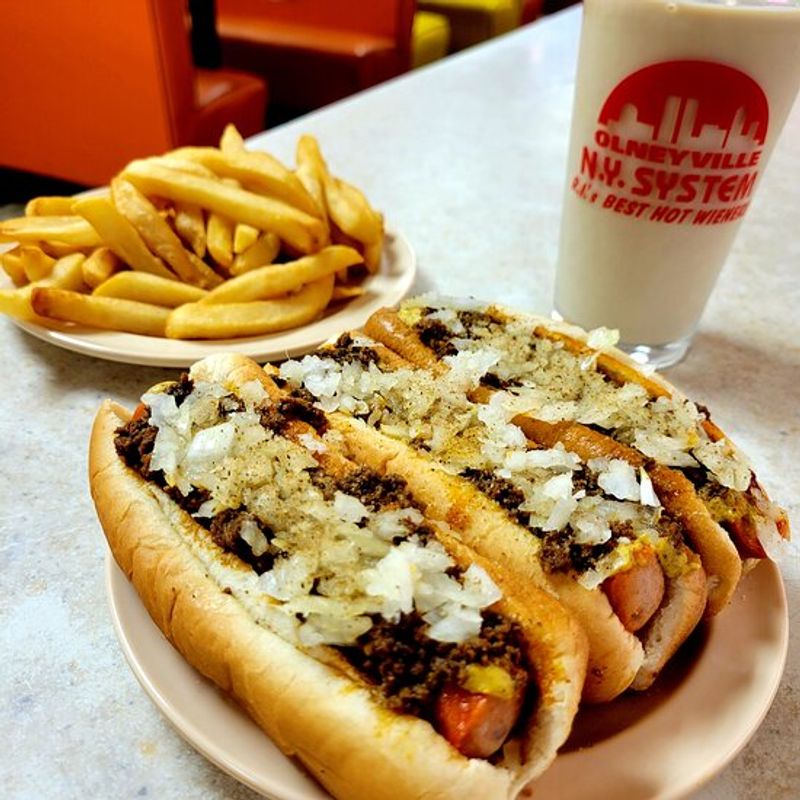
The restaurant’s specialty is the hot wiener, and that distinction is built into the ingredients, the language, and the rules of service. Ketchup does not belong on it, which tells you immediately that this is a defined regional style, not a blank canvas.
They use a blend of different meats, a combination that separates them from the all-beef profile many travelers expect. That meat mix gives the bite a different structure and makes the topping formula work without turning it too heavy.
In Rhode Island, some people also call these wieners gaggers or belly-busters, nicknames that point to the dish’s long life in everyday speech. And everyday guilty pleasure.
This crowd is hot for hot dogs, but the regulars here protect it for a reason. The no-ketchup rule is not arbitrary theater.
Sweet tomato would flatten the spice in the meat sauce and blur the sharp line created by mustard and onions. Once you understand that balance, the ban sounds less like dogma and more like practical editing.
An American icon can still be highly regional, and this one proves it by refusing the country’s default hot dog script.
The Up The Arm Method Is Real Technique

The famous up the arm technique is not a gimmick. Come on, even the name sounds cool.
It is a practical method for assembling multiple hot wieners quickly, with buns lined along a forearm so toppings can be added in sequence.
Once you know the move, you understand that the system in New York System means more than a name. Technique shapes the final product anywhere but especially when it comes to food.
Lining up several buns at once keeps the order uniform, which matters when mustard, onions, meat sauce, and celery salt must land in tight proportion. A single overloaded bun would upset the balance that defines the style.
That is why the preparation draws so much attention. The motion compresses efficiency, repetition, and regional know-how into a few seconds of work.
A sense of place can emerge from a forearm, a row of buns, and a topping pattern repeated thousands of times. You also see why the dish encourages ordering in multiples.
The method suits batches, not solitary hesitation, and the food itself reads best when eaten in rhythm. One wiener introduces the formula, but two or three let you track how the onions brighten one bite and the celery salt lingers on the next.
Then there is the practical side.
The wieners, steamed buns, and a finely textured sauce all support this assembly style better than bulkier ingredients would. Watch the order come together in your mind and ask yourself a useful question.
Why would anyone design such a specific method for an ordinary hot dog? Try the hot dog and reflect.
Coffee Milk And Fries Complete The Rhode Island Lesson
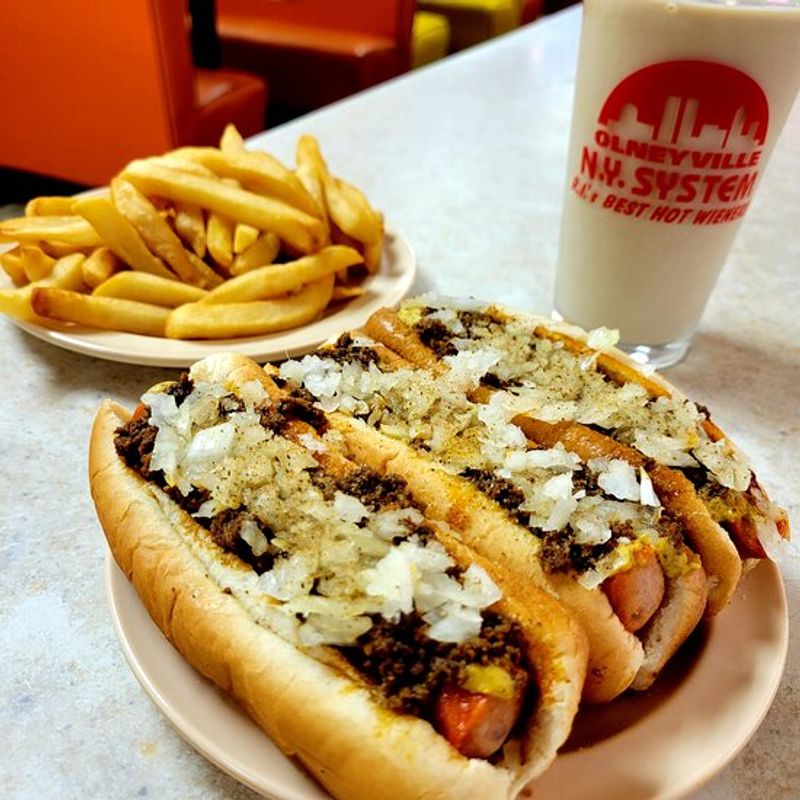
If the wieners teach the main lesson, the side order finishes the course. Traditional accompaniments here include salt and vinegar French fries and coffee milk.
That pairing matters because it keeps the meal anchored in Rhode Island, not just in generic diner territory. Coffee milk carries official status in the state.
Rhode Island recognizes it as the official state drink, which gives the glass next to your tray more cultural weight than a random beverage choice. Its sweet coffee note cuts across mustard, onions, and spice in a way that turns contrast into part of the meal.
The fries follow their own local logic. Ah, they always do.
Salt and vinegar bring direct acidity, which sharpens the palate after the rich meat sauce and the mixed-meat wiener.
The portions are big enough to cure all your craving ailments. That line sounds playful, yet the combination explains why so many people stop at wieners, fries, and coffee milk instead of building a larger order.
Each item does a distinct job, and together they create a full Rhode Island plate with no wasted space. It’s hard to help yourself when the wind blows, and the smell of hot dogs seduces your appetite.
Notice the geography built into that tray.
Coffee milk ties you to state identity, vinegar fries sharpen the edges, and the wieners hold the center. If you want the clearest introduction to local eating habits, skip the detour and let the side dishes make their case bite by bite.
National Recognition Backed The Local Legend
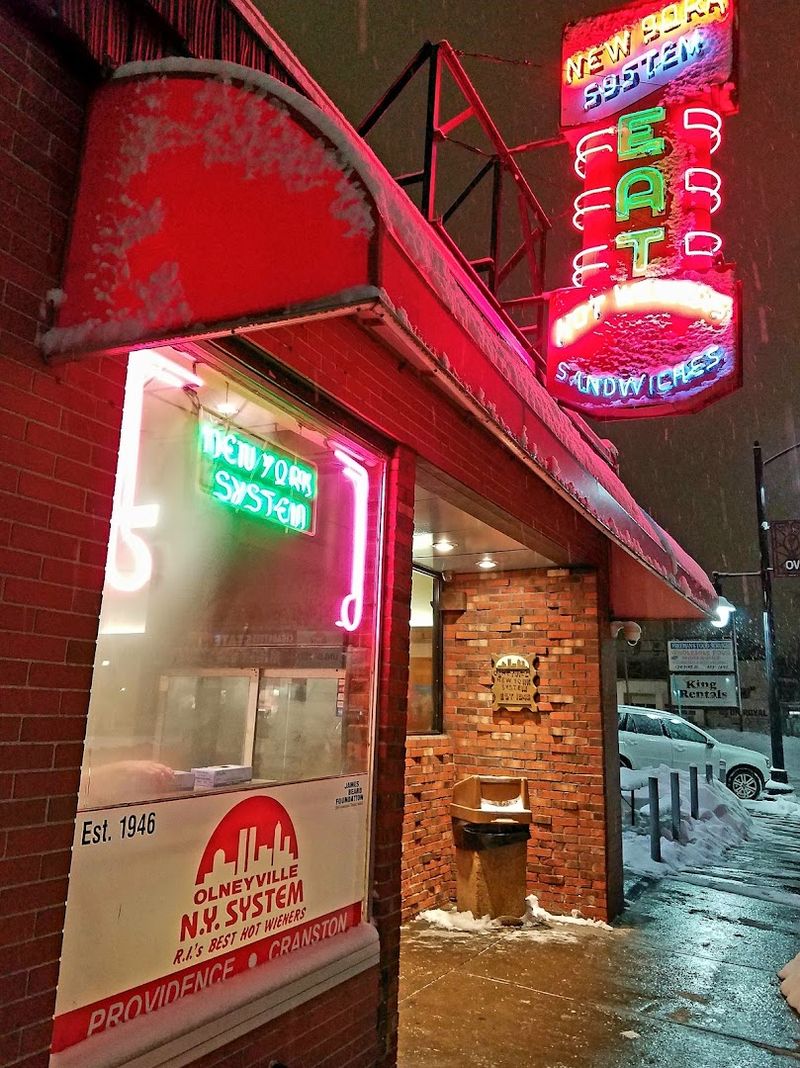
Local fame is one thing. Documented national recognition is another, and this restaurant has that too.
The James Beard Foundation gave Olneyville New York System its America’s Classics award in 2014, placing the restaurant in a category that honors regionally significant establishments.
That award stands out because it recognizes a specific kind of importance. America’s Classics does not celebrate trend-chasing menus or decorative plates.
It points to places that define a local food tradition clearly enough to represent it on a national stage.
Television helped widen the audience after that. The restaurant has appeared on Man v.
Food Nation and The Best Thing I Ever Ate, two programs that introduced its hot wieners to viewers well beyond Rhode Island.
Culinary figures such as Guy Fieri and Alton Brown have also acknowledged the quality of its wieners. I trust the pros when they say something is worth it.
Those mentions do not change the food itself.
They do, however, confirm that a small regional specialty can hold attention even when judged against broader American eating habits. That matters if you want proof that the dish’s reputation rests on more than hometown loyalty.
The stronger point is this: recognition arrived without changing the core order. The same all-the-way formula, the same mixed-meat wiener, and the same Rhode Island sidekicks carried the restaurant into national conversation.
If awards usually make you suspicious, use that skepticism wisely and test the evidence at the counter with your own notebook.
The Name Explains A Whole Food Migration
The phrase New York System sounds geographic, but the real story runs through migration. The style traces back to Greek immigrant communities connected to New York, then took shape as a distinct Rhode Island food culture.
That twist explains why the name points one direction while the finished dish belongs to another place entirely. Food history often gets flattened into slogans.
It’s just a modern reality.
Here, the chain of movement matters because it links immigrant entrepreneurship to a durable local specialty. The restaurant’s menu preserves that lineage in everyday language each time someone orders wieners all the way.
You can read the plate as a map. The mixed-meat wiener, the steamed bun, the seasoned meat sauce, and the Rhode Island habit of pairing it with coffee milk all show adaptation in action.
Pay attention to the result, not the label, and the state identity becomes obvious. That identity also explains why Providence guards this dish so closely.
Don’t tell the locals I told you about it.
Regional foods survive when people keep their terminology, defend their toppings, and pass down the form without sanding off the sharp edges. This restaurant stands as one of the clearest examples because the menu still teaches the language that built it.
In practical terms, the name invites a question, and the tray answers it. Why call it New York System if Rhode Island owns the ritual now?
Order Olneyville New York System Restaurant’s local specialty, follow the wording, and let the history lesson arrive in a steamed bun before your curiosity cools.