What if the meal everyone talks about is not the one with the biggest sign out front? In Pennsylvania, generations of cooking traditions still shape plates in ways that feel wonderfully unchanged.
Fresh bread, hearty comfort dishes, and recipes passed through families for decades create the kind of food that grabs your attention from the first bite.
The real fun comes from discovering how much history can fit onto a single table. Pennsylvania continues to celebrate these traditions through restaurants that stay true to their roots while serving food people genuinely crave today.
By the time the main course arrives, the story behind the recipes becomes part of the experience. That combination of heritage, flavor, and authenticity is what makes Pennsylvania such a rewarding place for anyone who appreciates a memorable meal.
A Restaurant Built On Amish Family Ownership Since 2008
Long before you scan a menu, one fact explains why this Katie’s Kitchen matters in Ronks.
An Amish family owns and operates it, and the business opened in 2008.
The restaurant is bustling in the current era of Lancaster County tourism while keeping its cooking tied to older Pennsylvania Dutch foodways. That ownership structure shapes the menu in direct ways, too.
This spot serves both Pennsylvania Dutch dishes and authentic Amish cuisine, which means you are not looking at a vague country menu with a few regional names dropped in for effect.
Instead, the food points to dishes with established local roots, including creamed beef, chicken pot pie in the Lancaster County style, ham loaf, and shoofly pie. The place asks you to slow down before you even enter.
It is a good sign for the experience you’re about to have.
Why does that matter when you sit down to eat?
Listen.
A restaurant built around scratch cooking and tradition usually tells you more through what it serves than through any slogan on a wall.
In practical terms, this is a family restaurant that has spent more than a decade and a half serving breakfast, lunch, and dinner in one of the best-known Amish regions in the country.
That history gives you a useful baseline. Who doesn’t enjoy a cozy family-owned spot in today’s loud, trend-driven dining world?
You are not testing a fresh concept here. You are ordering from a place that has had time to define what it cooks and why those dishes belong in this part of Pennsylvania.
Start with the item that sounds most local to you, then let the second visit make you curious.
Why The Ronks Location Plays A Huge Role
Location can tell you what a restaurant cooks before the first plate does.
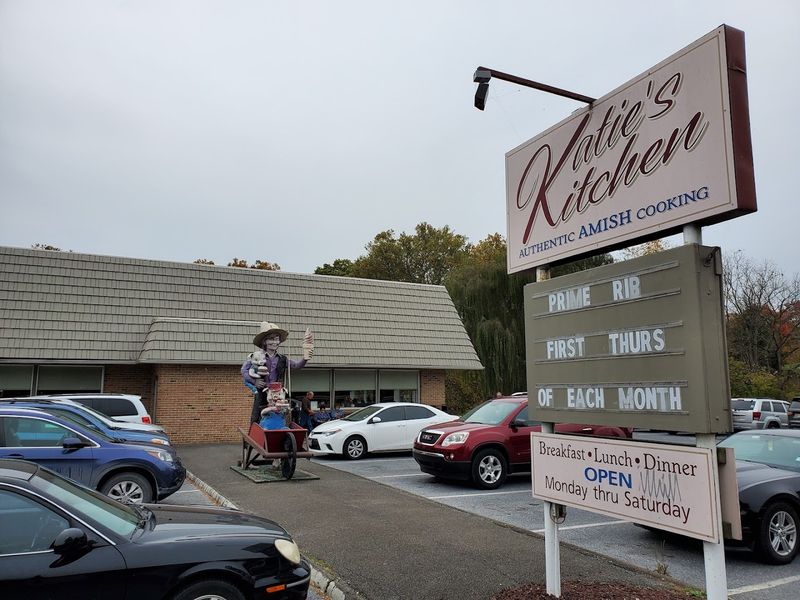
Katie’s Kitchen sits at 200 Hartman Bridge Rd, Ronks, Pennsylvania, in Lancaster County, a region widely recognized for its prominent Amish community. That matters because local food traditions hold on more firmly where the surrounding culture still supports them.
Here, the setup gives you three clear ways to eat.
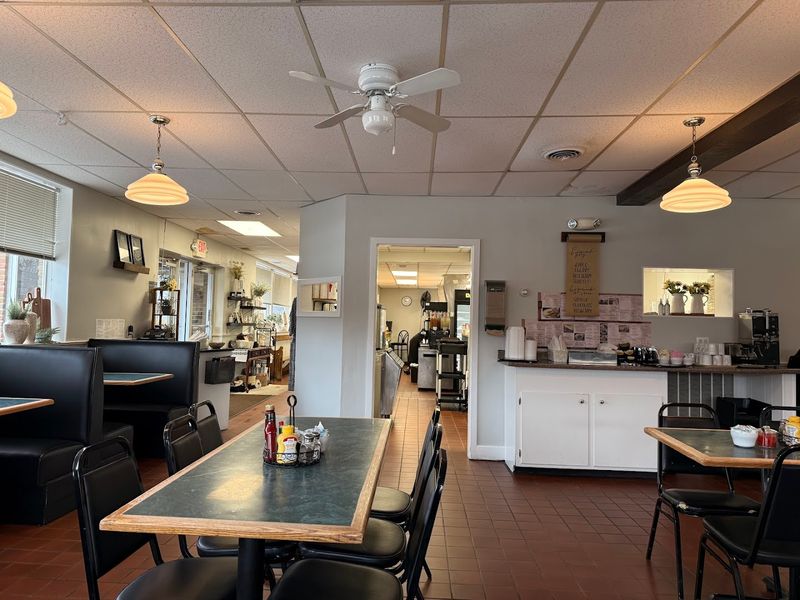
Guests can choose a dining room, a lunch counter with a view into the kitchen, or shaded picnic tables outside.
Those options are not decorative extras. Not here, at least.
They show a restaurant built for regular meals, quick stops, and longer family tables without changing what comes from the menu.
The lunch counter says something important on its own. You can watch plates move out of the kitchen, which puts the mechanics of the meal in plain view.
For a style of cooking tied to scratch preparation, that visibility adds context.
You see food as daily work, not as a staged performance for interested tourists. Then the picnic tables.
How cute is that, by the way?
Outdoor seating under shade may sound simple, yet in this stretch of county roads and farmland, simple usually proves useful. If you want your apple dumpling or sandwich in the open air, the restaurant already has a factual answer ready.
Rushing is not recommended. Come on, you deserve a break.
Pick the seat that fits your pace, then order the plate that makes the map pin worth saving.
Breakfast Turns Regional Dishes Into The Main Event
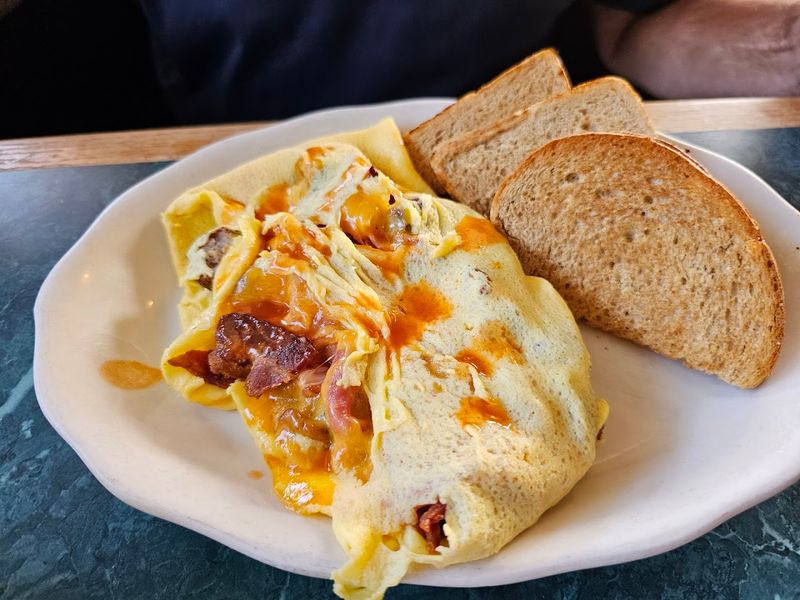
Breakfast here does not lean on generic eggs-and-bacon shorthand.
It uses specific dishes to mark out local style.
The Dutchman Special, for example, pairs creamed beef with homemade toast and homefries, which gives you a breakfast tied to Pennsylvania Dutch cooking instead of a standard diner template.
The menu shifts into stacked territory. You don’t have to say it, I will.
We want real portions of real food.
The Breakfast Haystack layers an English muffin with crumbled bacon, fried potatoes, grilled onions and peppers, sausage gravy, eggs, and cheese sauce.
That is not a random pile at all. Each part names exactly what you are getting, and the result reads like a full breakfast plate arranged vertically.
Another option, the Amish Benedict, swaps classic hollandaise for sausage gravy and adds Swiss cheese on an English muffin with eggs. That single change tells you plenty about the kitchen’s direction.
It adapts a familiar American breakfast format through ingredients that show up more naturally in this regional style. Fried cornmeal mush completes the picture and your appetite.
You do not see it on every breakfast menu in Pennsylvania.
When a restaurant keeps cornmeal mush in the lineup, it signals confidence in older breakfast habits that have not disappeared here.
A meal you know was made with steady hands and a steady heart.
Lunch And Dinner Focus On Pennsylvania Standards
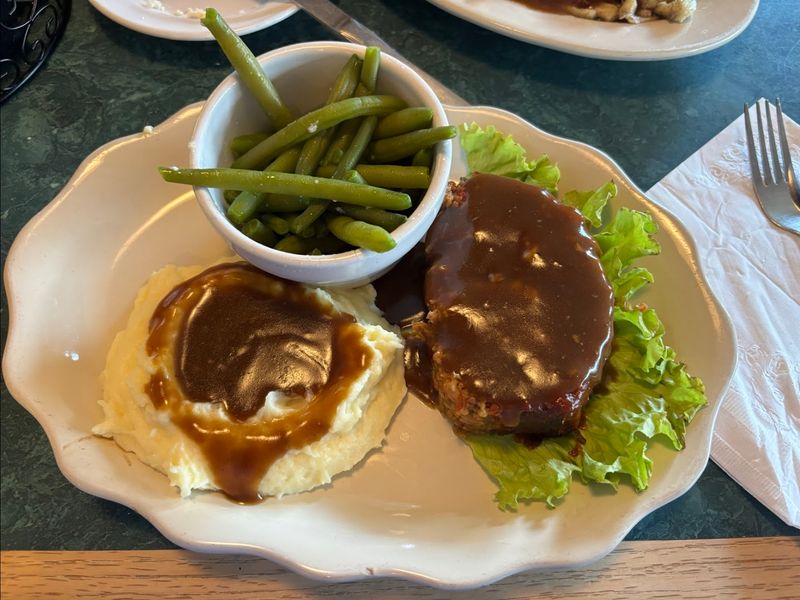
Lunch and dinner here feed you the best when you read the menu as a guide to regional staples. Homemade meatloaf appears because it belongs in the category of dependable everyday dishes. That never needed reinvention.
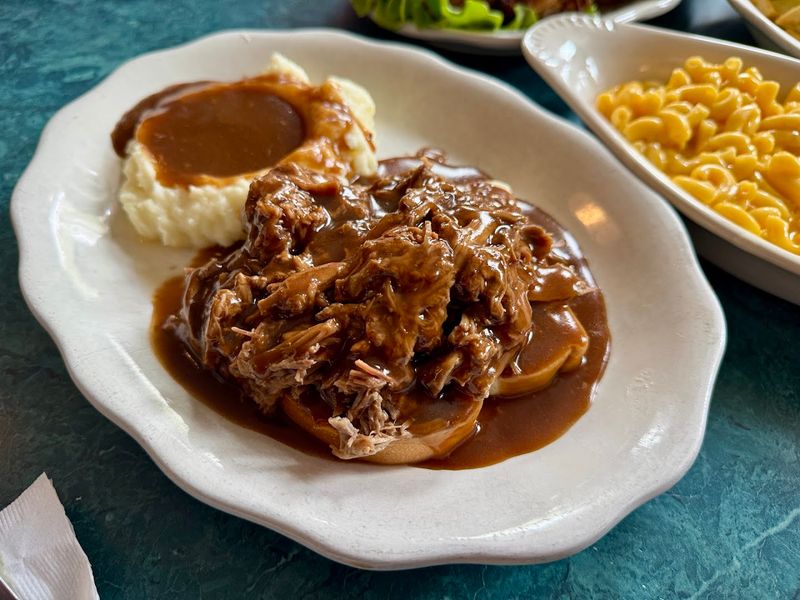
That is also why an open-faced roast beef sandwich arrives on homemade bread with mashed potatoes.
The strongest example may be the chicken pot pie. In this part of Pennsylvania, that dish often follows the local chicken-and-dumpling model instead of the enclosed pastry form many people expect.
So when you order it here, you are not chasing novelty. Not here, friend.
You are eating a version that fits Lancaster County usage.
Ham loaf also deserves attention because it marks a very specific regional habit. You can find meatloaf across the country, but ham loaf carries a more direct Pennsylvania Dutch identity.
The menu’s inclusion of buttered noodles next to these heartier mains keeps the meal grounded in the plain, filling side dishes that support them.
The food mirrors the peaceful tradition. Something we all need more of. That phrase only works because the dishes themselves stay concrete.
Roast beef on homemade bread, mashed potatoes under gravy, and pot pie in the local style all point to meals designed to satisfy hunger with recognizable ingredients and practical cooking methods.
If you usually skip the open-faced options, this is the moment to change your rules. And perhaps your taste in dining.
Dessert Keeps The Regional And The Dining Story Going
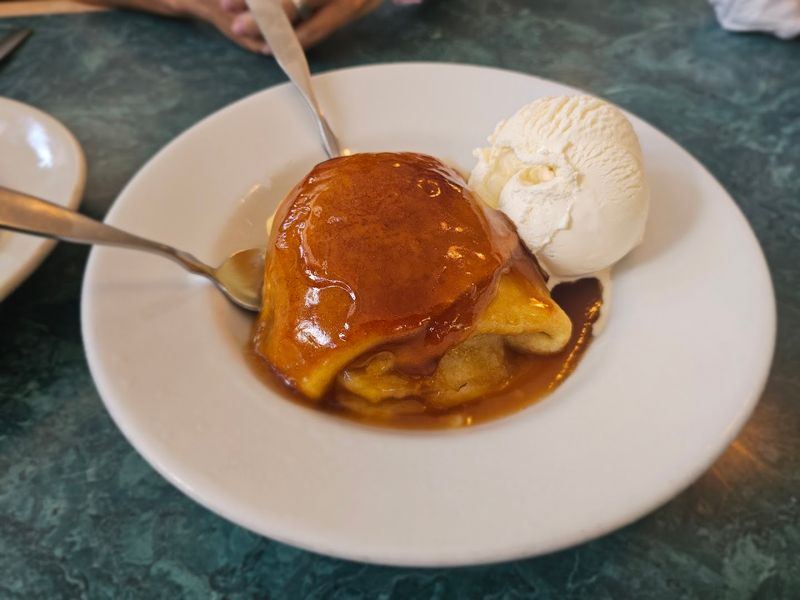
The desserts here are just as steady as the rest of this charming little place. It extends the same regional story you get from the main menu.
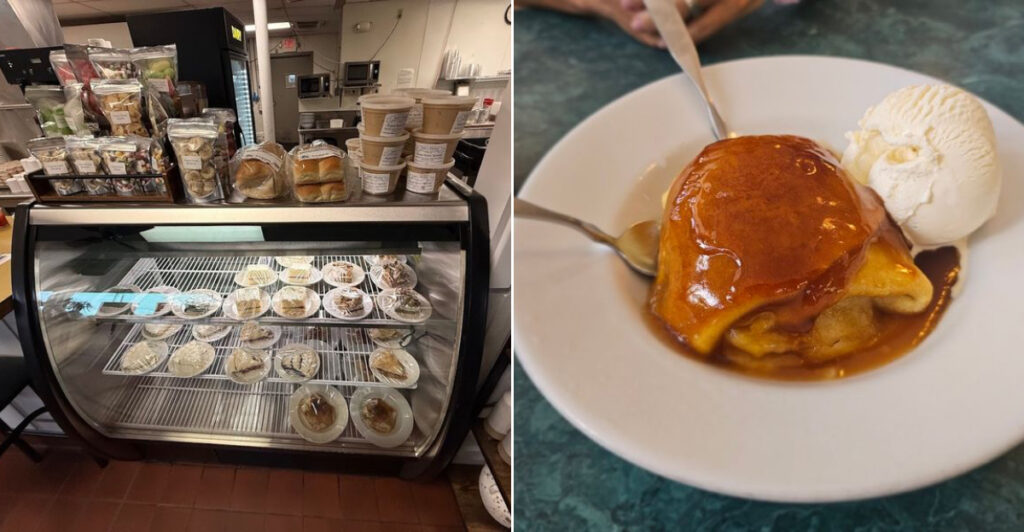
Homemade pies, apple dumplings, whoopie pies, and homemade vanilla ice cream keep the focus on recognizable Pennsylvania Dutch and Amish sweets with specific names and long local histories.
The apple dumpling gives you the clearest example.
The restaurant can serve it with ice cream, a pairing that turns a baked fruit dessert into a fuller plate without changing its identity.
That combination is worth all this rave and crave because the dumpling already carries weight as a traditional sweet, and vanilla ice cream adds contrast without competing for attention.
Whoopie pies also matter for anyone tracking regional food instead of generic dessert trends.
Here, they come in flavors such as pumpkin or chocolate.
Those flavor options keep the format familiar while still giving you a choice between a classic cocoa version and a seasonal-leaning variation that many Pennsylvania bakers know well.
Ah, then the pie.
A restaurant that lists homemade pies alongside dumplings and whoopie pies tells you it understands dessert as a category built on baking, not just refrigeration.
In Amish-style cooking, scratch preparation and longstanding recipes shape the menu from breakfast through the last bite of the outing.
If you think dessert sounds optional after a full meal, I’d love to see you claim that here.
The Extras On The Way Out Will Melt Your Heart
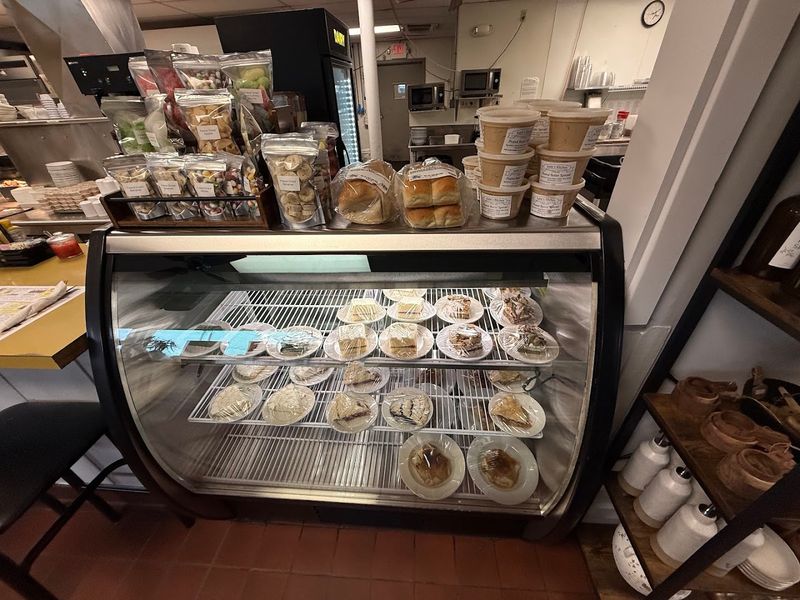
Some restaurants treat retail shelves like a side hustle. For most of them, they are.
Here, though, the items for purchase line up with the kitchen’s core identity.
Homemade jams, jellies, and Amish peanut butter spread connect directly to the kinds of preserved and pantry foods that appear across Amish and Pennsylvania Dutch cooking.
The peanut butter spread stands out because it signals a regional habit that surprises first-time visitors. This is not standard supermarket peanut butter passed across the table with no explanation.
In Amish-country restaurants, a sweet peanut butter spread often arrives as a familiar companion to bread, and seeing it available for purchase turns one bite into something you can take home.
Jams and jellies are show-stoppers in their own right, too.
Preservation has long mattered in Amish cooking, where seasonal produce and practical storage methods shape the yearly table.
When a restaurant offers jars to go, it links the meal in front of you to the broader tradition of canning and keeping fruit beyond peak harvest.
Katie’s Kitchen offers takeout for all menu items, which means the restaurant does not draw a hard line between the dining room meal and the food you want later.
That policy turns dinner into lunch tomorrow, or dessert tonight into breakfast table temptation the next morning.
Grab the spread or a jar on the way out, and let your kitchen carry the reminder.
Why The Cooking Style Lands So Clearly On The Plate
The menu really comes into focus once you understand how Amish kitchens approach food. It reflects a way of cooking built on real farm life and everyday hands-on preparation.
Eggs, milk, butter, garden vegetables, and locally raised meats form the backbone of almost everything here. These ingredients come from nearby farms and are prepared from scratch in a way that keeps everything honest and full of natural flavor.
Nothing about it feels industrial or overcomplicated. It is the kind of cooking that feels deeply connected to the land, where simple ingredients are handled with care and turn into something far more satisfying than you expect.
It also favors scratch preparation, recipes passed through generations, and slow cooking methods that can take hours to develop a dish fully. That background helps explain why the restaurant’s signature foods read the way they do.
Creamed beef over homemade toast, meatloaf, roast beef with mashed potatoes, and pies from the dessert list all fit a cooking tradition built on pantry staples and practical technique.
Nothing depends on novelty. This place actually cares about your hunger.
Everything depends on execution and continuity.
Cast-iron skillets hold a visible place in many Amish kitchens, and preservation methods such as canning and pickling remain important across the broader food culture.
Seasonal ingredients are also a huge part of this lovely story.
When you look at jams, noodles, dumpling-style pot pie, and breakfast plates heavy with eggs and potatoes, the pattern becomes easy to trace. That pattern is more important than any single dish.
Why else do these foods keep their place across generations?
Because they solve the same problem every day.
Feeding people with ingredients close at hand and methods that reward patience. Order the dish that sounds oldest, not newest.
That choice drops you straight into the kitchen’s real language, and your appetite already knows how to read it.