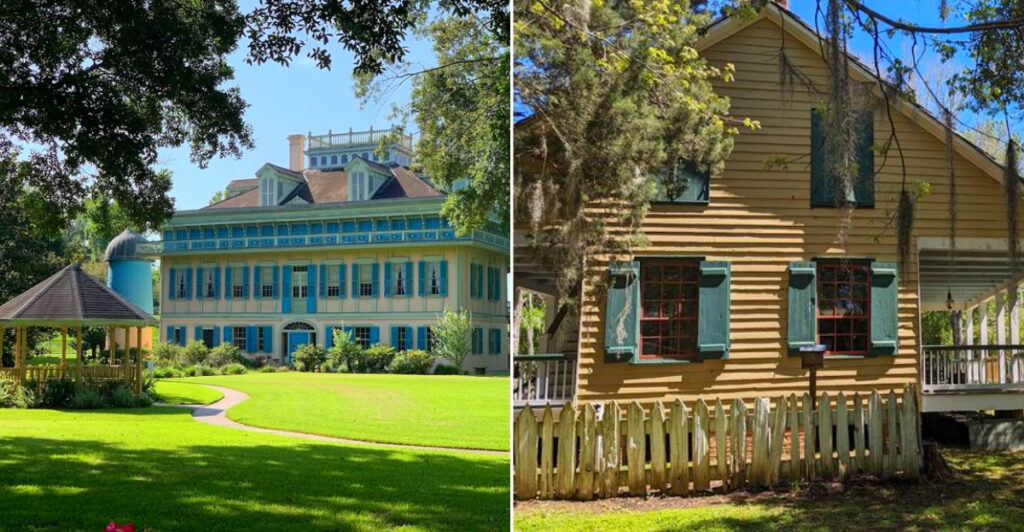
There is something about walking through a preserved nineteenth-century village that no museum exhibit can replicate.
The creak of wooden floors beneath your feet, the smell of aged timber, plus the quiet hum of a place where people actually lived and worked bring history into focus in a way textbooks never manage.
Across this state, restored settlements invite visitors to slow down and experience what daily life looked like for the communities who shaped the region. Some focus on Acadian heritage with original homes dotting shaded paths.
Others showcase plantation complexes or small-town main streets frozen in time. Each destination tells a different chapter of the same long, remarkable story.
Walking through these sites is not passive observation but genuine immersion in the textures of another era.
Twelve historic villages across Louisiana offer hands-on experiences that turn a simple afternoon into a genuine journey through centuries of culture, resilience, and discovery.
12. Laurel Valley Plantation
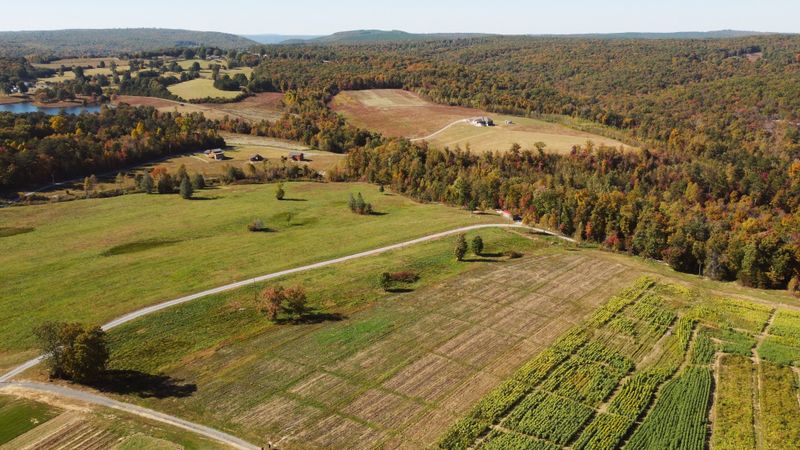
Along Highway 308 at 595 Highway 308 in Thibodaux, weathered cottages stretch through what remains the country’s largest surviving nineteenth- and twentieth-century sugar plantation complex.
The arrangement resembles a rural company town because homes, a store, a school, places of worship, and industrial structures once supported an entire working community.
The site is still surrounded by active sugarcane land, but its surviving buildings offer a direct view into the lives of laborers who sustained the plantation across slavery, emancipation, Reconstruction, and the later company-town era.
Small cabins stand close together, creating a very different impression from historic sites centered almost entirely on a grand mansion.
Guided village tours are generally offered every day at 10 a.m. and 2 p.m. and last approximately 90 minutes. Advance booking is recommended, particularly when making a special trip from outside the Thibodaux area.
For a livelier introduction, the Laurel Valley Acadian Heritage Spring Festival takes place on April 26, 2026, from 10 a.m. to 4 p.m. Arts and crafts, Cajun food, music, and community activity fill the grounds around the village store.
11. Vermilionville Historic Village
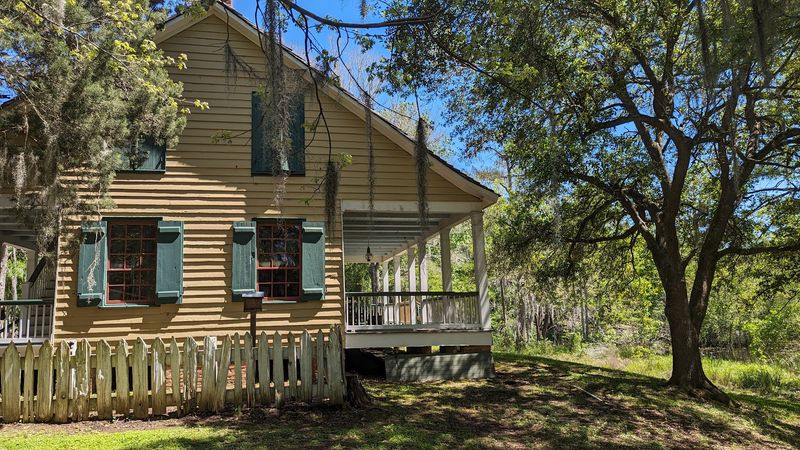
Beside Bayou Vermilion at 300 Fisher Road in Lafayette, restored and reconstructed buildings create an expansive introduction to Acadian, Creole, Native American, and African-descended life in southern Louisiana.
Interpreters and artisans help keep the village from feeling static.
Depending on the day, visitors may encounter traditional music, cooking, spinning, woodworking, gardening, or discussions about how language and culture developed across Acadiana.
Original and period-style homes reveal how architecture responded to heat, rain, flooding, and the materials available locally.
The bayou is not simply decorative scenery. It explains why settlements formed here and how waterways connected families, trade, fishing, farming, and travel long before modern roads dominated the region.
Live programming is a major reason to check the calendar before visiting.
The 2026 Créole Culture Day celebration was held on June 7, while Bal du Dimanche continues with Cajun and Creole dancing on selected Sundays.
The June 28, 2026, dance features Cajun Fire from 1 to 4 p.m., with admission also covering a self-guided village tour.
Regular hours run Tuesday through Sunday from 10 a.m. to 4 p.m. Arrive before 3 p.m., since the full route takes at least an hour and deserves more time than a hurried final lap.
10. LSU Rural Life Museum
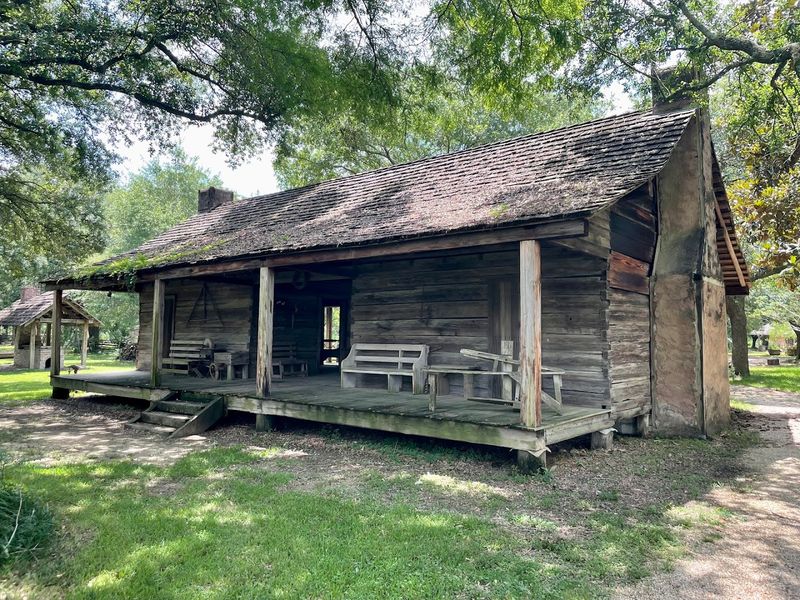
Across 25 acres at 4560 Essen Lane in Baton Rouge, more than 30 historic buildings create one of Louisiana’s most substantial open-air collections of rural architecture.
Instead of presenting one idealized version of the past, the grounds are divided into areas that examine different communities and economic systems.
Raised Gulf Coast buildings, upland cabins, Acadian homes, barns, workshops, kitchens, a church, a schoolhouse, and plantation structures demonstrate how geography and social position affected daily life.
The Working Plantation section addresses the labor of enslaved people whose work supported agricultural wealth, while other areas examine small farmers, craftspeople, and families living across Louisiana’s varied regions.
Tools, furnishings, agricultural equipment, and household objects provide a material record of routines that written histories often overlook.
Special programs make the buildings feel active again. The 2026 summer calendar included Fiddlin’ With The Finest on June 13, while an Orchid Show and Sale will occupy the museum area on July 11 and 12.
9. LARC’s Acadian Village
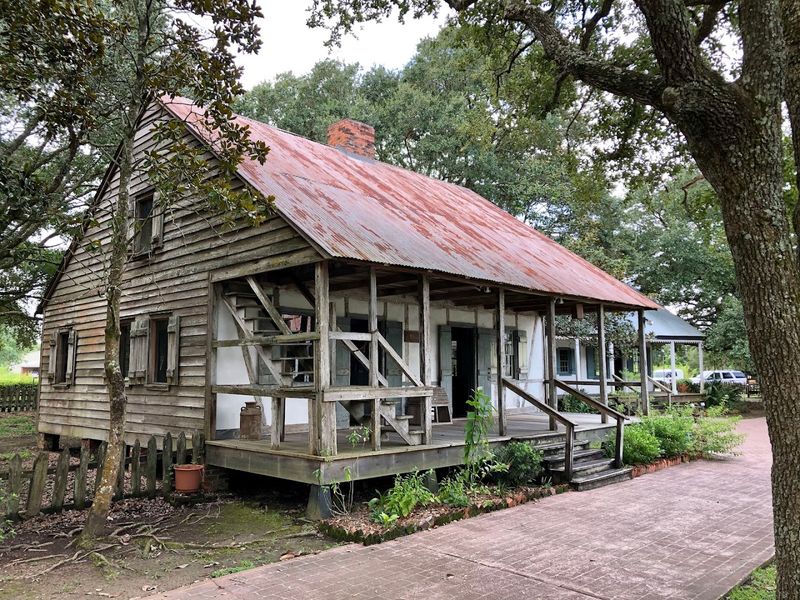
Under broad oak trees at 200 Greenleaf Drive in Lafayette, a collection of nineteenth-century Acadian homes surrounds a small bayou, chapel, blacksmith shop, general store, and other village structures.
Several buildings were moved from surrounding communities and furnished to illustrate domestic life in early Acadiana. Small bedrooms, porches, kitchens, tools, and religious objects make it easier to understand how families organized limited space and adapted European traditions to Louisiana’s climate.
The experience is compact enough to explore without exhaustion, yet detailed enough to reward careful observation. Visitors can compare construction methods, study handmade furniture, and notice how community life revolved around family, faith, work, and shared cultural practices.
Self-guided tours are available Monday through Saturday from 10 a.m. to 4 p.m. Guided group visits should be arranged in advance and usually take between 90 minutes and two hours.
8. The Cajun Village
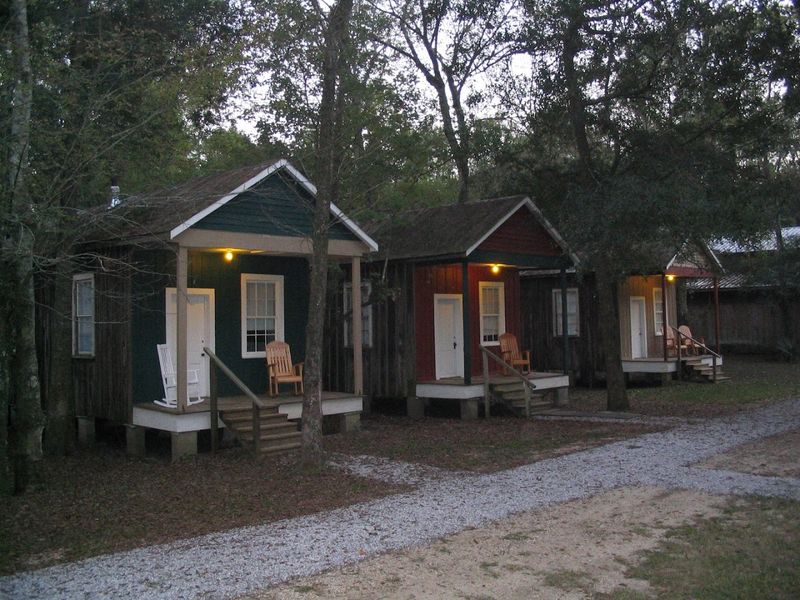
Along the highway at 6490 Highway 22 in Sorrento, a cluster of restored Acadian-style buildings turns an ordinary roadside stop into a small historic settlement filled with food, shops, antiques, and overnight cottages.
Eight of the cottages are shotgun-style homes dating to around 1900.
They were saved from areas near Baton Rouge’s Spanish Town neighborhood and moved to this quieter setting, where their narrow proportions, porches, and simple rooflines remain easy to examine.
Unlike a formal living-history museum, the complex operates as an active collection of businesses. Historic buildings contain gift shops and specialty stores, while the Coffee House serves beignets, café au lait, breakfast, and Louisiana comfort food.
That commercial use gives the village a casual rhythm rather than requiring visitors to follow a prescribed tour.
No major public festival dates have been announced for 2026, so this is better treated as a flexible year-round stop than an event-centered destination. The coffee house generally opens daily, while individual shop schedules can vary.
7. Zachary Historic Village
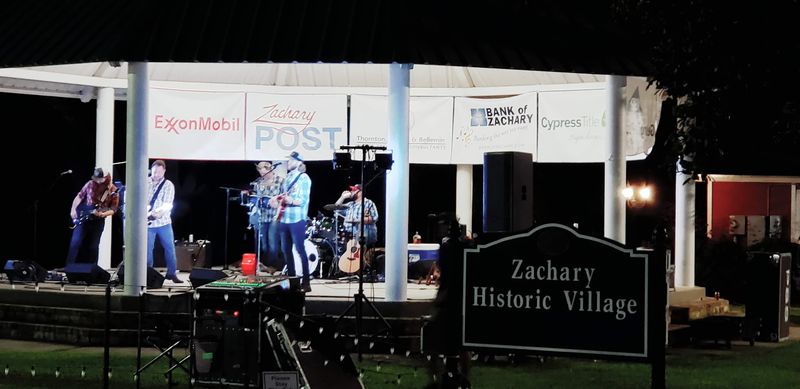
Within a two-block section of downtown Zachary, eight preserved buildings illustrate how a small railroad community developed from the late nineteenth century through the middle of the twentieth.
The village is centered near 4525 Virginia Street and includes historic dwellings, a barn, carriage house, pavilion, railroad depot, Old Town Hall, and former fire station.
Together, they create the sense of a compact Main Street community rather than a collection of unrelated artifacts.
Zachary grew around the arrival of the railroad, and the depot remains central to understanding that transformation. Tracks and commerce connected the town to larger markets, while civic buildings, homes, and businesses gradually formed around the new transportation route.
Some interiors have limited access, and the Old Town Hall is undergoing renovation as a city museum and archive. Even so, the district remains worthwhile as an outdoor walking destination, especially when combined with surrounding downtown businesses.
The weekly Zachary Farmers Market adds activity every Saturday from 9 a.m. to 1 p.m. at nearby HugYourPeople Community Park, 4412 Lee Street, directly beside the historic district entrance.
6. Destrehan Plantation
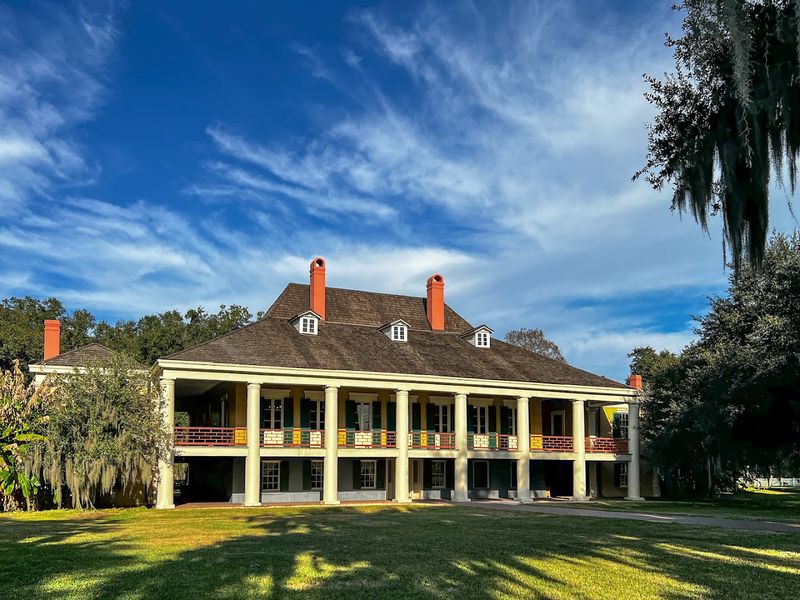
Only a short drive from New Orleans, the complex at 13034 River Road in Destrehan combines one of the Lower Mississippi Valley’s oldest documented plantation houses with cabins, workshops, museums, gardens, and agricultural buildings.
Guided tours examine the architecture and families associated with the estate, but the fuller story extends far beyond the main house.
Exhibits address enslaved labor, the 1811 German Coast uprising, the plantation economy, sugar production, and the experiences of formerly enslaved people who established the nearby Rost Home Colony after the Civil War.
That broader interpretation is essential. Decorative rooms and fine craftsmanship reveal accumulated wealth, while surviving documents and reconstructed spaces help explain who produced it and under what conditions.
Several 2026 programs offer reasons to plan around a specific date. The annual Fall Festival will take place November 14 and 15 from 9 a.m. to 4 p.m., bringing more than 150 arts-and-crafts booths, food, music, children’s activities, and antique sellers to the grounds.
5. Kent Plantation House
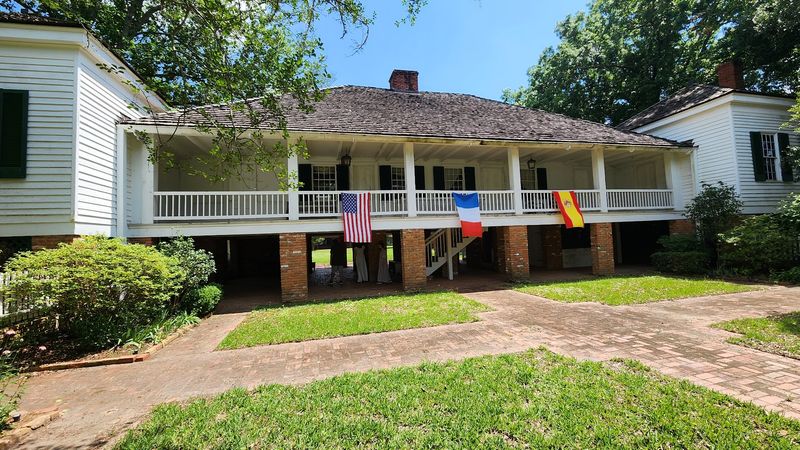
Set at 3601 Bayou Rapides Road in Alexandria, this French Colonial complex preserves a Creole residence dating to the period before the Louisiana Purchase, along with gardens, workshops, kitchens, and agricultural outbuildings.
The raised house, wide galleries, steep roof, and internal arrangement demonstrate how builders adapted European and Caribbean ideas to central Louisiana’s heat and rainfall.
Construction details become particularly meaningful when a guide explains why rooms connect in certain ways or how air moved through the structure.
Interpretation also extends beyond architecture. Furnishings and work spaces reveal the routines of the family, skilled craftspeople, laborers, and enslaved people connected to the plantation.
Separate buildings for cooking and production help visitors understand that the estate functioned as a workplace as well as a residence.
4. Frogmore Plantation
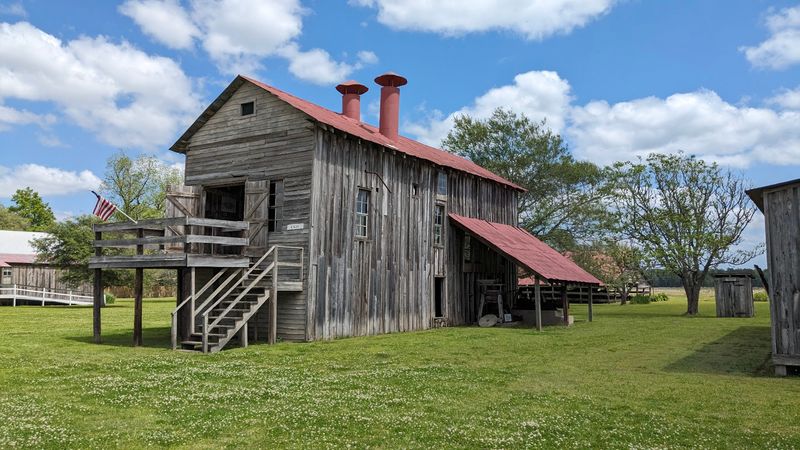
Near Ferriday at 11656 U.S. Highway 84, preserved cabins, a steam-powered cotton gin, fields, agricultural equipment, and a modern computerized gin connect more than two centuries of cotton production.
This is a cotton site rather than a sugarcane plantation, and that distinction shapes the entire visit. Tours explain how cotton was planted, harvested, processed, and marketed while tracing the labor systems that changed from slavery to sharecropping and mechanized agriculture.
The surviving structures provide an important physical scale for those histories. Cabins and work areas reveal living conditions more directly than statistics can, while the contrast between the historic steam gin and modern equipment demonstrates how technology transformed both productivity and employment.
Interpretation also explores the relationship between field labor, religion, music, and African American cultural traditions. The strongest tours do not treat gospel, blues, and work songs as decorative additions but as forms shaped by specific communities and conditions.
3. Oakley Plantation At Audubon State Historic Site
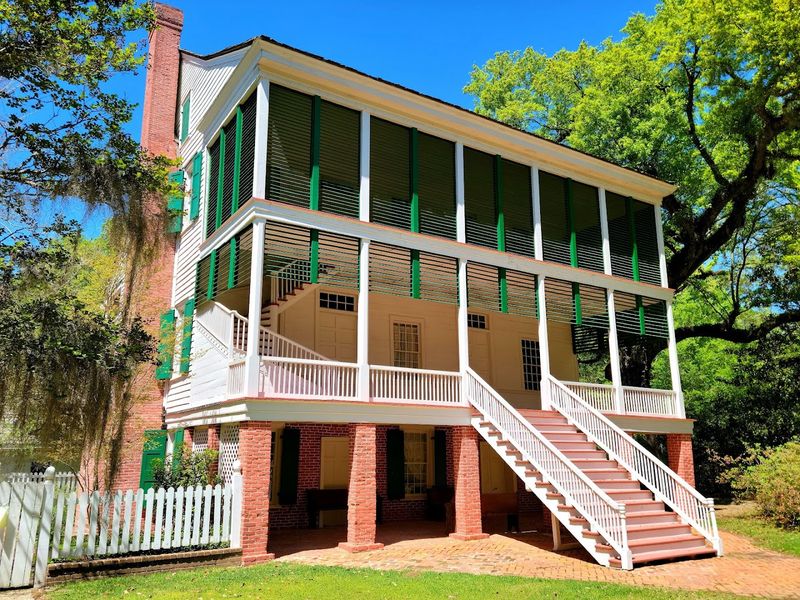
Among woods and gardens at 11788 Highway 965 near St. Francisville, a raised Creole house forms the centerpiece of a 100-acre historic landscape associated with artist and naturalist John James Audubon.
Audubon stayed here in 1821 while working as a tutor and produced dozens of bird studies that later contributed to The Birds of America. The house tour places that creative period within a much broader history of plantation agriculture, family life, and enslaved labor.
Visitors can also see a reconstructed kitchen, barn, formal and practical gardens, trails, and cabins representing the people who lived and worked outside the main residence. The natural setting is especially important because birds, plants, and changing light help explain what Audubon was observing when he worked here.
Daily guided house tours are generally available between 10 a.m. and 4 p.m., while the grounds remain open from 9 a.m. to 5 p.m.
The 2026 program schedule is unusually full. A Bird Walk With Audubon is planned for July 11, Birds, Bees And Tree IDs follows on July 18, the Junior Artist Program takes place July 25, Nature Crafts arrives August 8, and another bird walk is scheduled for October 10.
2. Houmas House Estate And Gardens
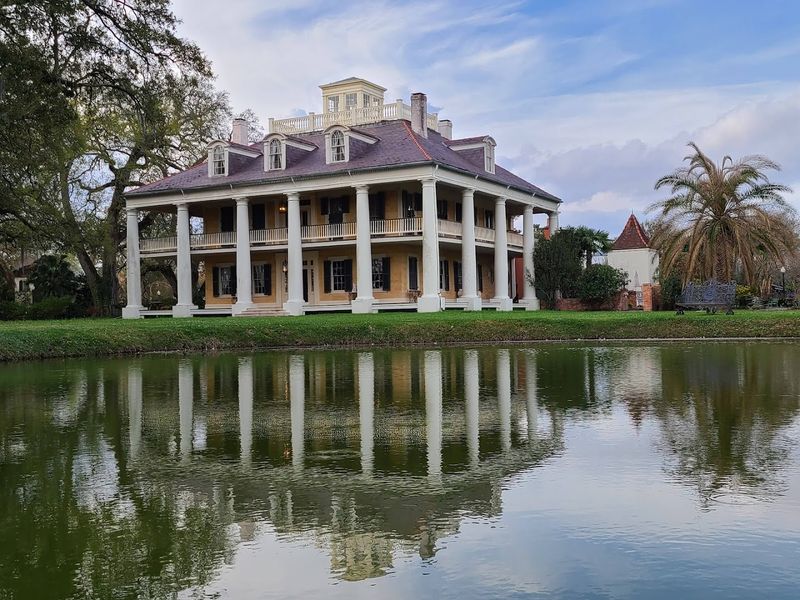
Behind an avenue of live oaks at 40136 Highway 942 in Darrow, an extensive complex combines a restored mansion, 38 acres of gardens, the Great River Road Museum, restaurants, cottages, and collections devoted to Mississippi River history.
The scale is immediately more elaborate than many other sites on this list. Formal plantings, fountains, bridges, sculpture, and carefully furnished rooms emphasize the wealth generated by sugar production along the river.
That visual grandeur needs historical context.
The estate’s development depended upon plantation agriculture and enslaved labor, and visitors should approach its decorative interiors alongside the wider economic and human systems that made such luxury possible.
1. Longfellow-Evangeline State Historic Site
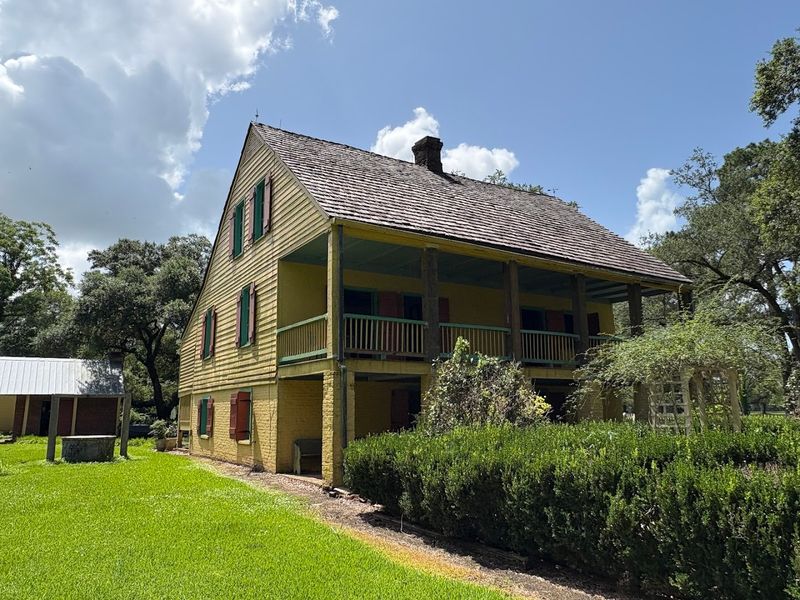
Along Bayou Teche at 1200 N. Main Street in St. Martinville, this state historic site brings Creole plantation architecture, an Acadian farmstead, gardens, trails, and literary history into the same landscape.
Maison Olivier, built around 1815, represents the wealthier Creole side of life along the bayou.
Across the grounds, a modest Acadian cabin and reproduced farmstead demonstrate how less-affluent families organized work, cooking, animals, crops, and household routines.
The contrast between these spaces is one of the site’s greatest strengths. Rather than presenting “old Louisiana” as one unified experience, it shows how wealth, culture, legal status, and ancestry shaped the homes people occupied.
Interpretation includes Acadian and Creole communities, Native peoples, Africans and African-descended residents, free people of color, and enslaved laborers. The site also examines how Henry Wadsworth Longfellow’s poem Evangeline influenced popular ideas about Acadian history.